
The Persian Prophet's Source: Zoroaster and the Salem Tradition
The founder of Zoroastrianism was not working in a cultural vacuum. The Urantia Book names his specific intellectual inheritance: on his first pilgrimage to Ur, Zoroaster encountered the Salem missionary teachings, learned the traditions of the Caligastia rebellion, and built his new religion on that foundation.
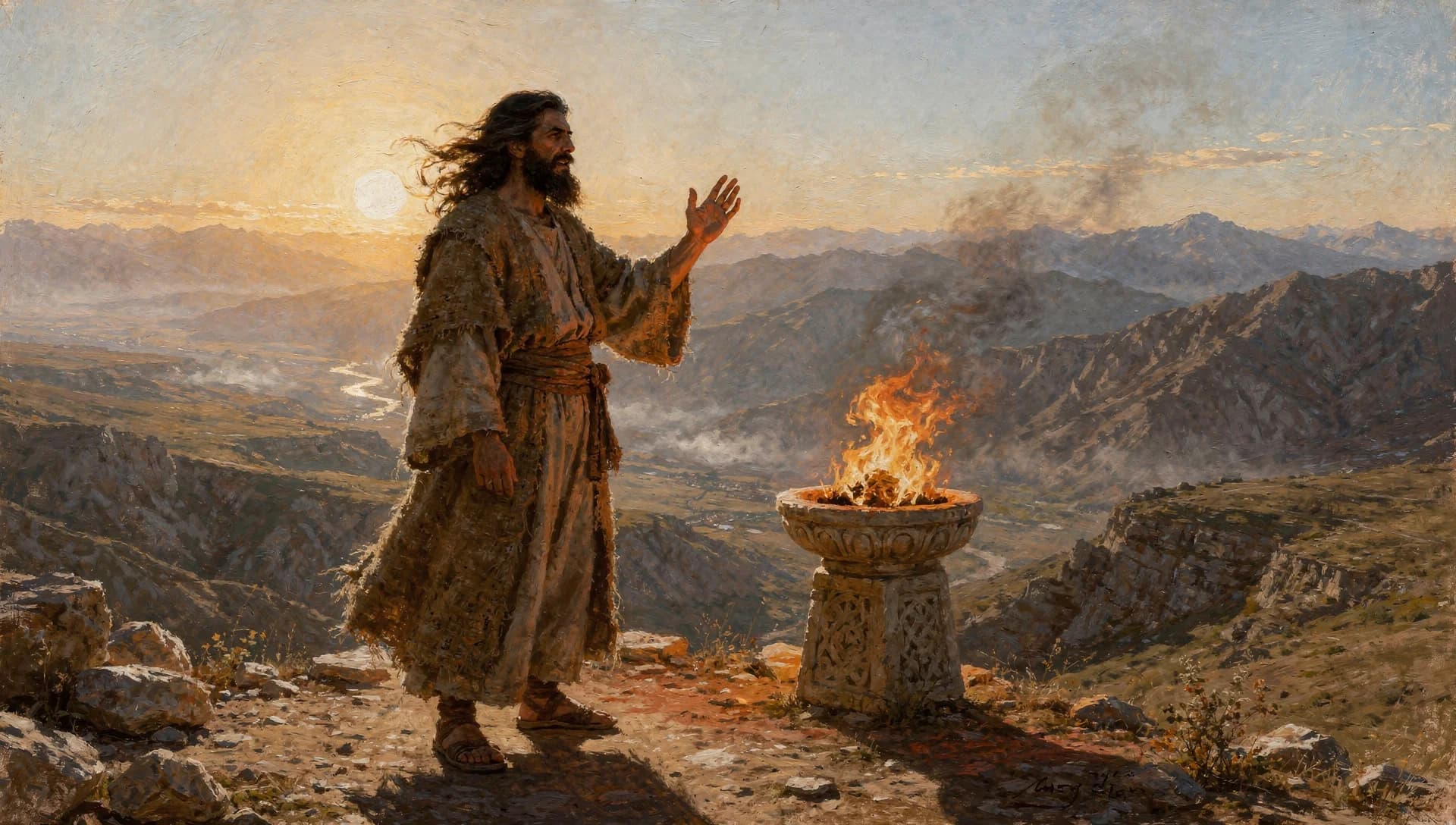
Zoroaster, Salem missionary descendant = Zarathustra, founder of Zoroastrianism
This article expands on the decoder mapping. For the side-by-side card and quick reference, see the mapping page.
The Source Behind the Prophet
Zoroaster (Old Iranian Zarathushtra) founded one of the most theologically consequential religions in world history. His teachings shaped subsequent Persian religious life for over a millennium, influenced post-exilic Judaism substantially, and through Mithraism shaped the pre-Christian Roman religious environment. His dates are contested (proposed ranges span the 15th through 6th centuries BCE) but the sixth century BCE dating is the most widely defended in contemporary scholarship.
The question of Zoroaster's specific intellectual inheritance has generated extensive academic literature. Mary Boyce's A History of Zoroastrianism (3 volumes, Brill, 1975-1991) and Jenny Rose's Zoroastrianism: An Introduction (I. B. Tauris, 2011) document the scholarly reconstruction. The consensus is that Zoroaster drew on earlier Indo-Iranian religious material, reformed or rejected much of it, and articulated a distinctive monotheistic framework centered on Ahura Mazda (the Wise Lord). What is less clear in the academic record is the specific source of the monotheistic impulse.
The Urantia Book supplies the specific source.
What the Urantia Book Says
Paper 95's account of the Salem mission to Iran is direct:
"From Palestine some of the Melchizedek missionaries passed on through Mesopotamia and to the great Iranian plateau. For more than five hundred years the Salem teachers made headway in Iran, and the whole nation was swinging to the Melchizedek religion when a change of rulers precipitated a bitter persecution which practically ended the monotheistic teachings of the Salem cult. The doctrine of the Abrahamic covenant was virtually extinct in Persia when, in that great century of moral renaissance, the sixth before Christ, Zoroaster appeared to revive the smouldering embers of the Salem gospel." (UB 95:6.1)
Zoroaster's specific backstory is named:
"This founder of a new religion was a virile and adventurous youth, who, on his first pilgrimage to Ur in Mesopotamia, had learned of the traditions of the Caligastia and the Lucifer rebellion—along with many other traditions—all of which had made a strong appeal to his religious nature. Accordingly, as the result of a dream while in Ur, he settled upon a program of returning to his northern home to undertake the remodeling of the religion of his people." (UB 95:6.2)
Zoroaster's teachings are placed in direct relationship to the Salem tradition:
"Zoroastrianism is the only Urantian creed that perpetuates the Dalamatian and Edenic teachings about the Seven Master Spirits. While failing to evolve the Trinity concept, it did in a certain way approach that of God the Sevenfold. Original Zoroastrianism was not a pure dualism; though the early teachings did picture evil as a time co-ordinate of goodness, it was definitely eternity-submerged in the ultimate reality of the good." (UB 95:6.5)
Zoroaster is placed in the sixth-century BCE Axial Age intervention:
"This great man was one of that unique group that sprang up in the sixth century before Christ to keep the light of Salem from being fully and finally extinguished as it so dimly burned to show man in his darkened world the path of light leading to everlasting life." (UB 95:6.9)
The specific intellectual pathway is therefore named. Salem missionaries entered Iran. Their teachings spread for five hundred years before being suppressed. The young Zoroaster encountered the residue of the Salem tradition at Ur, received a visionary experience, returned to his Iranian homeland, and articulated a reformed religion that preserved specific features of the Salem teaching (particularly the Seven Master Spirits teaching) while organizing them within a new framework that would survive the Persian cultural environment.
What the Ancient Source Says
The Gathas, attributed directly to Zoroaster and composed in Old Avestan, are the earliest surviving Zoroastrian texts. Stanley Insler's The Gathas of Zarathustra (E. J. Brill, 1975) provides the standard critical edition. Martin Schwartz's work on the Old Avestan liturgy and Prods Oktor Skjaervo's contributions to the Cambridge History of Iran (Cambridge University Press) establish the linguistic and textual framework.
Zoroaster's core theological claims include: a supreme creator deity (Ahura Mazda, "Wise Lord"), six or seven attendant divine attributes or emanations (the Amesha Spentas, treated in the companion decoder article), an ongoing cosmic conflict between truth (asha) and falsehood (druj), a moral universe in which human choice matters, a doctrine of personal judgment after death with rewards and punishments, and a final cosmic renewal (Frasho-kereti) in which evil is eventually defeated.
Several features of this theology are distinctive among ancient Near Eastern religions:
First, strict ethical monotheism. Ahura Mazda is the supreme creator; other divine attributes emanate from him but are not independent gods. Paul Kriwaczek's In Search of Zarathustra (Alfred A. Knopf, 2003) documents the distinctiveness of this theology in its Iranian context.
Second, a cosmic moral framework. The conflict between truth and falsehood is not a battle between gods of equal stature; it is a structured cosmic history in which truth is ultimately victorious.
Third, personal eschatology. Individual human beings face judgment after death. The doctrine is more developed than comparable Near Eastern traditions and parallels the post-exilic Jewish and Christian eschatological frameworks.
Fourth, the concept of the seven principal divine attributes (the Amesha Spentas, treated in the companion article). This is unusual in comparative religion and specifically matches the Urantia Book's Seven Master Spirits theology.
The academic consensus treats Zoroaster as an original religious genius working within Indo-Iranian tradition. The Urantia Book's specific identification of the Salem missionary tradition as his intellectual source is not part of standard academic reconstruction but is consistent with the documented distinctiveness of his theological innovations from the broader Indo-Iranian religious substrate. The particular features that make Zoroastrianism stand out (monotheism, the Seven, the moral cosmos, personal eschatology) are exactly the features the Salem teaching would have introduced.
Why This Mapping Matters
Zoroastrianism's theological influence on subsequent world religions is substantial. The post-exilic Jewish theology of heaven, hell, angels, devils, and final judgment derives in significant part from Zoroastrian contact during the Babylonian captivity and the subsequent Persian period. Christian theology inherited this framework through the Jewish substrate. Mithraism, the late Roman mystery cult derived from Iranian religion, became a direct competitor and eventual source material for early Christianity. The Zoroastrian tradition is therefore not merely a regional religion but a central node in the theological history of Western religion.
The Urantia Book's identification of Salem as Zoroaster's intellectual source places this entire downstream history within a specific framework. The theological features that Judaism, Christianity, and Mithraism inherited from Zoroastrianism are not Zoroastrian originals; they are the preserved fragments of the Salem Melchizedek tradition that Zoroaster reformulated for the Iranian environment.
This has consequences for how the subsequent theological history should be read. The "Persian influence on Judaism" academic framework is accurate as far as it goes, but the deeper attribution is that Persian influence itself was Salem influence. The monotheistic framework, the Seven Master Spirits structure, the personal eschatology, the cosmic moral framework: all of these trace back through Zoroaster to Machiventa Melchizedek's original Salem school in the nineteenth century BCE.
The mapping's significance is that it establishes the Salem tradition as a continuous intellectual thread across the ancient Near East, reaching from the second-millennium Machiventa incarnation through the first-millennium Zoroastrian reform, into post-exilic Judaism, into Mithraic Rome, and eventually into Christianity itself. The thread was frequently fragmented, often reformulated, and sometimes substantially corrupted, but its continuity is real, and Zoroaster is one of its principal transmission nodes.
Sources
- The Urantia Book, Paper 95 (The Melchizedek Teachings in the Levant). Urantia Foundation, first printing 1955. Cited passages: 95:6.1, 95:6.2, 95:6.4, 95:6.5, 95:6.7, 95:6.9.
- Boyce, Mary. A History of Zoroastrianism. 3 volumes, E. J. Brill, 1975-1991.
- Boyce, Mary. Zoroastrians: Their Religious Beliefs and Practices. Second edition, Routledge, 2001.
- Insler, Stanley. The Gathas of Zarathustra. Acta Iranica 8, E. J. Brill, 1975.
- Rose, Jenny. Zoroastrianism: An Introduction. I. B. Tauris, 2011.
- Kriwaczek, Paul. In Search of Zarathustra: The First Prophet and the Ideas That Changed the World. Alfred A. Knopf, 2003.
- Stausberg, Michael. Zarathustra and Zoroastrianism. Equinox, 2008.
- Yarshater, Ehsan, editor. The Cambridge History of Iran, Volume 3: The Seleucid, Parthian, and Sasanian Periods. Cambridge University Press, 1983.
Confidence and Evidence
- Confidence: UB CONFIRMED
- Evidence rating: STRONG
- Basis: The Urantia Book directly names the Salem missionary tradition as Zoroaster's source in Paper 95:6.1-2. Academic scholarship independently documents the distinctiveness of Zoroastrian monotheism from the broader Indo-Iranian religious substrate. The specific theological features the Urantia account attributes to Salem transmission (monotheism, Seven Master Spirits analog, moral cosmos, personal eschatology) are exactly the features academic scholarship identifies as Zoroastrian innovations over the inherited tradition.
Related Decoder Articles
- Seven Master Spirits = Amesha Spentas
- Salem Missionaries' Purest European Teaching = Cynics
- Salem Missionaries = Ikhnaton / Akhenaten
By Derek Samaras
Connecting Articles
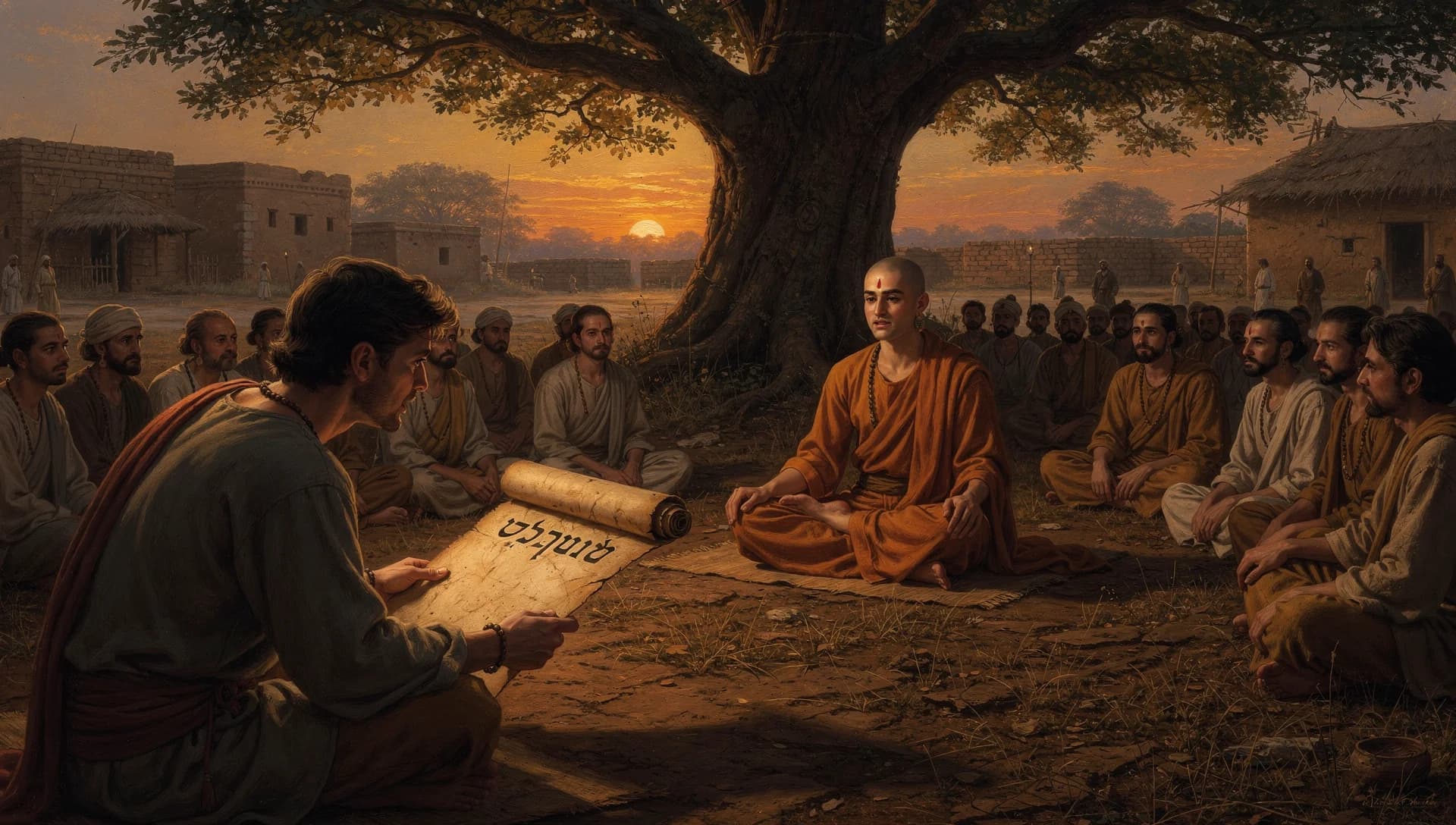
The Prophet Who Almost Got There: Gautama Siddhartha and the Salem Gospel

The One First Cause: Salem Monotheism in Lao-tse's Tao

Not Equal Principles, Real Rebellion: Zoroastrian Dualism and the Lucifer Event
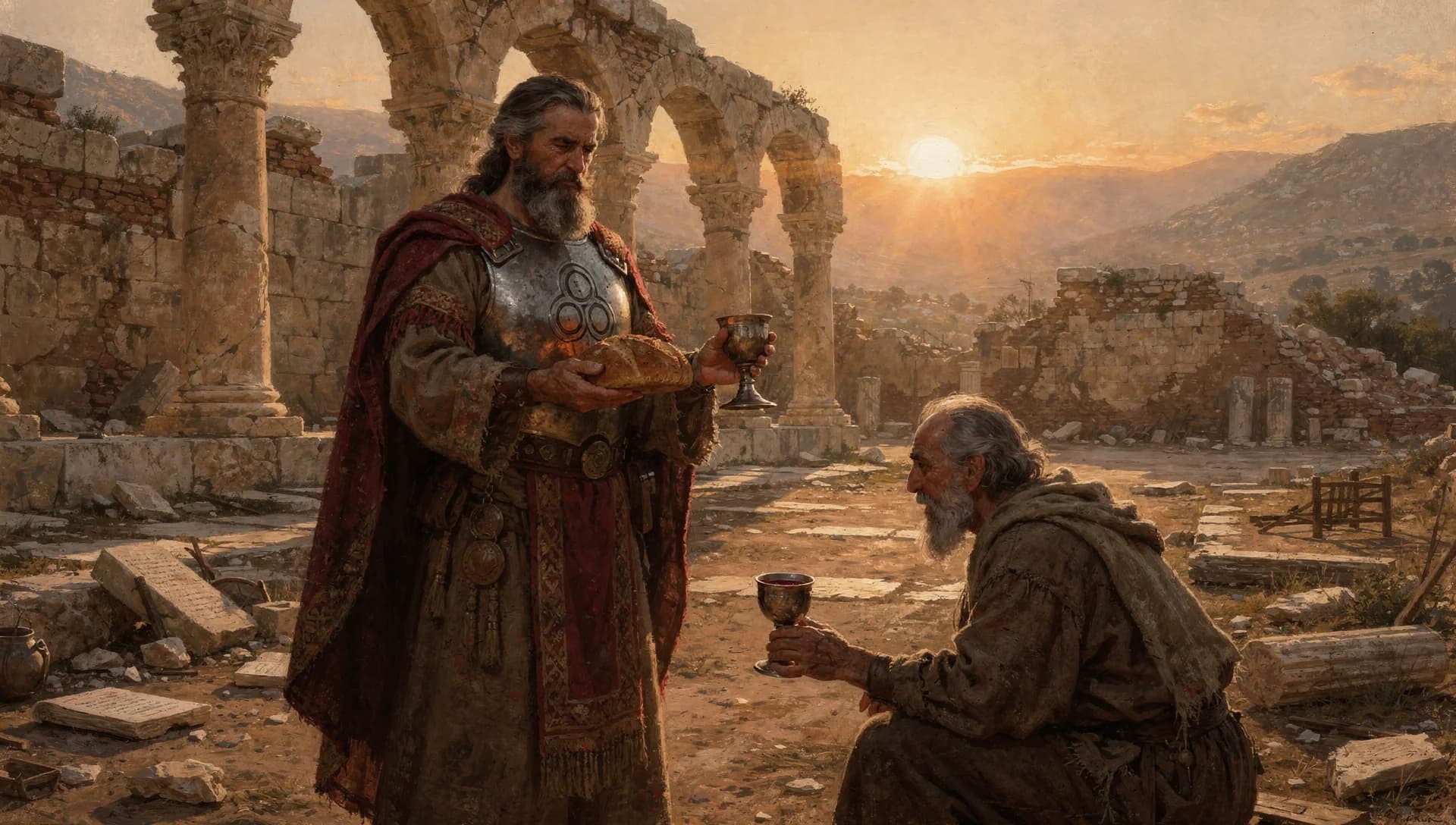
The Priest Who Had No Father: Machiventa Melchizedek and the Genesis Fragment
The Newsletter
Get the research behind each piece
Free. New Urantia Book explorations, the sources behind the videos, and early looks. No spam, unsubscribe anytime.
Prefer video? Follow on YouTube and Facebook.
Delivered through Substack. You can also read past issues.