
Seven Divine Attributes, Seven Master Spirits: The Amesha Spentas and the Paradise Seven
Zoroaster's theology organized the divine reality around a principal deity (Ahura Mazda) and six or seven attendant divine attributes, the Amesha Spentas. The Urantia Book identifies Zoroastrianism as the only Urantian creed that preserved the teaching of the Seven Master Spirits, the seven supreme administrators of the grand universe whose reality the Iranian tradition uniquely remembered.
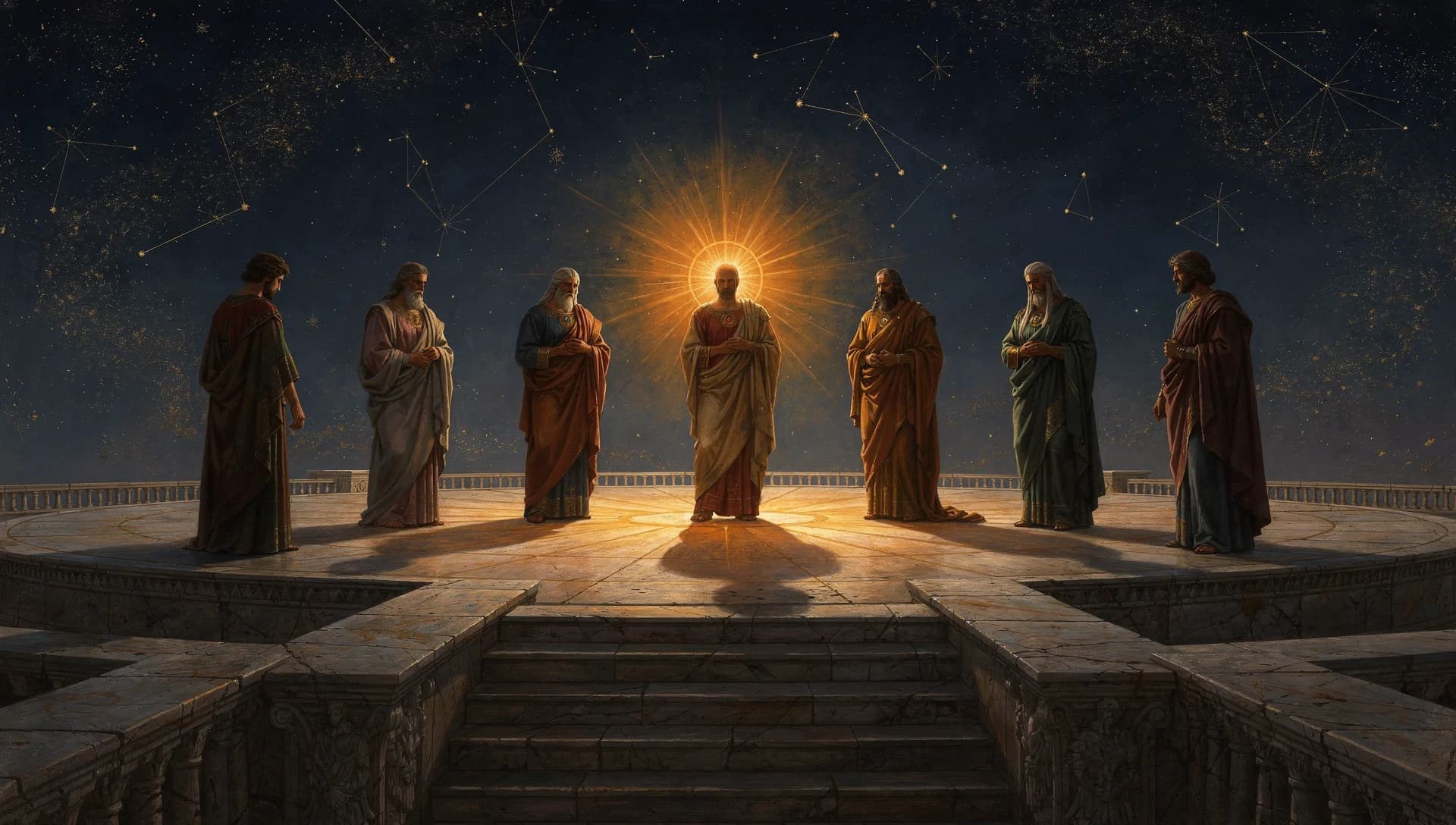
Seven Master Spirits, supreme universe administrators = Ahura Mazda + seven supreme gods (Amesha Spentas)
This article expands on the decoder mapping. For the side-by-side card and quick reference, see the mapping page.
The Structure No Other Religion Preserved
The Seven Master Spirits are one of the distinctive theological concepts in the Urantia revelation. They are the seven principal administrators of the grand universe, the highest personalities in the Paradise-Havona system below the Trinity itself, and the sources from which the local universe Creator Sons and Divine Ministers are authorized. Paper 16 treats them extensively. Their number is specific; their functions are distinct; their structure is not decorative.
Most world religious traditions do not preserve the Seven Master Spirits teaching. The Dalamatian-era dissemination of the teaching, prior to the rebellion, would have reached the ancient world in various forms, but most preservations have been compressed into vaguer concepts (the seven archangels, the seven planets, the seven chakras, the seven sacraments, the seven heavens). The Urantia Book names one specific tradition that preserved the teaching with unusual structural precision: Zoroastrianism.
What the Urantia Book Says
The Urantia Book's statement on Zoroastrian preservation of the Seven Master Spirits is direct:
"Zoroastrianism is the only Urantian creed that perpetuates the Dalamatian and Edenic teachings about the Seven Master Spirits. While failing to evolve the Trinity concept, it did in a certain way approach that of God the Sevenfold." (UB 95:6.5)
This is a striking claim. Across all the world's religions, one tradition is named as preserving the Seven Master Spirits structure. Not Hindu (with its trimurti), not Christian (with its trinity and angelic orders), not Islamic (with its seven heavens), not Mesopotamian (with its various sevens), not Egyptian (with its enneads and ogdoads). Zoroastrianism alone, in the Urantia Book's assessment, preserved the Seven Master Spirits teaching.
The Seven Master Spirits themselves are described in Paper 16:
"THE Seven Master Spirits of Paradise are the primary personalities of the Infinite Spirit. In this sevenfold creative act of self-duplication the Infinite Spirit exhausted the associative possibilities mathematically inherent in the factual existence of the three persons of Deity. Had it been possible to produce a larger number of Master Spirits, they would have been created, but there are just seven associative possibilities, and only seven, inherent in three Deities." (UB 16:0.1)
The broader theological context of the Seven is that they represent associative combinations of the three Paradise Deity persons (Father, Son, Spirit). The first Master Spirit represents the Father alone, the second the Son alone, the third the Spirit alone, the fourth the Father-Son combination, the fifth the Father-Spirit combination, the sixth the Son-Spirit combination, the seventh the Father-Son-Spirit combination. Each Master Spirit represents a unique combinatorial aspect of the Trinity's character.
The Zoroastrian preservation is therefore structurally important. The Amesha Spentas are not merely seven abstract gods or seven cosmic principles; they are, on the Urantia account, the preserved memory of the actual Seven Master Spirits of Paradise, whose original teaching was carried from Dalamatia through the Salem missionary tradition to Zoroaster's sixth-century Iranian reform.
What the Ancient Source Says
The Amesha Spentas are documented across the Zoroastrian textual tradition. The Gathas (Zoroaster's own hymns) name them, and the subsequent Young Avestan and Pahlavi literature develops their theological roles. The standard modern treatments include Mary Boyce's three-volume A History of Zoroastrianism (Brill, 1975-1991), Stanley Insler's The Gathas of Zarathustra (Brill, 1975), and William W. Malandra's An Introduction to Ancient Iranian Religion (University of Minnesota Press, 1983).
The canonical enumeration of the seven (or six, with Ahura Mazda as the coordinating primary) includes:
- Spenta Mainyu: the Holy Spirit, the bounteous or creative principle
- Vohu Manah: the Good Mind, divine wisdom
- Asha Vahishta: the Best Truth, the cosmic moral order
- Kshathra Vairya: the Desirable Dominion, divine sovereignty
- Spenta Armaiti: the Holy Devotion, divine piety and fidelity
- Haurvatat: Wholeness, integrity, integration
- Ameretat: Immortality, the eternal life-giving function
The enumeration varies slightly across Zoroastrian texts (some count Ahura Mazda as included in the seven, making the count seven with the supreme deity; others treat Ahura Mazda as coordinating a distinct group of six or seven Amesha Spentas). The theological significance is consistent: the Amesha Spentas are divine attributes or emanations that together constitute the full range of divine activity in the cosmos. They are not seven independent gods; they are seven aspects of the single supreme reality working in coordinated ministry.
This structural feature matches the Urantia Master Spirits theology precisely. The Seven Master Spirits are not seven independent gods; they are seven associative combinations of the three persons of Paradise Deity, working in coordinated ministry. The "seven aspects of the single reality" structure is common to both frameworks.
The divine-attribute designations (truth, good mind, wholeness, immortality, and so on) in the Zoroastrian formulation do not map one-to-one to the Urantia Master Spirits (who are not typically named in attribute terms in the Urantia text). But the structural feature of a seven-fold divine coordination emanating from the supreme reality is preserved in both systems.
Robert Charles Zaehner's The Dawn and Twilight of Zoroastrianism (Weidenfeld & Nicolson, 1961) provides the classical treatment of the Amesha Spentas' theological function. William W. Malandra's An Introduction to Ancient Iranian Religion (1983) documents their ritual and liturgical roles. The consistent observation across the scholarly literature is that the Amesha Spentas structure is distinctive in ancient Iranian religion and does not have obvious precedents in the pre-Zoroastrian Indo-Iranian religious substrate.
Why This Mapping Matters
The Amesha Spentas teaching is one of the most important theological structures in Zoroastrianism, yet its origin in the broader history of religion has been persistently puzzling to comparative scholarship. The seven-fold divine attribute structure does not derive clearly from pre-Zoroastrian Indo-Iranian material, does not appear in adjacent Mesopotamian or Levantine traditions, and does not have obvious parallels in Vedic Hinduism (which has various divine-attribute structures but not this seven-fold one).
The Urantia Book's identification of the Amesha Spentas as the preserved memory of the Seven Master Spirits explains the theological puzzle. The teaching entered the ancient world through the Dalamatian administration (five hundred thousand years ago, UB 66:0.2), was partially lost through the rebellion and the subsequent cultural fragmentation, was preserved in residual form in various traditions, and was transmitted to Zoroaster through the Salem missionary tradition as Zoroaster reformed Iranian religion in the sixth century BCE. The Amesha Spentas are Zoroaster's reformulation of the Seven Master Spirits teaching.
The scholarly observation that the Amesha Spentas structure does not derive from pre-Zoroastrian Indo-Iranian material is consistent with the Urantia account. The structure is not indigenous to Indo-Iranian tradition; it was introduced by Zoroaster's Salem-informed reform. The subsequent Zoroastrian tradition preserved it, often in evolving and partially corrupted forms, across the two and a half millennia since.
The mapping's significance is that it identifies Zoroastrianism as a uniquely privileged preservation of cosmic structural truth. Of all the world's religions, the Zoroastrian tradition is the one where the Seven Master Spirits teaching was successfully transmitted across the intervening millennia in recognizable form. The Amesha Spentas are the Iranian name for what the Urantia revelation calls the Master Spirits. The theological bridge is specific, historically locatable, and consistent with both the Urantia account and the academic analysis of Zoroastrian theological distinctiveness.
Sources
- The Urantia Book, Paper 16 (The Seven Master Spirits), Paper 95 (The Melchizedek Teachings in the Levant). Urantia Foundation, first printing 1955. Cited passages: 16:0.1, 95:6.5.
- Insler, Stanley. The Gathas of Zarathustra. Acta Iranica 8, E. J. Brill, 1975.
- Boyce, Mary. A History of Zoroastrianism. 3 volumes, E. J. Brill, 1975-1991.
- Zaehner, R. C. The Dawn and Twilight of Zoroastrianism. Weidenfeld & Nicolson, 1961.
- Malandra, William W. An Introduction to Ancient Iranian Religion: Readings from the Avesta and Achaemenid Inscriptions. University of Minnesota Press, 1983.
- Rose, Jenny. Zoroastrianism: An Introduction. I. B. Tauris, 2011.
- Stausberg, Michael. Zarathustra and Zoroastrianism. Equinox, 2008.
- Yarshater, Ehsan, editor. The Cambridge History of Iran, Volume 3. Cambridge University Press, 1983.
Confidence and Evidence
- Confidence: UB CONFIRMED
- Evidence rating: STRONG
- Basis: The Urantia Book names Zoroastrianism directly as the sole preserver of the Seven Master Spirits teaching. The Amesha Spentas structural feature (seven divine attributes emanating from a supreme deity) is academically recognized as distinctive within ancient Iranian religion and does not derive from pre-Zoroastrian substrate. The Urantia account of Salem transmission to Zoroaster supplies a historical mechanism for the introduction.
Related Decoder Articles
- Zoroaster, Salem Missionary Descendant = Zarathustra
- Corrupted Zoroastrianism in Rome = Mithras Mystery Cult
- Seven Adjutants / Chakras / Mother Spirit
By Derek Samaras
Connecting Articles
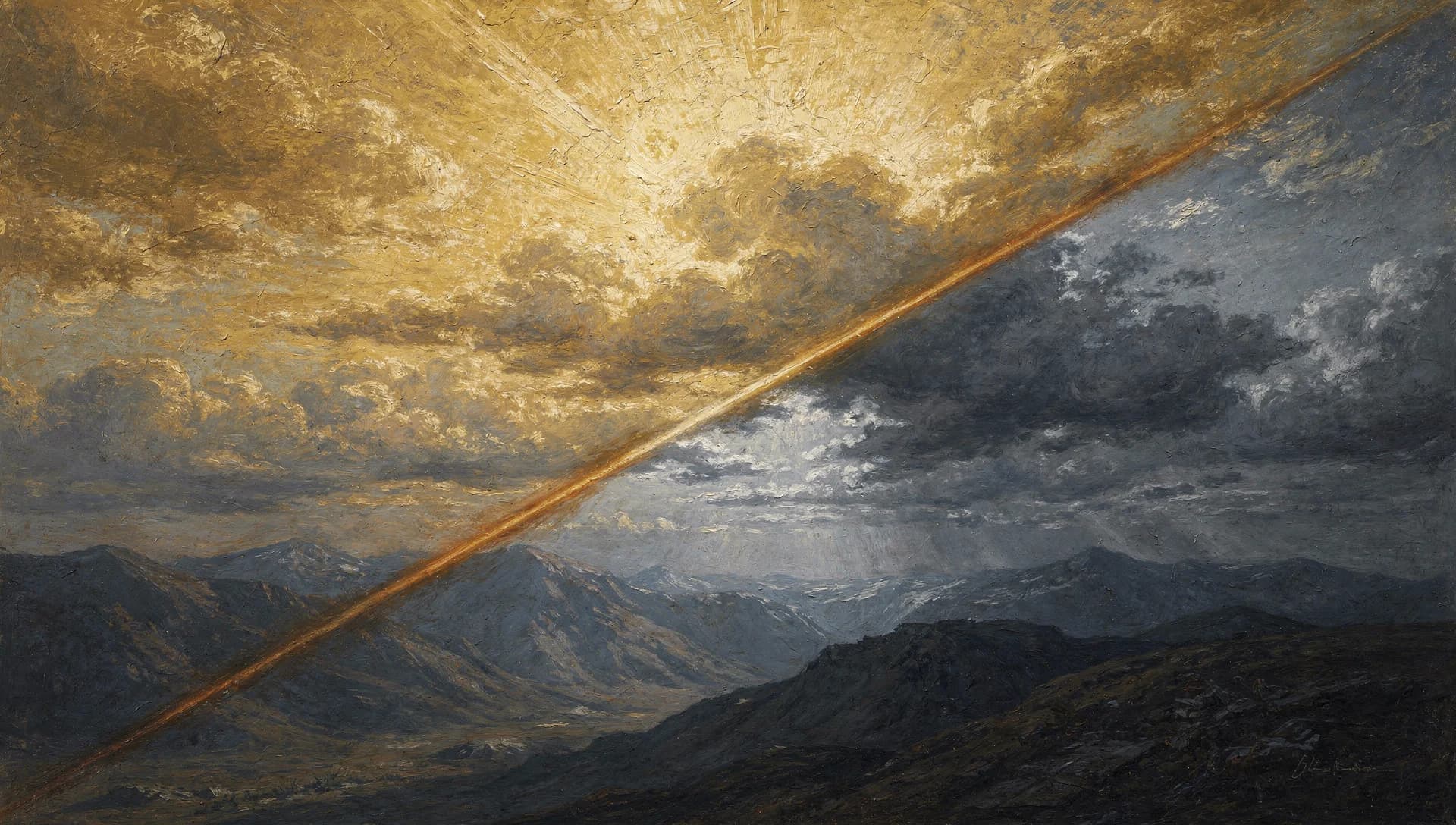
Not Equal Principles, Real Rebellion: Zoroastrian Dualism and the Lucifer Event
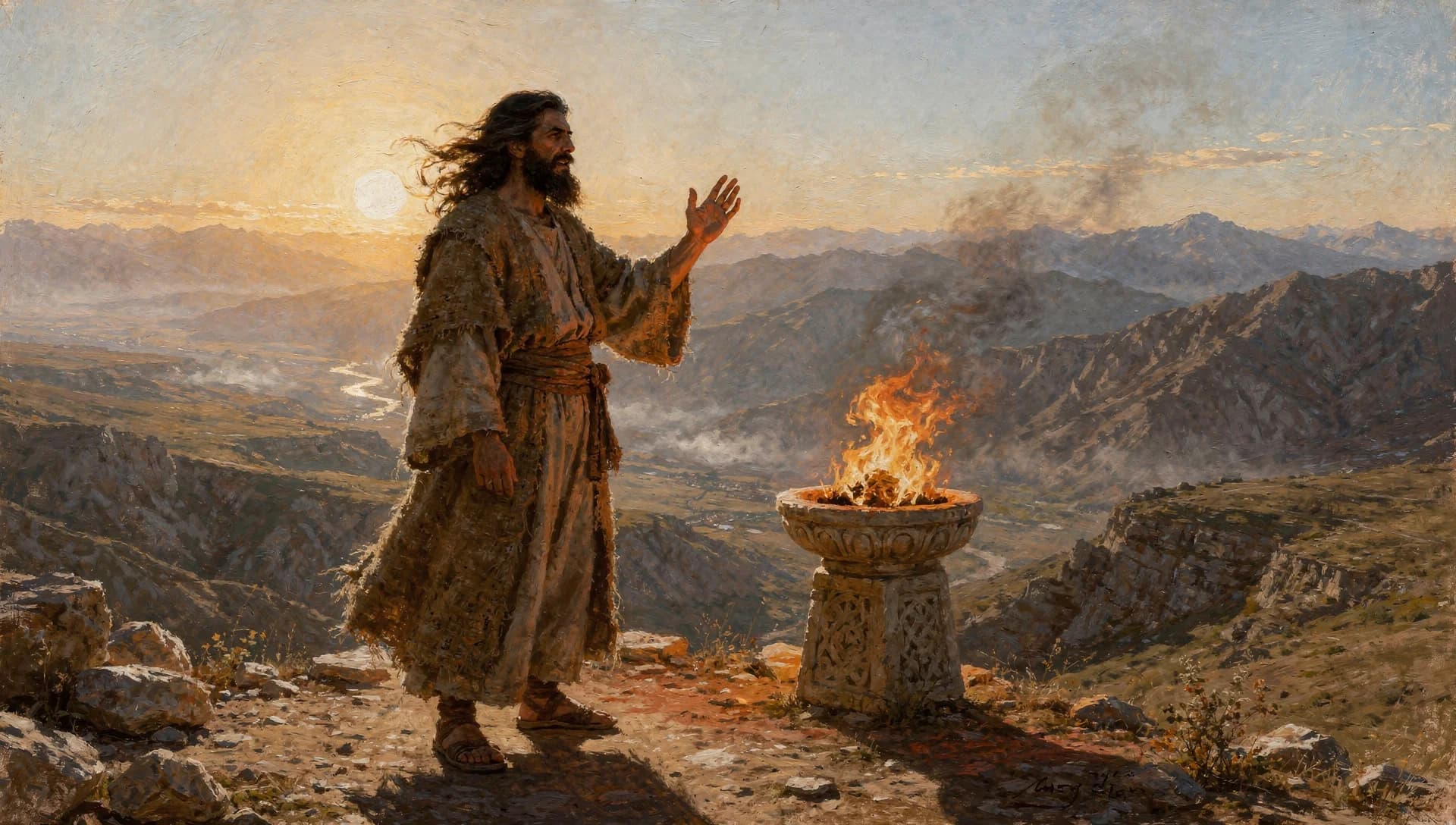
The Persian Prophet's Source: Zoroaster and the Salem Tradition
The Longest Memory: Australian Aboriginal Dreamtime and the Primordial Teaching-Ancestors
The Final Adjudication: Ragnarok and the Pending Verdict
The Newsletter
Get the research behind each piece
Free. New Urantia Book explorations, the sources behind the videos, and early looks. No spam, unsubscribe anytime.
Prefer video? Follow on YouTube and Facebook.
Delivered through Substack. You can also read past issues.