
The Priest Who Had No Father: Machiventa Melchizedek and the Genesis Fragment
Genesis 14 preserves a strange fragment: a priest-king of Salem named Melchizedek who appears without genealogy, blesses Abraham, receives a tithe, and vanishes from the narrative. Hebrews 7 treats him as a type of Christ. The Urantia Book identifies Machiventa Melchizedek as a specific emergency incarnation and explains why the surrounding Genesis material was deliberately edited to remove the rest of the story.
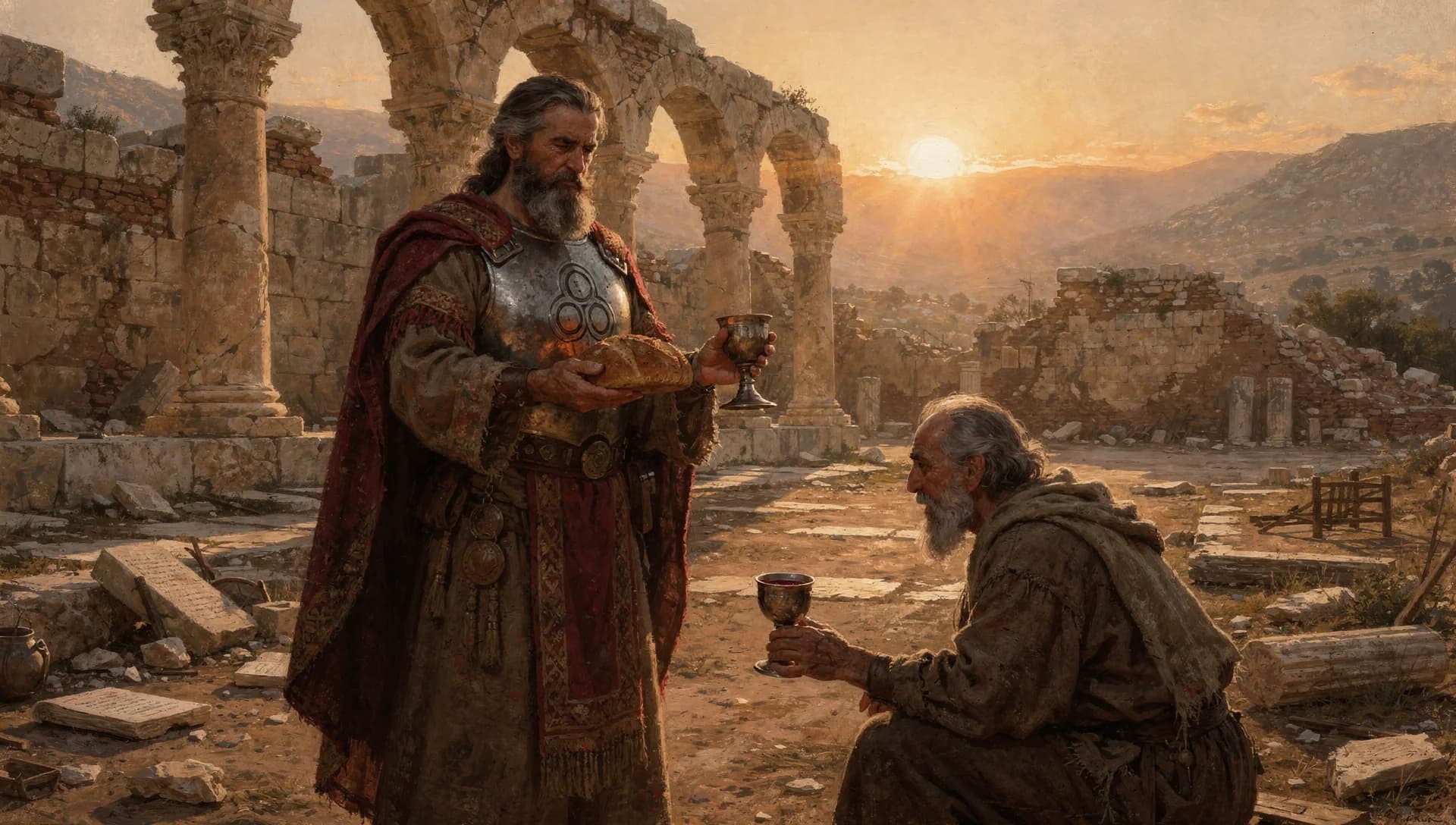
Machiventa Melchizedek, incarnated teacher = Melchizedek, mysterious priest-king deleted from Genesis
This article expands on the decoder mapping. For the side-by-side card and quick reference, see the mapping page.
The Fragment That Refused to Fit
Genesis 14:18-20 preserves a narrative fragment unlike anything else in the patriarchal literature. Abraham, returning from the rescue of Lot, is met by Melchizedek, king of Salem and priest of El Elyon (God Most High). Melchizedek brings out bread and wine, blesses Abraham, and receives a tithe of the spoils. Melchizedek then vanishes from the biblical narrative. His lineage is not given. His death is not recorded. His successors are not named. Three verses, and the figure is gone.
The strangeness of this fragment was noted by the writer of Hebrews 7, who made theological use of exactly this peculiarity: "He is without father or mother or genealogy, having neither beginning of days nor end of life, but resembling the Son of God he continues a priest forever" (Hebrews 7:3). Melchizedek's genealogical emptiness is not a narrative omission but a theological signal: the figure exists outside the ordinary human succession.
Biblical scholarship has long recognized that the Genesis 14 passage is compositionally anomalous. It sits awkwardly in its context. Its language differs from the surrounding patriarchal material. Its implicit theology of a single God El Elyon sits ill with the surrounding theology of Yahweh. Something was preserved here from an older and richer tradition that the surrounding narrative no longer carries.
The Urantia Book identifies what the older tradition was and explains why the surrounding material was removed.
What the Urantia Book Says
The Urantia Book treats Machiventa Melchizedek as a historical being who incarnated on Urantia as an emergency measure to preserve revealed truth on a spiritually isolated planet:
"It was 1,973 years before the birth of Jesus that Machiventa was bestowed upon the human races of Urantia. His coming was unspectacular; his materialization was not witnessed by human eyes. He was first observed by mortal man on that eventful day when he entered the tent of Amdon, a Chaldean herder of Sumerian extraction. And the proclamation of his mission was embodied in the simple statement which he made to this shepherd, 'I am Melchizedek, priest of El Elyon, the Most High, the one and only God.'" (UB 93:2.1)
The theological content of Melchizedek's mission is described:
"Melchizedek taught the concept of one God, a universal Deity, but he allowed the people to associate this teaching with the Constellation Father of Norlatiadek, whom he termed El Elyon—the Most High." (UB 93:3.2)
The Salem school operated for ninety-four years. Melchizedek "lived and taught" at Salem for nearly a century, developing a community of believers and training successors:
"Melchizedek taught elementary revealed truth at Salem for ninety-four years, and during this time Abraham attended the Salem school three different times. He finally became a convert to the Salem teachings, becoming one of Melchizedek's most brilliant pupils and chief supporters." (UB 93:4.16)
The Melchizedek-Abraham relationship is far more extensive than Genesis 14 preserves. Abraham attended the Salem school three times. The Salem covenant (with its seven commandments and its offering of divine favor through faith) is the structural antecedent of the later Abrahamic covenant. Many of the "conversations with God" attributed to Abraham in Genesis were, in the Urantia account, conversations with Melchizedek:
"What the Old Testament records describe as conversations between Abraham and God were in reality conferences between Abraham and Melchizedek. Later scribes regarded the term Melchizedek as synonymous with God." (UB 93:9.7)
"The record of so many contacts of Abraham and Sarah with 'the angel of the Lord' refers to their numerous visits with Melchizedek." (UB 93:9.7)
The Urantia Book's explanation for why so little of this survives in Genesis is specific and historically locatable:
"The teaching of Melchizedek was full and replete, but the records of these days seemed impossible and fantastic to the later Hebrew priests, although many had some understanding of these transactions, at least up to the times of the en masse editing of the Old Testament records in Babylon." (UB 93:9.6)
"The Hebrew narratives of Isaac, Jacob, and Joseph are far more reliable than those about Abraham, although they also contain many diversions from the facts, alterations made intentionally and unintentionally at the time of the compilation of these records by the Hebrew priests during the Babylonian captivity." (UB 93:9.8)
The ultimate editorial direction is named:
"The national ego of the Jews was tremendously depressed by the Babylonian captivity. In their reaction against national inferiority they swung to the other extreme of national and racial egotism, in which they distorted and perverted their traditions with the view of exalting themselves above all races as the chosen people of God; and hence they carefully edited all their records for the purpose of raising Abraham and their other national leaders high up above all other persons, not excepting Melchizedek himself." (UB 93:9.9)
The Hebrews 7 writer who preserved Melchizedek's significance is identified as a exceptional case:
"But one of the writers of the Book of Hebrews understood the mission of Melchizedek, for it is written: 'This Melchizedek, priest of the Most High, was also king of peace; without father, without mother, without pedigree, having neither beginning of days nor end of life but made like a Son of God, he abides a priest continually.' This writer designated Melchizedek as a type of the later bestowal of Michael, affirming that Jesus was 'a minister forever on the order of Melchizedek.'" (UB 93:9.11)
Machiventa's departure was sudden and complete:
"Machiventa terminated his bestowal as a creature of flesh and blood just as suddenly and unceremoniously as he had begun it. Neither his appearance nor departure were accompanied by any unusual announcement or demonstration; neither resurrection roll call nor ending of planetary dispensation marked his appearance on Urantia; his was an emergency bestowal." (UB 93:10.2)
This is why Genesis preserves the fragment in its peculiar form. A being who entered history suddenly as an adult, taught for ninety-four years, departed suddenly without dying, and had no human genealogy, would leave exactly the residue Genesis 14 and Hebrews 7 preserve: a priest without father or mother or genealogy, whose career had no recorded beginning or end, who appeared to Abraham, blessed him, received tithes, and vanished.
What the Ancient Source Says
The Genesis 14 passage has been one of the most intensively studied fragments in biblical scholarship. Joseph A. Fitzmyer's The One Who Is to Come (Eerdmans, 2007) surveys the Melchizedek literature. John Gammie's "Loci of the Melchizedek Tradition of Genesis 14:18-20" (Journal of Biblical Literature, 1971) treats the passage's compositional history.
The passage's peculiarities include: the sudden introduction of Melchizedek without prior context, the use of the divine name El Elyon (which appears in Genesis only in this passage and in Psalm 78:35), the priestly-royal double office of Melchizedek, the theological independence of the figure from the surrounding Yahwist narrative, and the narrative self-containment of the scene (Melchizedek does not reappear in Genesis after verse 20). Margaret Barker's The Great High Priest (T&T Clark, 2003) treats the passage as preserving a pre-Yahwist stratum of Israelite religious tradition.
The Qumran materials, particularly 11QMelch (11Q13), preserve a first-century BCE Melchizedek theology in which Melchizedek is treated as a heavenly redeemer figure who will execute divine judgment at the end of days. Paul Kobelski's Melchizedek and Melchireša (Catholic Biblical Quarterly Monograph Series 10, 1981) treats the Qumran material comprehensively. The Qumran Melchizedek is not a memory of the historical figure but a theological development of the Genesis fragment in the direction of eschatological redemptive function.
The Hebrews 7 interpretation takes a different but related direction: Melchizedek as a type of Christ, prefiguring the eternal priesthood of Jesus. This reading takes the Genesis fragment's peculiarities (no genealogy, no recorded death) and reads them as deliberate theological signals of Melchizedek's transcendence of ordinary human succession.
The redaction-critical approach to Genesis 14 has generally treated the passage as a late insertion into the patriarchal narrative, drawing on a prior Salem tradition whose content is lost. Gerhard von Rad's Genesis (Westminster, 1972) and Claus Westermann's Genesis 12-36 (Augsburg, 1985) both treat the passage as compositionally independent. The Babylonian-captivity editorial context the Urantia Book identifies is consistent with the critical-scholarly dating of the final Pentateuchal redaction (Priestly source, sixth to fifth centuries BCE).
The claim that the Hebrew priestly editors deliberately suppressed the bulk of the Melchizedek tradition to elevate Abraham as the national father is a claim the academic record cannot confirm directly but is consistent with the documented exilic and post-exilic editorial pattern. The Deuteronomistic Historian's elevation of specifically Israelite figures over non-Israelite religious authorities is well-documented; the Priestly editor's ideological interests in legitimating the Aaronic priesthood over alternative priestly claims is also documented. The Urantia account places the Melchizedek suppression within this documented editorial pattern.
Why This Mapping Matters
The Melchizedek fragment in Genesis 14 has always been a puzzle. Its narrative peculiarities, its theological content, its absence of connection to the surrounding material, its mysterious absence of follow-up: these features do not fit the patterns of ordinary patriarchal narrative. The conventional academic treatment has been to acknowledge the passage's distinctiveness while being unable to say much about what generated it.
The Urantia Book supplies the generative account. The Melchizedek of Genesis 14 is the compressed residue of a historical figure whose ninety-four-year career as an emergency Son of world ministry actually occurred (UB 93:4.16). What Genesis preserves is three verses of a story that extends across nearly a century of Salem teaching, three visits by Abraham to the Salem school and his final conversion, the establishment of the Salem covenant, and the foundation of the monotheistic tradition that later produced the Hebrew religion itself.
The suppression the Urantia Book describes is historically locatable. The Babylonian exile traumatized the Hebrew national psyche. The Priestly editors of the exilic and post-exilic period responded by consolidating a specifically Israelite national identity built around Abraham as the ethnic-religious father. A Melchizedek whose Salem ministry predated Abraham, whose theological teaching was the source of Abraham's religion, whose priestly authority Abraham acknowledged by paying tithe, would have been incompatible with the ideological project of the exilic editors. The solution was to preserve the Genesis 14 fragment (too widely known to be eliminated) while suppressing the surrounding narrative that would have made Melchizedek's priority over Abraham explicit.
The implications for reading the Hebrew Bible are substantial. The Abrahamic religion is, on the Urantia account, downstream from the Salem religion rather than its origin. The monotheism Abraham carried was Melchizedek's monotheism. The covenant Abraham received was a continuation of the Salem covenant. The Hebrew tradition preserves this inheritance in fragments (Genesis 14, Psalm 110 "You are a priest forever after the order of Melchizedek," the Hebrews 7 commentary) but the full account was deliberately edited out.
The mapping restores what the editing suppressed. Machiventa Melchizedek is not a mythological figure or a theological type; he is a specific historical personality who lived and taught at Salem for ninety-four years, from about 1980 BCE until about 1886 BCE (93:2.1, 93:4.16), taught Abraham and many others, and laid the theological foundation on which the entire subsequent Hebrew-Christian tradition was built. The Genesis editors were not wrong to preserve his name; they were only selective about how much of his story they let through.
Sources
- The Urantia Book, Paper 93 (Machiventa Melchizedek). Urantia Foundation, first printing 1955. Cited passages: 93:2.1, 93:3.2, 93:4.16, 93:9.6, 93:9.7, 93:9.8, 93:9.9, 93:9.11, 93:10.2.
- Fitzmyer, Joseph A. The One Who Is to Come. Eerdmans, 2007.
- Barker, Margaret. The Great High Priest: The Temple Roots of Christian Liturgy. T&T Clark, 2003.
- Kobelski, Paul J. Melchizedek and Melchireša'. Catholic Biblical Quarterly Monograph Series 10, 1981.
- Gammie, John G. "Loci of the Melchizedek Tradition of Genesis 14:18-20," Journal of Biblical Literature 90/4 (1971), pp. 385-396.
- von Rad, Gerhard. Genesis: A Commentary. Westminster, 1972.
- Westermann, Claus. Genesis 12-36: A Commentary. Translated by John J. Scullion, Augsburg, 1985.
- 11QMelchizedek (11Q13). In Florentino García Martínez and Eibert J. C. Tigchelaar, eds., The Dead Sea Scrolls Study Edition, Brill, 1997.
Confidence and Evidence
- Confidence: UB CONFIRMED
- Evidence rating: STRONG
- Basis: The Urantia Book treats Machiventa directly and extensively in Paper 93. The peculiar Genesis 14 fragment (Melchizedek without genealogy, priest of El Elyon, blessing Abraham) is exactly the residue that the Urantia-described historical career would leave after Babylonian-captivity editorial compression. The Hebrews 7 interpretation independently preserves awareness of Melchizedek's unusual theological status. The Qumran 11QMelchizedek tradition preserves awareness of Melchizedek as a celestial-category figure.
Related Decoder Articles
- Salem Missionaries' Purest European Teaching = Cynics
- Serapatatia, Well-Meaning Nodite Leader = The Serpent
- Salem Missionaries = Ikhnaton / Akhenaten
By Derek Samaras
Connecting Articles

The Memory That Reached Japan: Machiventa and the Shinto Substrate
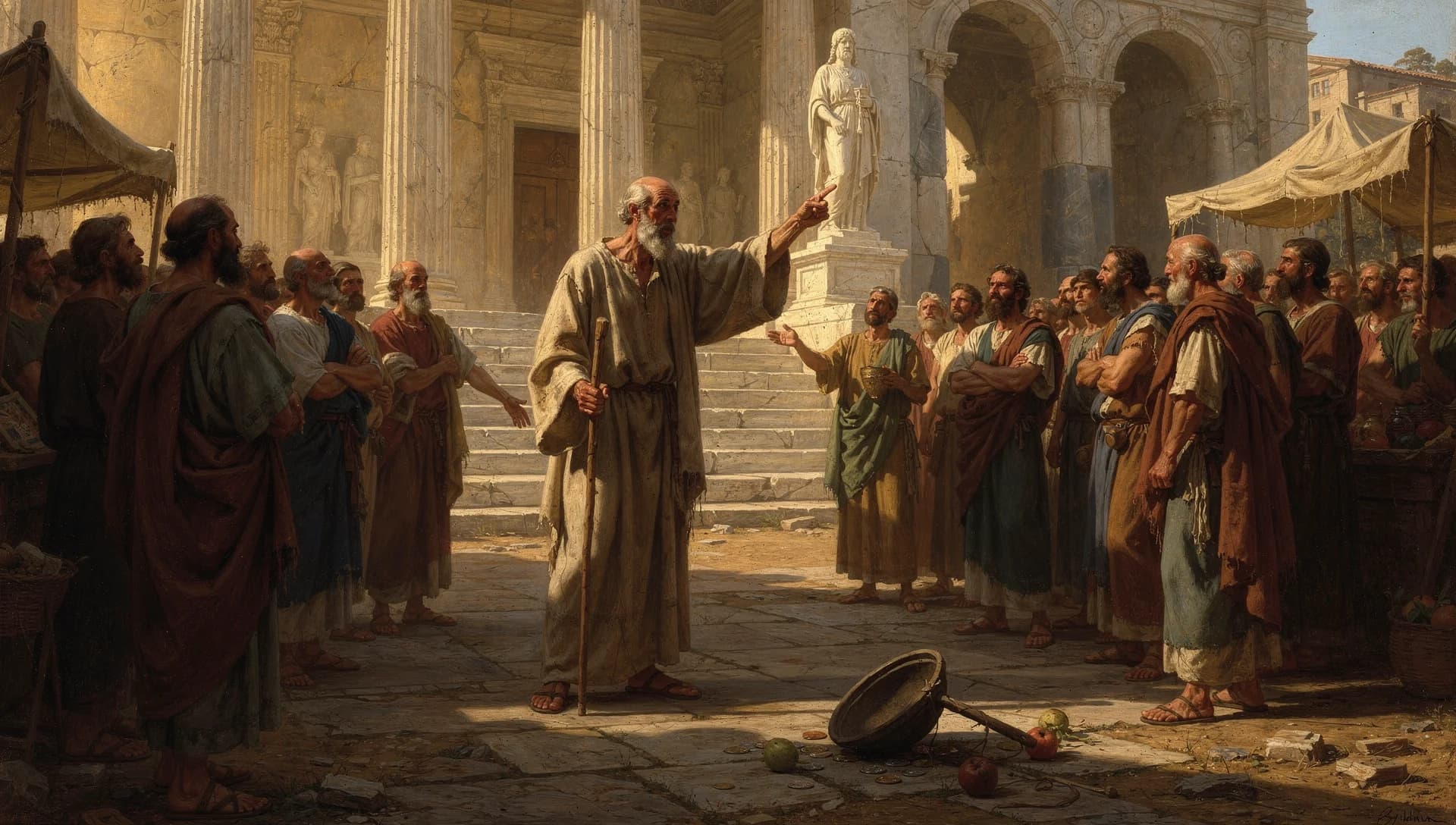
The Last Stand: Salem Missionaries and the Greek Cynics
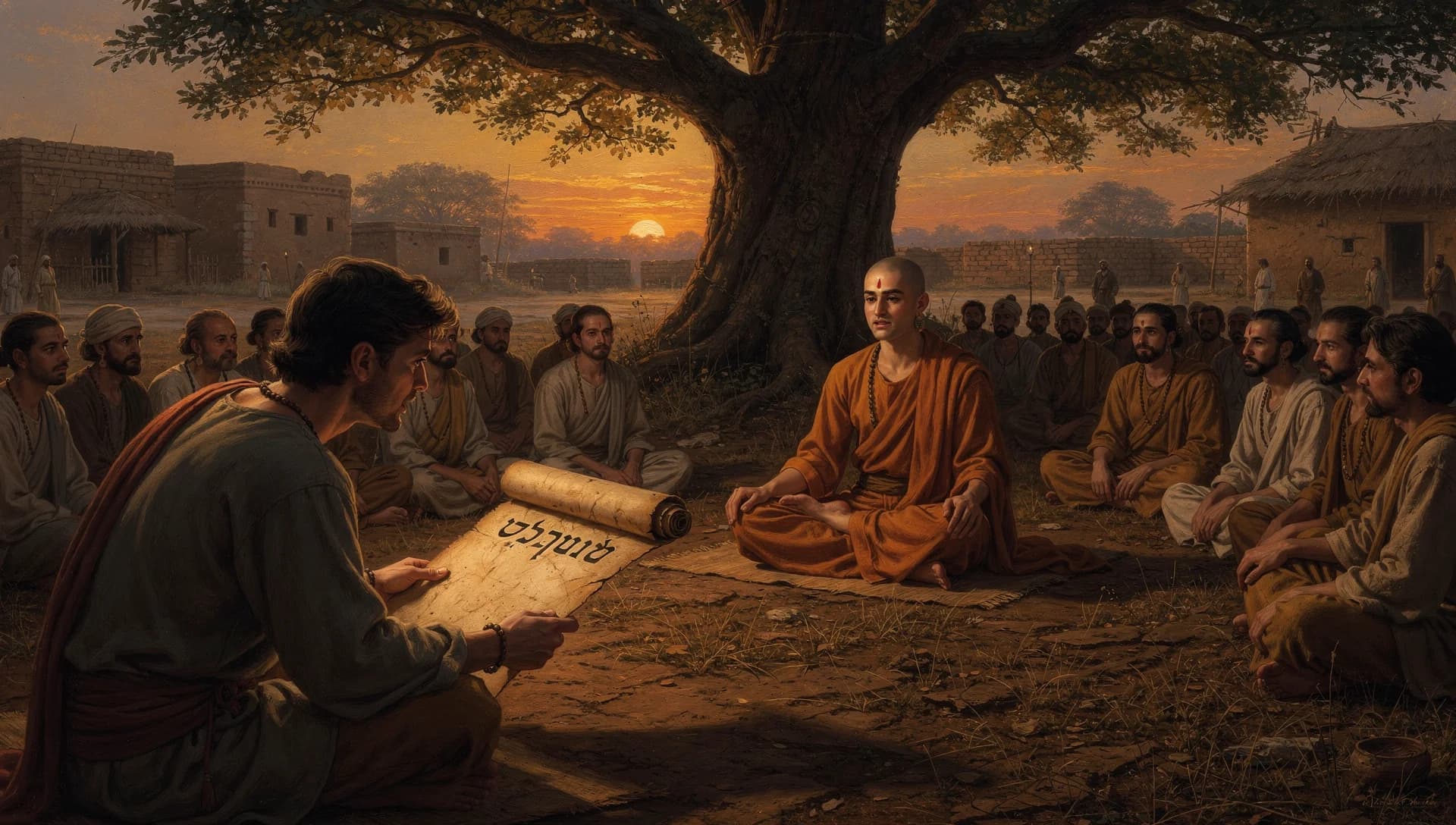
The Prophet Who Almost Got There: Gautama Siddhartha and the Salem Gospel
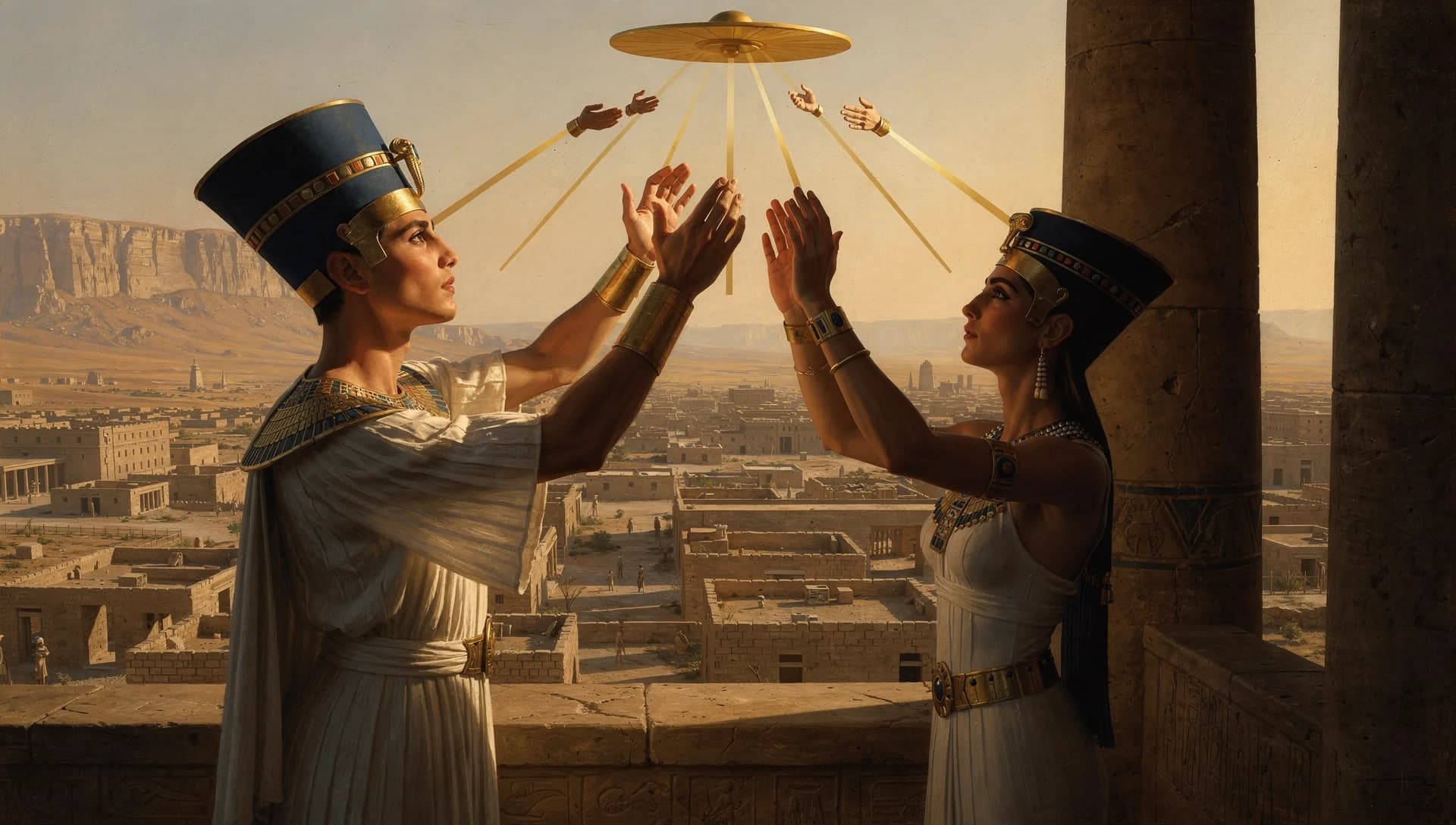
The Pharaoh Who Preached One God: Ikhnaton and the Salem Mission
The Newsletter
Get the research behind each piece
Free. New Urantia Book explorations, the sources behind the videos, and early looks. No spam, unsubscribe anytime.
Prefer video? Follow on YouTube and Facebook.
Delivered through Substack. You can also read past issues.