
Not Equal Principles, Real Rebellion: Zoroastrian Dualism and the Lucifer Event
Zoroastrian theology is famous for its cosmic dualism: Ahura Mazda the good versus Angra Mainyu the evil, locked in conflict across cosmic history. The Urantia Book identifies what the dualism actually preserves: the distorted memory of the Lucifer rebellion, a specific administrative event that was systematized into eternal cosmic warfare by Iranian theological reflection.
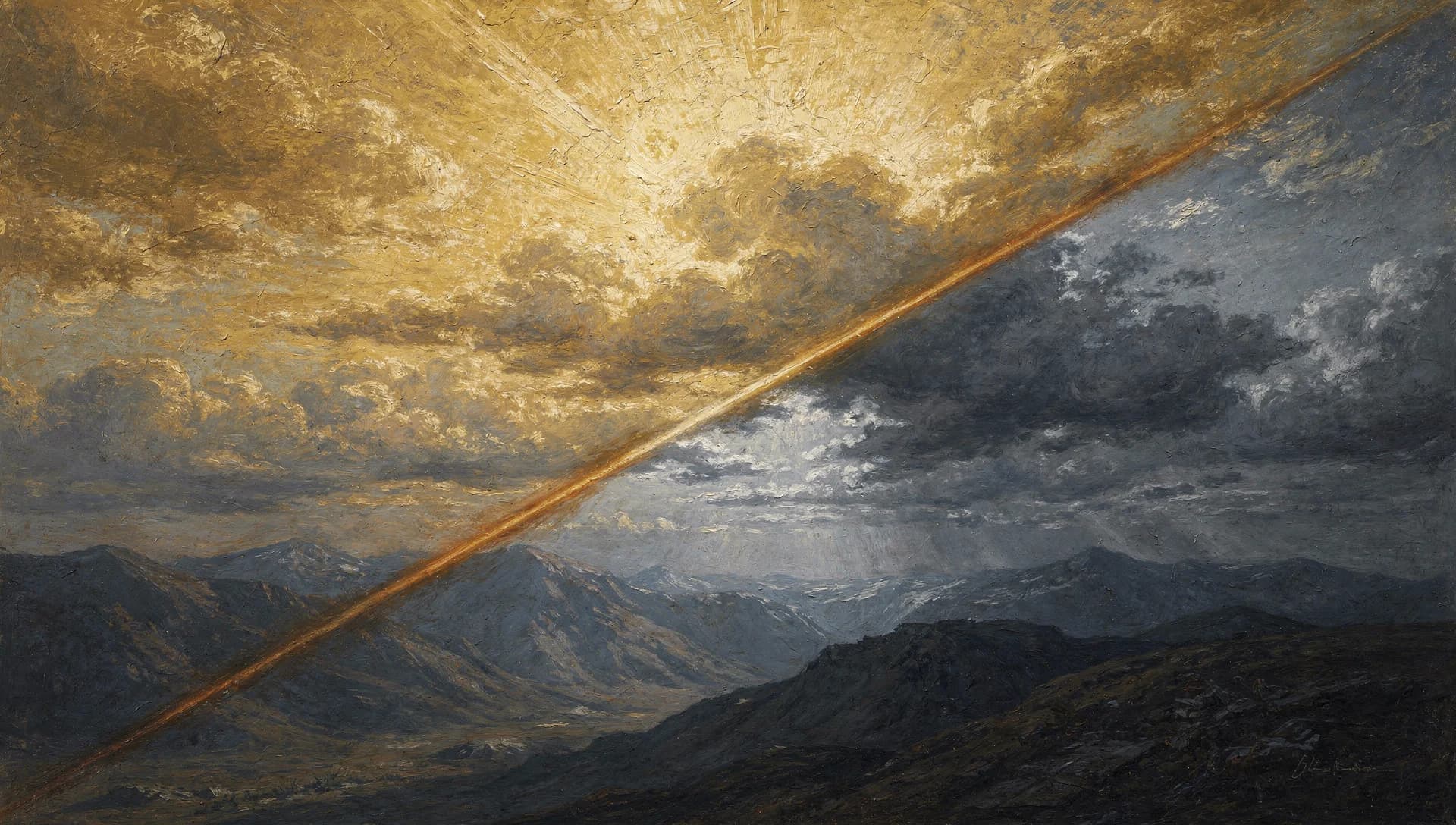
Lucifer rebellion, distorted memory of cosmic war = Zoroastrian dualism (Ahura Mazda vs. Angra Mainyu)
This article expands on the decoder mapping. For the side-by-side card and quick reference, see the mapping page.
The Theological Framework That Shaped the Western Imagination
Zoroastrian dualism is one of the most influential theological frameworks in Western religious history. The picture of a cosmic conflict between the supreme good (Ahura Mazda) and the supreme evil (Angra Mainyu), with human beings caught in the middle as participants in the ongoing struggle, shaped post-exilic Jewish theology, provided the structural framework for Christian doctrines of Satan and the devil, and remained the dominant Western model of the moral cosmos until the modern period.
The form of the dualism matters. Zoroastrianism does not teach that good and evil are symmetric cosmic principles of equal weight. The early teaching is clearer: Ahura Mazda is the ultimate creator, and Angra Mainyu is a secondary principle whose defeat is cosmically guaranteed in the final renewal (Frasho-kereti). But the later development of Zoroastrian theology, particularly in the Sassanian period, hardened the dualism into a more symmetric cosmic opposition. This hardened dualism is what most directly influenced the Western religious tradition.
The Urantia Book identifies the specific historical event that the Zoroastrian dualism preserves in distorted form.
What the Urantia Book Says
Paper 95 addresses the Zoroastrian dualism directly:
"Original Zoroastrianism was not a pure dualism; though the early teachings did picture evil as a time co-ordinate of goodness, it was definitely eternity-submerged in the ultimate reality of the good. Only in later times did the belief gain credence that good and evil contended on equal terms." (UB 95:6.5)
The underlying historical reality is identified:
"The Jewish traditions of heaven and hell and the doctrine of devils as recorded in the Hebrew scriptures, while founded on the lingering traditions of Lucifer and Caligastia, were principally derived from the Zoroastrians during the times when the Jews were under the political and cultural dominance of the Persians." (UB 95:6.6)
The Urantia Book therefore establishes a causal chain. The Lucifer rebellion (a specific administrative event in the Satania system approximately two hundred thousand years ago) left cultural residues (UB 53:4.1). Zoroaster's Salem-informed reform preserved these residues in structured theological form. The subsequent Zoroastrian tradition hardened the preservation into the dualistic framework. Post-exilic Judaism inherited the framework from Iranian cultural contact. Christianity inherited it from Judaism. The full Western tradition of cosmic dualism between good and evil traces back, through this chain, to the actual Lucifer rebellion.
The rebellion itself is not dualistic in the Zoroastrian sense. It was an administrative revolt by specific beings (Lucifer as System Sovereign, Satan as his assistant, Caligastia as Planetary Prince on Urantia, and other figures) against the established universe government. The rebels were not an eternal cosmic principle; they were created personalities who chose rebellion. Their power is not symmetric with divine power; it is the limited freedom of created beings to oppose their creator until the final adjudication resolves the situation. The "cosmic conflict between good and evil" is not the basic structure of reality; it is the historical consequence of a specific administrative failure.
What the Ancient Sources Say
The early Zoroastrian theology preserved in the Gathas is not the pure dualism of later Zoroastrianism. Stanley Insler's The Gathas of Zarathustra (Brill, 1975) and Mary Boyce's A History of Zoroastrianism (Brill, 1975-1991) document the theological development. In the Gathas, Zoroaster names Spenta Mainyu (Holy Spirit) and Angra Mainyu (Hostile Spirit) as twin spiritual principles whose opposition structures the moral cosmos, but Ahura Mazda is the supreme creator above both, and the final victory of the good is eternal rather than contingent.
The hardening of the dualism occurs in the post-Gathic tradition. By the Sassanian period (third through seventh centuries CE), the Zurvanite heresy (Zurvanism) treated time itself (Zurvan) as the parent of both Ahura Mazda and Angra Mainyu, making the two principles structurally equivalent. Orthodox Zoroastrian opposition to Zurvanism preserved the supremacy of Ahura Mazda, but the popular imagination had already absorbed the more symmetric dualistic framework. R. C. Zaehner's Zurvan: A Zoroastrian Dilemma (Clarendon Press, 1955) treats this development.
The Jewish inheritance of Zoroastrian dualistic material during the Babylonian captivity and the Persian period is extensively documented. John J. Collins's The Apocalyptic Imagination: An Introduction to Jewish Apocalyptic Literature (Eerdmans, third edition 2016) traces the development of Jewish apocalyptic eschatology. The distinctive features of post-exilic Jewish theology (the cosmic adversary figure, the final judgment, the resurrection of the dead, the elaborated angelology, the heaven-hell geography) are all substantially new in Jewish thought during and after the Persian period. The parallels with Zoroastrian material are detailed and extensive.
Elaine Pagels's The Origin of Satan (Random House, 1995) traces the development of the Satan figure from the pre-exilic Hebrew ha-satan (a prosecutorial functional role in the heavenly court) into the post-exilic cosmic adversary drawing on Zoroastrian Angra Mainyu. The figure that Christian tradition inherited as "the Devil" is the cumulative product of this theological development.
The Christian adoption of cosmic dualism is documented across the patristic period. The Manichaean tradition (third century CE, founded by Mani in Persia) explicitly combined Zoroastrian dualism with Christian material, producing the most radical dualistic form. Augustine's early Manichaean phase (he was a Manichaean auditor for nine years before his conversion to orthodox Christianity) left substantial dualistic residues in his subsequent theological development. The broader Western tradition's tendency to frame moral-cosmic reality as a war between good and evil traces back through Augustine's partial Manichaean inheritance to the earlier Zoroastrian source.
Why This Mapping Matters
The Western theological tradition's cosmic dualism has had substantial practical consequences. Reading human moral and spiritual life as participation in a cosmic war between good and evil produces outcomes: urgency about personal salvation, adversarial framing of moral struggle, tendency to externalize moral failure onto cosmic forces, dualistic patterns in the treatment of body and spirit, material and spiritual, and this world and the next.
The Urantia Book's framework offers a significant correction. The actual cosmic situation is not a symmetric war between good and evil. It is an administrative situation in which specific created beings rebelled against the established universe government, were progressively defeated, are currently awaiting final adjudication, and will be resolved through administrative processes. The "cosmic war" framework preserves real memory of real events, but it distorts the administrative reality into a theological myth that exaggerates the power and cosmic status of the rebels.
Several interpretive consequences follow:
First, moral and spiritual life is not primarily warfare. It is growth and ascension under the care of divine personalities (Thought Adjusters, the Spirit of Truth, the Mother Spirit's ministry) whose work is the positive construction of human spiritual capacity. The adversarial forces are real but secondary, not the primary framework.
Second, evil is not eternal. Angra Mainyu in orthodox Zoroastrian theology is not eternal; his defeat is guaranteed in the final renewal. The Urantia framework confirms this: the Lucifer rebellion is pending final adjudication, after which the rebels will be annihilated or restored, and the universe will be cleansed of the disturbance.
Third, the human being's relationship to the moral cosmos is not primarily defensive (warding off attacks by cosmic adversaries) but constructive (cooperating with the divine personalities who are building the human spiritual life).
Fourth, the theological tradition's elaborate mythology of cosmic warfare can be recognized as the distorted residue of a specific administrative event rather than as the basic structure of reality. The Urantia framework allows reading the Zoroastrian-Jewish-Christian dualistic tradition as preserving real memory in exaggerated form, which enables a more accurate underlying understanding without requiring wholesale rejection of the tradition.
The mapping's significance is that it specifies the actual event behind two millennia of cosmic-dualistic theological development. The dualism is real memory. The memory is of a specific rebellion. The rebellion has been resolved in principle (through Michael's bestowal) and awaits final adjudication. The ongoing human moral-spiritual life is not primarily a battlefield; it is the primary domain of constructive divine ministry that the dualistic framework has obscured.
Sources
- The Urantia Book, Paper 53 (The Lucifer Rebellion), Paper 95 (The Melchizedek Teachings in the Levant). Urantia Foundation, first printing 1955. Cited passages: 95:6.5, 95:6.6.
- Insler, Stanley. The Gathas of Zarathustra. Acta Iranica 8, E. J. Brill, 1975.
- Boyce, Mary. A History of Zoroastrianism. 3 volumes, E. J. Brill, 1975-1991.
- Zaehner, R. C. Zurvan: A Zoroastrian Dilemma. Clarendon Press, 1955.
- Zaehner, R. C. The Dawn and Twilight of Zoroastrianism. Weidenfeld & Nicolson, 1961.
- Collins, John J. The Apocalyptic Imagination: An Introduction to Jewish Apocalyptic Literature. Third edition, Eerdmans, 2016.
- Pagels, Elaine. The Origin of Satan. Random House, 1995.
- Lieu, Samuel N. C. Manichaeism in the Later Roman Empire and Medieval China. Second edition, Mohr Siebeck, 1992.
Confidence and Evidence
- Confidence: UB CONFIRMED
- Evidence rating: STRONG
- Basis: The Urantia Book directly attributes Zoroastrian dualism to distorted Lucifer rebellion memory in Paper 95:6.5-6. The academic reconstruction of Zoroastrian theological development from early non-symmetric dualism to later hardened cosmic dualism is well-documented. The Jewish-Christian inheritance of cosmic-dualistic theology through Persian contact is extensively documented. The Urantia account's identification of the Lucifer rebellion as the underlying event is consistent with the broader Urantia treatment of the rebellion's continuing cultural effects.
Related Decoder Articles
- Lucifer Binding = Loki Binding Beneath the Earth
- Zoroastrian Influence on Jewish Theology
- Not One Devil, Six Rebels: The Theological Confusion
By Derek Samaras
Connecting Articles
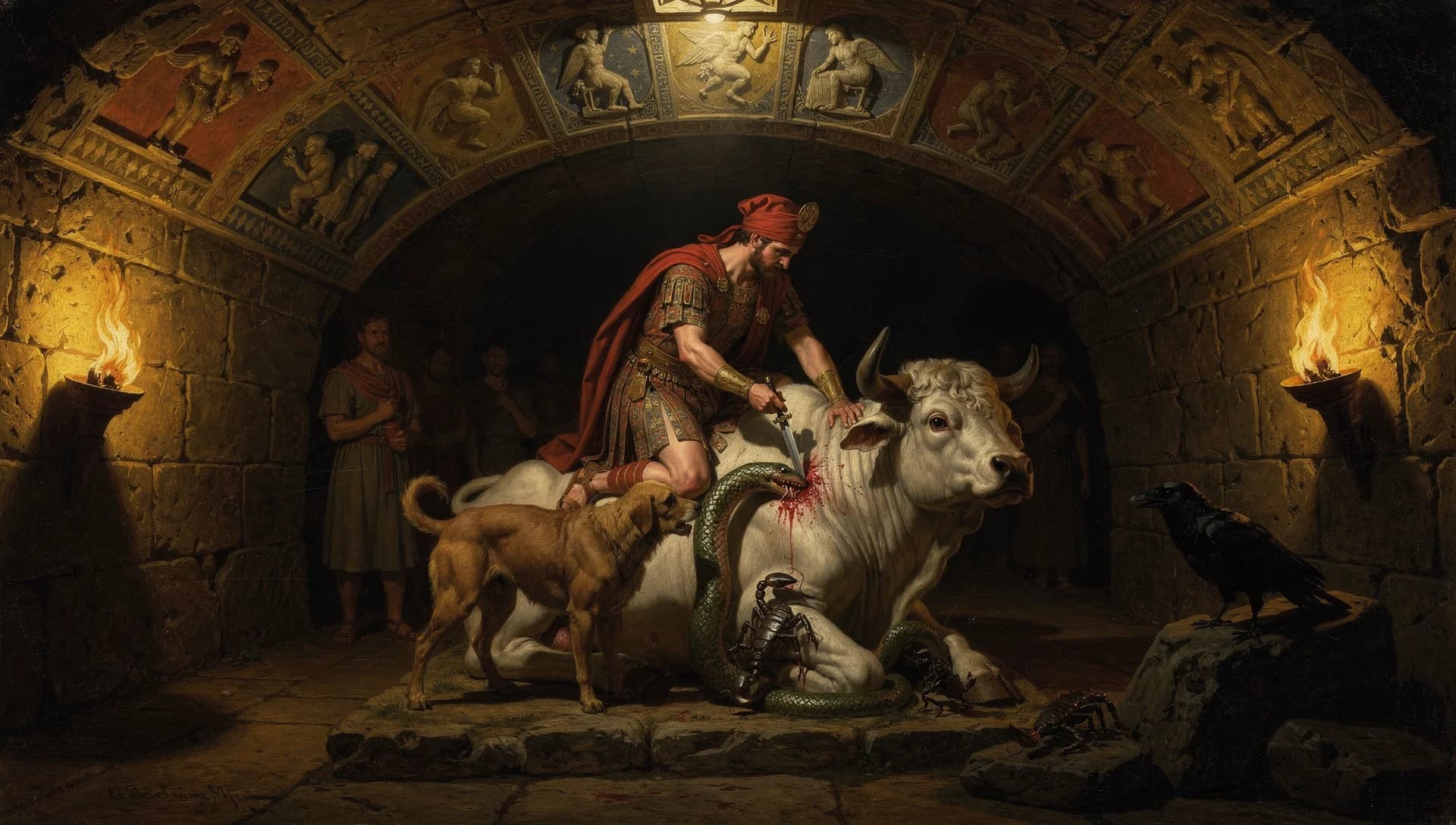
The Bull-Slayer and the Cosmic Ages: Mithraic Tauroctony and the Rebellion Memory
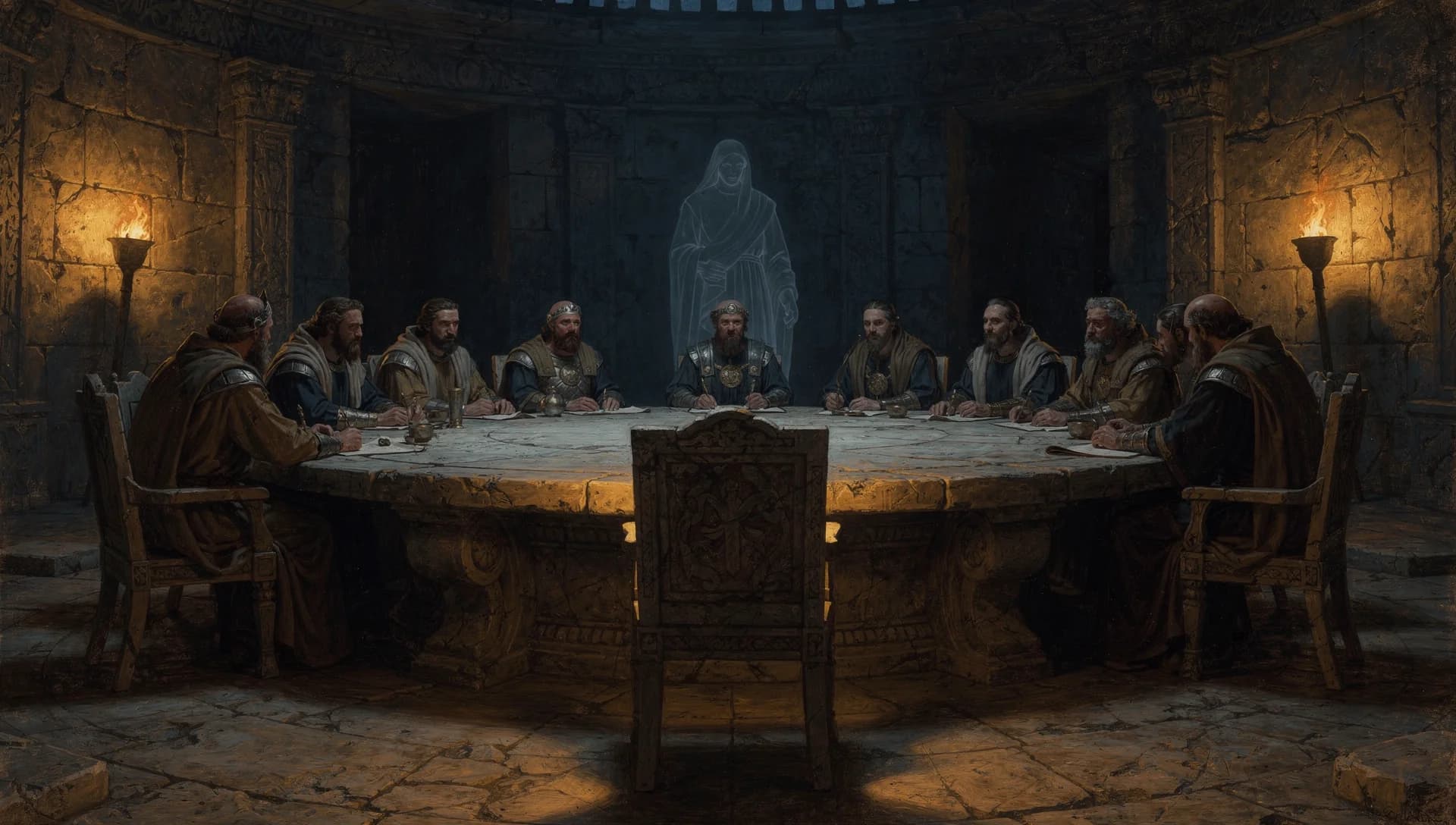
The Insider Who Betrayed: Caligastia and the Norse Loki
Seven Divine Attributes, Seven Master Spirits: The Amesha Spentas and the Paradise Seven
The First War Among the Gods: The Staff Split and the Aesir-Vanir Conflict
The Newsletter
Get the research behind each piece
Free. New Urantia Book explorations, the sources behind the videos, and early looks. No spam, unsubscribe anytime.
Prefer video? Follow on YouTube and Facebook.
Delivered through Substack. You can also read past issues.