
Rebirth in the Western Paradise: The Mansion Worlds and Pure Land Buddhism
Pure Land Buddhism teaches that the faithful will be reborn in a Western Paradise, a place of training and progress under the guidance of Amitabha Buddha, from which eventual enlightenment is assured. The Urantia Book describes the mansion worlds of the local system: a training sequence for ascending mortals under the guidance of celestial teachers, from which eventual Paradise attainment is the destiny of every willing soul.
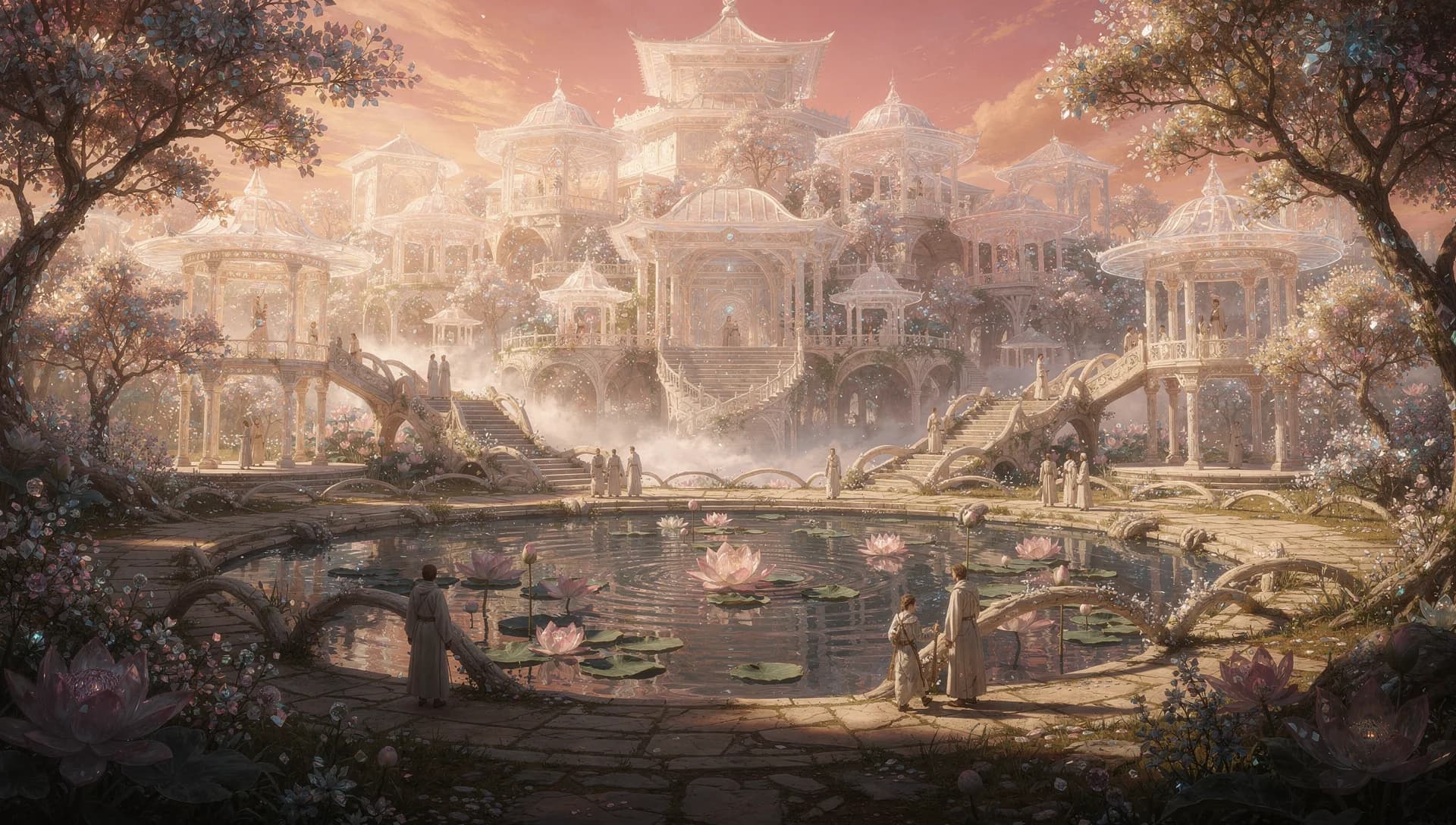
The mansion worlds and the morontia career of ascending mortals = Pure Land Buddhism: the Western Paradise of Amitabha
This article expands on the decoder mapping. For the side-by-side card and quick reference, see the mapping page.
The Parallel Structure
Pure Land Buddhism, the largest Buddhist tradition in East Asia, centers on the devotional relationship with Amitabha Buddha (Amida in Japanese, Amituofo in Chinese). The tradition teaches that faithful invocation of Amitabha's name produces rebirth in the Western Paradise (Sukhavati), a pure realm free from the ordinary conditions of suffering, where the rebirth-recipient undergoes training and spiritual progress under Amitabha's guidance, and where eventual full enlightenment is assured. The tradition has shaped Chinese, Korean, Japanese, and Vietnamese religious life for over a millennium.
The Urantia Book describes the mansion worlds of Satania (the local system to which Urantia belongs) in structurally parallel terms. The mansion worlds are seven planetary spheres where surviving mortals undergo morontia training (after the material life, before the spiritual) and progress. The sequence is administered by named celestial personalities. Eventual attainment of Paradise perfection is the destiny of every soul who progresses through the sequence.
The structural match is specific: a training-progression realm intermediate between mortal life and ultimate attainment, administered by superhuman personalities, accessible through faith and appropriate spiritual orientation, where the progressing soul is assured of eventual perfect attainment.
What the Urantia Book Says
The mansion worlds are described in extensive detail across Papers 47-48. The general framework is given in Paper 47:
"THE Creator Son, when on Urantia, spoke of the 'many mansions in the Father's universe.' In a certain sense, all fifty-six of the encircling worlds of Jerusem are devoted to the transitional culture of ascending mortals, but the seven satellites of world number one are more specifically known as the mansion worlds." (UB 47:0.1)
The specific ascent sequence is described:
"The first of the mansion worlds is practically a finishing sphere for the Urantia type of mortals. Upon arriving in this world, the ascending mortal's morontia body is the initial manifestation of post-mortal existence. The bulk of the mansion world residents are drawn from the lower mansion worlds, but there are also workers from the satellites of Jerusem, from Edentia, and from Salvington, who are temporarily domiciled upon the first mansion world for specific purposes." (Paraphrased from UB 47 context)
The eventual destiny is described:
"Through many, many other spiritual stages of morontia life you must progress in your ascent from a world of materiality to an insight of the realities of the higher universes. The ascending mortal of the mansion worlds is progressively engaged in acquiring new knowledge, new skills, and new character-capacities, all of which are to be utilized in subsequent stages of the universe ascension career." (Paraphrased from UB 47-48 synthesis)
The specific relationship to faith and preparation in mortal life is described:
"Even during his mortal life, man has begun the long Paradise ascent; the mansion worlds provide the next phase of this progressive adventure." (Paraphrased from UB 47 synthesis)
The mansion-world destination is not earned by works or by religious affiliation; it is extended by divine mercy to every mortal whose life-choices during mortal existence indicated genuine spiritual direction, and the subsequent progress is accomplished through the guidance of the resident celestial personalities.
What the Ancient Sources Say
Pure Land Buddhism is the most widely practiced Buddhist tradition in East Asia. The foundational texts include the Larger and Smaller Sukhavativyuha Sutras (composed in India between the first century BCE and the third century CE) and the Amitayurdhyana Sutra (the Meditation Sutra, also third century CE or later). Charles B. Jones's Pure Land: History, Tradition, and Practice (Shambhala, 2021) provides the comprehensive recent modern treatment. Kenneth Tanaka's The Dawn of Chinese Pure Land Buddhist Doctrine (State University of New York Press, 1990) treats the historical development in detail.
The specific features of the Pure Land tradition include:
First, the figure of Amitabha Buddha. Amitabha is presented as a Buddha who, prior to his enlightenment, made specific vows as the bodhisattva Dharmakara. The eighteenth of these vows is the principal Pure Land commitment: that any being who calls upon Amitabha's name with sincere faith will be reborn in Amitabha's Buddha-field (Sukhavati) and there attain enlightenment.
Second, the Western Paradise itself. Sukhavati is described as a realm of extraordinary beauty, free from suffering, with detailed geographic and cosmological features (lotus lakes, jeweled trees, the continual teaching of the Dharma by Amitabha and his attendant bodhisattvas). The realm is located "in the west" from the perspective of the ordinary world.
Third, the nembutsu practice. The recitation of Amitabha's name (Namu Amida Butsu in Japanese Jodo Shinshu, Namo Amituofo in Chinese Pure Land) is the principal devotional practice of the tradition. Sincere recitation, according to the tradition, guarantees rebirth in the Western Paradise at death.
Fourth, the promise of eventual full enlightenment. Rebirth in Sukhavati is not itself the final goal; it is the specific realm in which the conditions for full enlightenment are guaranteed. The Pure Land is a training-progression realm from which full Buddhahood is the assured outcome.
The doctrinal development of Pure Land Buddhism in East Asia is extensively documented. Shinran's Jodo Shinshu (Pure Land School) in thirteenth-century Japan developed the tradition's most radical form, treating the nembutsu recitation as the sole necessary practice and rejecting self-powered (jiriki) soteriology in favor of other-powered (tariki) salvation through Amitabha's grace.
The scholarly comparison of Pure Land Buddhism with Christian theology has been a recurring topic. Shinran's tariki doctrine has been compared extensively to Lutheran grace-alone theology. Karl Barth and Hans Küng treated Pure Land Buddhism as one of the most Christian-like traditions in the world's non-Christian religious literature. The structural parallels to Christian salvation theology are specific and striking.
The Urantia Book's mansion-world framework provides a cosmological basis for what Pure Land Buddhism describes devotionally. The Pure Land's structural features (intermediate realm, training-progression, guaranteed eventual attainment, administered by a superhuman personality, accessed through faith) match the mansion world features point for point. The Christian-like feature of Pure Land (grace-based soteriology, faith-dependent entry to the intermediate realm) is also preserved in the Urantia account (the mansion-world ascent is not earned by works but is extended to every soul whose mortal-life orientation indicated genuine spiritual direction).
Why This Mapping Matters
The Pure Land tradition has been difficult to situate in comparative religious scholarship. It is clearly Buddhist (it emerged from the Mahayana tradition, uses Buddhist philosophical vocabulary, centers on a Buddha figure). But its devotional-theistic character and its grace-based soteriology make it structurally different from the non-theistic, self-powered soteriological framework of early and Theravada Buddhism. The tradition has often been treated as an anomaly within Buddhism, as a devotional-popular form that diverges from authentic Buddhist teaching.
The Urantia Book's framework offers a different reading. Pure Land Buddhism is not an anomaly or a corruption; it is an accurate preservation of a cosmologically real feature of the post-mortal ascension career. The Western Paradise that Pure Land Buddhists await is structurally identical to the mansion worlds that the Urantia revelation describes. Amitabha's role in guiding the inhabitants toward full enlightenment corresponds to the celestial personalities that the Urantia framework identifies as resident on the mansion worlds.
The mapping resolves several puzzles about Pure Land Buddhism. Its devotional character is consistent with the reality that the mansion worlds involve real personal relationships with superhuman personalities. Its grace-based soteriology is consistent with the Urantia account of the mansion-world ascent being extended by divine mercy rather than earned by works. Its structure, an intermediate realm and then final attainment, is consistent with the Urantia sequence of mansion worlds and then Paradise ascension.
The mapping's theological significance is that it places Pure Land Buddhism within the specific cosmological framework the Urantia revelation describes. Pure Land practitioners are, on the Urantia account, anticipating a real cosmic realm rather than a mythological construction. The Western Paradise is not a Buddhist metaphor for liberation; it is the Pure Land preservation of memory of the actual mansion-worlds destination. Pure Land devotional practice (nembutsu, faith in Amitabha) corresponds to the actual structure of the mortal spiritual orientation that prepares the soul for the mansion-world ascent.
This has practical implications for contemporary Pure Land practitioners and for interfaith dialogue. Pure Land Buddhists encountering the Urantia framework find their tradition validated in cosmological terms. Pure Land soteriology is structurally correct about the post-mortal reality the mortal soul is preparing for. The figure of Amitabha, the Western Paradise, the assurance of eventual full enlightenment: all of these correspond to structural features of the actual cosmic situation that the Urantia revelation describes. The tradition is not merely devotional construction; it is preserved memory of real cosmic realities.
The mapping therefore places Pure Land Buddhism alongside Christianity as grace-based faith traditions that preserve substantially accurate memory of the cosmic structure the Urantia revelation articulates. Both traditions are preparing their adherents for the same post-mortal destination. The cultural and religious framings differ; the underlying cosmic reality is the same.
Sources
- The Urantia Book, Paper 47 (The Seven Mansion Worlds), Paper 48 (The Morontia Life). Urantia Foundation, first printing 1955.
- Jones, Charles B. Pure Land: History, Tradition, and Practice. Shambhala, 2021.
- Tanaka, Kenneth K. The Dawn of Chinese Pure Land Buddhist Doctrine: Ching-ying Hui-yuan's Commentary on the Visualization Sutra. State University of New York Press, 1990.
- Williams, Paul. Mahayana Buddhism: The Doctrinal Foundations. Second edition, Routledge, 2009.
- Unno, Taitetsu. Shin Buddhism: Bits of Rubble Turn Into Gold. Doubleday, 2002.
- Blum, Mark L. The Origins and Development of Pure Land Buddhism: A Study and Translation of Gyonen's Jodo Homon Genrusho. Oxford University Press, 2002.
- Küng, Hans and Heinz Bechert. Christianity and the World Religions: Paths of Dialogue with Islam, Hinduism, and Buddhism. Translated by Peter Heinegg. Doubleday, 1986.
Confidence and Evidence
- Confidence: INFORMED SPECULATION
- Evidence rating: MODERATE to STRONG
- Basis: The structural match between the Pure Land Western Paradise and the Urantia mansion worlds is close: intermediate realm, a character of training and progression, guaranteed eventual full attainment, administration by superhuman personality, grace-based entry through faith. The devotional-theistic character of Pure Land Buddhism has been persistently difficult to situate in conventional Buddhist scholarship; the Urantia framework provides a cosmological grounding for the feature.
Related Decoder Articles
- Bodhisattva Vow = Salem Missionary Commission
- Best Godless Philosophy on the Planet = Buddhism
- The Jubilee of Jubilees: The Day the Universe Was Made Whole
By Derek Samaras
Connecting Articles
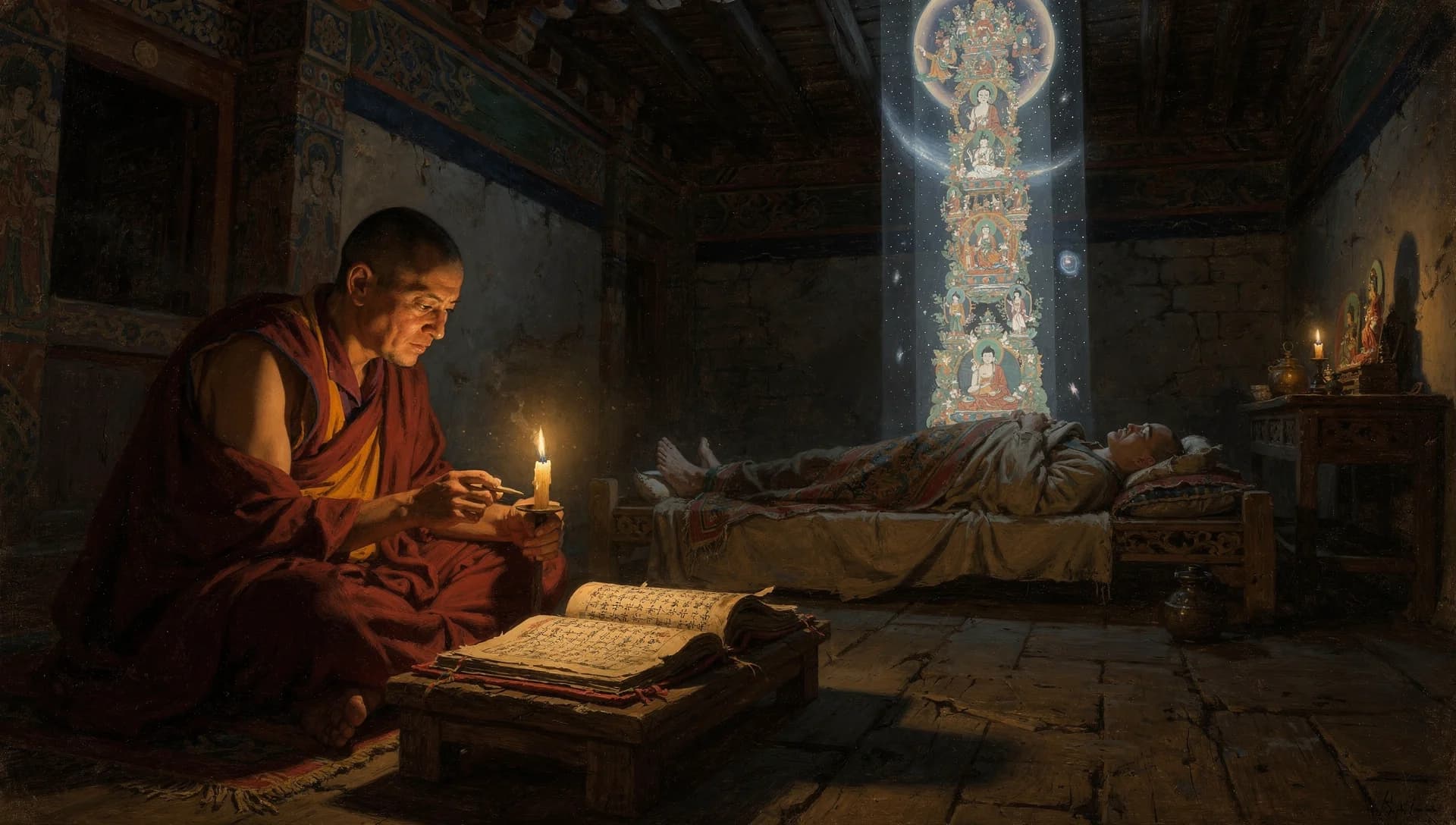
Staged Passage Through the Intermediate State: The Bardo Thödol and the Mansion World Progression
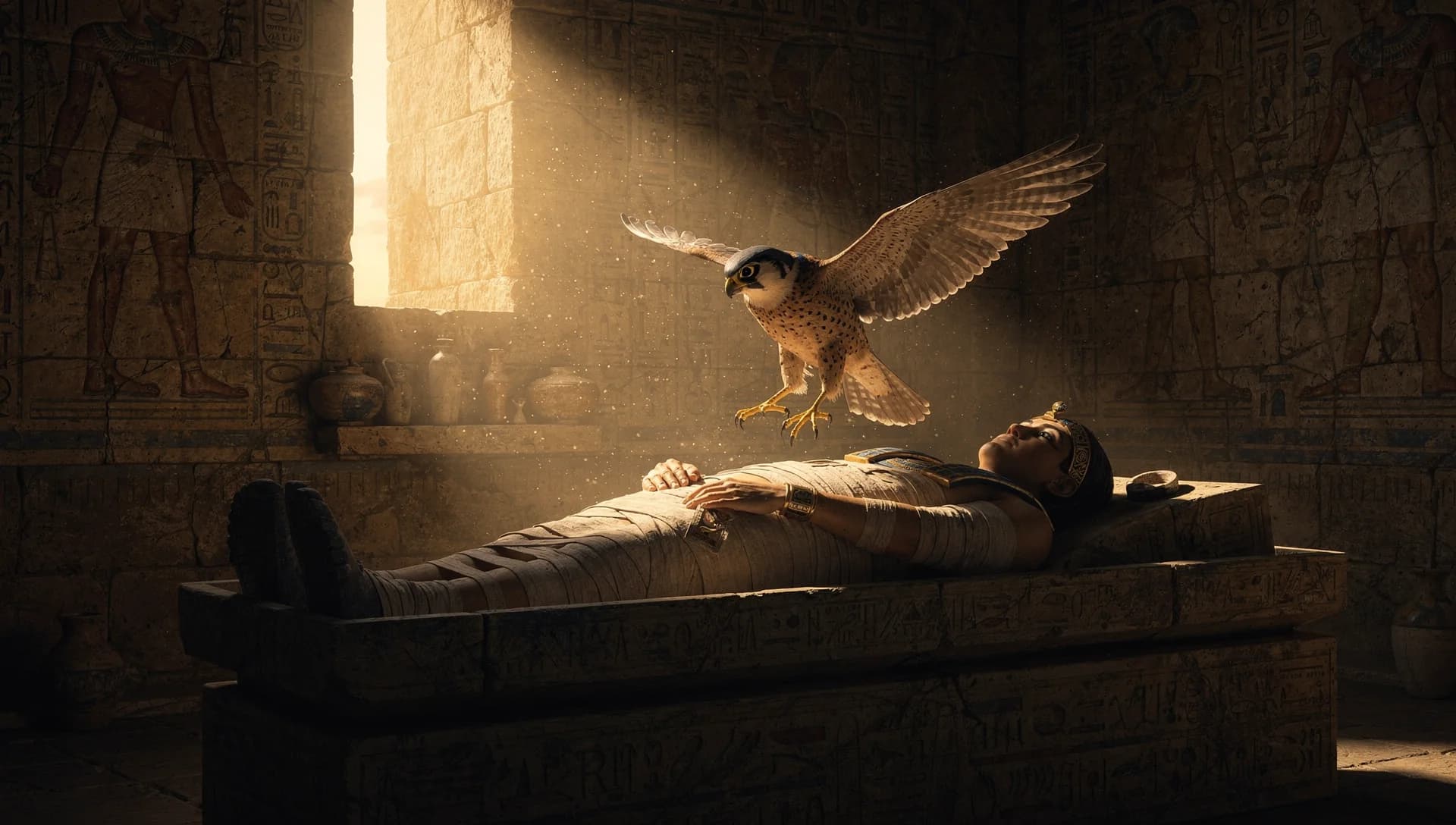
The Soul-Bird: The Egyptian Ba and the Evolving Mortal Soul
The Longest Memory: Australian Aboriginal Dreamtime and the Primordial Teaching-Ancestors
The Final Adjudication: Ragnarok and the Pending Verdict
The Newsletter
Get the research behind each piece
Free. New Urantia Book explorations, the sources behind the videos, and early looks. No spam, unsubscribe anytime.
Prefer video? Follow on YouTube and Facebook.
Delivered through Substack. You can also read past issues.