
The Final Adjudication: Ragnarok and the Pending Verdict
Norse prophecy ends with Ragnarok: the released rebel, the final battle, the old order destroyed, a new world emerging from the sea. The Urantia Book describes a specific pending administrative event in the local universe: the final adjudication of the Lucifer rebellion at Uversa, which will resolve the cosmic account and inaugurate a new planetary era. The two prophetic traditions converge on the same expected resolution.
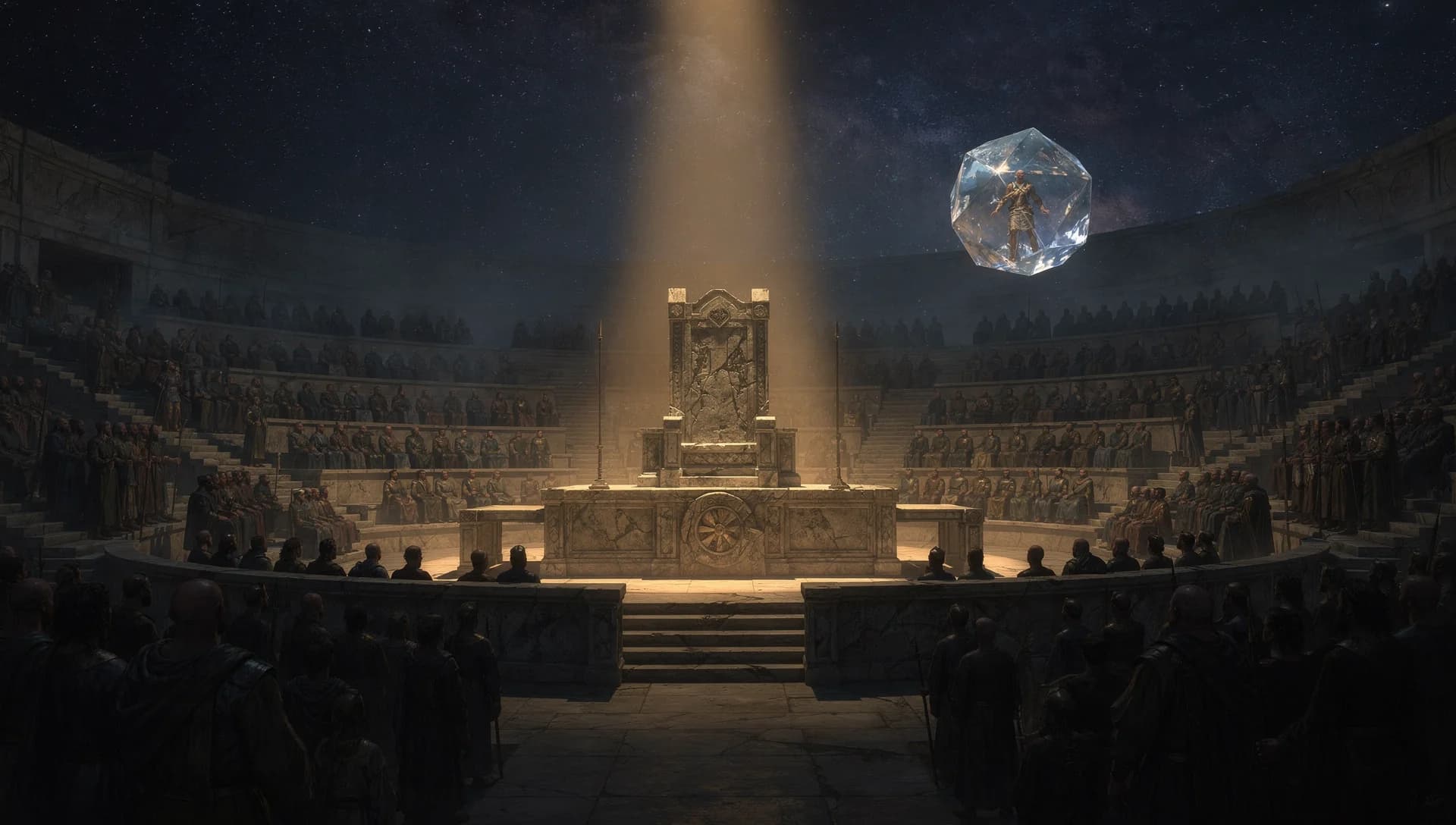
Michael's final adjudication of the Lucifer rebellion = Ragnarok, the twilight of the gods and the renewal of the world
This article expands on the decoder mapping. For the side-by-side card and quick reference, see the mapping page.
The Prophecy Both Traditions Preserve
Ragnarok is one of the most detailed eschatological visions in any ancient religious literature. Unlike many apocalyptic traditions that offer general images of cosmic ending, the Norse prophecy gives a sequenced event list: the binding of Loki breaks, the wolves pursue the sun and moon, the stars fall from the sky, the earth shakes, the sea rises, Jörmungandr the world-serpent emerges, the hosts of chaos march on the gods, the final battle is fought at Vígríðr, the principal Aesir are slain in single combat with their corresponding adversaries, the world burns, and then a new world rises green and purified from the sea, inhabited by a small remnant of surviving gods and two human survivors who will repopulate the earth.
The Urantia Book describes a specific pending administrative event that, while considerably more compressed in narrative detail, shares the same structural core. The structural match across the Norse prophetic tradition, the Christian Revelation tradition, and the Urantia revelation establishes that three independent sources preserve substantially the same expected cosmic resolution.
What the Urantia Book Says
The present situation of the Lucifer rebellion is described as pending:
"Michael, upon assuming the supreme sovereignty of Nebadon, petitioned the Ancients of Days for authority to intern all personalities concerned in the Lucifer rebellion pending the rulings of the superuniverse tribunals in the case of Gabriel vs. Lucifer, placed on the records of the Uversa supreme court almost two hundred thousand years ago, as you reckon time." (UB 53:9.3)
"We do not look for a removal of the present Satania restrictions until the Ancients of Days make final disposition of the archrebels. The system circuits will not be reinstated so long as Lucifer lives. Meantime, he is wholly inactive." (UB 53:9.6)
The expected final resolution has these features:
"We await the flashing broadcast that will deprive these traitors of personality existence. We anticipate the verdict of Uversa will be announced by the executionary broadcast which will effect the annihilation of these interned rebels." (UB 53:9.7)
"But for ages the seven prison worlds of spiritual darkness in Satania have constituted a solemn warning to all Nebadon, eloquently and effectively proclaiming the great truth 'that the way of the transgressor is hard'; 'that within every sin is concealed the seed of its own destruction'; that 'the wages of sin is death.'" (UB 53:9.8)
The planetary consequences of the adjudication include the eventual integration of Urantia into the normal regulatory circuits of the local system, the lifting of the rebellion-era quarantine, and the beginning of Urantia's progression toward the settled stages of light and life. Paper 54 and Paper 55 develop these expected post-adjudication developments in detail.
The fate of the rebel leaders themselves includes a choice structure. Michael extended mercy; the leaders refused:
"The last act of Michael before leaving Urantia was to offer mercy to Caligastia and Daligastia, but they spurned his tender proffer." (UB 53:8.6)
"Early in the days of the Lucifer rebellion, salvation was offered all rebels by Michael. To all who would show proof of sincere repentance, he offered, upon his attainment of complete universe sovereignty, forgiveness and reinstatement in some form of universe service. None of the leaders accepted this merciful proffer. But thousands of the angels and the lower orders of celestial beings, including hundreds of the Material Sons and Daughters, accepted the mercy proclaimed by the Panoptians and were given rehabilitation at the time of Jesus’ resurrection nineteen hundred years ago." (UB 53:9.1)
The expected adjudication therefore has a definite structural shape: the case has been pending before the superuniverse tribunals for nearly two hundred thousand years, the archrebels have declined the offered mercy, and the final verdict is expected to effect their annihilation via executionary broadcast. The planetary cosmic situation will then transition to a new era.
What the Ancient Source Says
The Ragnarok prophecy is preserved principally in the Völuspá of the Poetic Edda and in the Prose Edda's Gylfaginning 51-53. The Völuspá 45-66 gives the poetic version:
"The giants' ship glides from the east, Loki steers, with the sons of Muspell; all the raven-black hosts come with the wolf and with them Byleist's brother.
What news of the Aesir? What news of the elves? All Jötunheim groans. The Aesir are at council. The dwarves stand before their stone doors, the wise walls of the mountain. Do you know yet, or what?"
The narrative continues through the principal confrontations: Odin against the wolf Fenrir (Odin is killed; Víðarr avenges him by killing the wolf). Thor against Jörmungandr the world-serpent (both kill each other). Tyr against the hound Garmr (both kill each other). Freyr against the giant Surt (Freyr is killed; Surt's fire burns the world). The world is consumed by flame, then sinks into the sea, then rises again:
"She sees, coming up a second time, the earth from the ocean, eternally green; waterfalls plunge, eagle flies above, catching fish on the mountain."
A small remnant survives: Víðarr and Váli among the original Aesir, the sons of Thor (Magni and Móði) who inherit their father's hammer, Baldr and Höðr returning from the dead, and two human survivors (Líf and Lífthrasir) who will repopulate the earth.
Ursula Dronke's edition of the Völuspá (Oxford University Press, 1997) is the standard modern scholarly reference. E. O. G. Turville-Petre's Myth and Religion of the North (Holt, Rinehart and Winston, 1964) traces the mythological structure. John Lindow's Norse Mythology (2001) treats the comparative context.
The structural features of the Ragnarok prophecy include:
First, a triggering event (the release of the bound rebel Loki). Second, a sequenced cosmic breakdown (earthquakes, sea-rise, stars falling, sun darkening). Third, a final battle between the released hosts of chaos and the defending Aesir. Fourth, the cosmic destruction of the old order. Fifth, the renewal of the world with a small surviving remnant.
The Christian Revelation apocalyptic shares the same structural sequence (release of the dragon, final battle, destruction of the old heavens and earth, new heavens and new earth with a surviving remnant). The Urantia account, in its administrative-cosmic register, describes the expected executionary broadcast, the annihilation of the interned rebels, the lifting of the quarantine, and the new planetary era.
Why This Mapping Matters
Three independent ancient traditions (Norse, Christian, and Zoroastrian-derived apocalyptic more broadly) preserve substantially the same eschatological structural sequence. The Urantia Book, writing in a twentieth-century revelatory register, describes a specific pending administrative event in the local universe government whose structural shape matches the ancient prophetic traditions.
The convergence is too exact to reflect coincidence. Eschatological structures are not universally distributed; most religious traditions do not have the sequence that Norse Ragnarok, Christian Revelation, and the Urantia adjudication all share. The shared structure requires a common causal substrate.
The Urantia Book's account provides the substrate. The Lucifer rebellion is an actual historical event in the Satania administrative system. The final adjudication is a specific pending tribunal case at Uversa, the superuniverse capital. The expected resolution has administrative content (executionary broadcast, annihilation of interned rebels, quarantine lifting, new planetary era). This is not mythological content in the Urantia account; it is the contemporary administrative situation the revelation describes.
If the Urantia account is historical, then the Norse Ragnarok prophecy and the Christian Revelation apocalyptic are not free-standing mythological constructions. They are preservations of the deep human cultural memory of the actual pending cosmic event. The memory has been transmitted across the millennia in various cultural forms, elaborated with local mythological content (named figures, geographic settings, narrative details), but structurally consistent with the underlying administrative reality.
The theological consequence is substantial. The Norse tradition's expectation of a final cosmic reckoning is not a myth of cyclical destruction or a post-Christian imposition or a Romantic-nationalist invention. It is the Germanic-Norse preservation of the same cosmic expectation that the Christian apocalyptic tradition preserves in its own cultural form and that the Urantia revelation articulates in its administrative register. All three are carrying forward the memory of a real future event.
The practical consequence for the contemporary reader is that reading Ragnarok or Revelation through the Urantia framework is not an arbitrary cross-cultural exercise. It is reading two preservations of the same anticipated cosmic resolution alongside the revelation that names the administrative mechanism by which the resolution will actually occur.
Sources
- The Urantia Book, Paper 53 (The Lucifer Rebellion), Paper 54 (Problems of the Lucifer Rebellion). Urantia Foundation, first printing 1955. Cited passages: 53:8.6, 53:9.1, 53:9.3, 53:9.6, 53:9.7, 53:9.8.
- Dronke, Ursula, editor and translator. The Poetic Edda, Volume II: Mythological Poems. Oxford University Press, 1997. Völuspá.
- Sturluson, Snorri. The Prose Edda. Translated by Jesse L. Byock. Penguin, 2005. Gylfaginning 51-53.
- Lindow, John. Norse Mythology: A Guide to Gods, Heroes, Rituals, and Beliefs. Oxford University Press, 2001.
- Turville-Petre, E. O. G. Myth and Religion of the North: The Religion of Ancient Scandinavia. Holt, Rinehart and Winston, 1964.
- Simek, Rudolf. Dictionary of Northern Mythology. Translated by Angela Hall. D. S. Brewer, 1993.
- Collins, John J. The Apocalyptic Imagination: An Introduction to Jewish Apocalyptic Literature. Third edition, Eerdmans, 2016.
- Boyce, Mary. Zoroastrians: Their Religious Beliefs and Practices. Second edition, Routledge, 2001.
Confidence and Evidence
- Confidence: INFORMED SPECULATION
- Evidence rating: STRONG
- Basis: The structural convergence of three independent eschatological traditions (Norse Ragnarok, Christian Revelation, Urantia adjudication) on substantially the same sequence (rebel release, final battle, cosmic destruction, renewal with remnant) is close enough to require a common causal substrate. The Urantia Book's account of the pending Lucifer adjudication supplies a historical-administrative substrate consistent with being the common source.
Related Decoder Articles
- Lucifer Binding = Loki Binding Beneath the Earth
- Caligastia = Loki, the Insider Trickster
- The Staff Split = Aesir-Vanir War
By Derek Samaras
Connecting Articles
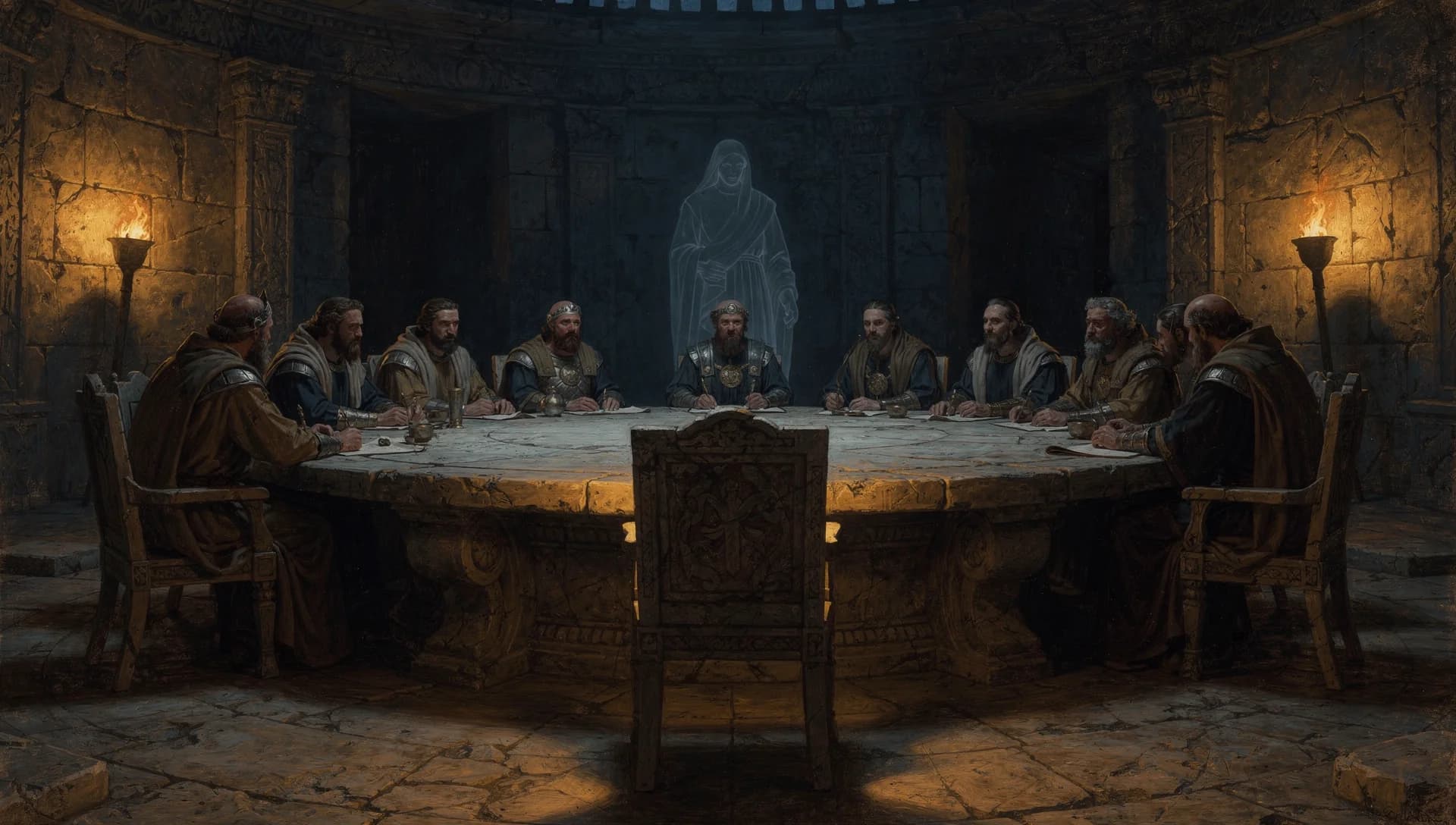
The Insider Who Betrayed: Caligastia and the Norse Loki
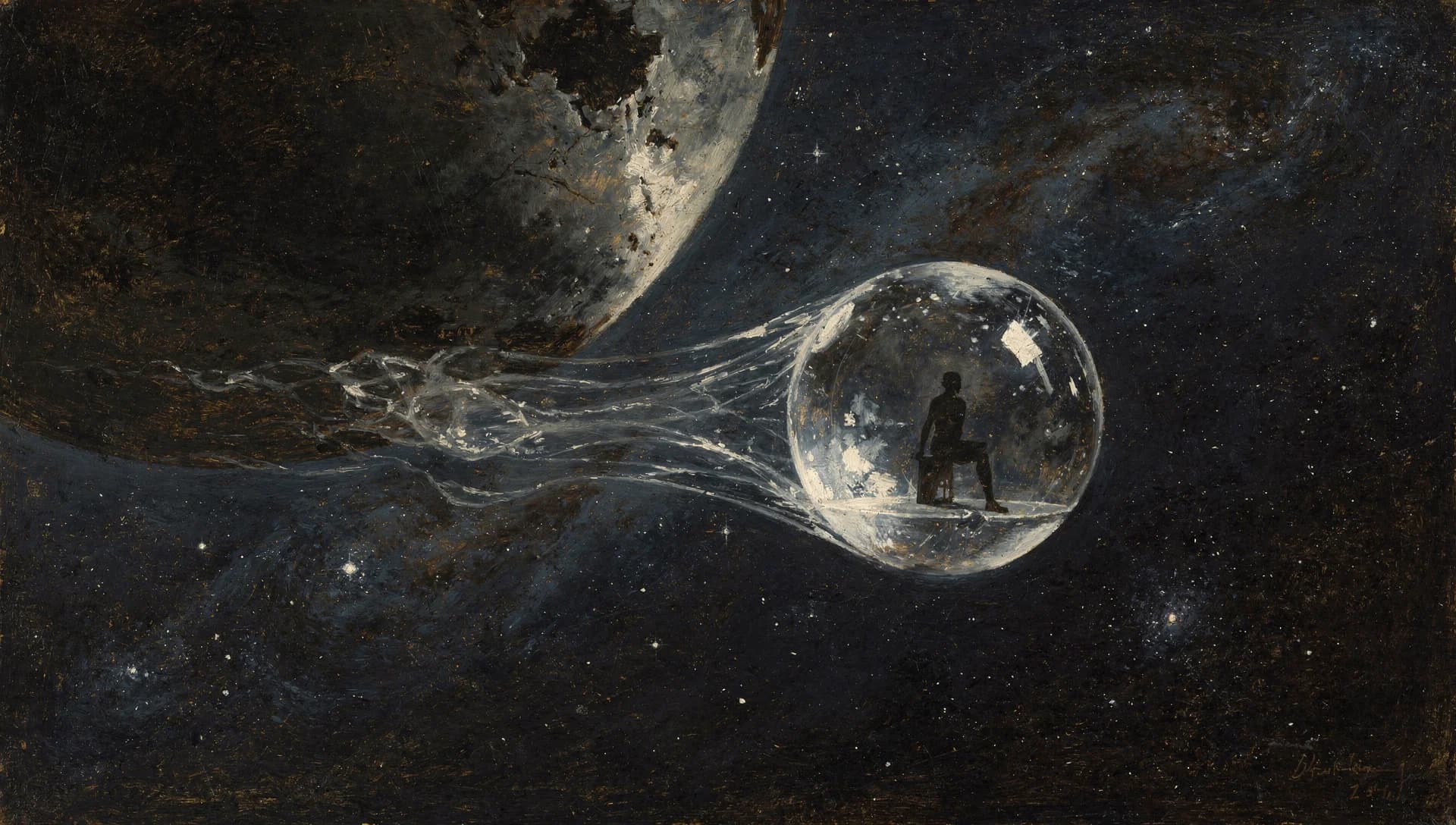
The Bound Rebel: Lucifer Interned and Loki in the Cave
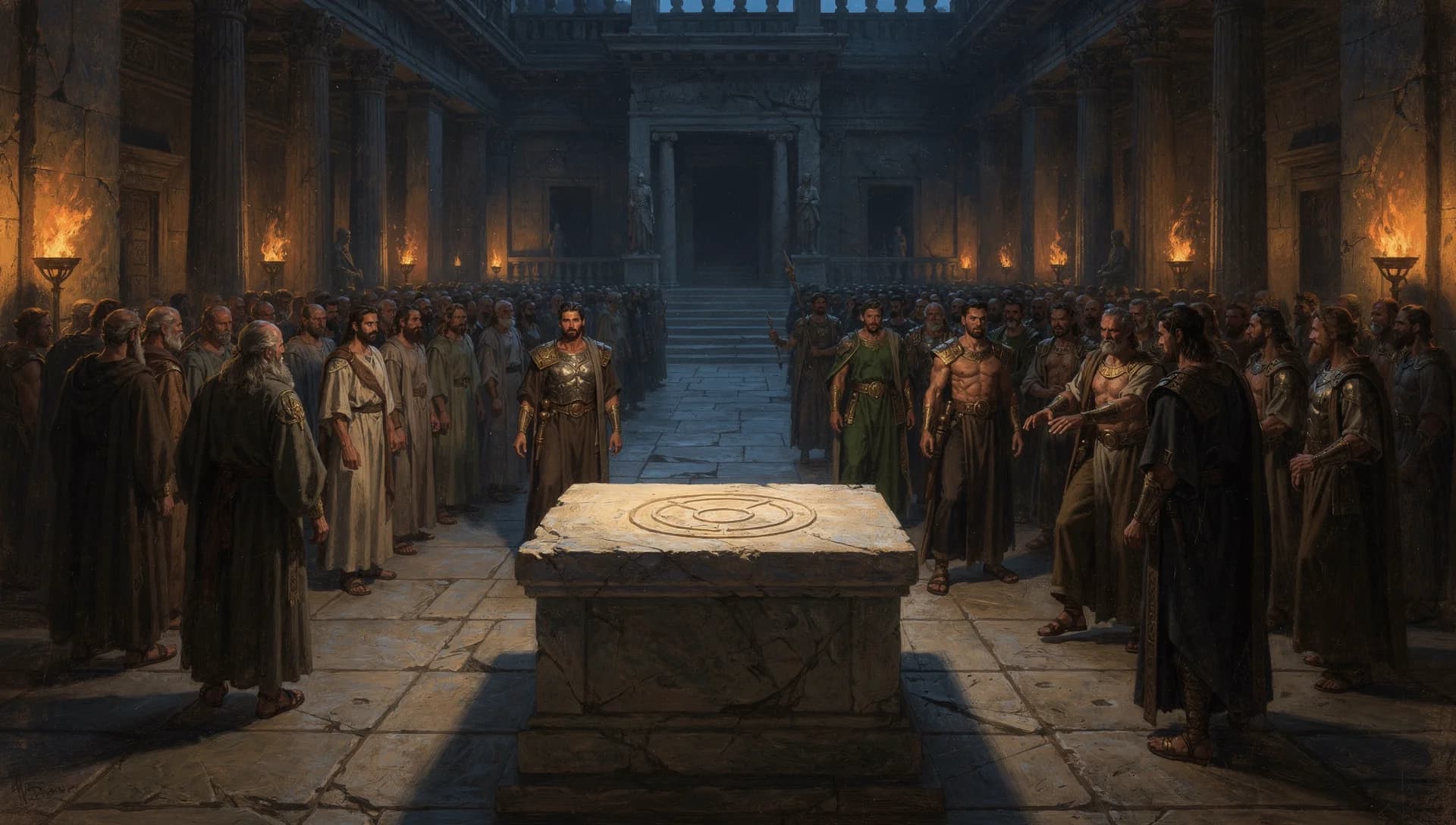
The First War Among the Gods: The Staff Split and the Aesir-Vanir Conflict
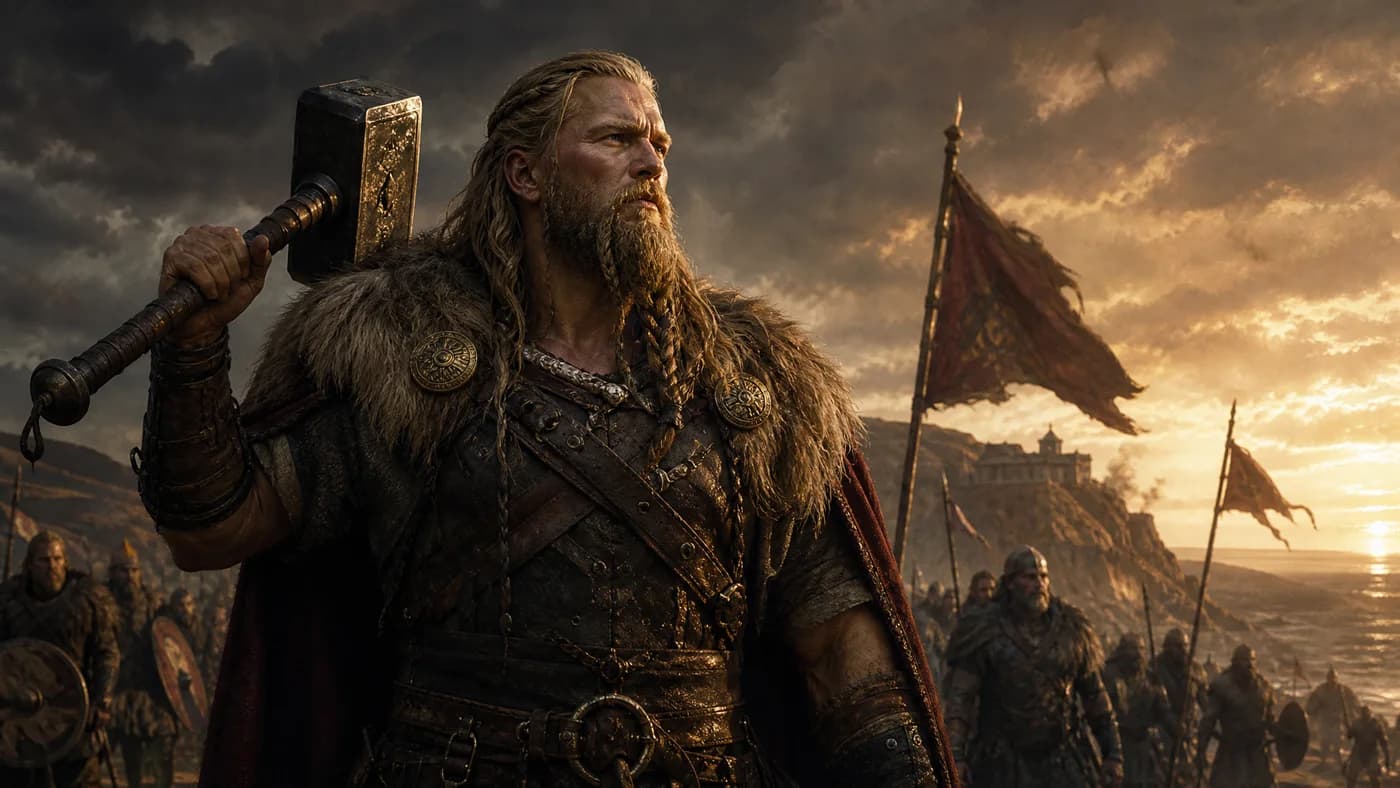
The Hero Who Became a God: The Historical Thor of the Somme
The Newsletter
Get the research behind each piece
Free. New Urantia Book explorations, the sources behind the videos, and early looks. No spam, unsubscribe anytime.
Prefer video? Follow on YouTube and Facebook.
Delivered through Substack. You can also read past issues.