
The Vow to Stay: Bodhisattva Ideal and the Salem Missionary Commission
The Mahayana Buddhist tradition is centered on the Bodhisattva vow: the commitment of an enlightened being to postpone final liberation until every sentient being has been awakened. The Urantia Book records the same structural commission: the Salem missionary organization's directive to carry the gospel to every people. The structural match is specific: spiritual attainment understood as communal responsibility rather than individual achievement.
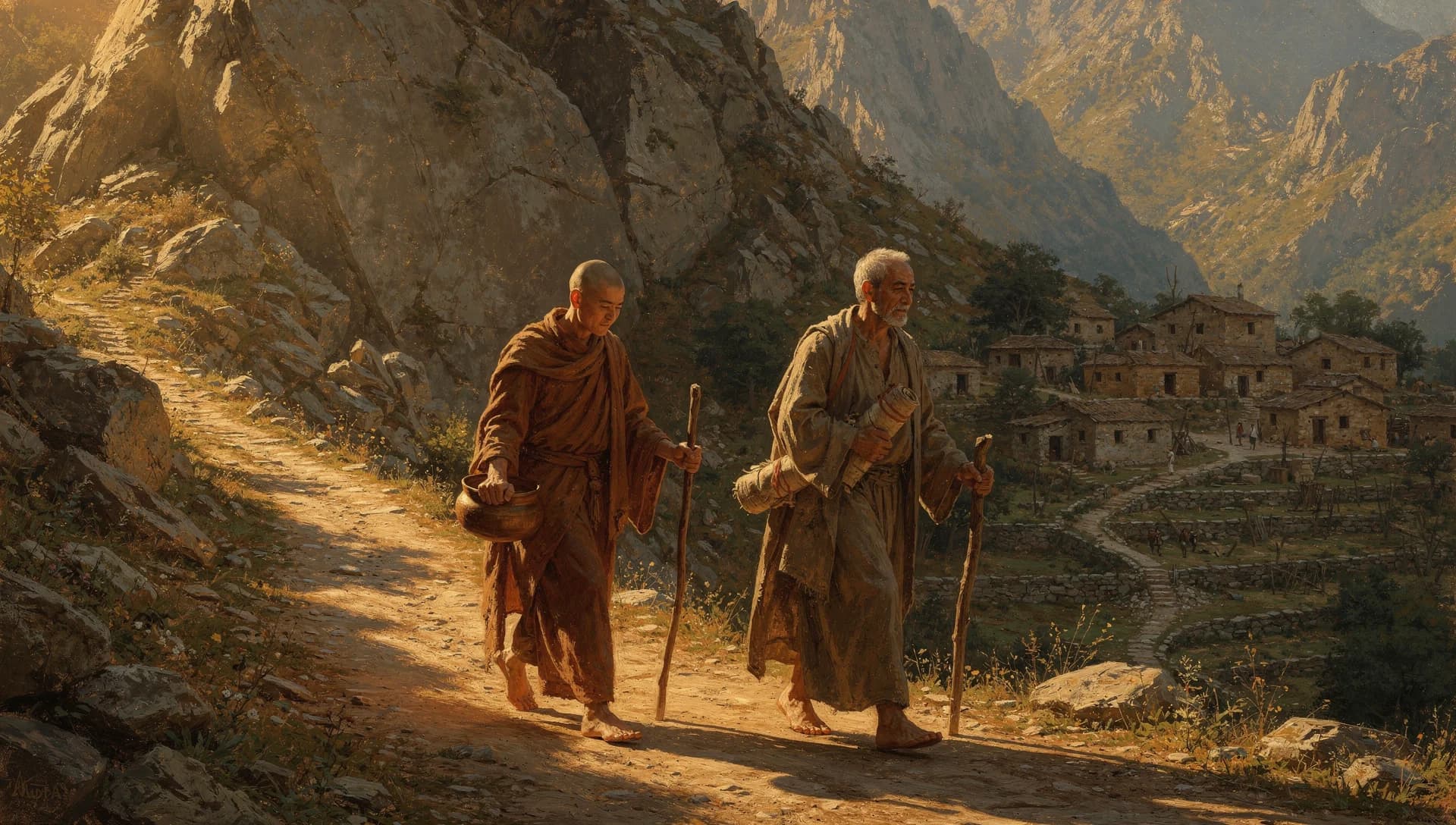
Salem missionary commission: to carry the gospel to every people = Bodhisattva vow: to delay nirvana until all beings are liberated
This article expands on the decoder mapping. For the side-by-side card and quick reference, see the mapping page.
The Structural Match
The Mahayana Buddhist Bodhisattva ideal is one of the most theologically distinctive features in world religious history. The commitment of an enlightened being (a bodhisattva) to postpone final nirvana until every sentient being has been liberated transforms Buddhism from a primarily individual-liberation framework into a communal-responsibility framework. The vow is precisely formulated: the bodhisattva will not enter final liberation while any being remains unawakened.
The Urantia Book records a structurally parallel commission: the Salem missionary organization, operating under Machiventa Melchizedek's authority, was directed to carry the gospel to every people of the earth. The commission was not merely evangelistic; it was ordered as a communal-responsibility framework in which spiritual knowledge was to be shared with every human population without exception.
The structural match is close enough to note: spiritual attainment understood as requiring the awakening of others rather than the private liberation of the attainer, with the attainer committed to the task of that awakening as the outworking of their own realization.
What the Urantia Book Says
The Salem missionary commission is described across Paper 93 and Paper 94. The foundational commission is given:
"Melchizedek continued for some years to instruct his students and to train the Salem missionaries, who penetrated to all the surrounding tribes, especially to Egypt, Mesopotamia, and Asia Minor. And as the decades passed, these teachers journeyed farther and farther from Salem, carrying with them Machiventa’s gospel of belief and faith in God." (UB 93:7.1)
The universal scope is named:
"The many religions of Urantia are all good to the extent that they bring man to God and bring the realization of the Father to man. It is a fallacy for any group of religionists to conceive of their creed as The Truth; such attitudes bespeak more of theological arrogance than of certainty of faith. There is not a Urantia religion that could not profitably study and assimilate the best of the truths contained in every other faith, for all contain truth. Religionists would do better to borrow the best in their neighbors’ living spiritual faith rather than to denounce the worst in their lingering superstitions and outworn rituals." (UB 92:7.3)
The commission extended across centuries and continents:
"From Palestine some of the Melchizedek missionaries passed on through Mesopotamia and to the great Iranian plateau. For more than five hundred years the Salem teachers made headway in Iran, and the whole nation was swinging to the Melchizedek religion when a change of rulers precipitated a bitter persecution which practically ended the monotheistic teachings of the Salem cult." (UB 95:6.1)
The documented migrations included the Egyptian mission (treated in the Ikhnaton and Amenemope decoder articles), the Iranian mission (treated in the Zoroaster articles), the Indian mission (treated in the Gautama and Brahman articles), the Chinese mission (treated in the Lao-tse articles), and the European mission (treated in the Cynics article). The commission was genuinely universal: no culture was to be excluded from the invitation to receive the Salem gospel.
The feature the commission shares with the Bodhisattva vow is the structural reframing of spiritual attainment. An individual Salem missionary's own relationship with Machiventa's gospel was not treated as private personal achievement; it was understood as equipping the missionary for the communal task of carrying the gospel onward. The missionaries operated under an institutional commitment that paralleled the Bodhisattva structure: their realization obligated them to the work of bringing others into the same realization.
What the Ancient Sources Say
The Bodhisattva ideal developed across Mahayana Buddhism in the first centuries CE. The Prajnaparamita literature (Perfection of Wisdom sutras) and the Lotus Sutra are among the foundational texts. Paul Williams's Mahayana Buddhism: The Doctrinal Foundations (Routledge, second edition 2009) provides the comprehensive modern scholarly treatment.
The features of the Bodhisattva ideal include:
First, the generation of bodhicitta (the awakened mind that aspires to enlightenment for the sake of all beings). The bodhisattva-path begins with the aspiration: to attain Buddhahood for the benefit of all beings.
Second, the six paramitas (perfections): generosity, moral discipline, patience, joyful effort, meditative concentration, wisdom. The bodhisattva cultivates these perfections across vast spans of incarnational practice.
Third, the ten bhumis (stages) of the bodhisattva path, each representing progressive attainments in wisdom and compassionate action.
Fourth, the commitment to delay final nirvana. The bodhisattva could enter final liberation but chooses not to, remaining in the cycle of rebirth to serve the liberation of others. This feature distinguishes Mahayana soteriology from Theravada soteriology (in which the arhat's achievement of final liberation is the principal goal).
Fifth, the cosmic-scale bodhisattva figures (Avalokiteshvara, Manjushri, Samantabhadra, Kshitigarbha) who serve as objects of devotional practice and as models of the bodhisattva ideal's ultimate fulfillment.
The scholarly question of when and how the Bodhisattva ideal emerged has generated substantial literature. Jan Nattier's A Few Good Men: The Bodhisattva Path According to The Inquiry of Ugra (University of Hawai'i Press, 2003) argues for earlier origins than conventionally assumed. The common scholarly view is that the ideal crystallized between the first century BCE and the first century CE, emerging from earlier Buddhist reflection on the Buddha's own career and his compassionate commitment to teaching rather than withdrawing into silent enlightenment.
The parallel to the Salem missionary commission has not been developed in standard comparative religious scholarship. The Urantia Book's identification of the structural parallel is novel. What is well-documented in academic work is the distinctiveness of the Mahayana communal-responsibility framework compared to other world religious soteriologies. The bodhisattva ideal is not a generic mystical universal; it is a Mahayana development with few structural precedents in non-Mahayana religious traditions.
The Salem missionary tradition, as the Urantia Book describes it, would be one of those few precedents. The structural match (spiritual attainment reframed as communal obligation to share the attainment with others) is close enough to note, and the Urantia framework's identification of the Mahayana tradition as a substantial preservation of Salem-derived material (treated in the companion Gautama-Salem and Buddhism-godless-philosophy articles) supplies the plausible transmission mechanism.
Why This Mapping Matters
The Bodhisattva ideal is one of Mahayana Buddhism's distinctive theological contributions and one of the features that gives Mahayana its characteristic ethical orientation toward active engagement with the world. The ideal shapes not only Mahayana soteriology but also Mahayana ethics, political theology, and practical religious life. Contemporary engaged Buddhism (from Thich Nhat Hanh to the Dalai Lama's social teachings) operates within the bodhisattva framework.
The Urantia Book's identification of the structural parallel to the Salem missionary commission places the bodhisattva ideal within a genealogical framework. The ideal is not a distinctively Buddhist innovation; it is a Mahayana reformulation of a structural commitment that the Salem Melchizedek tradition had originally introduced. The Mahayana tradition preserved this structural commitment even as it lost the theistic framework in which Salem had originally presented it.
This has consequences for how the bodhisattva ideal should be read in comparative religious contexts. It shares structural features with the Christian missionary mandate ("Go therefore and make disciples of all nations"), with the Jewish prophetic universalism of Deutero-Isaiah ("a light to the nations"), and with the specifically Salem missionary framework that underlies all of these. The common structural core is the reframing of spiritual attainment as communal responsibility.
The mapping also has practical implications for contemporary interfaith work. Mahayana Buddhists and Christians share more structural theology than either tradition typically recognizes. The bodhisattva vow and the Christian missionary mandate are not competing religious frameworks; they are parallel preservations of the same Salem-derived communal-responsibility structure. Recognizing this allows especially fruitful dialogue and shared work that the conventional religious-competition framing obscures.
The mapping's broader significance is that it identifies the Salem missionary tradition as a continuing influence on world religious development in structural as well as content terms. The Salem tradition contributed theological content (monotheism, the Seven Master Spirits, the personal God-relationship) to downstream traditions, and it also contributed structural frameworks (the communal-responsibility framing of spiritual attainment, the missionary institutional form, the universal-scope evangelism). Both kinds of contribution persist in downstream traditions even when the content itself is lost or reformulated.
Sources
- The Urantia Book, Paper 93 (Machiventa Melchizedek), Paper 94 (The Melchizedek Teachings in the Orient), Paper 95 (The Melchizedek Teachings in the Levant). Urantia Foundation, first printing 1955. Cited passages: 93:7.1, 94:0.1, 95:6.1.
- Williams, Paul. Mahayana Buddhism: The Doctrinal Foundations. Second edition, Routledge, 2009.
- Nattier, Jan. A Few Good Men: The Bodhisattva Path According to The Inquiry of Ugra. University of Hawai'i Press, 2003.
- Ray, Reginald A. Buddhist Saints in India: A Study in Buddhist Values and Orientations. Oxford University Press, 1994.
- Shantideva. The Bodhicaryavatara: A Guide to the Buddhist Path to Awakening. Translated by Kate Crosby and Andrew Skilton. Oxford University Press, 1996.
- Conze, Edward. The Large Sutra on Perfect Wisdom. University of California Press, 1975.
- Harvey, Peter. An Introduction to Buddhist Ethics. Cambridge University Press, 2000.
Confidence and Evidence
- Confidence: INFORMED SPECULATION
- Evidence rating: MODERATE
- Basis: The Urantia Book documents the Salem missionary commission and its communal-universal character directly in Paper 93:7 and related passages. The Mahayana Bodhisattva ideal is distinctive among world religious soteriological frameworks. The structural parallel (spiritual attainment as communal responsibility) is close enough to note. The transmission mechanism (Salem-derived Mahayana material) is consistent with the broader Urantia framework for Buddhism's development.
Related Decoder Articles
- Salem Gospel Almost Revived in India = Gautama Siddhartha
- Best Godless Philosophy on the Planet = Buddhism
- The Mansion Worlds = Pure Land Buddhism
By Derek Samaras
Connecting Articles
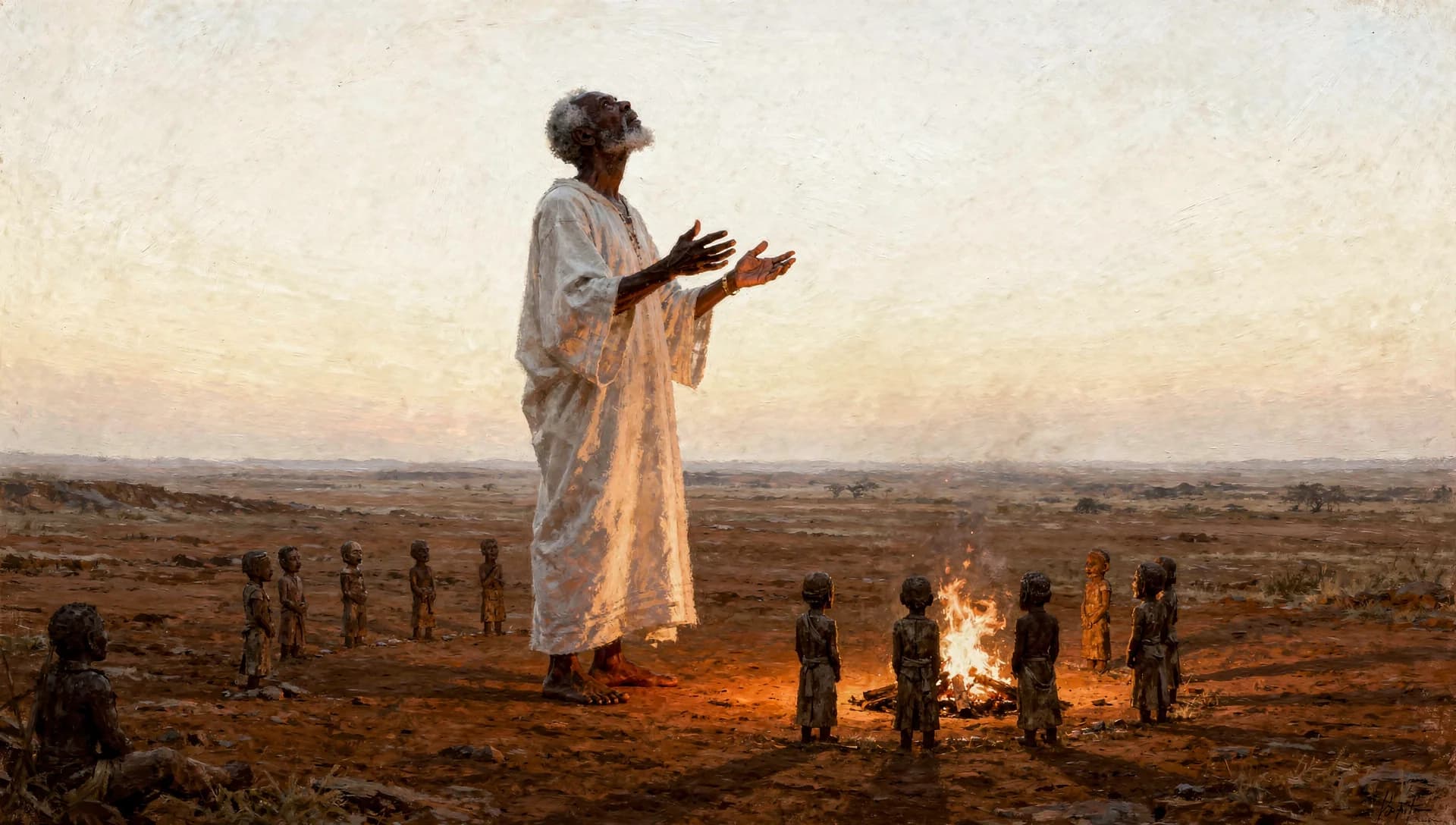
The Sky God Who Withdrew: African High-God Traditions and the Salem Teaching Layer
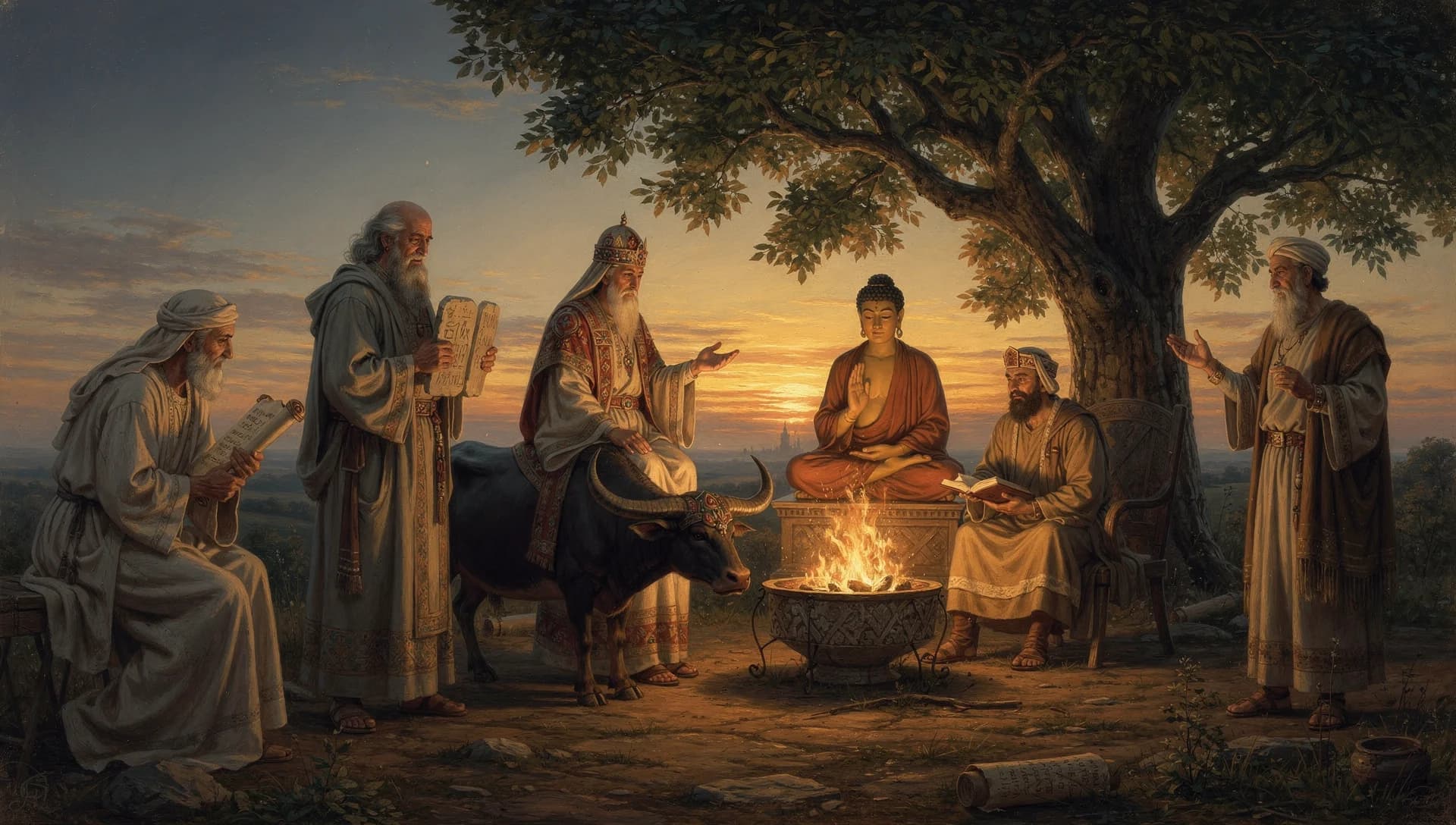
Seven Teachers, One Preparation: The Axial Age and the Salem Continuity
The Primordial Teacher Before Buddha: Tonpa Shenrab, Yungdrung Bön, and the Salem Layer in Tibetan Religion
The Good God of Ireland: Dagda and the Salem High-God Imprint
The Newsletter
Get the research behind each piece
Free. New Urantia Book explorations, the sources behind the videos, and early looks. No spam, unsubscribe anytime.
Prefer video? Follow on YouTube and Facebook.
Delivered through Substack. You can also read past issues.