
The Soul-Bird: The Egyptian Ba and the Evolving Mortal Soul
Where the Egyptian Ka is the divine spirit-double bestowed at birth, the Ba is something different: the evolving experiential aspect of the person, depicted as a human-headed bird that flies between worlds after death. The Urantia Book identifies this distinction as a precise ancient anticipation of the relationship between the Thought Adjuster and the morontia soul.
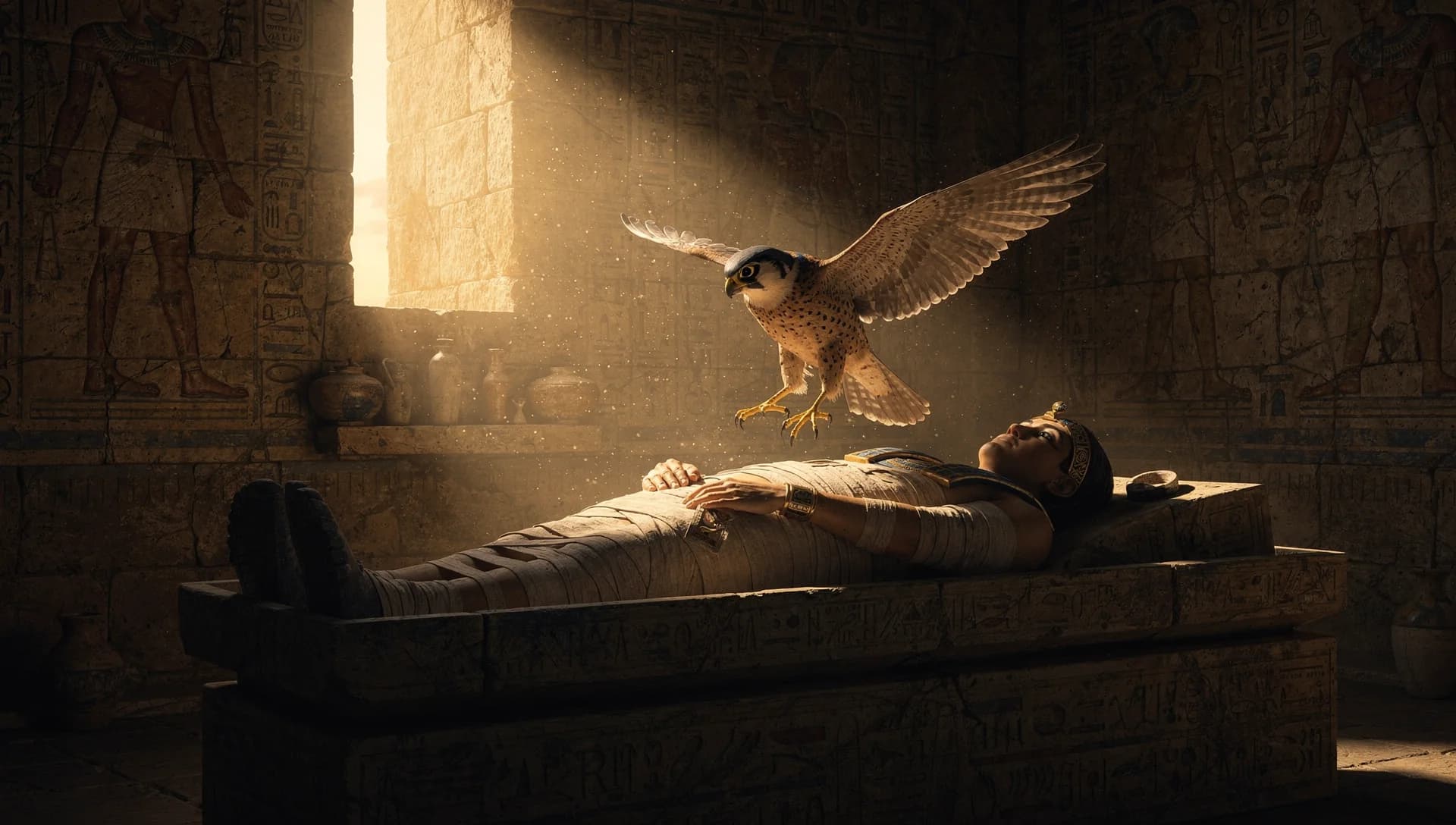
Evolving mortal soul = Egyptian Ba, the soul-bird
This article expands on the decoder mapping. For the side-by-side card and quick reference, see the mapping page.
The Second of Two Inner Realities
Egyptian religious anthropology distinguished two inner realities, not one. The Ka, treated in the companion decoder article, is the divine spirit-double bestowed at birth by the creator god. The Ba is something else: the experiential aspect of the person, depicted iconographically as a small bird with a human head, capable of movement between the realm of the living and the realm of the dead.
The distinction is unusual and theologically precise. Most ancient religions, including the Hindu Upanishadic tradition that is otherwise nearest to the Urantia account, collapsed the inner divine presence and the personal soul into a single concept (atman). Egyptian theology kept them separate. The divine gift and the evolving personal reality are two different things.
The Urantia Book's account of what survives mortal death distinguishes the same two realities under the names Thought Adjuster and morontia soul, and credits the Egyptian Ba concept with partial anticipation of the latter.
What the Urantia Book Says
The comparative statement in Paper 111 places the Egyptian Ka-Ba distinction alongside the Chinese yang-yin and contrasts both with the Hindu conflation:
"In the conception of the atman the Hindu teachers really approximated an appreciation of the nature and presence of the Adjuster, but they failed to distinguish the copresence of the evolving and potentially immortal soul. The Chinese, however, recognized two aspects of a human being, the yang and the yin, the soul and the spirit. The Egyptians and many African tribes also believed in two factors, the ka and the ba; the soul was not usually believed to be pre-existent, only the spirit." (UB 111:0.4)
The two-reality structure is the structural feature the Urantia Book is crediting. Where Hindu philosophy had one inner reality (atman = Brahman), Egyptian theology had two (ka and ba). The two-reality structure is the structure the Urantia revelation confirms as correct.
The evolving soul is developed throughout Paper 111 as a specific theological entity distinct from the indwelling Adjuster:
"THE presence of the divine Adjuster in the human mind makes it forever impossible for either science or philosophy to attain a satisfactory comprehension of the evolving soul of the human personality. The morontia soul is the child of the universe and may be really known only through cosmic insight and spiritual discovery." (UB 111:0.1)
The soul is described as co-created. It is not a pre-existing reality that descends into the body; it is not a natural emergent of embodied life; it is not the indwelling Adjuster itself. It is a new reality born in the co-operation between the Adjuster and the mortal mind:
"Though the work of Adjusters is spiritual in nature, they must, perforce, do all their work upon an intellectual foundation. Mind is the human soil from which the spirit Monitor must evolve the morontia soul with the co-operation of the indwelt personality." (UB 111:1.1)
The soul's capacity for movement between realms is preserved in the Urantia morontia doctrine: the surviving soul transitions through the mansion worlds, the constellation and universe capitals, the superuniverse, Havona, and finally Paradise. Movement between realms is one of the defining features of the morontia soul's career. The Egyptian Ba's iconography of movement between the realm of the living and the realm of the dead preserves exactly this feature, compressed into a binary structure (here vs. hereafter) but structurally correct.
The note in Paper 111:0.4 that the soul was not usually believed to be pre-existent, only the spirit, identifies where the Egyptian tradition got it right. The Urantia Book's morontia soul is not preexistent; it is born through the co-operation of Adjuster and mortal mind. The Egyptian Ba tradition matched this structure: the ka (spirit) was treated as the preexistent divine gift, while the ba (soul) was the evolving experiential reality that came into being through the lived life.
What the Ancient Source Says
The Ba concept is attested from the Old Kingdom onward and receives its most developed treatment in the Book of the Dead and related funerary literature. Louis V. Žabkar's A Study of the Ba Concept in Ancient Egyptian Texts (University of Chicago Press, 1968) remains the principal modern monograph. Jan Assmann's Death and Salvation in Ancient Egypt (Cornell University Press, 2005) treats the Ba in the context of the full Egyptian anthropology.
Several features of the Ba are well documented. First, the Ba is depicted as a small bird with a human head, often with human arms. The iconography appears on coffin lids, stelae, tomb paintings, and funerary papyri from the Middle Kingdom through the Roman period. The motif of a human head on a bird is distinctive; no other Egyptian religious concept is rendered this way.
Second, the Ba is mobile. Tomb texts repeatedly describe the Ba leaving the tomb, flying above the landscape, visiting the sun, and returning to the body. The mobility is intrinsic to the concept; a Ba that cannot move is a Ba that has failed. The per-em-hru ("Coming Forth by Day," the Egyptian title of what modern scholarship calls the Book of the Dead) is organized around the Ba's capacity for daily return from the underworld to the world of the living.
Third, the Ba is experiential. The Ba accumulates the character and memory of the person's lived life. The Ba of a wise person is a wise Ba. The Ba of a cruel person is a cruel Ba. The Ba carries forward who the person has become through their life. This experiential quality is the feature Žabkar emphasized as distinguishing the Ba from the Ka. The Ka is the bestowed gift; the Ba is the outcome of what the person made of the gift.
Fourth, the Ba's survival is contingent. A Ba that has developed properly survives; one that has not fails. The judgment scene in the Book of the Dead measures not the Ka (which is already a divine gift and does not need to be measured) but the accumulated integrity the Ba carries. The Ba's survival is the survival of the personal continuity.
Why This Mapping Matters
The Ka-Ba distinction in Egyptian theology is the clearest ancient case of a religious tradition independently arriving at the two-reality structure the Urantia Book articulates under the names Adjuster and morontia soul. The distinction did not survive into the dominant later traditions in its original form. Hellenistic Egyptian syncretism collapsed it. Christian theological vocabulary, drawing on Greek categories, did not preserve it. The modern theological vocabulary has only the single word "soul" for what the Egyptians carefully divided in two.
Recovering the distinction is important because it resolves specific theological questions that a single-soul anthropology cannot handle well. Does the individual personality survive death, or is it the indwelling divine that survives? Answer: both, but as two different realities. The Adjuster returns to the Universal Father; the morontia soul continues the ascension career. The Egyptian tradition's Ka-returns-to-Khnum and Ba-continues-as-person distinction tracks this structure.
The same distinction also handles the problem of pre-mortal existence. The Adjuster is pre-existent; it was bestowed on the mortal at a specific moment in the mortal's life, but the Adjuster itself existed before. The morontia soul is not pre-existent; it came into being through the co-operation of Adjuster and mortal mind. Paper 111:0.4 notes that the Egyptians did not usually believe the soul to be pre-existent, only the spirit, which matches the Urantia structure: two inner realities with different origins and different post-mortem trajectories.
The Urantia Book's mapping of the Ba to the evolving mortal soul preserves the Egyptian insight directly. The Ba is right in being distinguished from the Ka, and right in not being treated as pre-existent. The Ba corresponds to the morontia soul the Urantia revelation describes.
Sources
- The Urantia Book, Paper 111 (The Adjuster and the Soul). Urantia Foundation, first printing 1955. Cited passages: 111:0.1, 111:0.4, 111:1.1.
- Žabkar, Louis V. A Study of the Ba Concept in Ancient Egyptian Texts. Studies in Ancient Oriental Civilization 34, University of Chicago Press, 1968.
- Assmann, Jan. Death and Salvation in Ancient Egypt. Translated by David Lorton. Cornell University Press, 2005.
- Taylor, John H. Death and the Afterlife in Ancient Egypt. British Museum Press, 2001.
- Allen, James P., translator. The Egyptian Book of the Dead. Metropolitan Museum of Art / Chronicle Books, 2015.
- Bolshakov, Andrey O. Man and His Double in Egyptian Ideology of the Old Kingdom. Harrassowitz, 1997.
- Budge, E. A. Wallis, translator. The Egyptian Book of the Dead (The Papyrus of Ani). 1895; reprinted Dover, 1967.
Confidence and Evidence
- Confidence: UB CONFIRMED
- Evidence rating: STRONG
- Basis: The Urantia Book names the Egyptian Ba directly in Paper 111 as one of the ancient approximations of the evolving mortal soul concept. The Ka-Ba distinction preserves the two-reality structure (bestowed divine gift plus evolving experiential soul) that the Urantia revelation confirms as correct. UB 111:0.4 specifically notes that the Egyptians did not usually believe the soul to be pre-existent, only the spirit, which aligns with the Urantia teaching that the morontia soul is co-created rather than pre-existing.
Related Decoder Articles
- Thought Adjuster = Egyptian Ka, the Divine Spirit-Double
- Thought Adjuster = Atman, the Inner Self
- Salem Teaching Corrupted = Osiris and Isis Mystery Cult
By Derek Samaras
Connecting Articles
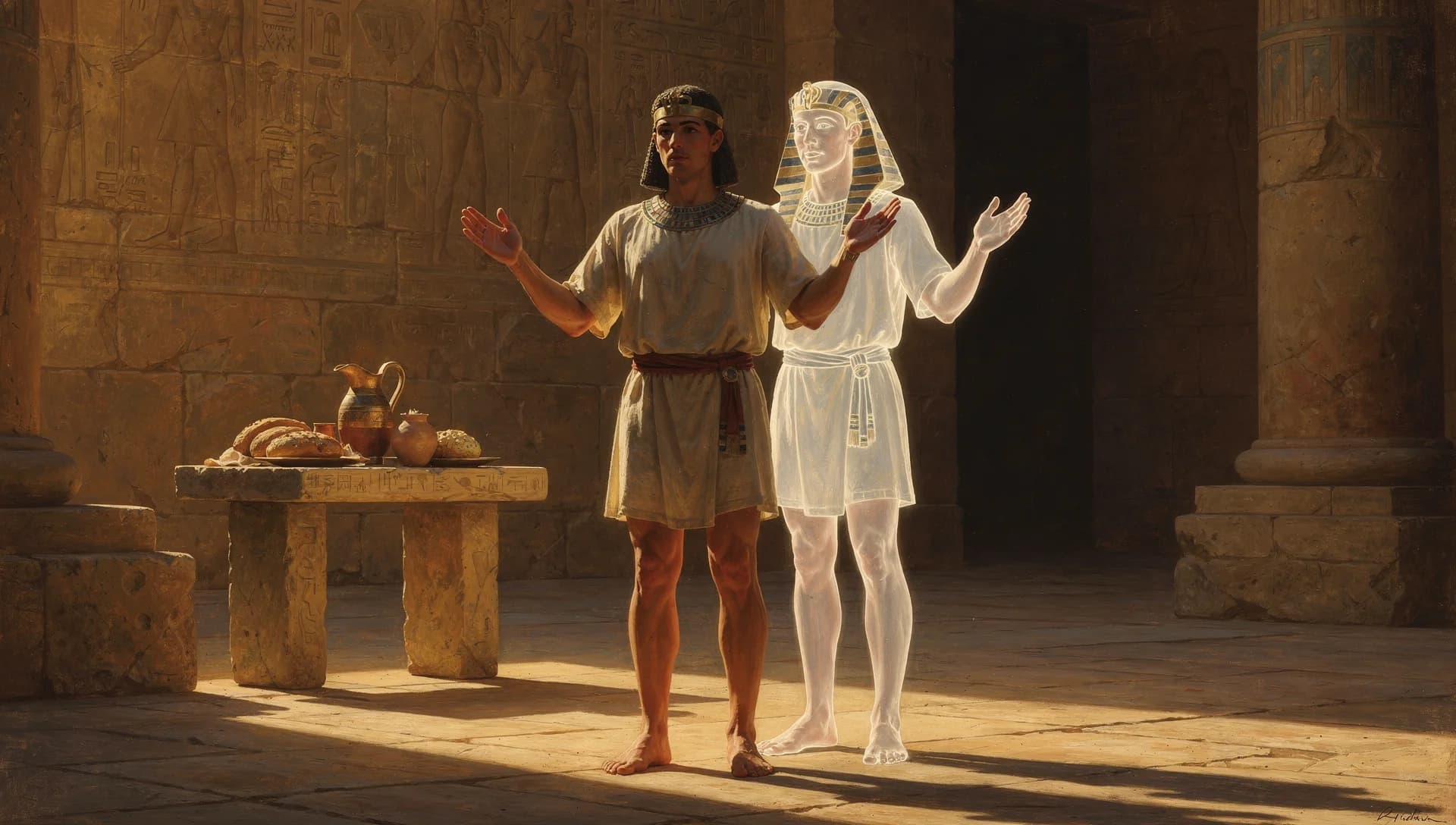
The Spirit-Double: The Egyptian Ka and the Thought Adjuster

Rebirth in the Western Paradise: The Mansion Worlds and Pure Land Buddhism

Two Realities, Two Names: Yang and Yin as Soul and Spirit

The Longest Memory: Australian Aboriginal Dreamtime and the Primordial Teaching-Ancestors
The Newsletter
Get the research behind each piece
Free. New Urantia Book explorations, the sources behind the videos, and early looks. No spam, unsubscribe anytime.
Prefer video? Follow on YouTube and Facebook.
Delivered through Substack. You can also read past issues.