
 Mythic
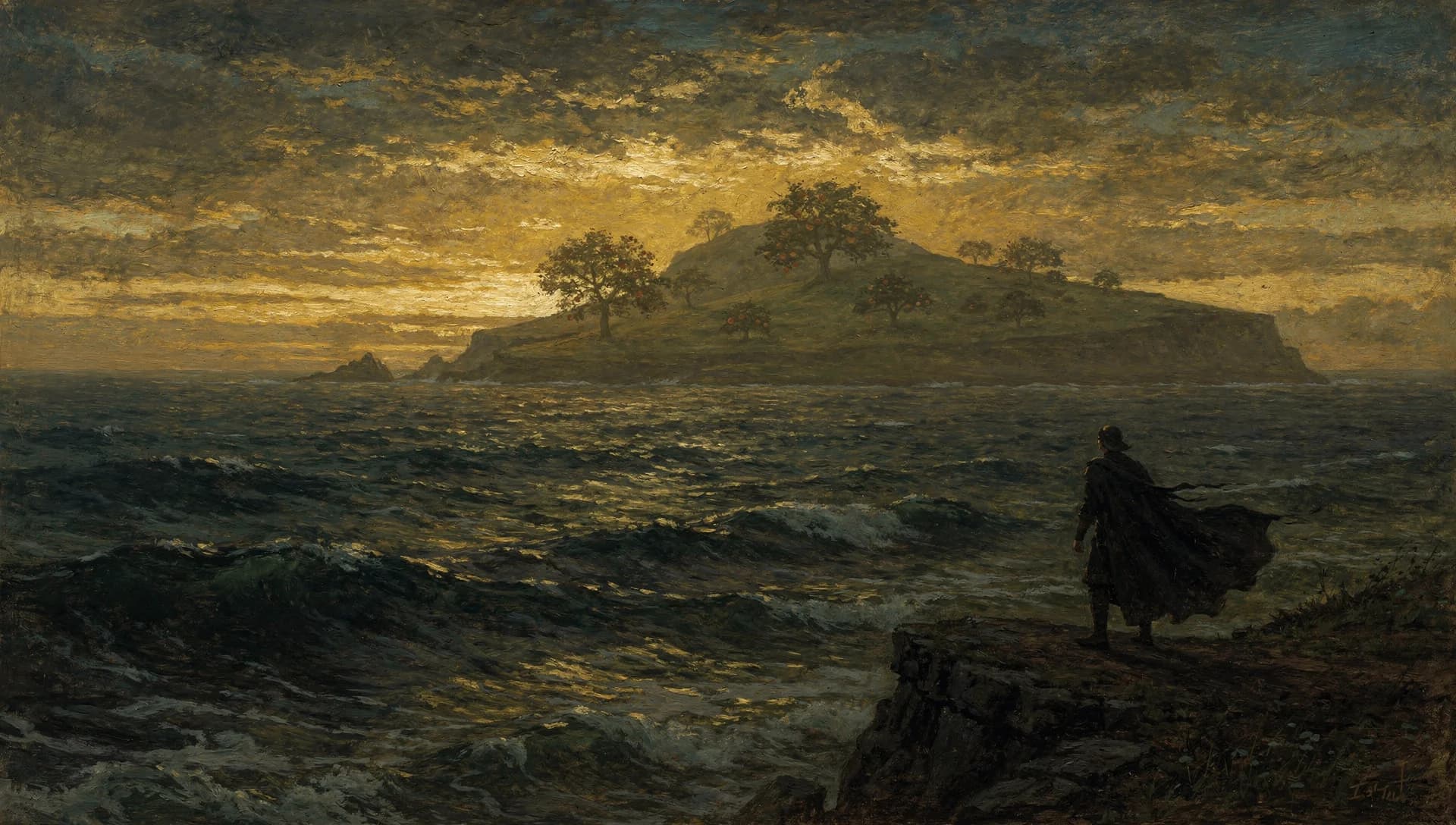
The Celtic Otherworld: Tír na nÓg, Hy-Brasil, Avalon: paradise beyond or beneath the sea
 UB
UBThe first Garden of Eden, submerged under the eastern Mediterranean
Full Article
Read the deep-dive article on this connection
The first Garden of Eden, submerged under the eastern Mediterranean = The Celtic Otherworld: Tír na nÓg, Hy-Brasil, Avalon: paradise beyond or beneath the sea
The Connection
Celtic tradition is saturated with paradise-beyond-the-sea and paradise-beneath-the-waves imagery: Tír na nÓg (Land of Youth), Hy-Brasil (the phantom island of the Atlantic), the Isle of Avalon where Arthur is taken. The shared features (lush garden, sacred tree, waters of immortality, temporary access by mortals who are later barred from return) match the UB description of the first Eden, a submerged peninsular paradise, with uncanny specificity. The Celtic tradition preserves the sunken-paradise motif that also appears in Plato's Atlantis, Sumerian Dilmun, and Hindu Dwarka: a common ancient memory.
UB Citation
UB 73:3.1, 73:7.1, 78:7.7
Academic Source
Matthews, The Celtic Book of the Dead (1992); Westropp, "Brasil and the Legendary Islands of the North Atlantic" (1912)
Historical Evidence(Moderate evidence)
T.J. Westropp documented Hy-Brasil as a persistent element of Atlantic Celtic tradition, appearing on medieval charts west of Ireland through the 18th century. Matthews' survey of Celtic Otherworld traditions identifies the sunken or distant paradise motif as a central structural element of Irish and Welsh pre-Christian cosmology. The cross-cultural persistence of "paradise lost beneath or beyond the waters" (Celtic Tír na nÓg, Greek Atlantis, Sumerian Dilmun, Hindu Dwarka) is more parsimoniously explained by a common seed memory than by independent invention in each culture.
Deep Dive
On medieval charts of the Atlantic Ocean, west of Ireland, an island called Hy-Brasil appeared regularly. It was first marked on a chart by Angelino de Dalorto in 1325. It continued to appear on Atlantic charts through the eighteenth century, sometimes circular, sometimes elongated, always somewhere west of Ireland but never quite reachable. Sea-captains reported sighting it through fog and mist. Expeditions were occasionally launched to find it. Hy-Brasil never materialized as a real island, but the chartographic tradition persisted for over four centuries before finally being removed from official British Admiralty charts in 1865.
T.J. Westropp documented this persistence in his 1912 Royal Irish Academy paper "Brasil and the Legendary Islands of the North Atlantic." The Hy-Brasil tradition is part of a much broader Celtic Otherworld complex that pervades Irish and Welsh pre-Christian cosmology. The Otherworld appears under many names: Tir na nOg (the Land of Youth), Mag Mell (the Plain of Honey or Plain of Delight), Tir Tairngire (the Land of Promise), Avalon (in Arthurian tradition, the Isle of Apples where Arthur is taken to be healed). The features are consistent across these names: a paradisal place beyond or beneath the western sea, accessible only through magical or near-death passage, characterized by perpetual youth, abundance, sacred trees, and pure waters.
Caitlin and John Matthews' The Celtic Book of the Dead (1992) surveyed this Otherworld complex across Celtic tradition. The pattern is too widespread and too structurally consistent to be reduced to generic "afterlife mythology." It has specific features that recur with remarkable fidelity: lush garden setting, sacred apple trees, waters of immortality, temporary mortal access through extraordinary means, eventual barring of return. These specific features distinguish the Celtic Otherworld from generic afterlife conceptions and require specific historical-cultural explanation.
The UB framework places this Celtic Otherworld pattern within the global complex of "lost paradise" memories. UB 73:3.1 describes the first Garden of Eden as "a long, narrow peninsula, almost an island," located in the eastern Mediterranean. UB 73:7.1 describes its submergence: "in connection with the violent activity of the surrounding volcanoes and the submergence of the Sicilian land bridge to Africa, the eastern floor of the Mediterranean Sea sank, carrying down beneath the waters the whole of the Edenic peninsula." The first Eden submerged with all its tree-of-life-fed gardens, its temples, its civilizational architecture intact beneath the rising Mediterranean.
The cultural memory of this submerged paradise spread outward through population migrations and oral tradition. As the memory reached different cultures, it attached to local geography while preserving its underlying structural features. The Celtic Otherworld complex is one specific reception of this memory. The Otherworld is "beyond the western sea" because the migrating populations that brought the memory had moved westward from the eastern Mediterranean origin point, and the lost paradise was therefore behind them in the direction they had come from. Over generations, "behind us in the east" became "out there in the west" as the geographic orientation drifted in the cultural memory.
The same submerged-paradise memory appears in many other traditions. Plato's Atlantis in the Critias and the Timaeus, located in the Atlantic west of Egypt, dating to nine thousand years before Plato, sunken in a single day-and-night cataclysm. The Sumerian Dilmun, located in the Persian Gulf, paradisal in description, partly submerged in archaeological reality. The Hindu Dwarka, the city of Krishna, said to have submerged in the Arabian Sea after Krishna's departure (and in fact archaeological remains have been found in the underwater shelf). The Vedic Pushkara, the lotus-island paradise of cosmological description.
Each of these traditions preserves the same underlying memory: a paradisal place existed, it sank beneath the waters, and the memory persists in cultural tradition with specific structural features (lush garden, sacred trees, immortality-waters, temporary mortal access). The UB framework identifies the underlying memory as the actual first Eden and possibly the earlier Dalamatia headquarters, both of which submerged in real geological events that the UB describes in detail.
The strongest counterargument is that "lost paradise" is a generic mythological motif that can be expected to appear in many cultures without requiring common historical descent. This is partially true. Generic paradise-lost mythology is widespread. But the specific structural features of the Celtic-Greek-Sumerian-Hindu submerged-paradise complex (the specific elements of sacred trees, immortality-waters, geographical-orientation features) are too consistent to be reduced to generic mythology. Some specific underlying memory is required, and the UB first-Eden-and-Dalamatia framework provides a candidate that mainstream comparative religion has not adequately supplied.
Key Quotes
“After the first garden was vacated by Adam, it was occupied variously by the Nodites, Cutites, and the Suntites. ... in connection with the violent activity of the surrounding volcanoes and the submergence of the Sicilian land bridge to Africa, the eastern floor of the Mediterranean Sea sank, carrying down beneath the waters the whole of the Edenic peninsula.”
“The remnants of this, one of the oldest civilizations, are to be found in these regions of Mesopotamia and to the northeast and northwest. But still older vestiges of the days of Dalamatia exist under the waters of the Persian Gulf, and the first Eden lies submerged under the eastern end of the Mediterranean Sea.”
Cultural Impact
The Celtic Otherworld tradition has been one of the richest sources of imaginative material in Western literature. From the medieval Arthurian romances to W.B. Yeats' Celtic Twilight to C.S. Lewis' Narnia (the world beyond the wardrobe) to contemporary fantasy literature, the Celtic Otherworld has shaped Western literary imagination at the deepest levels. The motif of the magical island beyond the western sea, accessible only through extraordinary passage, recurs repeatedly across centuries. The UB framework offers a way to engage with this generative tradition that takes its cultural-memory depth seriously. The Otherworld is not just a literary invention or a generic mythological motif; it is the cultural memory of an actual lost paradise (the first Eden and beyond it the Dalamatia headquarters). Engaging with the tradition as such, rather than as merely imaginative material, opens it to a different kind of comparative analysis. For Celtic-heritage readers, the framework offers a way to honor the Otherworld tradition as preserving genuine memory rather than as primitive mythology. The tradition's persistent generativity, its recurrence across centuries of literary and folkloric development, reflects the deep cultural-memory anchor that the UB identifies.
Modern Resonance
Contemporary popular culture continues to draw heavily on the Celtic Otherworld tradition. The "fairy land" or "magical island" motif appears regularly in fantasy literature, film, and television. The Disney version of Tinker Bell and Neverland is a recent commercial expression of the underlying Celtic Otherworld pattern. More serious literary engagements (Patricia McKillip's work, Susanna Clarke's Jonathan Strange and Mr Norrell) continue to explore the tradition's deeper resonances. The UB framework offers a way to engage with these contemporary expressions that takes their cultural inheritance seriously. The recurring fascination with magical-otherworld settings is not just escapism; it is the expression of a genuine cultural memory of a real lost paradise that persists across generations even when the specific historical referent is no longer consciously known. The popular appeal of these settings reflects the deep cultural-memory anchor. For contemporary readers, this framework offers a way to engage with fantasy literature that goes beyond simple entertainment. The settings we love in literature are settings that preserve real cultural memory of how human history actually unfolded, even when the specific historical content has been transformed beyond recognition in the literary surface. The UB framework recovers some of that historical content for those willing to read fantasy literature as cultural-memory data rather than as pure imagination.
Related Mappings
The Adamic-Andite arrival pattern: superhuman teachers coming from the east
= Tuatha Dé Danann, the "People of the goddess Danu" who arrived in Ireland
Corporeal staff survivors whose memory became "wise counselor" figures
= Merlin / Myrddin, the prophetic wise counselor to kings
Universal cult of the Tree of Life (UB 85:2.4)
= Celtic sacred groves and the druid reverence for the oak (from which "druid" derives)
Salem missionaries reaching "even to the British Isles" after Melchizedek's incarnation
= Celtic high-god Dagda, "The Good God," father-figure of the Tuatha Dé Danann
Related Articles
Where to next
The free newsletter. The research behind each piece, no spam.