
Giants, Dragons, and Fairies: Where the Myths Came From
Every culture remembers giants, serpent-beings, dragons, little people, and wild men of the forest. The Urantia Book doesn't dismiss these traditions. It explains where they came from, what really happened, and why the memories survived in garbled form.

GIANTS, DRAGONS, AND FAIRIES: WHERE THE MYTHS CAME FROM
Derek Samaras | Urantia Book Network | April 2026
Series Note: This is Part 6 of the "Revelation vs. Noise" series, and works in partnership with the Mythology Decoder on this site. If a myth persists across cultures and millennia, the Urantia Book suggests there's usually a reason.
The Pattern
Across every continent and every era, human cultures have preserved memories of beings that don't fit the ordinary categories: giants who walked the earth, serpent-beings who tempted humanity, dragons who guarded treasure or terrorized cities, little people who lived just beyond the edge of perception, and wild men of the forest who were almost human but not quite.
Modern culture tends to treat these traditions as pure fiction, primitive attempts to explain a world that frightened early humans. But the Urantia Book takes a different position. It states directly that many of these myths are garbled memories of real events:
"The presence of these extraordinary supermen and superwomen, stranded by rebellion and presently mating with the sons and daughters of earth, easily gave origin to those traditional stories of the gods coming down to mate with mortals. And thus originated the thousand and one legends of a mythical nature, but founded on the facts of the postrebellion days, which later found a place in the folk tales and traditions of the various peoples whose ancestors had participated in these contacts with the Nodites and their descendants." (67:4.3)
The myths are real memories. The details are scrambled. Here is the decoder.
The Giants
Every ancient culture remembers a time when giants walked the earth. The Hebrew Bible calls them Nephilim. The Greeks remembered Titans. Norse mythology has the Jotnar. Even the indigenous peoples of the Americas carried traditions of giant races.
The Urantia Book identifies at least three distinct sources for these memories:
Source 1: The corporeal staff of the Planetary Prince. One hundred volunteers from other worlds, given physical bodies constructed from the best Andonite genetic material, enhanced by the life circuits of the Satania system (66:2.4). The staff and their early descendants were hardly sons of the gods, but they "were so regarded by the evolutionary mortals of those distant days; even their stature came to be magnified by tradition" (77:2.3). Their descendants, the Nodites, inherited increased height and physical superiority.
Source 2: Adam and Eve. The Material Son and Daughter assigned to Urantia were "a little more than eight feet in height" (74:1.1). Material Sons across the universe generally range from "eight to ten feet" and their "bodies glow with the brilliance of radiant light of a violet hue" (51:1.3). Their Adamite descendants carried this increased stature into the general population.
Source 3: Sangik race giants. The green and orange races of the six Sangik peoples produced genuine giants. "In many ways both groups were evenly matched in this struggle since each carried strains of the giant order, many of their leaders being eight and nine feet in height. These giant strains of the green man were mostly confined to this southern or Egyptian nation" (64:6.19).
Three distinct populations of genuinely tall, physically impressive people, all contributing to a single "giant" memory that compressed over millennia into the Nephilim tradition.
The Serpent in the Garden
The serpent of Genesis is one of the most powerful images in Western religious tradition: a reptilian tempter who deceives Eve and causes the fall of humanity. Reptilian conspiracy theories in modern culture often trace back to this archetypal image.
The Urantia Book tells a very different story. There was no literal serpent in the Garden.
The real figure behind the myth was Serapatatia, a Nodite leader whose name, spoken and respoken across thousands of years of oral tradition, was gradually corrupted into "serpent." He was "a brown-tinted man, a brilliant descendant of the onetime chief of the Dalamatia commission on health" (75:3.1). He was entirely sincere in his activities; "he was never conscious, even later on, that he was being used as a circumstantial tool of the wily Caligastia" (75:3.3).
Serapatatia was the unwitting instrument of Caligastia's scheme to undermine the Adamic mission. The real tempter was invisible: the deposed Planetary Prince, operating behind the scenes through a sincere but manipulated intermediary. Over time, the nuance was lost. Serapatatia became "the serpent." Caligastia's invisible manipulation became the serpent's speech. And a sophisticated political tragedy became a fable about a talking snake.
The broader "reptilian" tradition in conspiracy culture may echo the same garbled memory: superhuman beings associated with deception, acting through intermediaries, remembered through the lens of the serpent symbol that was already deeply embedded in ancient Mesopotamian religion (85:3.3).
The Dragons
Dragon myths appear in virtually every culture on earth. They fly. They breathe fire. They guard sacred places. They are associated with both wisdom and destruction.
The Urantia Book identifies three distinct sources for dragon traditions:
Source 1: Spiritual symbolism. The dragon is explicitly identified as the symbolic representation of Lucifer and the rebel leaders. "The dragon eventually became the symbolic representation of all these evil personages" (53:1.6). The Book of Revelation's "great red dragon" whose "tail drew a third part of the stars of heaven" (53:7.7) is a direct reference to the Lucifer Rebellion, not a literal creature.
Source 2: Prehistoric reptiles. Flying pterosaurs had wingspans of "twenty to twenty-five feet" and grew "to be ten feet long" with "separable jaws much like those of modern snakes" (60:2.12). These creatures actually existed. While they went extinct millions of years before humans, the UB describes a process where the memory of dramatic creatures can persist in racial consciousness far longer than direct experience would explain.
Source 3: Snake cult evolution. "The Chinese worship of the dragon is a survival of the snake cults" (85:3.3). Serpent worship was one of the oldest and most widespread religious practices. As these cults evolved, the serpent grew wings, acquired fire, and became the dragon.
Three streams, spiritual rebellion symbolism, prehistoric reptile memory, and snake cult development, merged over millennia into a single archetype.
The Fairies and Little People
Irish sidhe. Norse alfar. Japanese yokai. The Indigenous "little people" of the Americas. Cultures worldwide describe invisible or semi-visible beings who interact with the physical world, can be helpful or mischievous, are associated with specific locations, and occupy a realm between the fully human and the fully spiritual.
The Urantia Book identifies these traditions as garbled memories of the midway creatures.
The midwayers are a specific order of superhuman beings who have been operating on Urantia for tens of thousands of years. They "exist just outside the range of mortal vision" (77:8.11) and "possess sufficient latitude of adaptation to make, at will, physical contact with what humans call 'material things.'" They have "certain definite powers over the things of time and space, not excepting the beasts of the realm" (77:8.11).
And the early humans at Dalamatia knew about them:
"These mid-type creatures were of great service in carrying on the affairs of the world's headquarters. They were invisible to human beings, but the primitive sojourners at Dalamatia were taught about these unseen semispirits, and for ages they constituted the sum total of the spirit world to these evolving mortals." (66:4.11)
The description is precise: invisible beings, operating at the threshold of material reality, interacting with physical objects, associated with specific places, known to early humans as "the spirit world." Every characteristic of the fairy tradition maps directly to the UB's description of midwayers.
Bigfoot and the Wild Men
Traditions of large, hairy, humanoid creatures living in remote forests appear across North America (Sasquatch), Central Asia (Yeti), Australia (Yowie), and numerous other regions. Modern culture treats these as either cryptozoology or pure folklore.
The Urantia Book provides two possible sources:
Source 1: Degraded pre-human and early human populations. The Primates, the immediate ancestors of the first true humans, were bipedal, territorial, and forest-dwelling. Their skeletal proportions were "very similar to those of the primitive human races" (62:4.4). The mid-mammals before them were "a little over four feet in height" (62:3.2) and "became the terror of this part of the world" (62:3.5). These species are described as extinct, but the UB acknowledges that extremely primitive Andonite populations, dark-skinned, forest-dwelling, and culturally isolated, persisted in remote regions for hundreds of thousands of years.
Source 2: Backward and degraded Sangik remnants. The UB describes backward tribal populations that retreated into isolation as more advanced races expanded. Some of these groups regressed culturally and physically. The memory of encounters with these isolated, primitive peoples could have generated persistent "wild man" traditions.
The UB explicitly states that "missing links" between animals and humans "will forever remain missing, for the simple reason that they never existed" (58:6.2). There is no surviving transitional species. But the memory of genuinely different humanoid populations, now extinct, could account for the tradition's persistence.
The "Aliens"
The idea that beings from other star systems have visited Earth in physical craft is the most popular garbled tradition of the modern era. Pleiadeans, Arcturians, and dozens of other named "star races" populate the channeling community.
The UB's position is clear. The universe is populated with inhabited worlds: 619 in Satania alone. The beings on those worlds are real. But they are not flying here.
The quarantine following the Lucifer Rebellion cut off all normal interplanetary communication (33:6.5). The entire system of Satania rests under a Norlatiadek quarantine "partially segregating it from all other systems" (46:8.2). And even without the quarantine, the UB describes no mechanism for material mortals to physically travel between inhabited worlds. Interworld transport is a seraphic function for morontia or spirit beings (39:4.15).
The "alien contact" desire may be a distorted intuition of a real truth: there is a cosmic administration, and beings from beyond this world have been here. The corporeal staff of the Planetary Prince were literally volunteers from other worlds, given physical bodies, who walked among early humans for 300,000 years. That is the closest thing to "aliens visiting Earth" in the UB record. And it happened 500,000 years ago.
The Pleiades are not mentioned in the Urantia Book.
The Decoder Key
Across all of these traditions, the same mechanism operates:
-
Real events and beings existed. Supermen, giant races, Serapatatia, midwayers, flying reptiles, the Lucifer Rebellion. These are not fiction.
-
Oral tradition garbled the details over millennia. The UB explicitly says this happened: "And much of your subsequent mythology grew out of the garbled legends of these early days when these members of the Prince's staff were repersonalized on Urantia as supermen" (66:4.1).
-
Multiple distinct sources collapsed into single myths. Dragons combine rebellion symbolism, pterosaur memory, and snake cults. Giants combine the staff, Adamites, and Sangik giantism. Each myth is a composite of several real sources.
-
The quarantine prevented correction. With no ongoing celestial contact, no authority existed to set the record straight. Myths could only drift further from their origins.
There is a fifth factor that deserves mention.
The Experimental Planet Factor
Urantia is a decimal world, a life-modification planet. One out of every ten inhabited worlds is designated for experimental biology, where the Life Carriers are granted extra latitude to try new approaches to life design (36:2.15, 65:4.1). This means our biological history is unusual by design. Some results were expected. Others were not.
The Life Carriers who planted life on Urantia stayed loyal during the Lucifer Rebellion. The "two resident Life Carriers" served on Van's advisory council and helped maintain order during the crisis (67:6.2, 67:6.5). But a broader passage reveals something less reassuring about Life Carriers across the system:
"This was a Lanonandek rebellion. The higher orders of local universe sonship did not join the Lucifer secession, although a few of the Life Carriers stationed on the rebel planets were somewhat influenced by the rebellion of the disloyal princes." (53:7.4)
"Somewhat influenced." Not full defection, but partial compromise. Life Carriers are the beings who design and implant the biological patterns on inhabited worlds and oversee the early stages of evolution. If any Life Carriers on any of the 37 rebel worlds had their judgment partially compromised, the biological trajectories of those worlds could have been affected in ways that produced unusual, unexpected, or problematic life forms.
On Urantia specifically, the Life Carriers remained loyal, but the experimental nature of our world already produced biological anomalies: giant insects with thirty-inch wingspans (59:5.7), flying reptiles with twenty-five-foot wingspans and snake-like jaws (60:2.12), Sangik race giants reaching eight and nine feet (64:6.19), and a general biological history shaped by Urantia's status as a life-experiment world (65:4.1), a history that even produced the Nodite peoples out of "certain peculiar and unexpected modifications" in the transferred life plasm (77:2.6).
The combination of an experimental planet, a planetary rebellion that shattered the administrative oversight, and an Adamic default that disrupted the biological uplift program produced a world with an unusually dramatic biological record. That record, filtered through hundreds of thousands of years of oral tradition and cultural memory, is the raw material from which creature myths were built.
The myths are not evidence that the universe is chaotic or malevolent. They are evidence that this planet has had an unusually difficult history. The biological experiments were real. The rebellion was real. The default was real. And the creatures that populated the memories of early humans were real. The myths persist because the events that inspired them were genuinely extraordinary.
The Urantia Book does not ask you to stop being fascinated by these traditions. It asks you to look deeper. Behind every persistent myth, there is a fact worth finding.
For the full cross-cultural mapping, visit the Mythology Decoder.
The locations where these beings lived and the sites they built are all mapped at the Interactive Planetary Map, from Dalamatia to Gobekli Tepe.
For how this history answers modern UAP and contact claims: You Deserve a Better Map
All citations reference The Urantia Book by Paper:Section.Paragraph. The full text is freely available at urantia.org.
Connecting Articles
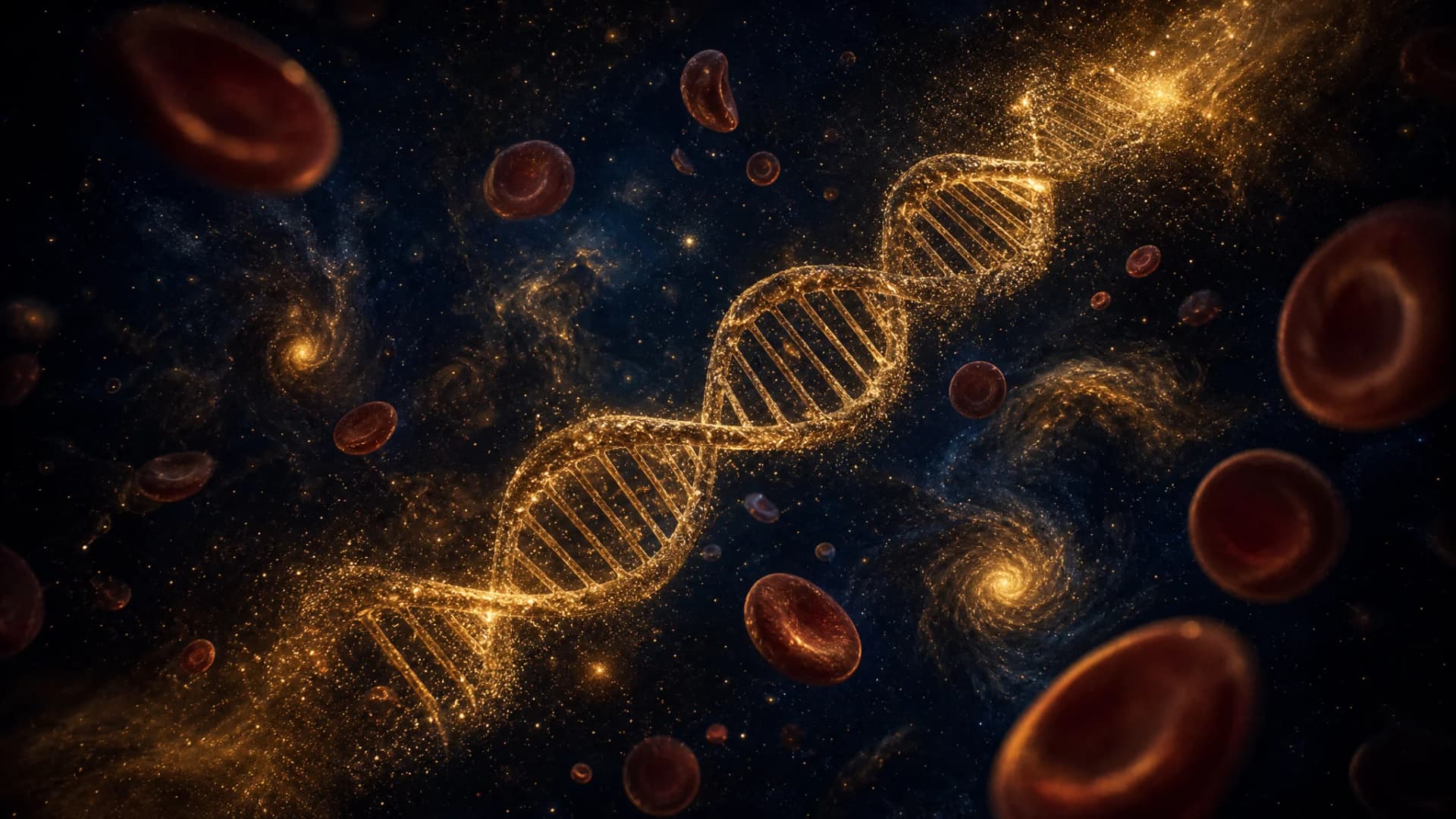
Rh-Negative Blood and the Nephilim Claim: What the Record and the Genetics Say

Cano and Eve's Default: The Real Story
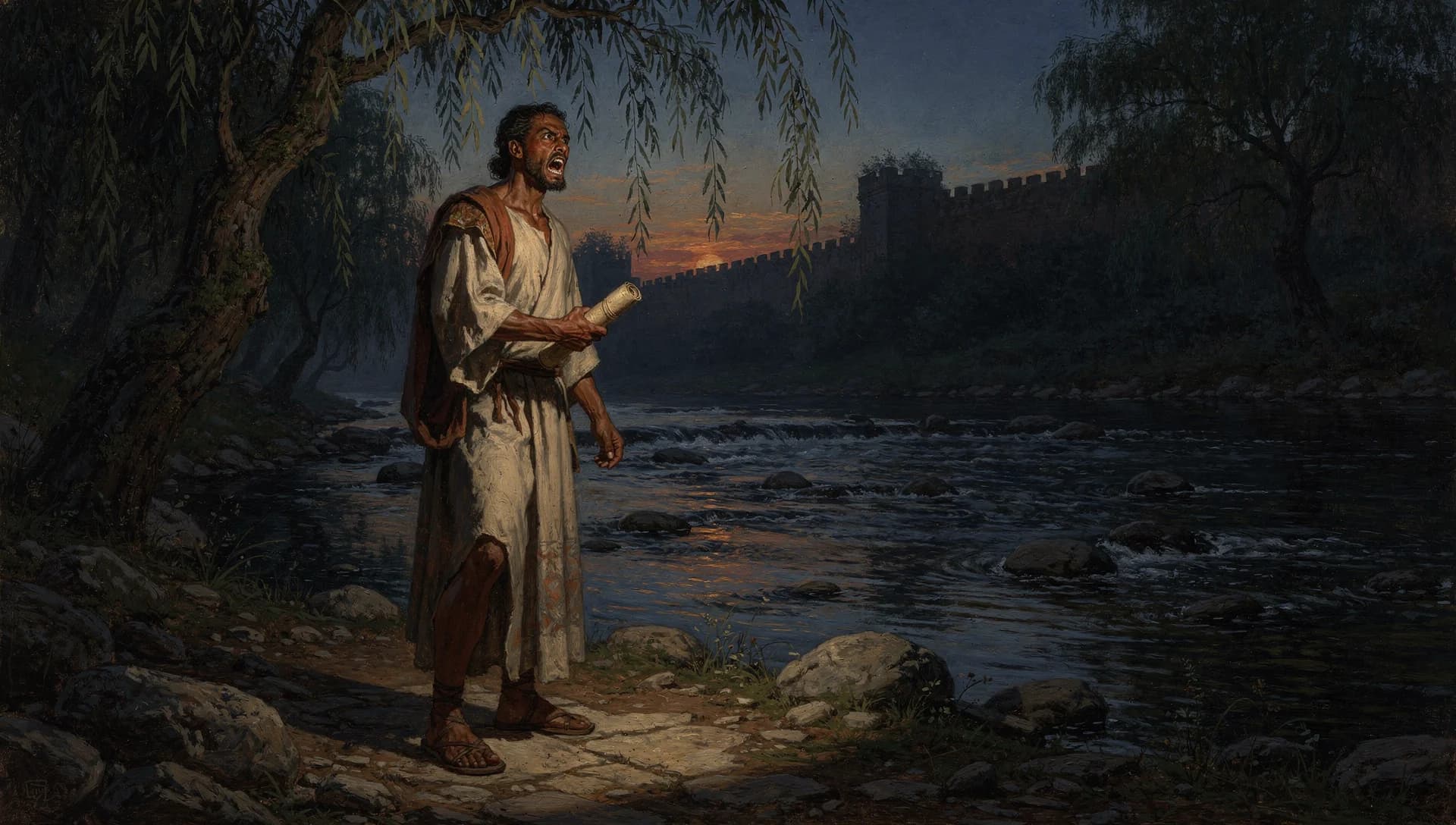
The Serpent Had a Name: Serapatatia and the Garden Narrative
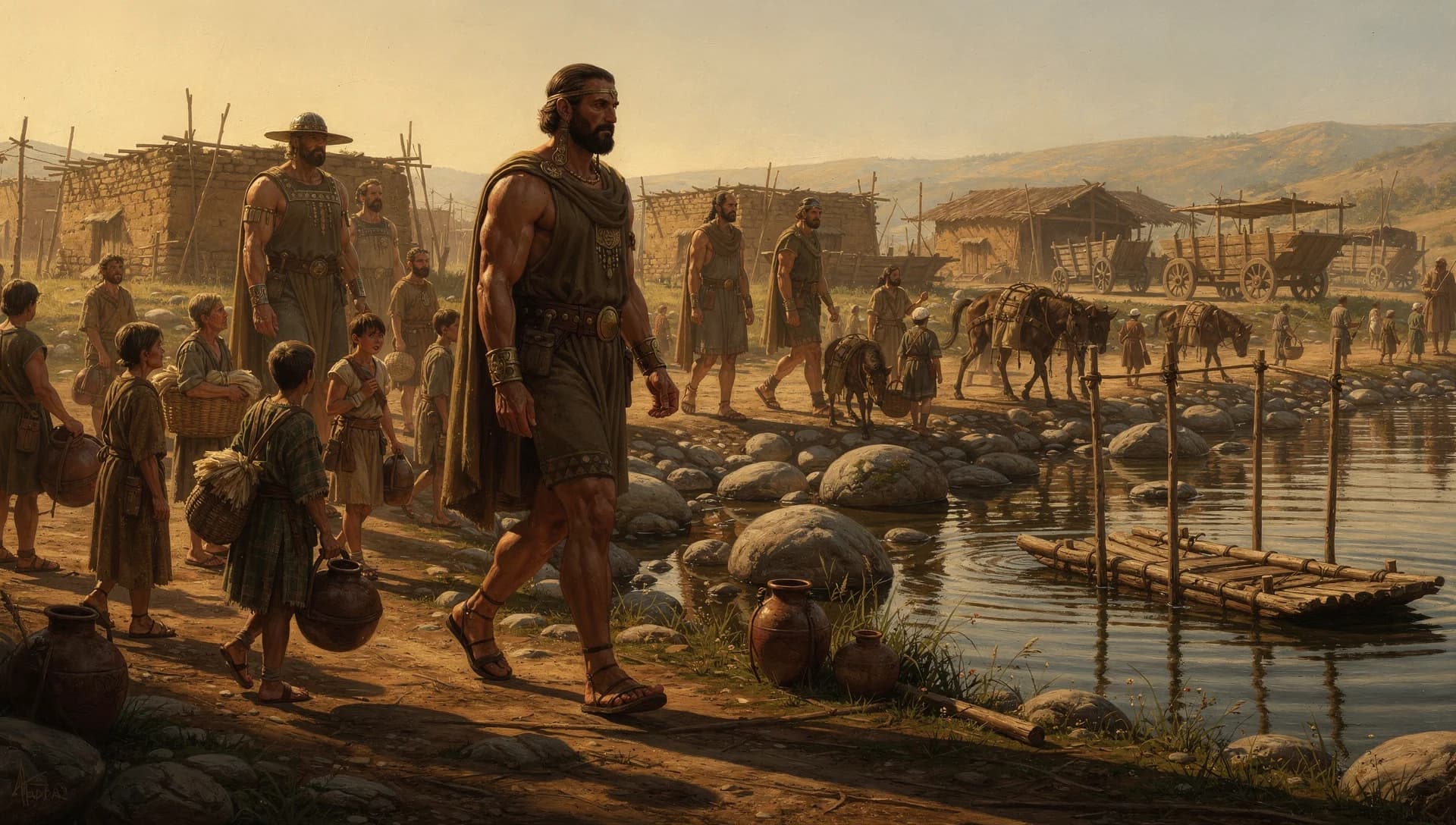
The Nodites and the Nephilim: The Most Direct Mythology Decode in the Urantia Book
The Newsletter
Get the research behind each piece
Free. New Urantia Book explorations, the sources behind the videos, and early looks. No spam, unsubscribe anytime.
Prefer video? Follow on YouTube and Facebook.
Delivered through Substack. You can also read past issues.