
The Dying and Rising God: Salem Teaching Corrupted into the Osiris Mystery
After Ikhnaton's death, the Egyptian priesthood reasserted control and the people returned to older forms of worship. The Osiris-Isis mystery cult that came to dominate late Egyptian religion preserved elements of the Salem teaching in a deeply corrupted form. The Urantia Book names the specific mechanism of the corruption.
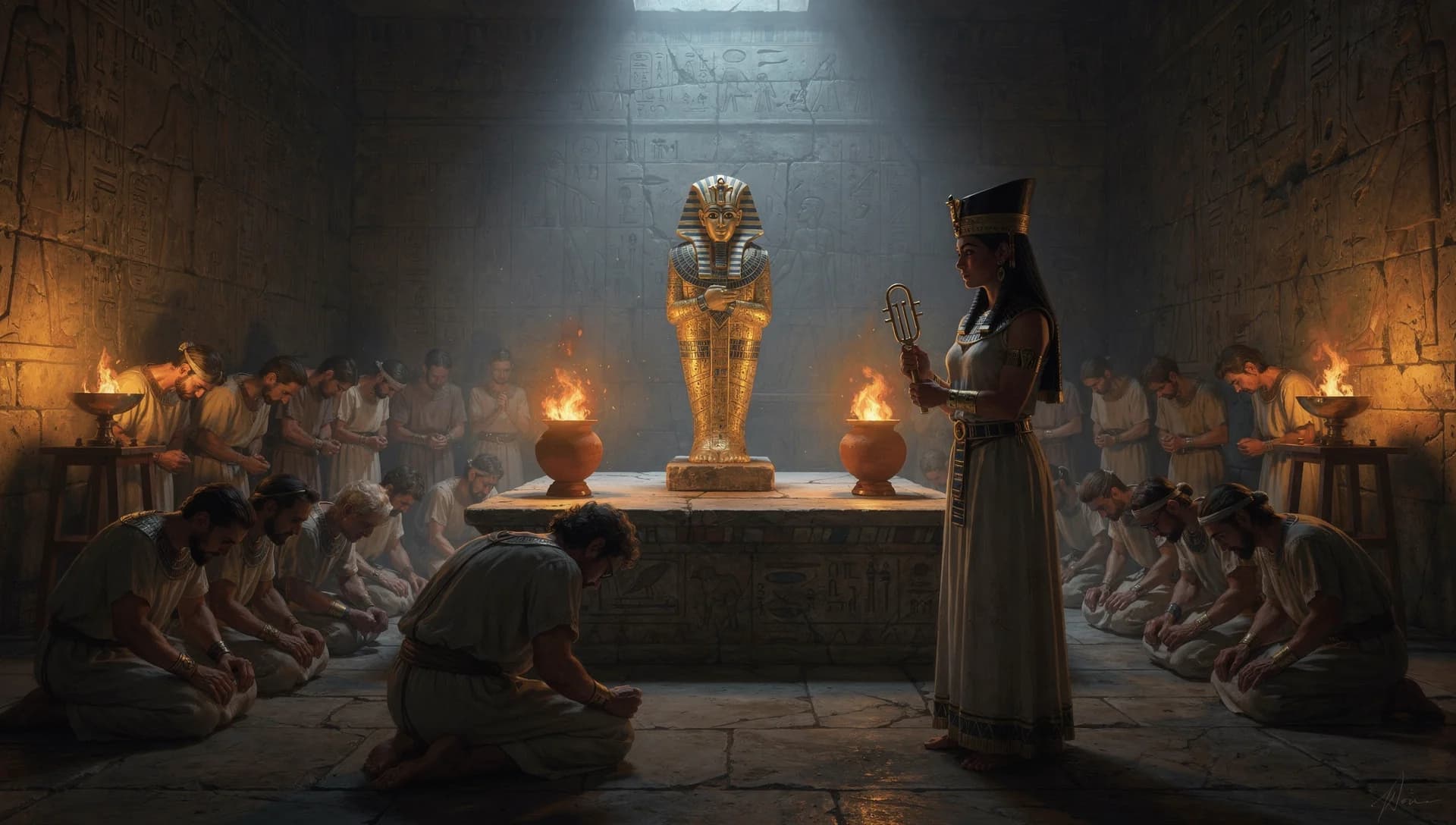
Machiventa Melchizedek's Salem teaching, corrupted in Egypt = Osiris and Isis, dying/rising god mystery cult
This article expands on the decoder mapping. For the side-by-side card and quick reference, see the mapping page.
The Mystery Cult That Outlasted the Pyramids
By the end of the first millennium BCE, the dominant form of religious life in Egypt was not the royal theology of the pharaohs. It was the Osiris-Isis mystery cult. The cult had originated in much older Egyptian funerary theology but had absorbed new theological content across the post-Amarna centuries. By the Ptolemaic and Roman periods, it was the most widely practiced religion of the Nile valley and had spread across the Mediterranean as one of the principal "mystery religions" of late antiquity. Its initiation rites, its focus on a dying and rising savior figure, its emphasis on personal communion with the goddess, and its promise of immortality through ritual identification with Osiris all anticipate features of later Christian religious practice.
The Urantia Book identifies the Osiris-Isis cult as specifically a corruption of what the Salem missionary tradition had tried to teach, preserved in mystery-cult form because the priesthood could absorb the Salem theology only by reframing it in a ritualistic apparatus that neutralized its monotheistic core.
What the Urantia Book Says
The post-Ikhnaton reversion is described with precision:
"The weakness of Ikhnaton's doctrine lay in the fact that he proposed such an advanced religion that only the educated Egyptians could fully comprehend his teachings. The rank and file of the agricultural laborers never really grasped his gospel and were, therefore, ready to return with the priests to the old-time worship of Isis and her consort Osiris, who was supposed to have been miraculously resurrected from a cruel death at the hands of Set, the god of darkness and evil." (UB 95:5.12)
The priesthood-Isis-Osiris alliance is framed as the specific mechanism by which the advanced Ikhnaton monotheism collapsed. The failure was not doctrinal but sociological: the Salem teaching was too demanding, the priesthood was politically organized, and the older ritual system had enough existing devotional infrastructure to absorb the population when the Amarna experiment ended.
The Osiris-Isis cult's ability to absorb Salem-derived content is treated as a general feature of how corrupted mystery traditions work:
"The teaching of immortality for all men was too advanced for the Egyptians. Only kings and the rich were promised a resurrection; therefore did they so carefully embalm and preserve their bodies in tombs against the day of judgment. But the democracy of salvation and resurrection as taught by Ikhnaton eventually prevailed, even to the extent that the Egyptians later believed in the survival of dumb animals." (UB 95:5.13)
The broader Mediterranean reception of the corrupted Osiris tradition is addressed in Paper 98, which lists the Egyptian cult of Osiris and his mother Isis as one of the three most popular mystery cults of the Greco-Roman world (98:4.2-4), alongside the Phrygian cult of Cybele and Attis and the Iranian cult of Mithras.
The Urantia Book's specific judgment on the mystery-cult structure is that it preserved some Salem content (the motif of dying, rising, and being reborn, the personal savior relationship, the promise of immortality) while losing the essential monotheistic core. The Osiris figure became, in the late Egyptian and Hellenistic receptions, a competitor with and eventually a model for later emergent Christian theological patterns, which Paul had to work against even as he had to work with the vocabulary these cults had established.
What the Ancient Source Says
The Osiris mythology is attested from the Pyramid Texts (c. 2400 BCE) onward. The classical source for the developed form is Plutarch's De Iside et Osiride (c. 100 CE), which preserves the fullest narrative account. The standard modern scholarly treatment is Jan Assmann's Death and Salvation in Ancient Egypt (Cornell University Press, 2005), which traces the theological development across three thousand years.
The core myth is stable across the tradition's long history. Osiris, a divine king, is murdered by his brother Set. Isis, his wife, reassembles his dismembered body and miraculously conceives their son Horus, who eventually avenges his father and establishes the kingship of the divine order. Osiris himself becomes lord of the underworld, judge of the dead, and the prototype and hope of every Egyptian who seeks eternal life.
The cult's spread across the Mediterranean in the Hellenistic and Roman periods is documented in detail. Sarolta Takács's Isis and Sarapis in the Roman World (Brill, 1995) and Franz Cumont's classic Oriental Religions in Roman Paganism (Open Court, 1911; reprinted Dover, 1956) treat the diaspora. The Iseum temples of Pompeii and the Isis-sanctuaries documented from Britain to Syria establish that the cult was one of the principal religious options in the Roman Empire of the first three centuries CE.
The formal similarities to early Christianity are the single most documented topic in the comparative study of ancient religions. The divine savior who dies and is resurrected, the mother-goddess who bears the redemptive child, the initiation rites that unite the initiate with the savior's death and resurrection, the promise of personal immortality through ritual identification with the savior figure: all these features are present in the Osiris-Isis cult centuries before Christianity and appear in recognizably similar forms in early Christian theology and practice. Rudolf Bultmann, in Primitive Christianity in Its Contemporary Setting (Meridian, 1956), treats the parallels as evidence of a common religious milieu. More recent scholarship, particularly Larry W. Hurtado's Lord Jesus Christ: Devotion to Jesus in Earliest Christianity (Eerdmans, 2003), has argued for the distinctiveness of early Christian devotional practice against the mystery-cult background, while acknowledging the vocabulary and formal overlap.
Why This Mapping Matters
The historical relationship between the mystery cults and early Christianity has been one of the central scholarly questions of the last century and a half. Two main interpretive traditions exist. The History of Religions School (Bousset, Reitzenstein, Bultmann) treated early Christianity as one mystery cult among others, distinguished by its specific historical narrative but structurally continuous with Osirianism, Mithraism, and similar movements. The distinctive-Christianity school (Hurtado and others) emphasizes the ways early Christian devotion was novel and cannot be reduced to mystery-cult precedent.
The Urantia Book's account cuts across this debate with a specific genealogical claim. The Osiris-Isis cult and the emerging Pauline Christianity are not parallel independent movements. They are both downstream of the Salem Melchizedek tradition. The Salem teaching reached Egypt through Amenemope, Ikhnaton, and the Salem missionary organization; it was corrupted by the priestly absorption of its universalism into the mystery-cult framework; its ritual apparatus and some of its theological vocabulary passed into the Hellenistic religious milieu; and Paul, a generation after Jesus' bestowal, had to teach in a Mediterranean religious environment that had been shaped for centuries by this corrupted Salem material.
The same source accounts for the formal similarities and for the theological differences. The formal similarities (dying-rising savior, personal immortality, initiation ritual) derive from the shared Salem substrate. The theological differences (personal monotheism restored and radicalized in Christianity versus absorbed-pluralism preserved in the mystery cults) derive from the Michael bestowal having corrected what the mystery-cult corruption had lost.
The practical consequence for reading early Christianity is that Pauline theology is not borrowing from Osirianism; it is restoring to the Mediterranean religious vocabulary the monotheistic core that the Osirianism had corrupted. The formal continuities are real. The theological direction is opposite.
Sources
- The Urantia Book, Paper 95 (The Melchizedek Teachings in the Levant), Paper 98 (The Melchizedek Teachings in the Occident). Urantia Foundation, first printing 1955. Cited passages: 95:5.12, 95:5.13, 98:4.4.
- Plutarch. De Iside et Osiride. Edited and translated by J. Gwyn Griffiths, University of Wales Press, 1970.
- Assmann, Jan. Death and Salvation in Ancient Egypt. Translated by David Lorton. Cornell University Press, 2005.
- Griffiths, J. Gwyn. The Origins of Osiris and His Cult. Brill, 1980.
- Takács, Sarolta A. Isis and Sarapis in the Roman World. Brill, 1995.
- Cumont, Franz. Oriental Religions in Roman Paganism. Open Court, 1911; reprinted Dover, 1956.
- Bultmann, Rudolf. Primitive Christianity in Its Contemporary Setting. Meridian, 1956.
- Hurtado, Larry W. Lord Jesus Christ: Devotion to Jesus in Earliest Christianity. Eerdmans, 2003.
Confidence and Evidence
- Confidence: UB CONFIRMED
- Evidence rating: MODERATE to STRONG
- Basis: The Urantia Book directly identifies the Osiris-Isis mystery cult as the corrupted form in which Salem monotheistic content was preserved after the post-Ikhnaton priestly reversion. The documented formal parallels between the Osiris mystery and emergent early Christianity are extensively studied in academic scholarship. The Urantia genealogical claim (both downstream of Salem) is unavailable to independent scholarship but supplies a specific source account for the formal continuities.
Related Decoder Articles
- Salem Missionaries = Ikhnaton / Akhenaten
- Amenemope, Egyptian Conscience Teacher = "Son of Man"
- Salem Missionaries' Purest European Teaching = Cynics
By Derek Samaras
Connecting Articles
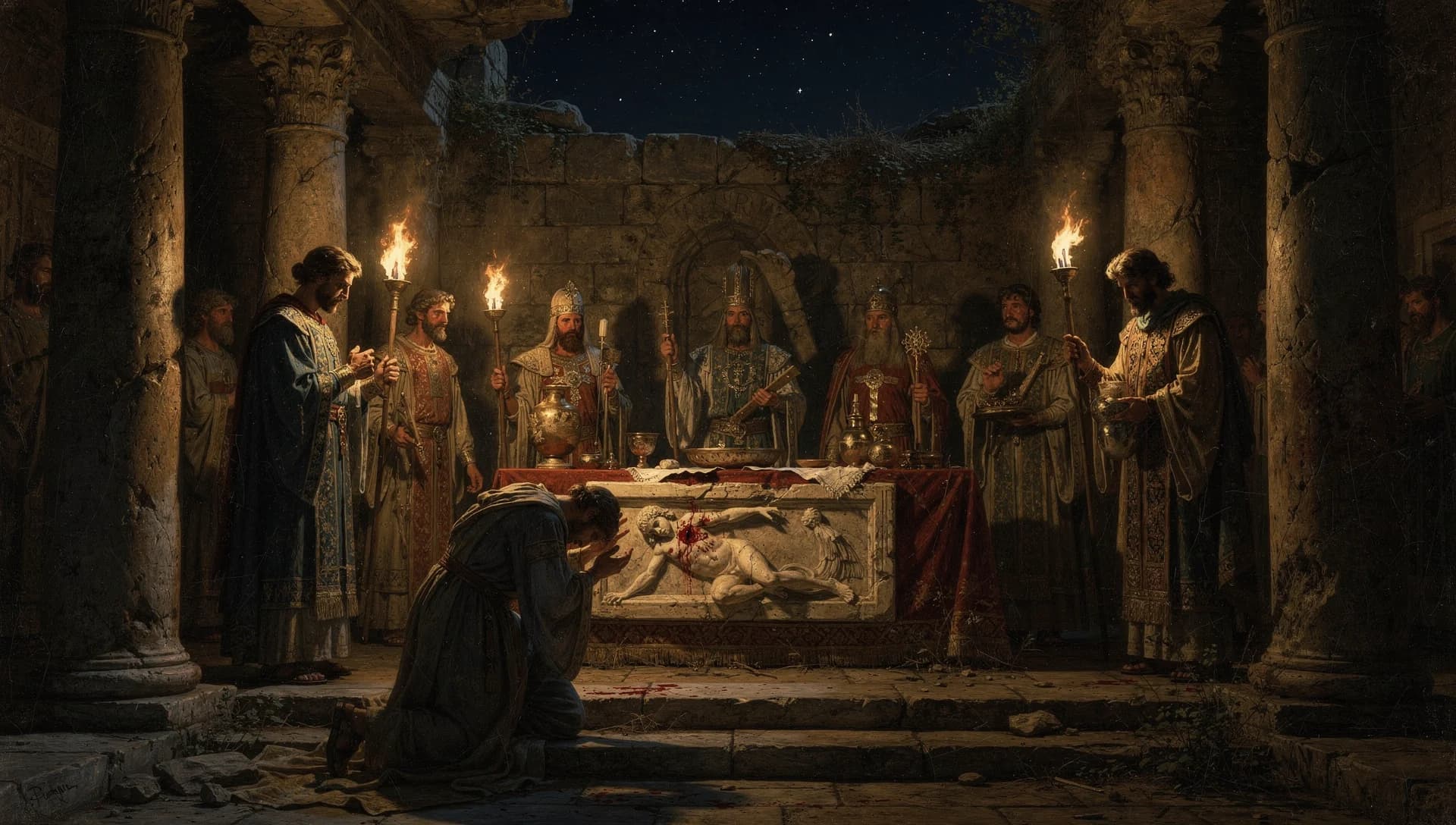
The Sacrificed Son Who Rises: Osiris, Tammuz, Attis, and the Corrupted Salem Teaching
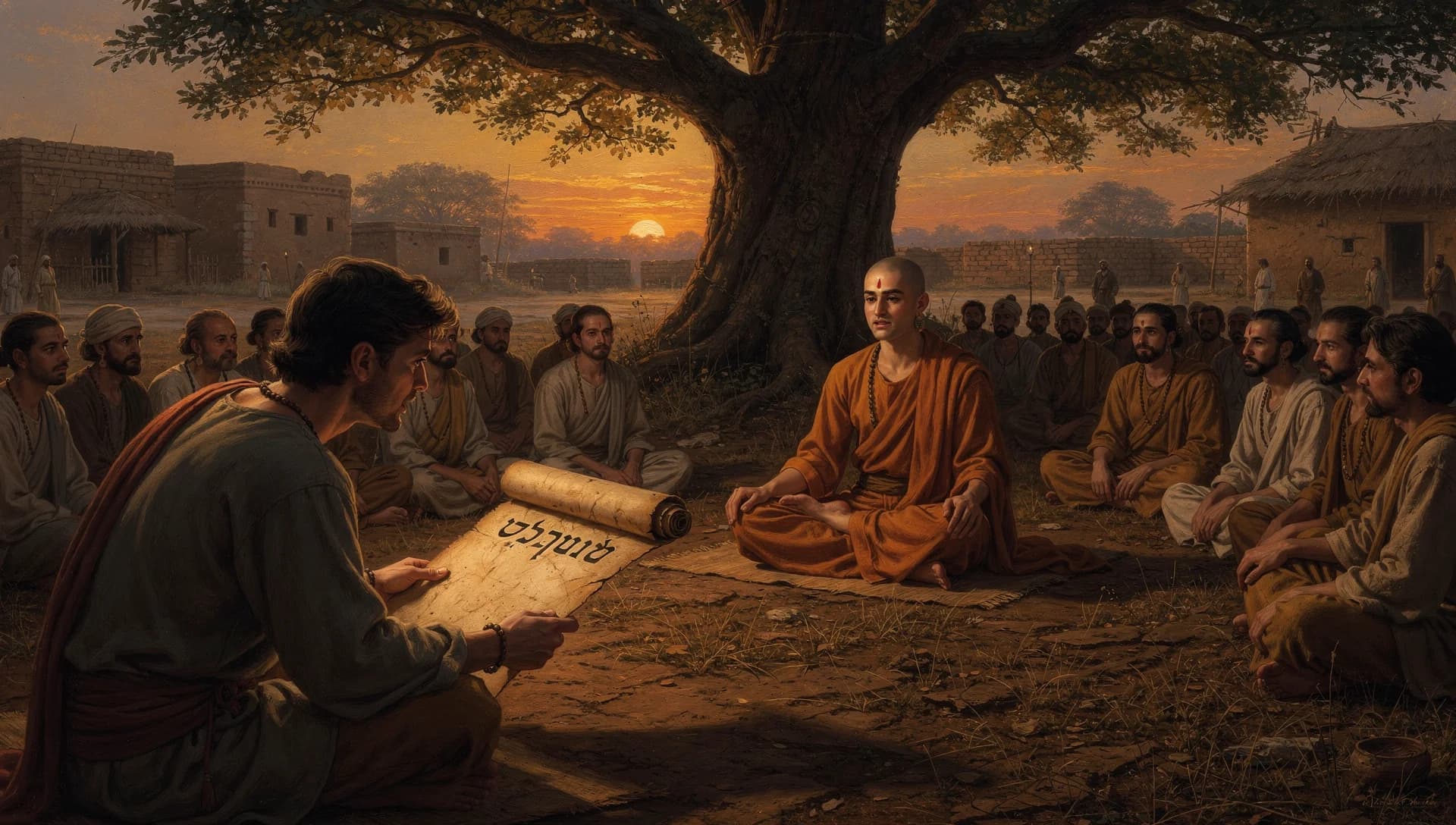
The Prophet Who Almost Got There: Gautama Siddhartha and the Salem Gospel
The Priest Who Had No Father: Machiventa Melchizedek and the Genesis Fragment
The Memory That Reached Japan: Machiventa and the Shinto Substrate
The Newsletter
Get the research behind each piece
Free. New Urantia Book explorations, the sources behind the videos, and early looks. No spam, unsubscribe anytime.
Prefer video? Follow on YouTube and Facebook.
Delivered through Substack. You can also read past issues.