
The Insider Who Betrayed: Caligastia and the Norse Loki
Most religions organize their cosmic evil as an outside adversary: the gods against the monsters, order against chaos. Norse mythology preserves a different structure. Loki sits inside the divine council of the Aesir and works against it from within. The Urantia Book names the specific insider-betrayer the Loki figure remembers: Caligastia, the Planetary Prince who turned.
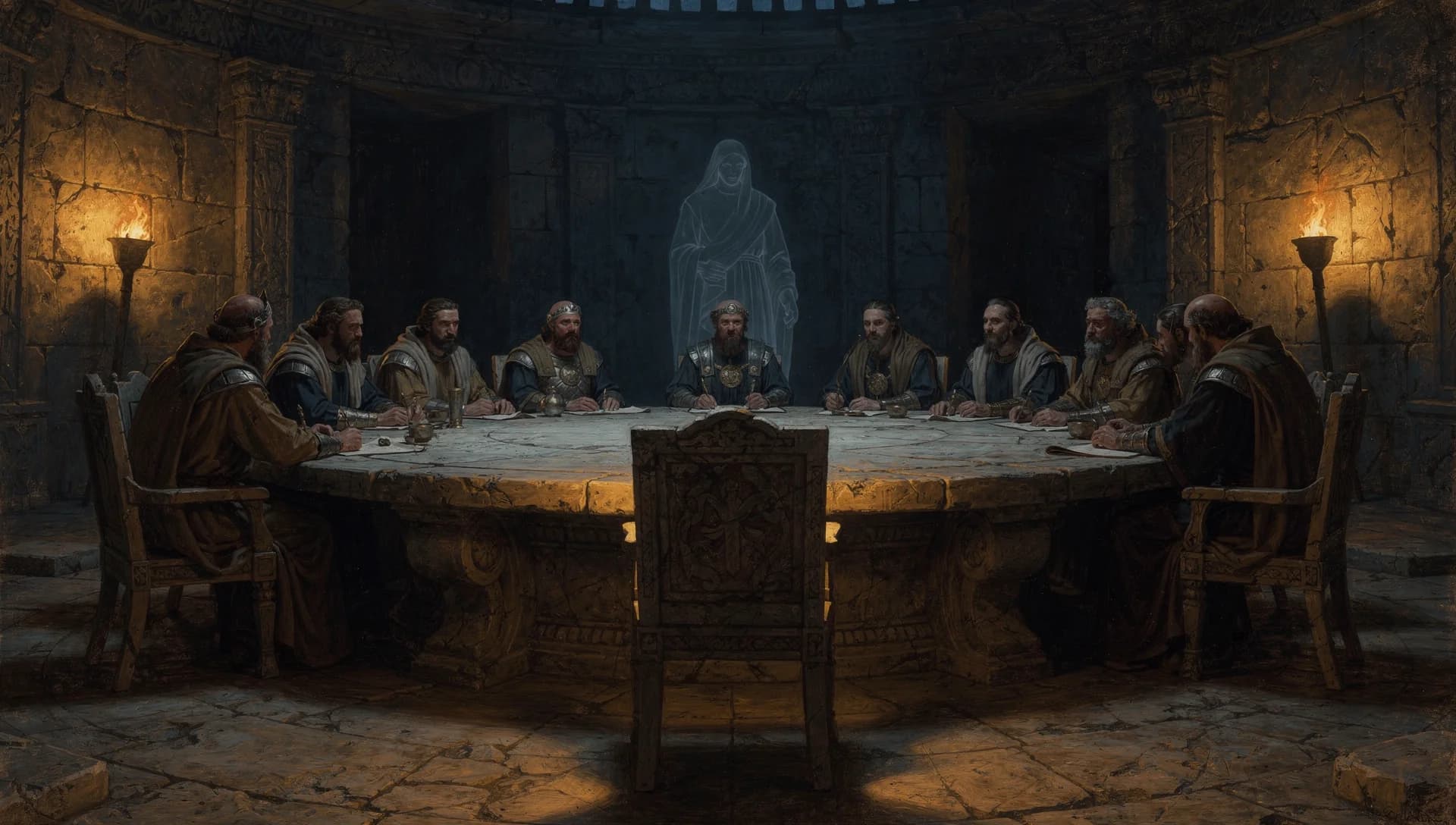
Caligastia, the deposed Planetary Prince whose deception continues on earth = Loki, the shapeshifting trickster within the Aesir who engineers Ragnarok
This article expands on the decoder mapping. For the side-by-side card and quick reference, see the mapping page.
The Category That Does Not Fit
Norse scholars have long noted that Loki does not cleanly fit either of the two principal categories the Norse cosmological system provides. He is not an Aesir in the straightforward sense (his parentage is giant-blooded and his behavior is antagonistic to the Aesir's interests). He is not a jotunn (frost-giant) in the straightforward sense either (he sits inside the Aesir council, participates in their affairs, is called a god by the tradition itself). John Lindow, in Norse Mythology (Oxford University Press, 2001), describes the resulting interpretive puzzle: "Loki is a member of the Aesir who is simultaneously their enemy, a category that does not fit cleanly within the comparative Indo-European templates for cosmic adversaries."
The puzzle persists because the Norse tradition preserves a specific structural feature that the ordinary template of gods against chaos cannot accommodate. The tradition remembers an insider who was simultaneously a betrayer. The Urantia Book names the historical figure whose career produced that memory.
What the Urantia Book Says
Caligastia's status in the Urantia administrative hierarchy is described directly in Paper 66:
"Caligastia was a Lanonandek Son, number 9,344 of the secondary order. He was experienced in the administration of the affairs of the local universe in general and, during later ages, with the management of the local system of Satania in particular." (UB 66:1.1)
His position as Planetary Prince was one of genuine administrative authority. He was not an outside enemy; he was the designated ruler of Urantia under the local universe government. His turn came from within this institutional authority:
"Caligastia very early sought a commission as Planetary Prince, but repeatedly, when his request came up for approval in the constellation councils, it would fail to receive the assent of the Constellation Fathers. Caligastia seemed especially desirous of being sent as planetary ruler to a decimal or life-modification world. His petition had several times been disapproved before he was finally assigned to Urantia." (UB 66:1.3)
When the Lucifer rebellion reached Satania, Caligastia used his position as Planetary Prince to carry the rebellion onto Urantia:
"The Lucifer rebellion was system wide. Thirty-seven seceding Planetary Princes swung their world administrations largely to the side of the archrebel. Only on Panoptia did the Planetary Prince fail to carry his people with him." (UB 53:7.1)
Caligastia's situation after the Michael bestowal is the key element for the Loki mapping. Caligastia is not removed from the planet; he continues to operate from within the planetary system, invisibly, as an active adversarial presence:
"Caligastia, your apostate Planetary Prince, is still free on Urantia to prosecute his nefarious designs, but he has absolutely no power to enter the minds of men, neither can he draw near to their souls to tempt or corrupt them unless they really desire to be cursed with his wicked presence." (UB 53:8.6)
"But since the day of Pentecost this traitorous Caligastia and his equally contemptible associate, Daligastia, are servile before the divine majesty of the Paradise Thought Adjusters and the protective Spirit of Truth, the spirit of Michael, which has been poured out upon all flesh." (UB 53:8.7)
The structural feature the Urantia Book records is this: a superhuman being who was genuinely a member of the ruling divine council (Caligastia was a Lanonandek Son of the appropriate administrative order), who betrayed his commission from within the system, and who continues to operate from within the planetary system after his formal deposition. He is not an external adversary who can be warded off; he is an insider whose insider status persists after the rebellion.
What the Ancient Source Says
Loki appears throughout the Norse literary corpus. The Prose Edda's Gylfaginning describes his ambiguous status:
"Also numbered among the Aesir is the one some call the slanderer of the Aesir, the author of deceit, and the disgrace of all gods and men. He is Loki. He is called the father of lies. Loki is pretty, even beautiful to look at, but he has an evil temper and is very fickle. He surpasses others in the kind of wisdom known as cunning, and is crafty in all things. He has again and again gotten the gods into trouble and often rescued them by his cunning."
The features of the Loki figure include:
First, membership in the Aesir council. Loki is not a giant attacking from outside; he sits at the table.
Second, cunning intelligence used against the council's interests. His distinctive contribution to the tradition is the mechanism of his betrayal: cleverness deployed within the institutional framework to produce outcomes that damage the framework.
Third, engineering of catastrophic events. Loki causes Baldr's death through the mistletoe ruse (Gylfaginning 33-35). He produces the serpent Jörmungandr, the wolf Fenrir, and Hel through monstrous offspring who will emerge at Ragnarok as the destroyers of the cosmic order.
Fourth, binding and eventual release. After the killing of Baldr, Loki is bound beneath the earth (treated in the companion Lucifer-Loki-binding decoder article). He remains bound until Ragnarok, when he is released to lead the hosts of chaos in the final cosmic battle.
The Norse scholarly literature on Loki's puzzling category is extensive. Jan de Vries's The Problem of Loki (Helsinki, 1933) was the foundational monograph. Anna Birgitta Rooth's Loki in Scandinavian Mythology (Gleerup, 1961) catalogued the variant traditions. Stefan Arvidsson's Aryan Idols: Indo-European Mythology as Ideology and Science (University of Chicago Press, 2006) discusses the interpretive history. The common recent scholarly position is that Loki represents a specific category the Norse tradition preserves that does not map cleanly onto comparative Indo-European templates, which suggests a Norse-generated cultural memory rather than an inherited Indo-European structural position.
Why This Mapping Matters
The Norse tradition's distinctive preservation of the insider-betrayer category has been one of the interpretive cruxes of Norse religious studies for a century. The category is theologically important because it shapes the entire Norse eschatological vision: Ragnarok is not the invasion of the cosmic order by external enemies; it is the self-destruction of the cosmic order through the actions of one of its own members. The apocalyptic is internal, not external.
The Urantia Book supplies the specific historical event that produces this distinctive structural preservation. The Lucifer rebellion was specifically an internal rebellion within the superhuman administrative system. Caligastia was not an outside adversary; he was the designated Planetary Prince who betrayed his office. His post-bestowal status is not exile or annihilation; it is continued operation within the planetary system under progressively restricted conditions. The Norse tradition's insider-betrayer category is the mnemonic preservation of this administrative reality.
The mapping has structural consequences for reading Norse religious material. The Loki figure is not a mythological abstraction of "the force of chaos within order" or a pure trickster archetype. He is the compressed memory of a specific historical being whose career produced the cultural substrate from which the Loki narrative was constructed. The distinctive features the Norse tradition preserves (insider status, cunning rather than brute force, engineering of catastrophes through manipulation of internal council members, eventual binding, eventual release for final reckoning) are each consistent with what the Urantia Book describes about Caligastia's career.
The decoder's claim does not require that every Loki narrative element trace directly to a Caligastia event. Mythological elaboration adds content that the historical substrate does not support. What the claim requires is that the structural core of the Loki figure (the insider-betrayer category that the Norse tradition distinctively preserves) be the mnemonic residue of the historical Caligastia rebellion. The structural fit is tight enough to warrant the mapping; the elaboration is the normal pattern of mythological transmission across 200,000 years of cultural history.
Sources
- The Urantia Book, Paper 53 (The Lucifer Rebellion), Paper 66 (The Planetary Prince's Staff), Paper 67 (The Planetary Rebellion). Urantia Foundation, first printing 1955. Cited passages: 53:8.6, 53:8.7, 66:1.1, 66:1.3, 67:1.3.
- Sturluson, Snorri. The Prose Edda. Translated by Jesse L. Byock. Penguin, 2005. Gylfaginning 33-35.
- Dronke, Ursula, editor and translator. The Poetic Edda, Volume II. Oxford University Press, 1997.
- Lindow, John. Norse Mythology: A Guide to Gods, Heroes, Rituals, and Beliefs. Oxford University Press, 2001.
- de Vries, Jan. The Problem of Loki. FF Communications 110, Helsinki, 1933.
- Rooth, Anna Birgitta. Loki in Scandinavian Mythology. Gleerup, 1961.
- Simek, Rudolf. Dictionary of Northern Mythology. Translated by Angela Hall. D. S. Brewer, 1993.
- Arvidsson, Stefan. Aryan Idols: Indo-European Mythology as Ideology and Science. University of Chicago Press, 2006.
Confidence and Evidence
- Confidence: INFORMED SPECULATION
- Evidence rating: MODERATE
- Basis: The Norse tradition's distinctive preservation of the insider-betrayer category has resisted assimilation to comparative Indo-European templates and invites a Norse-generated cultural memory. The Urantia account of Caligastia's career (Planetary Prince who betrayed from within, continues to operate within the system post-deposition, awaits final adjudication) structurally matches the Loki figure's defining features. The mapping is internally consistent across multiple Norse narrative elements.
Related Decoder Articles
- Caligastia, Planetary Prince = An / Anu
- Lucifer Binding = Loki Binding Beneath the Earth
- The Staff Split = Aesir-Vanir War
By Derek Samaras
Connecting Articles
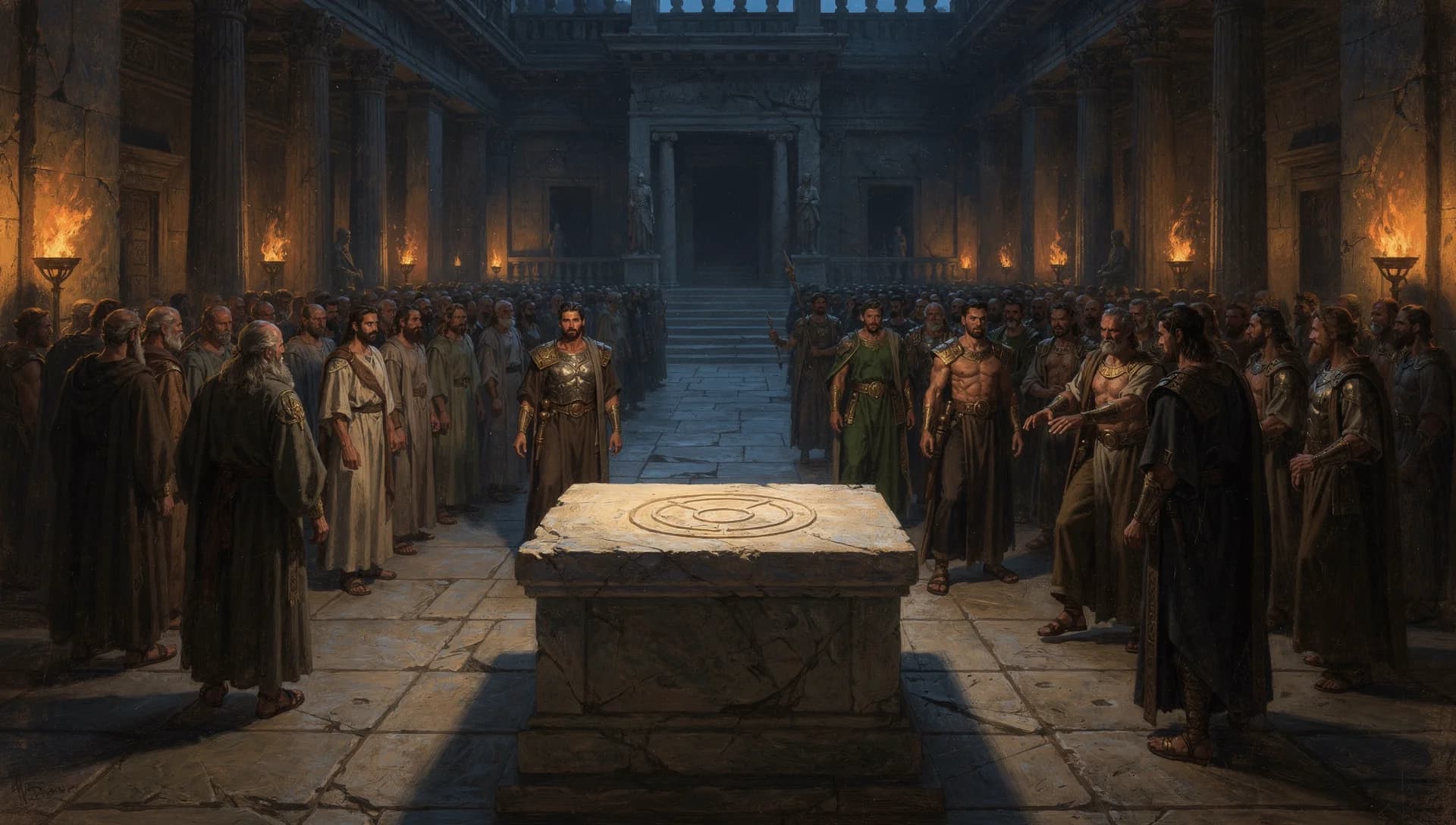
The First War Among the Gods: The Staff Split and the Aesir-Vanir Conflict
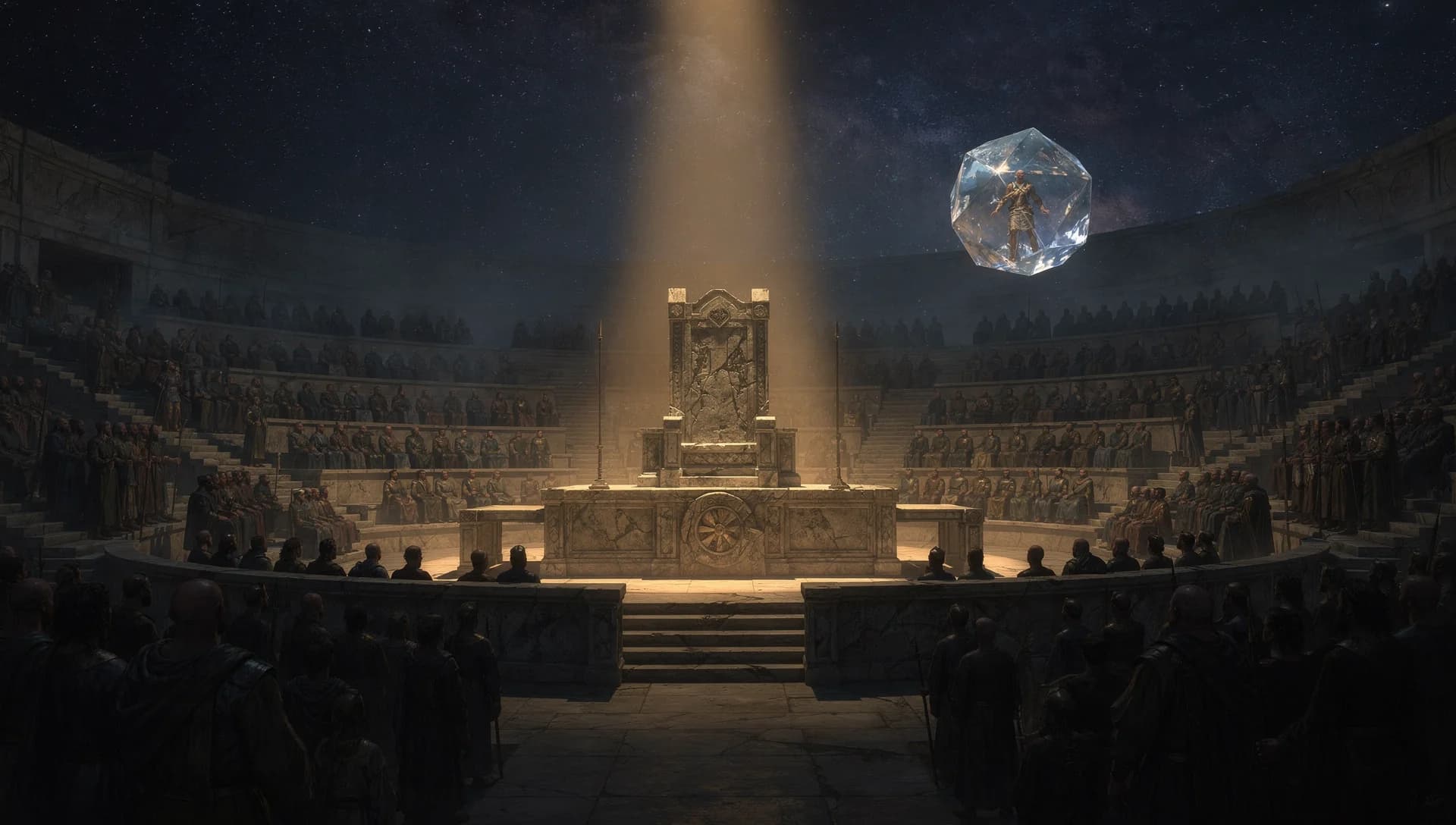
The Final Adjudication: Ragnarok and the Pending Verdict
Not One Devil, Six Rebels: The Theological Confusion of Lucifer, Satan, and Caligastia
The Bound Rebel: Lucifer Interned and Loki in the Cave
The Newsletter
Get the research behind each piece
Free. New Urantia Book explorations, the sources behind the videos, and early looks. No spam, unsubscribe anytime.
Prefer video? Follow on YouTube and Facebook.
Delivered through Substack. You can also read past issues.