
The First War Among the Gods: The Staff Split and the Aesir-Vanir Conflict
The first war in Norse mythology is not a battle between gods and giants. It is a schism within the divine community itself: Aesir against Vanir, two factions of an originally unified divine order. The Urantia Book records the historical event: the Caligastia staff split during the Lucifer rebellion, and the loyal faction followed Van.
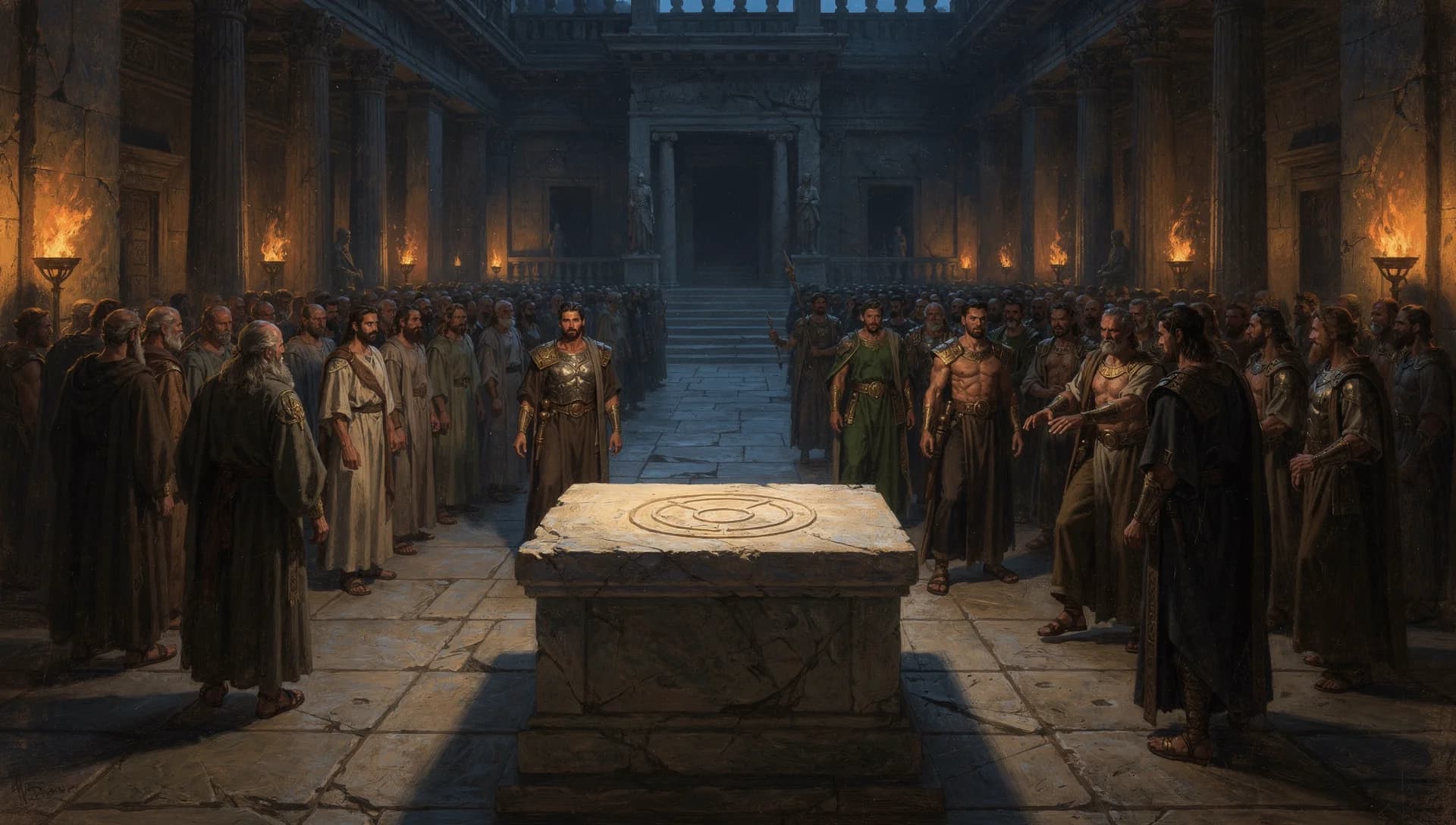
The staff split: loyal vs. rebel members of the Prince's corps = The Aesir-Vanir War, the first conflict among the gods
This article expands on the decoder mapping. For the side-by-side card and quick reference, see the mapping page.
The War That Was Not Supposed to Happen
Most ancient religious traditions have a war at their cosmic origin. In Mesopotamian mythology, the gods of order battle the monsters of chaos. In Greek mythology, the Olympians war against the Titans. In Vedic mythology, the Devas oppose the Asuras. The structure is consistent: a divine pantheon aligned against an external adversary, with the adversary typically representing a prior cosmological stratum that must be overcome.
Norse mythology breaks this pattern. The first war in Norse cosmology is not between the gods and outsiders. It is a civil war within the divine community itself: Aesir against Vanir, two factions of the divine order fighting each other before they eventually reconcile and form the composite pantheon of Norse religion. The war has puzzled Norse scholars since the systematization of the sources in the nineteenth century. Why does the Norse tradition remember a schism within the divine family as its foundational cosmic conflict?
The Urantia Book records the specific historical event that produces exactly this mnemonic shape.
What the Urantia Book Says
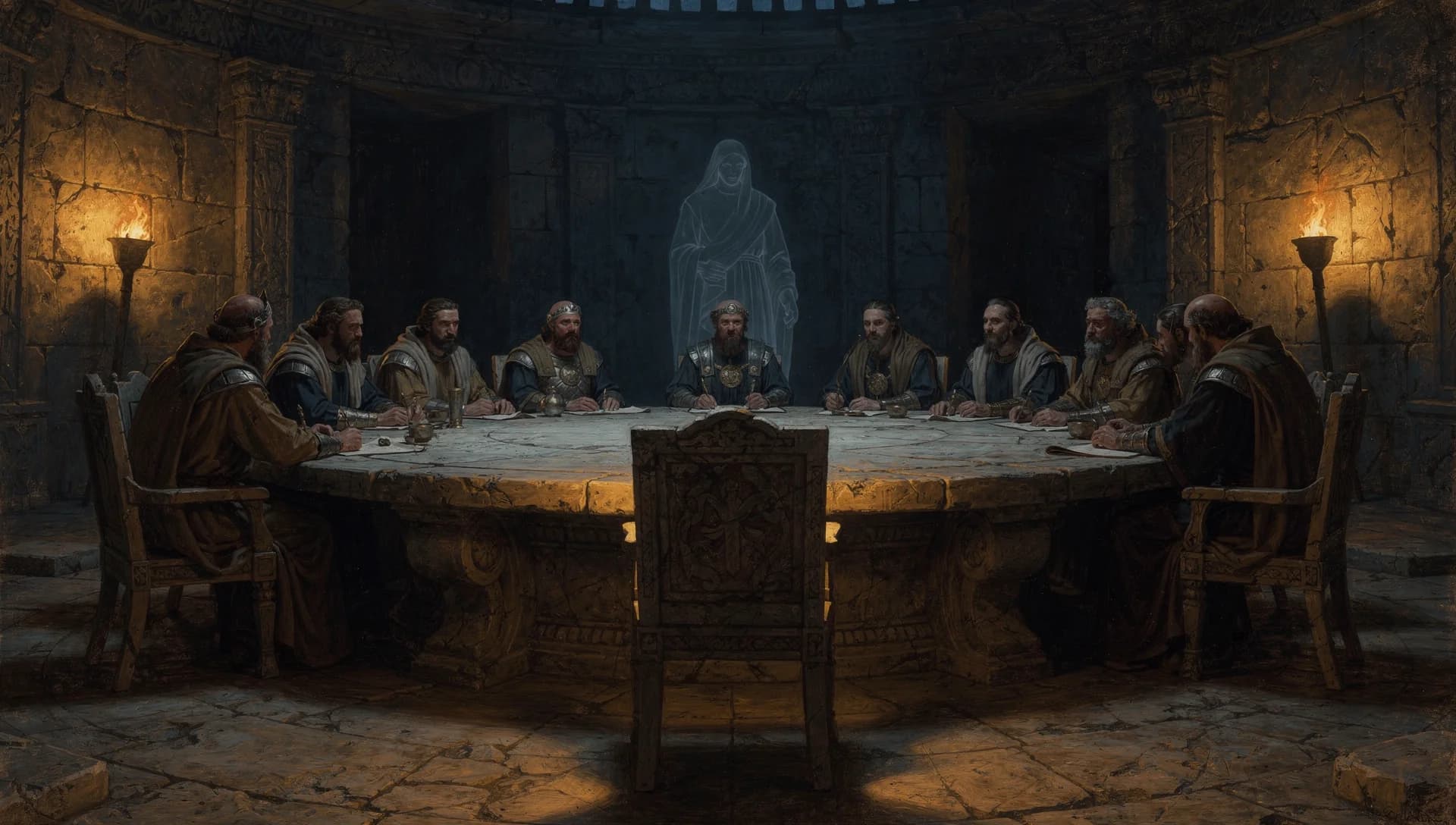
The Caligastia staff, the corporeal body of one hundred superhuman beings assigned to Urantia at the arrival of the Planetary Prince, was a single unified administrative corps (UB 66:2.3). When the Lucifer rebellion reached Urantia through Caligastia, the corps did not hold together:
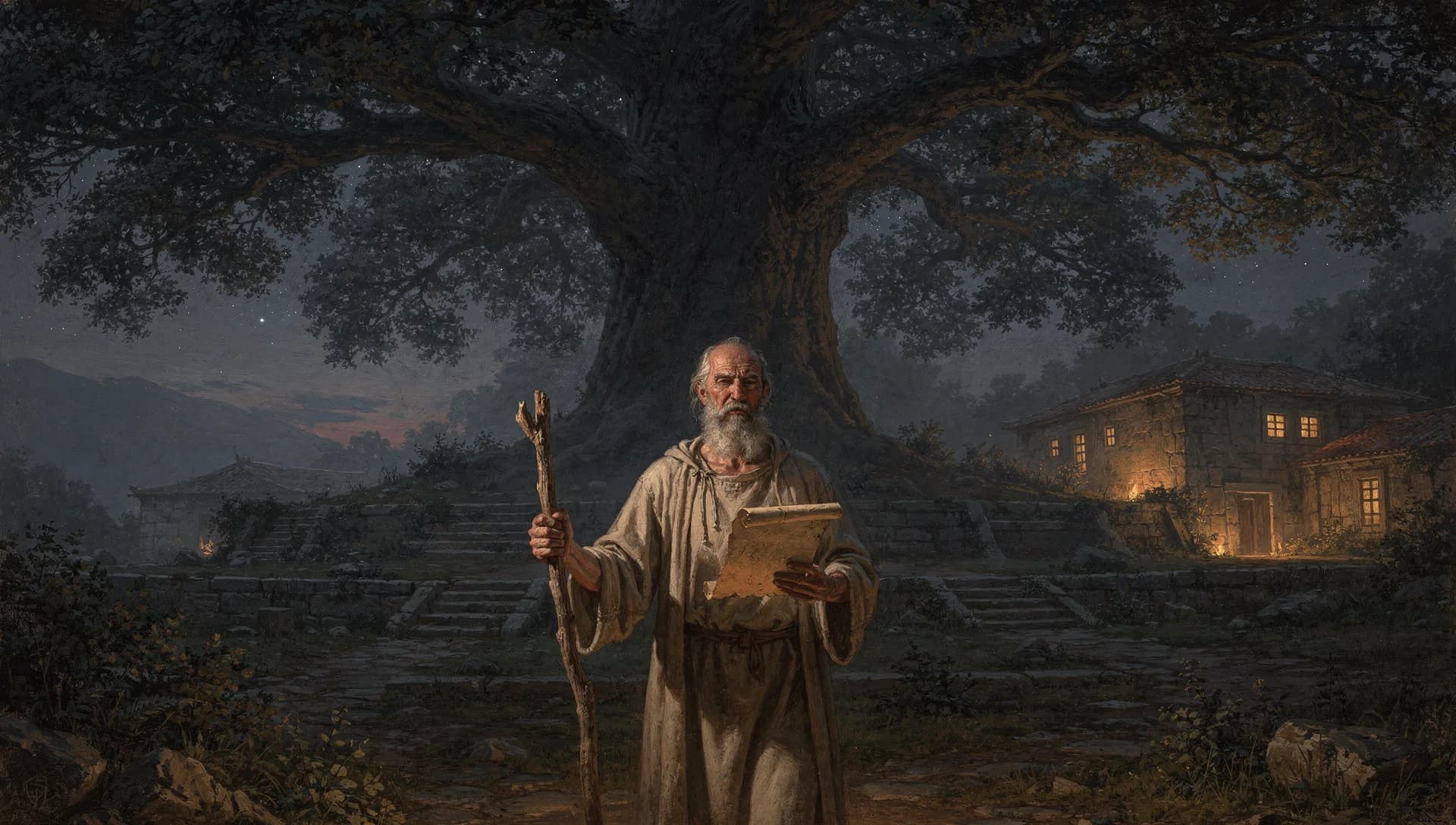
"Upon the outbreak of rebellion, loyal cherubim and seraphim, with the aid of three faithful midwayers, assumed the custody of the tree of life and permitted only the forty loyalists of the staff and their associated modified mortals to partake of the fruit and leaves of this energy plant. There were fifty-six of these modified Andonite associates of the staff, sixteen of the Andonite attendants of the disloyal staff refusing to go into rebellion with their masters." (UB 67:3.5)
Forty loyal, sixty rebel. The split is specific. The loyal faction was led by Van; the rebel faction was led by Nod (the onetime chairman of the Dalamatia commission on industry and trade).
The loyal faction's subsequent history is described:
"Before the arrival of the Melchizedek receivers, Van placed the administration of human affairs in the hands of ten commissions of four each, groups identical with those of the Prince's regime. The senior resident Life Carriers assumed temporary leadership of this council of forty, which functioned throughout the seven years of waiting. Similar groups of Amadonites assumed these responsibilities when the thirty-nine loyal staff members returned to Jerusem." (UB 67:6.2)
The rebel faction became the Nodites:
"The sixty members of the planetary staff who went into rebellion chose Nod as their leader. They worked wholeheartedly for the rebel Prince but soon discovered that they were deprived of the sustenance of the system life circuits. They awakened to the fact that they had been degraded to the status of mortal beings. They were indeed superhuman but, at the same time, material and mortal." (UB 67:4.2)
The subsequent relationship between the two groups is described as a long-running tension:
"Ten thousand years after the rebellion practically all the gains of the Prince's administration had been effaced; the races of the world were little better off than if this misguided Son had never come to Urantia. Only among the Nodites and the Amadonites was there persistence of the traditions of Dalamatia and the culture of the Planetary Prince." (UB 73:1.2)
The two factions, both carrying the corporeal-staff inheritance but now divided by the rebellion, populated the ancient Near East as parallel cultural streams. Their descendants continued for millennia. The linguistic trace is explicit: Van's loyal faction was associated with Van, and the name "Amadonites" was used for the modified Andonite associates who remained loyal with Amadon. The Nodite lineage was named for its rebel leader Nod.
What the Ancient Source Says
The Aesir-Vanir war is preserved principally in the Völuspá (Poetic Edda) and in the Prose Edda's Skáldskaparmál. The Völuspá 21-26 describes the war's opening and its indecisive outcome:
"She remembers the first war in the world, when the gods with spears struck Gullveig, and in Hár's hall they burned her. Three times burned, three times reborn, often, again; though she still lives.
She was called Heiðr whenever she came to houses, the witch of prophecy; she charmed rods. She practiced seiðr wherever she could; she was ever the joy of wicked women.
Then all the Powers went to the judgment seats, the most sacred gods, and took counsel on this: whether the Aesir should pay a fine, or whether all the gods should share the worship."
The passage is compressed. The war opens with a ritual killing of Gullveig (associated with the Vanir) by the Aesir. The Vanir retaliate. The war continues inconclusively until the two sides negotiate a peace involving an exchange of hostages (Njörðr, Freyr, and Freyja sent from the Vanir to the Aesir) and a shared worship arrangement.
Georges Dumézil's Gods of the Ancient Northmen (University of California Press, 1973) treats the Aesir-Vanir war as the Norse preservation of an Indo-European structural pattern distinguishing a warrior-sovereign divine class (Aesir) from a fertility-wisdom divine class (Vanir). John Lindow's Norse Mythology (2001) notes the scholarly consensus that the war represents "a conflict within the divine community rather than between gods and their enemies." E. O. G. Turville-Petre's Myth and Religion of the North (Holt, Rinehart and Winston, 1964) places the Vanir's distinctive association with earth, fertility, and older wisdom within the broader comparative Indo-European religious frame.
The etymology of Vanir is contested but philologically interesting. The plural Vanir derives from a root associated with the semantic field of friend, kin, or favor (Old Norse vinr, Old English wine, cognate with Latin venus in its original sense of affection or favor). Some philologists have proposed a connection to the geographic name Van (as in Lake Van in Armenia, the historical kingdom of Urartu). The Urartian-Vanir connection is not philologically standard but has been noted in comparative Indo-European linguistics.
The Aesir-Vanir distinction was theologically important in Norse religion. The Vanir are consistently associated with older, earth-based, fertility-related wisdom. The Aesir are associated with warrior-kingship, sky, and younger dominant authority. The post-war arrangement, in which Vanir deities are received into the Aesir pantheon but retain their distinctive character, preserves the memory of two originally separate divine households that merged under duress.
Why This Mapping Matters
Norse mythology's structure of a first war that is a civil schism is anomalous in the comparative Indo-European religious corpus. The conventional pattern (gods versus chaos monsters) is not what the Norse tradition preserves. Instead, the Norse tradition remembers a specific schism within a single originally unified divine order, with two factions eventually reconciling through hostage exchange and shared worship.
The Urantia Book supplies the historical event that could plausibly seed this mnemonic structure. The Caligastia staff was a single unified corps that split during the Lucifer rebellion into a loyal faction (led by Van) and a rebel faction (led by Nod). The subsequent millennia saw both factions continuing as parallel cultural streams whose descendants (Amadonites and Nodites) persisted in the ancient Near East. The split, the subsequent parallel existence, and the eventual blending of the two streams in later populations correspond to the structural shape of the Aesir-Vanir war narrative.
The linguistic correspondence is specific enough to note. The Vanir are the divine faction associated with older earth-wisdom; the Van's loyal faction in the Urantia account is the faction that preserved the Dalamatian cultural-civilizational inheritance. The name Vanir, etymologically linked to the semantic field of friend or kin (and possibly to the geographic Van region of Urartu, treated in the Van-Assyrian-Reliefs decoder article), corresponds to what the Van-faction inheritance would plausibly be named in a downstream Germanic preservation.
The transmission route is consistent with the documented Andite and later Indo-European migrations. The Vanir memory would have been carried north and west through the same migration corridors that produced the broader Germanic religious tradition. By the time the Norse tradition was systematized in thirteenth-century Iceland, the specific historical referents had been lost, but the structural memory of the staff split survived as the Aesir-Vanir war.
The mapping's significance is that it restores a specific historical referent to a mythological puzzle. The Norse first war as civil schism is not an arbitrary mythological choice; it is the preserved mnemonic shape of a real historical event in the deep past of the planet's superhuman administrative history. The war the Norse tradition places at the cosmic origin is, on the Urantia account, the staff split during the Lucifer rebellion, remembered across 200,000 years of cultural transmission (UB 53:4.1).
Sources
- The Urantia Book, Paper 67 (The Planetary Rebellion), Paper 73 (The Garden of Eden). Urantia Foundation, first printing 1955. Cited passages: 67:3.5, 67:4.2, 67:6.2, 73:1.2.
- Dronke, Ursula, editor and translator. The Poetic Edda, Volume II: Mythological Poems. Oxford University Press, 1997.
- Sturluson, Snorri. Edda. Translated by Anthony Faulkes. Everyman, 1987.
- Lindow, John. Norse Mythology: A Guide to Gods, Heroes, Rituals, and Beliefs. Oxford University Press, 2001.
- Dumézil, Georges. Gods of the Ancient Northmen. Edited by Einar Haugen, University of California Press, 1973.
- Turville-Petre, E. O. G. Myth and Religion of the North: The Religion of Ancient Scandinavia. Holt, Rinehart and Winston, 1964.
- Ellis Davidson, H. R. Gods and Myths of Northern Europe. Penguin, 1964.
- Polomé, Edgar C. Essays on Germanic Religion. Journal of Indo-European Studies Monograph 6, 1989.
Confidence and Evidence
- Confidence: INFORMED SPECULATION
- Evidence rating: MODERATE
- Basis: The Norse first war as civil schism is anomalous in the Indo-European comparative corpus and invites a specific historical antecedent. The Urantia Book's account of the Caligastia staff split supplies a specific event matching the structural shape (unified divine corps, split into two factions, subsequent parallel existence, eventual blending). The Vanir etymology's semantic field (friend/kin) and possible Van geographic connection reinforce the mapping.
Related Decoder Articles
- Van, Sustained by the Tree of Life = Odin on Yggdrasil
- The Hundred and Forty-Four: Modified Andonites and the Sumerian Igigi
- Van + Fandor + Tree of Life = Assyrian Winged Figure Reliefs
By Derek Samaras
Connecting Articles
The Newsletter
Get the research behind each piece
Free. New Urantia Book explorations, the sources behind the videos, and early looks. No spam, unsubscribe anytime.
Prefer video? Follow on YouTube and Facebook.
Delivered through Substack. You can also read past issues.