
The Bound Rebel: Lucifer Interned and Loki in the Cave
Three major religious traditions preserve the same eschatological structure: a cosmic rebel, bound after defeat, held in captivity for a long period, awaiting release for a final reckoning. The Urantia Book names the historical event. Norse mythology, Christian Revelation, and the Urantia revelation converge on the same account.
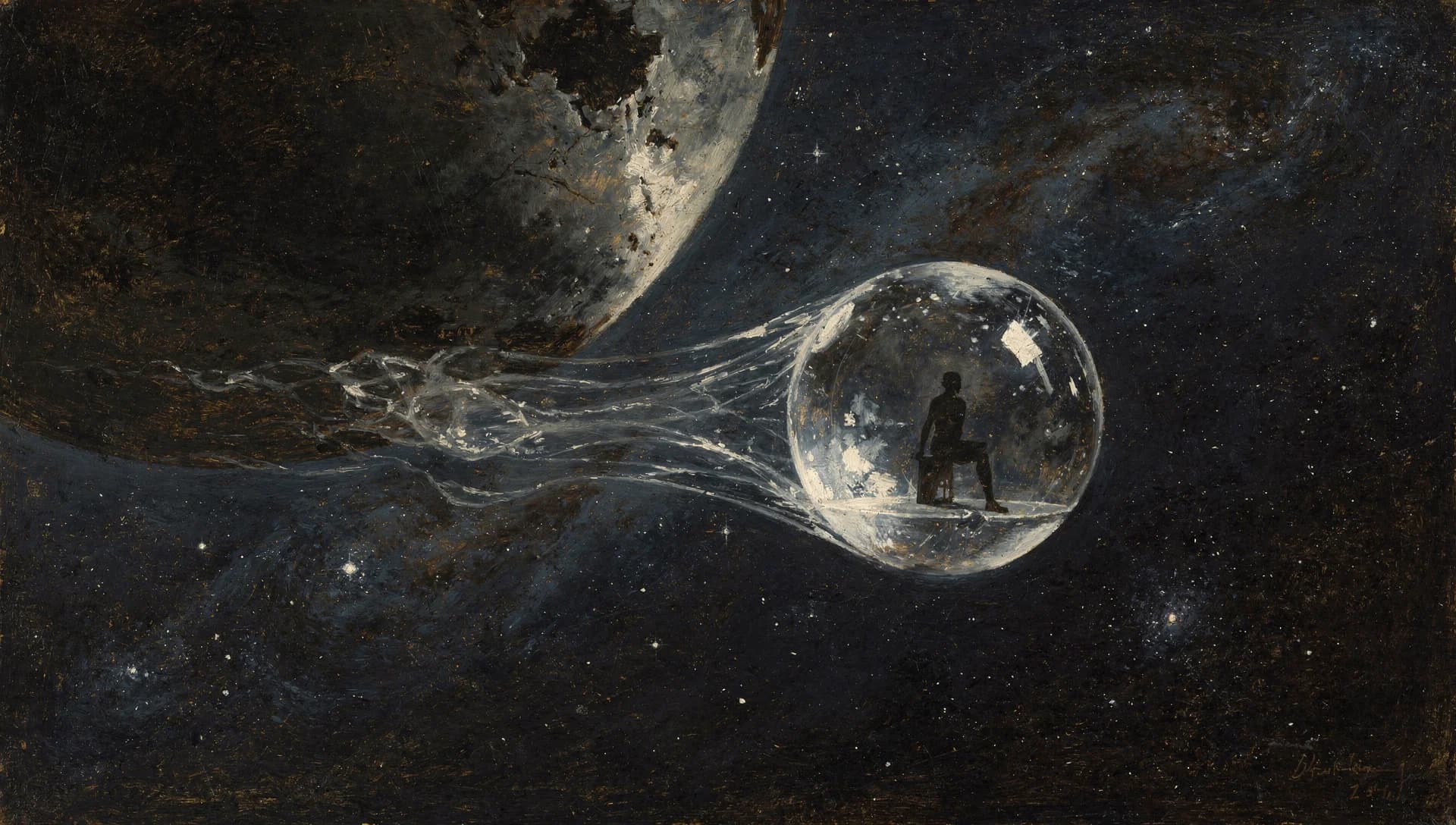
The binding of Lucifer after Michael's bestowal = The binding of Loki beneath the earth until Ragnarok
This article expands on the decoder mapping. For the side-by-side card and quick reference, see the mapping page.
The Structural Match Across Three Traditions
Three independent religious traditions preserve substantially the same account of what happened to the cosmic rebel after the rebellion's resolution. The rebel is captured. The rebel is bound. The rebel is held in a set location. The captivity continues for a long but finite period. The rebel will eventually be released, briefly, for a final reckoning that resolves the cosmic situation permanently.
The three traditions that preserve this account are Norse mythology (Loki bound beneath the earth), Christian apocalyptic (the dragon bound in the bottomless pit, Revelation 20), and the Urantia revelation (Lucifer interned on satellite number one of Jerusem). The structural convergence across three traditions developing in different cultures and different millennia is close enough to invite a common causal explanation.
What the Urantia Book Says
The Urantia account of the post-bestowal treatment of Lucifer is precise. Michael's bestowal on Urantia terminated the active phase of the Lucifer rebellion in the Satania system:
"The bestowal of Michael terminated the Lucifer rebellion in all Satania aside from the planets of the apostate Planetary Princes. And this was the significance of Jesus' personal experience, just before his death in the flesh, when he one day exclaimed to his disciples, 'And I beheld Satan fall as lightning from heaven.' He had come with Lucifer to Urantia for the last crucial struggle." (UB 53:8.3)
The custodial status of Lucifer is then described:
"The archdeceiver has never been on Urantia since the days when he sought to turn back Michael from the purpose to complete the bestowal and to establish himself finally and securely as the unqualified ruler of Nebadon. Upon Michael's becoming the settled head of the universe of Nebadon, Lucifer was taken into custody by the agents of the Uversa Ancients of Days and has since been a prisoner on satellite number one of the Father's group of the transition spheres of Jerusem. And here the rulers of other worlds and systems behold the end of the unfaithful Sovereign of Satania." (UB 53:9.2)
The captivity's duration is finite, and the expected resolution is named:
"Michael, upon assuming the supreme sovereignty of Nebadon, petitioned the Ancients of Days for authority to intern all personalities concerned in the Lucifer rebellion pending the rulings of the superuniverse tribunals in the case of Gabriel vs. Lucifer, placed on the records of the Uversa supreme court almost two hundred thousand years ago, as you reckon time." (UB 53:9.3)
"We do not look for a removal of the present Satania restrictions until the Ancients of Days make final disposition of the archrebels. The system circuits will not be reinstated so long as Lucifer lives. Meantime, he is wholly inactive." (UB 53:9.6)
The expected final resolution is described:
"We await the flashing broadcast that will deprive these traitors of personality existence. We anticipate the verdict of Uversa will be announced by the executionary broadcast which will effect the annihilation of these interned rebels." (UB 53:9.7)
The structure the Urantia Book describes is exact: a rebel leader, captured at a fixed moment (Michael's ascension), held in a named location (satellite number one of Jerusem), for a stated but finite duration (until the Ancients of Days render final judgment), after which the rebel will be either restored (which Lucifer has refused) or annihilated (which is expected).
What the Ancient Sources Say
Norse Mythology
The Prose Edda's Gylfaginning 50 describes the binding of Loki after his engineering of Baldr's death:
"The Aesir bound Loki with the entrails of his own son, and they were changed into iron. The Skadi took a serpent and hung it over Loki, so that venom should drop into his face; and Sigyn, his wife, stands beside him and holds a basin under the venom-drops. But whenever the basin is full, she goes and pours it out, and while she is doing this the venom drops onto Loki's face, so that he writhes violently, and the earth trembles."
Loki will remain bound "until Ragnarok." At the end of the age, he will be released to lead the hosts of chaos in the final battle against the Aesir. The Völuspá 51-56 preserves the earlier Poetic Edda account of the release and the final cosmic conflict.
Anthony Faulkes's edition of Edda (Everyman, 1987) provides the standard English translation. John Lindow's Norse Mythology (2001) discusses the theological structure of the binding. The Norse account has several matching features: a rebel bound for cosmic offense, held in a named location (beneath the earth with a venom-dripping serpent above), enduring the captivity across the full age, released for a final battle that resolves the cosmic situation.
Christian Revelation
Revelation 20:1-3 preserves the same structural account:
"Then I saw an angel coming down from heaven, holding in his hand the key to the bottomless pit and a great chain. And he seized the dragon, that ancient serpent, who is the devil and Satan, and bound him for a thousand years, and threw him into the pit, and shut it and sealed it over him, so that he might not deceive the nations any longer, until the thousand years were ended. After that he must be released for a little while."
The elements again: a rebel (the dragon / Satan), bound by angelic agency, confined to a named location (the bottomless pit), for a stated duration (a thousand years), released briefly before the final reckoning.
Craig Koester's Revelation: A New Translation with Introduction and Commentary (Anchor Yale Bible, Yale University Press, 2014) treats the passage's apocalyptic background. David E. Aune's three-volume Revelation commentary (Word Biblical Commentary, 1997-1998) provides the detailed exegesis. The Christian binding-release-final-battle structure has been traced to earlier Jewish apocalyptic material (1 Enoch 10, 4 Ezra 13, 2 Baruch 39) and ultimately to the Iranian Zoroastrian eschatology that influenced post-exilic Jewish apocalyptic.
The Shared Structure
The three traditions preserve the same structural sequence:
- A cosmic rebel (Lucifer / Loki / Satan-dragon).
- Defeat or subjugation at a fixed moment.
- Binding by authoritative agency.
- Confinement to a location.
- Duration long but finite.
- Expected release for a final reckoning.
- Final cosmic resolution after the release.
The match is sufficient. No single element could establish genealogical relationship, but the combination of all seven across three independent traditions is too specific to plausibly reflect independent parallel development.
Why This Mapping Matters
Eschatological structures vary sharply between cultures. Most religious traditions do not have this particular sequence of binding, release, and final battle. Mesopotamian religion does not. Egyptian religion does not. Hindu religion has several cosmic conflict structures but not this one. Buddhist religion has eschatological material but not this sequence. The structure appears in Norse mythology, Christian apocalyptic, and the Urantia revelation, and the three traditions are otherwise historically and culturally distant enough that direct borrowing between them is not a sufficient explanation.
The Urantia Book's account supplies the common source. The Lucifer rebellion was a specific historical event in the Satania system. Michael's bestowal on Urantia terminated the active phase. Lucifer was interned pending the Ancients of Days' final adjudication. The system awaits this resolution. This is not mythological material in the Urantia account; it is the contemporary cosmic situation the revelation describes.
If this is the actual historical event, the mnemonic substrate that produced the Norse Loki binding, the Christian dragon binding, and the Zoroastrian-derived apocalyptic binding would all be downstream preservations of the same event. Each tradition preserves the structural core (rebel bound, finite duration, final release, cosmic resolution) while elaborating the details in culturally specific directions.
The Norse tradition puts Loki under the earth with a serpent dripping venom. The Christian tradition puts the dragon in the bottomless pit for a thousand years. The Urantia revelation puts Lucifer on satellite number one of Jerusem awaiting the Gabriel vs. Lucifer adjudication at Uversa. The details differ because each tradition filled them in with locally available imagery. The shared structural core is the memory of the actual rebellion's resolution, carried through millennia of cultural transmission and religiously systematized in each receiving tradition.
The mapping's significance for the contemporary reader is substantial. The Norse Ragnarok prophecy and the Christian Revelation apocalyptic are not arbitrary mythological constructions. They are, on the Urantia account, two cultural preservations of the same actual cosmic situation the Urantia Book describes. The final adjudication of the rebellion is not a mythological inevitability imposed on history; it is a pending event in the Satania system's administrative affairs. The Norse and Christian traditions preserve the memory that this adjudication is coming. The Urantia revelation supplies the administrative detail the ancient traditions could only compress into mythological shape.
Sources
- The Urantia Book, Paper 53 (The Lucifer Rebellion), Paper 54 (Problems of the Lucifer Rebellion). Urantia Foundation, first printing 1955. Cited passages: 53:8.3, 53:9.2, 53:9.3, 53:9.6, 53:9.7.
- Sturluson, Snorri. Edda. Translated by Anthony Faulkes. Everyman, 1987. Gylfaginning 50.
- Dronke, Ursula, editor and translator. The Poetic Edda, Volume II. Oxford University Press, 1997. Völuspá.
- Lindow, John. Norse Mythology: A Guide to Gods, Heroes, Rituals, and Beliefs. Oxford University Press, 2001.
- Koester, Craig R. Revelation: A New Translation with Introduction and Commentary. Anchor Yale Bible, Yale University Press, 2014.
- Aune, David E. Revelation. 3 volumes, Word Biblical Commentary, Word Books, 1997-1998.
- Collins, John J. The Apocalyptic Imagination: An Introduction to Jewish Apocalyptic Literature. Third edition, Eerdmans, 2016.
- Boyce, Mary. Zoroastrians: Their Religious Beliefs and Practices. Second edition, Routledge, 2001.
Confidence and Evidence
- Confidence: INFORMED SPECULATION
- Evidence rating: STRONG
- Basis: Three independent religious traditions (Norse, Christian, Urantia) preserve the same seven-element structural sequence for the rebel's treatment after defeat. The structure is culturally restricted rather than universal. The Urantia account supplies a specific historical event consistent with being the common causal substrate. The Zoroastrian-derived Jewish apocalyptic tradition provides the documented transmission corridor through which the structure reached early Christianity.
Related Decoder Articles
- Caligastia, Planetary Prince = An / Anu
- The Staff Split = Aesir-Vanir War
- Van, Sustained by the Tree of Life = Odin on Yggdrasil
By Derek Samaras
Connecting Articles
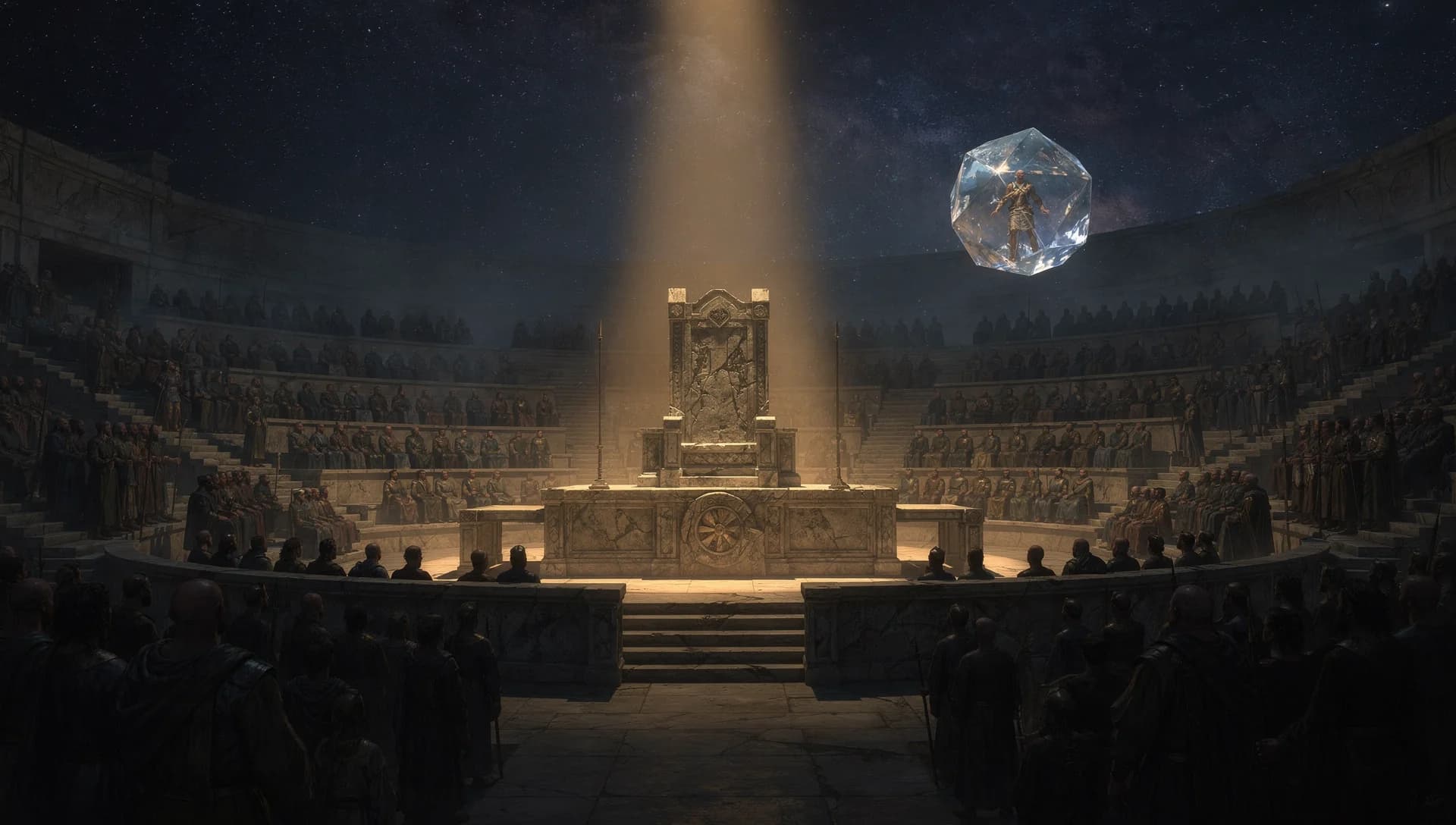
The Final Adjudication: Ragnarok and the Pending Verdict
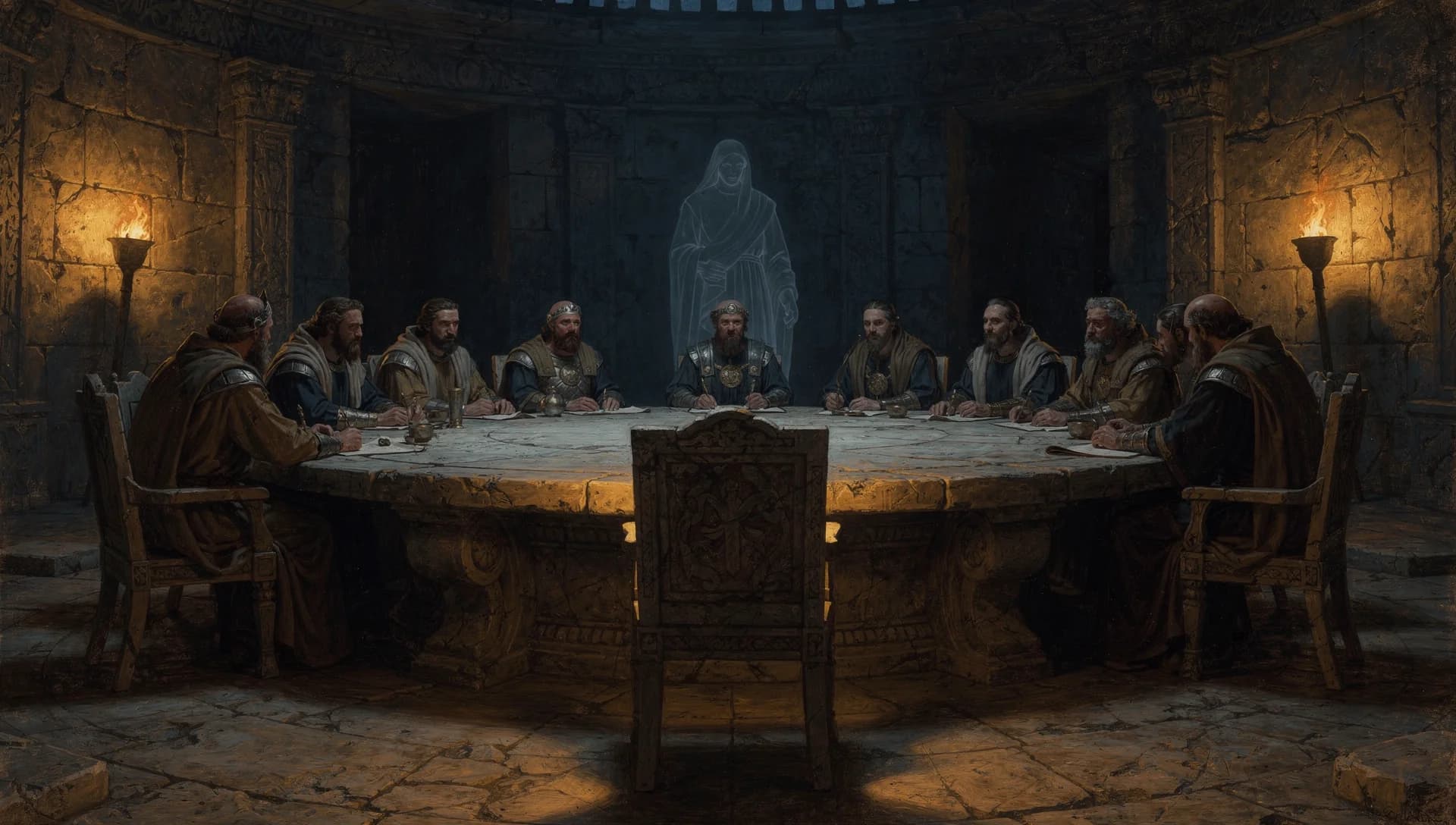
The Insider Who Betrayed: Caligastia and the Norse Loki
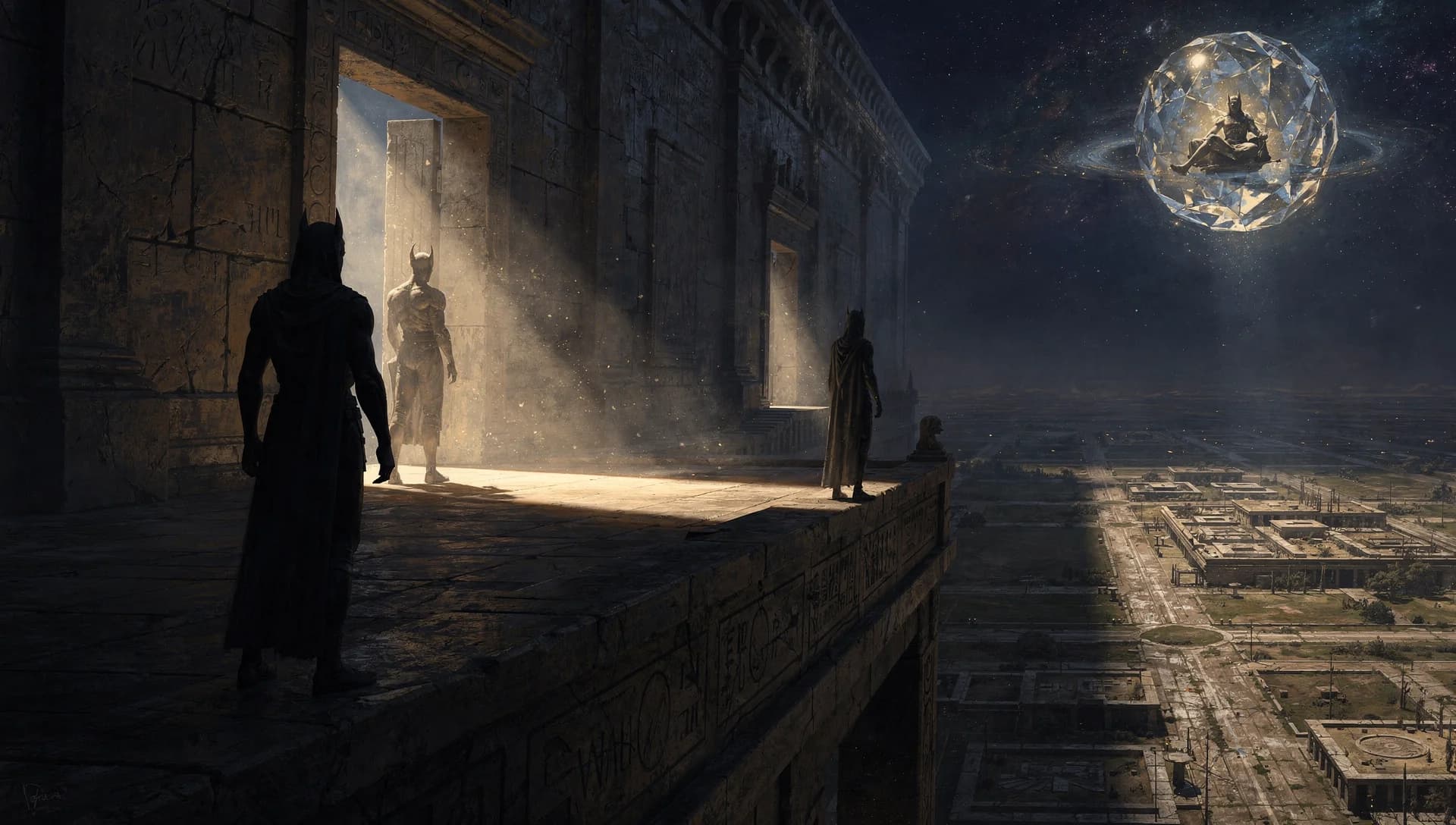
Not One Devil, Six Rebels: The Theological Confusion of Lucifer, Satan, and Caligastia
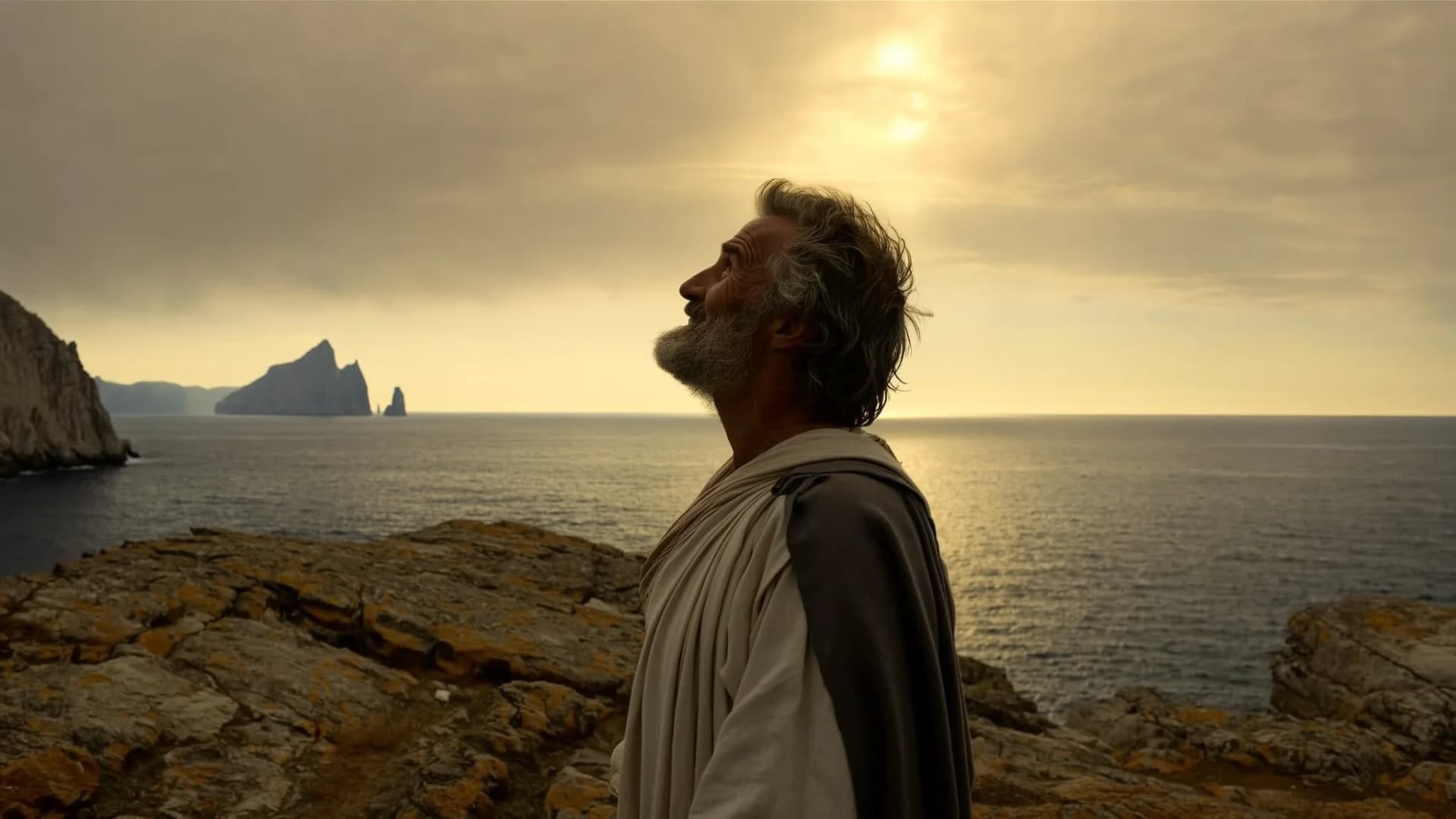
Fragments of Revelation: John's Patmos Vision and What the Text Preserves
The Newsletter
Get the research behind each piece
Free. New Urantia Book explorations, the sources behind the videos, and early looks. No spam, unsubscribe anytime.
Prefer video? Follow on YouTube and Facebook.
Delivered through Substack. You can also read past issues.