
Caligastia and Anu: The Invisible Sky Ruler Who Could Not Be Seen
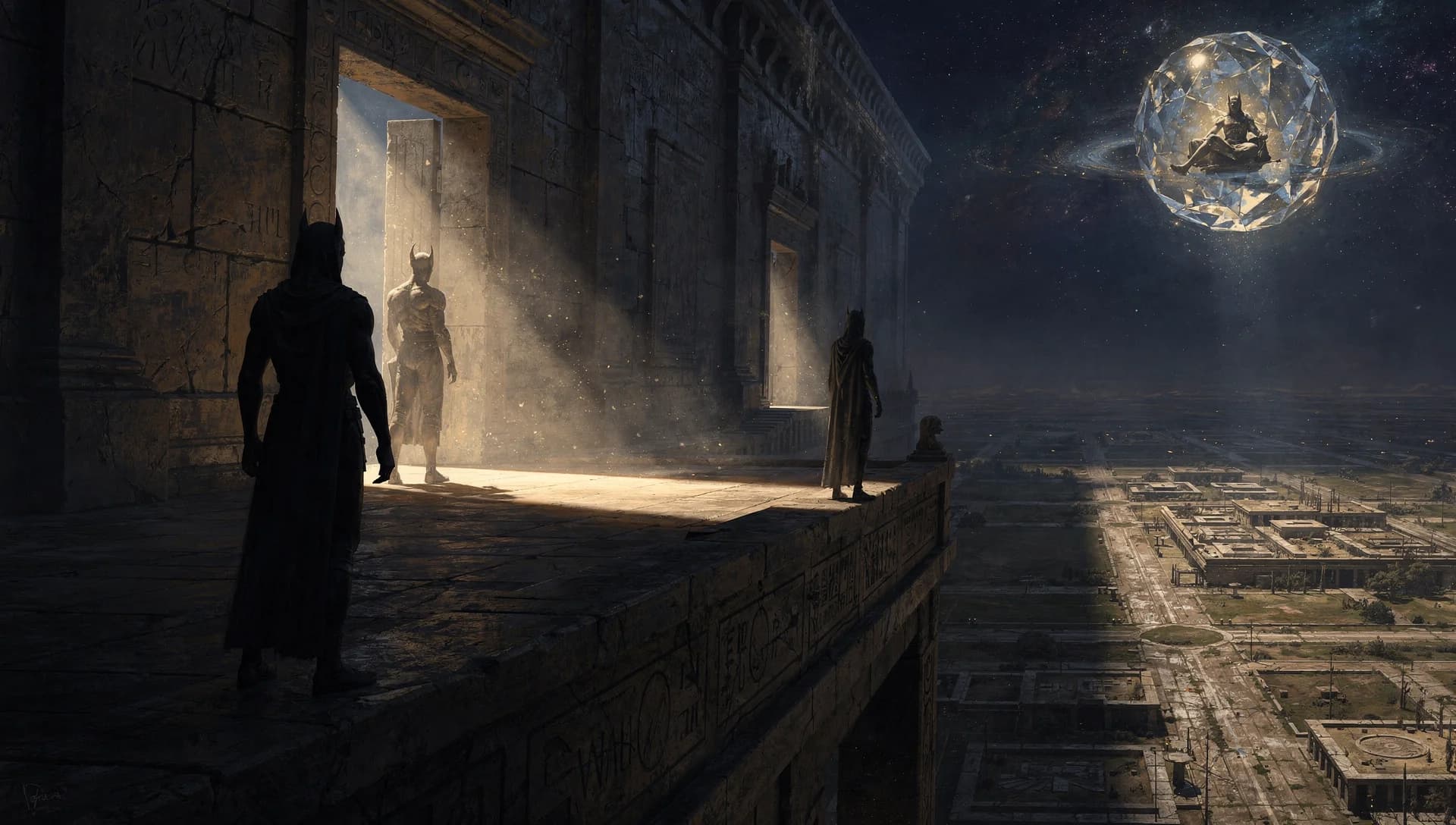
Sumerian religion places Anu at the top of the divine hierarchy, then describes him as remote, aloof, and almost never directly involved. The Urantia Book describes the Planetary Prince as the invisible ruler of Urantia, a being present but unseen, who remained in office for three hundred thousand years before the rebellion. The match between the Sumerian otiose sky-father and the UB's invisible Prince is precise enough to matter.
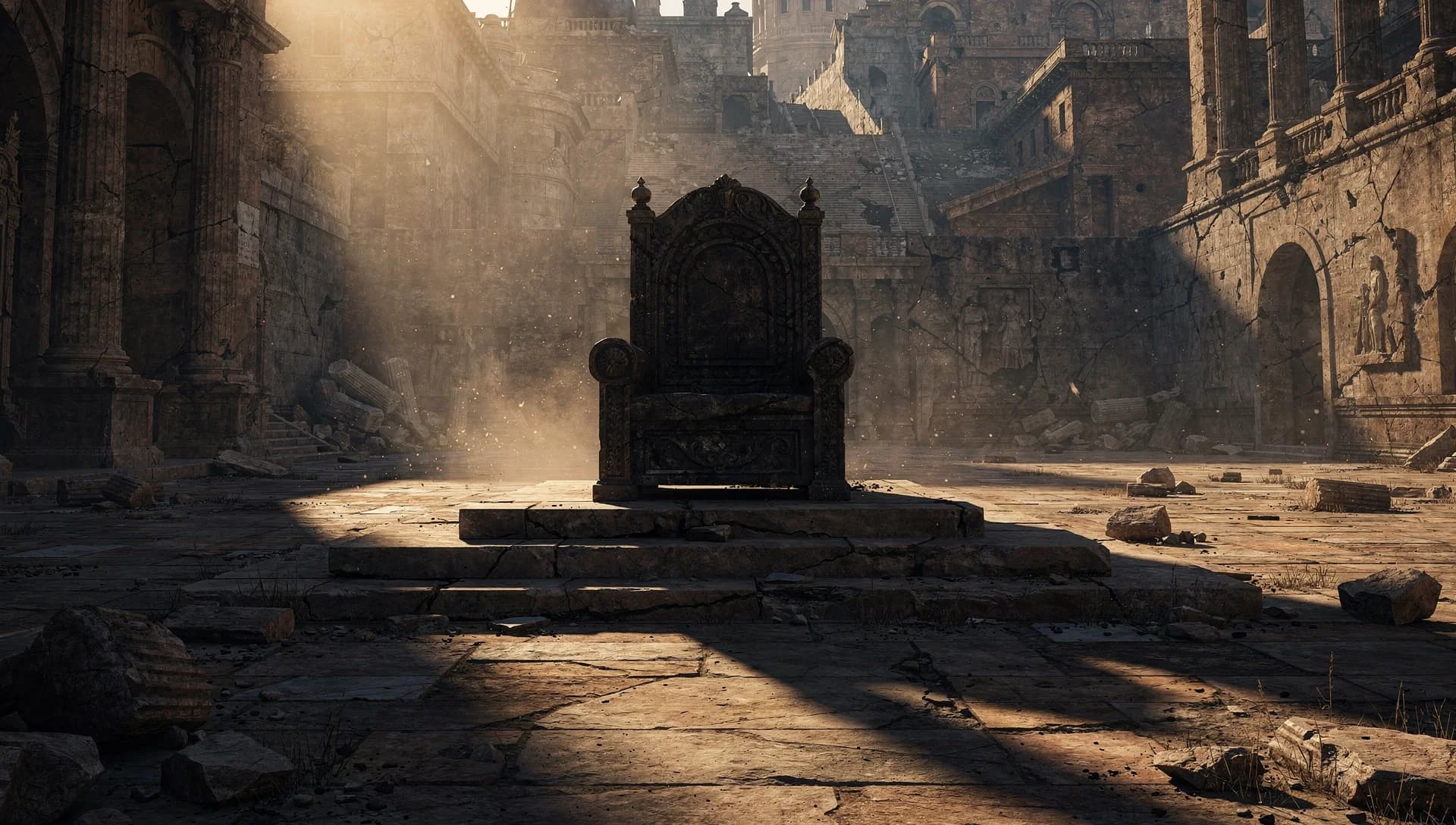
Caligastia, Planetary Prince = An (Sumerian) / Anu (Akkadian)
This article expands on the decoder mapping. For the side-by-side card and quick reference, see the mapping page.
The God Who Never Descends
Every Sumerian list of gods begins with An (in later Akkadian texts, Anu). He is the supreme sky-father, the theoretical head of the pantheon, the founder of the divine line. And yet, despite his position, he is nearly absent from the religious life of ancient Mesopotamia. Scholars have noticed this for more than a century, and they have a name for the phenomenon: An is the paradigm case of a deus otiosus, a retired god.
ORACC, the Open Richly Annotated Cuneiform Corpus maintained at the University of Pennsylvania, summarizes the position this way: An "seems to have always been regarded as rather remote from human affairs." Paul-Alain Beaulieu describes him as a "figurehead." Britannica, in its standard entry, states it plainly: "Although theoretically the highest god, Anu played only a small role in mythology, hymns, and cults of Mesopotamia." The Sumerian and Akkadian peoples knew An existed. They wrote his name at the top of their theological charts. They did not actually pray to him, build temples for him in the way they did for Enki or Enlil, or describe his direct interventions in human life.
This is unusual. Most peoples, when they name a supreme ruler at the head of the pantheon, give him an active role. They tell stories about what he did. They offer him sacrifices. The Sumerians and Akkadians did not. They preserved the position of the supreme sky-ruler while recording, through generations of cultic practice, that he was not in fact present to them.
The Urantia Book describes a figure who occupied exactly this position on earth.
Caligastia, the Planetary Prince
The record is specific about Caligastia's arrival and status:
"About five hundred thousand years ago and concurrent with the appearance of the six colored or Sangik races, Caligastia, the Planetary Prince, arrived on Urantia. There were almost one-half billion primitive human beings on earth at the time of the Prince's arrival, and they were well scattered over Europe, Asia, and Africa. The Prince's headquarters, established in Mesopotamia, was at about the center of world population." (UB 66:0.2)
For three hundred thousand years before the rebellion, Caligastia ruled Urantia as its Planetary Prince (UB 67:1.1). He was a secondary Lanonandek Son, a high order of local universe personality, assigned to the planet as its supreme executive authority. His headquarters were established in Mesopotamia at the city of Dalamatia, and from there his corporeal staff of one hundred organized the first human civilization.
A crucial feature of the Prince's office is that he himself was invisible to mortals. The record is explicit:
"The Planetary Prince of Urantia was not sent out on his mission alone but was accompanied by the usual corps of assistants and administrative helpers." (UB 66:2.1)
"At the head of this group was Daligastia, the associate-assistant of the Planetary Prince. Daligastia was also a secondary Lanonandek Son, being number 319,407 of that order. He ranked as an assistant at the time of his assignment as Caligastia's associate." (UB 66:2.2)
Caligastia directed the corporeal staff, who in turn interacted with mortals. But the Prince himself, as a secondary Lanonandek Son, was a higher-order spiritual being whose native form was not perceptible to human senses. The humans of Dalamatia knew that a Prince ruled over them. They knew his administration was present. They did not see him. This is not a feature unique to Urantia; it is the normal arrangement on any inhabited world during the dispensation of the Planetary Prince. The Prince's presence is real; the Prince's person is not visible.
The word the Sumerologists use for exactly this kind of figure is otiose.
Melam and the Terrifying Splendor
The Mesopotamian record preserves a specific technical term for the experience of an invisible ruler's presence: melam (Akkadian melammu). The term describes a terrifying divine radiance, a numinous aura of rulership that surrounds the gods and the kings they favor. It is not the god made visible; it is the psychological and perceptual impact of a divine presence that cannot itself be seen. The Chicago Assyrian Dictionary defines melammu as "the terrifying divine splendor," the awe-weight of a presence too great to be directly witnessed.
Elena Cassin's La splendeur divine (1968) established the technical vocabulary around melam. Her analysis is foundational in Assyriology: the Mesopotamians had a precise phenomenological term for what it felt like to be in the presence of an invisible ruler. They did not say the ruler was visible. They said the ruler was present in the terrifying splendor of his unseen authority.
This is the exact experience the UB describes of mortals at Dalamatia during Caligastia's reign. The Prince was real, present, in administrative control of the planet. He was not seen. His presence was mediated through the corporeal staff, felt in the structure of the civilization he had organized, and registered by humans as the numinous weight of a ruling authority whose person they could not directly witness.
The Succession Pattern: Anu to Enlil to Marduk
A second structural feature matches the UB record. Mesopotamian theological history records a succession of active rulers while Anu remains in his remote position above them. Enlil occupies the executive role during the Sumerian period. Marduk takes it during the Babylonian period. Later, Ashur takes it in Assyria. The active god changes; Anu remains in theoretical supremacy but out of daily affairs. The Sumerologists treat this as a feature of Mesopotamian theological development: the sky-father is too elevated to govern, so the executive function passes to more accessible figures.
The UB records a parallel structure in the post-rebellion period. Caligastia, though he remained the "titular Planetary Prince" (75:2.2), was stripped of his circuits, isolated from the higher administration, and eventually deposed in connection with Michael's bestowal. The active administration of Urantia passed to the Melchizedek receivers after the rebellion (67:6.6), to the twelve of them who oversaw the planet's affairs, and through them to Adam and Eve, to Machiventa, and through the long sequence of intervening personalities. The sky-father's position is preserved as a formal title while the real work of administration passes through other hands.
Why the Sumerians Would Remember Him This Way
The Urantia Book places Dalamatia exactly where Mesopotamian civilization later arose. After the city's submergence, the loyal Amadonites and the rebel Nodites settled in the same broad region. The Sumerian culture that took shape over the following ten thousand years had two memory streams running through it: the Nodite stream carried the memory of the rebel faction, and the Amadonite stream carried the memory of the loyal remnant. Both streams knew that an invisible Prince had once ruled over their ancestral land. Neither stream had a way to describe this Prince directly, because no ordinary person had ever seen him.
What they could describe was the phenomenology of his presence: a supreme authority, removed from daily affairs, real but invisible, whose power was felt rather than witnessed. They preserved the memory in the figure the Sumerologists call An and the Akkadians called Anu, the otiose sky-father at the head of the pantheon, who everyone agreed was supreme but no one could describe in action.
Why This Matters
None of this proves that Sumerian scribes intended to describe Caligastia specifically. The confidence rating on this mapping is INFORMED SPECULATION, and the evidence rating on the card is STRONG precisely because the phenomenological match is unusually precise. What the comparison shows is a pattern that is hard to account for without a common seed: a supreme sky-ruler, real but invisible, at the head of the divine order but removed from its daily operation, whose presence was registered as numinous splendor rather than direct vision.
The Urantia Book names the person who fits this description. Sumerian religion preserves the memory of a figure who occupied exactly this role. The names differ. The role is the same.
Read against the UB background, the Mesopotamian otiose sky-father stops being a puzzle in comparative religion and starts being a record of what the people of that region actually knew about the administrative history of their planet, remembered as accurately as thousand-year-old oral tradition allowed.
Sources
- The Urantia Book, Papers 66, 67, 75.
- Beaulieu, Paul-Alain. "The God Anu." In The God-Lists of Mesopotamia. Leuven, 2003.
- Cassin, Elena. La splendeur divine: Introduction à l'étude de la mentalité mésopotamienne. Mouton, 1968.
- Chicago Assyrian Dictionary (CAD), entries for melammu, anu.
- ORACC (Open Richly Annotated Cuneiform Corpus), University of Pennsylvania: An/Anu entry.
- Encyclopaedia Britannica, entry for "Anu (Mesopotamian god)."
- Kramer, Samuel Noah. The Sumerians: Their History, Culture, and Character. University of Chicago Press, 1963.
Confidence rating: INFORMED SPECULATION. Evidence rating: STRONG. The decoder methodology, evidence ratings, and full mapping table live at /decoder.
For the rebellion that ended Caligastia's reign, see The War in Heaven Was Real. For the loyal remnant who rebuilt after Dalamatia fell, see Van and Enki.
Byline: Derek Samaras | Urantia Book Network | April 2026
Connecting Articles
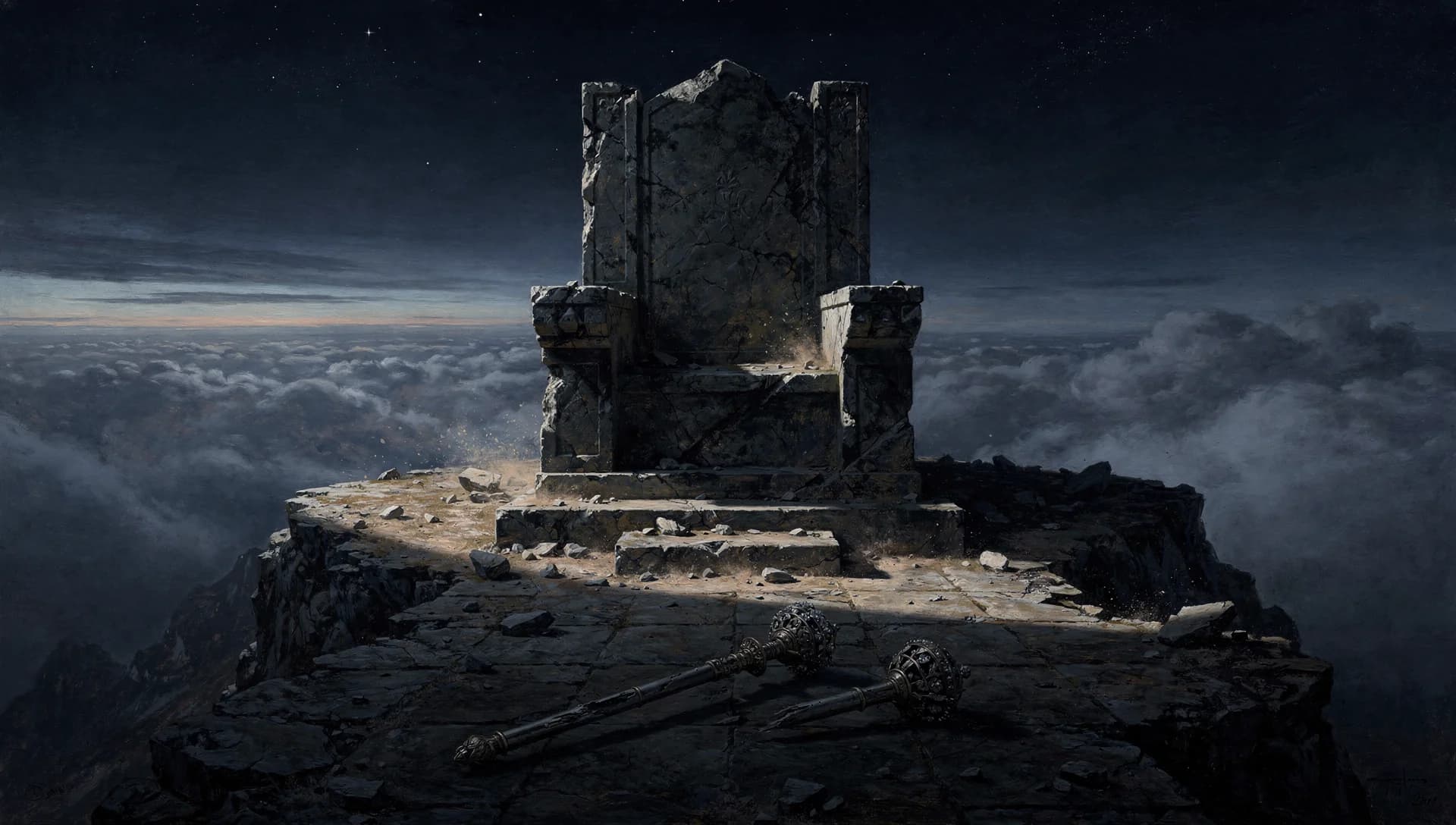
The Sky Father Who Could Not Be Seen: Caligastia and the Greek Ouranos

The Corporeal Staff and the Anunnaki: When Mainstream Etymology Already Says the Answer
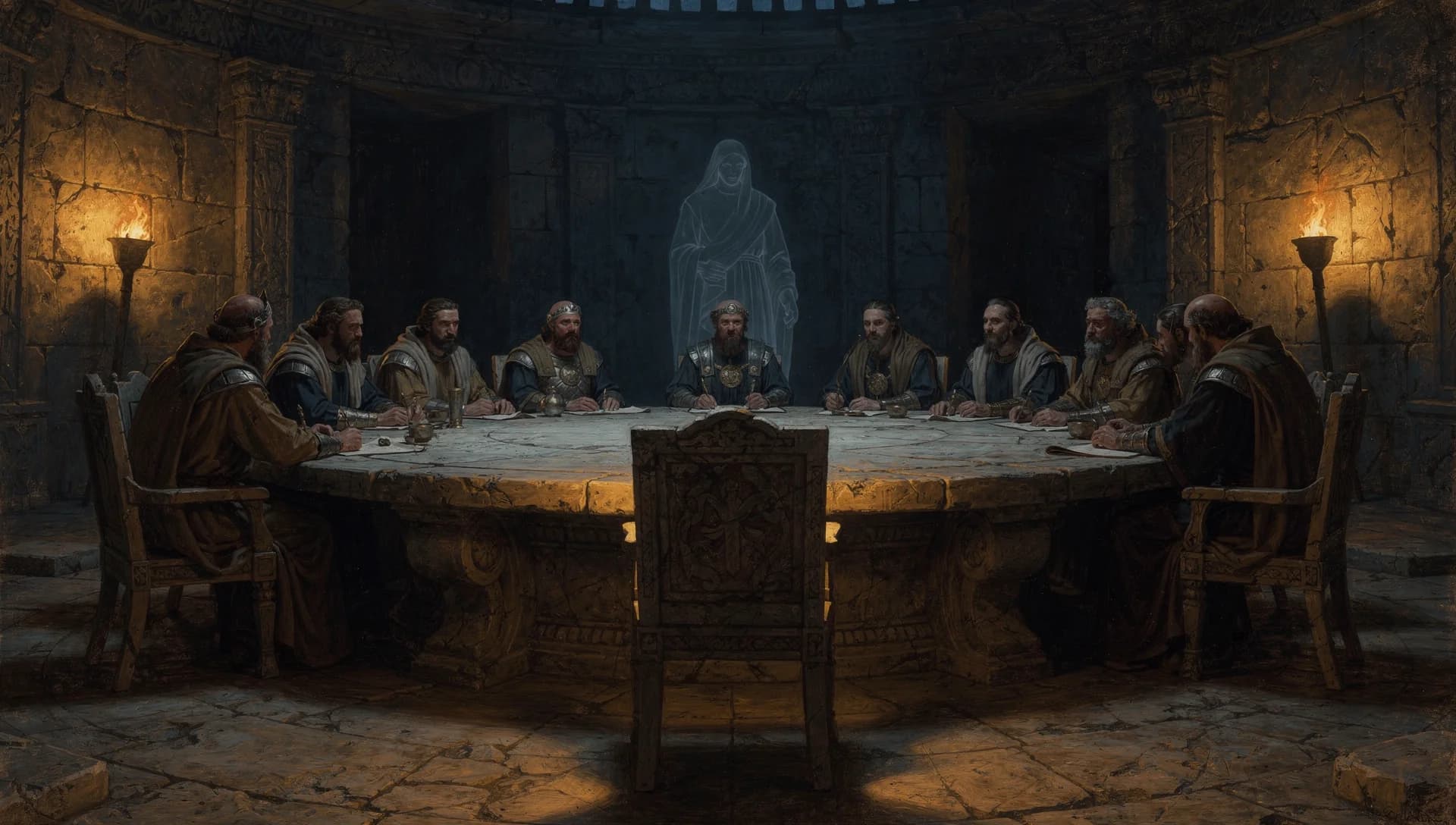
The Insider Who Betrayed: Caligastia and the Norse Loki
Not One Devil, Six Rebels: The Theological Confusion of Lucifer, Satan, and Caligastia
The Newsletter
Get the research behind each piece
Free. New Urantia Book explorations, the sources behind the videos, and early looks. No spam, unsubscribe anytime.
Prefer video? Follow on YouTube and Facebook.
Delivered through Substack. You can also read past issues.