
The Sky God Who Withdrew: African High-God Traditions and the Salem Teaching Layer
Across sub-Saharan Africa, a remarkably consistent pattern repeats. A supreme creator (Yoruba Olodumare, Akan Nyame, Bantu Mulungu) made the world and the moral order, then withdrew. Lesser spirits handle the daily concerns. The Urantia Book records Salem missionaries reaching Africa through Egypt. The African high-god pattern looks like the Salem monotheistic seed, carried south and softened over millennia.
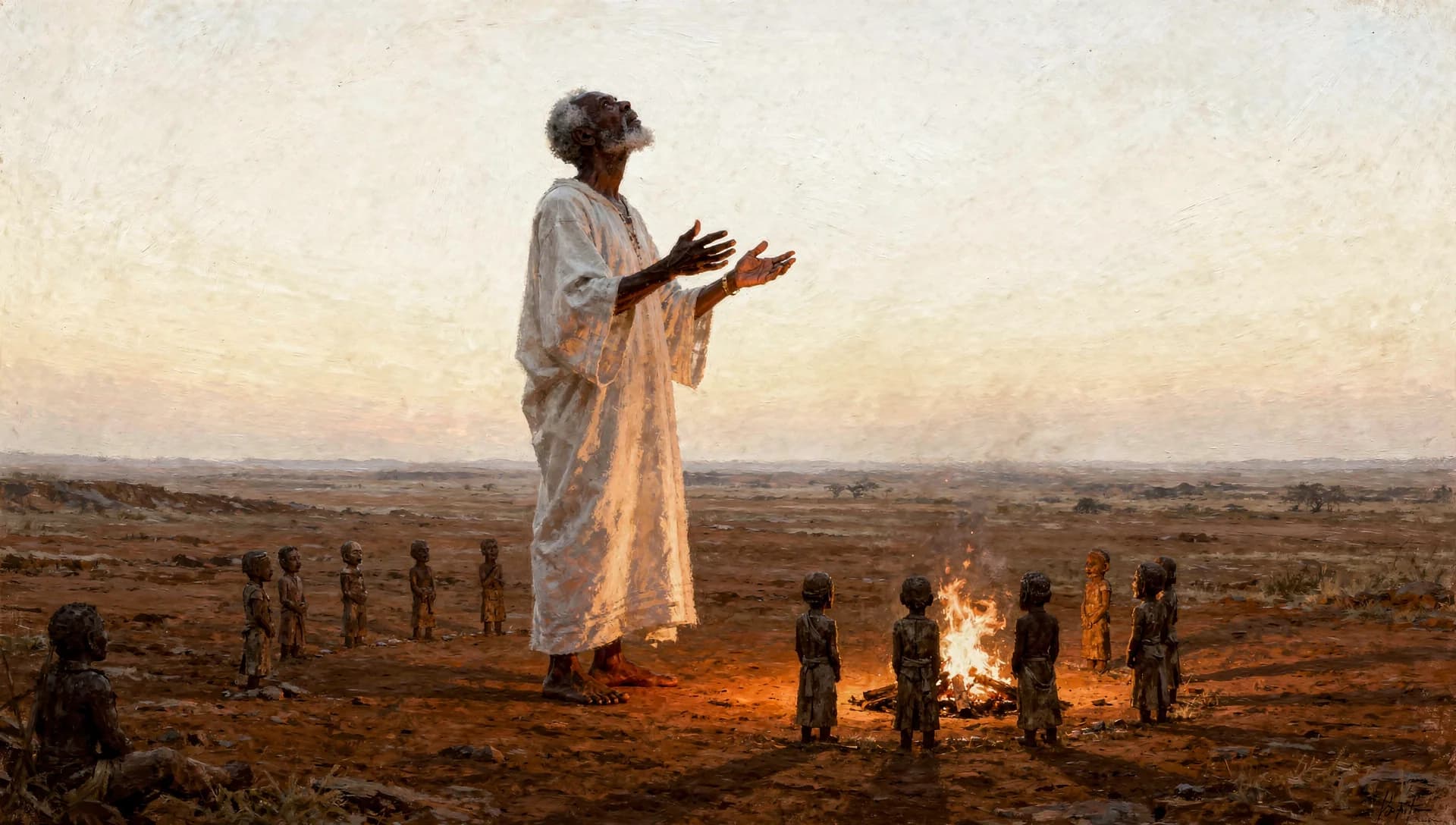
Salem high-god monotheistic layer = African supreme-creator traditions (Olodumare, Nyame, Mulungu)
This article expands on the decoder mapping. For the side-by-side card and quick reference, see the mapping page.
The Withdrawn Creator Pattern
Across sub-Saharan African traditional religions, a strikingly consistent pattern repeats. A supreme creator, named and understood as the single ultimate source of all things, made the world and the moral order at the beginning of time, then withdrew from active involvement in human affairs. Daily spiritual concerns, healing, protection, divination, and ancestral relationship are handled by lesser spirits, ancestors, and intermediary divinities. The high god remains acknowledged as the final authority behind everything, but is rarely invoked in active worship.
The Yoruba of West Africa call this figure Olodumare, also Olorun, "the owner of the heavens." The Akan of Ghana call him Nyame, "the shining one" or "the sky." The Bantu peoples across central, eastern, and southern Africa call him Mulungu, Nzambi, Leza, Katonda, or similar names, all sharing the same underlying concept of a supreme sky-dwelling creator. The Kikuyu call him Ngai. The Zulu call him uMvelinqangi, "the first to appear," or uNkulunkulu, "the great-great-one." The Shilluk call him Juok.
The Urantia Book identifies the historical mechanism that ties these parallel traditions together.
What the Urantia Book Says
The Urantia Book records that Salem missionaries pushed into Africa following Machiventa Melchizedek's twentieth century BCE foundation at Salem.
"THE early teachers of the Salem religion penetrated to the remotest tribes of Africa and Eurasia, ever preaching Machiventa's gospel of man's faith and trust in the one universal God as the only price of obtaining divine favor." (UB 94:0.1)
The Egyptian transmission pathway is detailed elsewhere:
"Later on, mixed Andites and Egyptians followed down both the east and west coasts of Africa well below the equator, but they did not reach Madagascar." (UB 78:5.5)
The Urantia Book also explains the broader pattern of why the Salem content tended to fade rather than take root in active worship outside Palestine.
"But the task was so great and the tribes were so backward that the results were vague and indefinite. From one generation to another the Salem gospel found lodgment here and there, but except in Palestine, never was the idea of one God able to claim the continued allegiance of a whole tribe or race." (UB 93:7.3)
"There was always a tendency for the new doctrine to become absorbed into the older body of religious teaching and magical practice. A new revelation is always contaminated by the older evolutionary beliefs." (UB 93:7.4)
The African pattern, a clear high-god layer preserved across the continent but overlaid and pushed to the margins by intermediary-spirit practice, fits this account exactly. The Salem seed was planted, then partly absorbed by older traditions, much as it was across Europe and the Near East. The companion article on Rod and Svarog traces the same dynamic in Slavic religion.
What the Ancient Sources Say
The African high-god pattern has been documented across a substantial ethnographic and theological literature. John S. Mbiti's African Religions and Philosophy (Heinemann, 1969; second edition 1990) is the definitive comparative treatment. Mbiti described what he called "diffused monotheism" across sub-Saharan African religions: nearly every traditional African religion affirms a single supreme creator whose name varies by culture but whose attributes are remarkably consistent.
Mbiti's catalog of high-god attributes includes: dwelling in the sky, creating the world and humanity, source of the moral order, aloof from daily affairs, invoked at crisis or in the deepest ritual but not in daily observance, the ultimate authority behind ancestors and intermediary spirits, eternal and unchanging, and the final destination of the righteous after death.
E. Bolaji Idowu's African Traditional Religion: A Definition (SCM Press, 1973) argued that Yoruba Olodumare was a genuine monotheistic concept and not a post-Christian import under missionary influence. His earlier Olodumare: God in Yoruba Belief (Longmans, 1962) documented the pre-Christian Yoruba theology of Olodumare as a single supreme creator with a coherent set of attributes: omniscience, omnipotence, eternal existence, and creator of all things including the lesser orishas.
Wilhelm Schmidt's twelve-volume Der Ursprung der Gottesidee (The Origin of the Idea of God, Aschendorff, 1912-1954) advanced the controversial Urmonotheismus thesis: that traditional religions across the world preserve an original monotheistic substrate that has been gradually overlaid by polytheistic development. Schmidt's framework was criticized for its cultural-evolutionary assumptions, but the ethnographic evidence he collected, especially from Pygmy, Bushman, and other African hunter-gatherer populations, documented a clear high-god layer that cannot be attributed to post-Christian missionary influence.
Henri Maurier's Philosophie de l'Afrique noire (Anthropos, 1976) treated the high-god pattern across central African Bantu traditions. Placide Tempels's La philosophie bantoue (Présence Africaine, 1945) opened the scholarly treatment of Bantu theology as a coherent system, with the high god plus intermediary spirits as its organizing structure.
The regional variations are informative. West African traditions (Olodumare, Nyame, Chukwu) preserve the most elaborated theology, with detailed creation narratives, moral attributes, and integration with the orisha, abosom, and alusi systems. Central African traditions (Mulungu, Nzambi, Leza) preserve a more recessed high god with less elaboration but greater geographic consistency. The Nilotic and East African traditions (Juok among the Shilluk, Nyasaye among the Luo, Ngai among the Kikuyu) emphasize sky and mountain associations, with covenants linking the high god to a first ancestor.
The question of Salem-era transmission into sub-Saharan Africa is treated across the literature on Saharan and Sahelian cultural exchange. Basil Davidson's The African Genius (Atlantic Monthly Press, 1969) documented the ancient trans-Saharan trade and cultural networks. Christopher Ehret's The Civilizations of Africa (University Press of Virginia, 2002) reconstructed African cultural history through linguistic and archaeological evidence, including the Bantu expansion from the Nigerian-Cameroonian cradle across central and southern Africa.
Why This Mapping Matters
The origin of African monotheistic content has been contested across the twentieth century. The Evans-Pritchard and Durkheim school treated the high god as a projection of social structure. The Schmidt school treated it as a survival of an original monotheism. The Mbiti and Idowu generation of African theologians treated it as a coherent African theology with intrinsic religious content. Each position captures part of the evidence, but none names a clear historical mechanism.
The Urantia Book supplies the mechanism Schmidt's thesis was missing. The Salem missionary enterprise, established by Machiventa Melchizedek in the twentieth century BCE, reached Africa through Egypt, following the Andite-Egyptian cultural corridor southward and westward. The missionaries carried a single teaching: faith in one universal God is the only price of divine favor. The African pattern, a clear high-god layer overlaid by intermediary-spirit cult, fits the broader Salem story of seed planting followed by partial absorption.
Africa carries one distinctive feature. The high god there is preserved with unusual clarity, unusual consistency, and unusual geographic reach. The Urantia Book accounts for this. Once the Salem content entered Africa through Egypt, the continent's own cultural diffusion did the rest. The Bantu expansion, the West African cultural spread, and the East African integration of Nilotic and Bantu peoples carried the high-god content across sub-Saharan Africa without needing multiple independent reseedings.
The fact that the African high god is withdrawn rather than actively worshipped, unlike the Hebrew preservation, also fits. The Hebrew prophetic tradition kept the Salem content alive as active worship through the Abrahamic covenant, the Mosaic law, and the prophetic schools. Africa never developed that kind of continuous institutional structure for Salem teaching. So the high god receded into the deus otiosus role, while the daily religious life flowed to intermediary spirits, ancestors, and the orisha, abosom, and alusi systems.
The moral content of the African high god is the strongest tie back to Salem. He is the source of the moral order, the guardian of justice, and the ultimate judge of the dead. This is the same shape as the Salem teaching that the Father is the ultimate moral authority, the source of the covenant, and the judge of the soul. Even after centuries of overlay by intermediary-spirit religion, the moral core of Machiventa's teaching survived in African memory.
The practical significance: the African high-god pattern should not be read primarily as an independent indigenous theology, nor as a post-Christian missionary residue. It is the African preservation of the Salem monotheistic seed, planted by an actual historical missionary enterprise that the Urantia Book documents. The continent-wide consistency of the pattern reflects the continuous transmission pathway from the Egyptian entry point through the Saharan and Sahelian corridors.
Sources
- The Urantia Book, Paper 78 (The Violet Race After the Days of Adam), Paper 80 (Andite Expansion in the Occident), Paper 93 (Machiventa Melchizedek), Paper 94 (The Melchizedek Teachings in the Orient), Paper 95 (The Melchizedek Teachings in the Levant). Urantia Foundation, first printing 1955. Cited passages: 78:5.5, 80:1.3, 93:7.1-4, 94:0.1.
- Mbiti, John S. African Religions and Philosophy. Heinemann, 1969; second edition 1990.
- Idowu, E. Bolaji. African Traditional Religion: A Definition. SCM Press, 1973.
- Idowu, E. Bolaji. Olodumare: God in Yoruba Belief. Longmans, 1962.
- Schmidt, Wilhelm. Der Ursprung der Gottesidee. Aschendorff, 1912-1954 (twelve volumes).
- Tempels, Placide. La philosophie bantoue. Présence Africaine, 1945.
- Maurier, Henri. Philosophie de l'Afrique noire. Anthropos, 1976.
- Ehret, Christopher. The Civilizations of Africa: A History to 1800. University Press of Virginia, 2002.
- Davidson, Basil. The African Genius: An Introduction to African Social and Cultural History. Atlantic Monthly Press, 1969.
Confidence and Evidence
- Confidence: UB CONFIRMED
- Evidence rating: MODERATE
- Basis: The Urantia Book directly documents the Salem missionary penetration of Africa at UB 94:0.1 and the Egyptian transmission corridor at 78:5.5. The ethnographic consistency of the high-god pattern across sub-Saharan Africa, first documented by Schmidt's early twentieth-century work and synthesized by Mbiti, is robust. The Salem seeding followed by partial overlay accounts for both the monotheistic content that survives and the marginalization pattern that surrounds it.
Related Decoder Articles
- Melchizedek = Machiventa and the Salem Enterprise
- Rod / Svarog = Salem Layer in Slavic Religion
- Dogon Nommo = Saharan Indigo Civilization
Byline: Derek Samaras | Urantia Book Network | April 2026
Connecting Articles
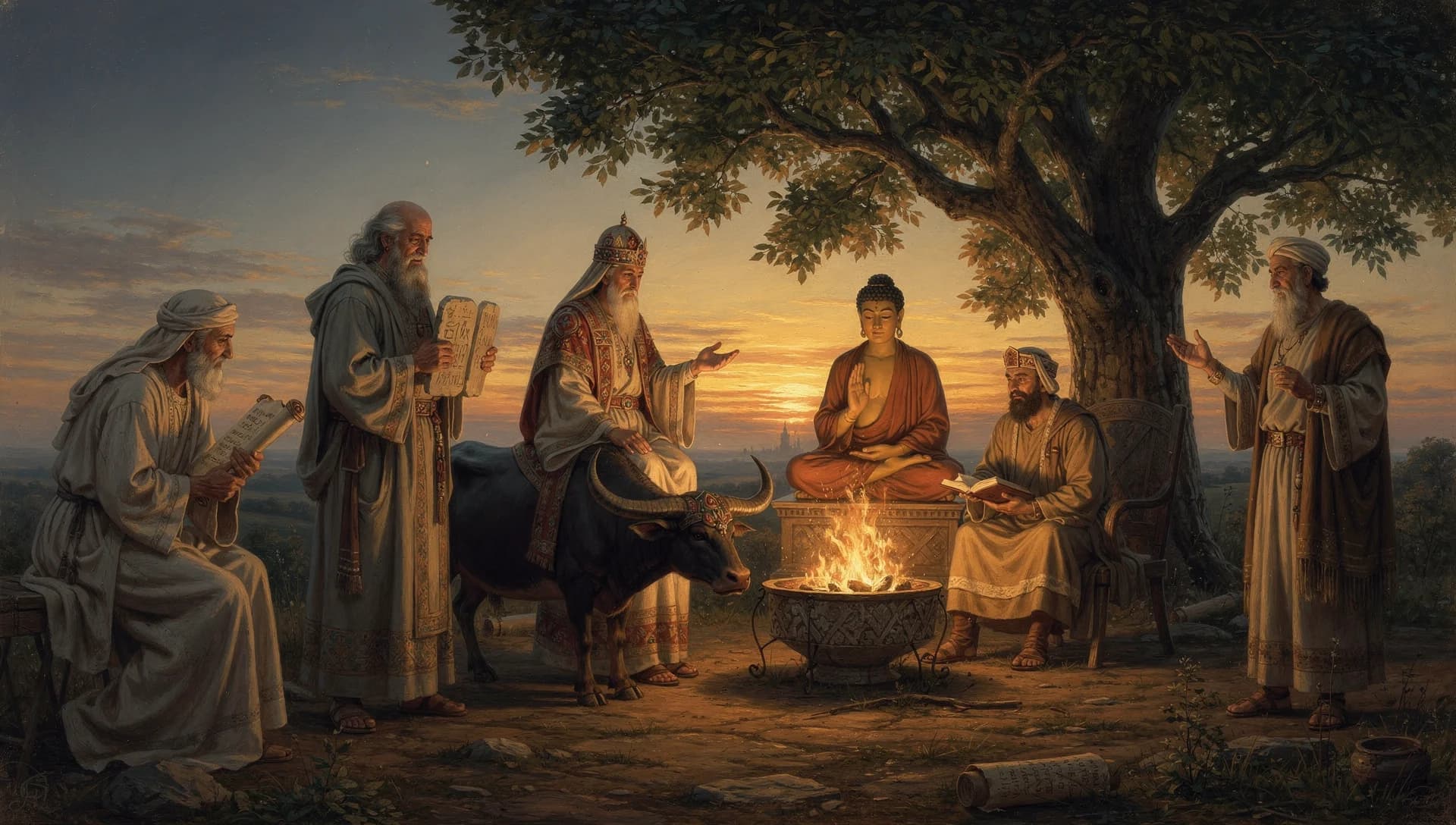
Seven Teachers, One Preparation: The Axial Age and the Salem Continuity
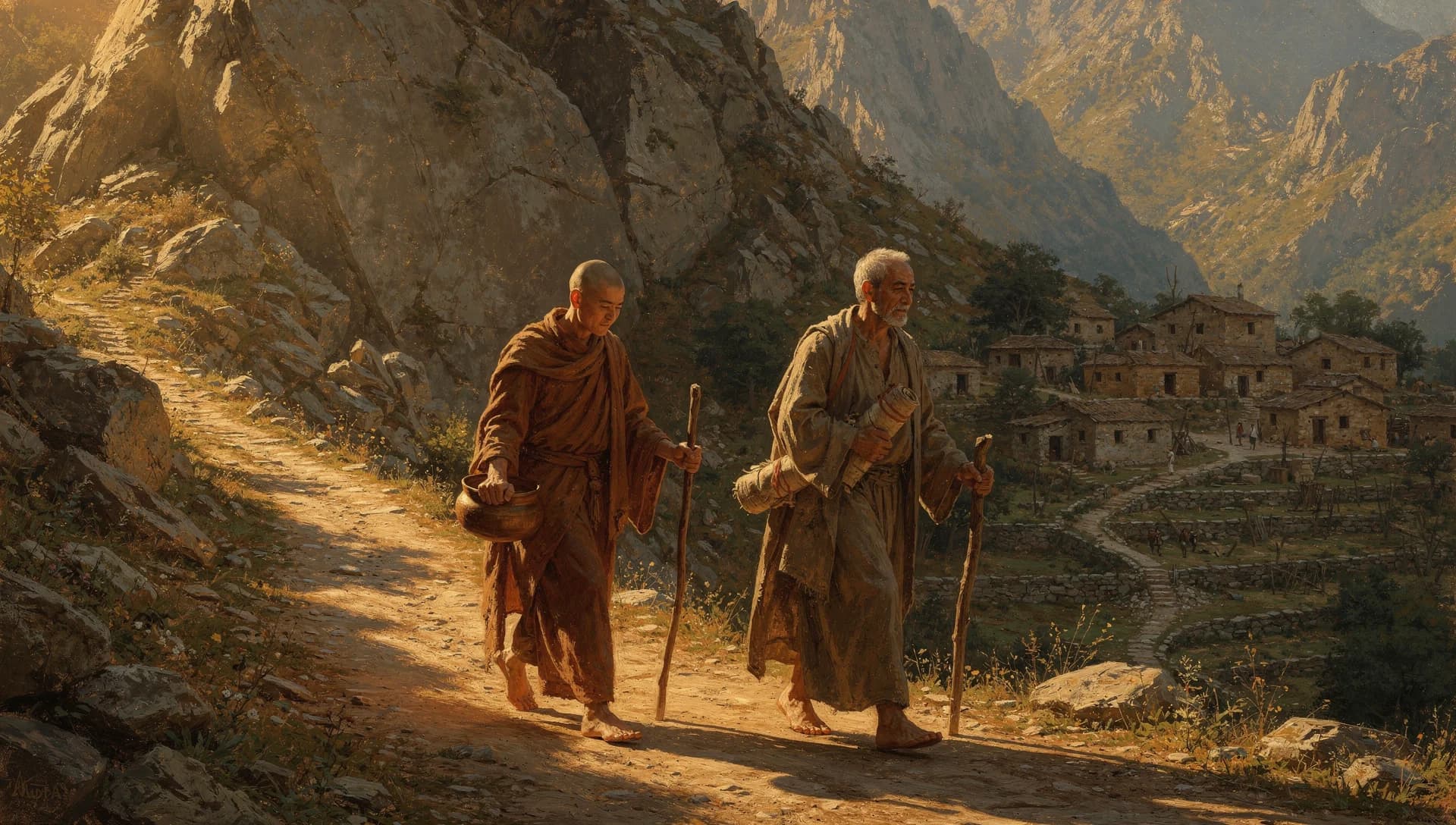
The Vow to Stay: Bodhisattva Ideal and the Salem Missionary Commission
The Primordial Teacher Before Buddha: Tonpa Shenrab, Yungdrung Bön, and the Salem Layer in Tibetan Religion
The Good God of Ireland: Dagda and the Salem High-God Imprint
The Newsletter
Get the research behind each piece
Free. New Urantia Book explorations, the sources behind the videos, and early looks. No spam, unsubscribe anytime.
Prefer video? Follow on YouTube and Facebook.
Delivered through Substack. You can also read past issues.