
The Good God of Ireland: Dagda and the Salem High-God Imprint
The Dagda, chief of the Tuatha Dé Danann, is called 'The Good God' in Irish tradition. He is a father-figure associated with abundance, wisdom, and moral order. Within a polytheistic Celtic pantheon otherwise organized around tribal and warrior deities, the Dagda's theological profile stands out as paternal and providential. The Urantia Book supplies the source: Salem missionary teaching reached the British Isles after Machiventa's incarnation.
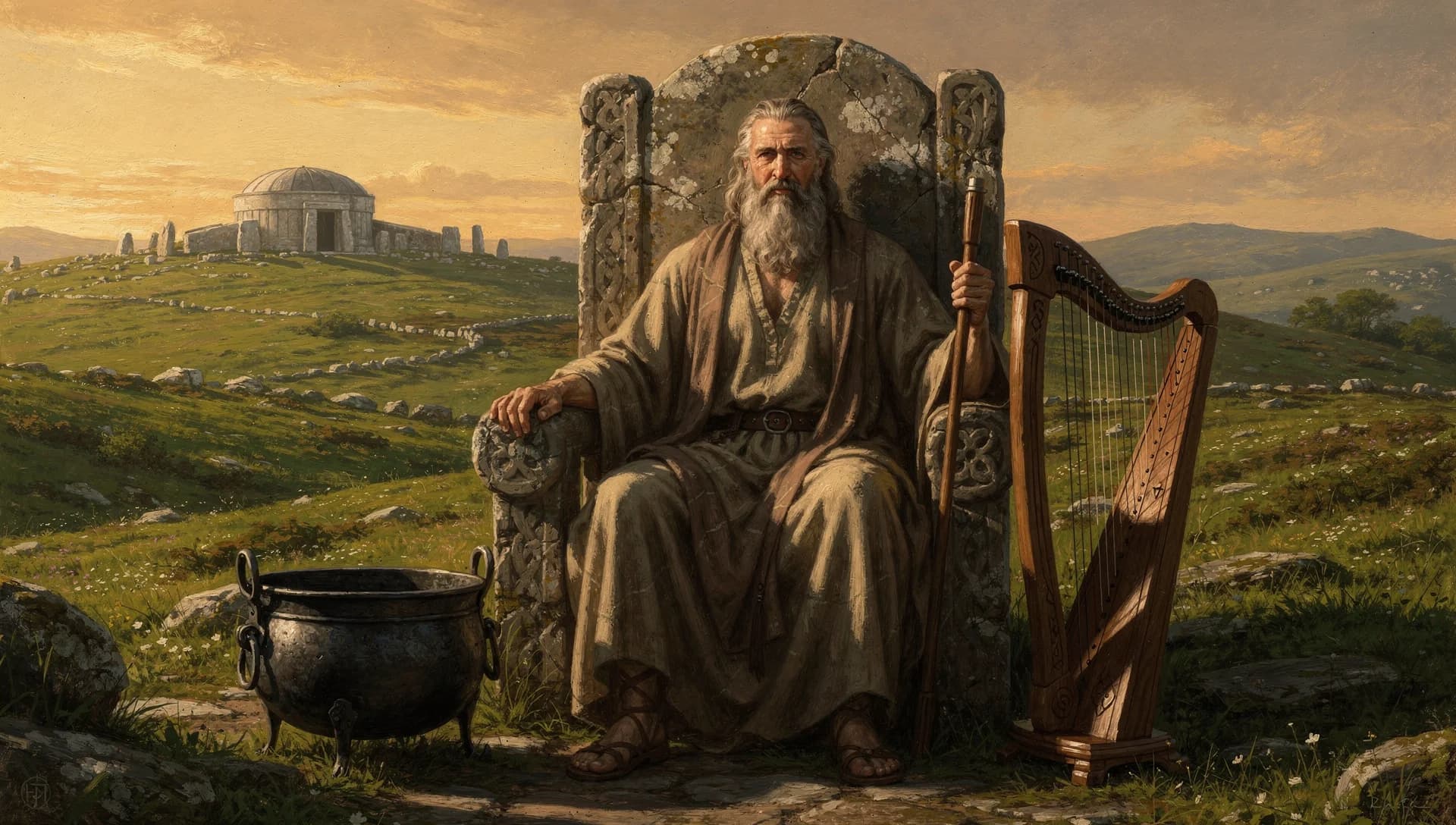
Salem missionaries reaching "even to the British Isles" after Melchizedek's incarnation = Celtic high-god Dagda, "The Good God," father-figure of the Tuatha Dé Danann
This article expands on the decoder mapping. For the side-by-side card and quick reference, see the mapping page.
The Good God Within a Warrior Pantheon
The Celtic pantheons preserved across Irish, Welsh, and continental Celtic traditions are substantially organized around tribal-warrior deities. Lugh Lámhfhada (Lugh of the Long Arm) is a warrior hero and champion. The Morrígan is a war-goddess. Cú Chulainn is the paradigmatic tribal war-hero. Taranis is the thunder and war god of continental Celtic tradition.
Within this tribal and warrior pantheon, the Dagda stands out as a theologically distinct figure. His epithets include "The Good God" (Dagda, literally "the good god") and "Eochaid Ollathair" ("Eochaid the All-Father"). His associations are with abundance (the cauldron of plenty), temporal order (the harp that controls the seasons), and fundamental moral authority (the staff that gives and takes life). He is father-figure rather than warrior-figure, providential rather than competitive, ordering rather than conquering.
The Urantia Book identifies the specific source of this distinctive theological profile.
What the Urantia Book Says
The specific Salem missionary reach into Britain is named:
"Salem missionaries penetrated all Europe, even to the British Isles. One group went by way of the Faroes to the Andonites of Iceland, while another traversed China and reached the Japanese of the eastern islands." (UB 93:7.2)
The general content of the Salem teaching is described in the universalism of Paper 92:
"The many religions of Urantia are all good to the extent that they bring man to God and bring the realization of the Father to man. It is a fallacy for any group of religionists to conceive of their creed as The Truth; such attitudes bespeak more of theological arrogance than of certainty of faith." (UB 92:7.3)
The Salem teaching the missionaries carried centered on the concept of El Elyon (the Most High), a supreme creator-father deity whose worship did not require sacrifice or caste or tribal membership but was available to every person through simple faith and ethical life. The Salem missionary profile is therefore specifically: a father-god concept, providential rather than tribal, ethical rather than ritual-oriented, universal rather than exclusive.
When this teaching reached the British Isles and encountered the pre-existing Celtic tribal-warrior religion, the resulting theological development would produce exactly the pattern the Dagda tradition preserves. An existing polytheistic pantheon absorbs the Salem father-god teaching, and the absorbed concept crystallizes within the pantheon as a specifically distinct figure with providential-paternal features, retained alongside the prior tribal-warrior deities rather than replacing them.
This is the structural pattern the Urantia Book describes across multiple downstream traditions. The Salem teaching rarely replaced the prior religious framework; it more commonly introduced a distinct figure within the prior framework to carry the Salem content. The Hindu Brahma within the broader Hindu pantheon (treated in the companion Salem-Trinity-Trimurti article), the Zoroastrian Ahura Mazda within the broader Iranian religious environment (treated in the companion Zoroaster article), the Egyptian Aton within the broader Egyptian religious environment (treated in the companion Ikhnaton article), all follow the same pattern.
The Dagda fits this pattern closely. The Celtic pantheon retained its tribal-warrior character. The Dagda was added (or the pre-existing tribal father-figure was restructured) to carry the Salem-derived providential and paternal content. The result is a Celtic high-god whose theological profile is structurally inconsistent with the broader Celtic pantheon's character but consistent with Salem-derived high-god traditions across the post-Machiventa world.
What the Ancient Sources Say
The Dagda is documented across Irish mythological literature. The principal sources include the Cath Maige Tuired (The Second Battle of Mag Tuired), the Lebor Gabála Érenn, and various Dindsenchas poems. Miranda Aldhouse-Green's Celtic Goddesses (British Museum Press, 1995) and Celtic Myths (British Museum Press, 1993) document the figure. Proinsias Mac Cana's Celtic Mythology (Hamlyn, 1970) treats the broader theological framework.
The Dagda's specific features include:
First, the epithets themselves. "The Good God" (Dagda) distinguishes him from the warrior deities by theological quality rather than by function. "Eochaid Ollathair" ("Eochaid the All-Father") explicitly names him as paternal in a way none of the other Tuatha Dé Danann are. "Ruad Rofhessa" ("Red one of Great Knowledge") associates him with wisdom rather than combat.
Second, the attributes. The cauldron of abundance (Coire Anseasc) provides unlimited food and never leaves anyone unsatisfied. The harp (Uaithne) controls the seasons and emotions. The staff (lorg mór) can kill with one end and revive with the other. Each attribute is paternal and providential rather than tribal and warlike.
Third, the structural role. The Dagda is the father-figure of the Tuatha Dé Danann in a specifically paternal sense, not merely genealogical. He is associated with the maintenance of cosmic order, the provision for the community, and the moral framework of Irish cultural life.
Fourth, the association with particular sacred sites. The Dagda is associated with the Brú na Bóinne (Newgrange), the Neolithic passage tomb complex dated to approximately 3200 BCE. This is far older than the conventional dating of the Celtic arrival in Ireland (approximately 500 BCE), which suggests the Dagda tradition preserves memory of religious-ceremonial content significantly older than the historical Celtic cultural horizon.
The question of the Dagda's origin has been contested in Celtic studies. Some scholars treat the figure as an indigenous Irish development preserving pre-Celtic material. Others treat him as a Celtic deity developed within Irish polytheism. The Urantia Book's framework suggests a third possibility: the Dagda represents the Salem-derived high god content that was introduced into the British Isles through missionary contact and preserved within the Celtic religious framework.
The dating is consistent. The Salem missionary tradition reached its peak in the period following Machiventa's incarnation (approximately 1886 BCE) and continued for centuries. The Celtic cultural framework of Ireland was in active formation during this period through multiple cultural-migration waves. A Salem high-god teaching introduced during this formative period would have been absorbed into the developing Celtic religious framework and preserved as the specifically "Good God" figure distinct from the tribal-warrior deities.
Why This Mapping Matters
The scholarly question of why the Dagda has the theological profile he does has persisted without clear resolution. The figure does not fit cleanly within the tribal-warrior Celtic pantheon. His father-figure character, his providential-paternal attributes, and his association with fundamental moral order distinguish him from his fellow Tuatha Dé Danann in ways that require explanation.
The Urantia Book's framework supplies the explanation. The Dagda preserves Salem-derived high-god teaching within the Celtic religious framework. The specific features that distinguish him from the rest of the Celtic pantheon (paternal-providential profile, moral-order authority, abundance-associated attributes) are exactly the features that the Salem teaching would have introduced into a receiving tradition. The framework therefore places the Dagda alongside Brahma in Hinduism, Ahura Mazda in Zoroastrianism, Shang-Ti in Chinese tradition, and the various other Salem-influenced high-god figures in world religious history.
This has real interpretive consequences for Irish religious studies. The Dagda should be read not primarily as an indigenous Irish deity but as the Irish preservation of a high god teaching introduced from outside. The paternal character, the providential attributes, and the moral authority trace back through Salem missionary transmission to Machiventa's Salem school. The Dagda is, in effect, the Irish name for the Most High whom the Salem missionaries were teaching.
The mapping also has implications for Celtic religious continuity. The specific features the Dagda preserves (father-god, provider of abundance, moral-order authority) are features that Christian missionaries later found they could connect to when Irish conversion to Christianity occurred in the fifth century CE and later. The rapid and substantial conversion of Ireland to Christianity (a feature that distinguished the Irish experience from many other continental European Christianization processes) may be partly explained by the pre-existing Salem-derived high-god concept that Irish religious culture had already absorbed. Christianization did not require introducing the high-god concept to Ireland; it required connecting the existing Dagda-substrate high-god concept to the Christian theological framework.
The mapping's broader significance is that it places the Dagda within the distributed network of Salem-derived high-god preservations across world religious traditions. The Irish preservation is one of the westernmost points of this network. Reading the Dagda alongside the Sumerian Salem-derived high-god features (the cosmic-justice concepts), the Egyptian (Aton), the Indian (Brahma), the Chinese (Shang-Ti), the Iranian (Ahura Mazda), and the other Salem-influenced traditions reveals a pan-Eurasian pattern of high-god teaching introduced through a specific historical mission and preserved across the receiving cultures.
Sources
- The Urantia Book, Paper 93 (Machiventa Melchizedek), Paper 94 (The Melchizedek Teachings in the Orient). Urantia Foundation, first printing 1955. Cited passages: 93:7.2, 94:0.1.
- Cath Maige Tuired (The Second Battle of Mag Tuired). Edited and translated by Elizabeth A. Gray, Irish Texts Society, 1982.
- Lebor Gabála Érenn (The Book of Invasions). Translated by R. A. Stewart Macalister, Irish Texts Society, 1938-1956.
- Aldhouse-Green, Miranda. Celtic Goddesses: Warriors, Virgins, and Mothers. British Museum Press, 1995.
- Aldhouse-Green, Miranda. Celtic Myths. British Museum Press, 1993.
- Mac Cana, Proinsias. Celtic Mythology. Hamlyn, 1970; revised 1983.
- Koch, John T., editor. Celtic Culture: A Historical Encyclopedia. 5 volumes, ABC-CLIO, 2006.
- Rees, Alwyn and Brinley Rees. Celtic Heritage: Ancient Tradition in Ireland and Wales. Thames & Hudson, 1961.
Confidence and Evidence
- Confidence: INFORMED SPECULATION
- Evidence rating: MODERATE
- Basis: The Urantia Book documents Salem missionary reach into the British Isles in Paper 93:7.2. The Dagda's specific theological profile (paternal-providential, moral-authority, abundance-associated) is distinct from the tribal-warrior character of the broader Celtic pantheon and aligns with Salem-derived high-god features in other world traditions. The chronological alignment (post-Machiventa missionary period with Celtic cultural formation) supports the transmission hypothesis.
Related Decoder Articles
- Tuatha Dé Danann = Adamic-Andite Arrival in Ireland
- Salem Monotheism in Chinese Form = Lao-tse's Tao
- Zoroaster, Salem Missionary Descendant = Zarathustra
By Derek Samaras
Connecting Articles
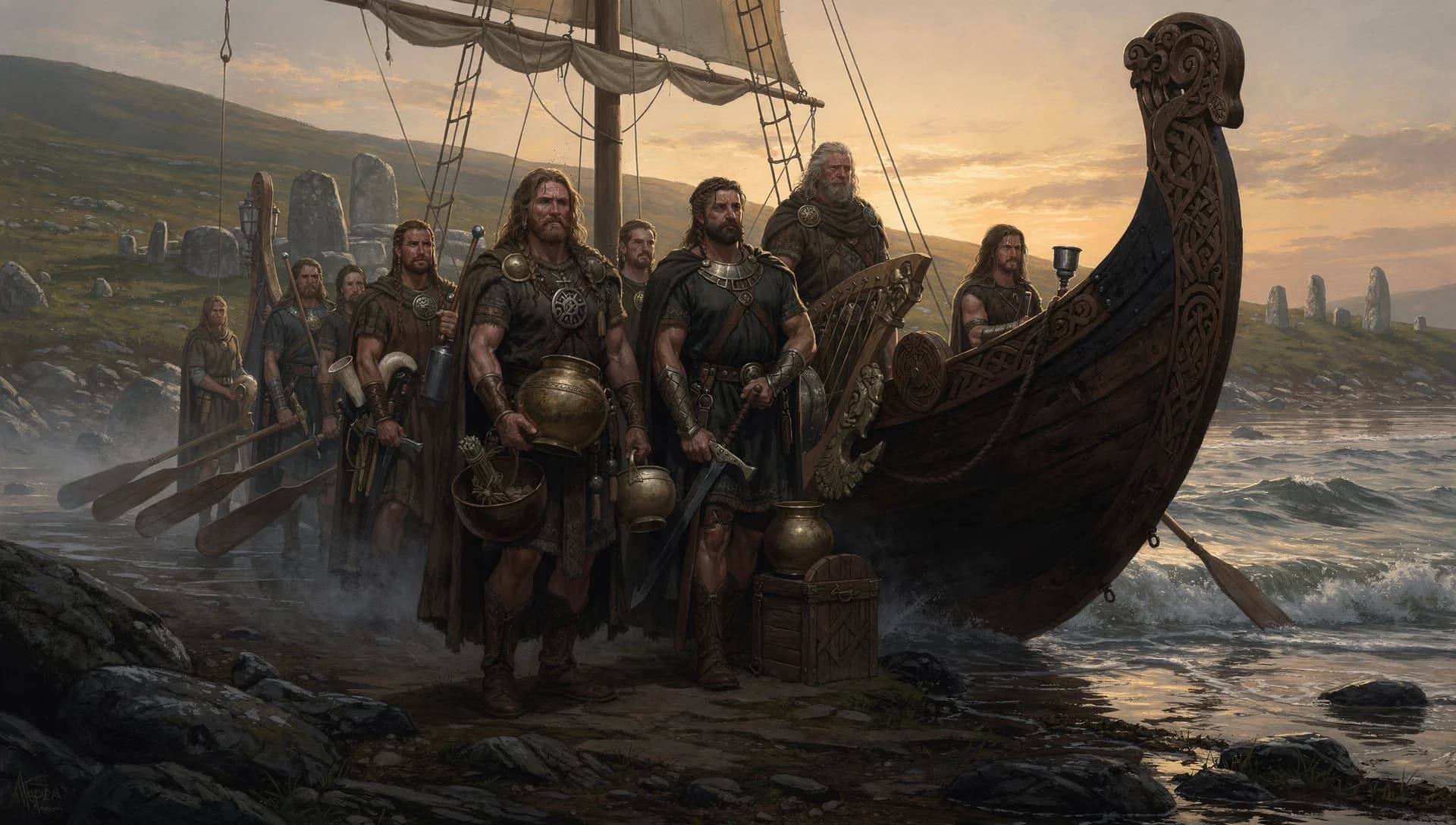
The People Who Came From the East: Tuatha Dé Danann and the Adamic-Andite Arrival Pattern
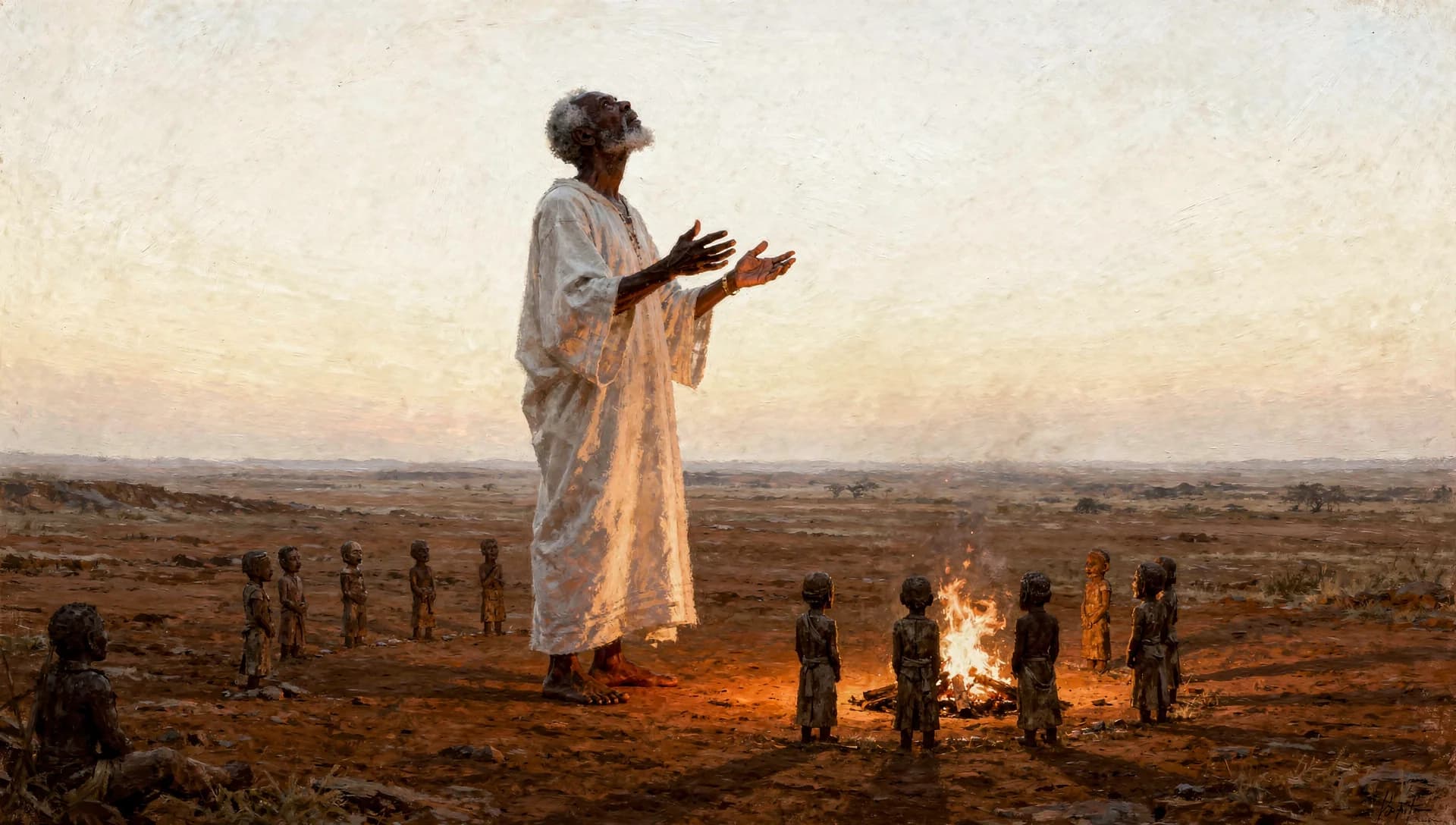
The Sky God Who Withdrew: African High-God Traditions and the Salem Teaching Layer
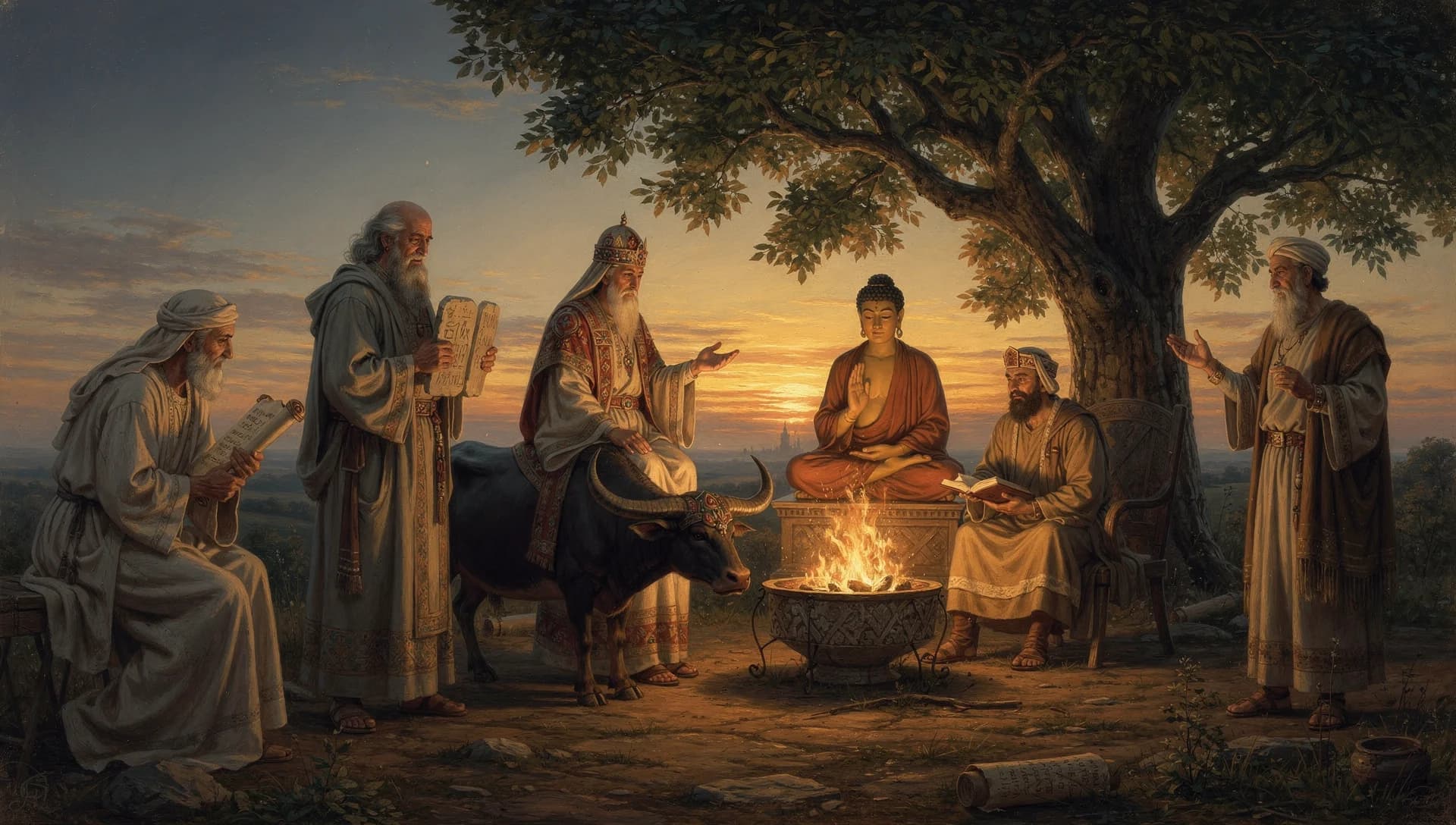
Seven Teachers, One Preparation: The Axial Age and the Salem Continuity
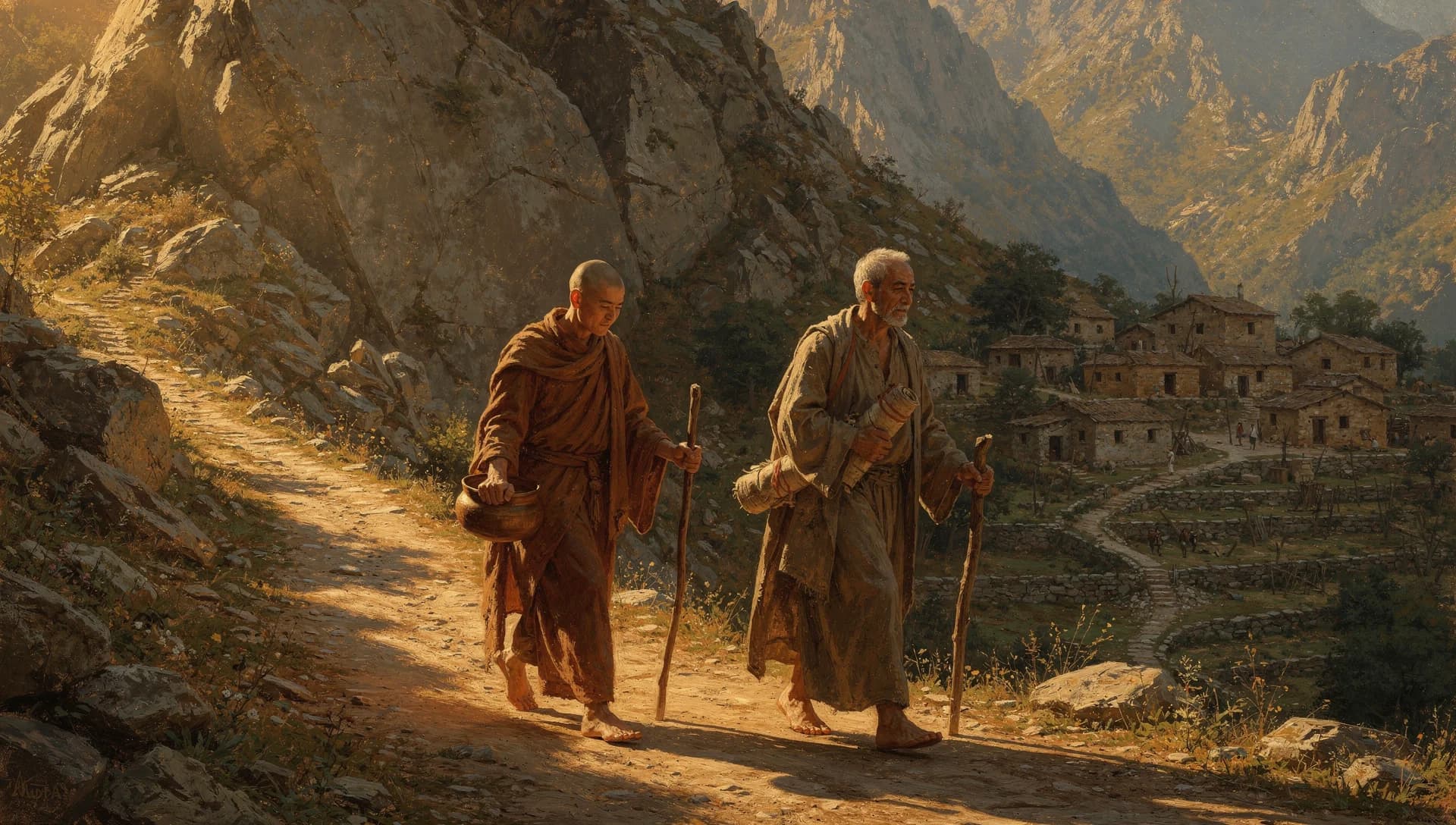
The Vow to Stay: Bodhisattva Ideal and the Salem Missionary Commission
The Newsletter
Get the research behind each piece
Free. New Urantia Book explorations, the sources behind the videos, and early looks. No spam, unsubscribe anytime.
Prefer video? Follow on YouTube and Facebook.
Delivered through Substack. You can also read past issues.