
The Sage of Salem: Machiventa Melchizedek and the Universal Thread Through All Religions
The striking similarities between world religions are not coincidental. They trace back to a single historical source: the Salem missionaries commissioned by Machiventa Melchizedek after his bestowal as 'the sage of Salem' around 1973 BCE. Every major religion that emerged after that date received some version of the Salem teaching: one God, salvation by faith, and preparation for a future bestowal Son. The Melchizedek missionaries are the universal thread that ties the world's religions together.
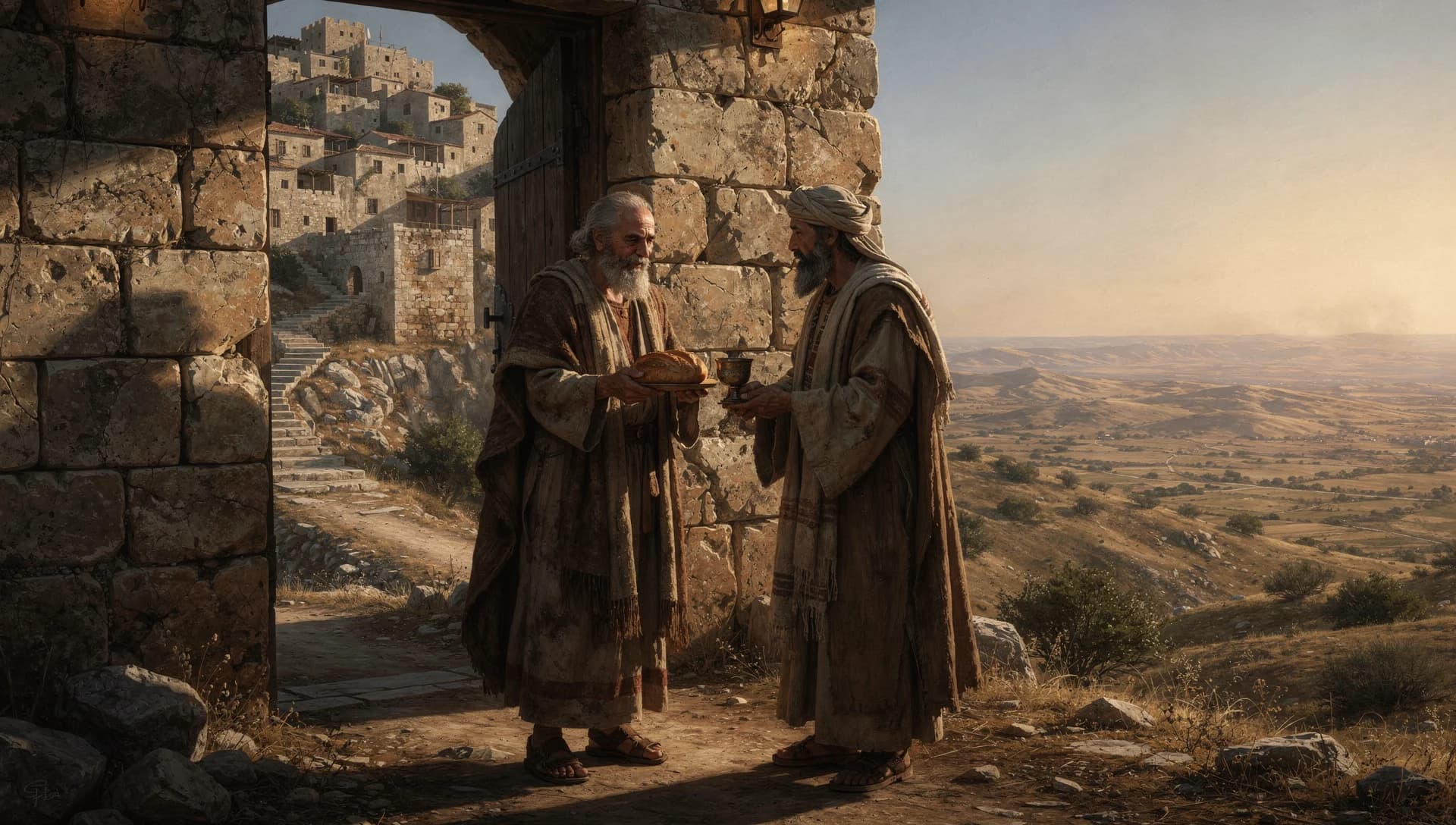
Salem missionary enterprise as universal thread = Machiventa Melchizedek and the cross-cultural religious substrate
This article expands on the decoder mapping. For the side-by-side card and quick reference, see the mapping page.
The Sage of Salem
Machiventa Melchizedek shows up in the Hebrew Bible as a striking and unexplained figure. Genesis 14:18-20 introduces him without preamble: "Melchizedek king of Salem brought out bread and wine; he was priest of God Most High. He blessed Abram and said, 'Blessed be Abram by God Most High, maker of heaven and earth; and blessed be God Most High, who has delivered your enemies into your hand.' And Abram gave him one-tenth of everything." The Epistle to the Hebrews (chapters 5-7) later picks him up and treats him as a typological precursor of Christ, "without father, without mother, without genealogy, having neither beginning of days nor end of life" (Hebrews 7:3).
The biblical canon preserves Melchizedek as an anomaly. His historical origin is unclear. His genealogy is unspecified. His priestly order is later attached to Christ (Hebrews 7:17, citing Psalm 110:4). The figure stands outside every category the rest of the Bible offers.
The Urantia Book discloses the historical reality behind this anomaly.
What the Urantia Book Says
The Urantia Book records Machiventa Melchizedek's emergency bestowal on Urantia in considerable historical detail. Paper 93, Machiventa Melchizedek, gives the full account:
"And it was in consequence of having been thrown so completely on their own resources that Machiventa Melchizedek, one of the twelve planetary receivers, volunteered to do that which had been done only six times in all the history of Nebadon: to personalize on earth as a temporary man of the realm, to bestow himself as an emergency Son of world ministry. Permission was granted for this adventure by the Salvington authorities, and the actual incarnation of Machiventa Melchizedek was consummated near what was to become the city of Salem, in Palestine." (93:1.3)
During his ninety-four-year ministry at Salem, Melchizedek lived for more than thirty years with the family of Katro (93:4.16). The Urantia Book records that the Katro family preserved many of these higher truths and carried them forward to the days of their illustrious descendant Moses, who received a compelling tradition of the days of Melchizedek through his father's side as well as through other sources on his mother's side (93:3.5).
From Salem, the teaching went outward through a deliberate missionary enterprise:
"Melchizedek continued for some years to instruct his students and to train the Salem missionaries, who penetrated to all the surrounding tribes, especially to Egypt, Mesopotamia, and Asia Minor. And as the decades passed, these teachers journeyed farther and farther from Salem, carrying with them Machiventa's gospel of belief and faith in God." (93:7.1)
The reach was global:
"THE early teachers of the Salem religion penetrated to the remotest tribes of Africa and Eurasia, ever preaching Machiventa's gospel of man's faith and trust in the one universal God as the only price of obtaining divine favor. Melchizedek's covenant with Abraham was the pattern for all the early propaganda that went out from Salem and other centers." (94:0.1)
But the conditions were rough, and the preservation across cultures was uneven:
"But the task was so great and the tribes were so backward that the results were vague and indefinite. From one generation to another the Salem gospel found lodgment here and there, but except in Palestine, never was the idea of one God able to claim the continued allegiance of a whole tribe or race." (93:7.3)
Machiventa's cosmic story did not end at Salem:
"Machiventa Melchizedek, the only Son of this order to bestow himself upon the Urantia races. While still numbered as a Melchizedek, he has become 'forever a minister of the Most Highs,' eternally assuming the assignment of service as a mortal ascender, having sojourned on Urantia in the likeness of mortal flesh at Salem in the days of Abraham. This Melchizedek has latterly been proclaimed vicegerent Planetary Prince of Urantia with headquarters on Jerusem and authority to act in behalf of Michael, who is actually the Planetary Prince of the world whereon he experienced his terminal bestowal in human form." (45:4.16)
Abraham's covenantal relationship with Machiventa is recorded at UB 93:6. Abraham became the principal human disciple of the Salem teaching and founded the Hebrew institutional line that later preserved the Salem content in its most developed form. UB 93:9-10 follows the Abrahamic lineage forward into the Hebrew covenantal tradition that produced the Bible's prophetic religion.
What the Ancient Sources Say
The canonical Melchizedek tradition rests on three texts. Genesis 14:18-20 records the historical encounter at the valley of Shaveh, after Abraham's victory over the four kings. Psalm 110:4 attaches the Davidic royal line to "the order of Melchizedek": "The Lord has sworn and will not change his mind, 'You are a priest forever according to the order of Melchizedek.'" Hebrews 5-7 then develops the typological reading, treating Melchizedek as a priestly and royal prefiguration of Christ.
The extrabiblical literature is substantial. The Dead Sea Scrolls preserve a significant Melchizedek text, 11Q13, the Melchizedek Document (roughly first century BCE), which casts him as a heavenly figure who will execute divine judgment at the end of the age. Joseph L. Mannino's Melchizedek and the Son of God (University Press of America, 1989) places 11Q13 in its second-temple Jewish setting.
The Gnostic Nag Hammadi library contains another Melchizedek text (NHC IX,1, the Melchizedek Apocalypse) that elaborates the figure within Gnostic categories. Birger Pearson's Gnosticism, Judaism, and Egyptian Christianity (Fortress, 1990) treats this material in detail.
The Philonic tradition adds yet another layer. Philo of Alexandria, in Allegorical Interpretation (3.79-82) and On Abraham (235), reads Melchizedek allegorically as the Logos priest who mediates between God and humanity. Philo's Hellenistic Jewish reading later supplied much of the raw material for Christian typological interpretation.
Whether the biblical Melchizedek is historical or symbolic has been argued back and forth for a long time. Mainstream historical criticism has tended to treat the Genesis 14 figure as legendary, a Canaanite priestly memory that the Hebrew narrative elevated for theological reasons. Traditional Jewish and Christian readings have kept the historical character of the figure but disagreed sharply on the theology. Jewish tradition often identified Melchizedek with Shem son of Noah; Christian tradition read him as a Christological prefiguration.
The Urantia Book offers a third reading that resolves the tension. Machiventa Melchizedek was a real historical individual, not a legend or a symbol, and he was a divine-order being, not an ordinary Canaanite priest. He took on flesh on Urantia as an emergency Son of world ministry for a ninety-four-year mission centered on Abraham and his line (93:2.6).
The Salem missionary enterprise that he established is documented in the Urantia Book at UB 93:7 and across UB 94 and 95. The work continued after his disappearance around 1886 BCE, at the close of his ninety-four-year ministry. The Salem school went on training and dispatching missionaries across the ancient world for roughly another two thousand years. That sustained outflow is what produced the global distribution of Salem content, and it is what the Urantia Book identifies as the universal thread running through every later world religion.
Why This Mapping Matters
The Melchizedek figure is the keystone of the Urantia Book's comparative religion framework. The thread that ties the world's seemingly unrelated religious traditions together is Machiventa's missionary enterprise, which carried monotheistic and ethical teaching across the pre-Christian world through institutional transmission rather than coincidence.
The shared substrate is easy to recognize once you look for it: monotheism or near-monotheism, ethical and moral teaching, a promise of salvation, an expected future bestowal Son, an inward spiritual orientation rather than an outward ritual focus. All of it traces to Machiventa's Salem teaching. The distinct features of each tradition are the local cultural and linguistic forms that the shared inheritance took as it traveled.
This framework addresses several persistent puzzles in comparative religion.
First, it explains the parallel emergence of ethical monotheism and salvation themes across widely separated cultures during the first and second millennia BCE. The standard sociological account (similar conditions producing similar responses) does some work, but it does not explain the shared theological content. The Salem missionary substrate accounts for that content through actual historical transmission.
Second, it explains why the preservation outside the Hebrew line was partial and degraded. The Urantia Book says plainly at 93:7.3-4 that Salem content tended to dissolve into local polytheistic and ritual frameworks. What survived in the world's religions is exactly what you would expect from this kind of decay: a high god receding behind a polytheistic pantheon, dying-and-rising gods that preserve the bestowal expectation in corrupted form, ethical and spiritual teaching surviving in restricted priestly settings.
Third, it explains why the Hebrew prophetic tradition is so much more developed than its peers. Abraham's direct discipleship under Machiventa established the institutional and covenantal continuity that kept the Salem content alive in its fullest form. The Hebrew prophets actively maintained Salem monotheism while other traditions lost it or absorbed it into older polytheistic substrates.
Fourth, it explains the Christological fulfillment. Machiventa's Salem teaching included the promise of a future bestowal Son (93:3.7). The Christ event of the first century CE fulfilled that promise. The Christian tradition's reading of Christ as a Melchizedekian priest (Hebrews 5-7) preserves something theologically accurate. Christ's Melchizedekian priesthood traces through an unbroken institutional line, from the original Salem ministry through the Abrahamic and Hebrew covenantal tradition to the bestowal itself.
The continuing cosmic role of Machiventa as vicegerent Planetary Prince of Urantia (UB 45:4.16) carries practical weight for present-day Urantia Book readers. Machiventa is not a historical figure whose work ended at Salem. He is an active cosmic personality who continues to minister to Urantia in his current administrative role. The Melchizedek schools that operate on the morontia spheres (Jerusem, Edentia, Salvington) preserve the institutional teaching tradition across a vastly longer time horizon than the ninety-four-year Salem bestowal alone represents (93:4.16).
The bottom line is this. The universal thread across the world's religions is best read not as parallel sociological emergence but as the historical distribution of Salem content through institutional missionary work. Machiventa Melchizedek, the personality who volunteered for the emergency bestowal, is the concrete agent behind that thread.
Sources
- The Urantia Book, Paper 45 (The Local System Administration), Paper 93 (Machiventa Melchizedek), Paper 94 (The Melchizedek Teachings in the Orient), Paper 95 (The Melchizedek Teachings in the Levant). Urantia Foundation, first printing 1955. Cited passages: 45:4.16, 93:1.3, 93:3.5, 93:7.1, 93:7.3, 94:0.1.
- Genesis 14:18-20. Psalm 110:4. Epistle to the Hebrews 5-7. New Revised Standard Version.
- The Dead Sea Scrolls, 11Q13 Melchizedek Document. In Geza Vermes, The Complete Dead Sea Scrolls in English, Penguin, revised edition 2011.
- Nag Hammadi Library, NHC IX,1 Melchizedek Apocalypse. In James M. Robinson, editor, The Nag Hammadi Library in English, HarperSanFrancisco, revised edition 1990.
- Philo of Alexandria. Allegorical Interpretation and On Abraham. In The Works of Philo, translated by C. D. Yonge, Hendrickson, 1993.
- Pearson, Birger A. Gnosticism, Judaism, and Egyptian Christianity. Fortress Press, 1990.
- Mannino, Joseph L. Melchizedek and the Son of God: A Study of Christological Discourse in Hebrews. University Press of America, 1989.
- Kobelski, Paul J. Melchizedek and Melchiresa. Catholic Biblical Association, 1981.
Confidence and Evidence
- Confidence: UB CONFIRMED
- Evidence rating: STRONG
- Basis: The Urantia Book documents Machiventa Melchizedek's bestowal at Salem at UB 93:1.3 and the subsequent missionary enterprise at UB 93:7 and 94:0.1. The biblical Melchizedek tradition (Genesis 14, Psalm 110, Hebrews 5-7) preserves the historical and theological anomaly that the Urantia Book revelation resolves. The cross-cultural distribution of Salem-derived content across world religions is treated tradition by tradition across UB 94 and 95 and developed further in the related decoder mappings.
Related Decoder Articles
- Axial Age = Salem Continuity and Seven Teachers
- Dying-and-Rising Gods = Corrupted Salem Teaching
- Ganid Compilation = First Comparative Religion
Byline: Derek Samaras | Urantia Book Network | April 2026
Connecting Articles
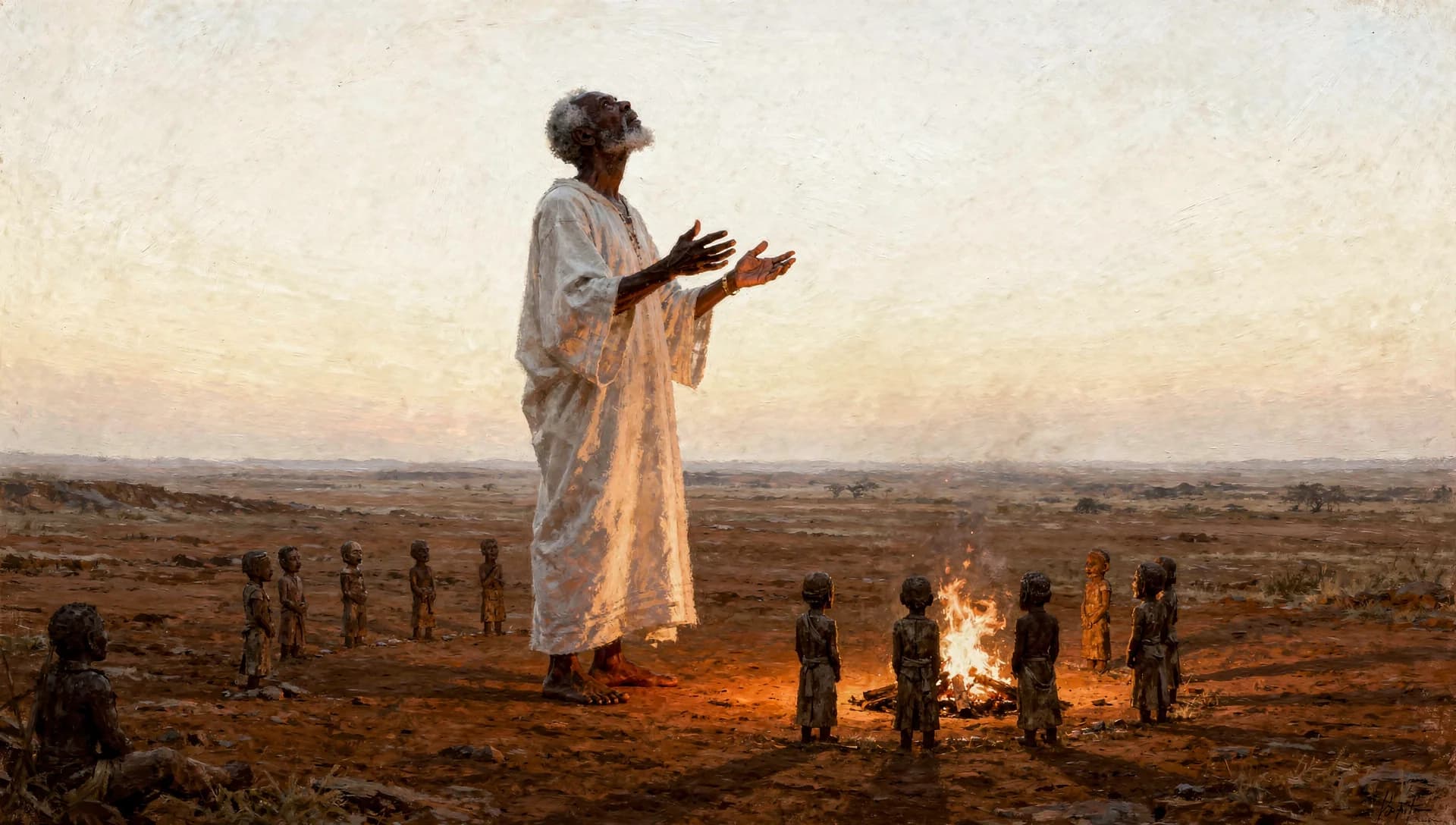
The Sky God Who Withdrew: African High-God Traditions and the Salem Teaching Layer
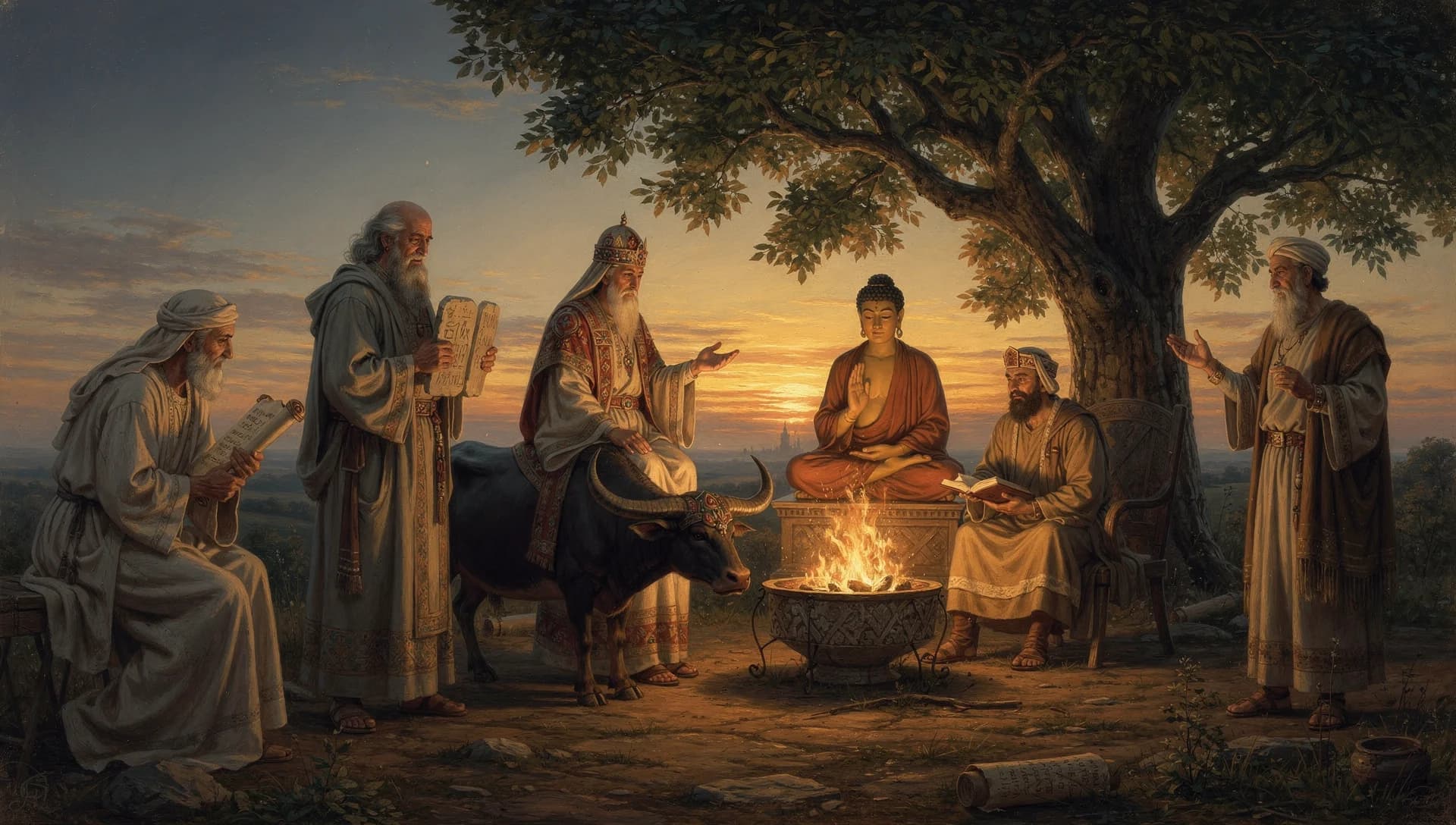
Seven Teachers, One Preparation: The Axial Age and the Salem Continuity
The Vow to Stay: Bodhisattva Ideal and the Salem Missionary Commission
The Primordial Teacher Before Buddha: Tonpa Shenrab, Yungdrung Bön, and the Salem Layer in Tibetan Religion
The Newsletter
Get the research behind each piece
Free. New Urantia Book explorations, the sources behind the videos, and early looks. No spam, unsubscribe anytime.
Prefer video? Follow on YouTube and Facebook.
Delivered through Substack. You can also read past issues.