
The Forgotten Father: Rod, Svarog, and the Salem Monotheism Layer in Slavic Religion
Rod, the oldest named Slavic deity, appears in the earliest sources as a primordial creator, then fades from active worship as the warrior and fertility gods take center stage. Svarog, the heavenly father, plays the same role. The Urantia Book documents Salem missionaries penetrating 'all Europe' after Machiventa's incarnation. Rod and Svarog preserve the Salem monotheism layer in pre-Christian Slavic religion, overlaid and marginalized by the later Indo-European polytheism.
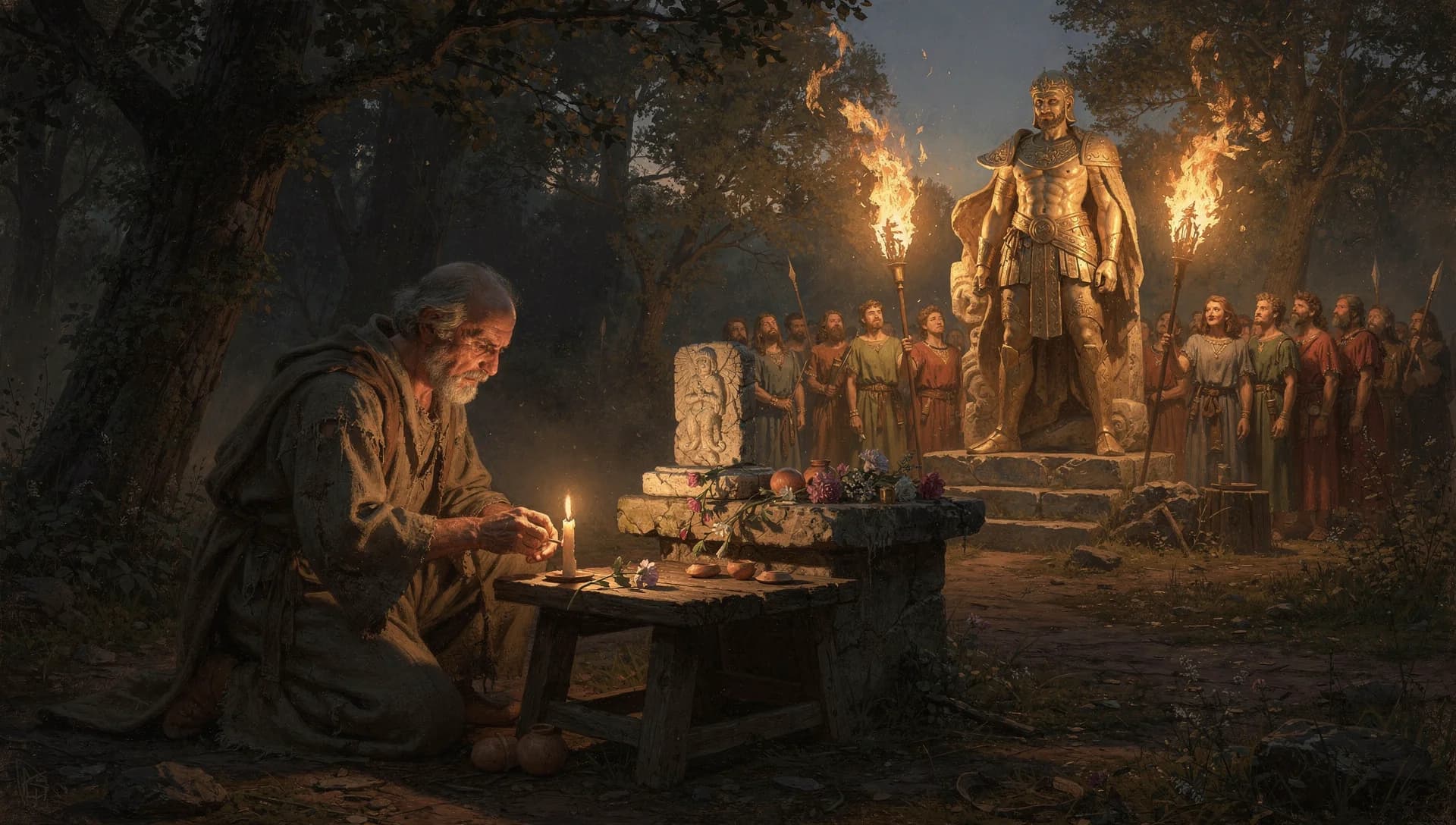
Salem monotheism layer in pre-Christian Europe = Rod / Svarog, pre-Slavic creator high-god marginalized by later pantheon
This article expands on the decoder mapping. For the side-by-side card and quick reference, see the mapping page.
The Fading High-God
A familiar pattern shows up again and again in the comparative study of world religions. An older monotheistic or near-monotheistic layer, with one creator at the center, gets overlaid by polytheistic worship of warrior, fertility, and tribal gods. The original high-god slides into a deus otiosus role, the withdrawn god, still acknowledged but no longer actively worshipped, while the younger pantheon takes over daily religious life.
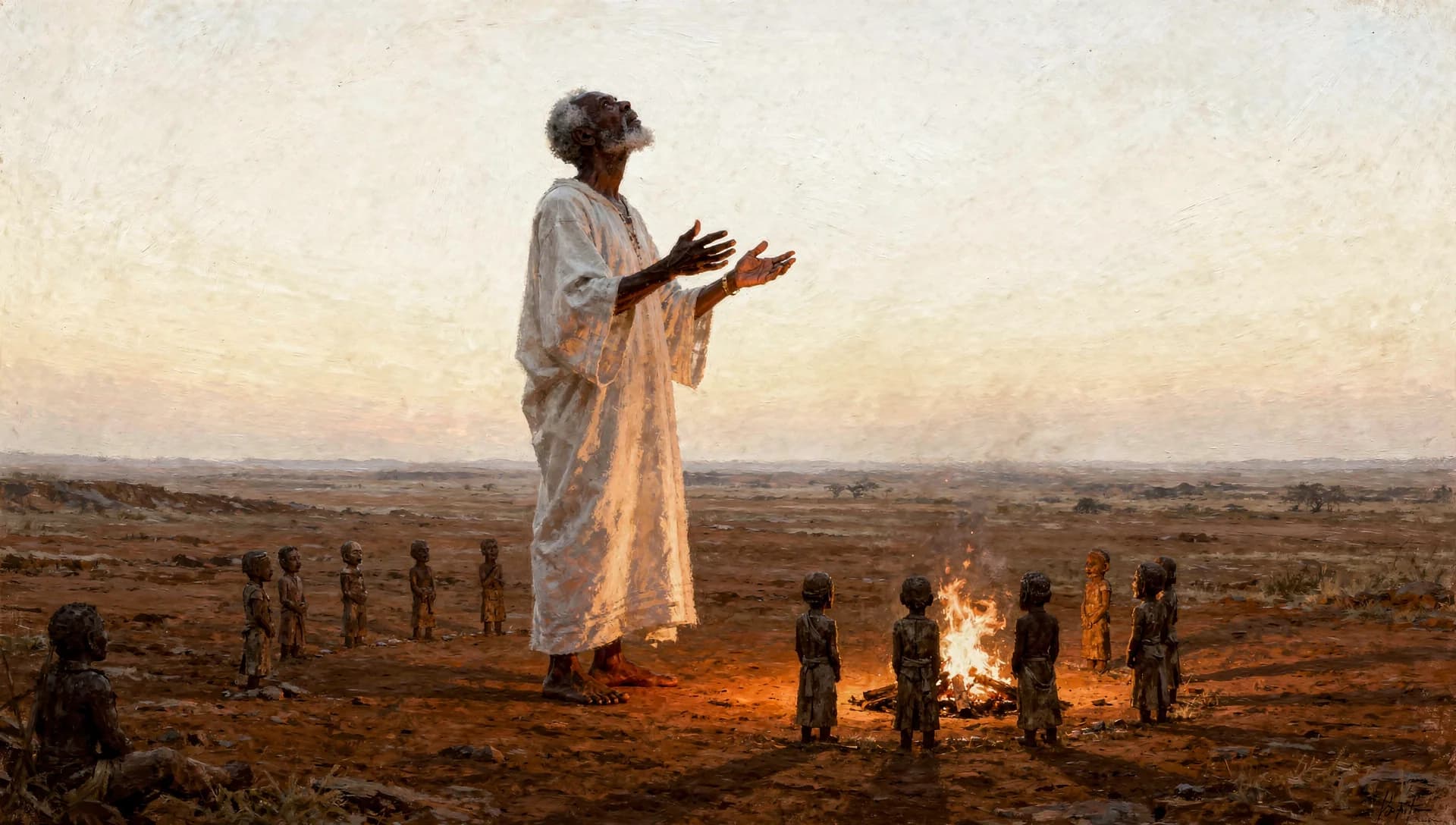
You can see this across African traditional religion, where High Gods like Nyame, Nzambi, and Mulungu recede behind the lesser divinities. You can see it across many Native American traditions. And you can see it clearly in pre-Christian Slavic religion, in the figures of Rod and Svarog.
Rod, whose name means "kin" or "generation," shows up in the earliest Russian sources as a primordial creator. He is associated with the Rozhanitsy, the female birth-goddesses, and invoked in matters of generation, fate, and the founding of lineages. By the time of the twelfth-century Christian polemics, Rod has receded. He is named but not actively worshipped. The warrior pantheon (Perun, Veles, Dazhbog, Stribog) has taken center stage. Medieval Christian authors treat Rod-worship as an older peasant practice already being displaced before Christianization arrived.
Svarog plays a similar role. He is the heavenly father, named as the father of Dazhbog (the sun) and Svarozhich (the household fire), but rarely the object of active cult himself. Svarog is the background creator. His sons are the active deities.
The Urantia Book identifies the historical source of this background-monotheism pattern.
What the Urantia Book Says
The Urantia Book attributes the monotheistic seed in pre-Christian Slavic religion to the Salem missionary enterprise that Machiventa Melchizedek established in the twentieth century BCE.
"Melchizedek continued for some years to instruct his students and to train the Salem missionaries, who penetrated to all the surrounding tribes, especially to Egypt, Mesopotamia, and Asia Minor. And as the decades passed, these teachers journeyed farther and farther from Salem, carrying with them Machiventa's gospel of belief and faith in God." (UB 93:7.1)
The European reach of the Salem mission is documented directly:
"The descendants of Adamson, clustered about the shores of the lake of Van, were willing listeners to the Hittite teachers of the Salem cult. From this onetime Andite center, teachers were dispatched to the remote regions of both Europe and Asia. Salem missionaries penetrated all Europe, even to the British Isles." (UB 93:7.2)
The likely transmission path into Slavic territory followed the existing Adamite migration corridor north from the second garden, through the Caucasus, the Black Sea region, and the Russian plains, dropping Salem monotheistic content at each population center along the way. The Urantia Book is candid about how hard this work was:
"But the task was so great and the tribes were so backward that the results were vague and indefinite. From one generation to another the Salem gospel found lodgment here and there, but except in Palestine, never was the idea of one God able to claim the continued allegiance of a whole tribe or race." (UB 93:7.3)
"You who today enjoy the advantages of the art of printing little understand how difficult it was to perpetuate truth during these earlier times; how easy it was to lose sight of a new doctrine from one generation to another. There was always a tendency for the new doctrine to become absorbed into the older body of religious teaching and magical practice. A new revelation is always contaminated by the older evolutionary beliefs." (UB 93:7.4)
The broader context for the European mission opens at:
"THE early teachers of the Salem religion penetrated to the remotest tribes of Africa and Eurasia, ever preaching Machiventa's gospel of man's faith and trust in the one universal God as the only price of obtaining divine favor. Melchizedek's covenant with Abraham was the pattern for all the early propaganda that went out from Salem and other centers." (UB 94:0.1)
The Slavic preservation of a background monotheistic layer, overlaid by the Indo-European pantheon as the warrior and cavalry populations came to dominate the cultural evolution, fits the pattern of seeding and overlay the Urantia Book describes.
What the Ancient Sources Say
Rod is attested in the earliest Russian sources. The Slovo nekotorogo khristoljubca (Word of a Certain Christ-Lover, eleventh or twelfth century CE) condemns peasant worship of Rod and the Rozhanitsy as a surviving pagan practice: "and others worship Rod and the Rozhanitsy, who shall be cursed." The Slovo o tom kako pervoe poganii verovali v idoly (Word on How the Pagans First Believed in Idols, twelfth century CE) names Rod plainly as a creator-deity worshipped before the later pantheon emerged. Boris Rybakov's Yazychestvo drevnikh slavyan (1981) treats the Rod cult as the earliest stratum of Slavic religious belief.
Svarog appears in the Povest' vremennykh let (the Russian Primary Chronicle), through the gloss on the Malalas Chronicle. Svarog is identified there with the Greek Hephaestus, the heavenly fire-smith father, and his sons are Dazhbog, identified with Helios the sun, and Svarozhich, the household fire. The family structure puts Svarog squarely in the deus otiosus role: the background creator whose sons run the active religious life.
Scholars have long read the Rod and Svarog layer as the Slavic version of a broader Indo-European pattern. An older Sky-Father figure, reconstructed as Proto-Indo-European *Dyeus phater and preserved as Greek Zeus Pater, Latin Jupiter, Vedic Dyaus Pitr, and Norse Týr in his original pre-Odin role, gets pushed aside as the warrior pantheon emerges. Georges Dumézil's trifunctional analysis (Mythe et épopée, 1968 to 1973) reads the Sky-Father as the sovereign-priestly deity of the first function, displaced by the second-function warrior deities (Indra, Thor, Perun) in the historically visible religious systems.
The Slavic version has its own wrinkle. Rod and Svarog are somewhat distinct figures, both filling the pre-pantheon creator role, but with different emphases. Rod carries generative, lineage-founding, kin-organizing associations. Svarog carries heavenly-fire, creator-father, pantheon-parent associations. Rybakov read this as two distinct strata of pre-Christian Slavic religion: an older Rod-worship as the oldest identifiable layer, and a somewhat later Svarog-worship as the integration of that earlier layer with the emerging Indo-European warrior pantheon.
Vasmer's Russisches etymologisches Wörterbuch (Carl Winter, 1950 to 1958) traces the etymology of Rod to Proto-Slavic rodъ (kin, generation, birth), and of Svarog to a possibly Indo-Iranian svar (heaven, sky, sun). The etymologies place Rod as the indigenous Slavic creator figure and Svarog as a probable Indo-European Sky-Father absorbed into Slavic religion through the Iranian steppe contact zone.
The pattern preserved here, an older Sky-Father creator marginalized behind an active warrior pantheon, is sharper in the Slavic case than in many parallel traditions. The Slavic record kept clear traces of the marginalized creator layer rather than fully absorbing it into the warrior pantheon. Those traces include the persistence of Rod-worship among the peasantry into the twelfth and thirteenth centuries CE, the heavenly-father gloss on Svarog in the Malalas Chronicle, and the folkloric survival of the Rozhanitsy in Russian peasant tradition into the early twentieth century.
Why This Mapping Matters
Pre-Christian Slavic religion offers an unusually clear test case for the Urantia Book's claims about Salem monotheism reaching Europe. The fading creator behind an active warrior pantheon is exactly the shape of seeding and then overlay the book describes.
The Urantia Book places the Salem seeding into Europe in the twentieth through twelfth centuries BCE, well before the Indo-European warrior pantheon achieved full cultural dominance across Slavic territory (which came substantially later, as the Iron Age Slavic expansion unfolded across the first millennium BCE). The Slavic cultural substrate received the Salem content, preserved it in the Rod and Svarog cult structure with the Rozhanitsy alongside, and then experienced the overlay of the warrior pantheon as Indo-European cavalry and military populations came to dominate cultural and political life.
The Urantia Book is explicit about the difficulty of preserving monotheistic content in Bronze-Age tribal contexts (93:7.3). The Slavic record shows that difficulty in action. Rod is preserved but marginalized. Svarog is named but passive. The monotheistic seed survives as cultural memory rather than as an active cult. That partial survival is exactly what the Urantia Book attributes to most of the European missionary enterprise.
The Slavic pattern is not unique. The same shape recurs across Indo-European religion: Greek Ouranos marginalized behind Zeus, Vedic Dyaus marginalized behind Indra, Norse Týr marginalized behind Odin. The Urantia framework explains the pattern as the post-Salem absorption of monotheistic content into the later warrior pantheons. The missionaries planted the creator seed, but without a continuing Salem institution (the way the Hebrew prophetic tradition kept the Salem content alive as active monotheism), the polytheistic warrior pantheons absorbed and marginalized the older creator layer.
For Slavic studies, the implication is this. The marginalized creator layer in Rod and Svarog should not be read primarily as an indigenous Slavic development. It is the Slavic preservation of the Salem monotheistic seeding that the Urantia Book describes as a real historical missionary enterprise into Europe. Slavic cultural continuity through the polytheistic overlay period kept the creator layer visible as identifiable memory content, giving us a usable window into Salem-era European religious history that most other Indo-European traditions have largely obscured.
The Hebrew preservation of Salem monotheism as the active tradition of Abraham, Moses, and the prophets (the Hebrew Bible's Yahweh tradition being the direct preservation of Melchizedek's teaching, per UB 93 and 94) stands as an instructive contrast. The same Salem seed produced, in the Hebrew lineage, the sustained monotheistic tradition that shaped Western religious history. In the Slavic lineage, it produced only the marginalized Rod and Svarog memory under a warrior-pantheon overlay. The contrast shows just how contingent monotheistic preservation was, and exactly how hard the missionary task was under Bronze-Age conditions, which is what the Urantia Book says all along.
Sources
- The Urantia Book, Paper 93 (Machiventa Melchizedek), Paper 94 (The Melchizedek Teachings in the Orient). Urantia Foundation, first printing 1955. Cited passages: 93:7.1-4, 94:0.1.
- Rybakov, Boris. Yazychestvo drevnikh slavyan (Paganism of the Ancient Slavs). Nauka, 1981.
- Rybakov, Boris. Yazychestvo drevnei Rusi (Paganism of Ancient Rus). Nauka, 1987.
- Vasmer, Max. Russisches etymologisches Wörterbuch. Carl Winter, 1950-1958.
- Gimbutas, Marija. The Slavs. Praeger, 1971.
- Dumézil, Georges. Mythe et épopée. Gallimard, 1968-1973.
- Povest' vremennykh let (Russian Primary Chronicle). Translated by Samuel Hazzard Cross and Olgerd P. Sherbowitz-Wetzor, Mediaeval Academy of America, 1953.
- Ivanov, Vyacheslav and Vladimir Toporov. Issledovaniya v oblasti slavyanskikh drevnostey. Nauka, Moscow, 1974.
Confidence and Evidence
- Confidence: INFORMED SPECULATION
- Evidence rating: SUGGESTIVE
- Basis: The Urantia Book directly documents the Salem missionary penetration of Europe at 93:7.2, and the difficulty of preserving monotheistic content across primitive tribal cultures at 93:7.3-4. The Slavic preservation of Rod and Svarog as marginalized creators behind an active warrior pantheon fits the pattern of seeding and overlay. The same partial-survival shape recurs across Indo-European religious histories, which supports the shared-substrate reading.
Related Decoder Articles
- Melchizedek = Machiventa and the Salem Enterprise
- Lake Van = A Name Preserved for 200,000 Years
- Salem Teachings in Asia = Brahmanic Reforms
Byline: Derek Samaras | Urantia Book Network | April 2026
Connecting Articles
The Sky God Who Withdrew: African High-God Traditions and the Salem Teaching Layer
Seven Teachers, One Preparation: The Axial Age and the Salem Continuity
The Vow to Stay: Bodhisattva Ideal and the Salem Missionary Commission
The Primordial Teacher Before Buddha: Tonpa Shenrab, Yungdrung Bön, and the Salem Layer in Tibetan Religion
The Newsletter
Get the research behind each piece
Free. New Urantia Book explorations, the sources behind the videos, and early looks. No spam, unsubscribe anytime.
Prefer video? Follow on YouTube and Facebook.
Delivered through Substack. You can also read past issues.