
 Mythic
The "Mark of Cain," divine protection
 UB
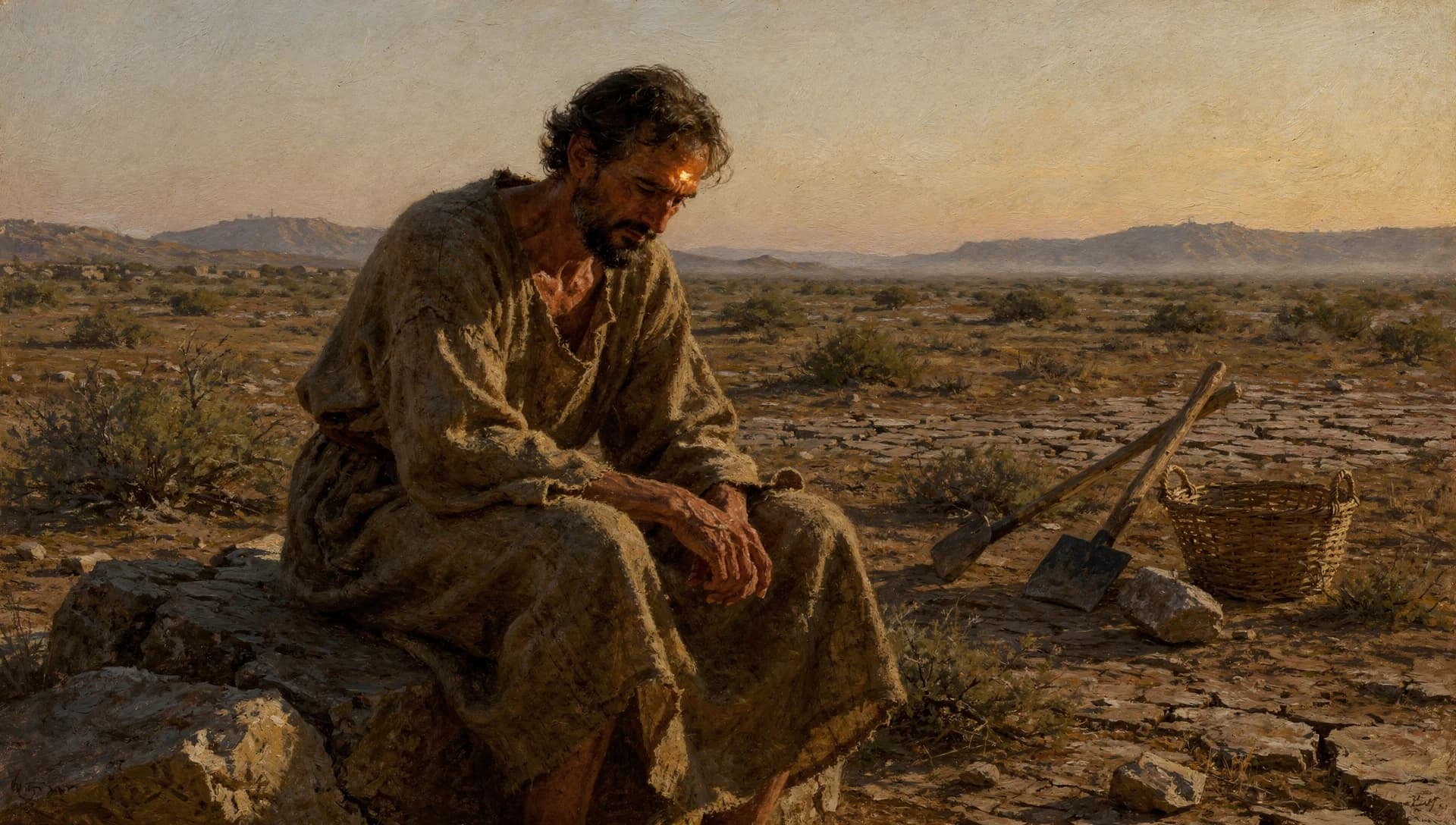
UBCain receiving a Thought Adjuster
Full Article
Read the deep-dive article on this connection
Cain receiving a Thought Adjuster = The "Mark of Cain," divine protection
The Connection
The "mark" that set Cain apart was not a physical brand; it was the indwelling Thought Adjuster, received through sincere repentance. This transforms the narrative from punishment to mercy: God's response to genuine repentance is the gift of divine indwelling.
UB Citation
Academic Source
Genesis 4:15; Westermann, Genesis 1-11 commentary
Historical Evidence(Strong evidence)
Genesis 4:15 Hebrew: "oth" (aleph-vav-tav) means "sign, token, omen, remembrance, miracle, wonder" with no inherent negative connotation. Bible Odyssey (Society of Biblical Literature) confirms the mark was divine protection, not punishment. Targum tradition identifies the mark as "the great and honorable name of the LORD" (the Tetragrammaton). Modern scholarly consensus: "The mark of Cain is God's promise to offer divine protection from premature death."
Deep Dive
The phrase "mark of Cain" has carried a heavy moral weight in Western imagination for two thousand years. In the medieval Christian tradition, the mark became synonymous with shame, with the visible stigma of fratricide, sometimes (in racist nineteenth-century misappropriations) identified with dark skin to justify slavery. In the modern psychological vocabulary, the "mark of Cain" labels the haunted moral guilt of those who have done irrevocable wrong. Almost none of this captures what the Genesis text actually says or what the Hebrew word actually means.
Genesis 4:15, in the Masoretic Hebrew text: "And the LORD set a mark (oth) on Cain, lest any who found him should kill him." The word oth is the standard Hebrew term for a sign, token, or marker, with no inherent negative connotation. The same word is used for the rainbow as the sign of God's covenant with Noah (Genesis 9:12), for the bloody hyssop as the sign that protected Israelite households at Passover (Exodus 12:13), for the sabbath as a sign between God and Israel (Exodus 31:13), for the miraculous signs Moses worked before Pharaoh, for the various signs and wonders of the prophetic tradition. In every case the oth is a positive marker indicating divine relationship, divine protection, or divine action. The Society of Biblical Literature's Bible Odyssey resource summarizes the mainstream scholarly consensus succinctly: the mark of Cain is God's promise to offer divine protection from premature death. The targumic tradition (Jewish Aramaic translations and paraphrases of the Hebrew Bible) identifies the mark specifically as the divine name itself, the Tetragrammaton, written somehow on Cain's person.
The Urantia Book provides what the targumic tradition was reaching for. Paper 76:2.8 records: "Cain's life in Mesopotamia had not been exactly happy since he was in such a peculiar way symbolic of the default. It was not that his associates were unkind to him, but he had not been unaware of their subconscious resentment of his presence. But Cain knew that, since he bore no tribal mark, he would be killed by the first neighboring tribesmen who might chance to meet him. Fear, and some remorse, led him to repent. Cain had never been indwelt by an Adjuster, had always been defiant of the family discipline and disdainful of his father's religion. But he now went to Eve, his mother, and asked for spiritual help and guidance, and when he honestly sought divine assistance, an Adjuster indwelt him. And this Adjuster, dwelling within and looking out, gave Cain a distinct advantage of superiority which classed him with the greatly feared tribe of Adam."
The structural match with Genesis 4 is precise. Cain has killed Abel and is being sent away into the wider world. He fears being killed by hostile populations. He turns to his mother for spiritual help. The result is a marker that gives him "a distinct advantage of superiority which classed him with the greatly feared tribe of Adam." The Genesis text says God set a mark on Cain so that no one would kill him. The UB says the marker was the indwelling Thought Adjuster, received through honest repentance. The Adjuster's effect on the personality, the visible quality of indwelling that other people sensed and respected, is what made Cain's protection real. The "greatly feared tribe of Adam" is the violet-race lineage whose members were known to other populations as bearers of a particular spiritual quality that produced fear and respect. Cain, with the Adjuster, was visibly recognizable as belonging to that lineage in the sense that mattered.
Why an Adjuster rather than a physical mark? Because the Hebrew oth is precisely the kind of word that would be used for an invisible spiritual marker known by its effects rather than for a literal physical brand. The targum tradition's identification of the mark with the divine name is heading in the right direction: a marker that consists of God's presence in the person, recognizable by its spiritual quality. The UB account specifies the mechanism: the Adjuster, the fragment of the Universal Father indwelling the human mind. Cain became, after his repentance, a person in whom God dwelt, and that indwelling was the mark.
Paper 76:2.5 to 76:2.7 provides the broader biographical context. Cain and Abel were the post-default sons of Eve, born after the migration east from the first garden. Their mutual hostility was substantively about character and inheritance and the meaning of the family's situation. After Cain killed Abel in a moment of rage, his parents encouraged him to leave because his presence had become symbolic of their own failure. Cain went into the wider world and there made a life, and there received the Adjuster after honest repentance.
The doctrinal weight of this reading is significant. The Genesis 4 narrative, read on the literal-mark hypothesis, has been one of the most theologically embarrassing passages in the Hebrew Bible: God protects a murderer with a stigmatizing brand, and the mark has been variously misappropriated to justify ethnic prejudice, slavery, and the marking of the morally compromised. The UB reading recovers the moral logic. God's response to honest repentance is the gift of indwelling divine presence. The "mark" is not a stigma but a sacrament. Cain's protection is not God's reluctant tolerance of a murderer but God's full restoration of a repentant son. The reading is consistent with the broader biblical tradition of God's response to repentance (David, Manasseh, the prodigal son) and with the New Testament teaching of the Spirit's indwelling.
The strongest counterargument is the assumption that Genesis 4 is so primitive that no developed doctrine of indwelling presence should be read back into it. The reply is that the doctrine of God's indwelling is not a late development; it is present in the J source's account of God walking in the garden in the cool of the day, in the Mosaic theophanies, in the prophetic visions of God's presence with Israel. The specific doctrine of personal indwelling that the UB articulates with the Thought Adjuster vocabulary may be more developed than what the Hebrew priests at Babylon could articulate, but the underlying reality of divine indwelling response to repentance is biblically primary, not late. The targumic tradition's reach toward the divine name as the mark is evidence that the indwelling-presence reading was within reach of Jewish interpretation in the first century CE.
What the parallel implies is that one of the most morally troubling passages in the Hebrew Bible turns out, on careful reading, to be one of the most morally luminous. God's response to a sincerely repentant murderer is the gift of divine indwelling. The mark of Cain is mercy, not stigma. The decoder's job is to recover this and let the cultural inheritance of the phrase carry its true weight.
Key Quotes
“Cain had never been indwelt by an Adjuster, had always been defiant of the family discipline and disdainful of his father’s religion. But he now went to Eve, his mother, and asked for spiritual help and guidance, and when he honestly sought divine assistance, an Adjuster indwelt him. And this Adjuster, dwelling within and looking out, gave Cain a distinct advantage of superiority which classed him with the greatly feared tribe of Adam.”
“The death of Abel became known to his parents when his dogs brought the flocks home without their master. To Adam and Eve, Cain was fast becoming the grim reminder of their folly, and they encouraged him in his decision to leave the garden.”
Cultural Impact
The phrase "mark of Cain" has been one of the most repurposed and misappropriated images in Western religious imagination. Medieval Christian iconography depicted Cain with a literal brand or scar, often on the forehead, which became the visual shorthand for the murderer-pariah. Nineteenth-century pro-slavery apologists, especially in the American South and in Mormon scriptural interpretation before 1978, identified the mark with dark skin in ways that were both biblically indefensible and morally catastrophic. Modern literature has used the phrase as a name for inherited or acquired moral guilt: Hermann Hesse's Demian, Lord Byron's Cain, John Steinbeck's East of Eden. The phrase has carried so much cultural baggage that recovering its original meaning requires deliberate work. The UB reading restores the original meaning: the mark is divine protection, the consequence of honest repentance, the visible sign of God's indwelling presence. Recovering this reading clears away centuries of misuse and lets Genesis 4 do what it was meant to do, which is testify to the reach of divine mercy.
Modern Resonance
Contemporary readers wrestling with the Hebrew Bible often find Genesis 4 morally puzzling, with God's protection of a murderer feeling like a violation of justice. The UB reading dissolves the puzzle. The protection is not for an unrepentant murderer but for a repentant one whose honest seeking has resulted in divine indwelling. The "mark" is not a license but a sacrament. For modern readers attempting to recover a usable theology of repentance and forgiveness, the Cain narrative becomes one of the most encouraging passages in the Bible: even the worst act, sincerely repented, opens the door to full restoration of relationship with God. The mainstream scholarly recognition that the oth is divine protection rather than stigma converges with the UB account at the right level. The theological recovery is available to any contemporary reader willing to read the Hebrew text carefully and to consider what kind of marker would actually fit the role the text assigns it. The decoder's job is to make the recovery visible and to clear away the cultural baggage the phrase has accumulated.
Related Mappings
Serapatatia, well-meaning Nodite leader
= The Serpent in the Garden of Eden
Eve's mating with Cano the Nodite
= "Eating the Forbidden Fruit" / Original Sin
Three Noahs: Historical, Regional, and Literary
= Biblical Noah, composite figure
Machiventa Melchizedek, incarnated teacher
= Melchizedek, mysterious priest-king deleted from Genesis
Related Articles
Where to next
The free newsletter. The research behind each piece, no spam.