
The Mark of Mercy: Cain's Thought Adjuster and the Genesis Mark
Genesis 4:15 records the mark God placed on Cain to protect him from retaliation. The Hebrew text does not describe a brand or stigma; the word is oth, a sign or token of divine attention. The Urantia Book identifies what the sign was: the bestowal of a Thought Adjuster, divine protection given in response to sincere repentance.
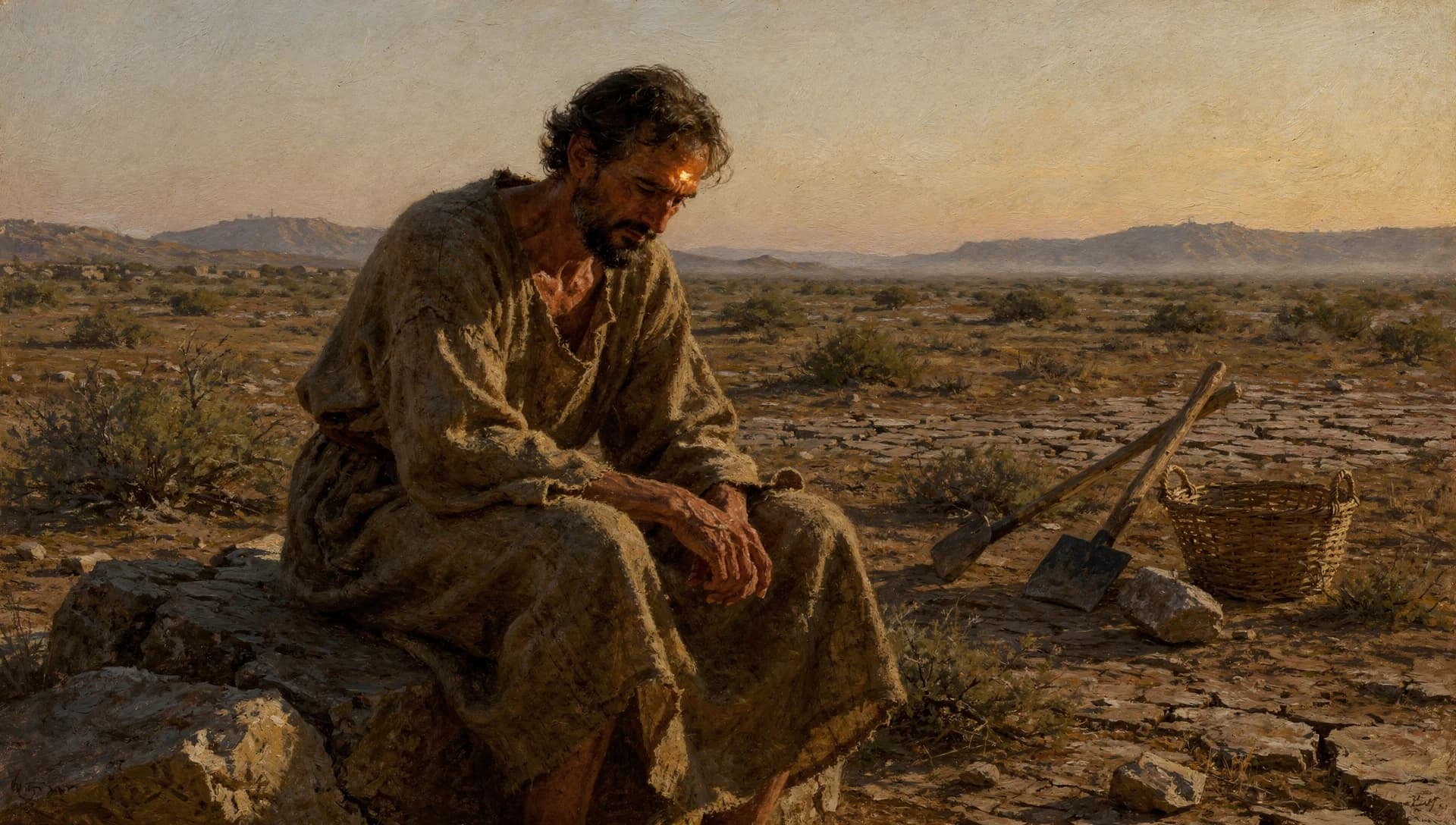
Cain receiving a Thought Adjuster = The "Mark of Cain," divine protection
This article expands on the decoder mapping. For the side-by-side card and quick reference, see the mapping page.
The Mistaken Reading
The Genesis 4 account of Cain and the mark has, across two millennia of Christian interpretation, been consistently misread as a story of divine punishment. The popular tradition treats the mark as a stigma of shame, a visible sign of guilt permanently branded on the murderer. Serious biblical scholarship has long noted that the text does not say this. The Hebrew word in Genesis 4:15 is oth (אוֹת), which simply means a sign, token, or distinguishing mark. The semantic field covers "miracle," "wonder," "standard," or "pledge," none of which carry inherent negative connotation.
The Targum tradition preserves the deeper reading. Targum Onkelos and Targum Pseudo-Jonathan both identify the mark as a divinely protective token rather than a brand of shame. Bereshit Rabbah 22:12 records the rabbinic tradition that the mark was the letter of the Tetragrammaton (the divine name) inscribed on Cain's forehead, a protective seal. The mark is unambiguously merciful in the rabbinic reading: divine attention extended to a repentant killer.
The Urantia Book identifies what the mark actually was.
What the Urantia Book Says
Cain's backstory is given with historical specificity in Paper 76. He was the child of Eve and Cano, conceived during the default. His lineage made him racially distinct from the pure-line Adamic children. His relationship with his half-brother Abel was fraught from childhood (76:2.4). The fatal confrontation came at age twenty:
"The boys were respectively eighteen and twenty years of age when the tension between them was finally resolved, one day, when Abel's taunts so infuriated his bellicose brother that Cain turned upon him in wrath and slew him." (UB 76:2.5)
Cain's subsequent life in exile is described:
"Cain's life in Mesopotamia had not been exactly happy since he was in such a peculiar way symbolic of the default. It was not that his associates were unkind to him, but he had not been unaware of their subconscious resentment of his presence. But Cain knew that, since he bore no tribal mark, he would be killed by the first neighboring tribesmen who might chance to meet him. Fear, and some remorse, led him to repent. Cain had never been indwelt by an Adjuster, had always been defiant of the family discipline and disdainful of his father's religion. But he now went to Eve, his mother, and asked for spiritual help and guidance, and when he honestly sought divine assistance, an Adjuster indwelt him. And this Adjuster, dwelling within and looking out, gave Cain a distinct advantage of superiority which classed him with the greatly feared tribe of Adam." (UB 76:2.8)
The Urantia Book identifies this voluntary indwelling of the Adjuster as the protective gift that distinguished Cain from those around him (76:2.8).
"And so Cain departed for the land of Nod, east of the second Eden. He became a great leader among one group of his father's people and did, to a certain degree, fulfill the predictions of Serapatatia, for he did promote peace between this division of the Nodites and the Adamites throughout his lifetime." (UB 76:2.9)
The structural claim is precise. Cain, before the murder, had not been indwelt by a Thought Adjuster because of the combined effects of the Adamic default and his mixed parentage. After the murder and the subsequent repentance, an Adjuster voluntarily indwelt him. This voluntary indwelling was recognized by the surrounding tribes as divine protection and functioned as the "mark" the Genesis record preserves. Cain lived out his days as a successful leader, promoted peace between Nodites and Adamites, and contributed to the restoration of post-default relations between the two descended populations.
What the Ancient Source Says
The Genesis 4:15 Hebrew text reads: va-yasem YHWH le-Qayin oth le-vilti hakkoth-oto kol-motzeo, conventionally translated "And the Lord set a mark on Cain, lest any who found him should kill him." The Hebrew word oth is the common noun for sign, wonder, token, or pledge. It appears in Exodus 4:8-9 as the signs Moses performs, in Exodus 12:13 as the Passover blood-sign, in Joshua 2:12 as the covenantal pledge, and in dozens of other contexts where the meaning is straightforwardly positive.
Gordon Wenham's Genesis 1-15 (Word Biblical Commentary, Word Books, 1987) discusses the Hebrew usage and the protective rather than punitive reading. Umberto Cassuto's A Commentary on the Book of Genesis, Part I: From Adam to Noah (Magnes Press, 1961) establishes the rabbinic-Targum tradition of protective reading. Michael Fishbane's Biblical Interpretation in Ancient Israel (Oxford University Press, 1985) traces the later misreading.
The rabbinic tradition preserved multiple candidates for the specific content of the mark. Bereshit Rabbah 22:12 lists several: the Tetragrammaton, a horn, the sun, a dog, leprosy, repentance itself. The rabbis were working from a deep awareness that the text meant something specific and protective rather than a generic stigma. What they did not have was a clear concept of the specific divine gift the mark represented.
The Urantia Book supplies that content. The Targum tradition's "Tetragrammaton inscribed on the forehead" is the closest rabbinic approximation; the specifically divine (YHWH-associated) character of the mark was preserved, and the modern English translation "Thought Adjuster" captures what the ancient tradition was identifying.
Why This Mapping Matters
The standard Christian reading of the mark of Cain as divine punishment or stigma has had serious historical consequences. In the antebellum United States, the mark was sometimes invoked to theologically justify slavery, on the reasoning that Cain's descendants bore the punishment perpetually. The misreading is not theologically innocuous.
The Urantia Book's identification is both philologically and theologically more careful. The mark is the divine gift of inner presence, extended to a repentant killer as mercy rather than punishment. It is not a brand of guilt but a pledge of reconciliation. It establishes that the Father's response to sincere repentance is the same in the Cain narrative as in the subsequent Urantia theology: the willing bestowal of the indwelling Adjuster.
The mapping has practical consequences for reading the broader Genesis narrative. Cain's subsequent life as a peacemaker between the Nodites and Adamites (76:2.9) is consistent with the account of a man whose inner life has been transformed by the bestowal of divine presence. The Genesis tradition preserves the fact of his survival and leadership but loses the specific theological content of why. The Urantia account restores the content.
Sources
- The Urantia Book, Paper 76 (The Second Garden). Urantia Foundation, first printing 1955. Cited passages: 76:2.4, 76:2.5, 76:2.8, 76:2.9.
- Wenham, Gordon J. Genesis 1-15. Word Biblical Commentary, Word Books, 1987.
- Cassuto, Umberto. A Commentary on the Book of Genesis, Part I: From Adam to Noah. Magnes Press, 1961.
- Fishbane, Michael. Biblical Interpretation in Ancient Israel. Oxford University Press, 1985.
- Bereshit Rabbah. Translated by Jacob Neusner, Genesis Rabbah, Scholars Press, 1985.
- Speiser, E. A. Genesis. Anchor Yale Bible, Doubleday, 1964.
- Westermann, Claus. Genesis 1-11: A Commentary. Augsburg, 1984.
Confidence and Evidence
- Confidence: UB CONFIRMED
- Evidence rating: STRONG
- Basis: The Hebrew oth is philologically a protective-positive sign, not a punitive brand. The Targum and Bereshit Rabbah traditions preserve specifically the divine-name / protective reading. The Urantia Book names the specific content (Thought Adjuster bestowal) consistent with the rabbinic preservation.
Related Decoder Articles
- Thought Adjuster = Egyptian Ka, the Divine Spirit-Double
- Eve's Mating with Cano = "Forbidden Fruit" / Original Sin
- Serapatatia, Well-Meaning Nodite Leader = The Serpent
By Derek Samaras
Connecting Articles
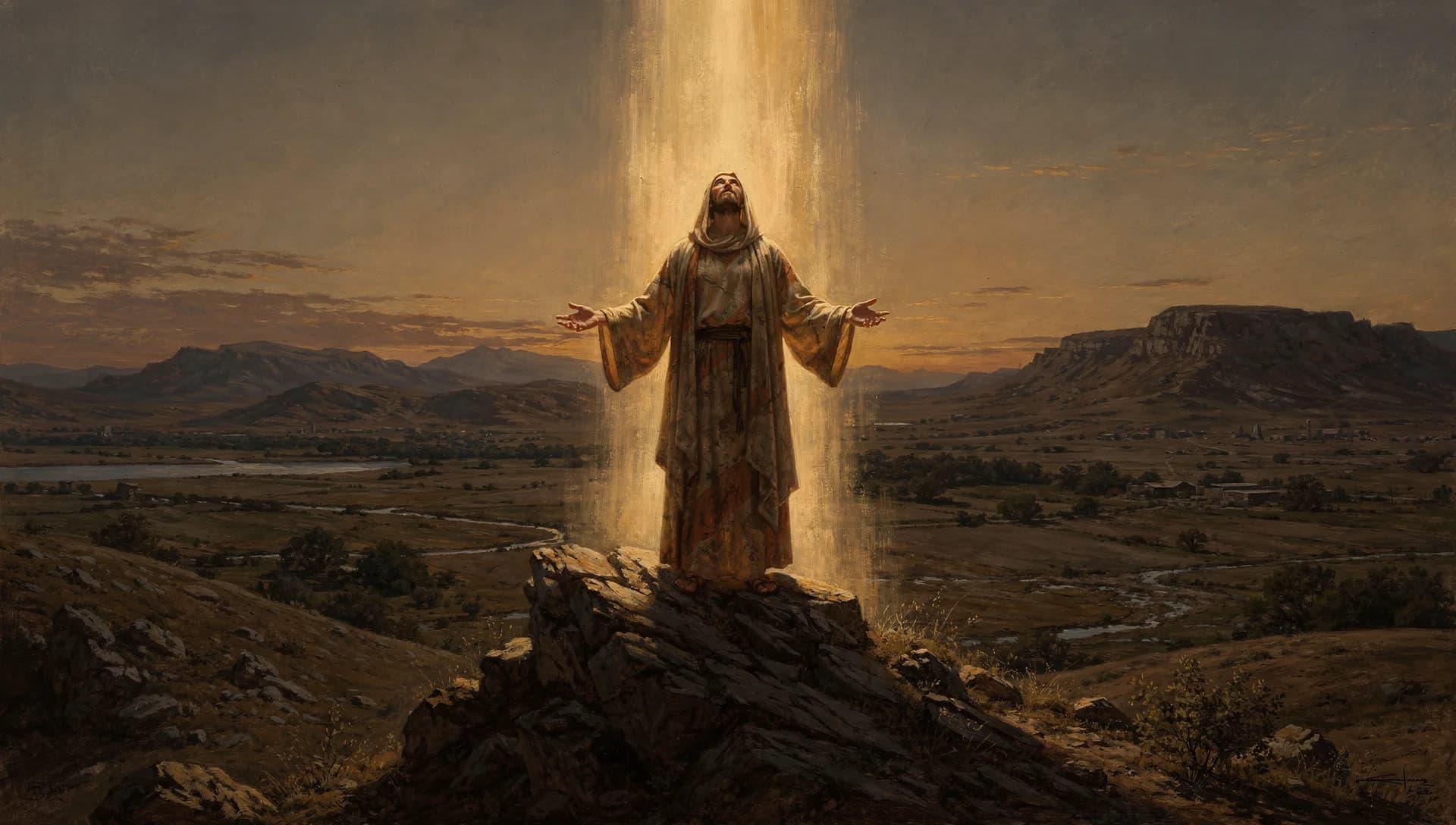
The One Who Did Not Die: Enoch's Fusion and the Genesis 5:24 Mystery

The Act Behind the Symbol: Eve's Union with Cano and the Forbidden Fruit
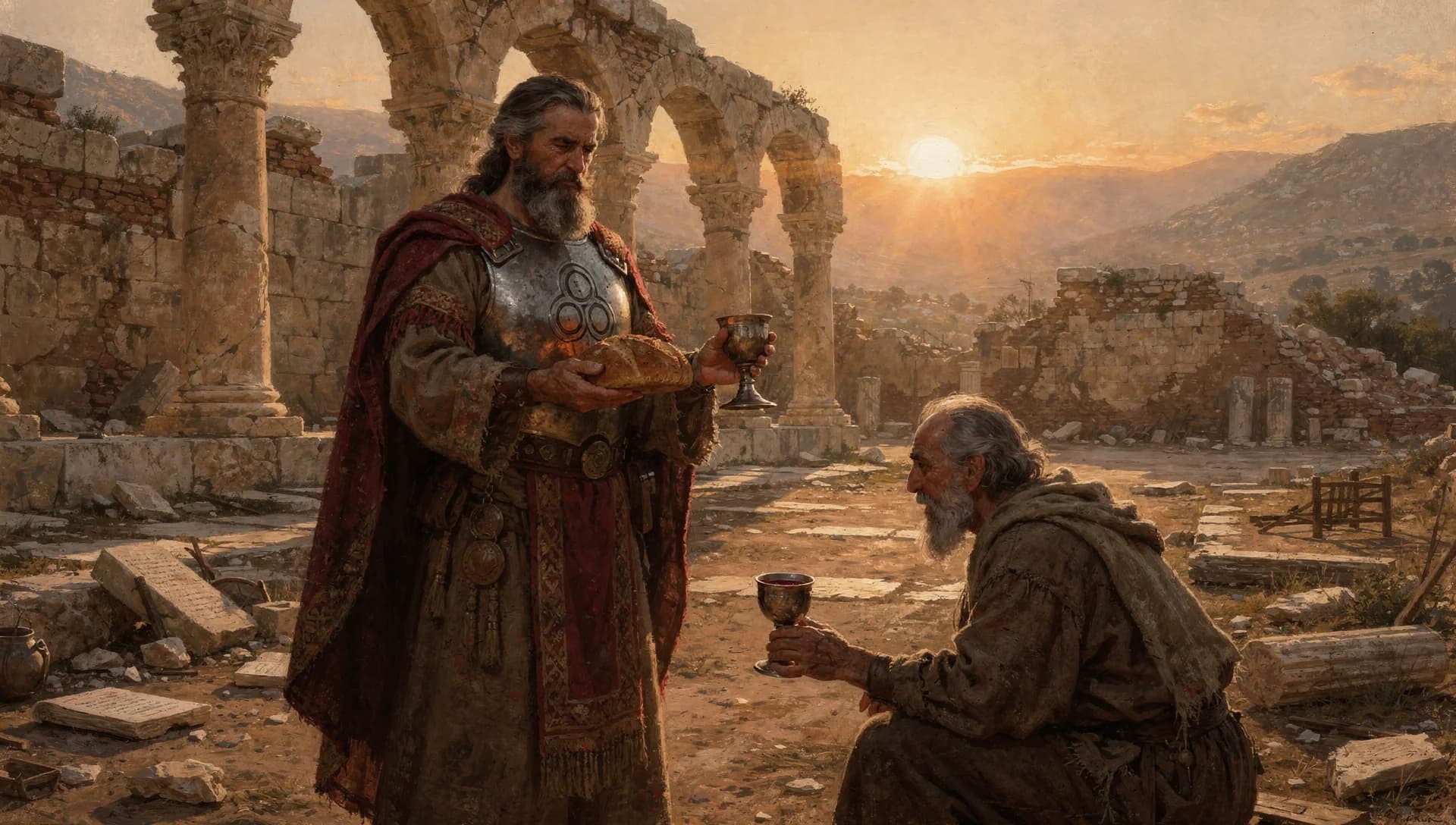
The Priest Who Had No Father: Machiventa Melchizedek and the Genesis Fragment

The Spark Within the Body: Orphic Brotherhood and the Thought Adjuster in Greek Dress
The Newsletter
Get the research behind each piece
Free. New Urantia Book explorations, the sources behind the videos, and early looks. No spam, unsubscribe anytime.
Prefer video? Follow on YouTube and Facebook.
Delivered through Substack. You can also read past issues.