
 Mythic
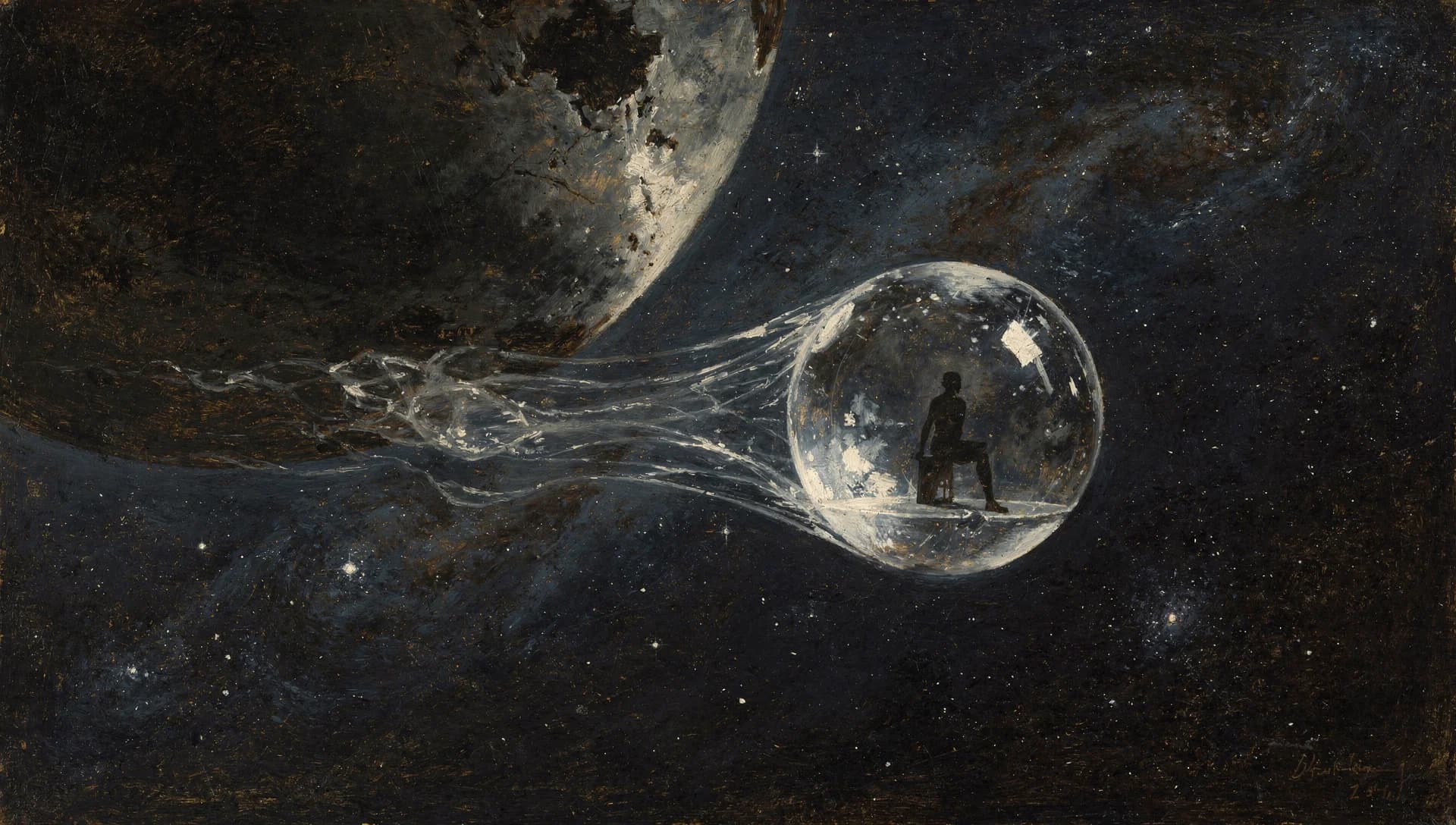
The binding of Loki beneath the earth until Ragnarok
 UB
UBThe binding of Lucifer after Michael's bestowal (UB 53:9)
Full Article
Read the deep-dive article on this connection
The binding of Lucifer after Michael's bestowal (UB 53:9) = The binding of Loki beneath the earth until Ragnarok
The Connection
The UB specifies that Lucifer, the deposed System Sovereign, is currently "a prisoner on satellite number one" of Jerusem since Michael's bestowal, bound until the final adjudication. The Prose Edda describes Loki bound beneath the earth with a serpent dripping venom above him until the end of the age, when he will be released to lead the hosts of chaos at Ragnarok. Both traditions preserve the same structure: a rebel leader captured, bound, held, and released only for a final reckoning. Revelation 20 preserves the same motif in the Christian stream.
UB Citation
UB 53:8.6, 53:9.2-4
Academic Source
Gylfaginning 50 (Sturluson); Völuspá 51-56; Revelation 20:1-3
Historical Evidence(Moderate evidence)
Gylfaginning 50 records Loki bound with the entrails of his own son in a cave with a serpent dripping venom onto his face, "to remain until Ragnarok." Völuspá 51-56 preserves the pre-Snorri prophecy of Loki's release at the end of the age. Revelation 20:1-3 describes the dragon "bound for a thousand years" in the bottomless pit, to be released briefly before final judgment. Three separate traditions (Norse, Christian, UB) preserve the same structural sequence of capture, binding, and eventual release for final adjudication, suggesting a common underlying memory of the actual rebellion's resolution.
Deep Dive
Three traditions, three different cultural contexts, the same structural sequence: a powerful rebel is captured after his rebellion is defeated, is bound in a place of restraint, will be released briefly at the end of the age for a final battle, and will be finally adjudicated thereafter. The Norse Loki: bound beneath the earth with a serpent dripping venom, to be released at Ragnarok. The Christian dragon of Revelation 20: bound for a thousand years in the bottomless pit, to be released briefly before final judgment. The Urantia Book Lucifer: held in custody on Jerusem satellite number one, awaiting the final adjudication of the case of Gabriel versus Lucifer in the courts of Uversa. The structural match across the three traditions is striking and asks for explanation.
The Urantia Book provides the historical referent. Paper 53:9.2 records Lucifer's status: "The archdeceiver has never been on Urantia since the days when he sought to turn back Michael from the purpose to complete the bestowal and to establish himself finally and securely as the unqualified ruler of Nebadon. Upon Michael's becoming the settled head of the universe of Nebadon, Lucifer was taken into custody by the agents of the Uversa Ancients of Days and has since been a prisoner on satellite number one of the Father's group of the transition spheres of Jerusem. And here the rulers of other worlds and systems behold the end of the unfaithful Sovereign of Satania."
Paper 53:9.3 records the structure of the pending adjudication: "Michael, upon assuming the supreme sovereignty of Nebadon, petitioned the Ancients of Days for authority to intern all personalities concerned in the Lucifer rebellion pending the rulings of the superuniverse tribunals in the case of Gabriel versus Lucifer, placed on the records of the Uversa supreme court almost two hundred thousand years ago, as you reckon time. Concerning the system capital group, the Ancients of Days granted the Michael petition with but a single exception: Satan was allowed to make periodic visits to the apostate princes on the fallen worlds until another Son of God should be accepted by such apostate worlds, or until such time as the courts of Uversa should begin the adjudication of the case of Gabriel versus Lucifer."
Paper 53:9.4 closes the loop: "Satan could come to Urantia because you had no Son of standing in residence, neither Planetary Prince nor Material Son. Machiventa Melchizedek has since been proclaimed vicegerent Planetary Prince of Urantia, and the opening of the case of Gabriel versus Lucifer has signalized the inauguration of temporary planetary regimes on all the isolated worlds. It is true that Satan did periodically visit Caligastia and others of the fallen princes right up to the time of the presentation of these revelations, when there occurred the first hearing of Gabriel's plea for the annihilation of the archrebels. Satan is now unqualifiedly detained on the Jerusem prison worlds."
So the UB account places Lucifer in custody on Jerusem satellite number one since Michael's bestowal completion, with Satan now also detained on the Jerusem prison worlds, with the case of Gabriel versus Lucifer pending at Uversa, and with the eventual adjudication and final disposition still in process. The structural sequence (rebellion, defeat, capture, binding pending adjudication, eventual final judgment) maps onto both the Norse Loki tradition and the Christian Revelation 20 tradition with extraordinary precision.
Snorri's Gylfaginning 50 records Loki bound with the entrails of his own son in a cave, with the giantess Skadi placing a venom-dripping serpent above his face. Loki's wife Sigyn holds a basin to catch the venom; when the basin fills and she has to empty it, the venom drips onto Loki's face and his writhing causes earthquakes. Loki will remain so until Ragnarok, when he will break free and lead the army of chaos in the final battle. Voluspa 51-56 preserves the pre-Snorri prophecy of the release: Loki captains the ship Naglfar that sails from the east at Ragnarok, carrying the army that will destroy the gods.
Revelation 20:1-3 records the Christian version: an angel comes down from heaven with the key to the bottomless pit and a great chain in his hand, seizes the dragon (the ancient serpent, the devil, Satan), binds him for a thousand years, throws him into the pit, shuts and seals it. After the thousand years are ended Satan must be released for a little while. Revelation 20:7-10 records the brief release, the gathering of the nations of Gog and Magog for the final battle, and the ultimate consumption of the rebel by fire from heaven.
The three accounts converge on a specific structural sequence that is otherwise rare in religious traditions. Most rebellion-and-defeat narratives across world mythology end with the rebel either annihilated immediately (most Mesopotamian Tiamat traditions) or established as a permanent feature of the cosmic landscape (Hades in Greek tradition, Yama in Vedic). The capture-binding-release-final-judgment sequence is structurally distinctive, and the Norse, Christian, and UB convergence on this sequence asks for explanation.
The UB explanation is the parsimonious one: a real cosmic-administrative event followed exactly this sequence, and three different cultural traditions preserve cultural memory of this same event. The Lucifer rebellion was real; the rebellion was defeated when Michael completed his bestowal and assumed unqualified sovereignty of Nebadon; the principal rebels were taken into custody pending the formal Uversa adjudication; that adjudication has been in process across the time since but has not yet reached final disposition; the disposition will involve some form of final judgment whose specific character the UB does not detail but the structure of which both Norse Ragnarok and Christian Revelation 20 preserve in mythological form.
E. O. G. Turville-Petre, in Myth and Religion of the North (Holt, Rinehart, and Winston, 1964), and the broader Eddic-comparative scholarship have noted the structural distinctiveness of the Norse Ragnarok tradition. The capture-binding-release pattern is not a generic mythological feature; it is specific to traditions that have absorbed cultural memory of the underlying cosmic event. The Christian Revelation tradition's similar structural specificity is the subject of David Aune's Word Biblical Commentary on Revelation (1997-1998) and broader Apocalyptic-tradition scholarship. The UB account ties the two strands together by identifying the common historical referent.
The strongest counterargument is that the Norse Ragnarok tradition postdates Christian missionary contact with Scandinavia and may have been influenced by Christian Apocalyptic eschatology. The reply is that the Eddic poetic material, especially Voluspa, contains pre-Christian elements that scholars have traced through philological work to centuries before the Christianization of Scandinavia. The Loki-bound-pending-Ragnarok complex is firmly attested in pre-Christian Norse tradition, even if Snorri's medieval recension has been influenced by Christian framing. The structural match between Norse and Christian traditions is most parsimoniously explained as common derivation from a deeper underlying memory rather than as one-way Christian influence on the Norse tradition.
What the parallel implies is that three separate traditions preserve cultural memory of the same cosmic-administrative event: the binding of the principal rebels of the Lucifer rebellion pending final adjudication. The decoder's job is to make the convergence visible and to honor each tradition's preservation of the underlying reality.
Key Quotes
“Upon Michael’s becoming the settled head of the universe of Nebadon, Lucifer was taken into custody by the agents of the Uversa Ancients of Days and has since been a prisoner on satellite number one of the Father’s group of the transition spheres of Jerusem. And here the rulers of other worlds and systems behold the end of the unfaithful Sovereign of Satania.”
“Michael, upon assuming the supreme sovereignty of Nebadon, petitioned the Ancients of Days for authority to intern all personalities concerned in the Lucifer rebellion pending the rulings of the superuniverse tribunals in the case of Gabriel vs. Lucifer, placed on the records of the Uversa supreme court almost two hundred thousand years ago, as you reckon time.”
“Satan is now unqualifiedly detained on the Jerusem prison worlds.”
Cultural Impact
The bound-rebel-pending-final-judgment structure has been one of the most enduring eschatological patterns in Western religious imagination. Through Revelation 20, the Christian tradition has preserved the structure as the foundation of millennialist eschatology, with the binding of Satan, the millennial reign, the brief release, and the final judgment becoming central to subsequent Christian apocalyptic. Through Norse mythology, especially as recovered by the Romantic movement and developed by Wagner's Ring, the structure has informed European cultural imagination of the end-time. Modern fantasy literature (Tolkien's binding of Morgoth, the long fantasy-genre tradition of dark lords sealed away awaiting their return) draws on the same structural substrate. Contemporary popular culture in films, television, video games, and novels regularly recurs to the bound-rebel-pending-release pattern. The cultural inheritance is durable. The UB account, by identifying the historical referent in the actual binding of Lucifer pending the Uversa adjudication, restores the source for what would otherwise be a peculiarly persistent and structurally specific mythological pattern.
Modern Resonance
Contemporary readers wrestling with eschatological themes, especially those raised in Christian or Norse-influenced contexts, often find the bound-rebel-pending-release structure intellectually compelling but theologically uncertain. The literal-millennialist Christian readings have been increasingly difficult to defend in modern contexts; the Norse Ragnarok tradition is mostly received as colorful mythology rather than as eschatological reality. The UB framework offers a sober middle position: the rebellion was real, the binding is real, the final adjudication is pending but certain, and the structure of the resolution has been preserved in multiple cultural memories. For modern readers attempting to develop a usable eschatology, the UB account provides specific historical content (Lucifer in custody on Jerusem satellite number one, Gabriel versus Lucifer pending at Uversa) that grounds what otherwise risks becoming purely symbolic. The decoder's job is to make the structural convergence across traditions visible and to point at the actual historical referent.
Related Mappings
Andite military commander (~5000 BC)
= Thor, Norse god of thunder and warfare
Van, sustained by the Tree of Life for 150,000 years
= Odin, self-hung on Yggdrasil, the World Tree (Norse)
Tree of Life, the Edentia shrub at the center of the Father's temple
= Yggdrasil, the World Tree sustaining all realms (Norse)
The staff split: loyal vs. rebel members of the Prince's corps
= The Aesir-Vanir War, the first conflict among the gods (Norse)
Related Articles
Where to next
The free newsletter. The research behind each piece, no spam.