
The Mother of God Temple Beneath St. Peter's: Vatican Hill and the Pagan Sacred Site
Long before St. Peter's Basilica was built, the Vatican Hill was sacred to Cybele, the Phrygian Mother of God. The Urantia Book states that the Mother of God cult had its headquarters on the exact site where the basilica now stands. The continuity from Great Mother worship to Marian veneration on the same physical ground is one of the clearest cases of a Christian center inheriting a pagan sanctuary.
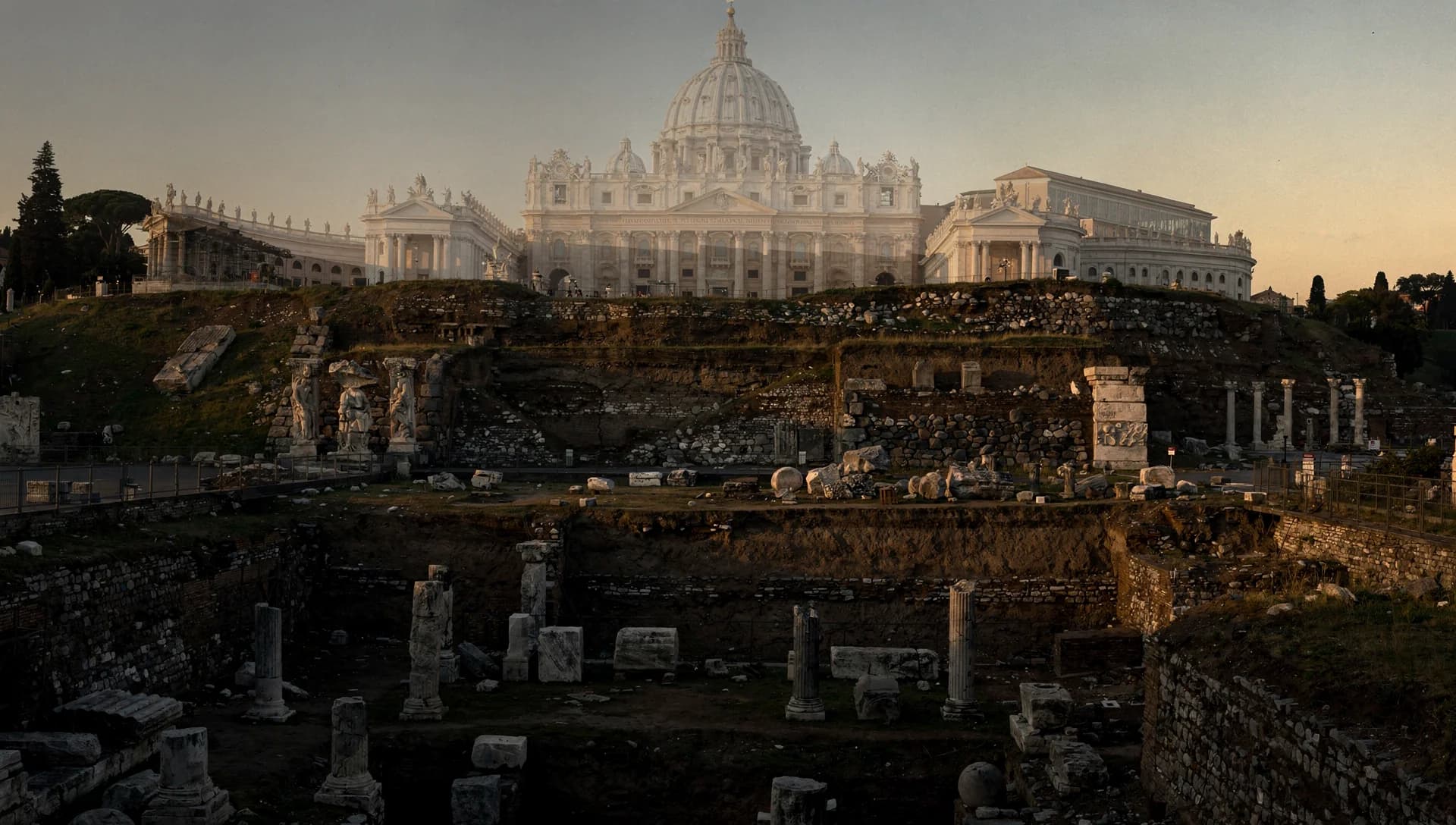
Pre-Christian Mother of God cult on the Vatican site = Mother of God temple where St. Peter's Basilica now stands
This article expands on the decoder mapping. For the side-by-side card and quick reference, see the mapping page.
The Sacred Site Beneath the Basilica
St. Peter's Basilica stands on the Vatican Hill, the Mons Vaticanus of ancient Rome. Tradition identifies the site as the burial place of the Apostle Peter. But the sacred use of the hill reaches back well before the Christian era.
The Vatican Hill held a principal sanctuary of Cybele, the Phrygian Mother of God, throughout the Roman Imperial period. The Phrygianum, her temple, stood on that ground. The major rites of the Cybele cult, including the March Hilaria and the Taurobolium, were celebrated there.
The Urantia Book documents the pre-Christian Mother of God cult on the very site where St. Peter's now stands.
What the Urantia Book Says
The Urantia Book makes the identification explicit at UB 98:3.5:
"This formal and unemotional form of pseudoreligious patriotism was doomed to collapse, even as the highly intellectual and artistic worship of the Greeks had gone down before the fervid and deeply emotional worship of the mystery cults. The greatest of these devastating cults was the mystery religion of the Mother of God sect, which had its headquarters, in those days, on the exact site of the present church of St. Peter's in Rome." (98:3.5)
The broader treatment places the cult within the Cybele and Attis mystery religion at 98:4.2 and 98:4.3:
"The three mystery cults which became most popular were:" (98:4.2)
"The Phrygian cult of Cybele and her son Attis." (98:4.3)
The Phrygian Mother of God, Cybele or Magna Mater, occupied the same cultic position later filled by the Christian Mother of God. The shared physical ground at the Vatican is among the most direct examples of Christian absorption of a pre-Christian sacred site that the Mediterranean record preserves.
What the Ancient Sources Say
The archaeological evidence for pagan cultic use of the Vatican Hill is substantial. Rodolfo Lanciani's Pagan and Christian Rome (Houghton Mifflin, 1892) documented the extensive pagan religious remains beneath Christian churches throughout Rome, with detailed attention to the Vatican sanctuaries.
L. Richardson Jr.'s A New Topographical Dictionary of Ancient Rome (Johns Hopkins University Press, 1992) confirms the pre-Christian sanctuary activity on the Vatican Hill, including the Phrygianum. Foundations of the Phrygianum have been documented archaeologically beneath the later Christian construction.
Inscriptions tell the same story. The Corpus Inscriptionum Latinarum (CIL VI) preserves multiple Taurobolium dedication inscriptions from the fourth and fifth centuries CE, recording the continued operation of the Cybele cult at the Vatican site through the late Roman period. Jaime Alvar's Romanising Oriental Gods (Brill, 2008) provides the principal modern scholarly synthesis of the evidence for the Vatican Phrygianum.
The Christian adoption of the site is documented in early Christian sources. Eusebius of Caesarea's Ecclesiastical History (fourth century CE) preserves the tradition of Peter's burial on the Vatican Hill following his martyrdom under Nero. The Constantinian basilica, built between roughly 324 and 360 CE under Emperor Constantine, took over the existing sacred topography of the hill and made it the Christian center.
The continuous Marian devotion at the basilica preserves structural parallels with the older Great Mother cult. The development of Mary as Mother of God, finalized in the Council of Ephesus in 431 CE with the title Theotokos, "God-bearer," played out in a cultural setting already shaped by Cybele Magna Mater devotion. The shared title "Mother of God" carries directly across the pre-Christian and Christian traditions.
Franz Cumont's The Oriental Religions in Roman Paganism (Open Court, 1911) documented the broader pattern of pre-Christian oriental religion shaping later Christian devotional life. The continuity from Cybele to Mary stands among the clearest cases. Rose Mary Sheldon's Intelligence Activities in Ancient Rome: Trust in the Gods, but Verify (Routledge, 2005) treats the political adoption of Cybele worship by the Roman state from 204 BCE through the imperial period.
Why This Mapping Matters
The shared physical ground between the pre-Christian Mother of God cult at the Vatican and the later Christian basilica is one of the most direct cases of sacred site continuity across the ancient Mediterranean religious transition. The Urantia Book's identification of the St. Peter's site with the pre-Christian Mother of God headquarters is a direct witness to that continuity.
The title "Mother of God," carried from Magna Mater to Theotokos, reflects genuine cultural inheritance. Christian Marian devotion grew up inside a religious environment that had cultivated Great Mother veneration for centuries.
The Urantia Book framework lets us hold both layers without flattening either. Christian Marian devotion has a real historical center: the actual mother of Jesus of Nazareth, whose motherhood of the bestowal Michael is the genuine foundation of the tradition. At the same time, this devotion grew up inside a Mediterranean culture already steeped in Great Mother veneration. Both are part of the picture.
The site continuity at the Vatican illustrates the same dual layering on the ground. The historical apostle Peter was martyred and buried at a real geographic location. That location happened to be the existing Cybele cultic center. The basilica that rose there honored the apostolic burial while inheriting the older sacred ground.
The mapping points to a reading of the Vatican that holds both layers at once: a real apostolic foundation at the physical level, plus an inherited cultural and religious framework at the structural level. The Urantia Book at 98:3.5 explicitly acknowledges the pre-Christian substrate while leaving the later Christian development its own historical and theological weight.
Sources
- The Urantia Book, Paper 98 (The Melchizedek Teachings in the Occident). Urantia Foundation, first printing 1955. Cited passages: 98:3.5, 98:4.3.
- Lanciani, Rodolfo. Pagan and Christian Rome. Houghton Mifflin, 1892.
- Richardson, L. Jr. A New Topographical Dictionary of Ancient Rome. Johns Hopkins University Press, 1992.
- Alvar, Jaime. Romanising Oriental Gods: Myth, Salvation and Ethics in the Cults of Cybele, Isis and Mithras. Brill, 2008.
- Vermaseren, Maarten J. Cybele and Attis: The Myth and the Cult. Thames and Hudson, 1977.
- Cumont, Franz. The Oriental Religions in Roman Paganism. Open Court, 1911.
- Corpus Inscriptionum Latinarum (CIL VI). Berlin, 1863-present.
Confidence and Evidence
- Confidence: UB CONFIRMED
- Evidence rating: MODERATE
- Basis: The Urantia Book directly documents the Mother of God cult headquarters on the St. Peter's site at UB 98:3.5. The archaeological evidence for the Vatican Phrygianum and pre-Christian cultic activity on the Vatican Hill is substantial. The shared "Mother of God" title across the Cybele and Christian Marian traditions reflects documented cultural and linguistic continuity.
Related Decoder Articles
- Cybele and Attis = Phrygian Mystery Cult
- Black Friday = Pre-Christian Attis Mourning
- Paul's Composite Christianity
Byline: Derek Samaras | Urantia Book Network | April 2026
Connecting Articles
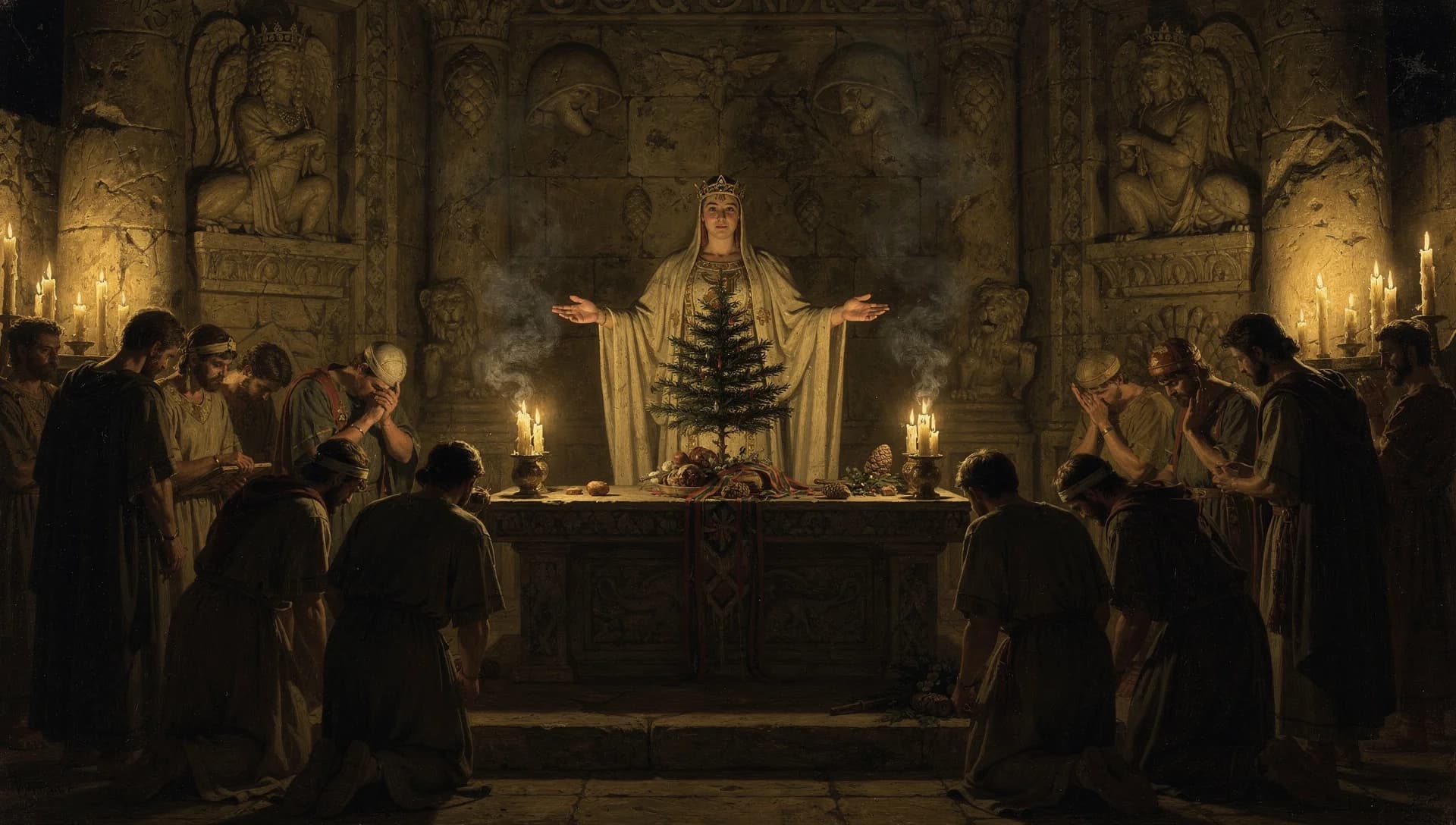
The Mother and Her Dying Son: Cybele, Attis, and the Corrupted Salem Teaching
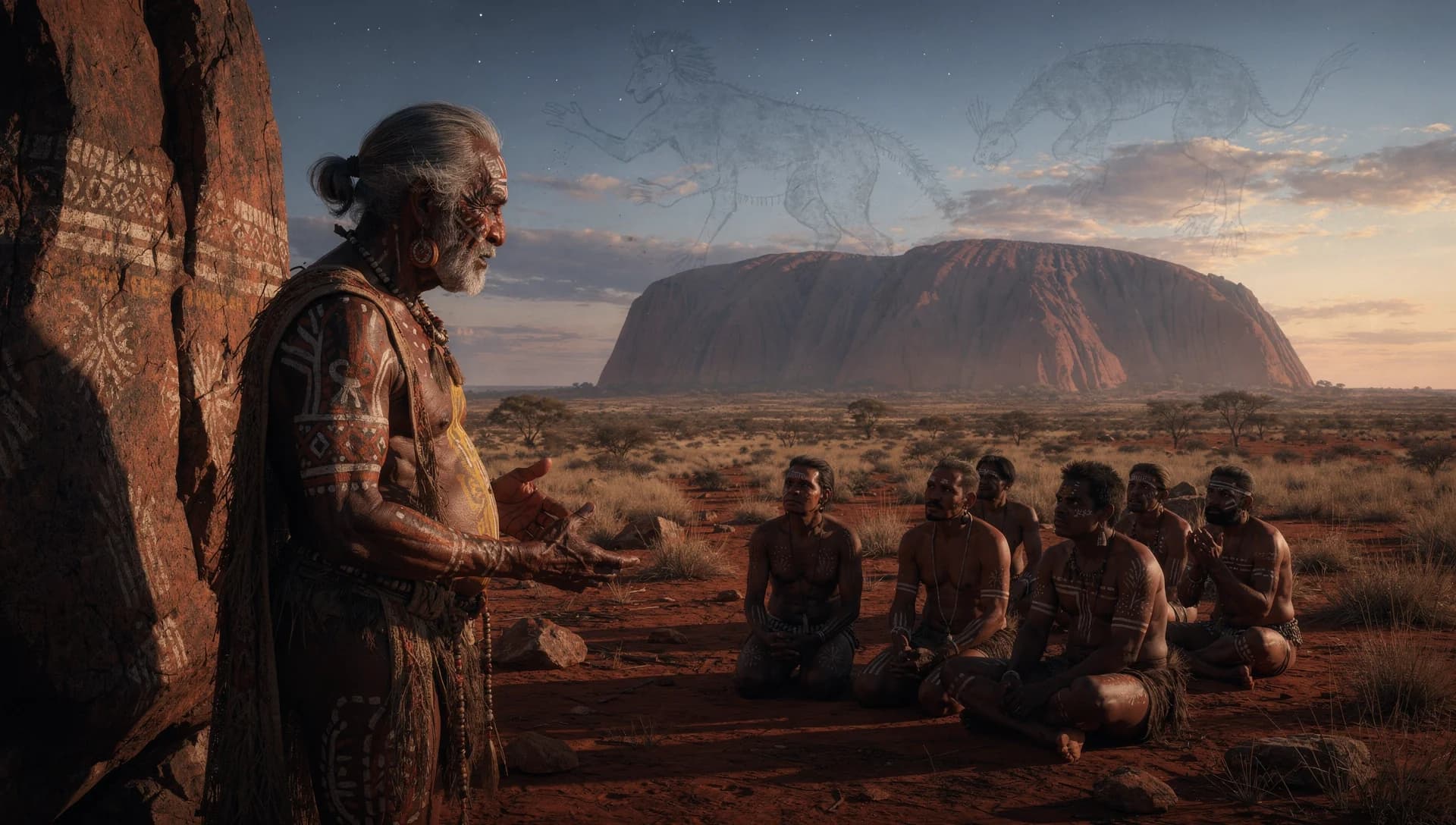
The Longest Memory: Australian Aboriginal Dreamtime and the Primordial Teaching-Ancestors
The Final Adjudication: Ragnarok and the Pending Verdict

We Come From One: African First-Family Traditions and the Sangik Origin
The Newsletter
Get the research behind each piece
Free. New Urantia Book explorations, the sources behind the videos, and early looks. No spam, unsubscribe anytime.
Prefer video? Follow on YouTube and Facebook.
Delivered through Substack. You can also read past issues.