
The Mother and Her Dying Son: Cybele, Attis, and the Corrupted Salem Teaching
The Phrygian mystery cult of Cybele and her son Attis swept the Roman Empire in the early Christian centuries. Attis died and rose every year, and initiates joined his death and resurrection through elaborate ritual. The Urantia Book identifies the tradition as corrupted Salem teaching. The original message of salvation through faith was absorbed into an older Anatolian mother goddess cult and reshaped into a dramatic story of death and return.
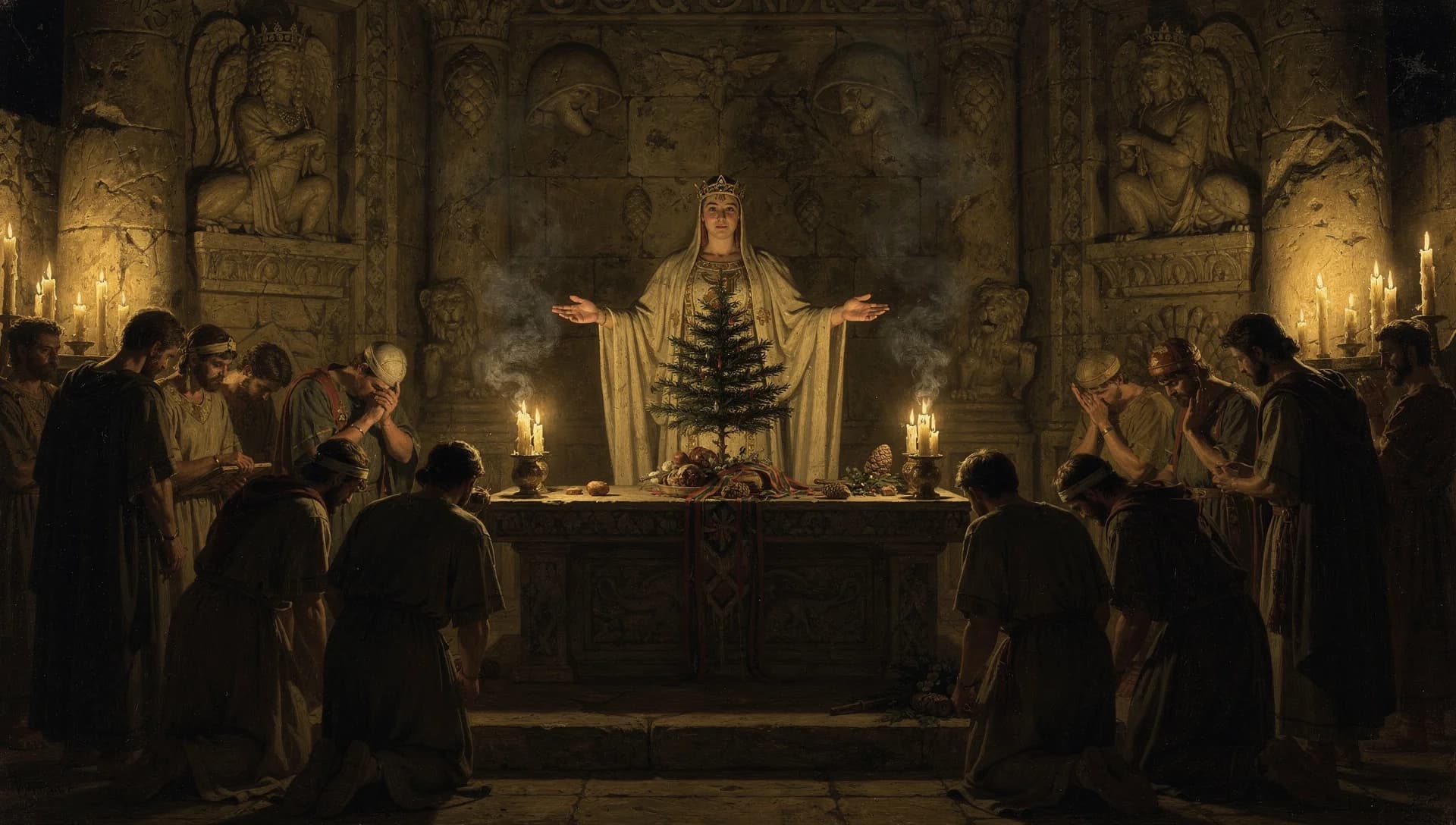
Corrupted Salem teaching in Phrygian mystery cult = Cybele and Attis, mother-son mystery religion
This article expands on the decoder mapping. For the side-by-side card and quick reference, see the mapping page.
The Phrygian Mystery Cult
The cult of the Magna Mater, the Great Mother Cybele, and her consort and son Attis came out of Phrygia in central Anatolia, in what is now Turkey. From roughly the fourth century BCE to the fifth century CE, it spread across the Hellenistic and Roman worlds. The story at the center of the cult is simple. Attis is a beautiful youth, beloved of Cybele. He castrates himself, dies, and is mourned and celebrated every year through elaborate ritual. Rome adopted the cult officially in 204 BCE during the Second Punic War, and the temple of the Great Mother was built on the Palatine Hill.
The Urantia Book identifies the Cybele and Attis tradition as one of the principal corrupted Salem derivatives.
What the Urantia Book Says
The Urantia Book documents the Phrygian mystery cult at Paper 98:4.
"The majority of people in the Greco-Roman world, having lost their primitive family and state religions and being unable or unwilling to grasp the meaning of Greek philosophy, turned their attention to the spectacular and emotional mystery cults from Egypt and the Levant." (98:4.1)
The three principal mystery cults are named directly:
"The three mystery cults which became most popular were:" (98:4.2)
"The Phrygian cult of Cybele and her son Attis." (98:4.3)
"The Egyptian cult of Osiris and his mother Isis." (98:4.4)
"The Iranian cult of the worship of Mithras as the savior and redeemer of sinful mankind." (98:4.5)
The dying and rising theology is laid out plainly:
"The Phrygian and Egyptian mysteries taught that the divine son (respectively Attis and Osiris) had experienced death and had been resurrected by divine power, and further that all who were properly initiated into the mystery, and who reverently celebrated the anniversary of the god's death and resurrection, would thereby become partakers of his divine nature and his immortality." (98:4.6)
So is the degraded character of the Phrygian rites:
"The Phrygian ceremonies were imposing but degrading; their bloody festivals indicate how degraded and primitive these Levantine mysteries became. The most holy day was Black Friday, the 'day of blood,' commemorating the self-inflicted death of Attis." (98:4.7)
What the Ancient Sources Say
The standard scholarly treatment is Maarten J. Vermaseren's Cybele and Attis: The Myth and the Cult (Thames and Hudson, 1977). His earlier Corpus Cultus Cybelae Attidisque (Brill, 1977 to 1989, seven volumes) is the comprehensive catalog of archaeological and textual evidence for the cult across the Roman Empire.
Lynn Roller's In Search of God the Mother: The Cult of Anatolian Cybele (University of California Press, 1999) traces the cult to Neolithic Anatolian goddess worship. In her reading, the dying and rising son element is a later overlay, added during the Hellenistic elaboration. The mother goddess came first, by thousands of years. The dying son was grafted on.
The Roman festival calendar is well documented. March 15 was Canna intrat, the entry of the reed. March 22 was Arbor intrat, the entry of the pine tree that represented Attis. March 24 was the Dies sanguinis, the Day of Blood, when Attis dies and the Galli priests cut themselves in ritual self-castration. March 25 was Hilaria, the Day of Joy, when Attis rises. Jaime Alvar's Romanising Oriental Gods (Brill, 2008) gives the standard reconstruction of the sequence.
The classical sources include Catullus poem 63 on Attis (first century BCE), Ovid's Fasti 4.221 to 248 on the festival, Lucretius De Rerum Natura 2.600 to 660 on the Great Mother, Pausanias Description of Greece 7.17.9 to 12 on the variant origin stories of Attis, and Julian the Apostate's Oration 5, a fourth-century Neoplatonic allegory of the myth.
Why This Mapping Matters
Cybele and Attis is one of the clearest cases of the pattern the Urantia Book describes. A Salem teaching enters a region. The original content, salvation by faith in one God and the expectation of a coming bestowal Son, gets absorbed into the religion already on the ground. In Anatolia that religion was the ancient mother goddess cult. What came out the other side was the Phrygian story of the dying and rising son, dressed in the symbols of the older cult.
The degraded ritual character follows from the absorption. The bloody self-mutilation of the Galli priests, the emotional swing from mourning to ecstasy, the spectacle that crowds out ethics, all of this is the older substrate dominating the inherited Salem content. The Urantia Book's phrase, "imposing but degrading," captures it well. The form is grand. The content has been pulled down.
The geography fits. The Urantia Book records that Salem missionaries reached into Asia Minor (UB 93:7.1). The seed entered the Anatolian soil, was absorbed by the existing goddess religion, and produced the hybrid that the Hellenistic and Roman periods inherited and spread.
What the Romans adopted on the Palatine in 204 BCE was already a hybrid. The Salem element was buried inside it, recognizable in the dying son who returns and in the promise of immortality for those who join his death and resurrection. The rest was older than Salem and harder to dislodge.
Sources
- The Urantia Book, Paper 98 (The Melchizedek Teachings in the Occident). Urantia Foundation, first printing 1955. Cited passages: 98:4.1-7.
- Vermaseren, Maarten J. Cybele and Attis: The Myth and the Cult. Thames and Hudson, 1977.
- Vermaseren, Maarten J. Corpus Cultus Cybelae Attidisque. Brill, 1977-1989 (seven volumes).
- Roller, Lynn E. In Search of God the Mother: The Cult of Anatolian Cybele. University of California Press, 1999.
- Alvar, Jaime. Romanising Oriental Gods: Myth, Salvation and Ethics in the Cults of Cybele, Isis and Mithras. Brill, 2008.
- Burkert, Walter. Ancient Mystery Cults. Harvard University Press, 1987.
Confidence and Evidence
- Confidence: UB CONFIRMED
- Evidence rating: STRONG
- Basis: The Urantia Book directly identifies the Cybele-Attis cult as the first of the three principal mystery cults at UB 98:4.3 and documents the degraded character of the Phrygian rites at 98:4.7. The pre-existing Anatolian mother-goddess substrate is archaeologically documented. The mechanism of Salem corruption plus goddess cult absorption accounts for the cult's characteristic features.
Related Decoder Articles
- Dying-and-Rising Gods = Corrupted Salem Teaching
- Black Friday = Pre-Christian Attis Mourning Day
- Mother of God Temple = Vatican Site
Byline: Derek Samaras | Urantia Book Network | April 2026
Connecting Articles
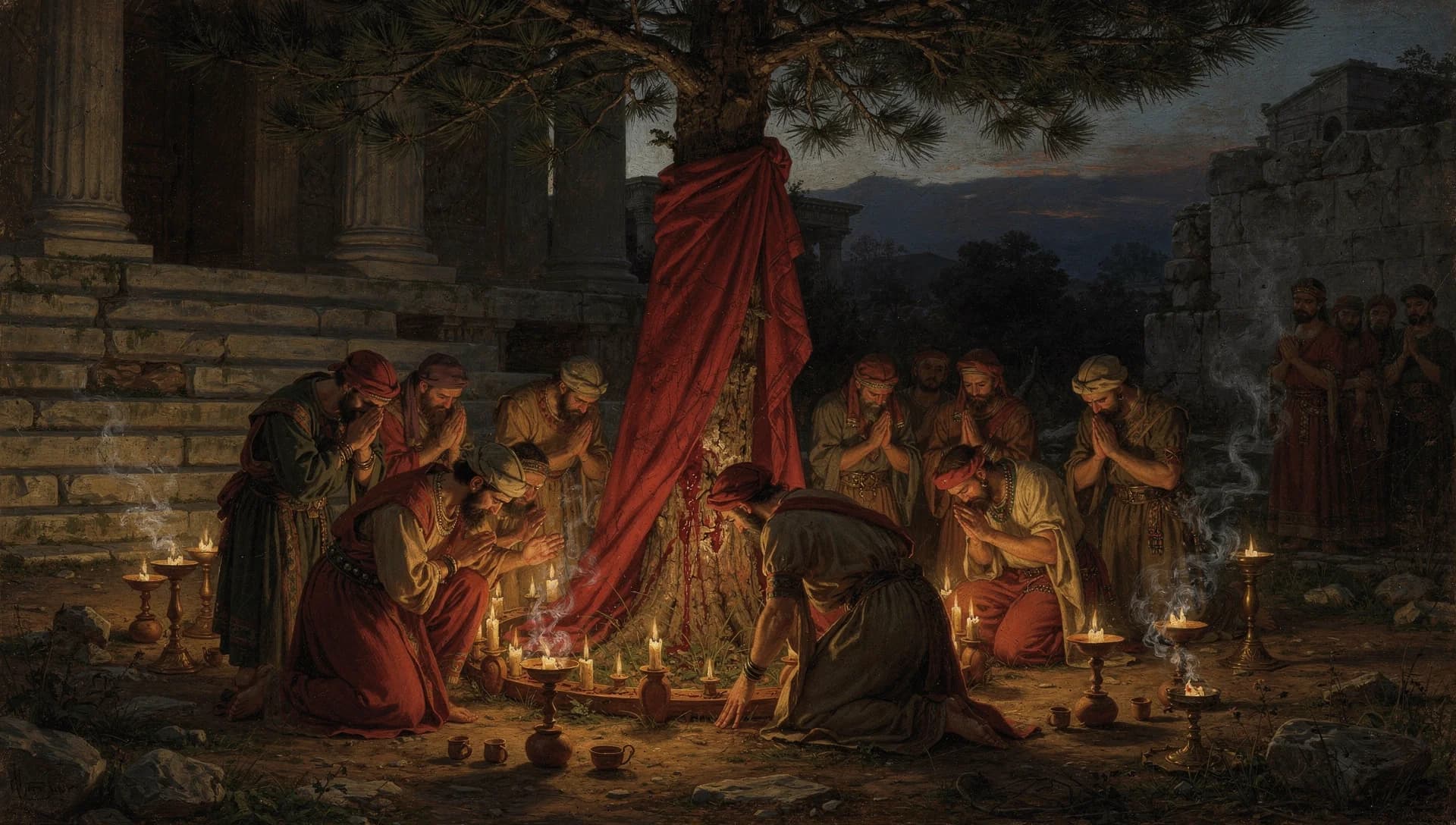
The Day of Blood: Black Friday, Attis, and the Pre-Christian Sacred Calendar
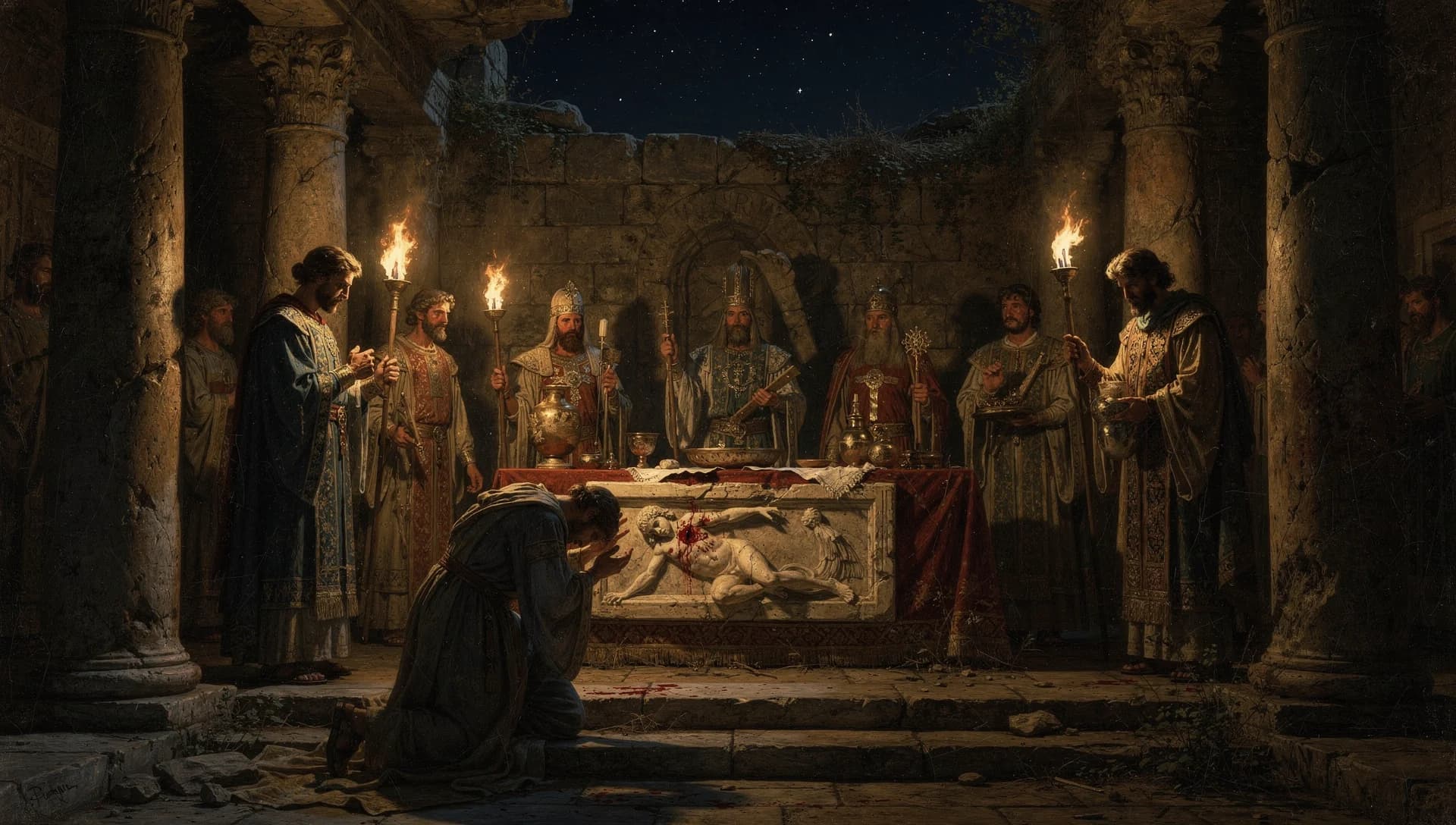
The Sacrificed Son Who Rises: Osiris, Tammuz, Attis, and the Corrupted Salem Teaching
The Grain Revealed: Eleusinian Mysteries and the Adamic Agricultural Inheritance
The Mother of God Temple Beneath St. Peter's: Vatican Hill and the Pagan Sacred Site
The Newsletter
Get the research behind each piece
Free. New Urantia Book explorations, the sources behind the videos, and early looks. No spam, unsubscribe anytime.
Prefer video? Follow on YouTube and Facebook.
Delivered through Substack. You can also read past issues.