
The Three-Source Christianity: Paul, Mystery Cults, and the Composite Religion
The Urantia Book identifies Paul's Christianity as a composite of three traditions: Jewish moral teaching, Greek philosophy, and mystery cult ritual. Paul did not simply transmit Jesus's gospel. He built a new religion out of the cultural materials around him. That construction explains both the rapid spread of Christianity through the Roman Empire and its drift from Jesus's original message of the Fatherhood of God and the brotherhood of man.

Paul's composite Christianity as three-source synthesis = Jewish morality plus Greek philosophy plus mystery cult ritual
This article expands on the decoder mapping. For the side-by-side card and quick reference, see the mapping page.
The Composite Religion
Early Christianity took shape in the Mediterranean world of the first and second centuries, and it drew its content from three traditions already on the ground.
The Jewish scriptures and the interpretive habits of Second Temple Judaism gave it a theological framework and a sense of sacred history. Greek philosophy, Platonic and Stoic strands especially, supplied the conceptual vocabulary for talking about God, soul, and Logos. The mystery cults, Cybele and Attis, Osiris and Isis, the Mithraic temples, contributed the ritual forms: initiation, sacrament, the language of dying and rising with a savior god.
The Urantia Book names this three-part composition directly.
What the Urantia Book Says
The clearest statement comes at UB 98:6.5:
"In the end the nominal Christian faith dominated the Occident. Greek philosophy supplied the concepts of ethical value; Mithraism, the ritual of worship observance; and Christianity, as such, the technique for the conservation of moral and social values." (98:6.5)
The Mithraic ritual influence on early Christianity is described at UB 98:6.3-4:
"During the third century after Christ, Mithraic and Christian churches were very similar both in appearance and in the character of their ritual. A majority of such places of worship were underground, and both contained altars whose backgrounds variously depicted the sufferings of the savior who had brought salvation to a sin-cursed human race." (98:6.3)
"Always had it been the practice of Mithraic worshipers, on entering the temple, to dip their fingers in holy water. And since in some districts there were those who at one time belonged to both religions, they introduced this custom into the majority of the Christian churches in the vicinity of Rome. Both religions employed baptism and partook of the sacrament of bread and wine." (98:6.4)
The deeper Pauline divergence from Jesus's original teaching runs across the broader corpus. The Urantia Book draws a steady line between "the religion OF Jesus" (the original gospel of the Fatherhood of God and the brotherhood of man) and "the religion ABOUT Jesus" (the Pauline tradition that grew up around the Christ-event rather than around the original teaching). That distinction is foundational to how the Urantia Book treats Christian history across Papers 194 to 196.
What the Ancient Sources Say
The Pauline corpus is preserved in the New Testament as thirteen letters: seven authentic, six disputed. The seven undisputed letters (Romans, 1 Corinthians, 2 Corinthians, Galatians, Philippians, 1 Thessalonians, Philemon) carry Paul's own theological voice. The disputed letters (Ephesians, Colossians, 2 Thessalonians, 1 and 2 Timothy, Titus) preserve either Pauline-school material or pseudonymous writing from the generation after Paul.
The principal modern treatment of Paul's Jewish substrate is E. P. Sanders's Paul and Palestinian Judaism (Fortress, 1977), which established the deep Jewish roots of Pauline theology against older readings that treated Paul as essentially Hellenistic. Sanders extended the analysis in Paul, the Law, and the Jewish People (Fortress, 1983).
The Hellenistic social context is documented in Wayne Meeks's The First Urban Christians: The Social World of the Apostle Paul (Yale University Press, 1983; second edition 2003). Meeks shows how Greek civic and religious forms shaped the organization of the early Pauline communities.
The mystery cult influence on Pauline Christianity has a substantial scholarly literature behind it. Bruce Metzger's "Methodology in the Study of the Mystery Religions and Early Christianity" (Historical and Literary Studies, Brill, 1968) is the careful methodological treatment. Metzger identified shared cultural and ritual ground between Pauline Christianity and the mystery cults (initiation rites, sacramental participation, the language of dying and rising with a god) while distinguishing this shared ground from direct borrowing of cult content.
The Pauline theology of dying and rising with Christ is set out in Romans 6:3-5: "Do you not know that all of us who have been baptized into Christ Jesus were baptized into his death? Therefore we have been buried with him by baptism into death, so that, just as Christ was raised from the dead by the glory of the Father, so we too might walk in newness of life. For if we have been united with him in a death like his, we will certainly be united with him in a resurrection like his." The structural parallel with mystery cult initiation, where the initiate participates in the god's death and resurrection, is hard to miss.
The Logos theology of John 1:1-18 carries the Greek philosophical strand into Christian writing, with the Platonic and Stoic Logos providing the vocabulary for the doctrine of the divine Word. Philo of Alexandria's Hellenistic Jewish Logos theology bridges the Jewish scriptures and the Greek philosophical tradition.
James D. G. Dunn's The Theology of Paul the Apostle (Eerdmans, 1998) offers the principal modern synthesis of Pauline theology, holding the Sanders Jewish-roots reading together with careful attention to the Hellenistic and mystery cult context.
Why This Mapping Matters
The Urantia Book draws a sharp distinction between the original teaching of Jesus and the Pauline Christian tradition that came after. That distinction has real consequences for how a reader understands the historical development of Christianity and its relation to what Michael actually taught during the bestowal.
The original teaching of Jesus is preserved in Part IV of the Urantia Book (Papers 120 to 196), the detailed account of Michael's bestowal as Jesus of Nazareth across almost thirty-six years of life in Palestine and the wider Mediterranean. That teaching centered on the Fatherhood of God, the brotherhood of all people, and the indwelling Thought Adjuster as the direct presence of God in every human mind.
Pauline Christianity developed in the decades after the Christ-event, and it incorporated the three-source synthesis that the Urantia Book describes. Paul's emphasis on salvation through faith in the atoning death and resurrection of Christ, the sacramental participation in the Christ-event through baptism and the eucharist, the picture of the Church as the body of Christ: these are Pauline construction, not direct transmission of what Jesus taught.
The Urantia Book's reading does not call Pauline Christianity false or corrupt. It treats it as a historically conditioned development that carried much of the original teaching forward while adapting that teaching to the Mediterranean cultural environment. The synthesis Paul built was effective. It carried substantial content of the Christ-event into the next two thousand years of Christian history.
The distinction between "the religion of Jesus" and "the religion about Jesus" gives Urantia Book readers the interpretive frame for engaging with Christianity today. The genuine content of the original teaching (Fatherhood of God, brotherhood of man, the indwelling Adjuster, moral and spiritual transformation through faith and cooperation with the Adjuster) is preserved and accessible through the Urantia Book itself. The Pauline tradition preserves a substantial portion of that content in its own theological and institutional forms, alongside Pauline elaboration that diverges from the original teaching in ways a careful reader can identify.
The point of the mapping is this: Pauline Christianity should be read as creative synthesis, not simple transmission. The three-part composite (Jewish morality, Greek philosophy, mystery cult ritual) accounts for both the Mediterranean success of early Christianity and the gap between that Christianity and the gospel Jesus actually preached.
Sources
- The Urantia Book, Paper 98 (The Melchizedek Teachings in the Occident), Paper 195 (After Pentecost). Urantia Foundation, first printing 1955. Cited passages: 98:6.3-5, 195:0-10.
- Sanders, E. P. Paul and Palestinian Judaism: A Comparison of Patterns of Religion. Fortress, 1977.
- Meeks, Wayne A. The First Urban Christians: The Social World of the Apostle Paul. Yale University Press, second edition 2003.
- Metzger, Bruce M. "Methodology in the Study of the Mystery Religions and Early Christianity." In Historical and Literary Studies, Brill, 1968.
- Dunn, James D. G. The Theology of Paul the Apostle. Eerdmans, 1998.
- Romans 6:3-5. New Revised Standard Version.
- Runia, David T. Philo in Early Christian Literature: A Survey. Van Gorcum, 1993.
Confidence and Evidence
- Confidence: UB CONFIRMED
- Evidence rating: STRONG
- Basis: The Urantia Book directly documents the three-source composition of nominal Christianity at UB 98:6.5 and the Mithraic ritual influence at 98:6.3-4. The scholarly consensus on Paul's composite character is substantial, running from the Sanders Jewish-roots framework through the Meeks treatment of Hellenistic social context. The Urantia Book's distinction between the religion of Jesus and the religion about Jesus provides the foundational interpretive frame.
Related Decoder Articles
- Dying-and-Rising Gods = Corrupted Salem Teaching
- Mithraic Tauroctony = Zoroastrian Rebellion Memory
- Cybele and Attis = Phrygian Mystery Cult
Byline: Derek Samaras | Urantia Book Network | April 2026
Connecting Articles
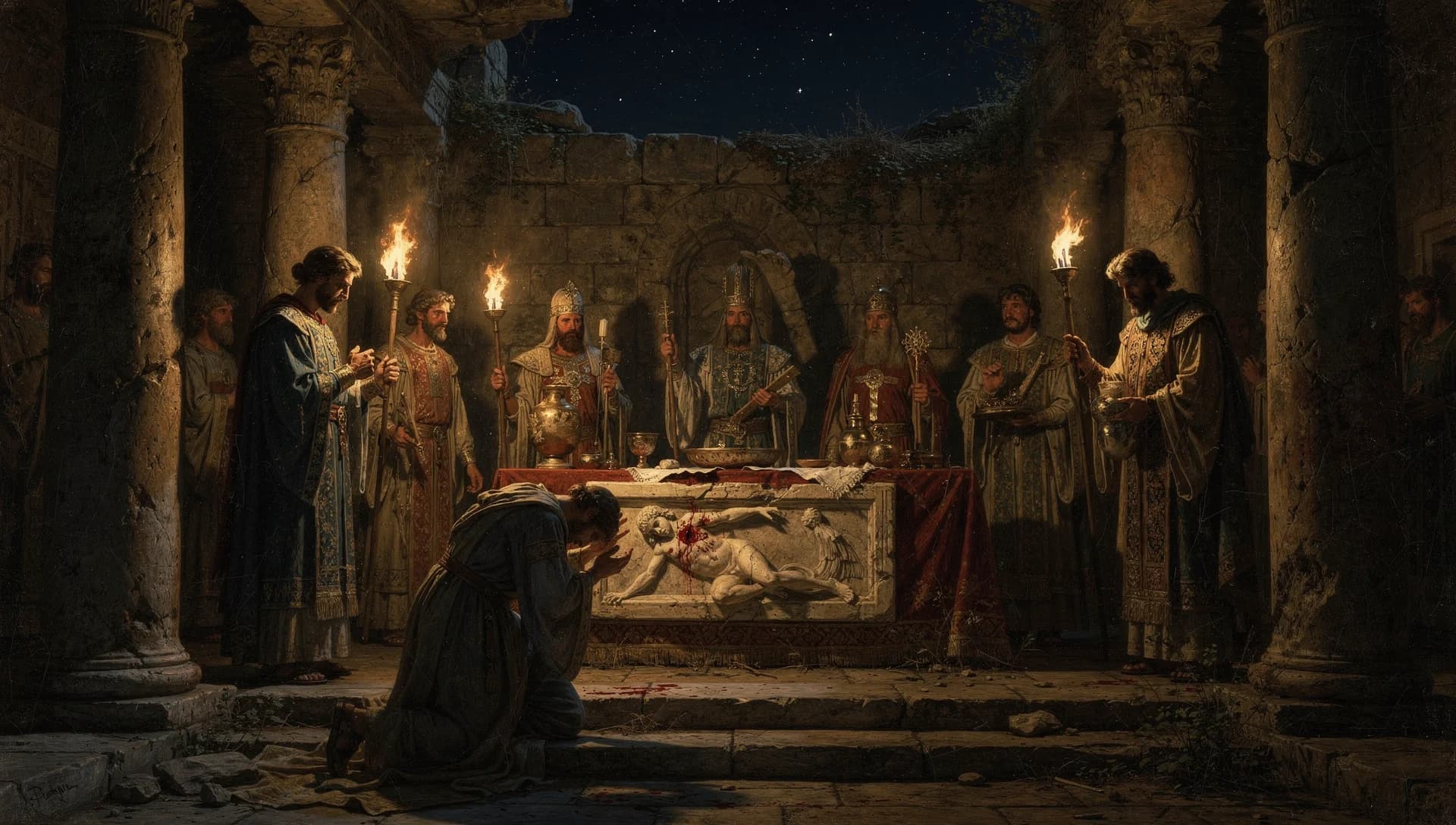
The Sacrificed Son Who Rises: Osiris, Tammuz, Attis, and the Corrupted Salem Teaching
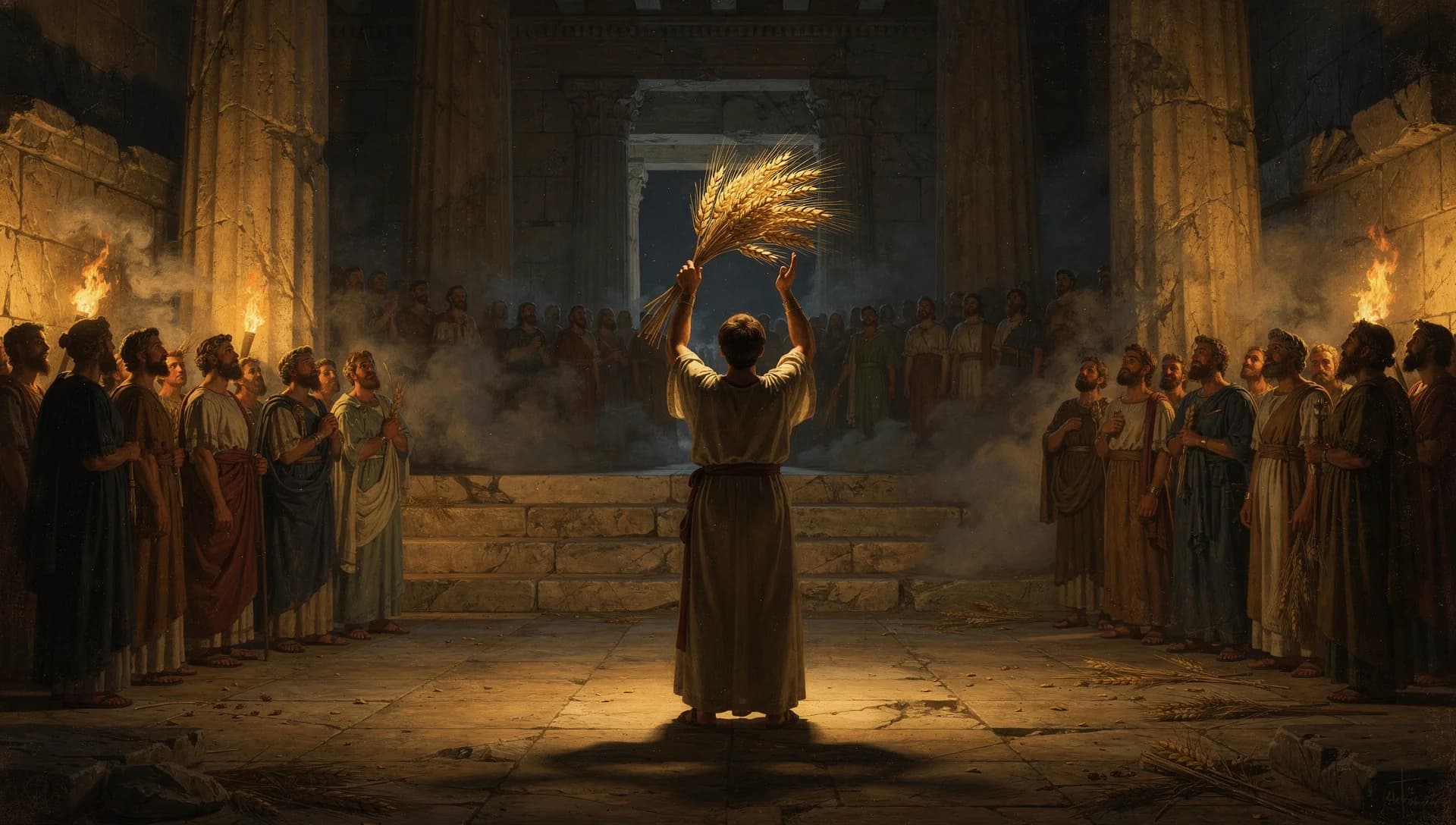
The Grain Revealed: Eleusinian Mysteries and the Adamic Agricultural Inheritance
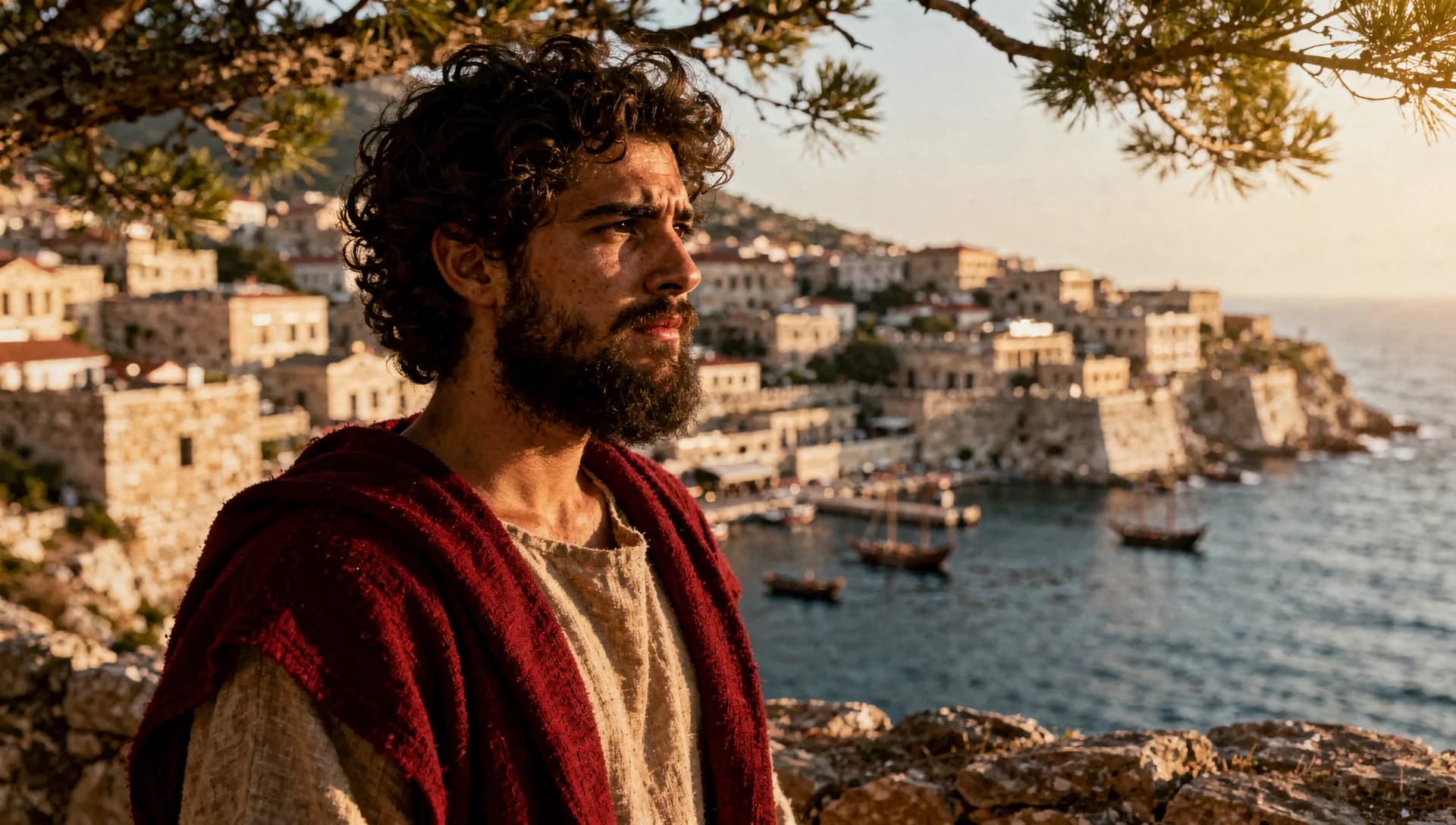
The All-Night Talk: Jesus and Angamon, Leader of the Stoics
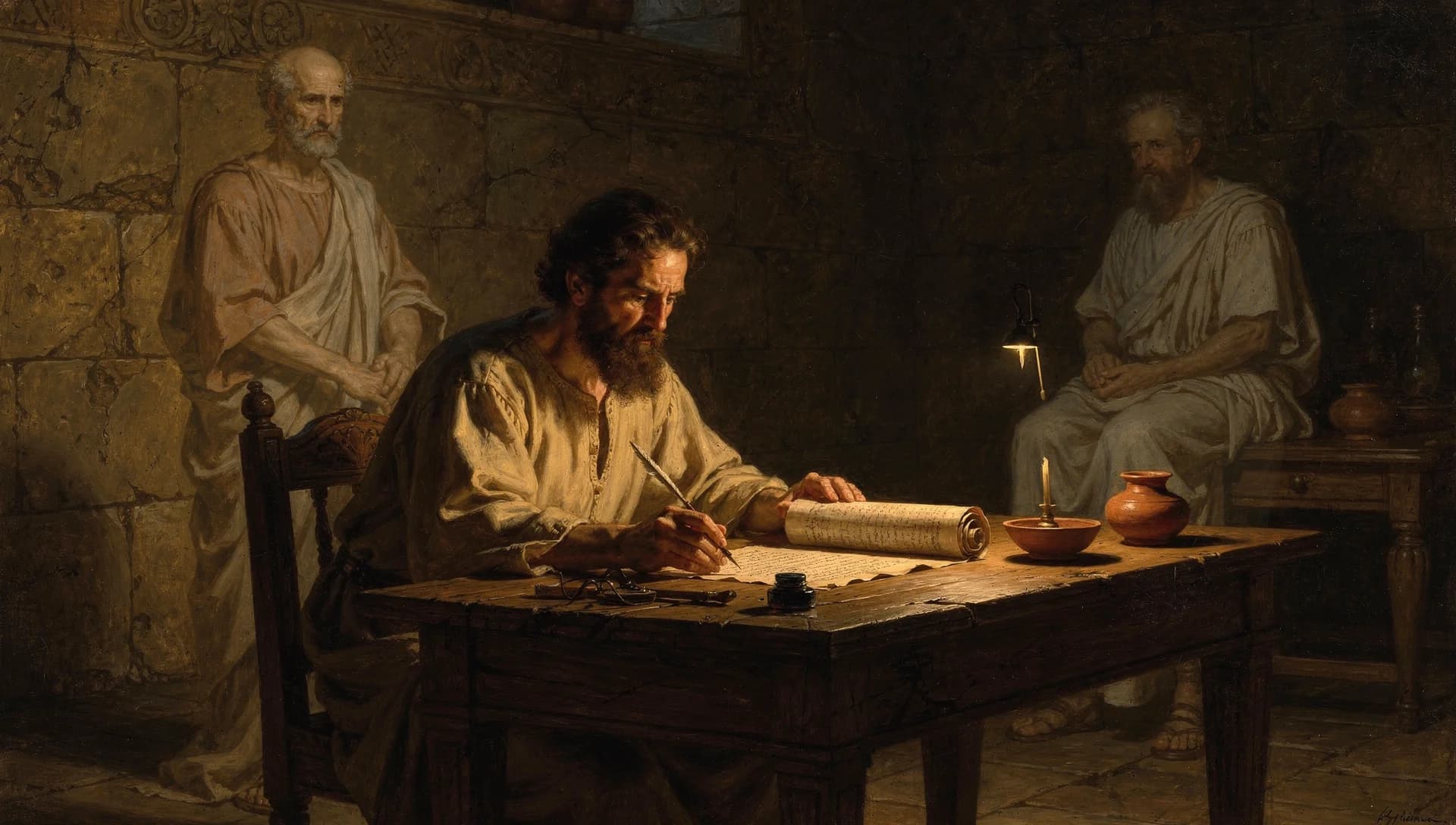
The Philosophy in Paul: How Stoic Ethics Entered Christianity
The Newsletter
Get the research behind each piece
Free. New Urantia Book explorations, the sources behind the videos, and early looks. No spam, unsubscribe anytime.
Prefer video? Follow on YouTube and Facebook.
Delivered through Substack. You can also read past issues.