
Nod and Enlil: The Rebel Who Became the Storm-God
The Urantia Book names Nod as the leader of the rebel faction of the Planetary Prince's staff, the rival of Van. Sumerian scribes carved tablets remembering Enlil, the storm-god who resolved to destroy mankind and stood against Enki. The rivalry at the heart of Sumerian religion is the same rivalry the UB places at the heart of the rebellion.
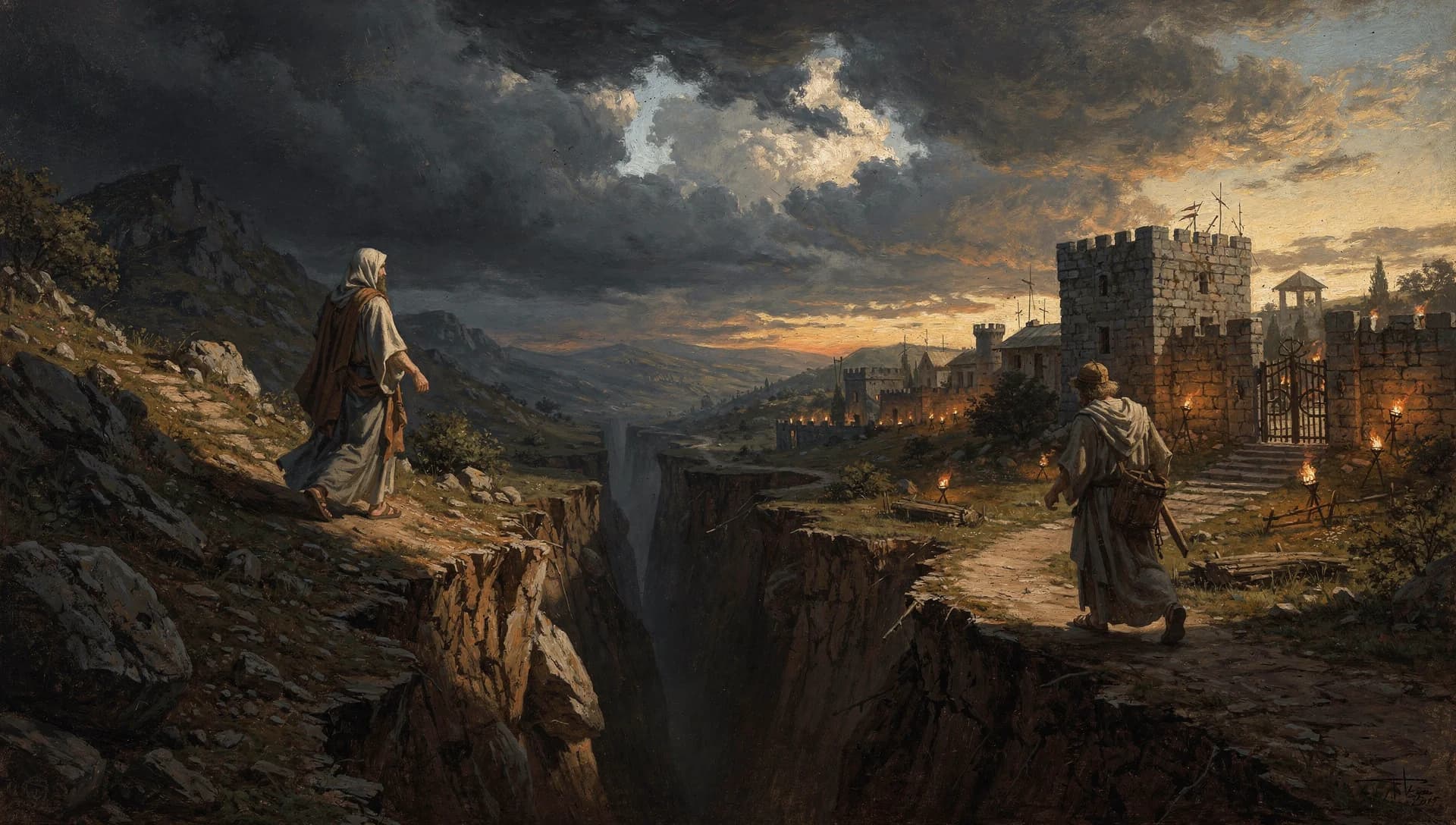
Nod, rebel faction leader = Enlil, "Lord of the Wind/Air"
This article expands on the decoder mapping. For the side-by-side card and quick reference, see the mapping page.
The Rivalry at the Center of Sumerian Religion
If you read Sumerian and Akkadian religious literature looking for the single most consistent theme, you find it quickly. Enki, the wise god of Eridu, is in conflict with Enlil, the storm-god of Nippur. They are not equals clashing from outside one another; they are both members of the same divine council, both sons of the sky-father Anu, working inside the same administrative system and pulling it in opposite directions. When Enlil decides to destroy humanity, Enki defies him. When Enki organizes civilization, Enlil disrupts it. The cosmos the Sumerians describe is one in which a wise teacher and a willful ruler are locked into permanent opposition.
This is not a minor feature of the record. It is the record.
The Atrahasis epic, preserved on tablets dating to roughly 1800 BCE and expanded in the Standard Babylonian version of Gilgamesh XI, is built on this rivalry. Enlil, disturbed by human noise, resolves to wipe out mankind, first by plague, then by drought, and finally by flood. Enki, sworn not to reveal the divine council's decree, finds a workaround: he warns his protégé Atrahasis through the wall of a reed hut, technically speaking to the wall and not to the man. The boat is built. Humanity survives. When Enlil discovers that a remnant has been saved, he is furious. The entire narrative is a record of two senior members of the divine council who are working against each other, one to preserve humanity and one to destroy it.
The Urantia Book describes a planetary rebellion in which the corporeal staff of one hundred members of the Planetary Prince split into exactly two factions (UB 67:4.1). One faction, forty members, remained loyal under Van (UB 67:4.1). The other faction, sixty members, went into rebellion under Nod (UB 67:4.2).
Nod, the Chosen Leader of the Rebel Faction
The record is specific. When Caligastia and Daligastia joined Lucifer's rebellion and the members of the corporeal staff were forced to declare their allegiance, the defections were tabulated by department. The UB lists the result council by council:
"When the final roll was called, the corporeal members of the Prince's staff were found to have aligned themselves as follows: Van and his entire court of co-ordination had remained loyal. Ang and three members of the food council had survived. The board of animal husbandry were all swept into rebellion as were all of the animal-conquest advisers. Fad and five members of the educational faculty were saved. Nod and all of the commission on industry and trade joined Caligastia. Hap and the entire college of revealed religion remained loyal with Van and his noble band. Lut and the whole board of health were lost. The council of art and science remained loyal in its entirety, but Tut and the commission on tribal government all went astray. Thus were forty out of the one hundred saved, later to be transferred to Jerusem, where they resumed their Paradise journey." (UB 67:4.1)
Sixty members of the staff went into rebellion. They needed a leader. The UB names him:
"The sixty members of the planetary staff who went into rebellion chose Nod as their leader. They worked wholeheartedly for the rebel Prince but soon discovered that they were deprived of the sustenance of the system life circuits. They awakened to the fact that they had been degraded to the status of mortal beings." (UB 67:4.2)
Nod had been the head of the commission on industry and trade under Caligastia, the department responsible for the material organization of civilization. When the rebellion fractured the staff, Nod stepped up as the coordinator of the rebel faction in the same way Van coordinated the loyal remnant. The two men were exact structural counterparts: each at the head of the civilization-teaching body of his faction, each responsible for the continuity of his side of the fractured staff.
After Dalamatia fell, the Nodites (Nod's descendants) migrated north and east, founded the city of Dilmun, and eventually spread across Mesopotamia. They became, as the UB records, "the eighth race to appear on Urantia" (77:2.8), the ancestors of the long-lived rulers whose reigns appear on the antediluvian sections of the Sumerian King List.
Enlil, the Storm-God Who Ordered the Flood
Turning to the Sumerian record, Enlil appears in the earliest sources already in possession of his defining feature. He is the ruling authority among the active gods. Anu, the sky-father, has retreated into remote transcendence; Enki organizes civilization from Eridu; but Enlil is the one who issues executive orders and expects them to be carried out. The Nippur theology, which dominated early Sumerian religion, placed Enlil at the head of the pantheon as the operational king of the universe.
Enlil's opposition to humanity is the single feature that most consistently appears in the Mesopotamian record. The Sumerian Eridu Genesis, the Akkadian Atrahasis, and the standard Babylonian Gilgamesh all preserve the same core story: Enlil decrees humanity's destruction, Enki saves one righteous man, and the world begins again. Thorkild Jacobsen, in his Treasures of Darkness (1976), treated the Enlil-Enki rivalry as the organizing principle of Sumerian religious psychology. Samuel Noah Kramer argued throughout his career that the flood narratives encoded "the struggle between the rival theologies and priesthoods of Eridu and Nippur," with Enki's priests at Eridu carrying the older wisdom tradition and Enlil's priests at Nippur carrying the later political authority.
Enlil is not evil in the Sumerian account. He is the ruling authority of the active divine council. But he is the authority whose will, if carried out without interference, would have meant the end of the human project. Only the intervention of Enki kept humanity in existence.
The UB describes the corporeal staff's rebellion in structurally identical terms. The rebel faction was not composed of externally wicked beings opposed to the good; it was composed of the administrative leadership of the planet, which declared itself sovereign and then proceeded in ways that threatened the human project Caligastia himself had been sent to nurture. Dalamatia fell. The teaching of civilization was interrupted. The loyal faction under Van preserved the continuity of the mission over the coming centuries. The structural parallel between the Nod / Van rivalry in the UB and the Enlil / Enki rivalry in the Sumerian record is not a loose resemblance. It is the same story at the level of mechanism.
What the Name Itself Carries
One detail in the Sumerian record is hard to overlook. The Mesopotamian god whose defining conflict is with the wisdom-teacher is called En-líl. In Sumerian, the name decomposes transparently as EN (lord) + LÍL (wind, air, breath). Enlil is literally the Lord of the Wind.
The Genesis 4 account, written in Hebrew a millennium or more after the Sumerian material, records Cain's departure "from the presence of the Lord" to dwell in "the land of Nod, on the east of Eden" (Genesis 4:16). The Hebrew Nôd means "wandering, restlessness, unrest," closely connected to a root associated with wind and breath. The name is not of Hebrew origin; the Hebrew scribes preserved it as a place-name from an older substrate. The UB records that the rebel faction leader's name was Nod, and his descendants were "the Nodites," settled specifically in the region the Hebrew record later called "the land of Nod."
The overlap between En-líl (Lord of the Wind), the storm-god of Mesopotamian rebellion-theology, and Nod (the restless one), the UB's named leader of the rebel faction, is at minimum evocative. It is not a claim this article rests on; the structural match between the two figures is sufficient on its own. But the linguistic trace is there, and serious readers should notice it.
What the Enlil Memory Preserves
None of this proves that Sumerian scribes were writing about a specific named figure called Nod. The confidence rating on this mapping is INFORMED SPECULATION, and it will stay that way. What the comparison demonstrates is something harder to dismiss: the center of Sumerian religious psychology is a conflict between two members of the same divine council, one a wisdom-teacher who defies the ruling authority to save mankind, the other a ruling authority who resolves to destroy mankind and must be resisted. That is, in precise structural terms, the Van-Nod rivalry at the heart of the Caligastia rebellion.
The UB's account is more specific than the Sumerian record at every point. The Sumerian tradition remembers the conflict but not its origin, the reason for the flood but not the earlier crisis, the names of the gods but not the historical positions they had occupied. The UB adds the prior context: a planetary administration, a split staff, a rebel leadership, and a loyal remnant that rebuilt civilization over the coming centuries while the rebel line spread its own influence eastward. Read against that background, the Sumerian record stops looking like arbitrary theological invention and starts looking like the cultural memory of an actual institutional crisis, preserved in the mythological framework available to scribes of the third millennium BCE.
Sources
- The Urantia Book, Papers 66, 67, 77.
- Jacobsen, Thorkild. The Treasures of Darkness: A History of Mesopotamian Religion. Yale University Press, 1976.
- Kramer, Samuel Noah. Sumerian Mythology: A Study of Spiritual and Literary Achievement in the Third Millennium B.C. Revised edition, University of Pennsylvania Press, 1961.
- Lambert, W.G., and A.R. Millard. Atra-Hasis: The Babylonian Story of the Flood. Oxford University Press, 1969.
- ETCSL (Electronic Text Corpus of Sumerian Literature), Oxford University: Eridu Genesis (1.7.4); Enki and Ninhursag (1.1.1).
- Pennsylvania Sumerian Dictionary, entries for en, líl, Enlil.
Confidence rating: INFORMED SPECULATION. The decoder methodology, evidence ratings, and full mapping table live at /decoder.
For the loyal counterpart to this article, see Van and Enki. For the larger story of the Caligastia rebellion, see The War in Heaven Was Real.
Byline: Derek Samaras | Urantia Book Network | April 2026
Connecting Articles
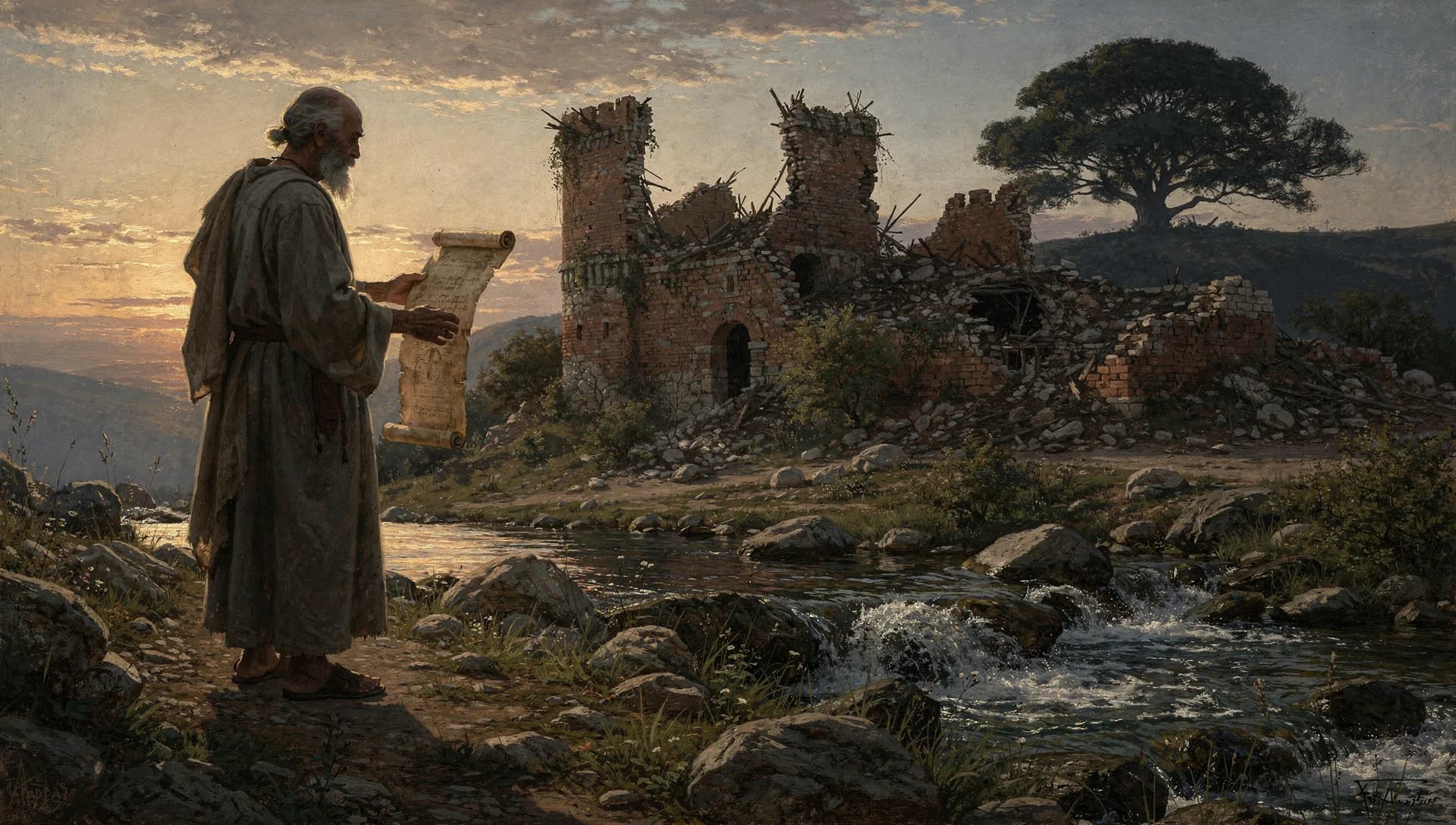
Van Is Remembered: The Steadfast Jurist and His Sumerian Echo
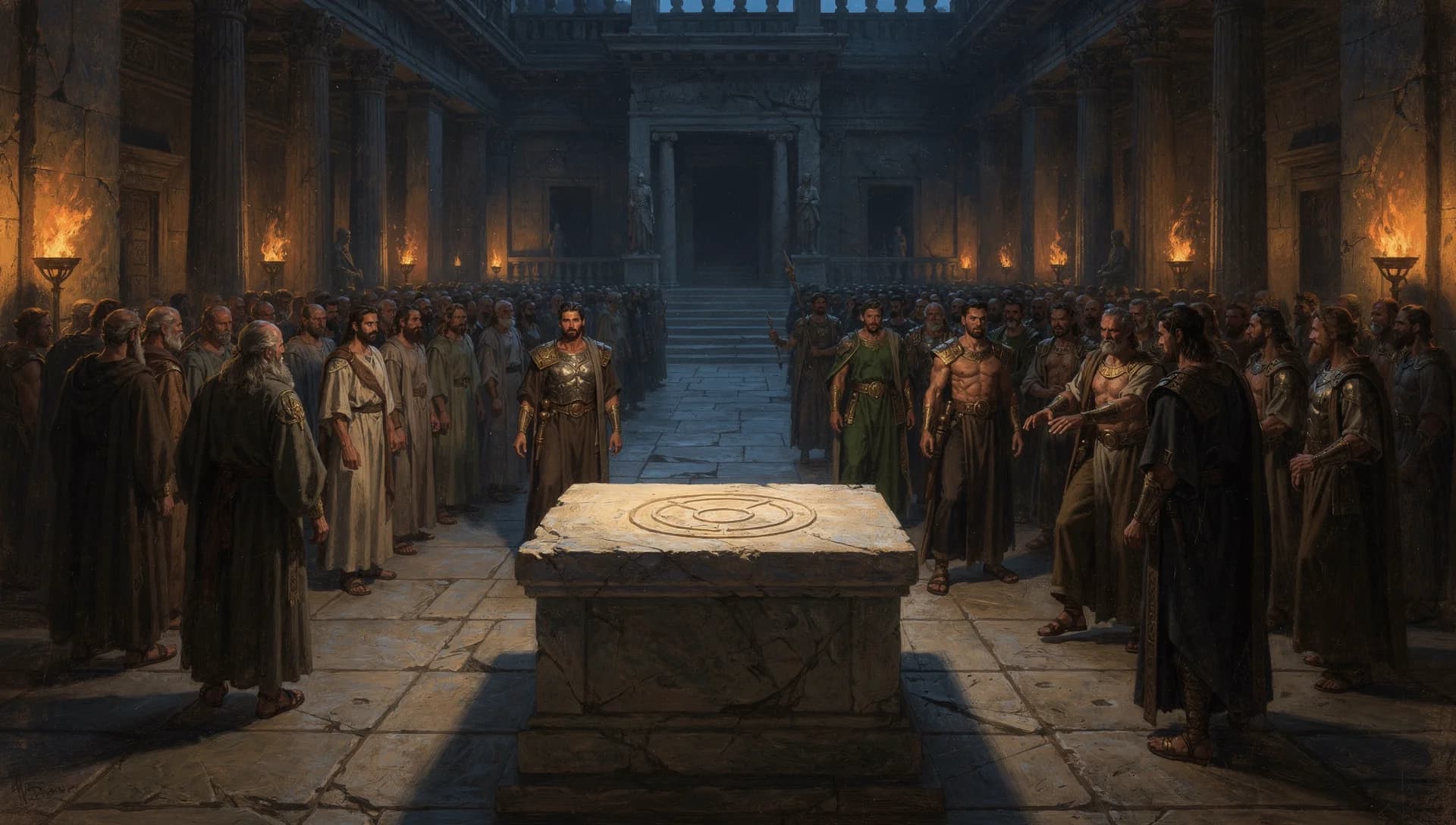
The First War Among the Gods: The Staff Split and the Aesir-Vanir Conflict
The Hundred and Forty-Four: Modified Andonites and the Sumerian Igigi
Civilization Delivered in Ten Portions: The Dalamatia Councils and the Sumerian ME
The Newsletter
Get the research behind each piece
Free. New Urantia Book explorations, the sources behind the videos, and early looks. No spam, unsubscribe anytime.
Prefer video? Follow on YouTube and Facebook.
Delivered through Substack. You can also read past issues.