
The Hundred and Forty-Four: Modified Andonites and the Sumerian Igigi
The Sumerians remembered a class of divine workers who labored under the senior gods until they rebelled. The Urantia Book records something very close: a group of modified Andonite attendants who served the corporeal staff, split during the rebellion, and left their imprint on every later memory of the event.
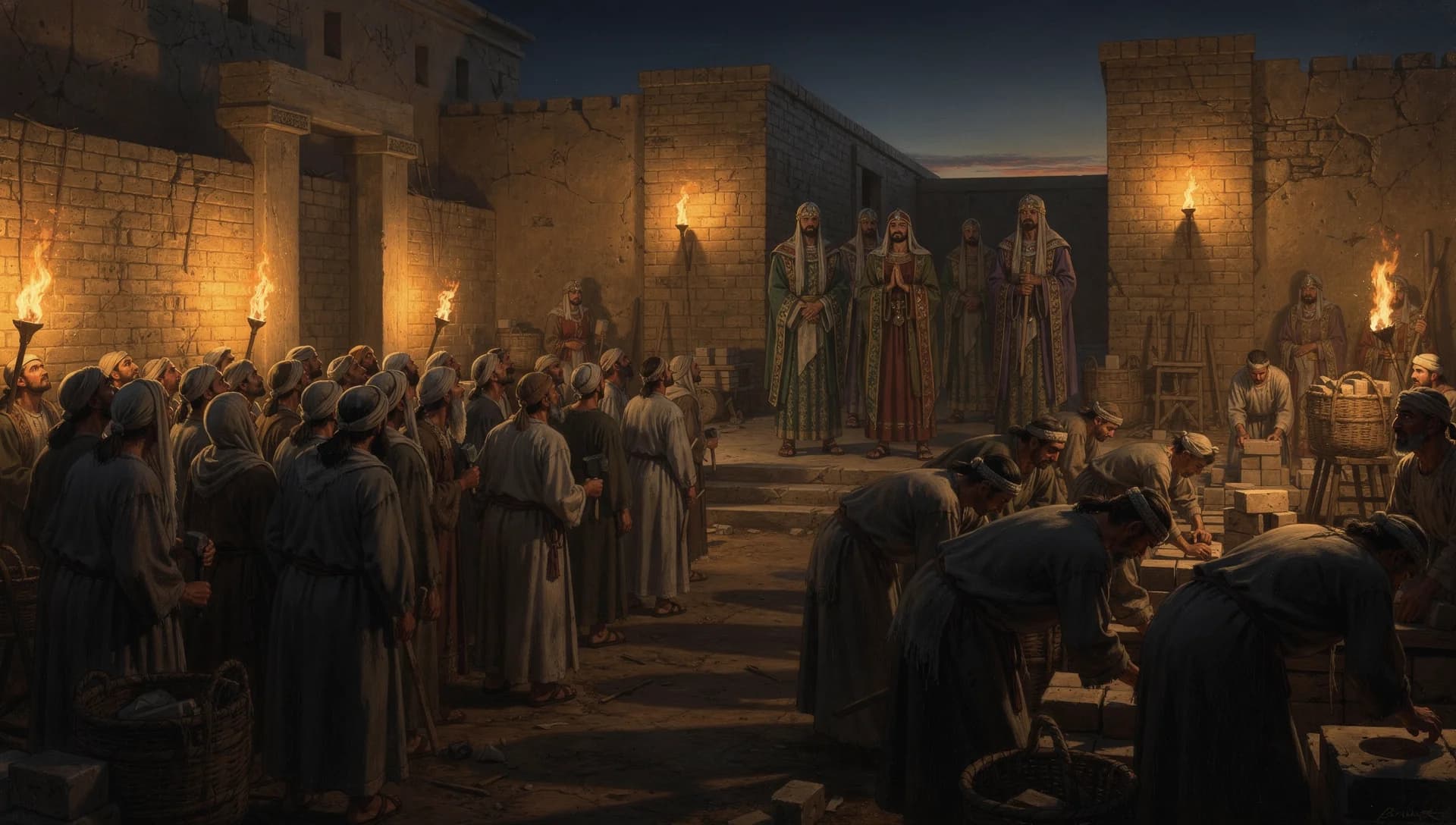
Modified Andonites (Amadon's people) = Igigi, lesser divine workers who served the Anunnaki
This article expands on the decoder mapping. For the side-by-side card and quick reference, see the mapping page.
The Workers Who Were Not Gods
Sumerian religion has two tiers of superhuman beings. The senior tier, the Anunnaki, sit on the decision councils. The junior tier, the Igigi, do the labor. The distinction is not marginal. It is the structural fact around which the oldest flood epic of the ancient Near East is organized.
The Atrahasis epic, preserved on Old Babylonian tablets from Sippar and Nineveh (c. 1800 BCE) and reconstructed by W. G. Lambert and A. R. Millard in their 1969 edition, opens with the Igigi laboring for the Anunnaki. They dig the Tigris and the Euphrates. They work for three thousand six hundred years. Eventually they break, set fire to their tools, and surround the house of Enlil in revolt. Humanity is created as a substitute workforce to spare them.
The Igigi are remembered as subordinate divine workers, performing the physical tasks the senior gods declined to perform, until a breaking point split the class and changed the shape of the world.
The Urantia Book records an event that matches the structure of that memory almost point for point.
What the Urantia Book Says
Before the planetary prince rebelled, the Caligastia staff of one hundred was served by a class of human attendants who had been biologically modified through the contribution of life plasm from the Andonite line. These were not members of the staff. They were the staff's human associates, and when the crisis came the group did not hold as one.
The record gives the count directly:
"Upon the outbreak of rebellion, loyal cherubim and seraphim, with the aid of three faithful midwayers, assumed the custody of the tree of life and permitted only the forty loyalists of the staff and their associated modified mortals to partake of the fruit and leaves of this energy plant. There were fifty-six of these modified Andonite associates of the staff, sixteen of the Andonite attendants of the disloyal staff refusing to go into rebellion with their masters." (UB 67:3.5)
The rebel side is counted with equal precision:
"The sixty members of the planetary staff who went into rebellion chose Nod as their leader. They worked wholeheartedly for the rebel Prince but soon discovered that they were deprived of the sustenance of the system life circuits. They awakened to the fact that they had been degraded to the status of mortal beings. They were indeed superhuman but, at the same time, material and mortal. In an effort to increase their numbers, Daligastia ordered immediate resort to sexual reproduction, knowing full well that the original sixty and their forty-four modified Andonite associates were doomed to suffer extinction by death, sooner or later." (UB 67:4.2)
The loyal modified Andonites are later named. They become the Amadonites:
"These Amadonites were derived from the group of 144 loyal Andonites to which Amadon belonged, and who have become known by his name. This group comprised thirty-nine men and one hundred and five women. Fifty-six of this number were of immortality status, and all (except Amadon) were translated along with the loyal members of the staff." (UB 67:6.3)
The pattern the book records is specific. A subordinate class of biologically modified humans serves the superhuman staff. When the rebellion comes the class splits. The loyal forty plus fifty-six form the Amadonites, who continue the work of civilization for thousands of years. The rebel forty-four die out.
What the Ancient Source Says
W. G. Lambert and A. R. Millard, in the standard edition of the Atrahasis epic (Oxford, 1969), reconstruct the opening scene on tablets from the Old Babylonian period. The Igigi, described as lesser deities, are subjected to the labor of the great gods. They dig the Tigris. They dig the Euphrates. The text gives the duration as three thousand six hundred years. Then the text records the revolt: the Igigi set fire to their tools, surround the house of Enlil, and refuse to continue. The Anunnaki are shaken. The solution proposed by Ea, the Anunnaki god of wisdom, is the creation of man from clay mixed with the blood of a slain god, a substitute laboring class that will free the Igigi from the tasks that broke them.
Thorkild Jacobsen, in The Treasures of Darkness (Yale, 1976), characterizes the Anunnaki-Igigi relationship as a stratified divine society in which one class rules and the other carries the burden. Samuel Noah Kramer, in The Sumerians (Chicago, 1963), documents the same structural feature across the ETCSL corpus: senior gods on councils, junior gods at labor, with the line between them periodically renegotiated.
The Anzu myth, preserved in versions from the second and first millennia BCE and edited by Stephanie Dalley in Myths from Mesopotamia (Oxford, 2000), confirms the pattern from a different angle. The Igigi appear as the workforce of the heavens until individuals within the class defect, seize divine prerogatives, or break the chain of command. The class is porous at its edges, which is exactly the structural claim the Atrahasis prologue makes.
Why This Mapping Matters
Most mythological labor-class stories are vague. The Urantia Book's account is not vague. It gives counts (fifty-six immortality-status loyalists, sixteen rebels who refused to follow their masters, forty-four associates of the rebel staff). It gives a geography (Mesopotamia). It gives a ruling class (the corporeal staff of one hundred, ten councils of ten). It gives the sequel (the Amadonites continue as biologic and cultural leaven for the dark ages that followed the rebellion).
The Atrahasis epic gives a hierarchy of divine workers under divine councils, a crisis caused by the intolerable imbalance between them, and a split that restructures humanity's situation on earth. The Urantia account reads like the original event of which the Atrahasis prologue is a memory. The direction of inheritance flows the way the rest of the decoder shows it flowing: from an actual planetary event, carried forward through Andite migrations and oral tradition, to the Sumerian scribes who wrote it down as the oldest layer of their religious literature.
That the Urantia Book names the loyal group after Amadon, whose name is not plausibly preserved in any Mesopotamian source, is also significant. The memory does not have to be complete to be real. The structural features survived. The names changed.
Sources
- The Urantia Book, Paper 67 (The Planetary Rebellion), sections 3, 4, and 6. Urantia Foundation, first printing 1955. Cited passages: 67:3.5, 67:4.2, 67:6.3.
- Lambert, W. G. and A. R. Millard. Atra-Hasis: The Babylonian Story of the Flood. Oxford University Press, 1969.
- Jacobsen, Thorkild. The Treasures of Darkness: A History of Mesopotamian Religion. Yale University Press, 1976.
- Kramer, Samuel Noah. The Sumerians: Their History, Culture, and Character. University of Chicago Press, 1963.
- Dalley, Stephanie, ed. Myths from Mesopotamia: Creation, the Flood, Gilgamesh, and Others. Revised edition, Oxford University Press, 2000.
- ETCSL (Electronic Text Corpus of Sumerian Literature), Oxford. Atrahasis and related Igigi texts.
Confidence and Evidence
- Confidence: INFORMED SPECULATION
- Evidence rating: STRONG
- Basis: The structural match is specific. A tiered class of superhuman workers subordinate to a council of senior beings, a crisis that splits the class, and a resolution that restructures humanity's status appears in both accounts. The Urantia Book supplies precise counts the Mesopotamian sources lack; the Mesopotamian sources preserve the hierarchy and the split the Urantia account describes.
Related Decoder Articles
- Van, loyal corporeal staff member = Enki (Sumerian) / Ea (Akkadian)
- The Corporeal Staff of One Hundred = Anunnaki
- Nod, rebel faction leader = Enlil, Lord of the Wind
By Derek Samaras
Connecting Articles
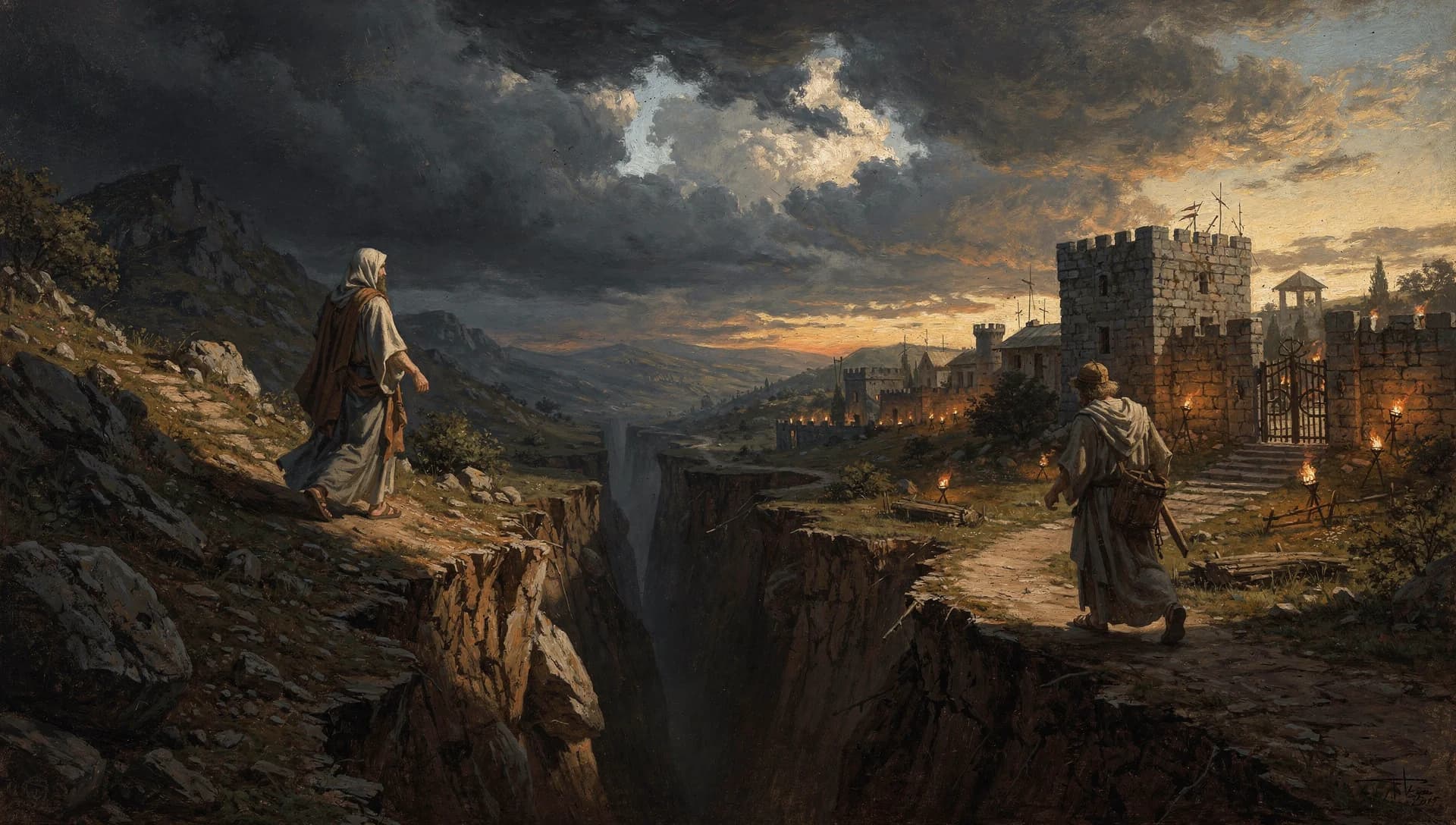
Nod and Enlil: The Rebel Who Became the Storm-God
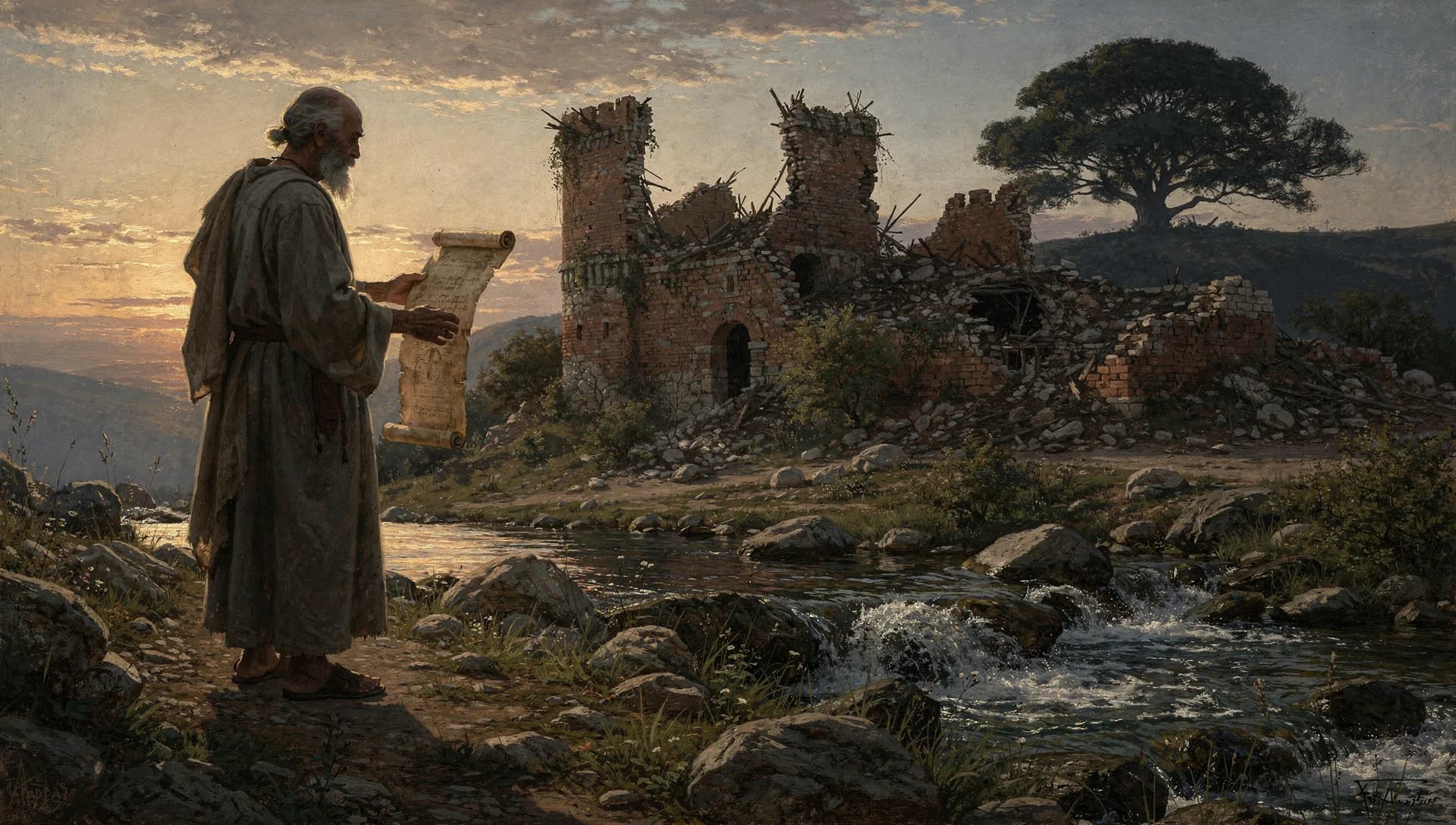
Van Is Remembered: The Steadfast Jurist and His Sumerian Echo
The Insider Who Betrayed: Caligastia and the Norse Loki
Not Equal Principles, Real Rebellion: Zoroastrian Dualism and the Lucifer Event
The Newsletter
Get the research behind each piece
Free. New Urantia Book explorations, the sources behind the videos, and early looks. No spam, unsubscribe anytime.
Prefer video? Follow on YouTube and Facebook.
Delivered through Substack. You can also read past issues.