
The One Who Defied the Sovereign: Van and the Greek Prometheus
Prometheus is the Titan who defied the supreme god, suffered for it, and gave civilization to humanity through an act of conscience. The Urantia Book records a specific being, Van, who did exactly this, and the match between the two figures is unusually tight on the features that matter.
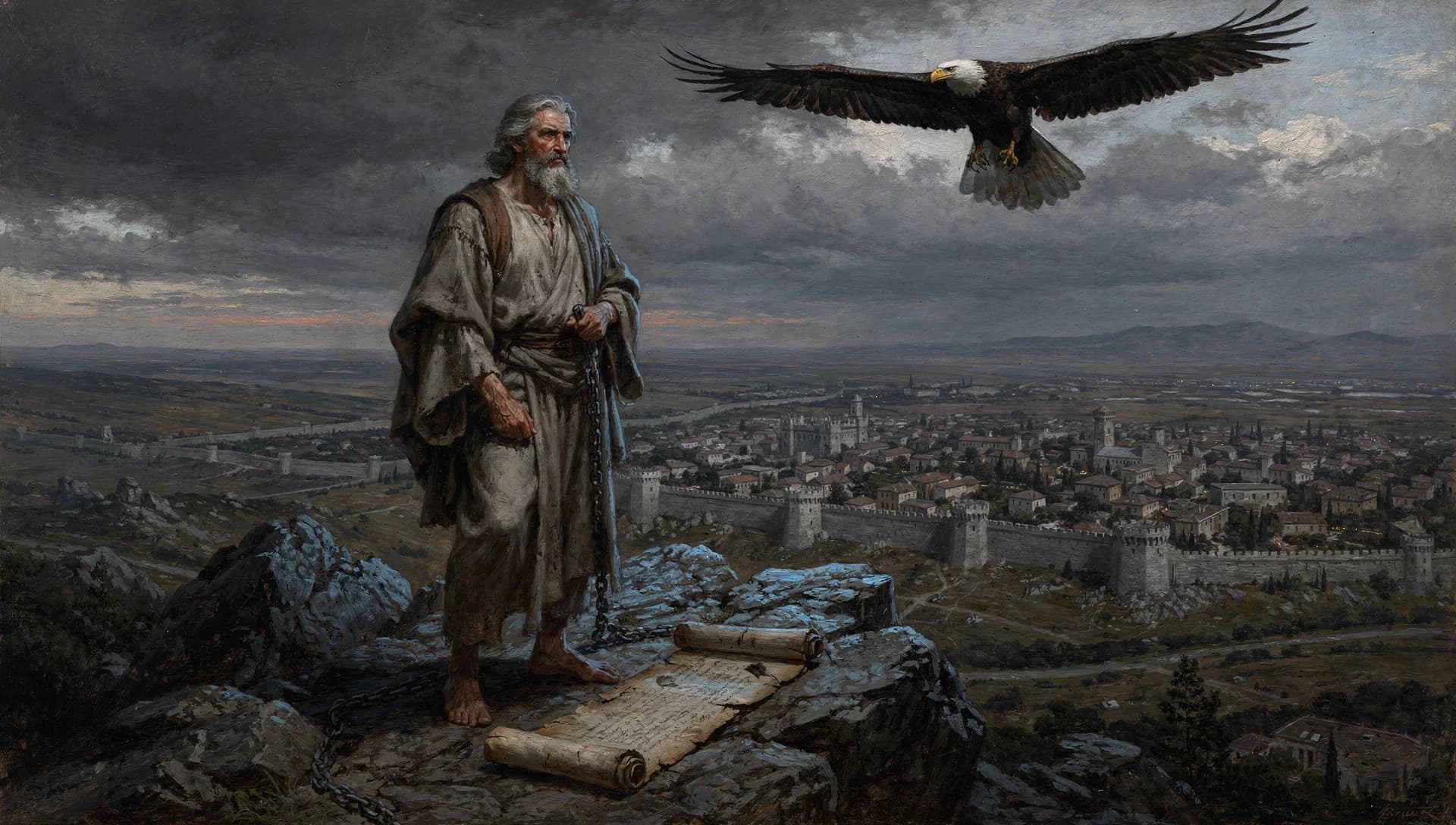
Van, loyal corporeal staff member who defied Caligastia and then held fast for more than 150,000 years = Prometheus, Titan who defied Zeus to bring civilization to humanity
This article expands on the decoder mapping. For the side-by-side card and quick reference, see the mapping page.
The Titan Who Would Not Bow
The Greek myth of Prometheus has never sat comfortably alongside the rest of the Olympian tradition. The other Titans are defeated and punished. Prometheus is defeated and punished, but his defeat is understood, uniquely among Greek mythological figures, as a moral victory. Aeschylus, in Prometheus Bound (produced around 460 BCE), portrays him not as a villain humbled by divine justice but as a conscience humbled by arbitrary power. He gave humanity fire. He was chained to a rock. He refused to recant. The eagle came daily to eat his liver. He endured it.
Hesiod, in the Theogony (c. 700 BCE), gives the older version. Prometheus is the Titan of foresight. He takes the side of mortals against the ruling authority. He tricks Zeus at the sacrifice of Mecone, steals fire from Olympus, and conceals it in a fennel stalk. Zeus punishes him with eternal torture. But Prometheus is not silenced. In the lost sequels Prometheus Unbound and Prometheus the Fire-Bringer, the tradition preserves his eventual reconciliation, not his defeat.
This is a structurally unusual figure. A superhuman being who defies the ruling authority not out of ambition but out of loyalty to humanity. A being who suffers for the defiance and is vindicated by it. A being whose defiance is the source of civilization itself.
The Urantia Book names such a being. His name is not Prometheus. It is Van.
What the Urantia Book Says
When Caligastia, the planetary prince of Urantia, announced his intention to join the Lucifer rebellion, the corporeal staff of one hundred split. Forty members refused to follow him. Their leader was Van:
"On Urantia forty members of the corporeal staff of one hundred (including Van) refused to join the insurrection. Many of the staff's human assistants (modified and otherwise) were also brave and noble defenders of Michael and his universe government." (UB 67:3.2)
The refusal was not tentative. Van appealed to higher authorities, maintained his ground when the planetary circuits were severed, and held the post through seven years of isolation:
"Throughout the seven crucial years of the Caligastia rebellion, Van was wholly devoted to the work of ministry to his loyal army of men, midwayers, and angels. The spiritual insight and moral steadfastness which enabled Van to maintain such an unshakable attitude of loyalty to the universe government was the product of clear thinking, wise reasoning, logical judgment, sincere motivation, unselfish purpose, intelligent loyalty, experiential memory, disciplined character, and the unquestioning dedication of his personality to the doing of the will of the Father in Paradise." (UB 67:3.6)
Van's defiance was not a mere episode. It was the defining act of his superhuman career, and the planetary consequences of it were carried for one hundred and fifty thousand years:
"Van was left on Urantia until the time of Adam, remaining as titular head of all superhuman personalities functioning on the planet. He and Amadon were sustained by the technique of the tree of life in conjunction with the specialized life ministry of the Melchizedeks for over one hundred and fifty thousand years." (UB 67:6.4)
And the consequences were civilizational. Where the Prometheus myth says the Titan gave humanity fire, the Urantia record is more specific about what Van preserved and transmitted:
"The twelve Melchizedek receivers of Urantia did heroic work. They preserved the remnants of civilization, and their planetary policies were faithfully executed by Van. Within one thousand years after the rebellion he had more than three hundred and fifty advanced groups scattered abroad in the world. These outposts of civilization consisted largely of the descendants of the loyal Andonites slightly admixed with the Sangik races, particularly the blue men, and with the Nodites." (UB 67:6.6)
Van was eventually vindicated, as the Greek tradition holds that Prometheus is eventually vindicated. The technical record was righted:
"It should be recorded that, when Van appealed to the Most Highs of Edentia after Lucifer had sustained Caligastia on Urantia, the Constellation Fathers dispatched an immediate decision sustaining Van on every point of his contention. This verdict failed to reach him because the planetary circuits of communication were severed while it was in transit." (UB 67:6.9)
"The technical status of Van on the legal records of Satania was not actually and finally settled until this ruling of the Edentia Fathers was recorded on Jerusem." (UB 67:6.10)
What the Ancient Source Says
Hesiod's Theogony (lines 507-616) is the earliest connected Greek account of Prometheus. M. L. West's commentary (Hesiod: Theogony, Oxford, 1966) remains the standard scholarly edition. The figure is archaic, Indo-European in ancestry, and the connections to Vedic and Near Eastern predecessors have been traced by R. L. Fowler (Early Greek Mythography, Oxford, 2000) and Martin West (The East Face of Helicon, Oxford, 1997).
Aeschylus's Prometheus Bound, preserved in its full form unlike most ancient Greek drama, is the principal literary treatment. Mark Griffith's critical edition (Aeschylus: Prometheus Bound, Cambridge University Press, 1983) reconstructs the trilogy and analyzes the theological conflict the play stages: a superhuman being arraigned before a supreme authority that punishes dissent while claiming to embody justice. Griffith notes that the play's theology is strikingly at odds with the conventional Olympian religion of its time: "The play presents Zeus as the newly installed tyrant and Prometheus as the conscience of the pre-Olympian order."
Four structural features of the Prometheus tradition are relevant to the mapping. First, Prometheus is a member of an earlier order (Titan) displaced by the new supreme authority (Zeus). Second, his defiance is framed as loyalty to a higher principle (justice, humanity) rather than personal ambition. Third, he brings civilization to humans as part of this defiance, specifically the arts and crafts, not only fire. In Aeschylus (Prometheus Bound, lines 442-506) Prometheus catalogues his gifts: architecture, astronomy, mathematics, writing, metallurgy, medicine, animal husbandry, navigation, divination. Fourth, his defiance is long-suffering rather than brief: the chained Prometheus bears the punishment across cosmic time until the tradition eventually reconciles him with the new order.
The parallel to Van is not decorative. The four structural features match point for point.
Why This Mapping Matters
Greek mythography has long puzzled over the moral inversion in the Prometheus tradition. The figure resists the categorical schemes that work for most of the rest of the Olympian mythology. He is not a hero who defeats a monster. He is not a god who triumphs. He is a superhuman being whose superhuman quality is precisely his refusal to cooperate with superhuman authority when that authority is in error. This is an unusual theological posture for a Bronze Age culture, and it has no clear antecedent in Mesopotamian mythology where the rebellious subordinate is usually defeated or absorbed.
The Urantia Book's account of Van supplies a structural antecedent that the Greek material lacks internally. A superhuman being loyal to a higher authority, who defies a nearer authority that has gone wrong, who preserves civilization through a long period of suffering and isolation, and who is eventually vindicated by the higher authority that his defiance invoked. The match is specific on the features that make Prometheus theologically unusual.
The Andite migrations out of the second garden carried genetic and cultural material westward into Anatolia and the Aegean. The same substrate that produced the Mycenaean Greek ruling class would have carried fragments of the Van tradition. By the time the Theogony was written down in the eighth century BCE, the name was gone and the details were garbled. The figure survived. The moral shape of his career survived. The civilizational function survived. That is the claim the mapping makes, and it is a constrained claim testable against the theological peculiarities of the Prometheus tradition itself.
Sources
- The Urantia Book, Paper 67 (The Planetary Rebellion), Paper 73 (The Garden of Eden). Urantia Foundation, first printing 1955. Cited passages: 67:3.2, 67:3.6, 67:6.4, 67:6.6, 67:6.9, 67:6.10.
- Hesiod. Theogony. Edition and commentary by M. L. West. Oxford University Press, 1966.
- Aeschylus. Prometheus Bound. Edition by Mark Griffith, Cambridge University Press, 1983.
- West, M. L. The East Face of Helicon: West Asiatic Elements in Greek Poetry and Myth. Oxford University Press, 1997.
- Fowler, R. L. Early Greek Mythography. Oxford University Press, 2000.
- Kerenyi, Karl. Prometheus: Archetypal Image of Human Existence. Translated by Ralph Manheim. Princeton University Press, 1963.
Confidence and Evidence
- Confidence: INFORMED SPECULATION
- Evidence rating: STRONG
- Basis: The Prometheus tradition's four structural peculiarities (pre-Olympian order, loyalty-based defiance, civilizational gift, long-suffering vindication) each match features the Urantia Book attributes to Van in the Paper 67 record. The theological unusualness of the Greek figure is precisely what the Urantia antecedent would explain.
Related Decoder Articles
- Van, Loyal Corporeal Staff Member = Enki / Ea
- Van + Fandor + Tree of Life = Assyrian Winged Figure Reliefs
- The Hundred and Forty-Four: Modified Andonites and the Sumerian Igigi
By Derek Samaras
Connecting Articles
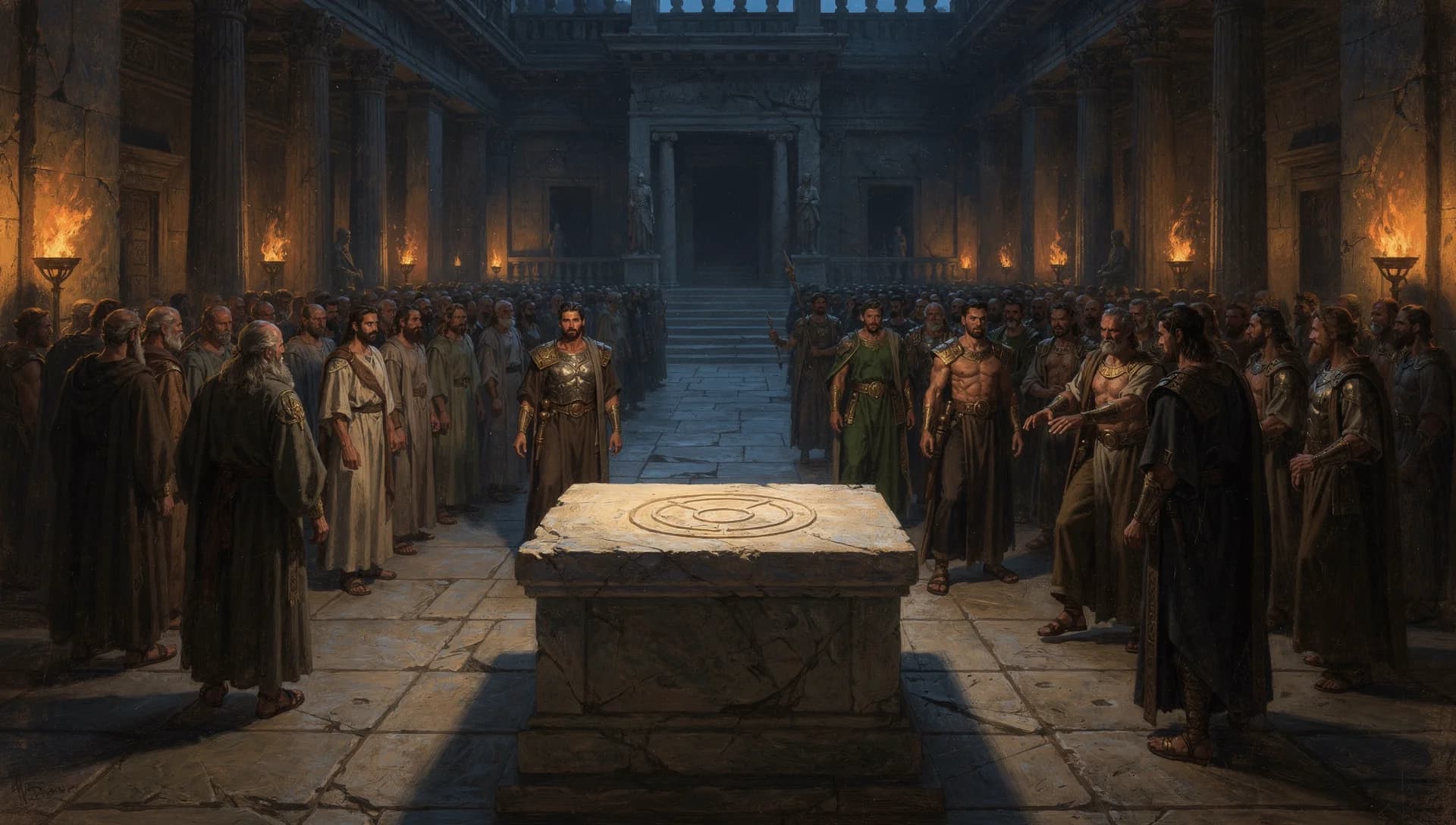
The First War Among the Gods: The Staff Split and the Aesir-Vanir Conflict
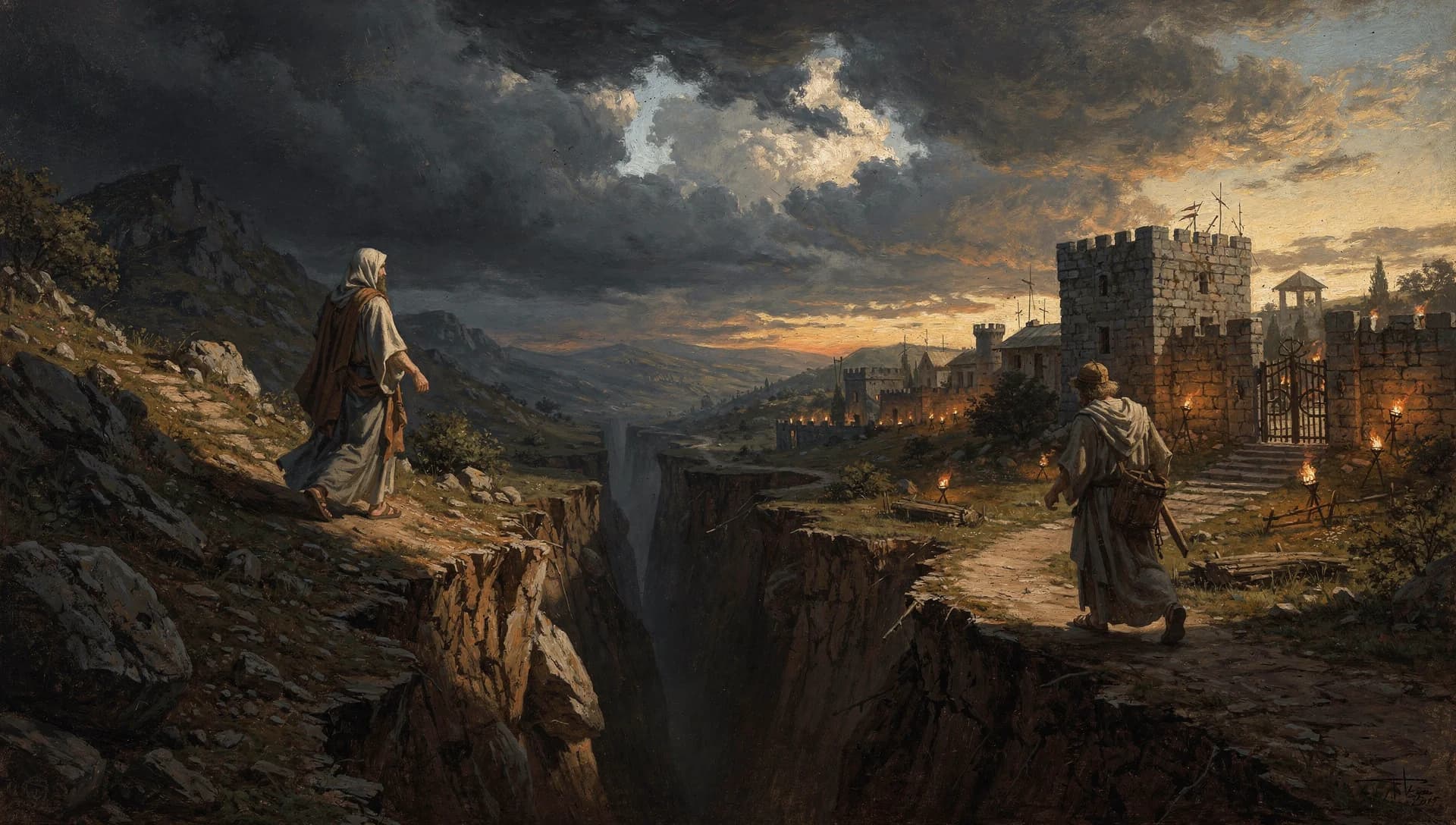
Nod and Enlil: The Rebel Who Became the Storm-God
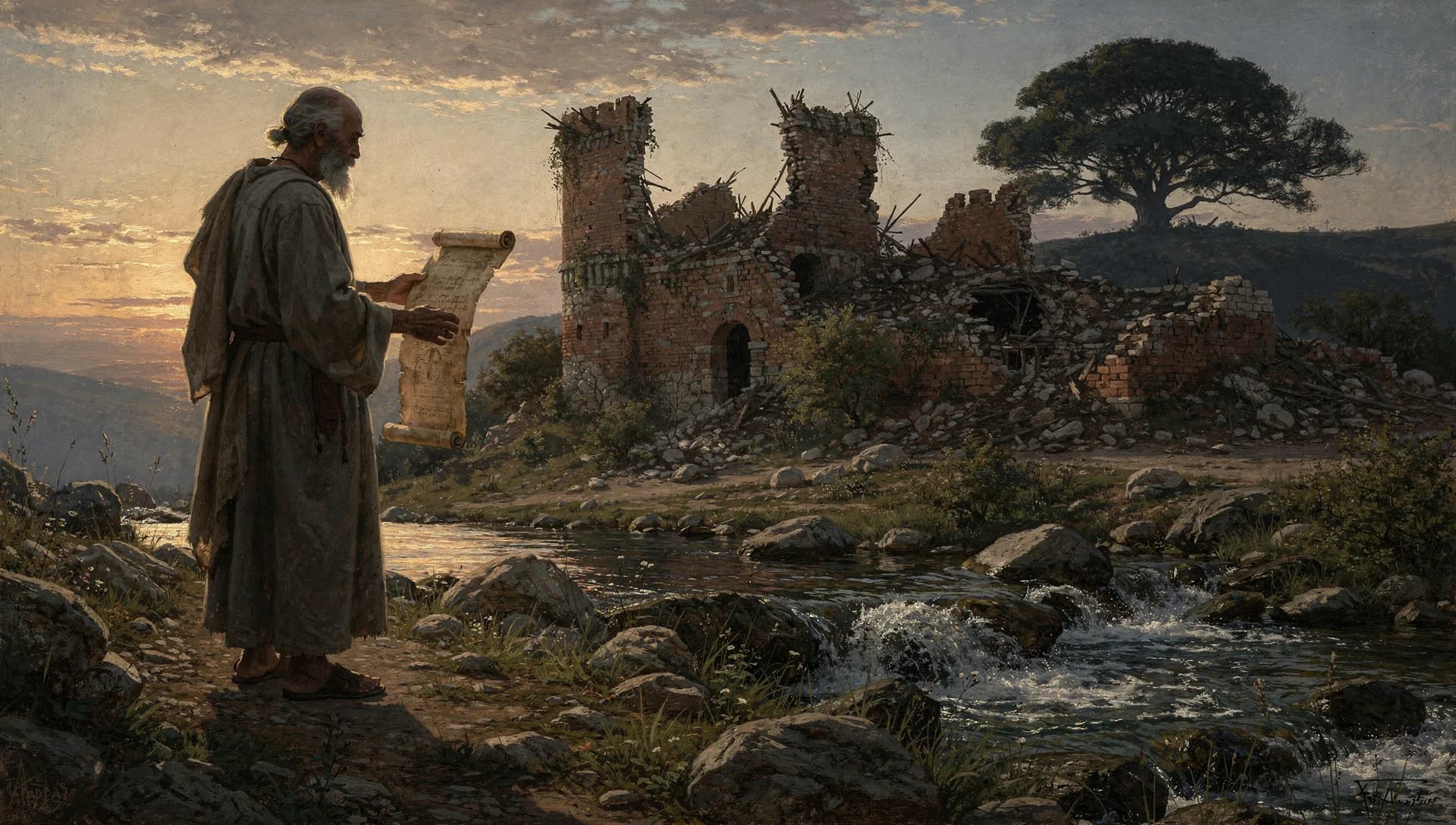
Van Is Remembered: The Steadfast Jurist and His Sumerian Echo
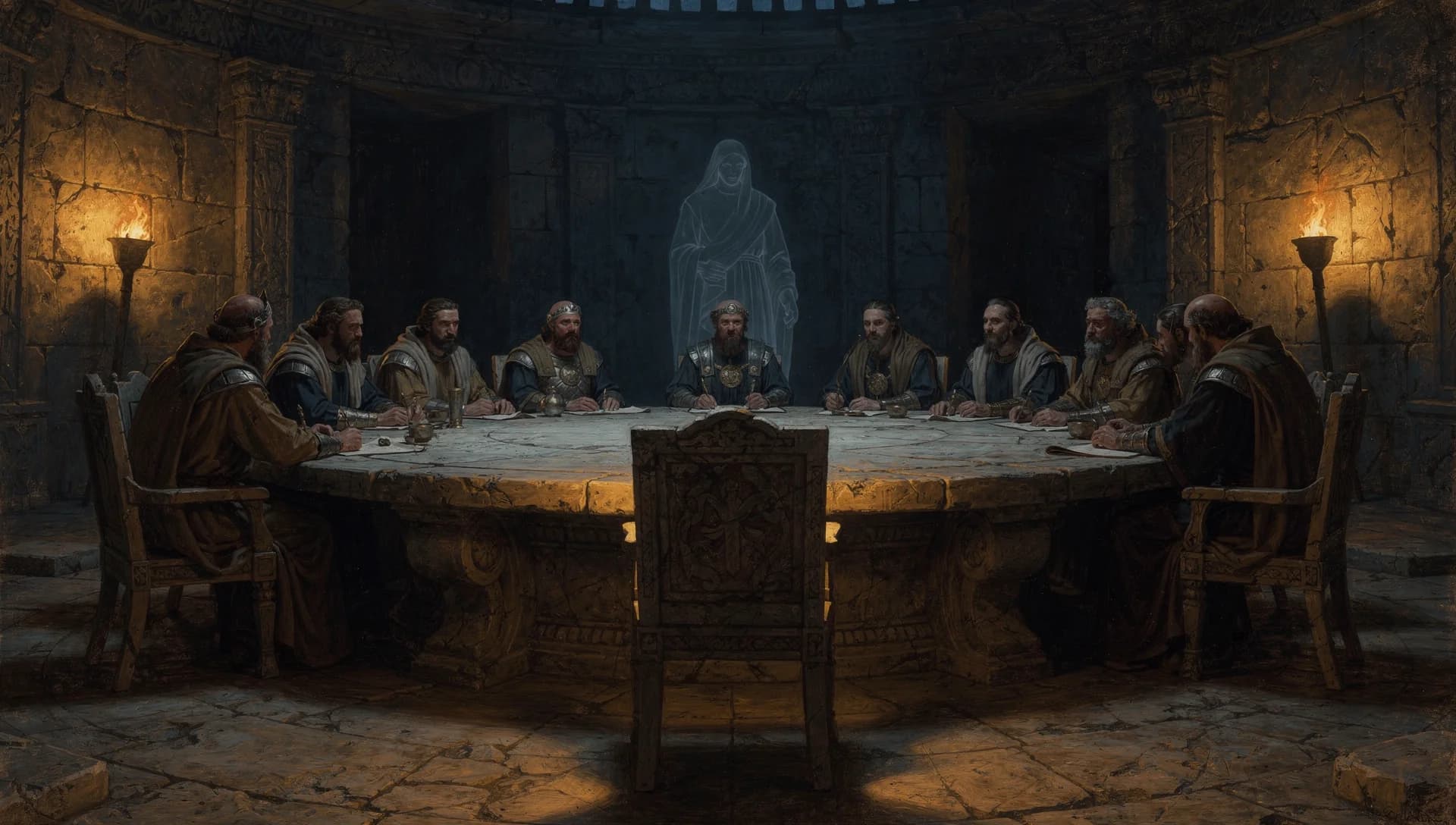
The Insider Who Betrayed: Caligastia and the Norse Loki
The Newsletter
Get the research behind each piece
Free. New Urantia Book explorations, the sources behind the videos, and early looks. No spam, unsubscribe anytime.
Prefer video? Follow on YouTube and Facebook.
Delivered through Substack. You can also read past issues.