
The All-Night Talk: Jesus and Angamon, Leader of the Stoics
During his sojourn in Rome, Jesus spent an entire night in conversation with Angamon, the leader of the Roman Stoics. The record of that conversation preserves the moment when the highest Greco-Roman ethical philosophy met the gospel face to face, and it explains why the Stoic tradition proved exceptionally receptive to the Christian movement a generation later.
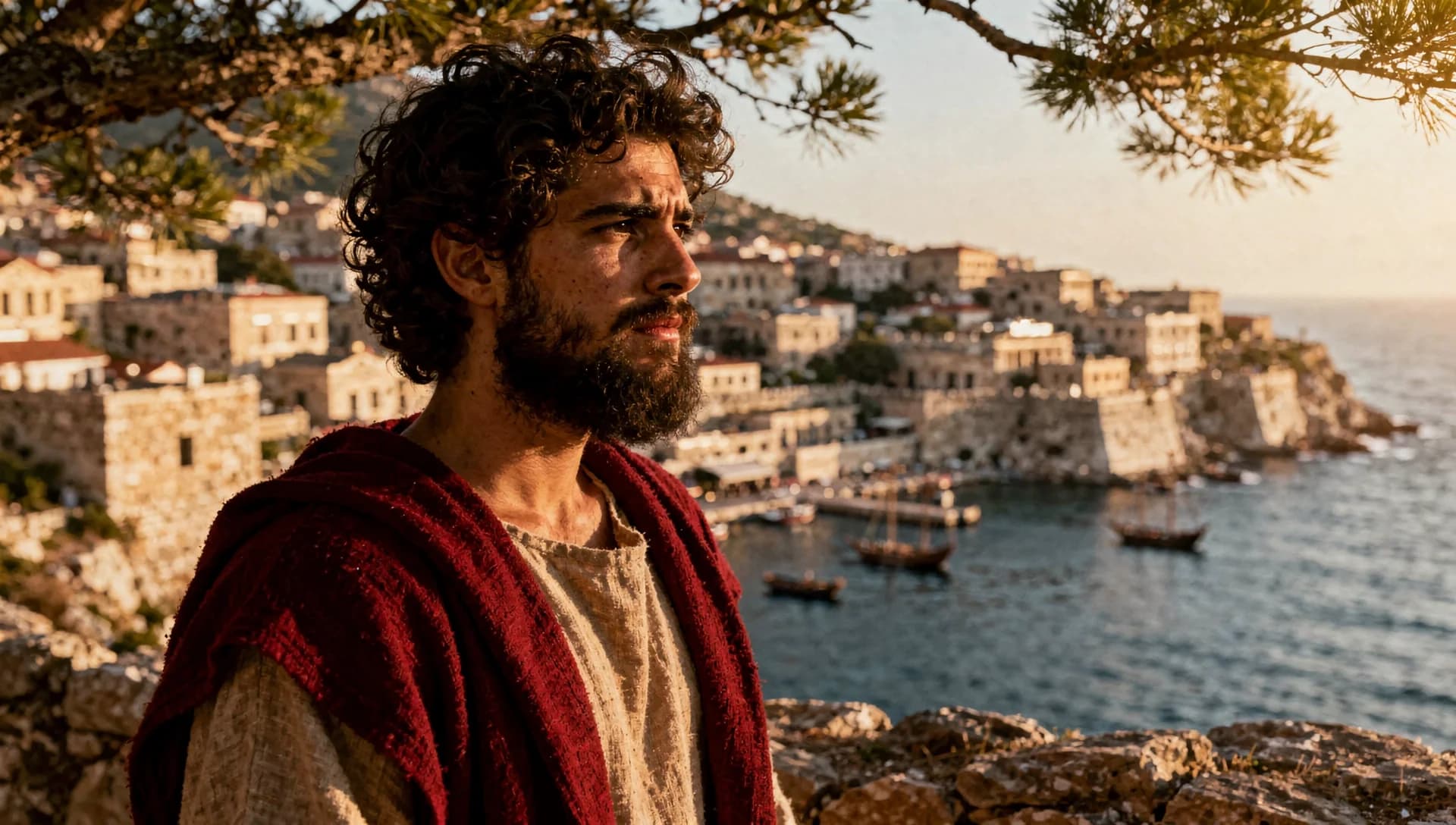
Angamon, Stoic leader taught by Jesus = Roman Stoic philosopher personally instructed in the gospel
This article expands on the decoder mapping. For the side-by-side card and quick reference, see the mapping page.
The Teacher Who Came to Rome
In AD 22 and 23, during his Mediterranean tour in the service of Gonod and Ganid, Jesus spent six months in Rome. Most of that time was occupied in quiet teaching work. The Urantia Book names four Roman philosophical figures with whom he had extended personal contact: Mardus the Cynic, Angamon the Stoic, and two named philosophers of lesser known affiliation. The sessions with Angamon are described as formative for the subsequent trajectory of Roman Christianity:
"It was with Angamon, the leader of the Stoics, that Jesus had an all-night talk early during his sojourn in Rome. This man subsequently became a great friend of Paul and proved to be one of the strong supporters of the Christian church at Rome. In substance, and restated in modern phraseology, Jesus taught Angamon:" (UB 132:1.1)
The claim is specific: Angamon, head of the Roman Stoic school during Jesus' visit, became a significant supporter of the Christian community in Rome a generation later through his friendship with Paul. The historical plausibility of this claim turns on the relationship between Stoic philosophy and early Roman Christianity, which is the subject of a substantial modern academic literature.
What the Urantia Book Says
The Urantia record of Jesus' teaching to Angamon is organized around a single theme: the standard of true value and the ordering of human loyalties. The opening is direct:
"The standard of true values must be looked for in the spiritual world and on divine levels of eternal reality. To an ascending mortal all lower and material standards must be recognized as transient, partial, and inferior. The scientist, as such, is limited to the discovery of the relatedness of material facts. Technically, he has no right to assert that he is either materialist or idealist, for in so doing he has assumed to forsake the attitude of a true scientist since any and all such assertions of attitude are the very essence of philosophy." (UB 132:1.2)
Three features of the teaching are relevant to the comparative case. First, the standard of true value is placed on the spiritual and eternal rather than the material and transient. This is a sharpening of the Stoic doctrine of the good (to agathon) as a function of correctly ordered rational will rather than external circumstance. Second, the distinction between scientific and philosophical activity is precisely drawn: observation of facts versus assertion of values, the same boundary Jesus drew for a Greek scholar in his discourse on science at Athens. Third, the framework is inclusive rather than polemical: Jesus is not attacking Stoicism but deepening it.
The teaching continues through several sections of Paper 132, addressing the ordering of loyalties, the nature of genuine worship, the limits of material attainment, and the specific practices of soul culture. The content throughout is philosophically sophisticated and pitched to a trained Stoic audience.
The Urantia Book's framing of the encounter treats Angamon as a receptive intellect prepared by Stoic training to recognize what Jesus was offering:
"Mardus was the acknowledged leader of the Cynics of Rome, and he became a great friend of the scribe of Damascus. Day after day he conversed with Jesus, and night upon night he listened to his supernal teaching." (UB 132:2.1, immediately following the Angamon section)
The paper frames Angamon and Mardus as paired figures: the two leading philosophical teachers of Rome, both spending extended time with Jesus, both later becoming instrumental in the Christian community's Roman reception.
What the Ancient Source Says
The historical Stoic leadership at Rome in the early first century CE is partially preserved. The major Stoic figures of the generation immediately following Jesus' visit, Seneca (4 BCE to 65 CE), Musonius Rufus (c. 20 CE to c. 101 CE), and Epictetus (c. 50 CE to c. 135 CE), are extensively attested. The generation that taught them, the Stoic leadership in Rome during the 20s CE, is more thinly documented but includes attested figures such as Attalus and Papirius Fabianus who are known to have been teaching in Rome during this period. Seneca names several of his teachers from this generation in the Epistulae Morales.
Angamon himself is not attested under that name in the surviving classical sources. As with Rodan of Alexandria, this absence is not decisive. The Roman Stoic school of the 20s CE is documented in fragments and passing references; the school's corporate leadership during any given year is not consistently recorded. A "leader of the Stoics" at Rome during Jesus' visit is historically plausible without being independently confirmable.
The Stoic-Christian convergence is where the modern academic literature is most substantial. Marcia Colish's The Stoic Tradition from Antiquity to the Early Middle Ages (Brill, 1985) treats the uptake of Stoic ethics into patristic Christianity as one of the central threads of late-ancient intellectual history. Troels Engberg-Pedersen's Paul and the Stoics (T&T Clark, 2000) argues at book length that the Pauline ethical framework is more thoroughly Stoic than has been traditionally recognized. Runar Thorsteinsson's Roman Christianity and Roman Stoicism: A Comparative Study of Ancient Morality (Oxford University Press, 2010) documents the specific parallels between Roman Christian moral teaching and Roman Stoic moral teaching during the first two centuries CE.
The direction of the scholarly consensus is clear. Stoic-Christian convergence in Rome was extensive, early, and theologically consequential. The Urantia Book's claim that a senior Stoic leader at Rome had personal instruction from Jesus before becoming a friend of Paul is a specific mechanism that would explain the convergence the academic record documents.
Why This Mapping Matters
The scholarly problem the Stoic-Christian parallel poses is one of origin. Pauline Christianity arrives in Rome with a moral framework that turns out to be deeply compatible with Roman Stoic ethics, more so than with contemporary Jewish Pharisaic ethics or with ordinary Roman civic religion. Pauline letters to Roman audiences employ Stoic technical vocabulary. The moral exhortations of early Roman Christian literature are saturated with Stoic diction. Something in the Roman intellectual climate was prepared to receive the Christian message in a specifically Stoic-compatible form.
The conventional academic explanations for this convergence fall into two camps. One camp treats it as parallel development: Stoicism and Christianity independently arrived at similar moral conclusions because both were responding to the same cultural and psychological pressures of the late Hellenistic period. The other camp treats it as historical contact: Paul himself was influenced by Stoic thought through his early education in Tarsus, and early Christian teachers adapted their message to Stoic hearers.
The Urantia Book supplies a third explanation, not incompatible with the other two but more specific: the principal Stoic teacher at Rome during Jesus' visit had personal extended instruction from Jesus, and when Paul arrived in Rome approximately three decades later he found in Angamon a senior Stoic leader who was already a committed friend and supporter. The Stoic-Christian convergence in Rome has, on this account, a specific historical anchor point: Angamon's all-night conversation with Jesus in AD 22 or 23.
The claim is not falsifiable against the surviving historical record because the historical record is too thin. But it is consistent with the Stoic-Christian convergence documented in the academic literature, and it provides the kind of specific causal mechanism that the convergence literature has sought without quite finding.
Sources
- The Urantia Book, Paper 132 (The Sojourn at Rome). Urantia Foundation, first printing 1955. Cited passages: 132:1.1, 132:1.2, 132:2.1.
- Colish, Marcia L. The Stoic Tradition from Antiquity to the Early Middle Ages. 2 volumes, Brill, 1985.
- Engberg-Pedersen, Troels. Paul and the Stoics. T&T Clark, 2000.
- Thorsteinsson, Runar M. Roman Christianity and Roman Stoicism: A Comparative Study of Ancient Morality. Oxford University Press, 2010.
- Sellars, John. Stoicism. Acumen, 2006.
- Long, A. A. Hellenistic Philosophy: Stoics, Epicureans, Sceptics. Second edition, University of California Press, 1986.
- Seneca. Epistulae Morales ad Lucilium. Loeb Classical Library edition, translated by R. M. Gummere, Harvard University Press, 1917-1925.
Confidence and Evidence
- Confidence: UB CONFIRMED
- Evidence rating: MODERATE
- Basis: The Urantia Book names Angamon specifically as leader of the Roman Stoics and associate of Paul. The historical Stoic-Christian convergence in Rome is extensively documented in modern academic literature. The Urantia narrative supplies a specific causal mechanism consistent with the academic observation but unavailable from independent historical records.
Related Decoder Articles
- Mardus, Cynic Leader Taught by Jesus
- Stoic Ethics Absorbed into Pauline Christianity
- Rodan of Alexandria, Greek Philosopher
By Derek Samaras
Connecting Articles
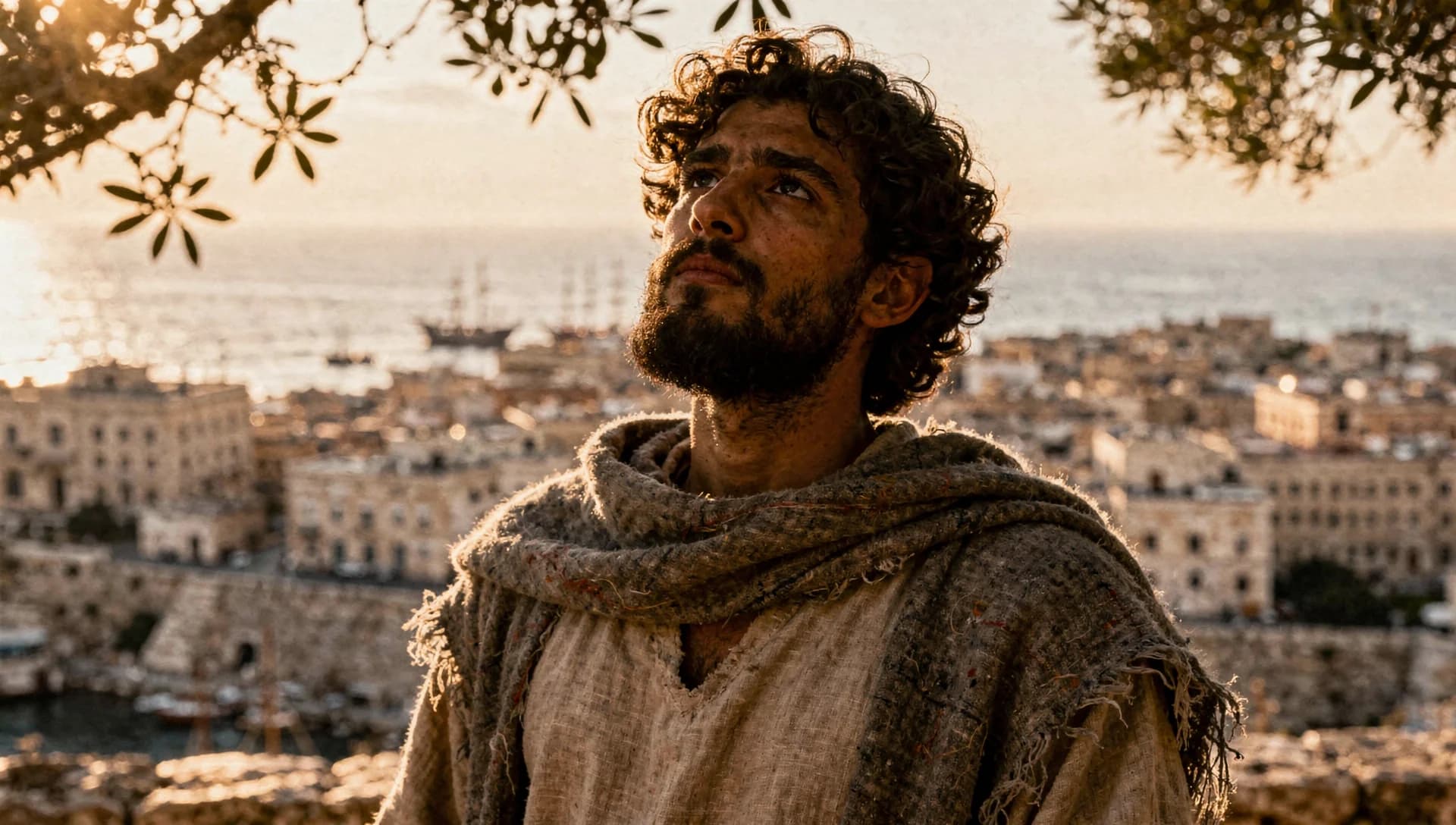
Day After Day: Jesus and Mardus, Leader of the Roman Cynics
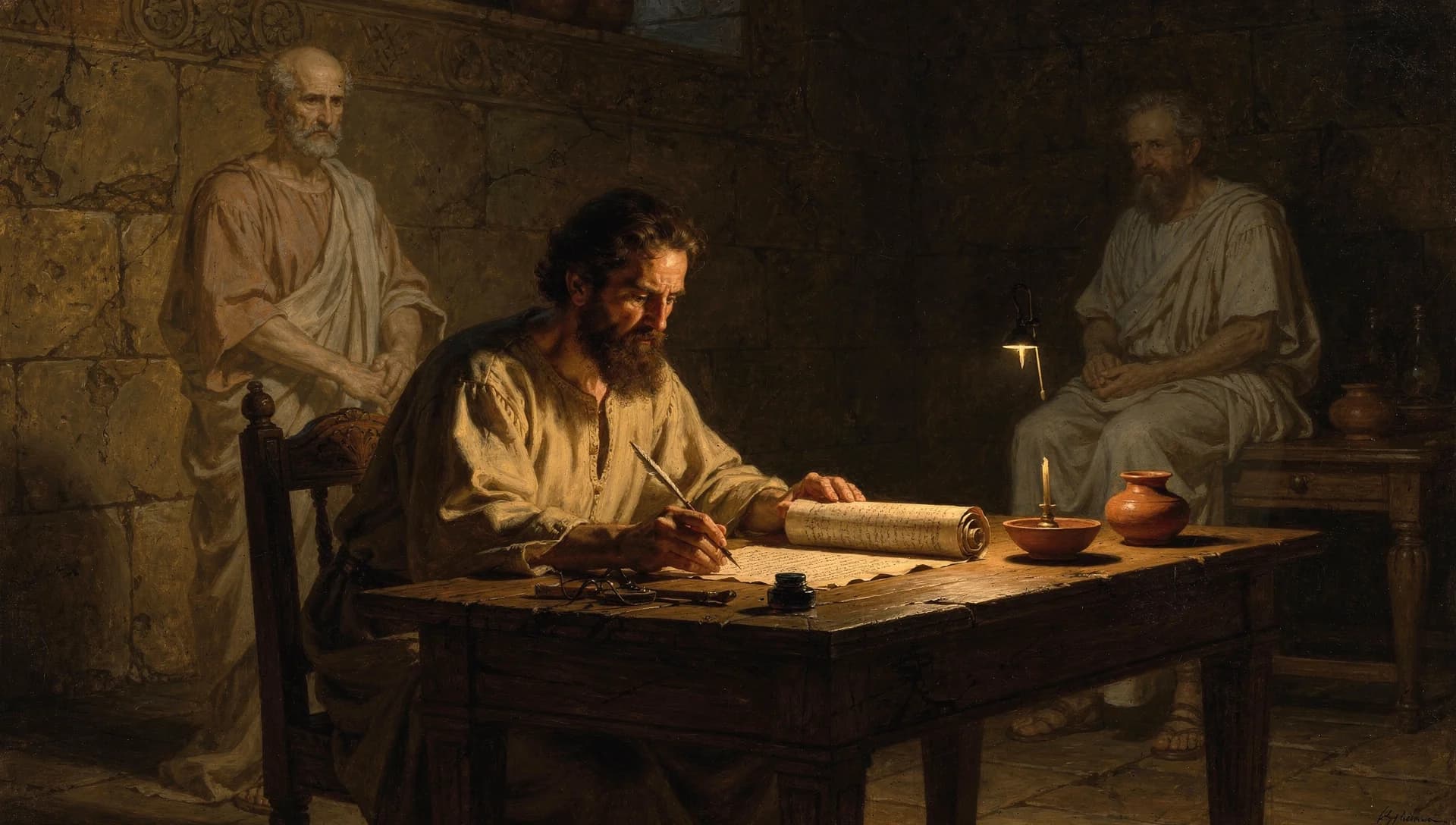
The Philosophy in Paul: How Stoic Ethics Entered Christianity

The First Comparative Religion Study: Ganid, Jesus, and the Alexandrian Compilation

Return Good for Evil: Lao-tse's Anticipation of Jesus
The Newsletter
Get the research behind each piece
Free. New Urantia Book explorations, the sources behind the videos, and early looks. No spam, unsubscribe anytime.
Prefer video? Follow on YouTube and Facebook.
Delivered through Substack. You can also read past issues.