
The Teacher Beneath the Redwoods: Onamonalonton and the Great Spirit Tradition
Sixty-five thousand years ago a spiritual leader named Onamonalonton revived the monotheistic worship of the Great Spirit among the red race of North America. The Urantia Book names him as one of the Twenty-Four Counselors on Jerusem, and his teachings became the substrate of every Great Spirit tradition that later Indigenous Americans preserved.
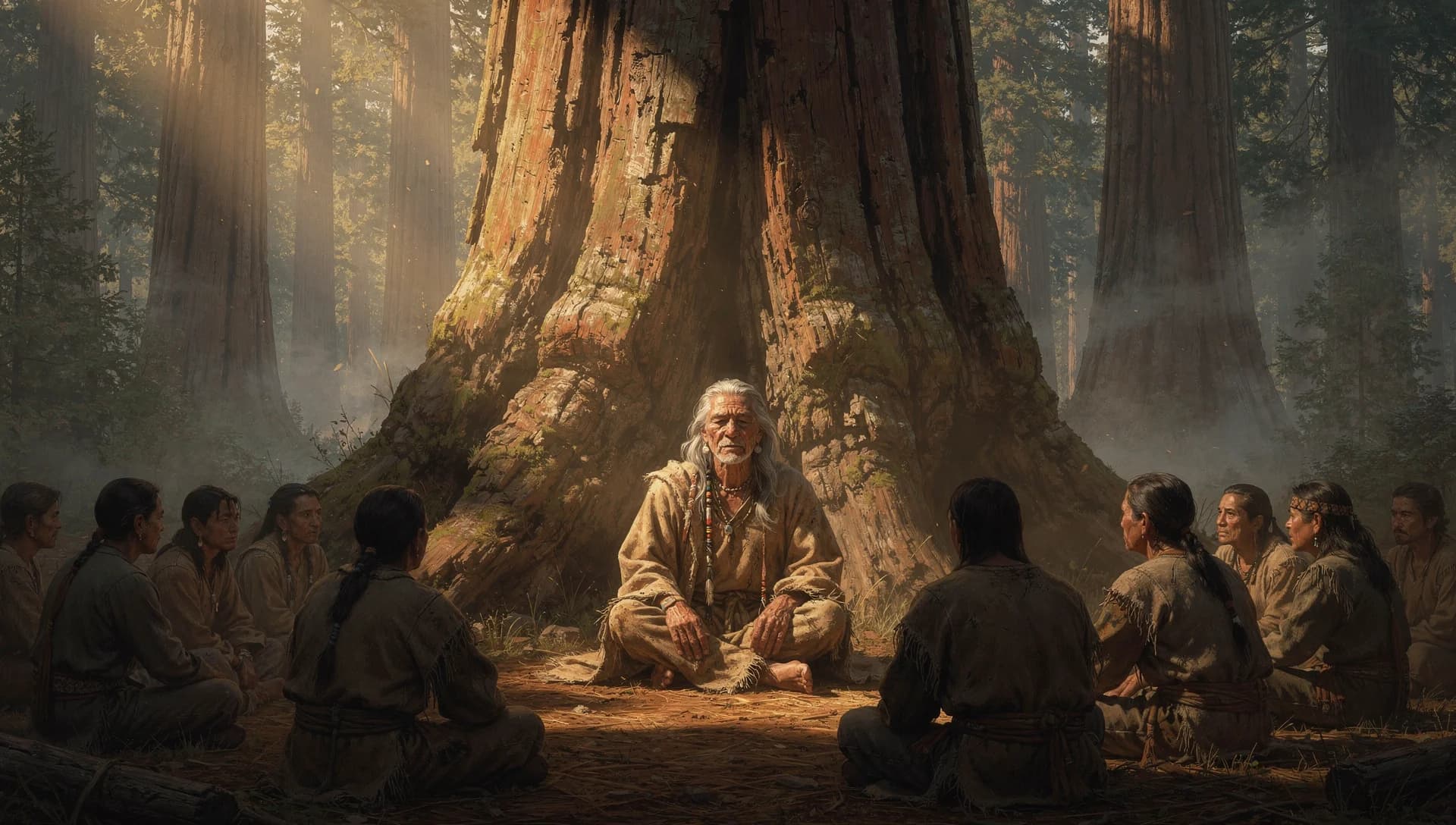
Onamonalonton, spiritual leader of the red race (~65,000 BC) = The "Great Spirit" tradition (Gitchi Manitou, Wakan Tanka)
This article expands on the decoder mapping. For the side-by-side card and quick reference, see the mapping page.
The Deepest Preservation of Monotheism on Any Continent
The Indigenous American spiritual tradition preserved, across tens of thousands of years of oral transmission and through hundreds of distinct tribal cultures, a remarkably consistent concept of a single supreme creator: the Great Spirit. The Algonquian Gitchi Manitou, the Lakota Wakan Tanka, the Iroquois Orenda, the Pawnee Tirawa, and the many other tribal-specific names for the supreme Being consistently refer to a single omnipresent creative reality rather than to a pantheon of competing deities.
Christopher Vecsey's Imagine Ourselves Richly: Mythic Narratives of North American Indians (Harper & Row, 1988) and Joseph Epes Brown's The Spiritual Legacy of the American Indian (Crossroad, 1982) document the pan-Indigenous distribution of the Great Spirit concept. The concept's coherence across cultures that had been geographically separated for tens of thousands of years is one of the more striking features of Indigenous American religious history.
The Urantia Book identifies the specific historical source of this tradition.
What the Urantia Book Says
The red race's migration to North America and subsequent isolation is described directly:
"About eighty-five thousand years ago the comparatively pure remnants of the red race went en masse across to North America, and shortly thereafter the Bering land isthmus sank, thus isolating them. No red man ever returned to Asia." (UB 64:6.5)
The subsequent spiritual decline and the rise of Onamonalonton is recorded:
"When the red man crossed over into America, he brought along much of the teachings and traditions of his early origin. His immediate ancestors had been in touch with the later activities of the world headquarters of the Planetary Prince. But in a short time after reaching the Americas, the red men began to lose sight of these teachings, and there occurred a great decline in intellectual and spiritual culture." (UB 64:6.6)
The reformer's career is named:
"Because of this great retrogression the red men seemed doomed when, about sixty-five thousand years ago, Onamonalonton appeared as their leader and spiritual deliverer. He brought temporary peace among the American red men and revived their worship of the 'Great Spirit.' Onamonalonton lived to be ninety-six years of age and maintained his headquarters among the great redwood trees of California." (UB 64:6.7)
Onamonalonton's subsequent status is confirmed in the broader Urantia framework. Paper 92:5.6 identifies him as one of the world's great religious leaders whose return was anticipated by his followers, placing him in the company of Buddha, Muhammad, and other civilization-defining spiritual figures:
"Many races have conceived of their leaders as being born of virgins; their careers are liberally sprinkled with miraculous episodes, and their return is always expected by their respective groups. In central Asia the tribesmen still look for the return of Genghis Khan; in Tibet, China, and India it is Buddha; in Islam it is Mohammed; among the Amerinds it was Hesunanin Onamonalonton; with the Hebrews it was, in general, Adam's return as a material ruler." (UB 92:5.6)
The decline after Onamonalonton's death is described:
"As time passed, the teachings of Onamonalonton became hazy traditions. Internecine wars were resumed, and never after the days of this great teacher did another leader succeed in bringing universal peace among them. Increasingly the more intelligent strains perished in these tribal struggles; otherwise a great civilization would have been built upon the North American continent by these able and intelligent red men." (UB 64:6.8)
The Urantia Book therefore places the Great Spirit tradition within a historical framework: an original religious inheritance from the Dalamatian planetary prince's regime (five hundred thousand years ago), carried across the Bering land bridge by the red race migration eighty-five thousand years ago, lost to progressive cultural decline, revived by Onamonalonton sixty-five thousand years ago, and then preserved in progressively hazier form through the subsequent sixty-odd millennia until European contact.
What the Ancient Sources Say
The Great Spirit tradition is attested across essentially the entire North American continent. Algonquian-speaking peoples (Ojibwe, Cree, Blackfoot, Lenape, and many others) refer to Gitchi Manitou. Siouan-speaking peoples (Lakota, Dakota, Nakota) refer to Wakan Tanka. Iroquoian-speaking peoples refer to Orenda. Caddoan-speaking peoples refer to Tirawa. Each tradition treats its supreme Being as the creator of all things, the source of life and breath, the ultimate governor of cosmic and moral order.
Christopher Vecsey documents (in the 1988 volume cited above) that early European observers consistently misinterpreted the Great Spirit concept as either a vague pantheistic "Creator of all things and the Giver of Life" or as a singular monotheistic deity on the Hebraic model. The Indigenous traditions themselves are more nuanced: the supreme Being is understood as a collective, benevolent essence that pervades all reality, eternal, life-giving, and the ultimate owner of the universe. The distinction between the pan-entity and the singular-personal readings is itself an artifact of the reception language; the underlying Indigenous concept resists simple translation into either framework.
Scholarly treatments of the pan-tribal Great Spirit include Åke Hultkrantz's The Religions of the American Indians (University of California Press, 1967, revised 1979), Sam D. Gill's Mother Earth: An American Story (University of Chicago Press, 1987), and the collected essays in Deward E. Walker's Handbook of North American Indians volumes on religion. The consistent observation is that the Great Spirit concept is demonstrably pan-tribal and pan-continental, with distinctive local elaborations but a consistent structural core.
The question of historical origin for the pan-Indigenous Great Spirit concept has generated comparative scholarly discussion. The conventional academic reading treats the concept as an independent indigenous religious development. The Urantia Book's identification of a specific historical reformer (Onamonalonton) sixty-five thousand years ago (UB 64:6.7) is not available to academic research without the Urantia source, but it is consistent with the pattern of pan-continental religious concept preservation that requires some form of original unifying source. A single reformer at the demographic near-origin of the Indigenous American populations, whose teachings propagated through subsequent continental dispersal, would produce exactly the pan-tribal distribution that comparative religious research has documented.
The geographic claim (Onamonalonton's California redwood headquarters) is not archaeologically testable for the sixty-five-thousand-year timeframe. What is testable is the pattern of Indigenous American population distribution, which consistently shows the California coastal region as a long-term cultural substrate for multiple subsequent migrations westward and southward. The California population centers for the Paleo-Indigenous period are consistent with having served as a cultural-religious staging ground for later continental diffusion.
Why This Mapping Matters
The pan-Indigenous Great Spirit tradition is distinctive in world religious history. Most continents preserve a patchwork of tribal or regional religious traditions rather than a unified pan-continental concept. The Indigenous American achievement of preserving a single core religious framework across 16 million square kilometers of continental geography and tens of thousands of years of separate cultural development is unusual enough to require explanation.
The Urantia Book supplies the historical origin. The Great Spirit concept is not parallel independent development across hundreds of tribal cultures. It is the inherited substrate of a religious reform led by a specific historical reformer, Onamonalonton, at a defined location (the California redwood region) at a defined time (sixty-five thousand years ago). The subsequent continental dispersal carried the religious substrate across the continent, producing the pan-tribal preservation the documented Indigenous traditions preserve.
The mapping's theological significance is substantial. On the Urantia account, of all who received the teachings of the one hundred the red men held them longest, though the idea of the Great Spirit "was but a hazy concept in Amerindian religion" until contact with Christianity clarified and strengthened it (UB 92:4.5). The preservation is older than Jewish monotheism by about sixty thousand years. The Great Spirit concept reaches further back into human religious history than any documented Old World monotheism.
This has consequences for how Indigenous American religious traditions should be read in comparative religious contexts. They are not primitive, pre-monotheistic, or culturally peripheral. They are the preserved fragments of a very ancient monotheistic reform, carried across an unusually long transmission timeline. The hazy state in which European contact found the tradition reflects sixty thousand years of cultural wear rather than a late, underdeveloped religious imagination.
The practical consequence for contemporary comparative religious scholarship is that Indigenous American Great Spirit traditions should be given the same scholarly respect accorded to Old World monotheistic traditions, and their fragmentary state should be read as evidence of very deep antiquity rather than of religious primitivism.
Sources
- The Urantia Book, Paper 64 (The Evolutionary Races of Color), Paper 92 (The Later Evolution of Religion). Urantia Foundation, first printing 1955. Cited passages: 64:6.5, 64:6.6, 64:6.7, 64:6.8, 92:5.6.
- Vecsey, Christopher. Imagine Ourselves Richly: Mythic Narratives of North American Indians. Harper & Row, 1988.
- Brown, Joseph Epes. The Spiritual Legacy of the American Indian. Crossroad, 1982.
- Hultkrantz, Åke. The Religions of the American Indians. Translated by Monica Setterwall. University of California Press, 1979.
- Gill, Sam D. Mother Earth: An American Story. University of Chicago Press, 1987.
- Walker, Deward E., editor. Handbook of North American Indians, various volumes. Smithsonian Institution, 1978 onward.
- Hultkrantz, Åke. Belief and Worship in Native North America. Syracuse University Press, 1981.
Confidence and Evidence
- Confidence: UB CONFIRMED
- Evidence rating: STRONG
- Basis: The Urantia Book names Onamonalonton directly in Paper 64:6.7 and Paper 92:5.6. The pan-Indigenous distribution of the Great Spirit concept is well-documented in comparative religious scholarship. The Urantia account provides a historical origin consistent with the pattern of continental religious-concept preservation observed by academic research.
Related Decoder Articles
- Fandor, Giant Passenger Bird = Thunderbird
- Red Race Migration = Pan-Indigenous Origin Traditions
- Singlangton, Yellow Race Spiritual Leader = "One Truth" → Tao
By Derek Samaras
Connecting Articles
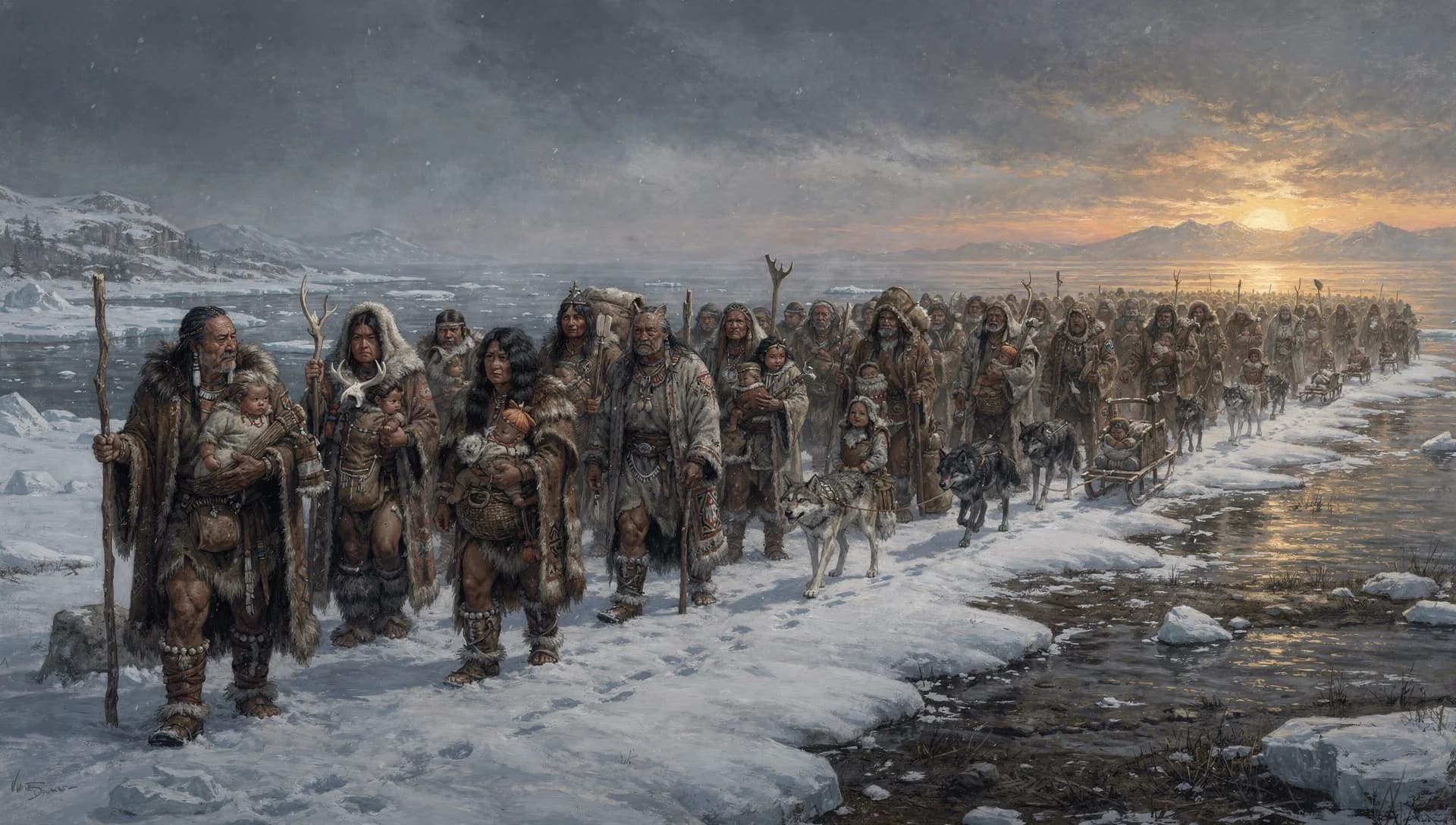
The Crossing: Red Race Migration and Pan-Indigenous Origin Traditions
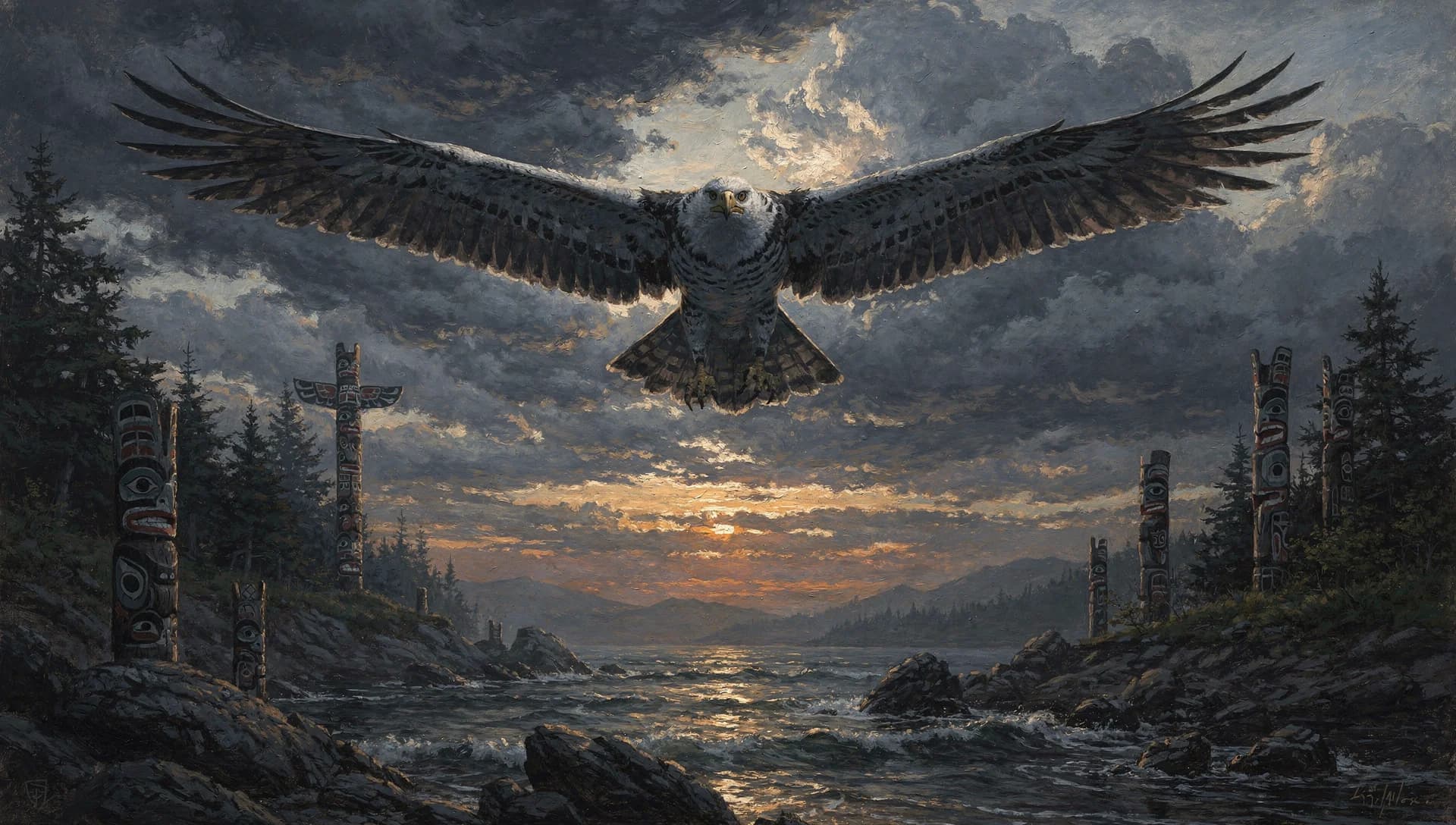
The Thunderbird Was Real: Fandors and the Indigenous American Giant Bird Tradition
The Invisible Mediators: Urantia Midwayers and the Hopi Kachinas
The Ones Who Came First: The Dalamatian Staff and the Navajo Holy People
The Newsletter
Get the research behind each piece
Free. New Urantia Book explorations, the sources behind the videos, and early looks. No spam, unsubscribe anytime.
Prefer video? Follow on YouTube and Facebook.
Delivered through Substack. You can also read past issues.