
The Invisible Mediators: Urantia Midwayers and the Hopi Kachinas
The Hopi of the Arizona high desert preserve one of the most sophisticated accounts of invisible spiritual mediators in Indigenous American religion: the Kachinas, ancestor-beings who dwell in the San Francisco Peaks and descend to the mesas during the ceremonial season. The Urantia Book describes an identical class of beings: the midwayers, a permanent order of planetary ministers invisible to mortal sight but present and active on Urantia.
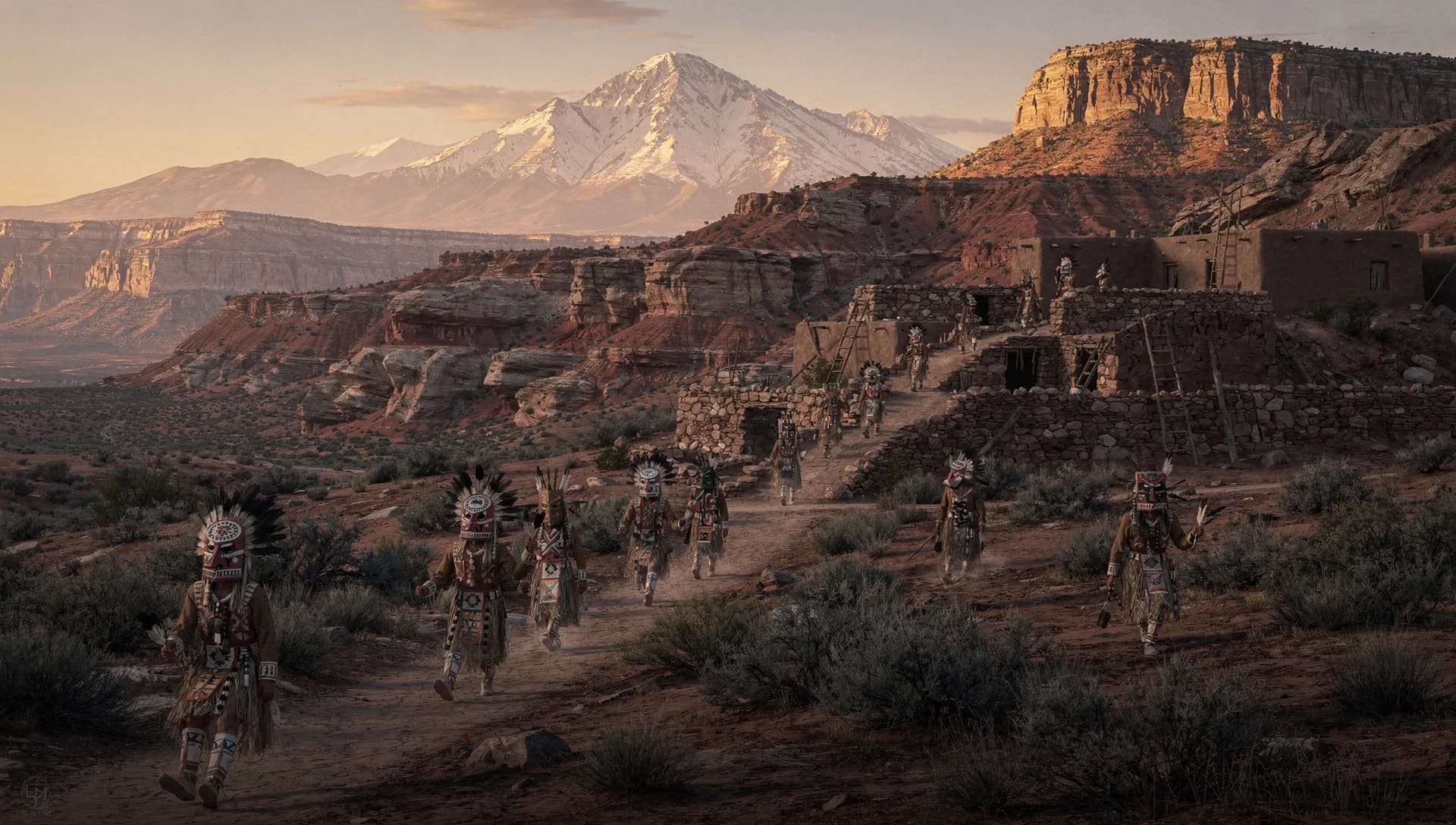
Midwayers, invisible planetary ministers who interact with the mortal realm = Hopi Kachinas, ancestor-spirits who mediate between gods and humans
This article expands on the decoder mapping. For the side-by-side card and quick reference, see the mapping page.
The Specific Theological Category
Hopi cosmology distinguishes several categories of spiritual beings with unusual precision. Taiowa the creator is ultimate. Sotuknang is his nephew, the implementer. Spider Grandmother is the intermediary teacher of human beings. And then there is a distinct class: the Kachinas, ancestor-related spiritual beings who are neither gods nor human ancestors in the ordinary sense but a permanent intermediate order, dwelling in the San Francisco Peaks, descending to the mesas during the ceremonial season to dance among the people and carry prayers between the human and divine realms.
The Kachina category has resisted easy comparative classification. They are not polytheistic gods. They are not the spirits of dead individuals in the ordinary ancestral sense. They are not angels in the Abrahamic model. They occupy a theological niche that the ordinary comparative categories do not capture.
The Urantia Book describes a class of beings that fits the Kachina profile precisely: the midwayers, a permanent order of planetary ministers assigned to Urantia at the arrival of the Planetary Prince, invisible to ordinary mortal sight, active in the mediation of spiritual ministry between the celestial administration and the human population.
What the Urantia Book Says
The midwayer order is described in Paper 77 in extensive detail. The primary midwayers (50,000 of them) were the offspring of the corporeal staff's Andonite human assistants. The secondary midwayers (originally 1,984) were the descendants of Adamson and Ratta (treated in the companion decoder articles). Both orders were permanent, non-reproducing, invisible to ordinary mortal perception, and assigned to planetary ministry.
The rebellion affected their numbers:
"The majority of the primary midwayers went into sin at the time of the Lucifer rebellion. When the devastation of the planetary rebellion was reckoned up, among other losses it was discovered that of the original 50,000, 40,119 had joined the Caligastia secession." (UB 77:7.1)
"The original number of secondary midwayers was 1,984, and of these 873 failed to align themselves with the rule of Michael and were duly interned in connection with the planetary adjudication of Urantia on the day of Pentecost." (UB 77:7.2)
The midwayers' ministerial function is described:
"Both groups of rebel midwayers are now held in custody awaiting the final adjudication of the affairs of the system rebellion. But they did many strange things on earth prior to the inauguration of the present planetary dispensation." (UB 77:7.3)
"These disloyal midwayers were able to reveal themselves to mortal eyes under certain circumstances, and especially was this true of the associates of Beelzebub, the leader of the apostate secondary midwayers." (UB 77:7.4)
The loyal midwayers (9,881 primary, 1,111 secondary) continue to serve as the permanent planetary ministers of Urantia. They function as the continuity-stewards across generations, maintaining the administrative memory of the planetary history, mediating between the celestial administration and the evolving human population. The "eleven-eleven" count of loyal secondary midwayers is theologically significant in Urantia theology and in the derived contemporary UB reader culture.
The midwayers' role is structurally unique among the personalities the Urantia Book catalogues. They are permanent residents of Urantia (they do not leave for Jerusem or the mansion worlds). They are invisible to ordinary mortal perception under normal conditions. They are active in spiritual ministry but operate in ways that leave most of their work undetected. They are not angels (who are a different celestial order). They are not the departed human dead. They are a distinct permanent order whose existence the Hopi Kachina tradition preserves with unusual fidelity.
What the Ancient Sources Say
The Hopi Kachina tradition is extensively documented in twentieth-century ethnographic literature. Frank Waters's Book of the Hopi (Viking, 1963) provides the foundational modern account, drawing on oral-tradition collection across multiple Hopi villages. Barton Wright's Kachinas: A Hopi Artist's Documentary (Northland Press, 1973) catalogs the 300+ named Kachina figures with their ritual functions and personalities. Edmund Ladd's "Hopi Kachinas" in the Handbook of North American Indians Volume 9: Southwest (Smithsonian, 1979) provides the scholarly reference treatment.
The Kachina concept's features include:
First, a permanent non-human order. The Kachinas are not departed ancestors in the generic sense. They are a distinct class of beings with their own continuous history separate from the human life-cycle. Frank Waters documents the Hopi tradition that the Kachinas "once lived openly with humans" before withdrawing to the San Francisco Peaks.
Second, invisibility under ordinary conditions. The Kachinas are not normally visible to ordinary Hopi. Their presence is inferred from ceremonial performance (Kachina dancers embody them during the ceremonial season), from dream and vision experience, and from the structural features of Hopi cosmology that require their existence. They become visible selectively, under certain circumstances, particularly during ritual.
Third, mediatorial function. The Kachinas carry prayers from the human world to the divine. They carry blessings (rain, fertility, health) from the divine world to the human. They are specifically intermediaries, not sources of ultimate power and not recipients of ultimate worship.
Fourth, a definite geographic dwelling. The Kachinas reside at the San Francisco Peaks, a mountain range visible from the Hopi mesas. The geography is definite; the Kachinas are not diffuse cosmic spirits but beings with a fixed location in the world.
Fifth, descent to the human world during the ceremonial season. The Kachinas visit the Hopi villages during a particular season (December through July in the traditional Hopi calendar), dancing among the people through the ritual embodiment of the Kachina-society members. They return to the peaks at the season's end.
The structural features match the Urantia midwayer profile closely. A permanent non-human order. Invisibility under ordinary conditions. Mediatorial function. A fixed planetary residence (the Urantia midwayers dwell on Urantia itself; the Kachinas at the San Francisco Peaks within Urantia). Direct interaction with the human population (the Urantia midwayers through subtle spiritual influence; the Kachinas through ceremonial embodiment).
The rebellion-era detail about some midwayers being "able to reveal themselves to mortal eyes under certain circumstances" (77:7.4) corresponds to the Hopi understanding that the Kachinas once lived openly with humans before withdrawing. The post-Pentecost invisibility of the loyal midwayers corresponds to the current Kachina practice of selective visible manifestation only during ceremonial contexts.
Why This Mapping Matters
The Kachina category is one of the genuinely difficult comparative-religious categories to classify. The Hopi tradition insists on a theological position: the Kachinas are real, distinct from both humans and high gods, permanent, invisible under ordinary conditions, and resident at a particular mountain. Fitting this into the available comparative categories (gods, ancestors, angels, nature-spirits) consistently fails to capture the Kachina specificity.
The Urantia Book supplies the theological category the Kachinas occupy. They are midwayers: a permanent planetary order distinct from mortals, angels, and the dead, resident on the planet, invisible under ordinary conditions, active in spiritual mediation. The Hopi tradition preserves the theological category with unusual fidelity because the Hopi cultural substrate includes (through the red race migration and subsequent isolation) particularly strong preservation of the original Dalamatian administrative framework.
The mapping's significance is that it establishes the Kachina tradition as preserving an accurate theological structure that the major Old World religions largely lost. The Christian tradition compressed the midwayer category into angels or denied it. The Islamic tradition absorbed it into jinn mythology. The Buddhist tradition absorbed it into various intermediate beings. The Hindu tradition has a proliferation of intermediate beings but without the Kachina-like category.
The Hopi preservation is exceptional. The features (permanent order, planetary residence, invisibility, mediation, mountain dwelling, selective visible manifestation during ritual) are all features the Urantia midwayer description would predict. The structural match is close enough to suggest cultural-memory preservation rather than coincidental parallel development.
The practical consequence for Indigenous American religious studies is that the Hopi Kachina tradition deserves treatment as a reliable source for a theological category the Old World religions have mostly lost. The Urantia Book's midwayer theology can be profitably read alongside Hopi Kachina ethnography; each illuminates features the other describes.
Sources
- The Urantia Book, Paper 77 (The Midway Creatures). Urantia Foundation, first printing 1955. Cited passages: 77:7.1, 77:7.2, 77:7.3, 77:7.4, 77:7.8.
- Waters, Frank. Book of the Hopi. Viking Press, 1963.
- Wright, Barton. Kachinas: A Hopi Artist's Documentary. Northland Press, 1973.
- Ladd, Edmund J. "Hopi Kachinas," in Handbook of North American Indians, Volume 9: Southwest. Smithsonian Institution, 1979.
- Sekaquaptewa, Emory and Dorothy Washburn. "As a Matter of Fact: The Kachina Cult and Its Contemporary Significance," in Kachinas in the Pueblo World, edited by Polly Schaafsma, University of New Mexico Press, 1994.
- Fewkes, Jesse Walter. Hopi Katcinas Drawn by Native Artists. Bureau of American Ethnology, 1903; reprinted Dover, 1985.
- Hultkrantz, Åke. The Religions of the American Indians. University of California Press, 1979.
Confidence and Evidence
- Confidence: INFORMED SPECULATION
- Evidence rating: MODERATE
- Basis: The Kachina theological category (permanent non-human planetary order, invisibility, mediation, residence, selective ceremonial visibility) matches the Urantia midwayer profile on multiple features. The category is unusual in comparative religions; the Hopi preservation and the Urantia description independently identify the same theological structure.
Related Decoder Articles
- Onamonalonton = The Great Spirit Tradition
- The Hundred and Forty-Four: Modified Andonites and the Sumerian Igigi
- 16 Children of Adamson + Ratta = Olympian Gods
By Derek Samaras
Connecting Articles
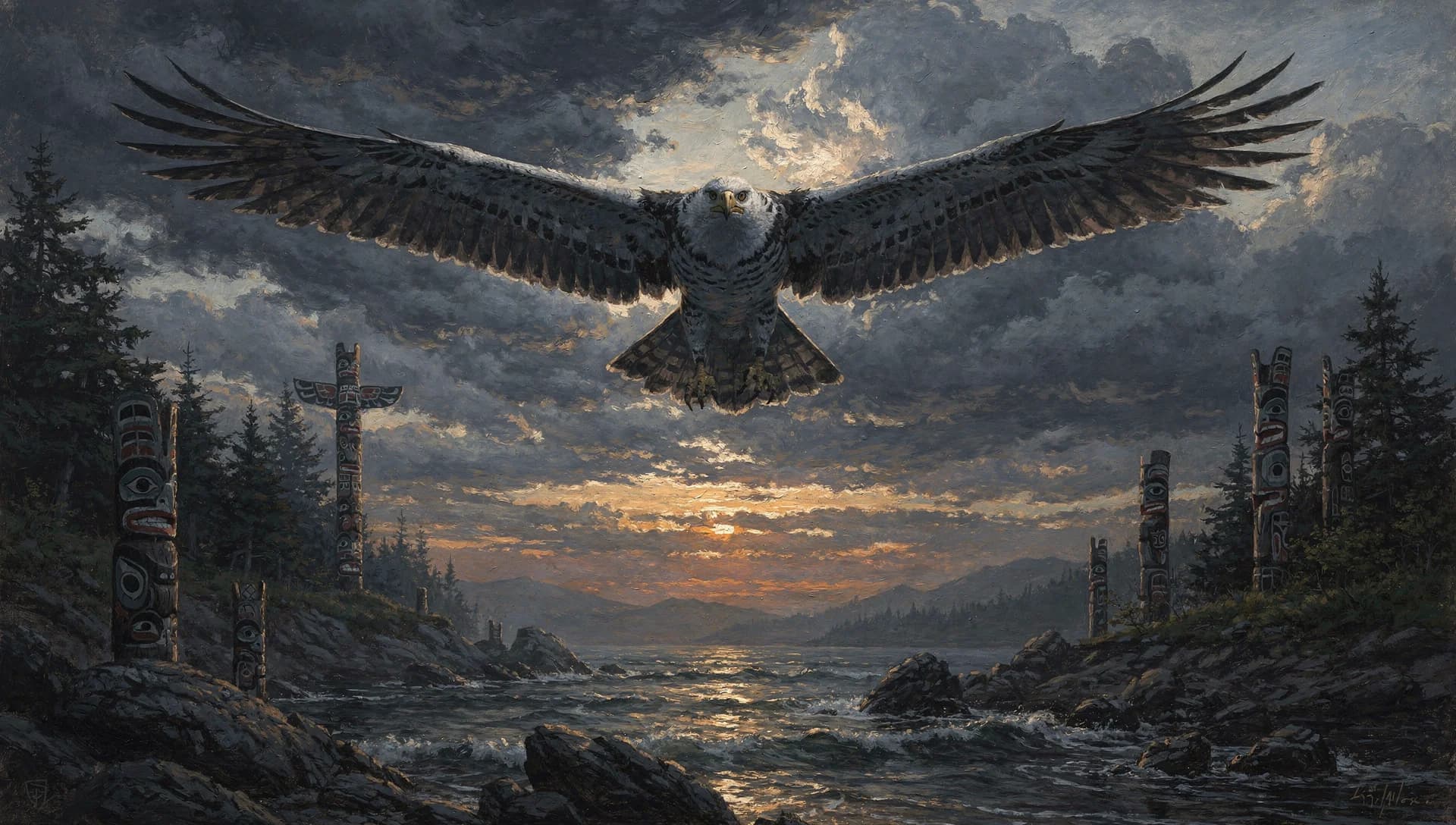
The Thunderbird Was Real: Fandors and the Indigenous American Giant Bird Tradition
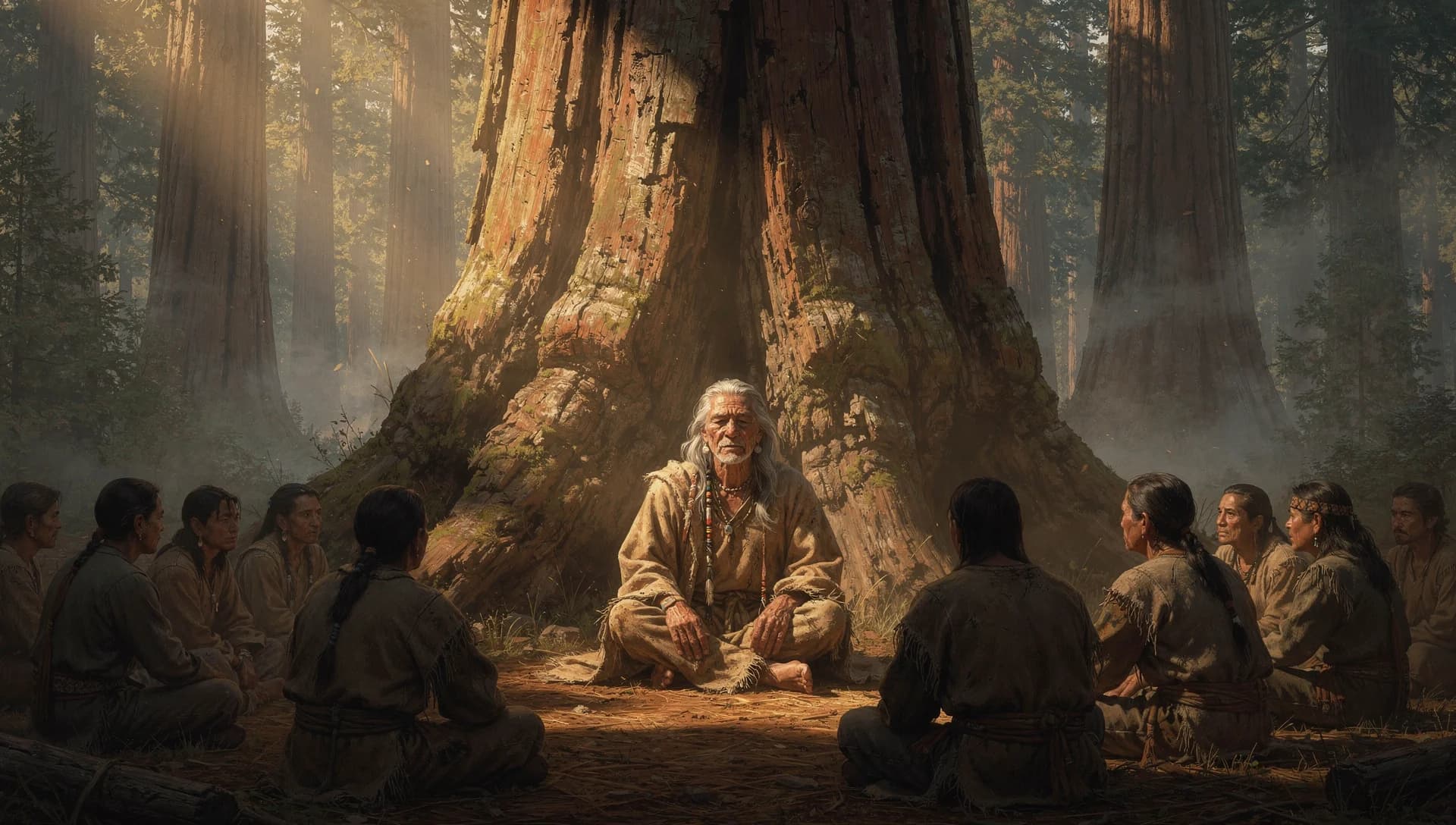
The Teacher Beneath the Redwoods: Onamonalonton and the Great Spirit Tradition
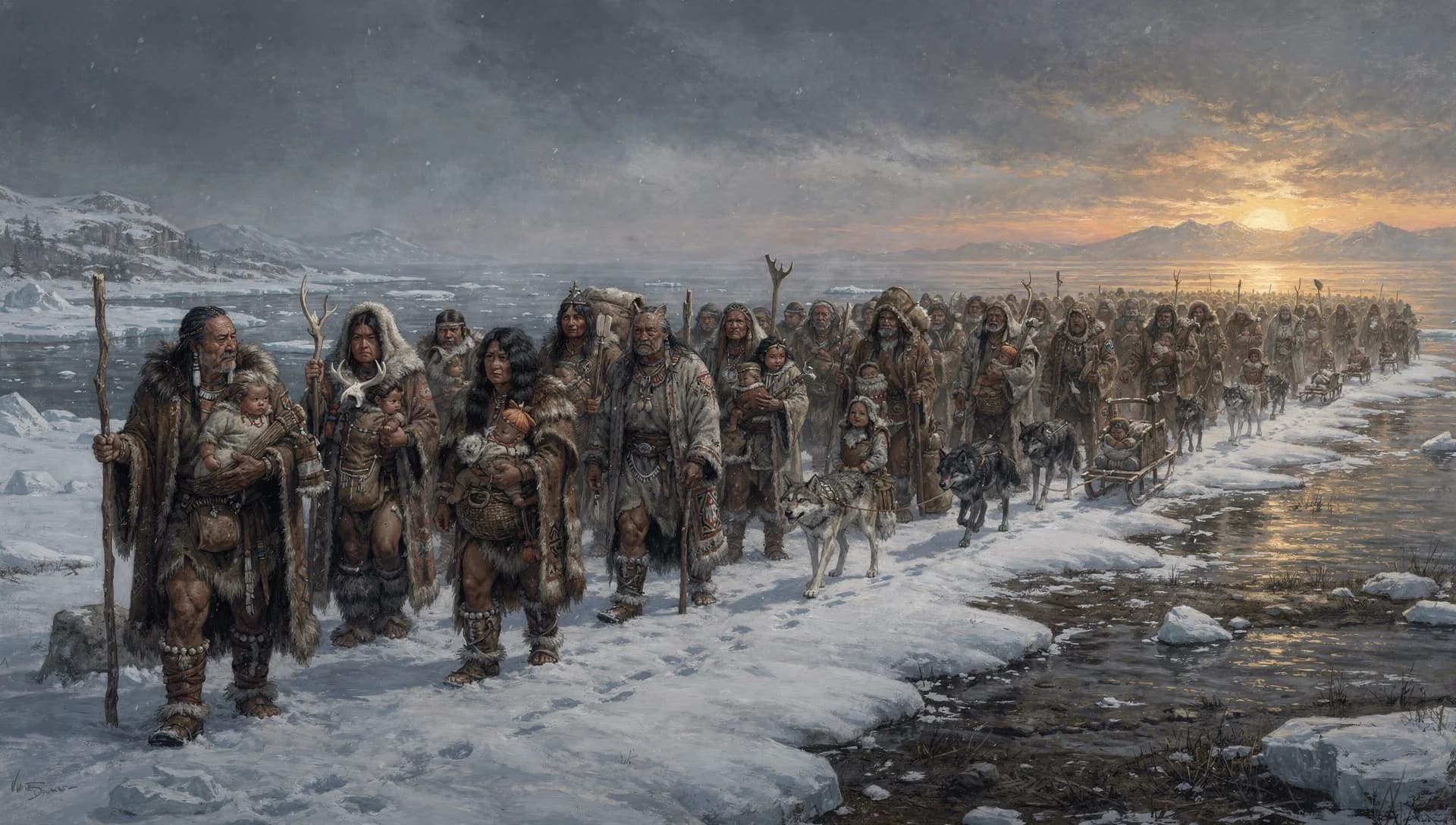
The Crossing: Red Race Migration and Pan-Indigenous Origin Traditions
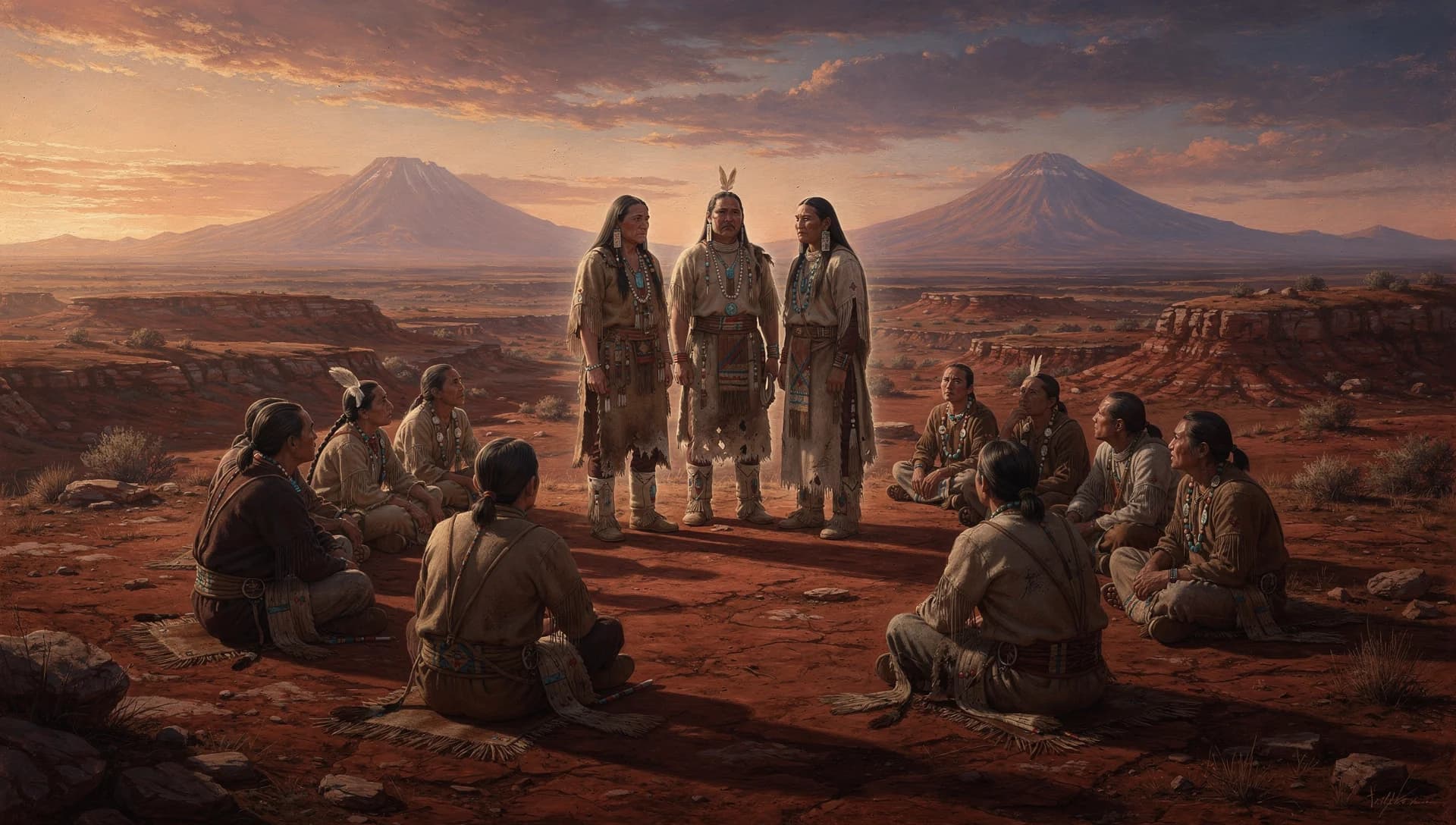
The Ones Who Came First: The Dalamatian Staff and the Navajo Holy People
The Newsletter
Get the research behind each piece
Free. New Urantia Book explorations, the sources behind the videos, and early looks. No spam, unsubscribe anytime.
Prefer video? Follow on YouTube and Facebook.
Delivered through Substack. You can also read past issues.