
Five Suns and Many Floods: Mesoamerican Flood Cycles and the Urantia Record
The Aztec, Maya, and K'iche' Maya traditions each preserve elaborate flood cycles. The K'iche' Popol Vuh describes multiple catastrophic destructions of humanity; the Aztec Five Suns narrate four prior worlds destroyed in specific cataclysms before the present age. The Urantia Book documents the historical substrate: multiple real planetary catastrophes including the Dalamatia submergence, the Eden submergence, and regional Mesopotamian floods, each preserved in cultural memory across continents.
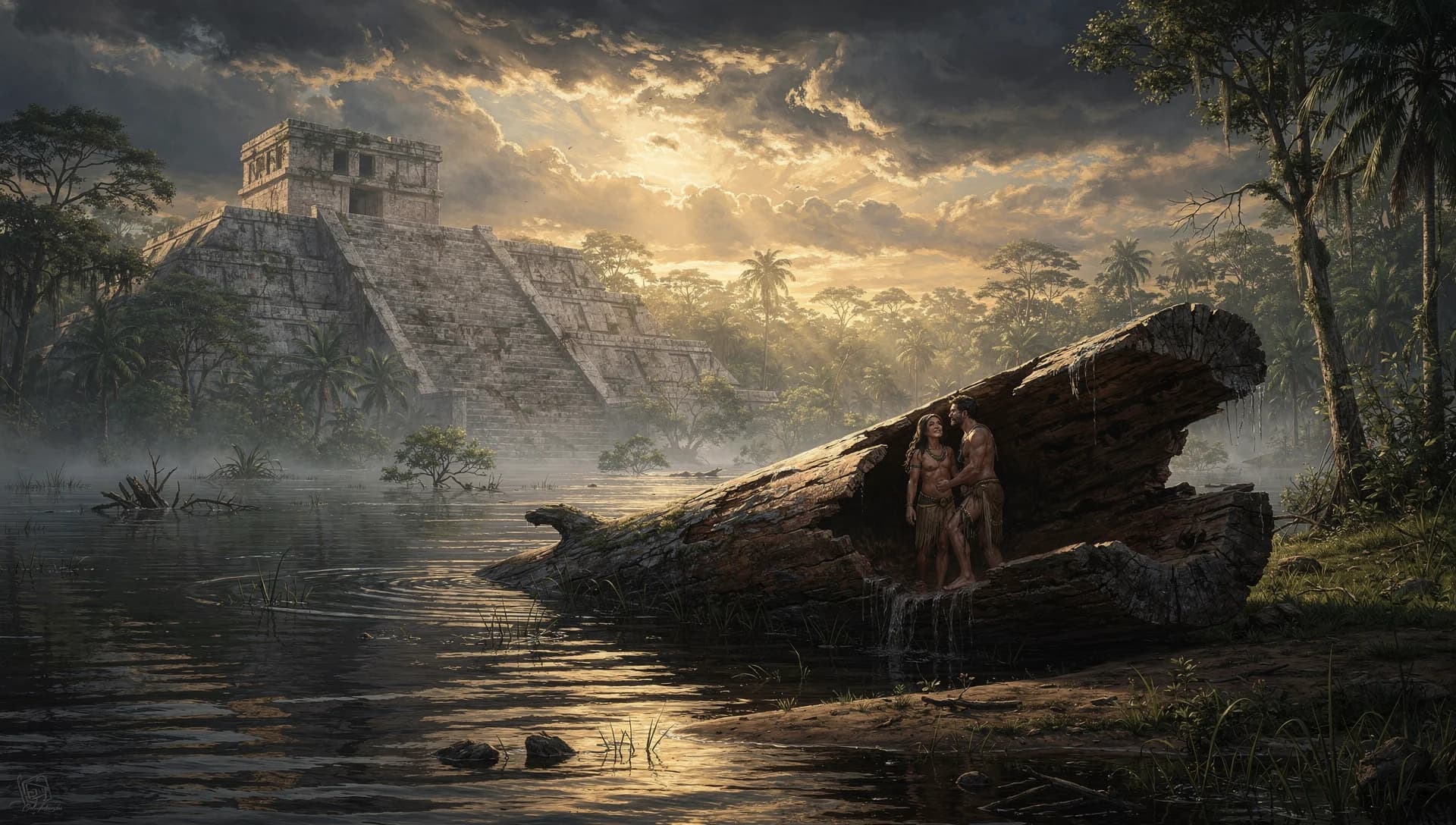
Post-rebellion flood memory = Aztec, Maya, and K'iche' flood cycles (Popol Vuh; the Five Suns)
This article expands on the decoder mapping. For the side-by-side card and quick reference, see the mapping page.
The Specific Mesoamerican Preservation
Mesoamerican religious traditions preserve flood-destruction cycles with unusual structural specificity. The K'iche' Maya Popol Vuh describes an initial creation of humanity from mud (which failed), followed by a creation from wood (which was destroyed by a great flood), followed by the present creation from maize. The Aztec Five Suns cosmology describes four prior world-ages (Suns), each destroyed by its own catastrophe (jaguars, wind, fire, flood), before the present Fifth Sun under which we now live. The catastrophes are itemized: named flood events, named destruction methods, and stated durations.
Mesoamerican flood cosmology is not generic. It is detailed, multiple, and calendrically precise. The Aztec tradition dates the prior Sun ages. The K'iche' tradition names survivors and the re-creations that followed. The traditions preserve memory of not one flood event but a sequence of catastrophes affecting multiple creation cycles.
The Urantia Book documents the historical substrate that Mesoamerican tradition preserves.
What the Urantia Book Says
The Urantia Book records multiple specific catastrophic events affecting the planet in the hundreds of thousands of years before written history began:
First, the Dalamatia submergence. The administrative center of the Caligastia regime was eventually submerged. Paper 78:7.7 refers to "still older vestiges of the days of Dalamatia" existing "under the waters of the Persian Gulf." The Dalamatian civilization ended with the rebellion but the physical site of Dalamatia was subsequently lost to geological subsidence.
Second, the first Eden submergence. Paper 73:7.1 describes the first Garden of Eden as "submerged under the eastern end of the Mediterranean Sea." The event is dated approximately 34,000 to 38,000 years ago, occurring as "a gradual settling, extending over a period of almost two thousand years." This is treated in the companion Eden-Atlantis-Dilmun decoder article.
Third, the Mesopotamian regional floods. Paper 78:7.1-6 describes the repeated regional flooding events in the Tigris-Euphrates valley that became the historical substrate of the Noah narrative (treated in the companion Three Noahs article). These events were locally catastrophic for the second garden civilization but not globally catastrophic.
Fourth, the post-rebellion cultural catastrophes. The rebellion itself, while not producing a specific flood event, produced the cultural-civilizational collapse that subsequently generated the widespread memory of "times before the present age" that had been destroyed by various catastrophes.
The red race migration to North America occurred approximately eighty-five thousand years ago (UB 64:6.5), carrying memory of these Old World catastrophic events into the Americas. The Mesoamerican flood cycle tradition preserves, in its own cosmological framing, the inherited memory of multiple prior-age destructions that the Old World cultural substrate carried.
What the Ancient Sources Say
The principal Mesoamerican flood-cycle sources include:
The Popol Vuh (K'iche' Maya), composed in the mid-sixteenth century CE from earlier oral tradition and recorded in alphabetic K'iche' by Francisco Ximénez around 1700. The standard modern English translation is Dennis Tedlock's Popol Vuh (Simon & Schuster, revised 1996). The text describes the creation sequence: the initial mud-people (insufficient); the wood-people (destroyed by flood); the maize-people (the present humanity). Each prior creation was judged inadequate by the creator gods and destroyed before the present creation was attempted.
The Aztec Five Suns tradition is preserved in multiple Colonial-era sources including the Codex Chimalpopoca, the Leyenda de los Soles, Bernardino de Sahagún's Florentine Codex, and Diego Durán's Historia. The tradition describes five successive cosmic ages:
- Nahui Ocelotl (Four Jaguar): first sun, humanity destroyed by jaguars
- Nahui Ehecatl (Four Wind): second sun, destroyed by wind
- Nahui Quiahuitl (Four Rain): third sun, destroyed by fire/rain of fire
- Nahui Atl (Four Water): fourth sun, destroyed by flood
- Nahui Ollin (Four Movement): fifth sun (the present age), destined to be destroyed by earthquake
The Fourth Sun flood narrative is particularly relevant. Bernardino de Sahagún's Florentine Codex records the Aztec narrative: during the Fourth Sun, a great flood destroyed humanity; only one man and one woman (Tata and Nene) survived by taking refuge in a hollow cypress log; they emerged after the flood to repopulate the earth. The Nahua motif of a surviving couple is distinctive and precise.
Miguel León-Portilla's Aztec Thought and Culture (University of Oklahoma Press, 1963) and Richard F. Townsend's The Aztecs (Thames & Hudson, third edition 2009) document the Five Suns tradition comprehensively. Karl Taube's The Major Gods of Ancient Yucatan (Dumbarton Oaks, 1992) treats the Maya flood material.
Maya astronomical and calendrical texts, particularly the Dresden Codex, preserve specific references to cosmic destruction events including flood imagery. The Dresden Codex's final pages include a dramatic deluge scene depicting the dragon serpent vomiting water. Linda Schele and David Freidel's A Forest of Kings (William Morrow, 1990) treats the Maya flood iconography in its broader cosmological context.
The scholarly question of Mesoamerican flood traditions' specific origins has been treated across substantial comparative literature. James E. Dickinson and Richard Townsend note the structural parallels with Near Eastern flood traditions (Gilgamesh, Noah, Deucalion, Manu) without direct contact between the cultures. The Urantia Book's framework supplies the explanation: the Mesoamerican flood cycles and the Near Eastern flood traditions are both downstream of the same underlying historical catastrophes, carried by separate cultural-transmission pathways from a common pre-migration substrate.
Why This Mapping Matters
The cross-cultural distribution of flood-destruction traditions has been one of the persistent puzzles of comparative mythology. Flood traditions exist across essentially every continent and most major cultural areas, with recurring structural features (world-destroying flood, human survivors, a vessel or refuge, post-flood re-creation) that appear too consistently to be explained as independent parallel developments. Independent emergence of the flood motif is documented in some cases (tropical cultures subject to monsoon flooding develop local flood traditions), but the features the major flood cycles share require a specific historical substrate.
The Urantia Book's framework identifies the substrate. Several catastrophic events affected the planet in the hundreds of thousands of years before literate history began: the Dalamatia submergence, the first Eden submergence, multiple regional flooding events, the post-rebellion cultural collapse. Each event struck particular cultural centers and produced its own memory content. The cultural substrates that emerged in the post-catastrophic environments carried the memory forward in their religious-mythological frameworks.
The Mesoamerican flood cycles preserve multiple catastrophe memory rather than a single-flood memory. This is structurally significant. The Old World flood traditions (Gilgamesh, Noah, Deucalion, Manu) typically preserve a single catastrophic event, consistent with these traditions having selected and simplified the multi-event Urantia historical reality into a single-flood narrative. The Mesoamerican tradition's preservation of multiple prior-age destructions is closer to the actual Urantia historical reality (multiple specific catastrophes across cosmic history) than the Old World simplifications.
The red race's isolation in the Americas (from approximately 80,000 years ago per UB 64:6.5 through approximately 5000 years ago) gave the Mesoamerican substrate real preservation advantages. The culture carried into the Americas the pre-migration memory of multiple catastrophes but was not subsequently subject to the Old World editorial simplifications that compressed the multi-event memory into single-flood narratives. The Popol Vuh's three-creation sequence and the Aztec Five Suns preserve a more structurally elaborate memory because the Mesoamerican substrate did not experience the editorial consolidation that affected Near Eastern flood traditions.
The mapping's significance is that it identifies Mesoamerican flood cycle tradition as an unusually well-preserved memory of multiple historical catastrophes that Old World traditions preserve in more compressed single-event form. The Mesoamerican tradition is not an independent cultural development; it is a continuous preservation of the same historical substrate that Near Eastern traditions also preserve, with the Mesoamerican preservation retaining more structural detail due to the cultural isolation of the post-migration Americas.
Sources
- The Urantia Book, Paper 64 (The Evolutionary Races of Color), Paper 67 (The Planetary Rebellion), Paper 73 (The Garden of Eden), Paper 78 (The Violet Race After the Days of Adam). Urantia Foundation, first printing 1955. Cited passages: 64:6.5, 67:5.4, 73:7.1, 78:7.1-7.
- Popol Vuh: The Definitive Edition of the Mayan Book of the Dawn of Life and the Glories of Gods and Kings. Translated by Dennis Tedlock, revised edition, Simon & Schuster, 1996.
- Sahagún, Bernardino de. Florentine Codex: General History of the Things of New Spain. Translated by Arthur J. O. Anderson and Charles E. Dibble, University of Utah Press, 1950-1982.
- Townsend, Richard F. The Aztecs. Third edition, Thames & Hudson, 2009.
- León-Portilla, Miguel. Aztec Thought and Culture: A Study of the Ancient Nahuatl Mind. University of Oklahoma Press, 1963.
- Schele, Linda and David Freidel. A Forest of Kings: The Untold Story of the Ancient Maya. William Morrow, 1990.
- Taube, Karl. The Major Gods of Ancient Yucatan. Dumbarton Oaks, 1992.
Confidence and Evidence
- Confidence: UB CONFIRMED
- Evidence rating: STRONG
- Basis: The Urantia Book documents multiple specific catastrophic events (Dalamatia submergence, Eden submergence, regional Mesopotamian floods) across Papers 67, 73, 78. The Mesoamerican flood-cycle tradition's preservation of multiple prior-age destructions structurally matches the actual Urantia historical reality more closely than the single-flood Old World traditions. The red race's isolation in the Americas explains the superior structural preservation.
Related Decoder Articles
- Three Noahs, One Story: Composite Biblical Noah
- Garden of Eden = Atlantis / Dilmun, the Sunken Paradise
- The 132 Andite Sailors = Quetzalcoatl
By Derek Samaras
Connecting Articles
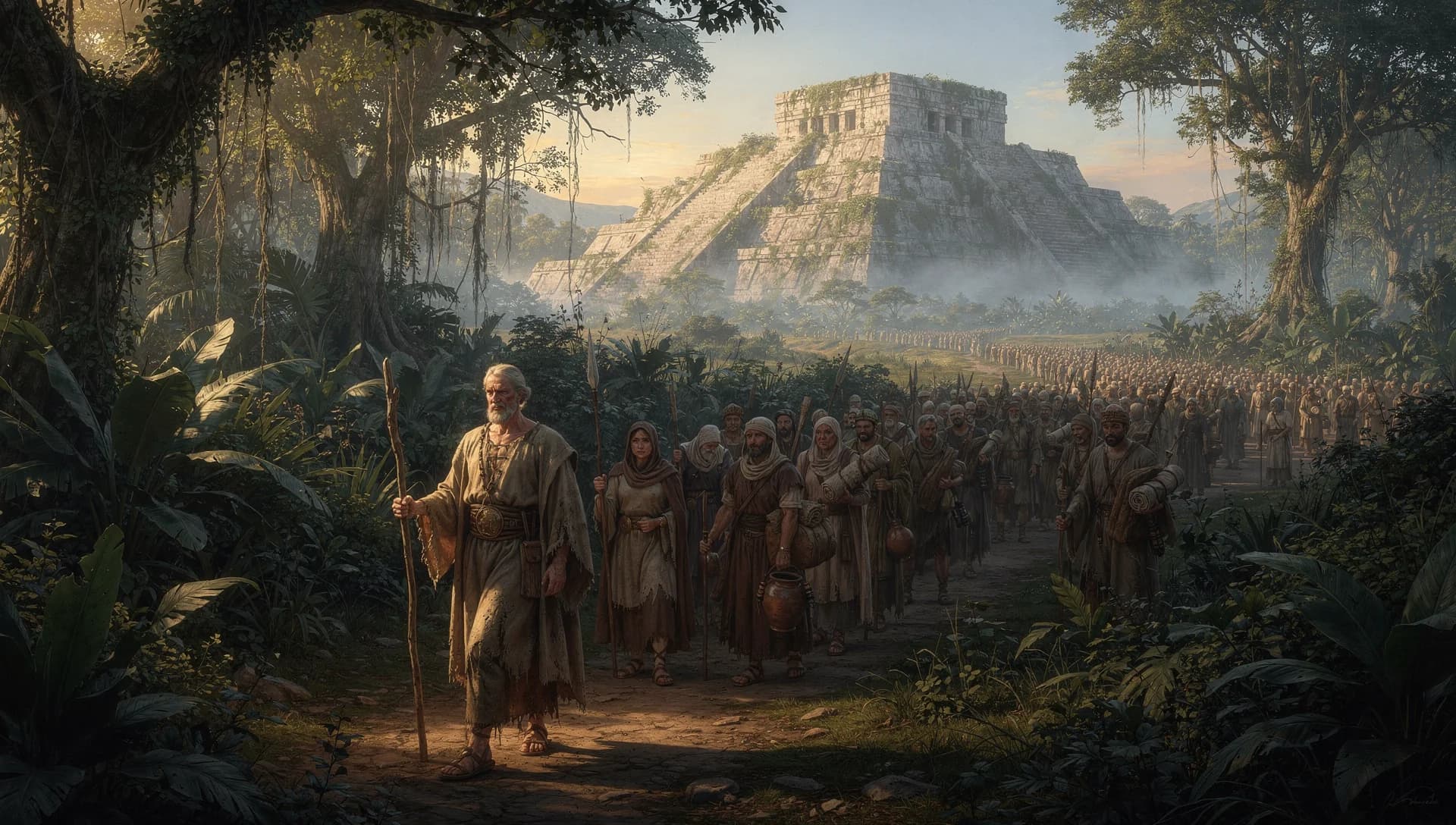
The 132 Sailors and the Feathered Serpent: Was Quetzalcoatl an Andite Memory?
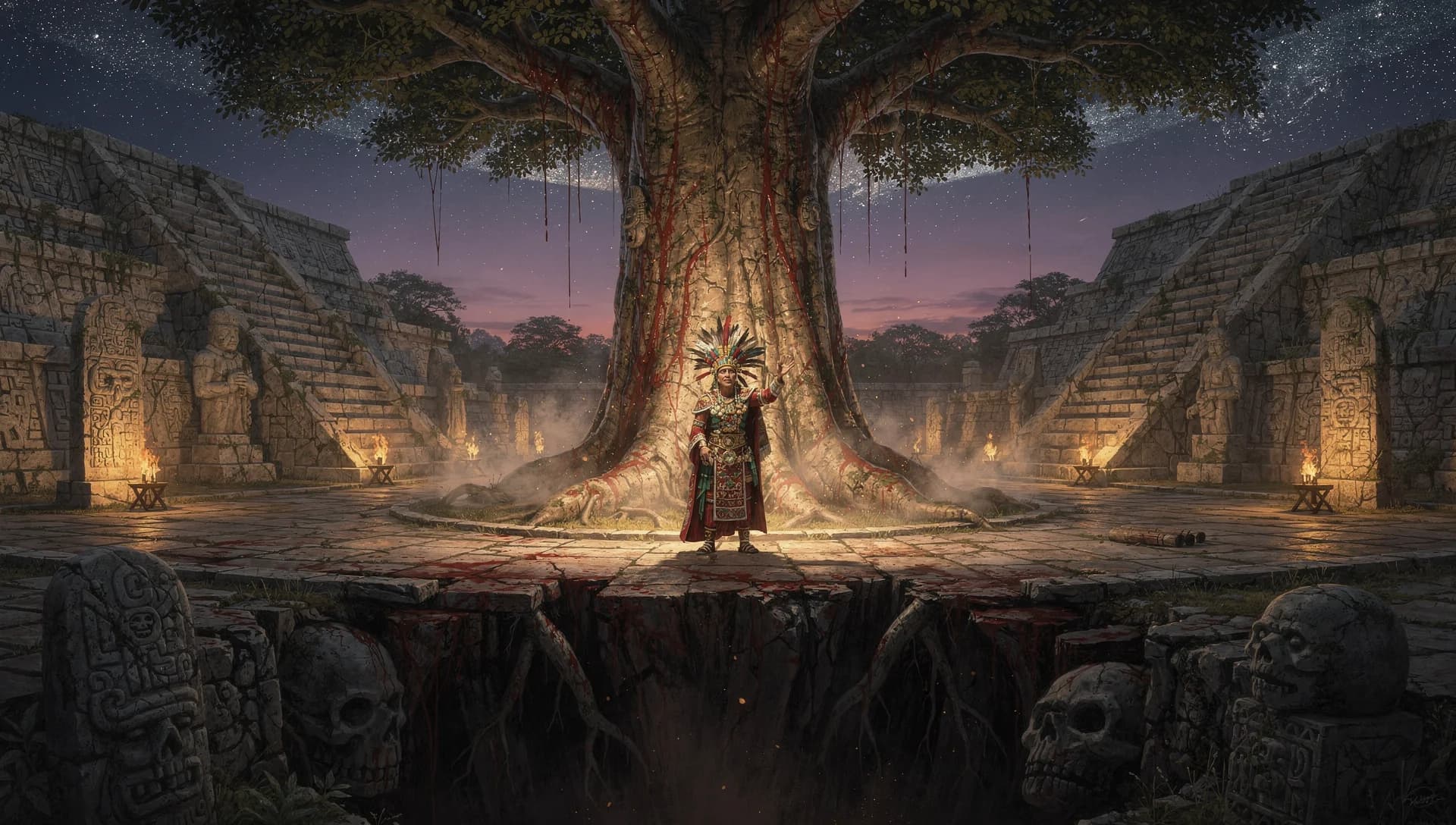
The Tree at the Center of the World: Maya Ceiba Yaxche' and the Tree of Life
Three Hundred Cultures, Many Floods: The Universal Deluge Tradition and the Urantia Record
The Longest Memory: Australian Aboriginal Dreamtime and the Primordial Teaching-Ancestors
The Newsletter
Get the research behind each piece
Free. New Urantia Book explorations, the sources behind the videos, and early looks. No spam, unsubscribe anytime.
Prefer video? Follow on YouTube and Facebook.
Delivered through Substack. You can also read past issues.