
The Paradise That Sank: Eden, Atlantis, and Sumerian Dilmun
Greek, Sumerian, and Hebrew traditions all preserve a memory of a paradise civilization lost beneath the sea. The Urantia Book identifies the specific historical event: the first Garden of Eden was situated on a peninsula projecting westward from the eastern Mediterranean, and it was submerged after the Adamic default by geological subsidence.
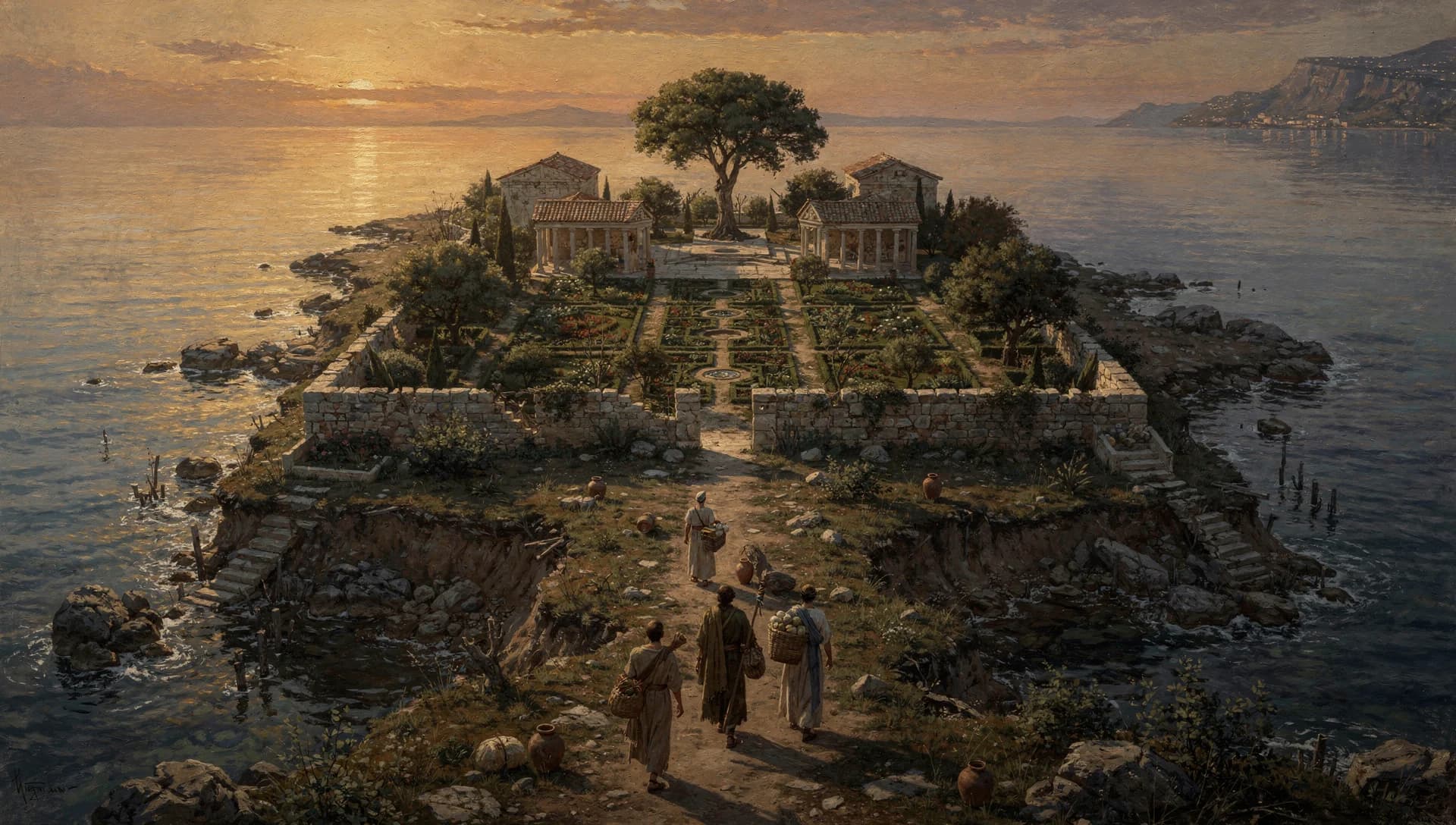
Garden of Eden, peninsula that sank into the eastern Mediterranean = Atlantis / Dilmun, a paradise civilization lost beneath the sea
This article expands on the decoder mapping. For the side-by-side card and quick reference, see the mapping page.
The Distributed Memory of a Specific Event
Three major ancient traditions preserve the memory of a paradise civilization lost beneath the sea. Plato's Timaeus and Critias describe Atlantis as an advanced island civilization that "sank into the depths of the sea" in a single day and night of catastrophic destruction. The Sumerian tradition preserves Dilmun as a paradise land "where sickness and death are unknown," eventually inaccessible to ordinary mortals. The Hebrew Genesis preserves Eden as the paradise from which humanity was expelled, a garden in a definite location that is no longer accessible.
The three traditions are culturally and geographically distant from each other. Plato wrote in fourth-century BCE Athens. The Sumerian Dilmun material is attested from the third and second millennia BCE in Mesopotamia. The Hebrew Eden narrative is compositionally Priestly-source material from the sixth-century BCE exile. Direct cross-cultural borrowing is not a sufficient explanation for the structural convergence.
The Urantia Book identifies the specific historical event all three traditions are preserving.
What the Urantia Book Says
The geographic location of the first Eden is named with specificity:
"The committee on location was absent for almost three years. It reported favorably concerning three possible locations: The first was an island in the Persian Gulf; the second, the river location subsequently occupied as the second garden; the third, a long narrow peninsula—almost an island—projecting westward from the eastern shores of the Mediterranean Sea." (UB 73:3.1)
The submergence is described:
"The peninsula had been overrun by these lower-grade Nodites for almost four thousand years after Adam left the Garden when, in connection with the violent activity of the surrounding volcanoes and the submergence of the Sicilian land bridge to Africa, the eastern floor of the Mediterranean Sea sank, carrying down beneath the waters the whole of the Edenic peninsula. Concomitant with this vast submergence the coast line of the eastern Mediterranean was greatly elevated. And this was the end of the most beautiful natural creation that Urantia has ever harbored. The sinking was not sudden, several hundred years being required completely to submerge the entire peninsula." (UB 73:7.1)
The connection to the Dilmun tradition is made explicitly in the broader UB treatment:
"But still older vestiges of the days of Dalamatia exist under the waters of the Persian Gulf, and the first Eden lies submerged under the eastern end of the Mediterranean Sea." (UB 78:7.7)
The Atlantis connection is not made as directly in the Urantia Book's primary text, but the structural features of Plato's description (advanced civilization, island/peninsular geography, sudden destruction by water) closely match the Urantia account of the first Eden. The transmission route from the first Eden's historical memory through Andite migrations into the Aegean and eventually into Greek literary tradition supplies the plausible historical mechanism by which an actual Urantia event could become the Platonic Atlantis narrative.
What the Ancient Sources Say
Plato's Atlantis
Plato's Timaeus 20d-26e and Critias 108e-121c provide the classical Atlantis account. The framework: Critias reports that his grandfather had received the Atlantis story from Solon, who had received it from Egyptian priests at Sais. The Egyptian priests claimed that nine thousand years before Solon's time (c. 9600 BCE), a great island civilization beyond the Pillars of Hercules had been destroyed in a single day and night of earthquake and flood.
The Atlantis description in Critias is detailed: a concentric-ring city, advanced technology, a maritime empire, eventual moral degeneration leading to divine judgment. The destruction was catastrophic and total; the island sank beneath the sea and became impassable sludge.
Modern scholarly treatments of the Atlantis tradition include A. E. Taylor's classic Plato: Timaeus and Critias (Methuen, 1929), Pierre Vidal-Naquet's The Atlantis Story: A Short History of Plato's Myth (University of Exeter Press, 2007), and Kathryn Morgan's Myth and Philosophy from the Presocratics to Plato (Cambridge University Press, 2000). The scholarly consensus treats the Atlantis narrative as a philosophical allegory rather than a historical record, but the source chain (Egyptian priests → Solon → Plato) and the details of the destruction narrative are too particular to be purely invented.
Sumerian Dilmun
The Dilmun tradition appears in multiple Sumerian compositions. The myth "Enki and Ninhursag" (ETCSL 1.1.1) describes Dilmun as a pure, pristine land where "the lion does not kill, the wolf does not seize the lamb," and sickness and death are unknown. The Sumerian King List locates early pre-diluvian kings in Dilmun. The flood story protagonist Ziusudra is granted eternal life and translated to Dilmun.
The geographical location of Dilmun has been extensively researched. Archaeological evidence identifies Dilmun with the Bahrain archipelago and adjacent Persian Gulf coast, with active trading relations with Sumer attested from the third millennium BCE. Harriet Crawford's Dilmun and Its Gulf Neighbours (Cambridge University Press, 1998) provides the archaeological treatment.
Two Dilmuns are attested in the tradition. The historical Dilmun (Bahrain) was a real trading partner of Sumer. The mythological Dilmun (the paradise where no death comes) was conflated with the historical Dilmun over time. The Urantia Book's reference to "vestiges of the days of Dalamatia exist under the waters of the Persian Gulf" (78:7.7) places the mythological Dilmun in a geographic relationship to the historical Dalamatian civilization, suggesting that the Dilmun paradise tradition preserves a memory of Dalamatian rather than Edenic material.
Hebrew Eden
The Genesis 2-3 Eden account is composite. The Priestly-source and Yahwist material combined preserve a tradition of a paradise garden with four rivers, a tree of life, a tree of knowledge of good and evil, and a geographic orientation "eastward." The four rivers (Pishon, Gihon, Tigris, Euphrates) have been the subject of extensive geographical reconstruction; two are identifiable (Tigris and Euphrates), two are contested.
The Genesis Eden is not explicitly submerged; the narrative ends with expulsion rather than destruction. But the tradition of a paradise no longer accessible to ordinary humans is preserved, and later Jewish and Christian interpretation progressively located Eden in unreachable geographic positions. The Urantia Book's placement of the first Eden as a westward-projecting Mediterranean peninsula that subsequently submerged explains why the Hebrew tradition preserves the inaccessibility but not the submergence event.
Why This Mapping Matters
The three ancient traditions of a lost paradise civilization share structural features that are not generic mythological universals. Most world traditions do not have a sunken-paradise motif. The Egyptian, Chinese, Indian, and Norse traditions do not preserve this structure. The sunken-paradise motif appears specifically in the Mediterranean-Near Eastern cultural zone, in three closely adjacent traditions, with sufficient structural overlap to suggest a common source.
The Urantia Book supplies the historical substrate. A real peninsula projecting westward from the eastern Mediterranean, hosting an advanced civilization (the first Eden), submerging gradually over approximately two thousand years beginning around 38,000 BCE. The event occurred within the geographic and chronological range where later Greek, Sumerian, and Hebrew cultures would inherit fragments of the memory.
The transmission routes are plausible. The first Eden's survivors migrated eastward to establish the second garden in Mesopotamia (UB 76:1.1-3). From there, memory of the first Eden would have propagated through the subsequent Nodite-Adamite cultural streams, eventually reaching the Aegean (where it would become Atlantis) and persisting in the Mesopotamian-Sumerian substrate (where it would become Dilmun) and in the Hebrew patriarchal tradition (where it would become Eden). The three downstream traditions preserve different features of the original event: Atlantis preserves the submergence and advanced-civilization features, Dilmun preserves the paradise without death, Eden preserves the sacred garden with its tree of life.
The mapping does not require that every detail of Atlantis, Dilmun, or Eden be historically accurate. Each tradition added its own elaboration. What the mapping requires is that the common structural core (an advanced garden civilization lost to the sea, located in a geographic relationship to the later cultures) be the preserved memory of a specific historical event. The Urantia account identifies that event.
Sources
- The Urantia Book, Paper 73 (The Garden of Eden), Paper 78 (The Violet Race After the Days of Adam). Urantia Foundation, first printing 1955. Cited passages: 73:3.1, 73:7.1, 76:1.1-3, 78:7.7.
- Plato. Timaeus and Critias. Translated by Desmond Lee, Penguin Classics, 1965; revised 1977.
- Taylor, A. E. A Commentary on Plato's Timaeus. Clarendon Press, 1928.
- Vidal-Naquet, Pierre. The Atlantis Story: A Short History of Plato's Myth. Translated by Janet Lloyd, University of Exeter Press, 2007.
- Crawford, Harriet. Dilmun and Its Gulf Neighbours. Cambridge University Press, 1998.
- ETCSL (Electronic Text Corpus of Sumerian Literature), Oxford. Text 1.1.1, Enki and Ninhursag.
- Alster, Bendt. "Dilmun, Bahrain, and the Alleged Paradise in Sumerian Myth and Literature," in Dilmun: New Studies in the Archaeology and Early History of Bahrain, Reimer, 1983.
- Speiser, E. A. Genesis. Anchor Yale Bible, Doubleday, 1964.
Confidence and Evidence
- Confidence: UB CONFIRMED
- Evidence rating: MODERATE to STRONG
- Basis: The Urantia Book names the first Eden's submergence under the eastern Mediterranean directly in Paper 73:7.1 and 78:7.7. The three downstream traditions (Atlantis, Dilmun, Eden) share structural features (advanced garden civilization, loss via water-related destruction or inaccessibility) that are not generic mythological universals. The plausible transmission routes from the first Eden's Andite-migration survivors to each downstream tradition are documented in the Urantia geographic framework.
Related Decoder Articles
- Tree of Life, Sacred Shrub = Huluppu Tree
- Andite Traditions of Eden = Chinese Kunlun Mythology
- Three Noahs, One Story: Composite Biblical Noah
By Derek Samaras
Connecting Articles
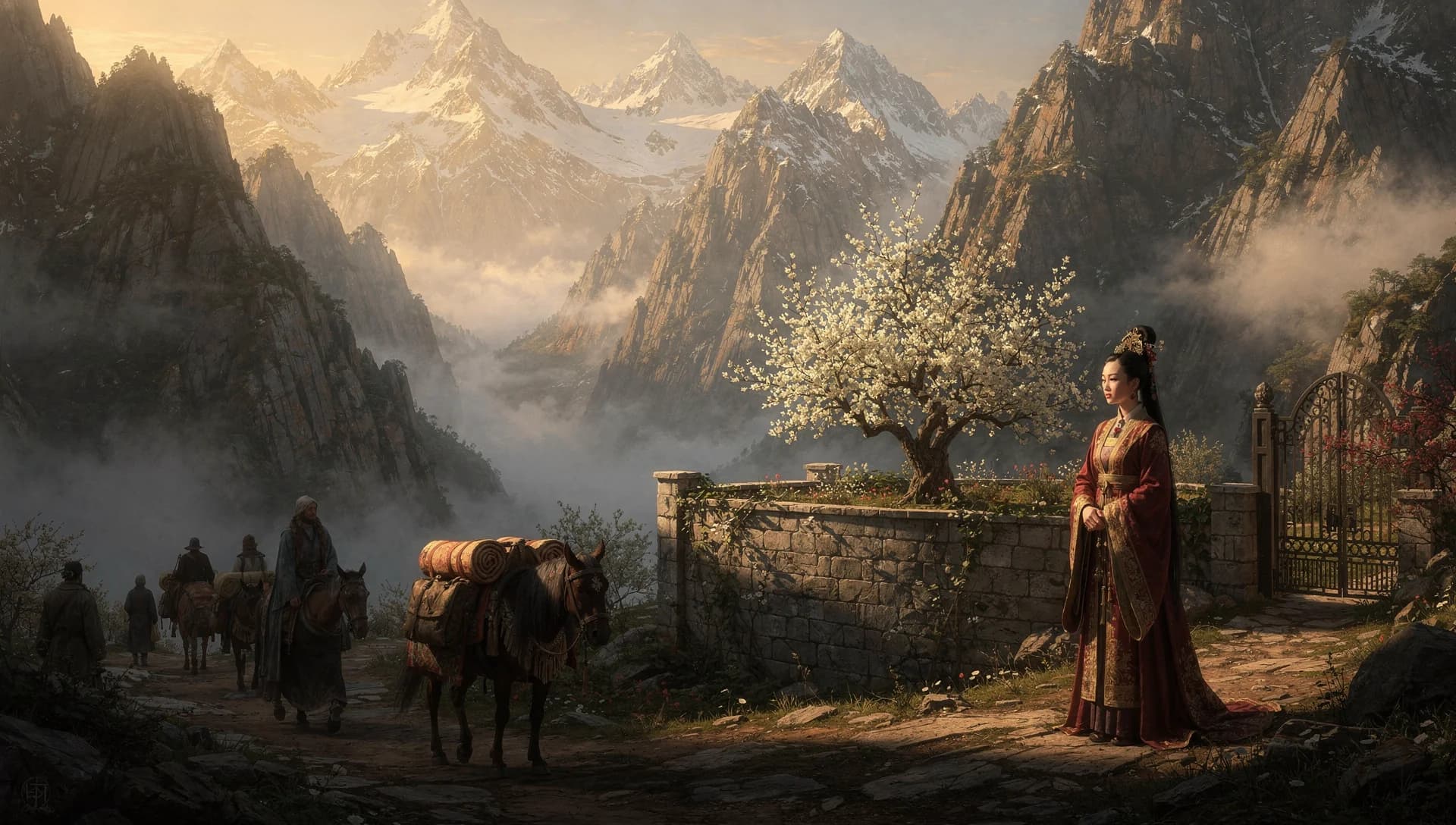
The Paradise in the West: Chinese Kunlun Mythology and the Andite Memory of Eden
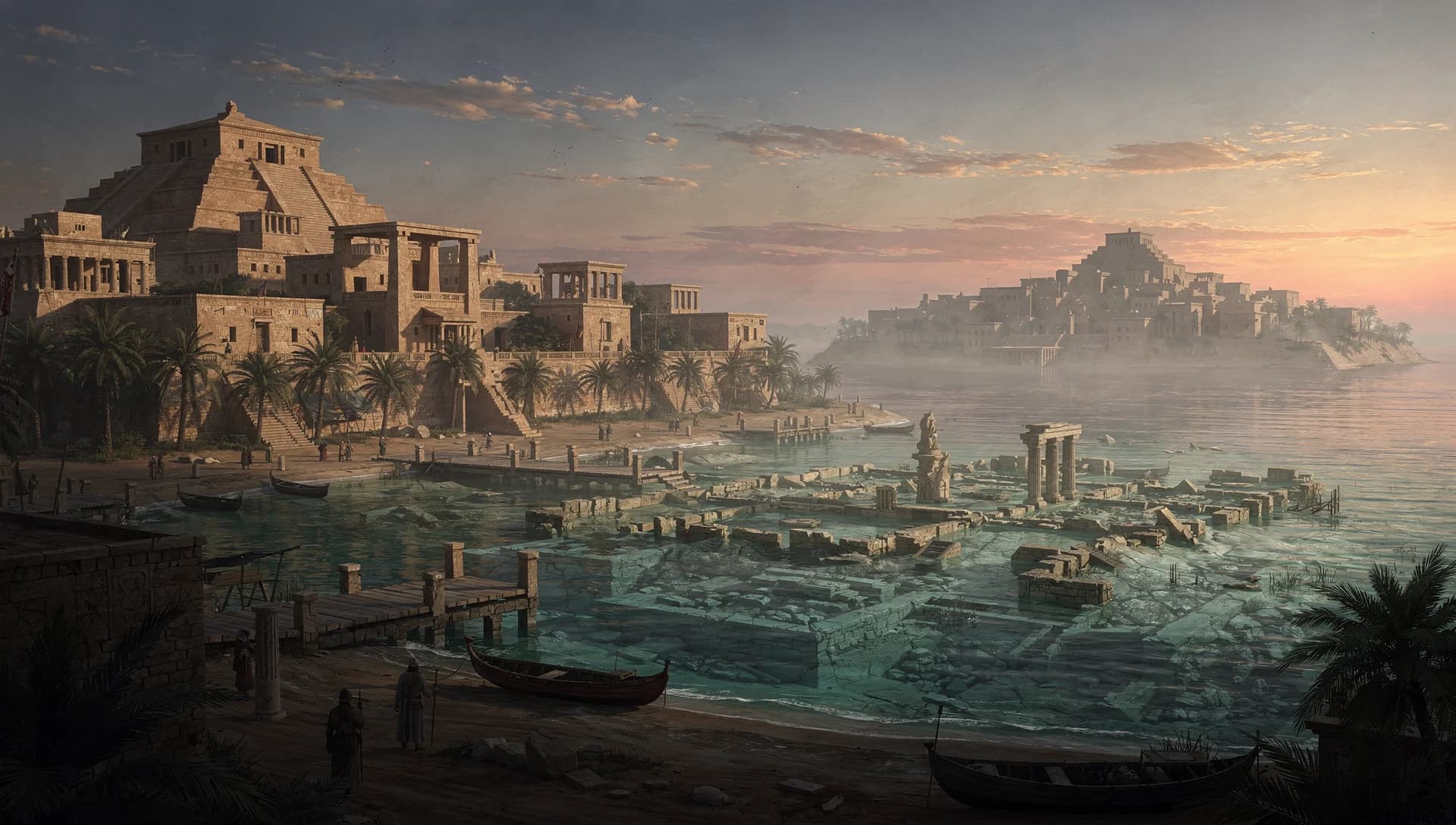
Two Dilmuns, Not One: Bahrain, the Nodite Headquarters, and the Confused Sumerian Paradise
A Tree Delivered to a Garden: The Tree of Life and the Sumerian Huluppu
The Longest Memory: Australian Aboriginal Dreamtime and the Primordial Teaching-Ancestors
The Newsletter
Get the research behind each piece
Free. New Urantia Book explorations, the sources behind the videos, and early looks. No spam, unsubscribe anytime.
Prefer video? Follow on YouTube and Facebook.
Delivered through Substack. You can also read past issues.