
The Tree at the Center of the World: Maya Ceiba Yaxche' and the Tree of Life
Maya cosmology is organized around the Ceiba Yaxche', the sacred tree at the center of the world. Its roots descend through Xibalba, its trunk stands among the living, and its crown reaches into the heavens. The Urantia Book records a universal cult of the Tree of Life, traced back to an actual tree at Dalamatia and carried across the Americas as the Maya world tree.
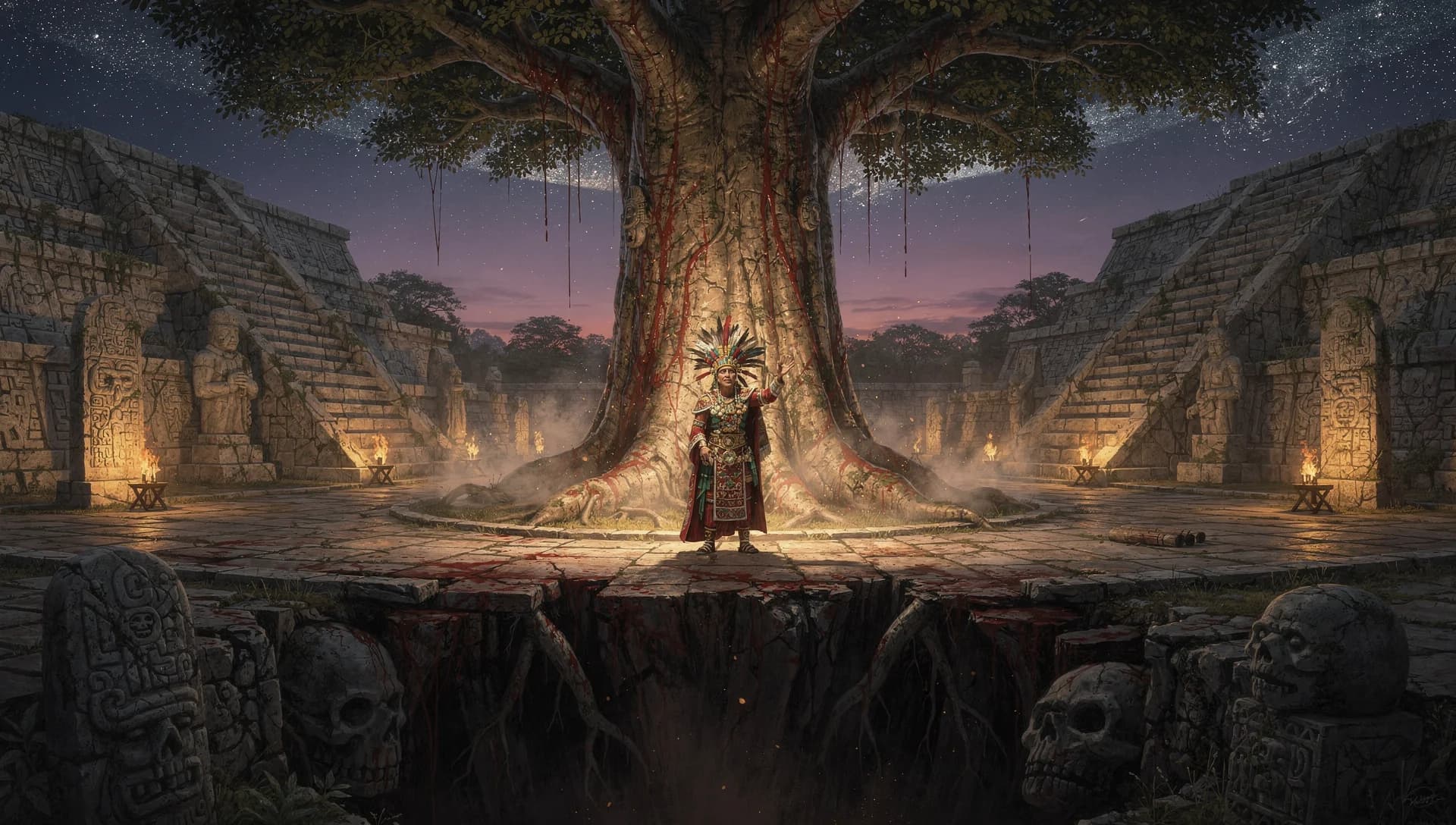
Sacred tree at the center of the world = The Maya Ceiba Yaxche', the World Tree at the center of the cosmos
This article expands on the decoder mapping. For the side-by-side card and quick reference, see the mapping page.
The American Preservation of the Cosmic Tree
Maya cosmology preserves, with unusual richness and detail, the image of a sacred tree at the center of the world. The Ceiba Yaxche' (in K'iche' Maya, "first tree" or "green tree") stands at the center of the Maya cosmos. Its roots reach into Xibalba, the underworld. Its trunk occupies the middle world of ordinary human experience. Its branches extend into the thirteen heavens. In Classic Maya royal art, the king is shown at the base of the world tree, with his authority drawn from his place along the cosmic axis.
What the Maya tradition preserves is concrete and consistent. The tree stands at the center of the world. It links three realms: underworld, earth, and heavens. The species is named, the ceiba. The tree bleeds and drips sacred fluids. The king is tied to it as the source of his legitimacy. And it appears at key creation moments in the Popol Vuh and at calendar transitions.
The Urantia Book identifies the historical substrate.
What the Urantia Book Says
The statement on the universal tree cult is direct:
"Except in China, there once existed a universal cult of the tree of life." (UB 85:2.4)
Behind that universal cult, according to the Urantia Book, stood an actual physical Tree of Life. Paper 66 places it at the architectural center of the Dalamatian administrative complex:
"These antidotal complements of the Satania life currents were derived from the fruit of the tree of life, a shrub of Edentia which was sent to Urantia by the Most Highs of Norlatiadek at the time of Caligastia's arrival. In the days of Dalamatia this tree grew in the central courtyard of the temple of the unseen Father, and it was the fruit of the tree of life that enabled the material and otherwise mortal beings of the Prince's staff to live on indefinitely as long as they had access to it." (UB 66:4.13)
The Urantia Book is also emphatic that the tree was real, not metaphor:
"The 'tree of the knowledge of good and evil' may be a figure of speech, a symbolic designation covering a multitude of human experiences, but the 'tree of life' was not a myth; it was real and for a long time was present on Urantia." (UB 73:6.3)
Of the red race the book says: "About eighty-five thousand years ago the comparatively pure remnants of the red race went en masse across to North America, and shortly thereafter the Bering land isthmus sank, thus isolating them" (UB 64:6.5). The book says they brought their Dalamatian inheritance with them: "When the red man crossed over into America, he brought along much of the teachings and traditions of his early origin. His immediate ancestors had been in touch with the later activities of the world headquarters of the Planetary Prince" (UB 64:6.6). It adds: "Of all who received the teachings of the one hundred, the red men held them longest" (UB 92:4.5). That the tree of life was among what they carried is our reading; the book names no tree in either passage. Over millennia of independent development in Mesoamerica, in our reading, that memory crystallized into the Ceiba Yaxche' tradition. The features the Maya tradition holds onto, central position, three realms stacked along a vertical axis, royal authority anchored in the tree, are in our reading local elaborations of a shared inheritance.
The book is specific about who founded the civilizations of Mexico and Central America. The red tribes did not cross alone:
"These tribes were accompanied by three small groups of mixed ancestry, the largest of these being a combination of the orange and blue races. These three groups never fully fraternized with the red man and early journeyed southward to Mexico and Central America, where they were later joined by a small group of mixed yellows and reds. These peoples all intermarried and founded a new and amalgamated race, one which was much less warlike than the pure-line red men. Within five thousand years this amalgamated race broke up into three groups, establishing the civilizations respectively of Mexico, Central America, and South America. The South American offshoot did receive a faint touch of the blood of Adam." (UB 64:7.5)
"In Mexico, Central America, and in the mountains of South America the later and more enduring civilizations were founded by a race predominantly red but containing a considerable admixture of the yellow, orange, and blue." (UB 79:5.8)
So the Maya world belongs, on the book's account, to that amalgamated race, and all of its strands left Asia with the red men. Of the orange race the book says: "The outstanding characteristic of this race was their peculiar urge to build, to build anything and everything, even to the piling up of vast mounds of stone just to see which tribe could build the largest mound" (UB 64:6.10). The book never connects that trait to the pyramids and stone platforms of Mesoamerica; the connection is ours. The book puts no violet or Andite blood in Mexico or Central America. Its only traces of Adam's line in the Americas are in the south: "a faint touch of the blood of Adam" in the South American offshoot (UB 64:7.5) and "traces of Andite blood" in Peru (UB 79:5.9).
A second contact is sometimes proposed: the 132 Andite sailors (treated in the companion article on the 132 Andites and Quetzalcoatl). The book tells of them in one paragraph:
"One hundred and thirty-two of this race, embarking in a fleet of small boats from Japan, eventually reached South America and by intermarriage with the natives of the Andes established the ancestry of the later rulers of the Incas." (UB 78:5.7)
It gives them no date and says nothing of what they taught (UB 78:5.7, 79:5.9). It places them in the Andes, not among the Maya, and it says of the Western Hemisphere: "These civilizations were evolutionary products of the Sangiks, notwithstanding that traces of Andite blood reached Peru. Excepting the Eskimos in North America and a few Polynesian Andites in South America, the peoples of the Western Hemisphere had no contact with the rest of the world until the end of the first millennium after Christ" (UB 79:5.9). That the 132 reinforced the Maya tree tradition would be our reading, and the book's own words count against it. The relative completeness of the Maya tree-of-life imagery is better read, on the book's account, as the memory the red, yellow, orange and blue founders brought with them from Asia.
The Pacific evidence does not yet show the voyage either. The contact between Polynesia and the Americas that genetics has dated falls at about AD 1200 and runs the other way, from the Americas into Polynesia (Ioannidis et al. 2020, Nature; Moreno-Mayar et al. 2024, Nature). These findings do not show a voyage from Japan across the whole Pacific, which is the voyage the book describes.
What the Ancient Sources Say
The Maya world tree shows up across the full sweep of Maya religious and artistic life. Classic Period iconography (250 to 900 CE) returns to it again and again in royal and ritual contexts. The Sarcophagus Lid from Palenque (late seventh century CE, the tomb of K'inich Janaab' Pakal) shows the ruler falling into Xibalba along the base of the world tree, with the cosmic tree visually structuring the entire composition. Linda Schele and David Freidel's A Forest of Kings (William Morrow, 1990) and Maya Cosmos (William Morrow, 1993, with Joy Parker) document the Classic Period tradition in depth.
Post-Classic and Colonial sources keep the tradition alive. The Popol Vuh frames its cosmology around the world tree at key creation moments. The Chilam Balam books (Yucatec Maya colonial manuscripts) describe the tree's role in cosmic renewal at calendar transitions. The closing sections of the Madrid Codex set world-tree imagery in calendrical and cosmological scenes.
A few features stand out across all of these sources.
First, the species. Maya tradition names the tree as a ceiba (Ceiba pentandra), the large tropical American tree that produces kapok fiber. This is not a generic sacred tree. The iconography renders the ceiba's distinctive trunk spikes and wide-spreading crown.
Second, the three realms. The roots in Xibalba, the trunk in the middle world, and the crown in the heavens organize the entire Maya cosmos. The thirteen heavens above and the nine underworld levels below run along the tree's vertical axis.
Third, the blood and water. Maya art shows the world tree producing vital fluids (blood, water, sap) that sustain the cosmic order. The motif is preserved from Classic Period royal art through Colonial-era sources.
Fourth, the king at the base. Classic kings are shown standing at the base of the world tree in scenes that assert their cosmic and religious authority. The king's legitimacy comes from his place along the cosmic axis the tree marks.
Karl Taube's The Major Gods of Ancient Yucatan (Dumbarton Oaks, 1992) and Olmec Art at Dumbarton Oaks (Dumbarton Oaks, 2004) document the iconographic tradition. Mary Miller and Simon Martin's Courtly Art of the Ancient Maya (Thames and Hudson, 2004) treats the royal dimension.
The comparative question, how the Maya world tree relates to Old World traditions, has been raised many times. The structural parallels with the Norse Yggdrasil, the Hindu Aśvattha, the Sumerian Huluppu, and the Hebrew Tree of Life are detailed and consistent: three realms, a cosmic center, a tie to royal authority. Independent invention struggles to account for them. The Urantia Book's framework offers a common substrate (the actual Dalamatian Tree of Life, preserved across world cultures) without requiring direct contact between the Maya and Old World civilizations.
Why This Mapping Matters
The Maya world tree is one of the most fully developed preservations of the motif anywhere in the world. Cosmic axis, three realms, royal anchor, blood and water: these features combine into a complete world-tree theology that rivals the Norse Yggdrasil tradition for richness.
The Urantia Book never names the Maya. It says: "Except in China, there once existed a universal cult of the tree of life" (UB 85:2.4). Placing the Maya version inside that universal memory of the Dalamatian Tree of Life is our reading: a regional preservation of a real historical reality, carried across by the red race migration and the mixed peoples who came with it (64:7.5, 79:5.8).
For Maya studies, the consequence is this. The world-tree iconography reads not primarily as a Mesoamerican innovation but as a particularly well preserved local expression of a shared inheritance. The Ceiba Yaxche' is the Maya name for what the Norse called Yggdrasil, what the Hindus called Aśvattha, what the Sumerians called Huluppu, and what the Urantia revelation identifies as the Edentia shrub at the center of the Father's temple in Dalamatia.
The motif of the king at the base lines up with the Urantia framework in an interesting way. In the Dalamatian administrative structure, the corporeal staff worked at the central temple complex where the tree of life grew. Their authority was not really civil or political; it was anchored in the tree, which conferred biological longevity and spiritual standing. The Maya scenes of the king at the base of the world tree preserve the structural memory of that arrangement, reframed in Classic Period royal terms.
The blood and water imagery carries its own resonance. The Tree of Life, as the Urantia Book describes it, gave off life-extending substance: its fruit and leaves conferred biological longevity. The Maya motif of a tree that bleeds and drips vital fluids preserves the memory of the tree as a real source of biological substance, not just a symbolic object. The artistic rendering, a tree producing fluids that sustain life, fits the biological function the Urantia Book attributes to the historical Tree of Life. That reading is ours, and the book's own words on blood in the Americas point elsewhere: "The later American Indians had a civilization emerging from cannibalism and, therefore, steeped in human sacrifice, especially in Central and South America" (UB 89:6.2). The blood in Maya royal art may owe more to that sacrificial world than to the memory of a tree.
Sources
- The Urantia Book, Paper 66 (The Planetary Prince's Staff), Paper 73 (The Garden of Eden), Paper 85 (The Origins of Worship). Urantia Foundation, first printing 1955. Cited passages: 64:6.5, 64:6.6, 64:6.10, 64:7.5, 66:4.13, 73:6.1, 73:6.3-7, 78:5.7, 79:5.8, 79:5.9, 85:2.4, 89:6.2, 92:4.5.
- Ioannidis, A. G. et al. 2020. Native American gene flow into Polynesia predating Easter Island settlement. Nature 583:572.
- Moreno-Mayar, J. V. et al. 2024. Ancient Rapanui genomes reveal resilience and pre-European contact with the Americas. Nature 633:389.
- Schele, Linda and David Freidel. A Forest of Kings: The Untold Story of the Ancient Maya. William Morrow, 1990.
- Schele, Linda, David Freidel, and Joy Parker. Maya Cosmos: Three Thousand Years on the Shaman's Path. William Morrow, 1993.
- Taube, Karl. The Major Gods of Ancient Yucatan. Dumbarton Oaks, 1992.
- Miller, Mary and Simon Martin. Courtly Art of the Ancient Maya. Thames & Hudson, 2004.
- Popol Vuh. Translated by Dennis Tedlock, revised edition, Simon & Schuster, 1996.
- Coe, Michael D. The Maya. Ninth edition, Thames & Hudson, 2015.
- Christenson, Allen J. Popol Vuh: The Sacred Book of the Maya. University of Oklahoma Press, 2007.
Confidence and Evidence
- Confidence: INFORMED SPECULATION
- Evidence rating: STRONG
- Basis: The Urantia Book names the universal tree-of-life cult directly in Paper 85:2 and documents the actual historical Tree of Life at Dalamatia. The Maya Ceiba Yaxche' tradition preserves the core features (cosmic axis, three realms, royal anchor, blood and water imagery) that in our reading fit the shared substrate. The red race migration and the amalgamated red, yellow, orange and blue race that founded the civilizations of Mexico and Central America (64:6.5, 64:7.5, 79:5.8) supply the transmission pathway in our reading. A later Andite contact does not: the book places the only Andite trace in Peru and gives the Western Hemisphere no other contact (79:5.9).
Related Decoder Articles
- Tree of Life = Norse Yggdrasil
- Tree of Life, Sacred Shrub = Huluppu Tree
- Druid Oak and Sacred Groves = Universal Tree Cult
Byline: Derek Samaras | Urantia Book Network | April 2026
Connecting Articles
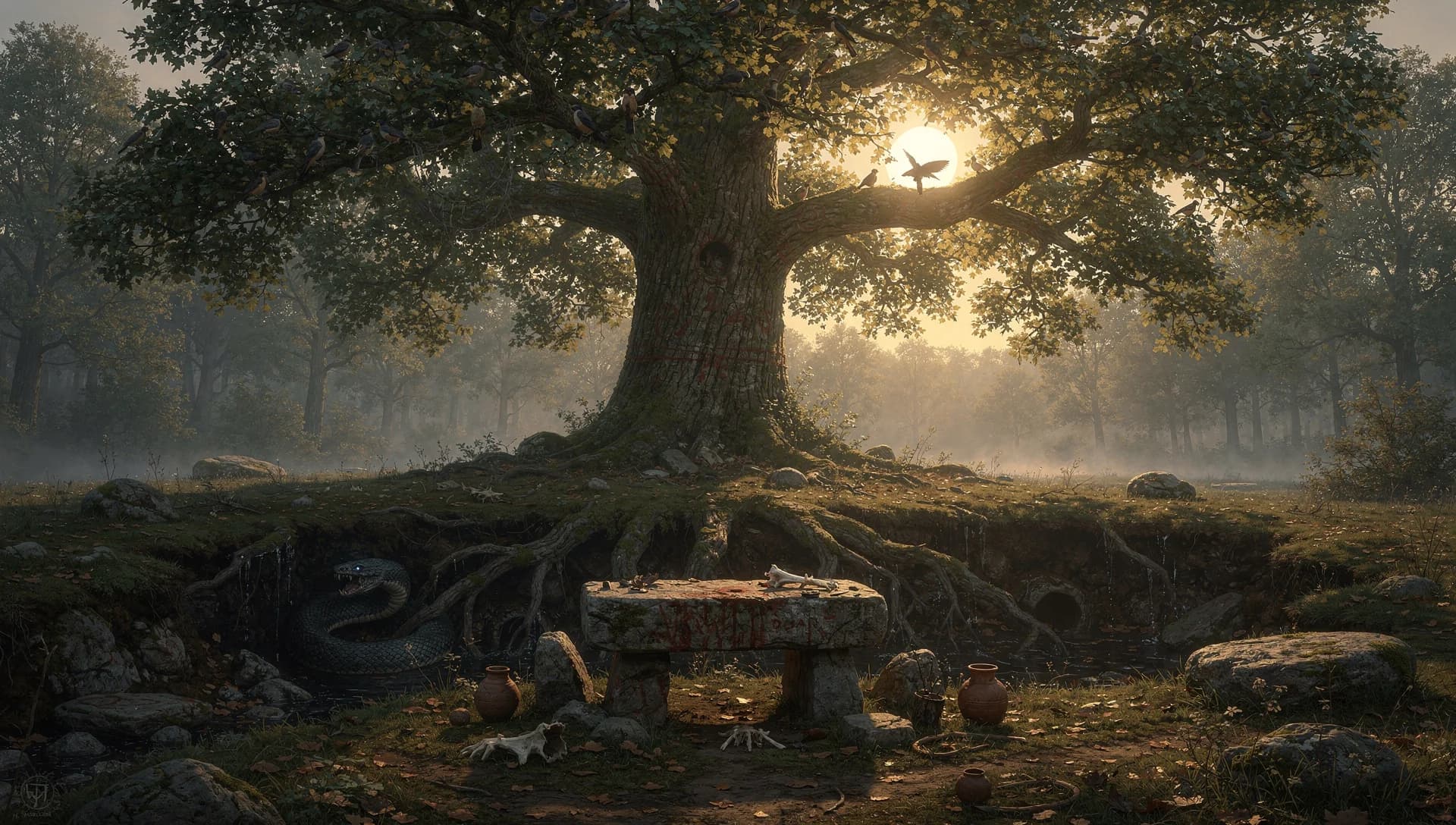
The Oak at the Center of the World: The Slavic Dub and the Universal Tree Cult
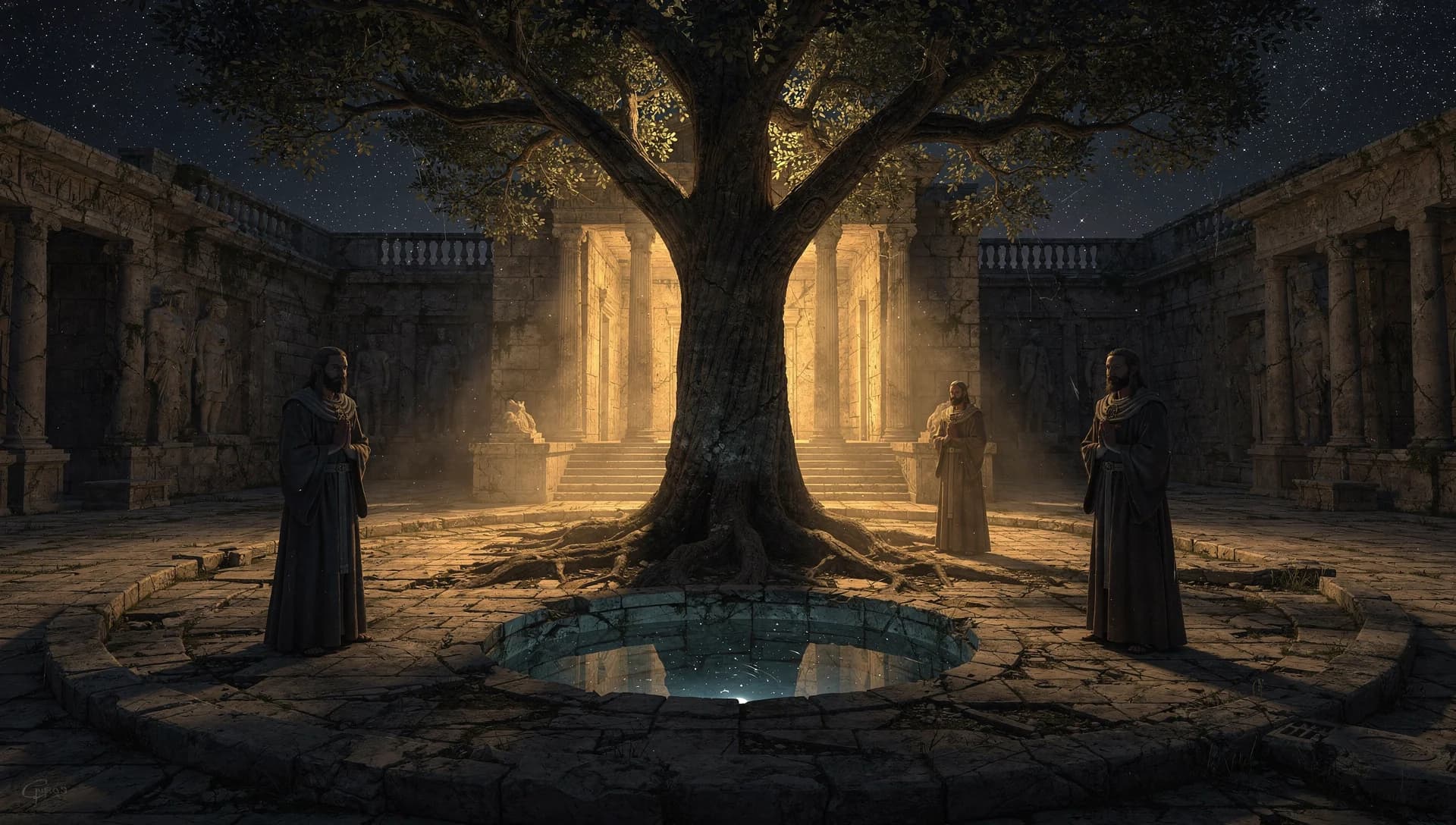
The Cosmic Tree: The Tree of Life and Norse Yggdrasil
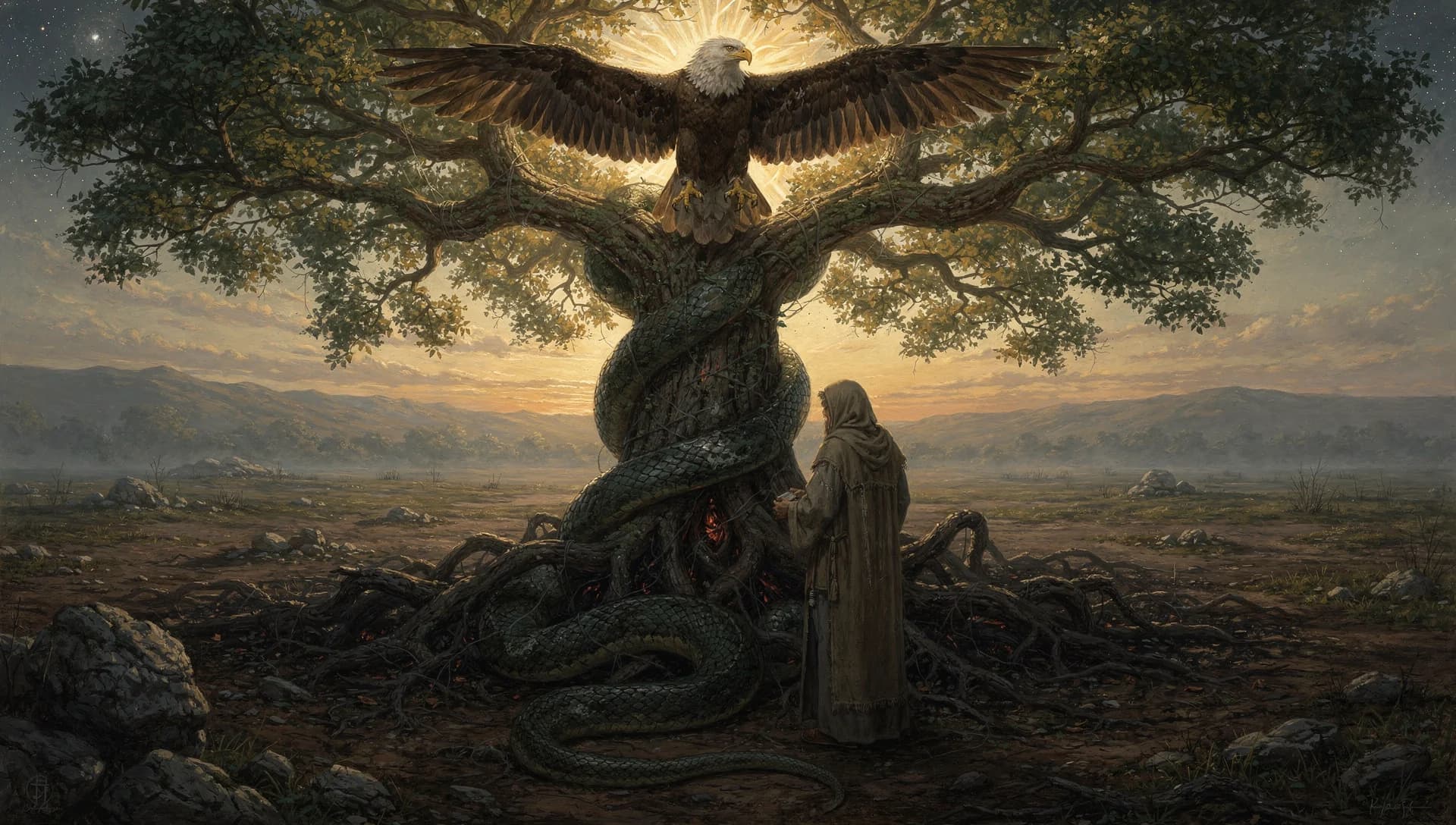
Bird in Crown, Serpent at Root: The Universal Tree of Life Cult Across World Cultures
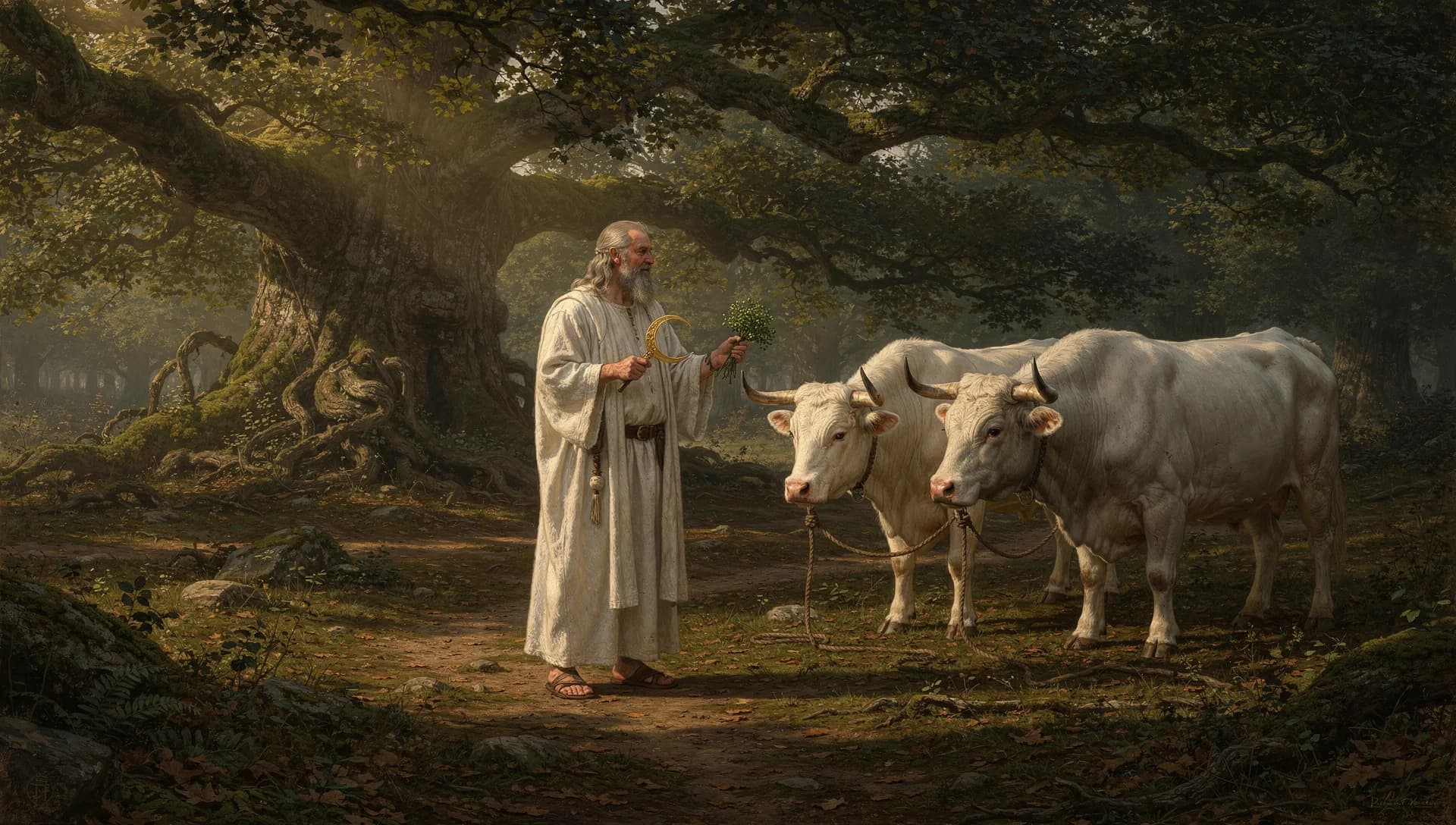
The Oak Priests: Druids, Sacred Groves, and the Universal Tree Cult
The Newsletter
Get the research behind each piece
Free. New Urantia Book explorations, the sources behind the videos, and early looks. No spam, unsubscribe anytime.
Prefer video? Follow on YouTube and Facebook.
Delivered through Substack. You can also read past issues.