
The Eternal Smith: Ilmarinen, the Kalevala, and the Craftsman-Sage Pattern of the Prince's Staff
The Finnish Kalevala remembers Ilmarinen the eternal smith, who forges the sky and the magical Sampo, alongside Väinämöinen the wise singer. Together they make civilized life possible. The Urantia Book describes the Planetary Prince's staff as ten councils that did the same work, with craft teachers and wisdom teachers paired in a single mission. The Ilmarinen and Väinämöinen pair carries the older memory forward.
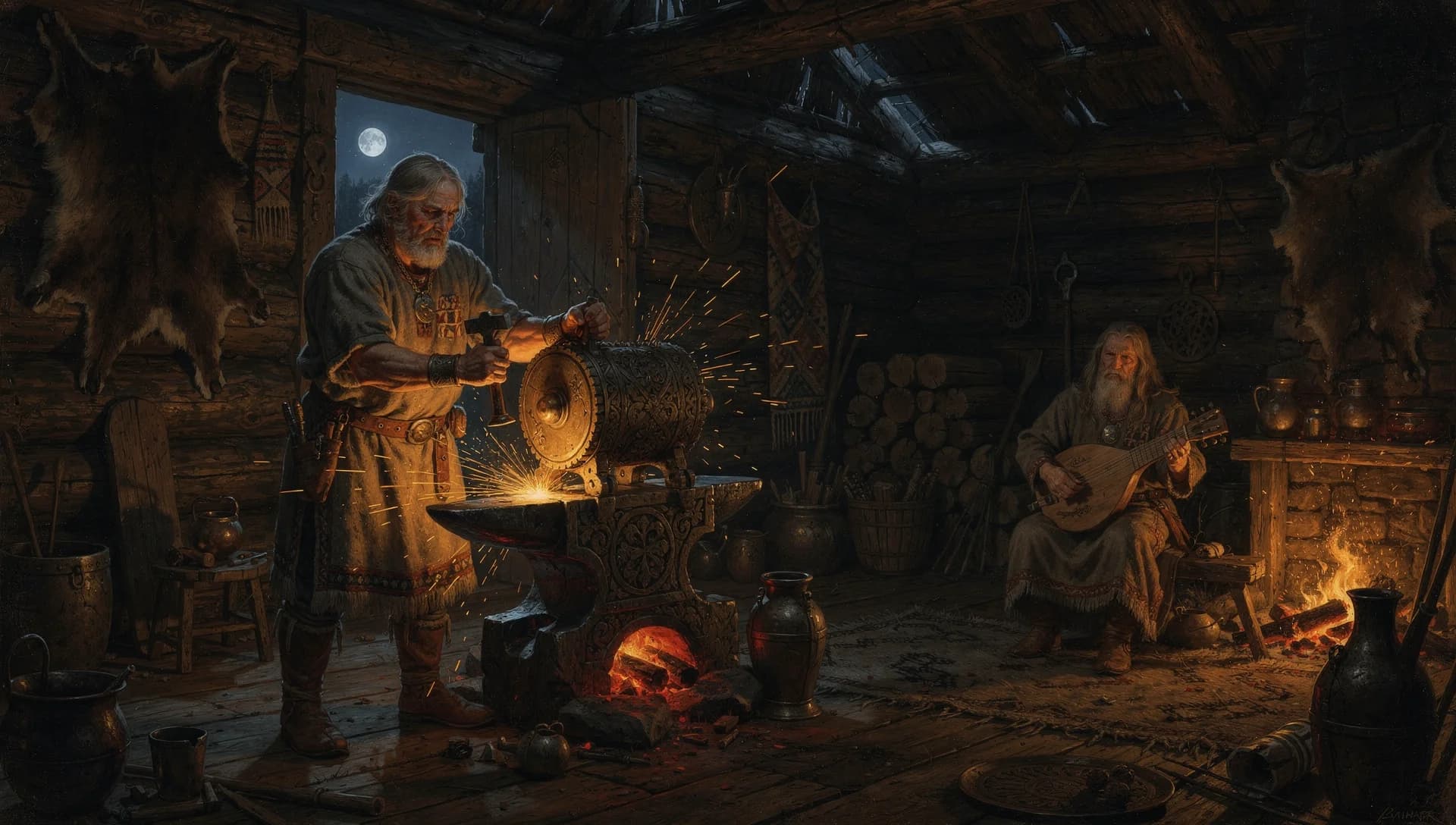
Craft and wisdom councils of the Prince's staff = Ilmarinen the eternal smith of the Finnish Kalevala
This article expands on the decoder mapping. For the side-by-side card and quick reference, see the mapping page.
The Finnish Craftsman and Sage
The Kalevala, the Finnish national epic compiled by Elias Lönnrot (1802 to 1884) from oral sources (first edition 1835, expanded 1849), centers on three principal heroes. Ilmarinen the eternal smith, Väinämöinen the wise singer, and Lemminkäinen the young warrior. Ilmarinen forges the sky in the primordial creation. Later he forges the magical Sampo, a cosmic mill that produces endless grain, salt, and gold. Väinämöinen is something different. His songs shape reality through verbal knowledge. His counsel guides the Finnish people through every challenge the epic throws at them.
Ilmarinen and Väinämöinen are paired across the Kalevala as two complementary civilizing figures. The craftsman who makes, and the sage who knows. Together they establish the conditions of civilized Finnish life across the long arc of the epic.
What the Urantia Book Says
The Urantia Book describes the Planetary Prince's corporeal staff as organized into ten autonomous councils of ten members each, with each council devoted to a distinct field of human endeavor (66:5.1).
The ten councils are listed across UB 66:5.2-31. Food and Material Welfare (Ang). Animal Domestication (Bon). Conquest of Predatory Animals (Dan). Dissemination and Conservation of Knowledge (Fad). Industry and Trade (Nod). Revealed Religion (Hap). Guardians of Health and Life (Lut). Art and Science (Mek). Advanced Tribal Relations (Tut). Supreme Court of Tribal Co-ordination (Van).
The craft and wisdom functions are clearly distinguished. Ang, Bon, Dan, Fad, Nod, Lut, and Mek handled the practical teaching of food, animal husbandry, toolmaking, knowledge preservation, industry, health, and art. Hap, Tut, and Van handled the wisdom and governance side. Revealed religion, tribal relations, and the supreme court that coordinated everything.
The pairing is built into the structure. The craft councils taught humans how to make things. The wisdom councils taught humans how to live rightly. Together they made civilized life possible. This is the same structural function that the Kalevala's Ilmarinen and Väinämöinen pair carries.
The pattern continued through the loyal faction after the rebellion. Van, the wise counselor at the head of the supreme court (67:4.1), is paired in the Urantia Book's accounts with Amadon the Andonite, the loyal associate who represents the craft and maintenance side across the long preservation that followed (67:6.3, 67:6.7).
What the Ancient Sources Say
Elias Lönnrot's Kalevala (original Finnish publication 1835, expanded edition 1849, standard English translation by Keith Bosley, Oxford University Press, 1989) preserves the Finnish national epic. Lönnrot collected the source materials from roughly 1828 to 1849, traveling through Karelia where the runolaulaja, the oral singers, had carried this content forward across many generations.
Thomas DuBois's Finnish Folk Poetry and the Kalevala (Garland, 1995) traces the Kalevala's content to pre-Christian Finno-Ugric oral tradition. The material is older than the Christian-era compilation and preserves elements of genuinely ancient Baltic-region belief. DuBois documents the mythological substrate underlying the epic's narrative surface.
Juha Pentikäinen's Kalevala Mythology (Indiana University Press, 1989) treats the mythological content in depth. Pentikäinen identifies the Ilmarinen and Väinämöinen pairing as a preservation of the shared Indo-European and Uralic culture-hero duo, a pattern that appears across many world mythologies.
The comparative pattern is striking. Hephaestus the craftsman paired with Prometheus the wisdom-bringer in Greek tradition. Tvashtar the divine craftsman paired with Brihaspati the lord of sacred speech in Vedic tradition. Wayland the Smith paired with Odin the wise in Germanic tradition. Goibniu the divine smith paired with Dagda in Celtic tradition. The same craftsman and sage duo recurs across widely separated traditions, which points to shared substrate.
The Sampo, Ilmarinen's magical mill, has been read across multiple frameworks. Matti Kuusi's Finnish Folk Poetry: Epic (Finnish Literature Society, 1977) documents the Sampo as a cosmological artifact that produces endless abundance. Its functions, grain and salt and gold, match the civilizational content that the Prince's craft councils were tasked with teaching: agriculture, food preservation, and commerce.
Why This Mapping Matters
The paired culture-hero structure that the Kalevala preserves, Ilmarinen the craftsman and Väinämöinen the sage, fits the shape of the Urantia Book's account of the Prince's staff. Craft and wisdom together. The same pattern recurs across widely separated Indo-European and Uralic traditions. Hephaestus and Prometheus. Tvashtar and Brihaspati. Wayland and Odin. Goibniu and Dagda. Ilmarinen and Väinämöinen. That kind of recurrence points to a shared source rather than independent invention.
The Finnish preservation has its own distinctive value. The Kalevala carries the pair in fully elaborated form across an extended epic narrative, with each figure given a clear personality and a clear teaching function. Finnish oral tradition kept the content alive across substantial time depth, and that depth of preservation matters.
The mapping's significance is this: the Ilmarinen and Väinämöinen pair should be read not as a one-off Finnish invention but as a Finnish preservation of an older shared inheritance. The Urantia Book identifies that inheritance as the actual historical staff of the Planetary Prince at Dalamatia, organized into craft and wisdom councils that began the systematic teaching of civilization on Urantia. The craftsman and sage pattern across so many traditions traces back to that single source.
Sources
- The Urantia Book, Paper 66 (The Planetary Prince's Staff), Paper 67 (The Planetary Rebellion). Urantia Foundation, first printing 1955. Cited passages: 66:5.1-14, 67:4.1, 67:6.3-7.
- Lönnrot, Elias. The Kalevala. Translated by Keith Bosley, Oxford University Press, 1989.
- DuBois, Thomas A. Finnish Folk Poetry and the Kalevala. Garland, 1995.
- Pentikäinen, Juha Y. Kalevala Mythology. Indiana University Press, 1989.
- Kuusi, Matti, Keith Bosley, and Michael Branch, editors. Finnish Folk Poetry: Epic. Finnish Literature Society, 1977.
- Siikala, Anna-Leena. Mythic Images and Shamanism: A Perspective on Kalevala Poetry. Academia Scientiarum Fennica, 2002.
Confidence and Evidence
- Confidence: INFORMED SPECULATION
- Evidence rating: SUGGESTIVE
- Basis: The Urantia Book documents the ten-council organization of the Prince's staff with distinct craft and wisdom functions at UB 66:5. The Kalevala's Ilmarinen and Väinämöinen pair preserves the shared Indo-European and Uralic culture-hero duo that recurs across many world mythologies. The shared structural pattern points to shared substrate in the pre-rebellion Dalamatian teaching tradition.
Related Decoder Articles
Byline: Derek Samaras | Urantia Book Network | April 2026
Connecting Articles
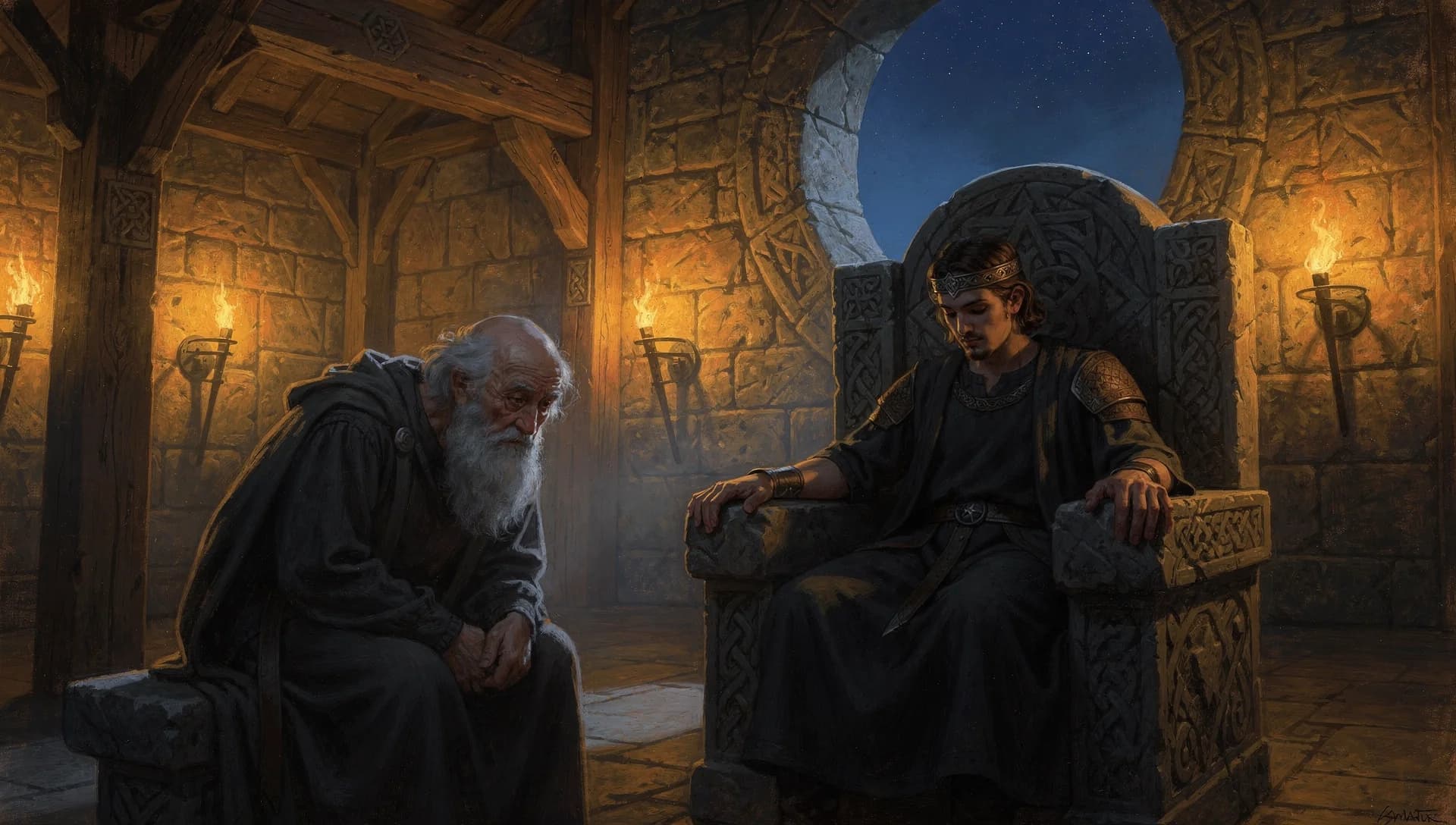
The Counselor Who Was Older Than the King: Merlin and the Wise Counselor Archetype
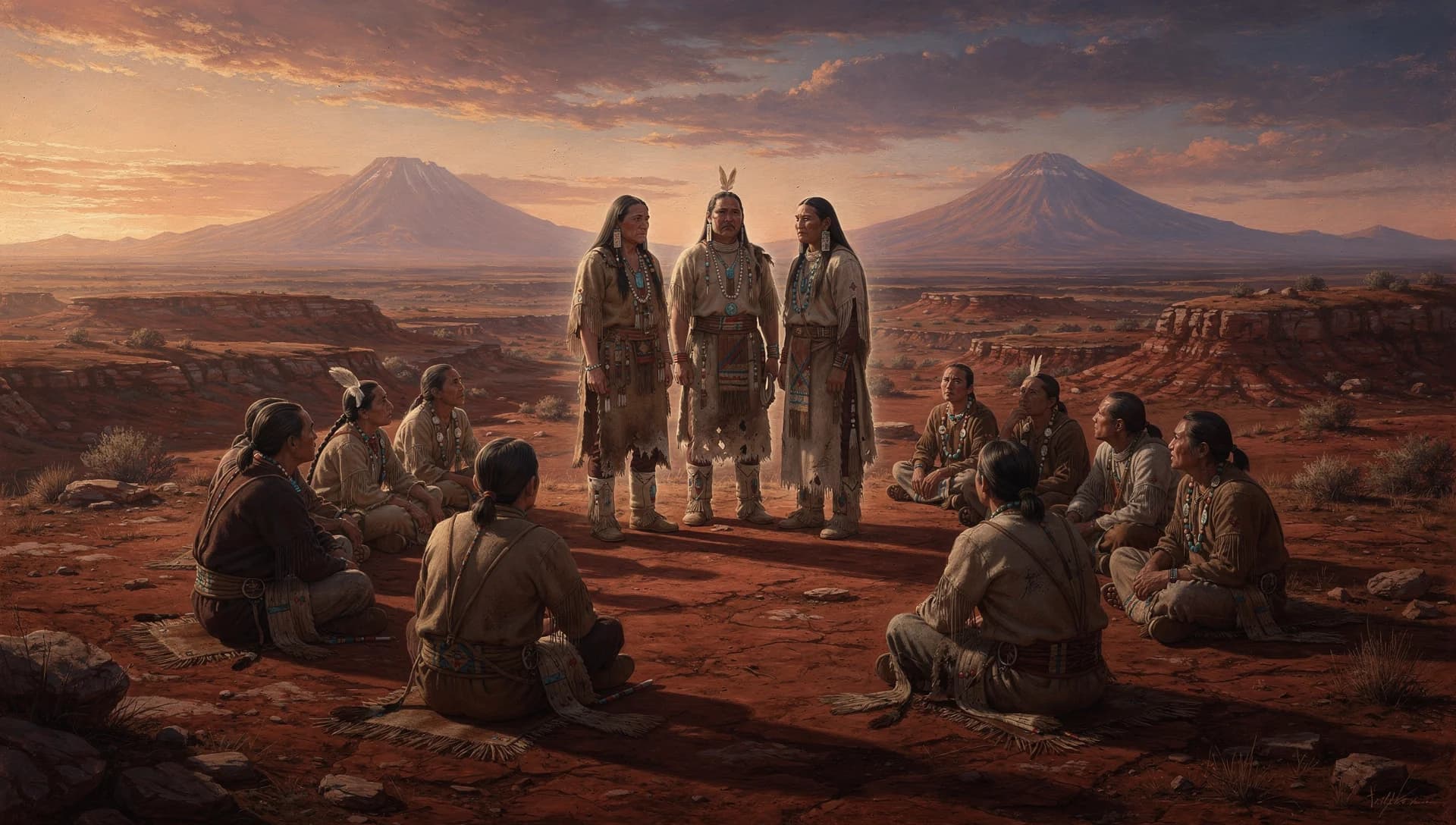
The Ones Who Came First: The Dalamatian Staff and the Navajo Holy People
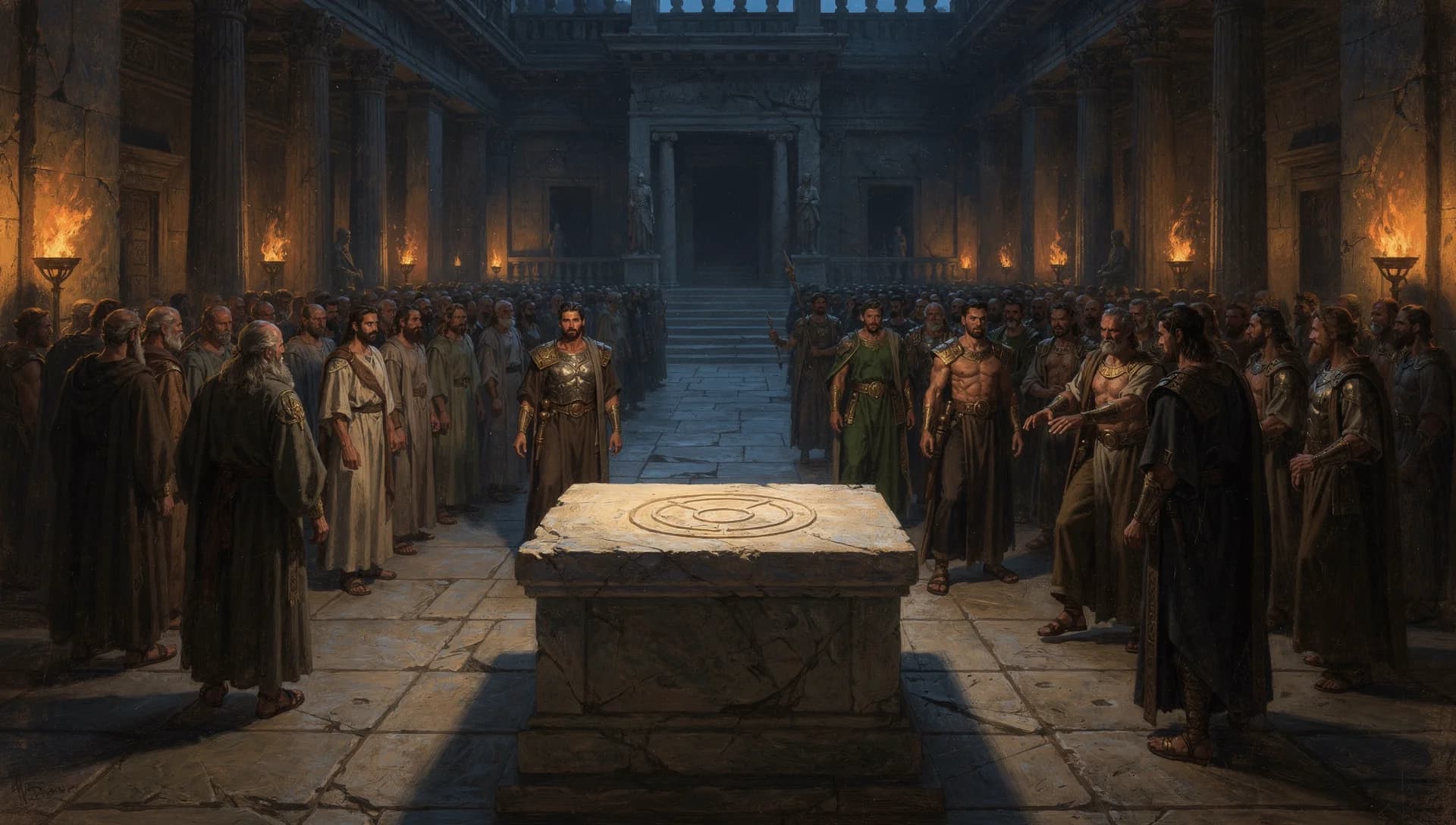
The First War Among the Gods: The Staff Split and the Aesir-Vanir Conflict
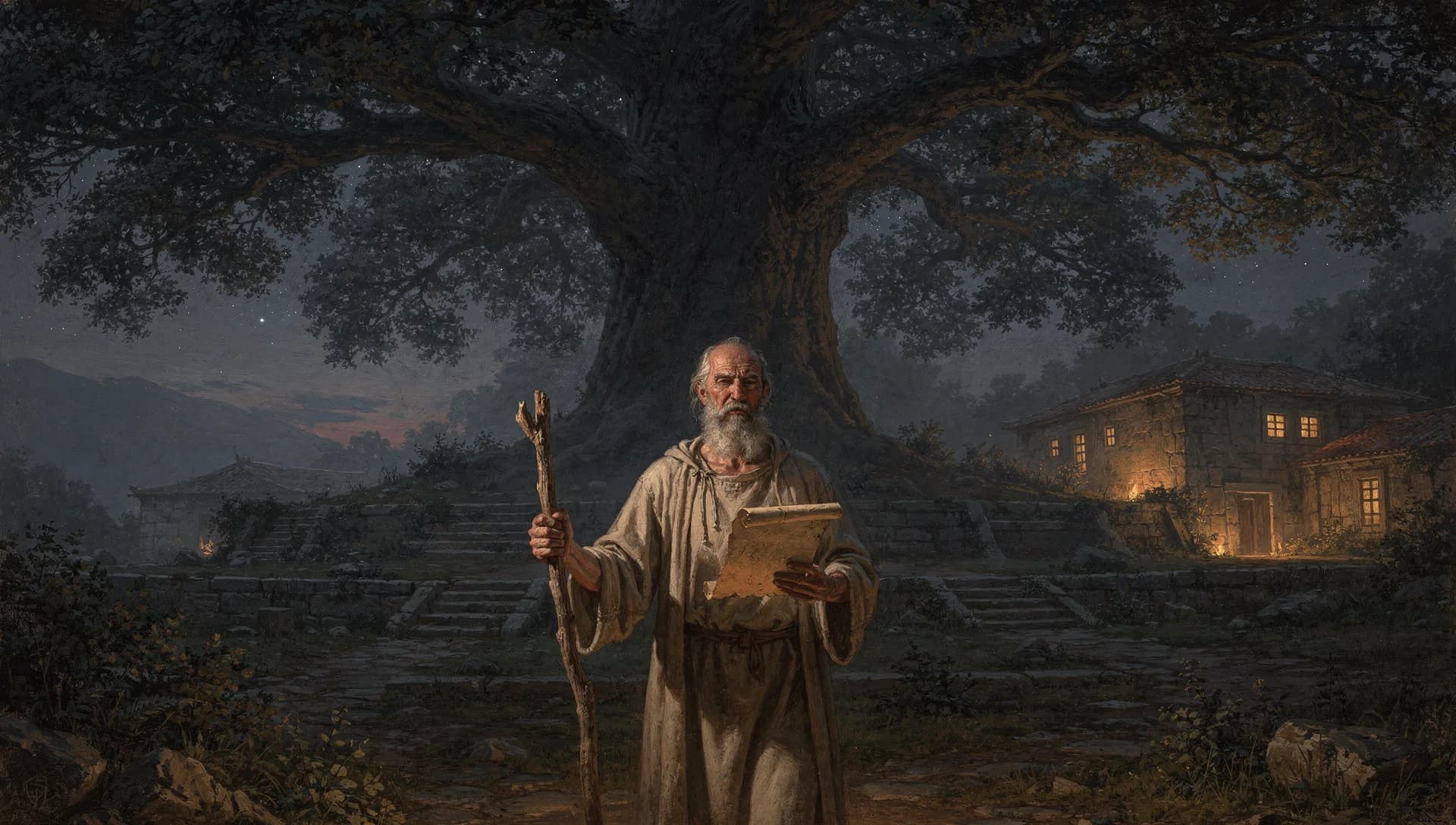
The One Who Hung on the Tree: Van and the Norse Odin
The Newsletter
Get the research behind each piece
Free. New Urantia Book explorations, the sources behind the videos, and early looks. No spam, unsubscribe anytime.
Prefer video? Follow on YouTube and Facebook.
Delivered through Substack. You can also read past issues.