
Van Is Remembered: The Steadfast Jurist and His Sumerian Echo
The Urantia Book tells of Van, the loyal jurist who appealed to the heavens when his planetary prince rebelled. Thousands of years later, Sumerian scribes carved tablets honoring Enki, the wise god of steadfast decisions who defied the ruling authority to protect mankind. The pattern is specific enough to ask whether the tablets remember someone real.
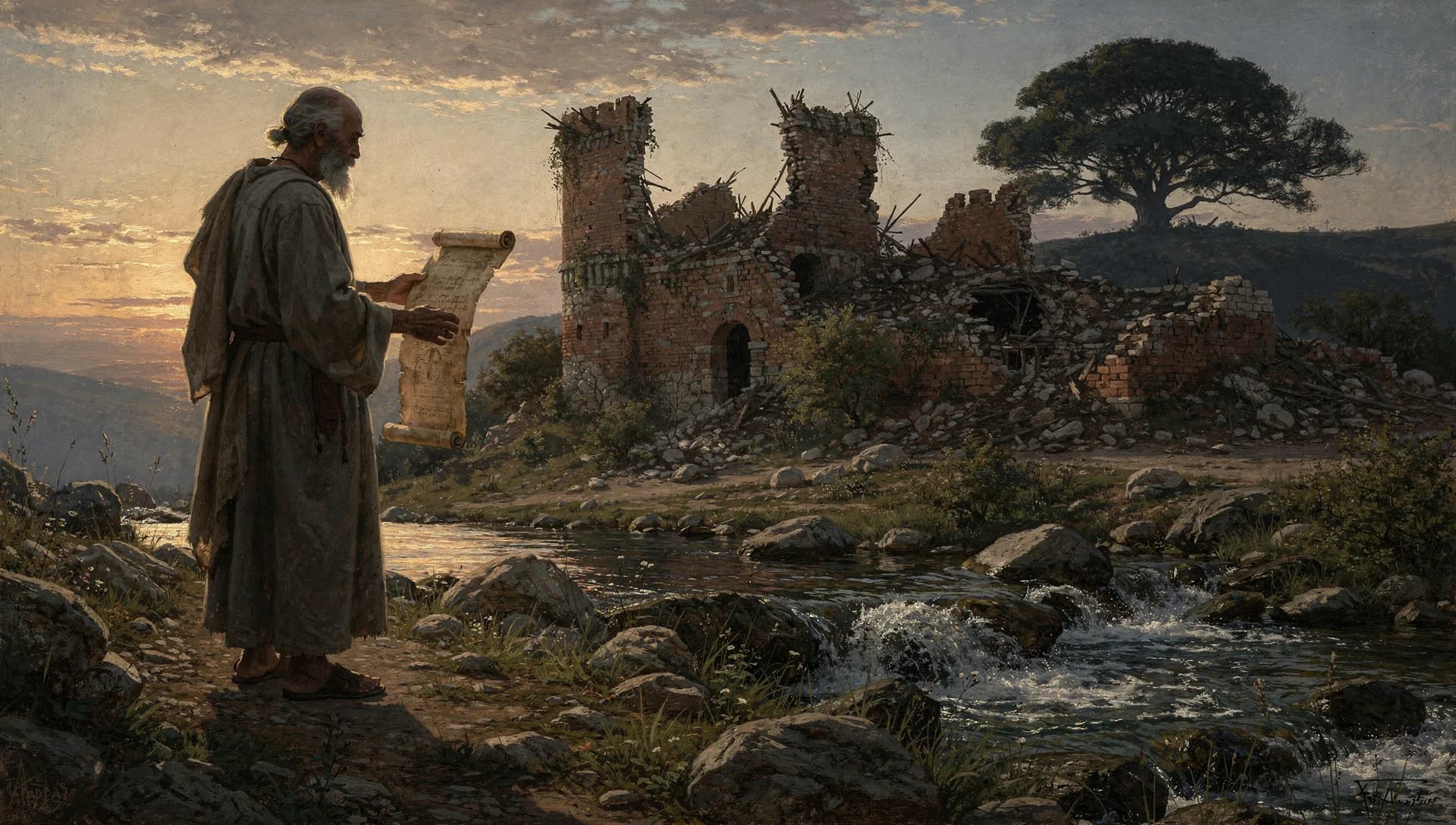
Van, loyal corporeal staff member = Enki (Sumerian) / Ea (Akkadian)
This article expands on the decoder mapping. For the side-by-side card and quick reference, see the mapping page.
There is a cinematic version of this. Watch the scroll film: Van Is Enki, and the full decoder short is below.
The Figure the Sumerians Could Not Forget
Of all the Mesopotamian gods, Enki is the strange one. He is not a warrior. He is not a king. He is the wise one, the patient one, the one who sits in Eridu beside the fresh waters and organizes civilization, and when the ruling authority decides to destroy mankind, Enki is the one who refuses.
The Sumerian flood tradition, preserved in the Eridu Genesis and later in the Akkadian Atrahasis epic, is specific on this point. Enlil, the chief god, resolves to wipe out humanity. Enki sides with humanity. He warns the righteous man (Ziusudra in the Sumerian, Atrahasis in the Akkadian) to build a boat, and humanity survives because one high official within the council broke ranks with his superior.
That is a very unusual story for an ancient civilization to tell about one of its gods.
Most ancient pantheons justify the ruling authority. They explain why the king on the throne reflects the god on the throne. Sumerian religion does not do this with Enki. It tells the story of the wise one who defied the ruler, and it says the world we live in exists because he did.
The Urantia Book records an event that matches the shape of this story with unusual precision.
Van, Chairman of the Supreme Council of Co-ordination
For three hundred thousand years before the crisis, Urantia was administered by a Planetary Prince named Caligastia, assisted by a corporeal staff of one hundred (UB 67:1.1). Among them was Van, described in the record as a "distinguished administrator and able jurist" (UB 67:2.2).
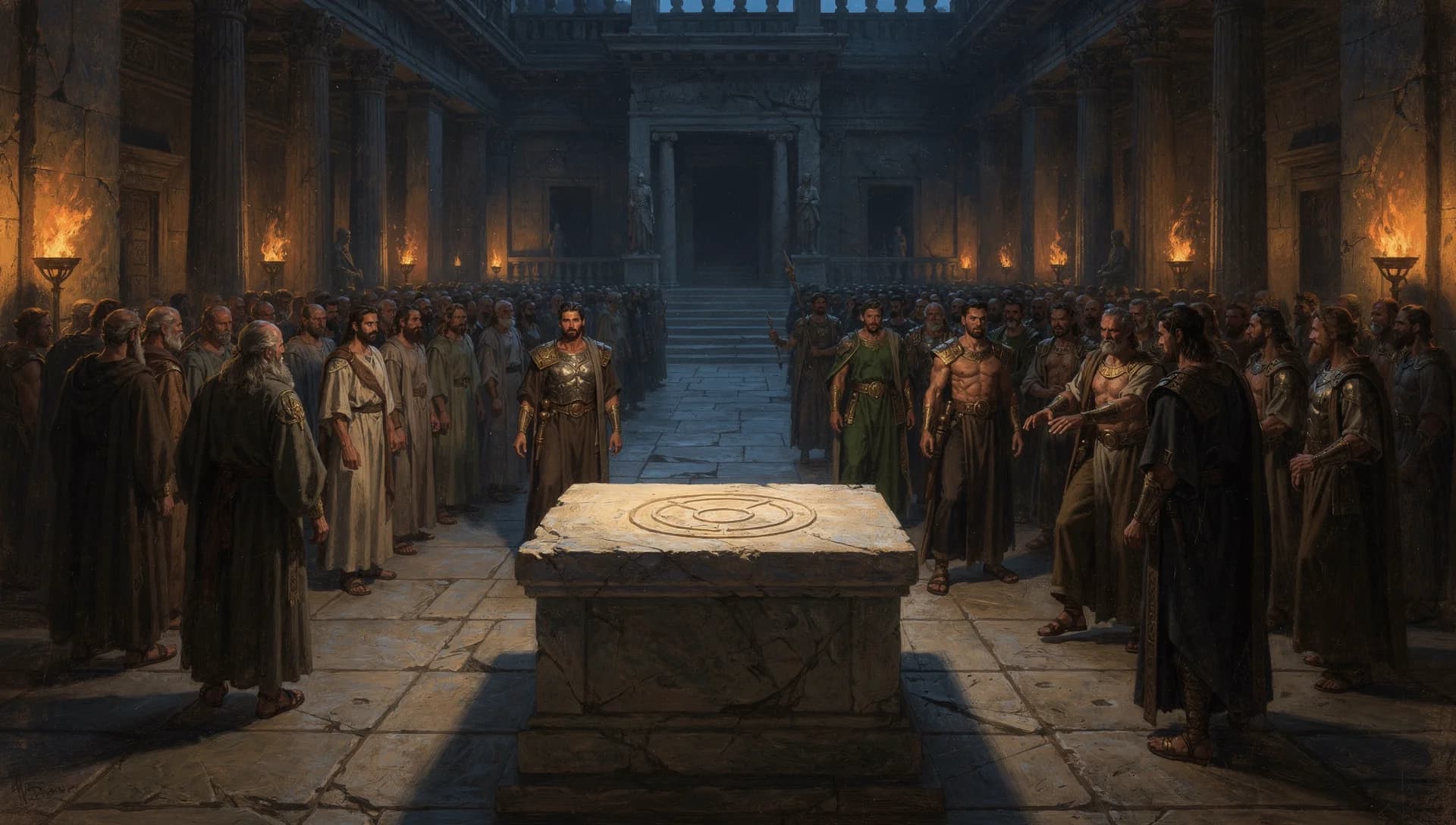
When Caligastia announced that he intended to abdicate from the universe government and proclaim himself sovereign of the planet, Van did not follow. He stood up and addressed the assembled councils. The record is blunt:
"This distinguished administrator and able jurist branded the proposed course of Caligastia as an act bordering on planetary rebellion and appealed to his conferees to abstain from all participation until an appeal could be taken to Lucifer, the System Sovereign of Satania; and he won the support of the entire staff." (UB 67:2.2)
When Lucifer's reply came back sustaining Caligastia, Van did not back down. He delivered what the record calls his "memorable address of seven hours' length" and formally drew his indictment of Daligastia, Caligastia, and Lucifer as standing in contempt of the sovereignty of the universe of Nebadon (UB 67:2.2). He took the appeal higher, to the Most Highs of Edentia, the constellation authorities.
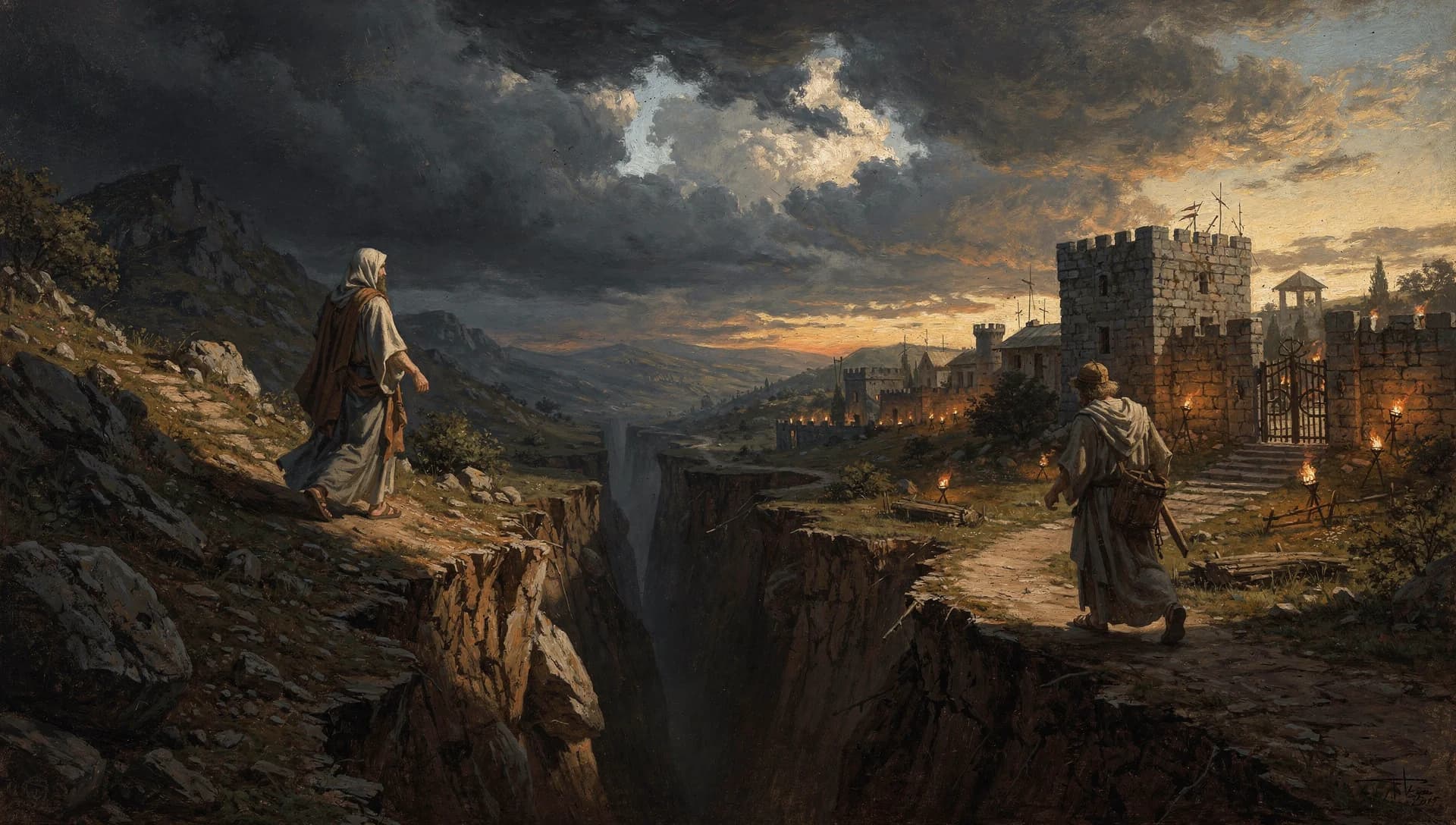
The planetary communication circuits were severed before the ruling could return. For seven years Van and forty loyal staff members held their ground in an unwalled settlement a few miles east of Dalamatia, guarded by the loyal midway creatures, with the tree of life in their possession (UB 67:3.4, 67:3.5).
Unknown to Van at the time, the Edentia Fathers had already ruled on every point of his contention. The verdict sustaining him had been in transit. It was discovered only recently, as the revelators describe it, lodged in the possession of a relay energy transmitter where it had been marooned since the isolation of Urantia (UB 67:6.9). Van was right. The universe government confirmed it. The message simply could not reach him in his lifetime of loyalty.
What Van Did After
Van survived the rebellion. The text records that he remained on earth until the time of Adam, sustained by the technique of the tree of life in conjunction with the specialized life ministry of the Melchizedeks, for over one hundred and fifty thousand years (UB 67:6.4).
What he did with that time was, in plain terms, rebuild civilization.
After the flood that engulfed Dalamatia one hundred and sixty-two years after the rebellion (UB 67:5.4), the followers of Van withdrew to the highlands west of India (UB 67:6.1). From there he established commissions, trained successors, and sent teachers outward. "Within one thousand years after the rebellion he had more than three hundred and fifty advanced groups scattered abroad in the world" (UB 67:6.6).
When Adam and Eve arrived, Van and his associate Amadon were waiting to greet them. The two were translated to Jerusem some years later (UB 67:6.8).
This is the figure the decoder proposes the Sumerian scribes were remembering.
The Sumerian Record
Samuel Noah Kramer, whose Sumerian Mythology (1961) remains the standard English reference, catalogues Enki as the patient organizer of civilization. His dwelling is Eridu, understood by Sumerologists to be among the oldest cities in the ancient record. The composition Enki and the World Order (ETCSL 1.1.3) portrays Enki organizing agriculture, crafts, irrigation, medicine, and the moral instruction of the peoples. ORACC, the Open Richly Annotated Cuneiform Corpus maintained at the University of Pennsylvania, summarizes Enki as "god of wisdom, crafts, fresh waters, magic."
The Sumerian poem Enmerkar and the Lord of Aratta gives Enki the epithet "lord of steadfast decisions." That phrase, in a Bronze Age Sumerian text, sits beside UB 67:3.6 in a way that is hard to ignore:
"The spiritual insight and moral steadfastness which enabled Van to maintain such an unshakable attitude of loyalty to the universe government was the product of clear thinking, wise reasoning, logical judgment, sincere motivation, unselfish purpose, intelligent loyalty, experiential memory, disciplined character, and the unquestioning dedication of his personality to the doing of the will of the Father in Paradise." (UB 67:3.6)
Steadfast decisions. Wise reasoning. Unshakable attitude. The Sumerian epithet is not generic praise; it is the single quality the scribes chose to emphasize about Enki above all others, and it is the same quality the Urantia Book emphasizes about Van above all others.
Historical Evidence
ETCSL "Enmerkar and the Lord of Aratta" (Oxford) gives Enki the exact epithet "lord of steadfast decisions." ORACC (U. Penn) catalogues Enki as "god of wisdom, crafts, fresh waters, magic." Enki and the World Order (ETCSL 1.1.3) portrays Enki organizing civilization: agriculture, crafts, medicine. The epithet match is exact and the civilizing function maps directly to Van's role as chairman of the supreme council of co-ordination (67:2.2). Religious instruction at Dalamatia belonged to Hap's group rather than to Van (66:5.14).
Why the Sumerians Would Remember Him
The Urantia Book offers a specific mechanism by which the memory of the Caligastia staff passed into the mythology of later civilizations. The sixty staff members who followed Caligastia into rebellion became mortal, migrated north and east from fallen Dalamatia, and became known as the Nodites (UB 67:4.2). The record says of them:
"The presence of these extraordinary supermen and superwomen, stranded by rebellion and presently mating with the sons and daughters of earth, easily gave origin to those traditional stories of the gods coming down to mate with mortals. And thus originated the thousand and one legends of a mythical nature, but founded on the facts of the postrebellion days, which later found a place in the folk tales and traditions of the various peoples whose ancestors had participated in these contacts with the Nodites and their descendants." (UB 67:4.3)
The Nodites were the rebel faction. The memory of the loyal staff, Van above all, was carried by a different stream: the 144 loyal Andonites who took Amadon's name and continued on earth as the Amadonites. The record describes them as "the biologic leaven which multiplied and continued to furnish leadership for the world down through the long dark ages of the postrebellion era" (UB 67:6.3).
Mesopotamia is exactly where these descendant populations eventually settled. The Nodites gave the region its name (the land of Nod), the Amadonites seeded its leadership, and the cultural memory of both streams flowed forward into the earliest literate civilizations. The Sumerian pantheon preserves both roles: a ruling authority figure who went wrong, and a wise figure who stood against him. The decoder's candidate for the loyal wise one is Van; the tablets' name for him is Enki.
Why This Matters
None of this proves that Sumerian scribes of the third millennium BCE were knowingly writing about Van of Urantia. The confidence rating on this mapping is INFORMED SPECULATION, and it will stay that way. What the comparison shows is something more modest and more interesting.
If the Urantia Book's account of the Lucifer rebellion were pure invention, one would not expect its central loyalist to match, in specific detail, the most-loved figure in the oldest civilization's pantheon. Wise organizer of civilization. Master of fresh waters. Defier of the ruler who tried to destroy mankind. Steadfast one. These are not vague overlaps; they are the exact qualities the record attaches to Van and the exact qualities the Sumerians attached to Enki.
The decoder argues, across more than eighty mappings, that what we call mythology is often fragmented memory. The Sumerians lived next door to where Dalamatia had once stood and where Van's followers settled after the flood. Their memory was shorter than the actual timeline by tens of thousands of years, but it was not invented from nothing. Something real happened, and the scribes preserved what they could.
Van does not need the tablets to confirm his reality. But the tablets, read in light of the Urantia Book, stop being a puzzle and start being a record.
Sources
- The Urantia Book, Papers 66, 67, 73
- Kramer, Samuel Noah. Sumerian Mythology: A Study of Spiritual and Literary Achievement in the Third Millennium B.C. Revised edition, University of Pennsylvania Press, 1961.
- ETCSL (Electronic Text Corpus of Sumerian Literature), Oxford University: Enki and the World Order (1.1.3); Enmerkar and the Lord of Aratta (1.8.2.3).
- ORACC (Open Richly Annotated Cuneiform Corpus), University of Pennsylvania: Enki entry.
- Atra-Hasis (standard edition: Lambert and Millard, Oxford, 1969).
Confidence rating: INFORMED SPECULATION. The decoder methodology, evidence ratings, and full mapping table live at /decoder.
For the story of what Hebrew scribes did with related Mesopotamian material, see /what-they-changed. For the geography of Dalamatia and the postrebellion dispersal, see /map.
Byline: Derek Samaras | Urantia Book Network | April 2026
Connecting Articles
Nod and Enlil: The Rebel Who Became the Storm-God
The First War Among the Gods: The Staff Split and the Aesir-Vanir Conflict
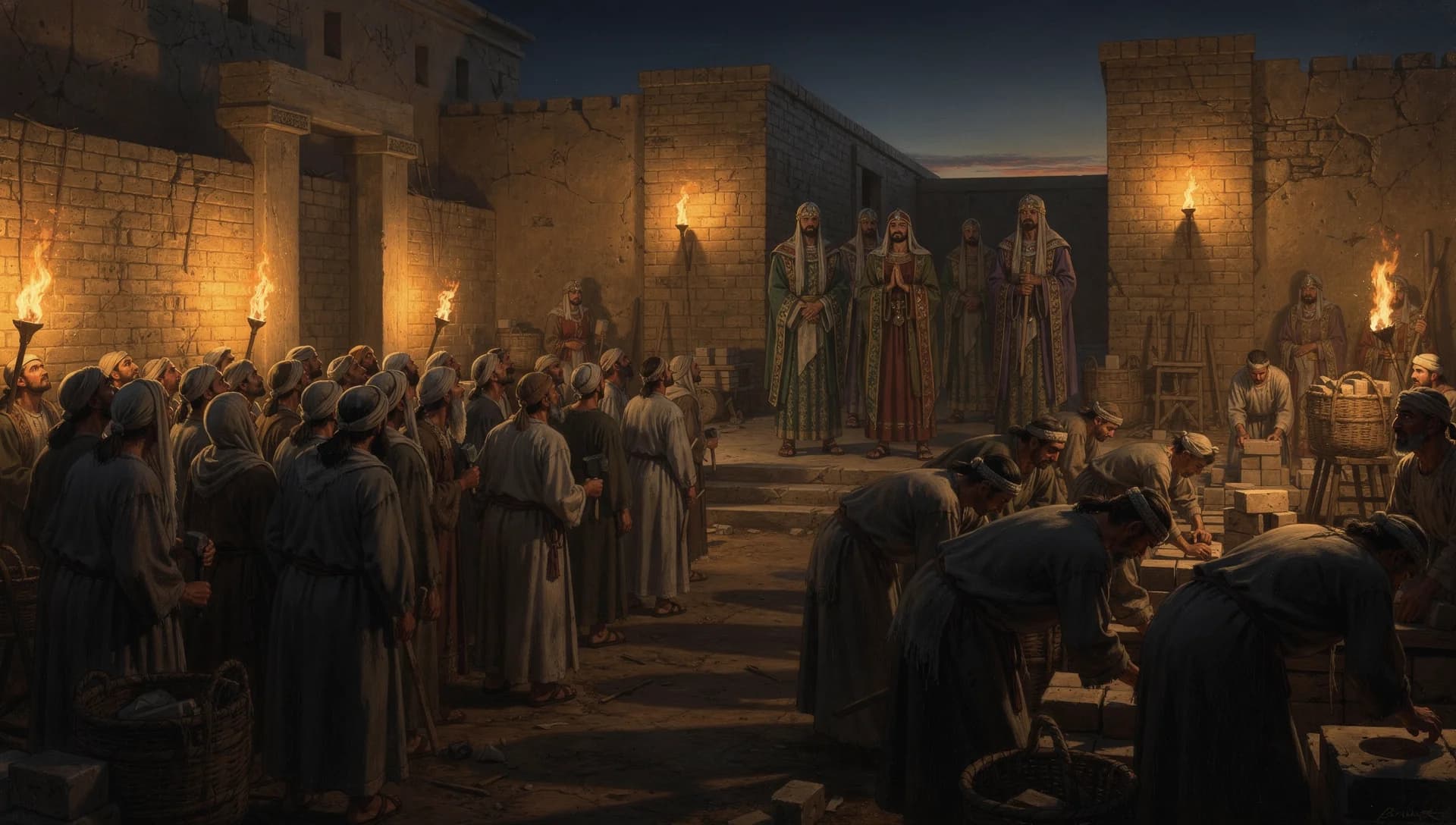
The Hundred and Forty-Four: Modified Andonites and the Sumerian Igigi
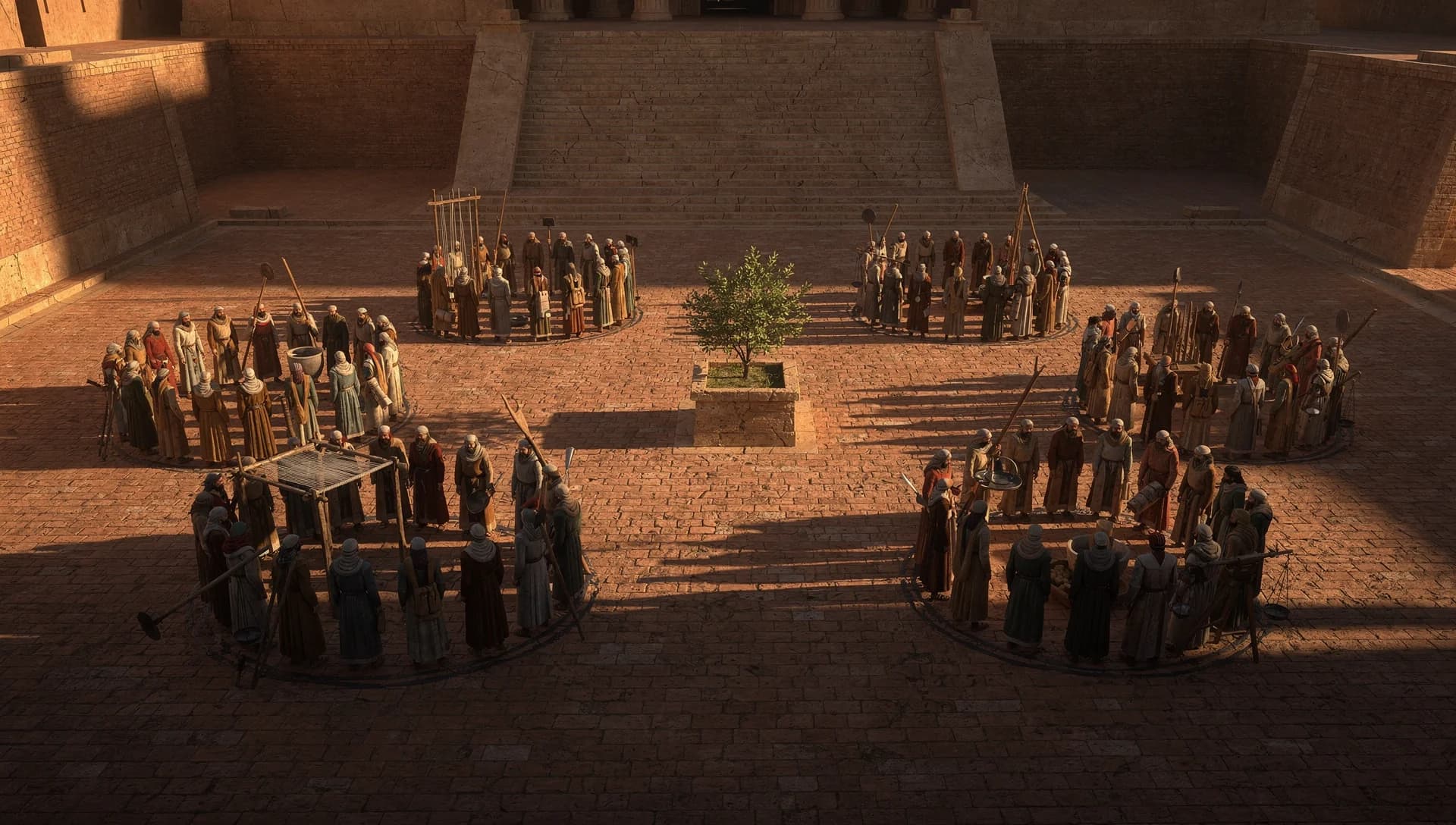
Civilization Delivered in Ten Portions: The Dalamatia Councils and the Sumerian ME
The Newsletter
Get the research behind each piece
Free. New Urantia Book explorations, the sources behind the videos, and early looks. No spam, unsubscribe anytime.
Prefer video? Follow on YouTube and Facebook.
Delivered through Substack. You can also read past issues.