
The Corporeal Staff and the Anunnaki: When Mainstream Etymology Already Says the Answer
Assyriologists at the University of Pennsylvania have established the standard etymology of Anunnaki: it breaks down as 'princely offspring' or, in functional translation, 'staff of the prince.' The Urantia Book describes the one hundred corporeal members of the Planetary Prince's staff, teachers of civilization at Dalamatia. The academic translation and the UB description are the same words for the same group.
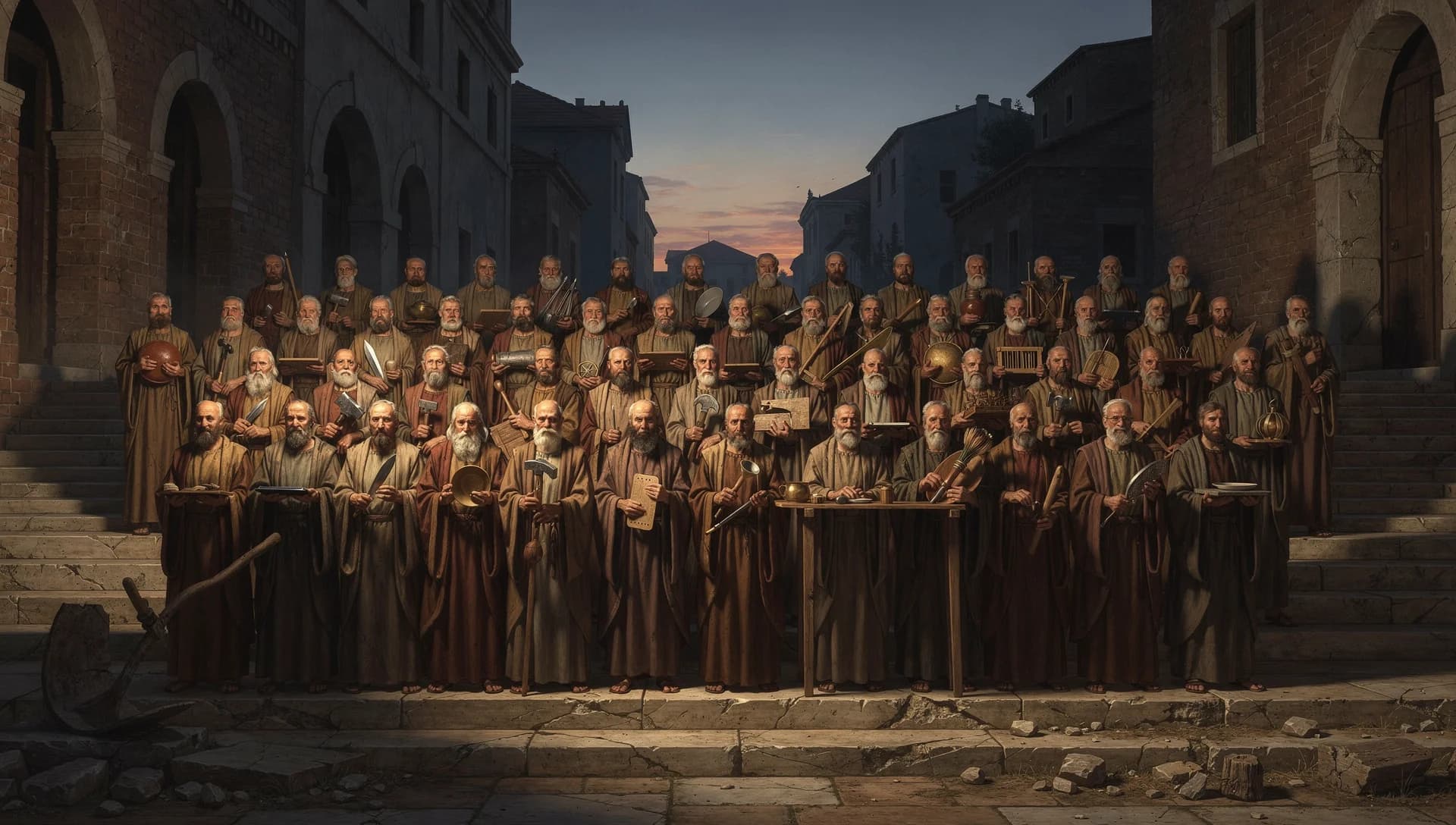
Corporeal Staff (100 members) = Anunnaki, "princely offspring / staff of the prince"
This article expands on the decoder mapping. For the side-by-side card and quick reference, see the mapping page.
What the Etymology Already Says
A reader who encounters the Anunnaki in Sitchin's books or in the wilder precincts of ancient-astronaut literature might assume the name is an esoteric puzzle requiring fringe interpretation to decode. It is not. The mainstream Assyriological etymology is well-attested, unambiguous, and published in reference works that students have been using for a century.
ORACC, the Open Richly Annotated Cuneiform Corpus at the University of Pennsylvania, analyzes Sumerian da-nun-na (plural da-nun-na-ke) morphemically as "princely offspring" or "royal offspring." The Britannica entry for Anunnaki gives the etymology as "princely seed" and adds the standard scholarly caveat that the precise meaning "remains ill-defined." The Chicago Assyrian Dictionary breaks the name into its component morphemes: A (seed, offspring) + NUN (prince, noble) + NA (of) + KI (earth). The composite is "princely offspring of earth," or in functional English translation, "the staff of the prince."
This is not a fringe reading. This is the Penn Sumerian Dictionary. It is the academic consensus. The word Anunnaki means the staff of the prince.
The Urantia Book, a document with no independent access to Sumerian lexicography, describes one hundred rematerialized personalities (UB 66:2.4) who came to earth half a million years ago (UB 66:0.2) as the administrative corps of the Planetary Prince. It calls them, in plain English, the Prince's corporeal staff.
Two independent records, using two different naming conventions, are describing the same group.
The Corporeal Staff of the Planetary Prince
The UB's description of the staff is detailed. They were selected from among more than 785,000 ascendant mortals on Jerusem who volunteered for the Urantia mission. They were rematerialized through a technical process developed on Avalon, embodying the actual life plasm of one hundred Andonite human donors. They served on earth as superhuman beings: visible, corporeal, more than human in intelligence and capacity, but operating within the range of ordinary mortal perception.
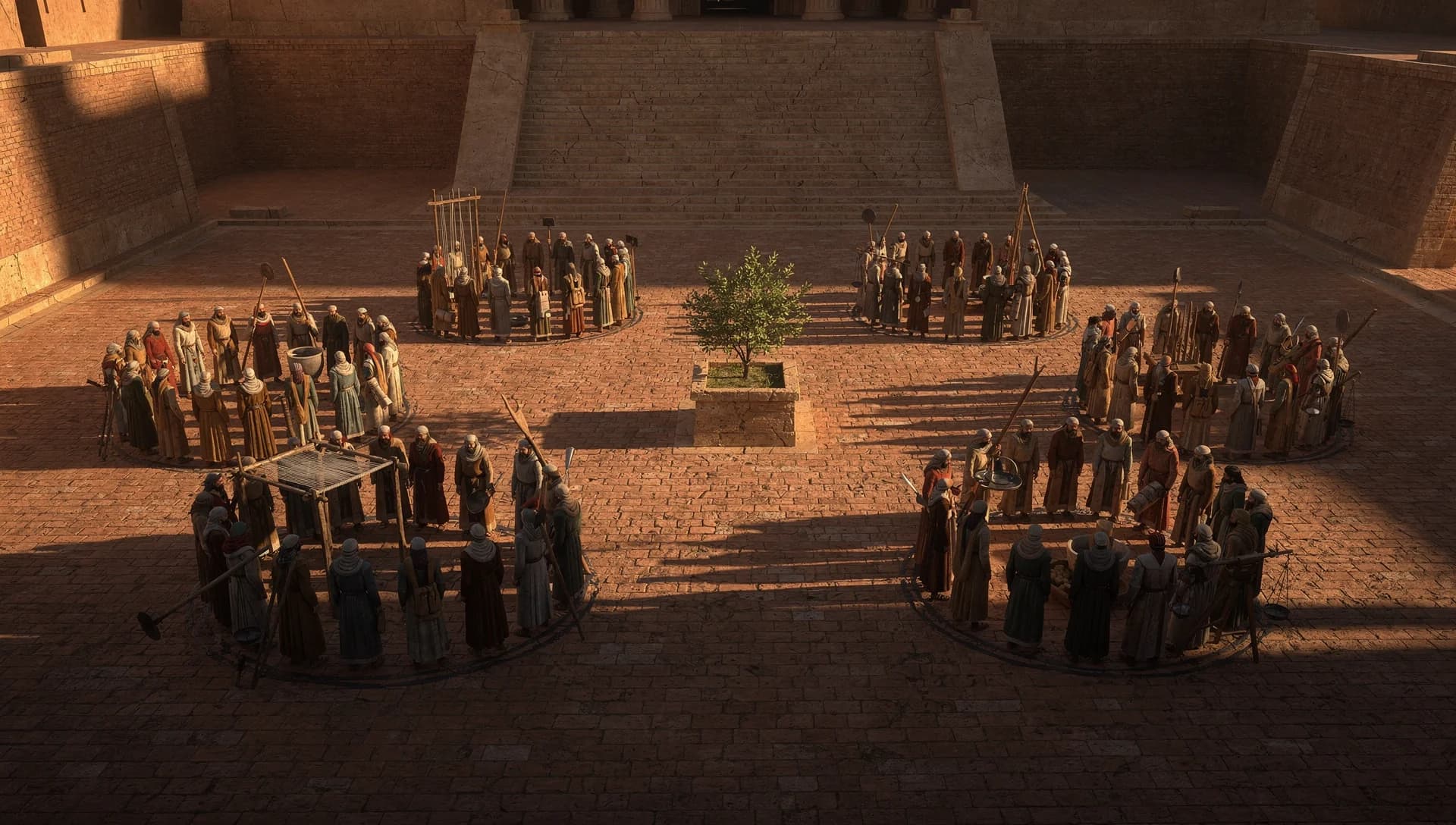
They were organized as a council of one hundred divided into ten specialized divisions. The UB names each of the ten councils explicitly:
"The city was laid out in ten subdivisions with the headquarters mansions of the ten councils of the corporeal staff situated at the centers of these subdivisions. Centermost in the city was the temple of the unseen Father. The administrative headquarters of the Prince and his associates was arranged in twelve chambers immediately grouped about the temple itself." (UB 66:3.4)
The ten councils governed the ten domains of organized civilization: food and maintenance, animal domestication, the conquest of predatory animals, the dissemination and conservation of knowledge, the commission on industry and trade, the college of revealed religion, the guardians of health and life, the planetary council on art and science, the governors of advanced tribal relations, and the supreme court of tribal co-ordination and racial co-operation (UB 66:5.1-14).
Civilization was delivered as a package, by a staff, organized into specialized departments, teaching the surrounding tribes in orderly sequence. This is not the UB's abstract claim. It is the UB's specific description of what happened at Dalamatia for three hundred thousand years before the rebellion (UB 66:7.19).
The Sumerian Record
The Mesopotamian record preserves the memory of a council of divine beings who delivered civilization in organized form. The Anunnaki appear throughout Sumerian and Akkadian literature as the senior divine council, the judges and administrators of the heavens and the earth, the bringers of the arts of civilization to humanity. The myth of "Inanna and Enki," preserved in ETCSL 1.3.1, lists over one hundred me, the divine decrees governing the domains of civilized life, originally held by Enki at Eridu and eventually transferred to Inanna at Uruk. The me cover exactly the domains the UB's ten councils cover: kingship, priesthood, writing, crafts, music, law, agriculture, warfare, sacred prostitution, and more. Samuel Noah Kramer described the me as "the fundamental, unalterable, comprehensive assortment of powers and duties, norms and standards, rules and regulations relating to civilized life."
The Atrahasis epic, which preserves the pre-flood narrative in its Old Babylonian form, depicts the Anunnaki as the council that makes decisions about humanity. The Igigi, a subordinate class of beings, perform the labor; the Anunnaki issue the executive orders; the overall structure is a hierarchical administrative body with senior and junior members, exactly the structure the UB describes for the Prince's staff above the modified Andonites.
The Imdugud Relief from Tell al-Ubaid (c. 2600-2400 BCE, now in the British Museum) shows the Anzu bird and the divine council together. The Assyrian sacred-tree reliefs from Nimrud (c. 900-700 BCE, also British Museum) depict winged figures attending a stylized tree, with human-headed winged bulls flanking the doorways. The visual grammar consistently shows the same elements the UB identifies: superhuman figures organized around a central sacred tree in a unified administrative composition.
The Number One Hundred
The UB is specific about the number of corporeal staff: "the Caligastia one hundred" (UB 66:2.3). The number is not metaphorical. It is administrative, the staff of a Planetary Prince on a normal inhabited world.
The Sumerian record does not preserve the number one hundred as a headline feature of the Anunnaki, but it preserves a closely related number. The list of the me held by Enki at Eridu, in the ETCSL reconstruction, runs to slightly over one hundred items. Some lists number them at ninety-four, others at one hundred and four; the precise count varies by recension, but the order of magnitude is exact. The Sumerians remembered that civilization arrived from the gods as a set of roughly one hundred discrete decrees, each governing a specific domain of human life.
The UB's ten councils of ten members, each governing a discrete domain, map directly onto the Sumerian list of roughly one hundred me governing discrete domains. Whether the Sumerian scribes were consciously preserving the structure of the original council or had inherited the number from a deeper tradition, the ordinal match is striking.
Why This Matters
The Anunnaki have become, in popular culture, a shorthand for speculative extraterrestrial theories that the mainstream academic consensus has thoroughly rejected. What is often missed is that the mainstream academic consensus has actually endorsed the literal etymology of the name: Anunnaki means "princely offspring" or "staff of the prince." This is not a fringe reading. This is what the Pennsylvania Sumerian Dictionary says. The fringe reading is the interpretation of the Anunnaki as literal reptilian aliens from Nibiru. The literal etymology, of a divine staff serving a supreme prince, is exactly what the record says.
The Urantia Book is not an ancient-astronaut book, and the corporeal staff are not extraterrestrial visitors in the Sitchin sense. They were rematerialized personalities who had previously existed as ascendant mortals on Jerusem, the system capital, and who were returned to Urantia in reorganized physical form to serve as the administrative corps of the Planetary Prince. The relationship to humanity is not "aliens visiting primitives"; it is "senior administrators teaching junior civilization." The UB has a richer and more coherent framework for exactly what the Sumerian etymology already records.
The confidence rating on this mapping is INFORMED SPECULATION, and the evidence rating is STRONG. The mainstream etymology of Anunnaki already says staff of the prince. The UB already describes the staff of the Prince. Two independent traditions, using two different naming conventions, are describing the same one hundred personalities.
Sources
- The Urantia Book, Paper 66.
- Katz, Dina. The Image of the Netherworld in the Sumerian Sources. CDL Press, 2003.
- Pennsylvania Sumerian Dictionary (PSD), entries for a, nun, na, ki, Anunna.
- ORACC (Open Richly Annotated Cuneiform Corpus), University of Pennsylvania: Anunnaki entry.
- Chicago Assyrian Dictionary (CAD), entry for anunnakū.
- Encyclopaedia Britannica, entry for "Anunnaki."
- Kramer, Samuel Noah. The Sumerians: Their History, Culture, and Character. University of Chicago Press, 1963.
- Lambert, W.G., and A.R. Millard. Atra-Hasis: The Babylonian Story of the Flood. Oxford University Press, 1969.
- ETCSL (Electronic Text Corpus of Sumerian Literature), Oxford University: Inanna and Enki (1.3.1).
Confidence rating: INFORMED SPECULATION. Evidence rating: STRONG. The decoder methodology, evidence ratings, and full mapping table live at /decoder.
For what happened to the staff during the rebellion, see Nod and Enlil and The War in Heaven Was Real. For the literal Urantia-Atlantis identification, see Dalamatia Is Atlantis.
Byline: Derek Samaras | Urantia Book Network | April 2026
Connecting Articles
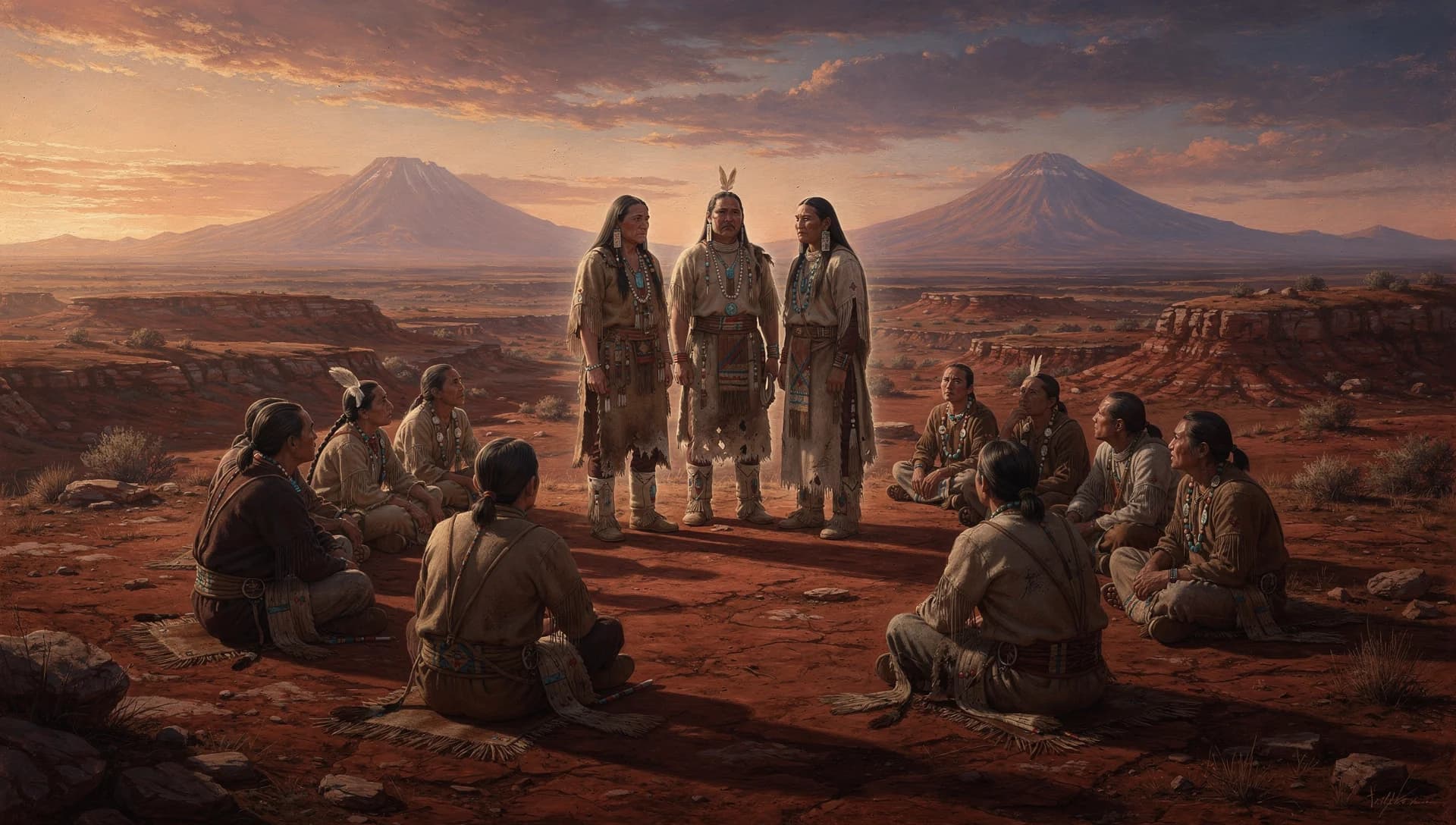
The Ones Who Came First: The Dalamatian Staff and the Navajo Holy People
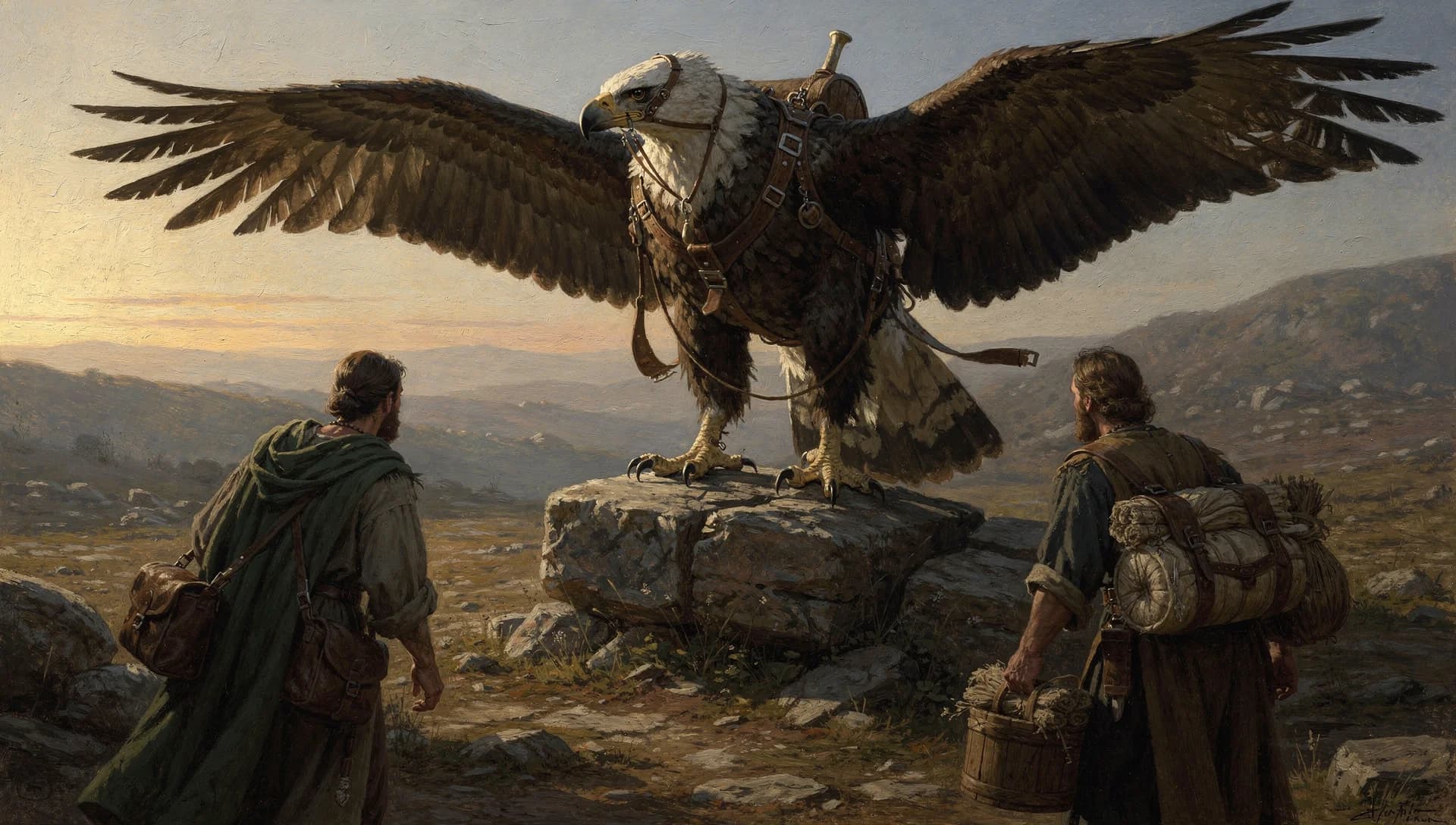
The Bird That Carried the Bull: Fandors and the Mesopotamian Anzu
Civilization Delivered in Ten Portions: The Dalamatia Councils and the Sumerian ME
Caligastia and Anu: The Invisible Sky Ruler Who Could Not Be Seen
The Newsletter
Get the research behind each piece
Free. New Urantia Book explorations, the sources behind the videos, and early looks. No spam, unsubscribe anytime.
Prefer video? Follow on YouTube and Facebook.
Delivered through Substack. You can also read past issues.