
The Bird That Carried the Bull: Fandors and the Mesopotamian Anzu
Assyrian and Sumerian art carved a giant divine bird called Anzu that carried stags, bulls, and men. The Urantia Book describes fandors, giant passenger birds trained by the Dalamatia council on animal domestication, which carried Adam and Eve across the Garden of Eden. The image was not a fantasy. Someone remembered the real animals.
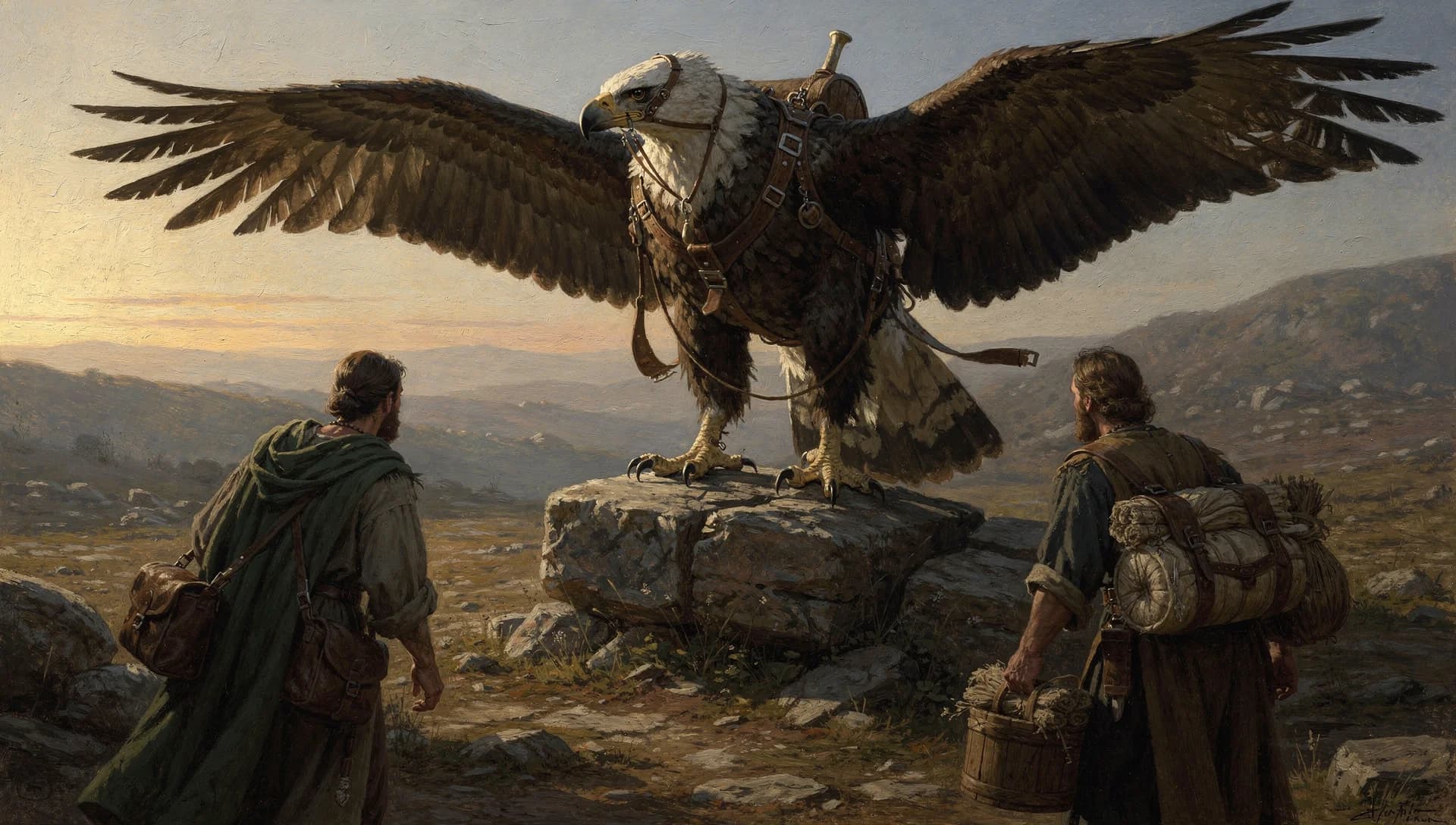
Fandor, giant passenger bird = Anzu / Zu Bird, monstrous divine bird
This article expands on the decoder mapping. For the side-by-side card and quick reference, see the mapping page.
The Bird Problem in Mesopotamian Religion
Scholars who work on the iconography of the third and second millennia BCE keep running into a specific motif. A huge bird, often lion-headed or with a lion's body beneath the wings, grasps smaller animals in its talons. Bulls. Stags. Humans. The motif appears at Tell al-'Ubaid around 2500 BCE on the Imdugud Relief now in the British Museum, and it persists for two thousand years across Sumerian and Akkadian and Assyrian palace art. The bird is called Imdugud in Sumerian, Anzu in Akkadian.
The standard academic treatment, following Stephanie Dalley's reconstruction of the Anzu Epic in Myths from Mesopotamia (Oxford, 2000), interprets the bird as a storm or thunder spirit whose abduction of the Tablets of Destiny sets the plot of the poem in motion. That reading is correct for the narrative function. But it does not answer the earlier question: why did ancient Mesopotamian artists, from the fourth millennium forward, repeatedly depict a giant bird physically carrying off large animals including bulls and men?
The Urantia Book records, in a short passage, something that would make the image intelligible.
What the Urantia Book Says
The Caligastia staff's council on animal domestication, led by Bon, worked on the task of selecting and training large animals for human use. Among their successes was a species of giant bird that could carry burdens over long distances. The record is brief and specific:
"It was in these days that carrier pigeons were first used, being taken on long journeys for the purpose of sending messages or calls for help. Bon's group were successful in training the great fandors as passenger birds, but they became extinct more than thirty thousand years ago." (UB 66:5.6)
The fandor reappears at the time of Adam's arrival in the Garden of Eden. On the third day after the Material Son and Daughter materialized in the Garden temple, they were given a tour of the Edenic territory from the air:
"The third day was devoted to an inspection of the Garden. From the large passenger birds—the fandors—Adam and Eve looked down upon the vast stretches of the Garden while being carried through the air over this, the most beautiful spot on earth." (UB 74:3.4)
Two facts are fixed by these passages. First, fandors were real animals, large enough to serve as passenger birds, trained by the Dalamatia staff for human use, and described as the carriers of Adam and Eve above the Garden. Second, the species went extinct roughly thirty thousand years ago, which is to say, within the range of human memory preserved through oral tradition and symbolic art.
What the Ancient Source Says
The Imdugud Relief (Tell al-'Ubaid, c. 2600 to 2400 BCE, British Museum BM 114308) depicts a lion-headed eagle with wings outstretched, gripping the haunches of two stags. The piece was excavated by H. R. Hall from the temple of Ninhursag and is among the oldest large-scale metalwork surviving from the ancient Near East. It is not a small piece. The relief is over two meters wide. Whoever commissioned it intended a monumental image of the giant bird carrying animals.
British Museum alabaster relief BM 124571, from the palace of Ashurnasirpal II at Nimrud (ninth century BCE), shows the god Ninurta in pursuit of the Anzu bird, rendering the bird at a scale proportionate to a beast that could realistically carry off animals. ORACC (the Open Richly Annotated Cuneiform Corpus, University of Pennsylvania) summarizes the scholarly consensus: "The Anzu bird had been a mainstay of cuneiform culture from at least the third millennium BC."
The Anzu Epic, preserved in Old Babylonian and later Neo-Assyrian recensions, describes Anzu as a bird large enough to seize the Tablets of Destiny from the supreme god Enlil and carry them to a remote mountain. The scale required for the narrative to make sense, a bird capable of physically transporting a symbol of cosmic authority, is exactly the scale the iconography insists upon.
Trevor Worthy and Richard Holdaway's work on Haast's Eagle (Hieraaetus moorei), the largest eagle known in the geological record with a wingspan of up to three meters, confirms that giant flightworthy birds existed in the Holocene and persisted until roughly 1400 CE in New Zealand. The ecological possibility is not fantastical. It is attested.
Why This Mapping Matters
The Anzu iconography has always been a puzzle for Mesopotamian specialists. The recurring detail, a bird carrying bulls and stags and men, does not fit the smaller bird of prey species native to the region. The scale insisted on by the art exceeds anything living today in western Asia. Scholars have generally treated it as mythological exaggeration.
The Urantia Book offers a straightforward alternative. The fandor was a real species, trained for human use by the Dalamatia council on animal domestication, extinct more than thirty thousand years ago (66:5.6). The Andite migrations out of the second garden carried the memory of fandors west and north into the regions that later became Sumer. The image the Sumerian and Assyrian artists preserved was not invention. It was remembered observation.
The mapping extends. The Anzu bird appears in the same iconographic program as the Sacred Tree and the winged figures at Nimrud. The Urantia Book places the fandor in the same functional context: the tree of life, Van and Adam, and large passenger birds belong to the same complex of remembered Dalamatian and Edenic material.
The mapping does not require that every Anzu image refer to a specific fandor. It requires only that the ancient memory of giant carrier birds, plausible on Haast's Eagle grounds, be the seed from which the iconographic tradition grew. That is a modest claim. The iconography itself does the heavier lifting.
Sources
- The Urantia Book, Paper 66 (The Planetary Prince's Staff), Paper 74 (The Garden of Eden). Urantia Foundation, first printing 1955. Cited passages: 66:5.6, 74:3.4.
- Dalley, Stephanie, ed. Myths from Mesopotamia: Creation, the Flood, Gilgamesh, and Others. Revised edition, Oxford University Press, 2000.
- Hall, H. R. A Season's Work at Ur. Methuen, 1930. Imdugud Relief excavation record.
- British Museum. Imdugud Relief, BM 114308; Ninurta and Anzu relief, BM 124571.
- Worthy, Trevor H. and Richard N. Holdaway. The Lost World of the Moa: Prehistoric Life of New Zealand. Indiana University Press, 2002.
- ORACC (Open Richly Annotated Cuneiform Corpus), University of Pennsylvania. Anzu article.
Confidence and Evidence
- Confidence: INFORMED SPECULATION
- Evidence rating: STRONG
- Basis: The Mesopotamian iconographic tradition explicitly depicts giant birds carrying bulls and men at a scale unaccountable for by modern avifauna. The Haast's Eagle precedent confirms such birds are biologically possible in the Holocene. The Urantia Book supplies a concrete historical context, a Dalamatian training program and the Edenic role at Adam's arrival, that plausibly seeds the tradition.
Related Decoder Articles
- Van + Fandor + Tree of Life = Assyrian Winged Figure Reliefs
- The Corporeal Staff of One Hundred = Anunnaki
- Tree of Life, Sacred Shrub = Huluppu Tree
By Derek Samaras
Connecting Articles
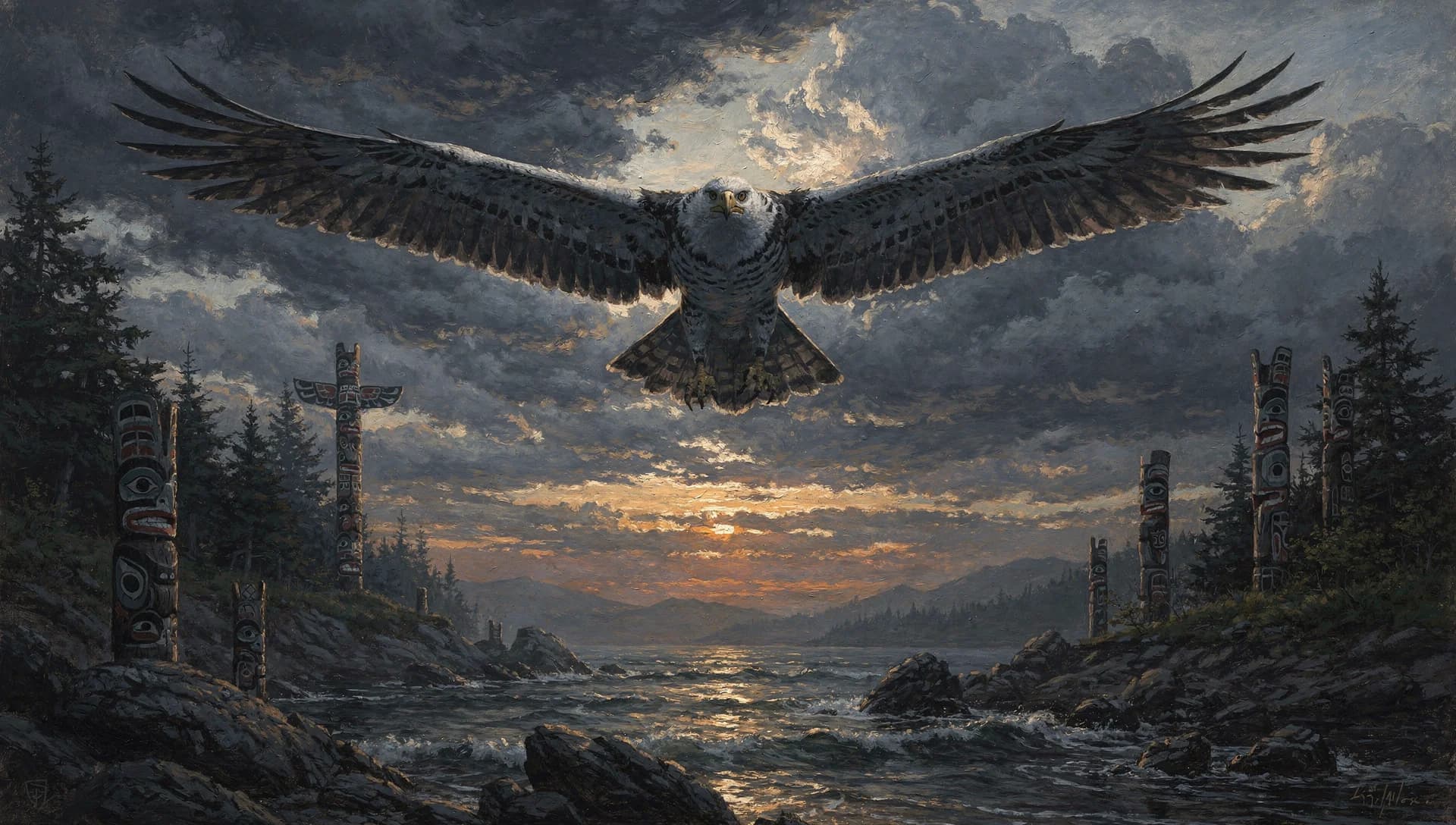
The Thunderbird Was Real: Fandors and the Indigenous American Giant Bird Tradition
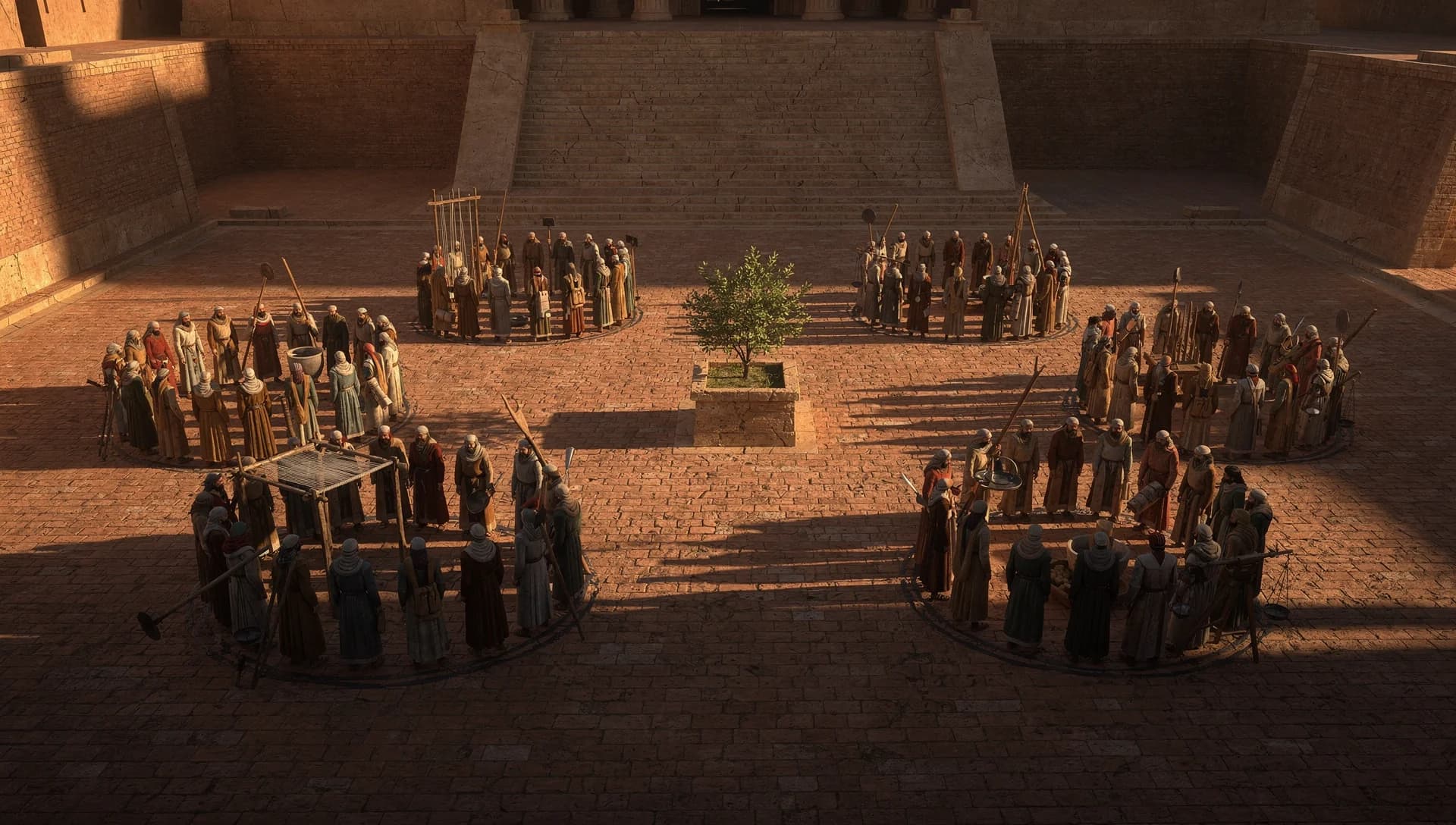
Civilization Delivered in Ten Portions: The Dalamatia Councils and the Sumerian ME
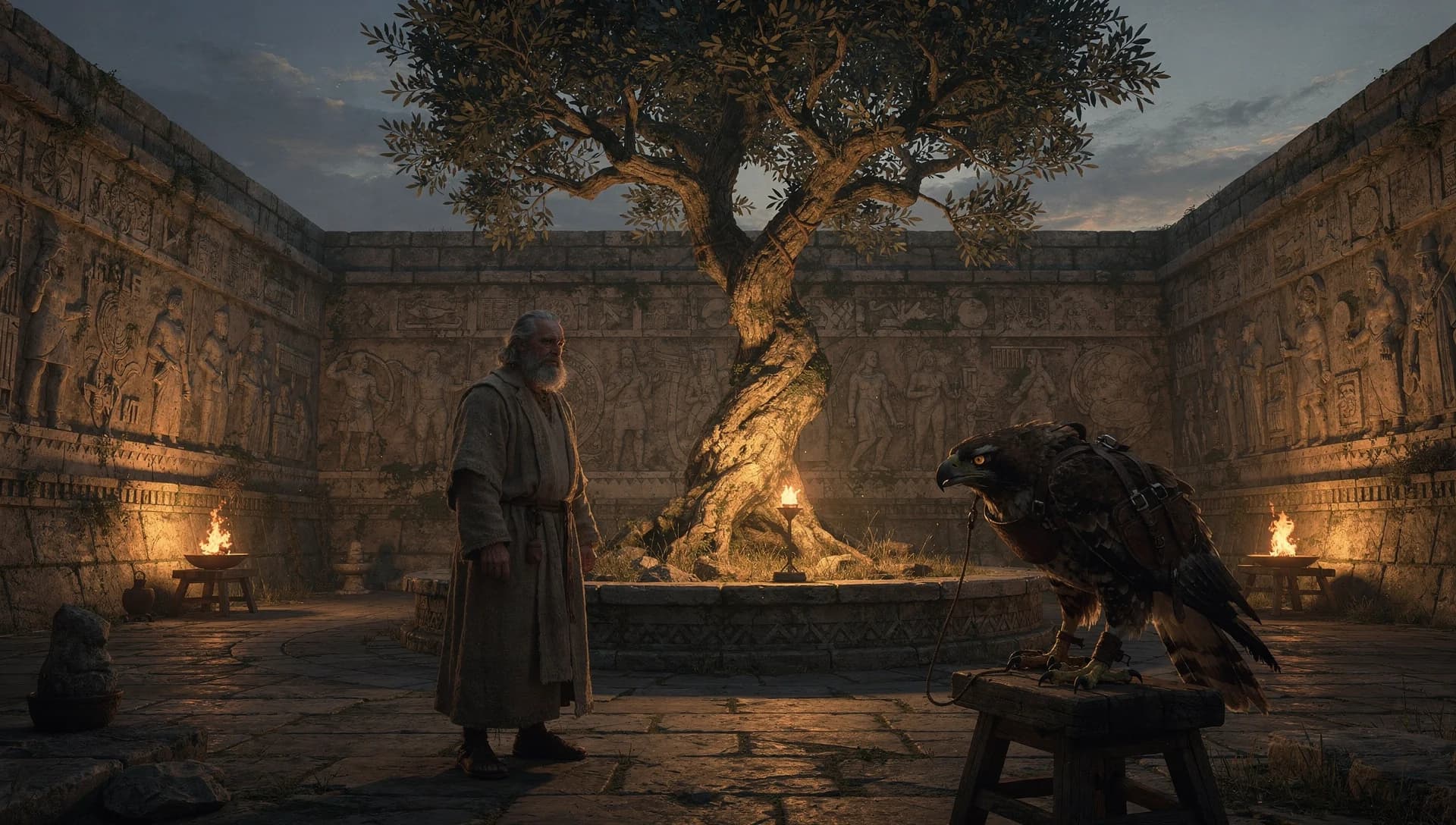
Three Elements, One Composition: Van, Fandor, and the Assyrian Palace Reliefs

The Corporeal Staff and the Anunnaki: When Mainstream Etymology Already Says the Answer
The Newsletter
Get the research behind each piece
Free. New Urantia Book explorations, the sources behind the videos, and early looks. No spam, unsubscribe anytime.
Prefer video? Follow on YouTube and Facebook.
Delivered through Substack. You can also read past issues.