
The One Who Did Not Die: Enoch's Fusion and the Genesis 5:24 Mystery
Genesis 5:24 records a single cryptic sentence: 'Enoch walked with God, and he was not; for God took him.' The text describes a figure who bypassed death entirely. The Urantia Book identifies what happened: Enoch was the first mortal in Urantia's history to fuse with his Thought Adjuster in the flesh, translated rather than buried.
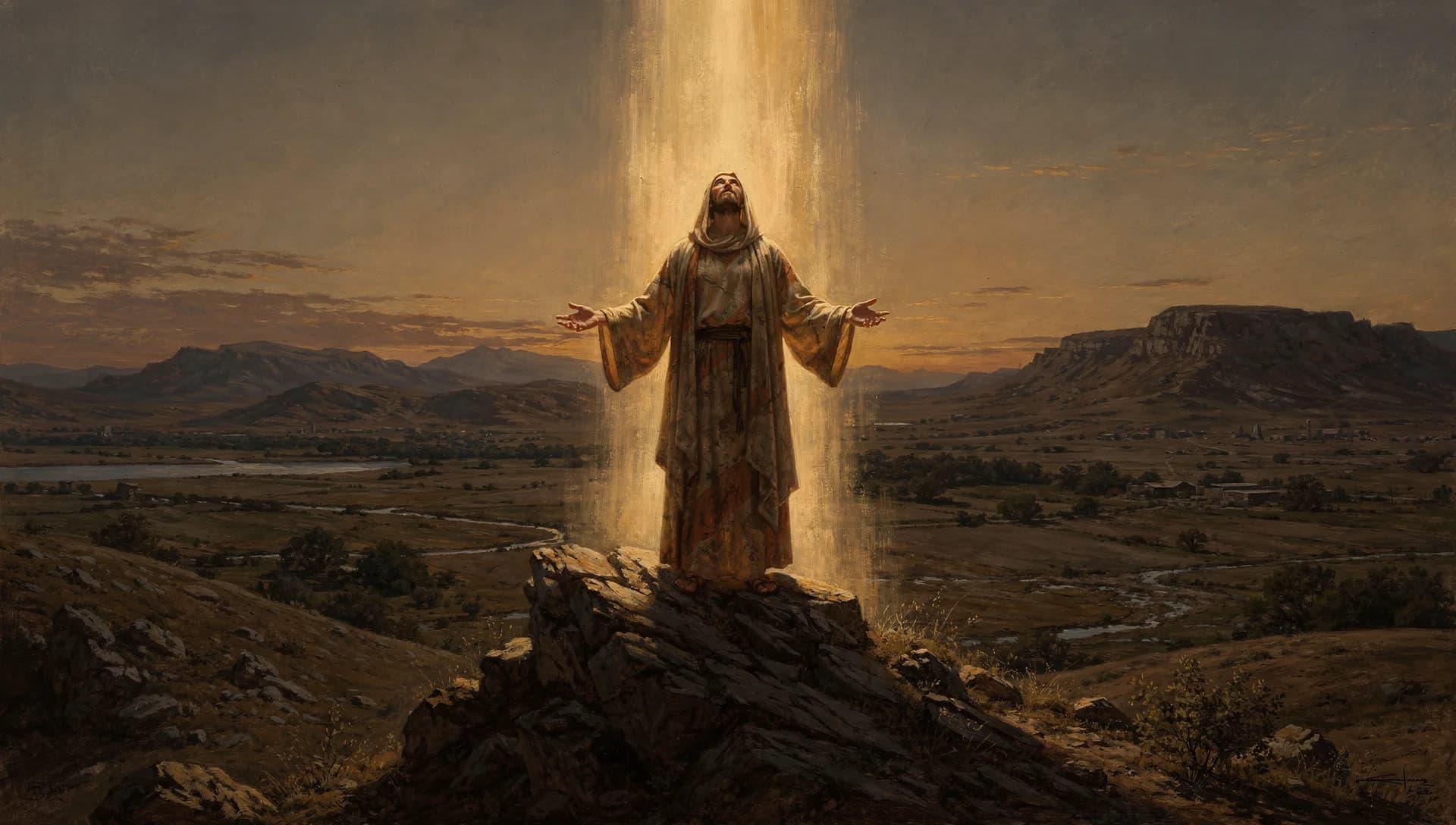
Enoch, first mortal to fuse with Thought Adjuster in the flesh = "Enoch walked with God, and he was not; for God took him" (Genesis 5:24)
This article expands on the decoder mapping. For the side-by-side card and quick reference, see the mapping page.
The Single Strangest Sentence in Genesis
The fifth chapter of Genesis is a genealogy. Adam begat Seth, Seth begat Enosh, and the list proceeds across ten generations to Noah. The formulaic structure is consistent: each patriarch is named, his age at the birth of his successor is given, his total lifespan is recorded, and the closing formula is "and he died."
One patriarch breaks the pattern. Enoch, seventh from Adam, receives a different closing formula. Genesis 5:24: "Enoch walked with God, and he was not; for God took him." The Hebrew verb laqach ("took") is the same verb used for Elijah's ascension in 2 Kings 2:3. The formula "he was not" indicates not death but disappearance from mortal existence. Enoch did not die; he was taken.
The text gives no further explanation. The later Jewish tradition elaborated extensively. The Enochic apocalyptic literature (1 Enoch, 2 Enoch, 3 Enoch) developed Enoch into a cosmic intermediary who ascended to heaven, received divine knowledge, and became the heavenly scribe. But the underlying Genesis claim is specific and simple: Enoch, alone among the patriarchs, bypassed death. The Urantia Book identifies what happened.
What the Urantia Book Says
The Urantia Book treats the Genesis record as preserving the memory of a specific technical event: Enoch was the first mortal in Urantia's history to achieve Thought Adjuster fusion during mortal life, which technically bypassed normal death.
The technical concept of Adjuster fusion is developed across Paper 40 (The Ascending Sons of God), Paper 101 (The Real Nature of Religion), and Paper 110 (Relation of Adjusters to Individual Mortals). Fusion is the permanent joining of the mortal personality with the indwelling Thought Adjuster, producing a new composite being that continues the ascension career across the universe levels. Fusion normally occurs after mortal death, on one of the mansion worlds. In rare cases fusion occurs during mortal life, producing what the Urantia Book calls a "translation" rather than a death.
The specific Enoch reference:
"Enoch, the first of the mortals of Urantia to fuse with the Thought Adjuster during the mortal life in the flesh." (UB 45:4.13)
The Urantia account treats Enoch as a specifically verified case. He was the first mortal in Urantia's dispensational history to achieve this outcome (UB 45:4.13), and the fact of his translation was preserved in the Hebrew tradition across the subsequent three millennia as the anomalous Genesis 5:24 record.
What the Ancient Source Says
The Genesis 5:24 text is the starting point. Hebrews 11:5 (New Testament) elaborates: "By faith Enoch was taken from this life, so that he did not experience death; 'he could not be found, because God had taken him away.' For before he was taken, he was commended as one who pleased God." The Hebrews author treats the Genesis record as a historical fact and places it within the faith-survival theological framework.
The Enochic apocalyptic literature elaborates extensively. 1 Enoch (Ethiopic Enoch), composed across the third century BCE through the first century CE, preserves a complex tradition of Enoch as the heavenly scribe, recipient of cosmic knowledge, intermediary figure between humanity and the divine council. The Book of the Watchers (1 Enoch 1-36) frames Enoch as the one who was shown the fallen angels' judgment and the cosmic secrets. The Book of Parables (1 Enoch 37-71) develops Enoch into the pre-existent Son of Man.
Modern scholarly treatments include George W. E. Nickelsburg's 1 Enoch: A Commentary (2 volumes, Fortress Press, 2001-2012), James VanderKam's Enoch: A Man for All Generations (University of South Carolina Press, 1995), and Annette Yoshiko Reed's Fallen Angels and the History of Judaism and Christianity (Cambridge University Press, 2005). The Enochic literature was substantially influential in Second Temple Judaism and early Christianity before being progressively marginalized in both traditions.
The Enochic traditions are not canonical in most Jewish and Christian communities (1 Enoch is canonical only in the Ethiopian Orthodox Church). The Genesis 5:24 fragment, by contrast, is canonical in all three Abrahamic traditions. The Urantia Book's claim does not require accepting the full Enochic apocalyptic elaboration; it requires only reading the Genesis fragment as preserving the historical fact of a translation event.
Why This Mapping Matters
The Enoch translation is theologically distinctive in the biblical tradition. It is one of only two clear translation cases (the other being Elijah). The rabbinic tradition preserved awareness that these cases were genuinely different from ordinary death. The Christian tradition preserved the fact but with less technical content.
The Urantia Book's contribution is to supply specific technical content. What happened at the Enoch translation was Thought Adjuster fusion during mortal life. The fusion bypassed ordinary mortal death, converting the transition directly into the morontia ascension career. The event occurred on Urantia because Urantia is a decimal or life-experiment world where unusual dispensational technique has been employed at various points.
This reading has several interpretive consequences. First, it establishes that the Genesis 5:24 fragment preserves genuine historical content, not merely theological construction. Second, it provides the technical mechanism (Adjuster fusion, rather than a vague "God took him"). Third, it places Enoch within the Urantia Book's broader account of Adjuster fusion as the central event of mortal religious life, of which Enoch's case was the first pre-mortem occurrence in Urantia's history.
The Enochic apocalyptic literature's subsequent elaboration is, on the Urantia account, a legitimate mythological development from a real event. Enoch's fusion with his Adjuster did produce a new composite being with cosmic authority. The apocalyptic traditions that developed Enoch into the heavenly scribe and the pre-existent Son of Man were elaborating on a real basis, even as they added substantial mythological content that was not part of the original event.
The mapping's significance is that it restores technical content to a Genesis fragment that has otherwise functioned as a puzzle in the biblical tradition. The puzzle has a specific answer: Enoch achieved Thought Adjuster fusion during mortal life, was translated rather than buried, and became the first historical case of what the Urantia revelation describes as the normal fusion outcome for all surviving mortals.
Sources
- The Urantia Book, Paper 45 (The Administration of the Local System), Paper 40 (The Ascending Sons of God), Paper 110 (Relation of Adjusters to Individual Mortals). Urantia Foundation, first printing 1955. Cited passage: 45:4.13.
- Nickelsburg, George W. E. 1 Enoch: A Commentary. 2 volumes, Fortress Press, 2001-2012.
- VanderKam, James C. Enoch: A Man for All Generations. University of South Carolina Press, 1995.
- Reed, Annette Yoshiko. Fallen Angels and the History of Judaism and Christianity: The Reception of Enochic Literature. Cambridge University Press, 2005.
- Stuckenbruck, Loren T. and Gabriele Boccaccini, editors. Enoch and the Synoptic Gospels: Reminiscences, Allusions, Intertextuality. Society of Biblical Literature, 2016.
- Speiser, E. A. Genesis. Anchor Yale Bible, Doubleday, 1964.
- Westermann, Claus. Genesis 1-11: A Commentary. Augsburg, 1984.
Confidence and Evidence
- Confidence: UB CONFIRMED
- Evidence rating: STRONG
- Basis: The Urantia Book identifies Enoch as a historical case of Adjuster fusion during mortal life. The Genesis 5:24 record preserves the distinctive non-death closing formula across an otherwise formulaic genealogy. The Hebrews 11:5 elaboration confirms the pre-modern reading of Genesis 5:24 as a genuine bypassing of death. The Enochic apocalyptic literature's extensive elaboration indicates that Second Temple Judaism preserved substantial memory of Enoch as an unusually significant figure.
Related Decoder Articles
- Thought Adjuster = Egyptian Ka, the Divine Spirit-Double
- Cain Receiving a Thought Adjuster = Mark of Cain
- Machiventa Melchizedek = Deleted Priest-King of Genesis
By Derek Samaras
Connecting Articles

The Mark of Mercy: Cain's Thought Adjuster and the Genesis Mark

The Act Behind the Symbol: Eve's Union with Cano and the Forbidden Fruit
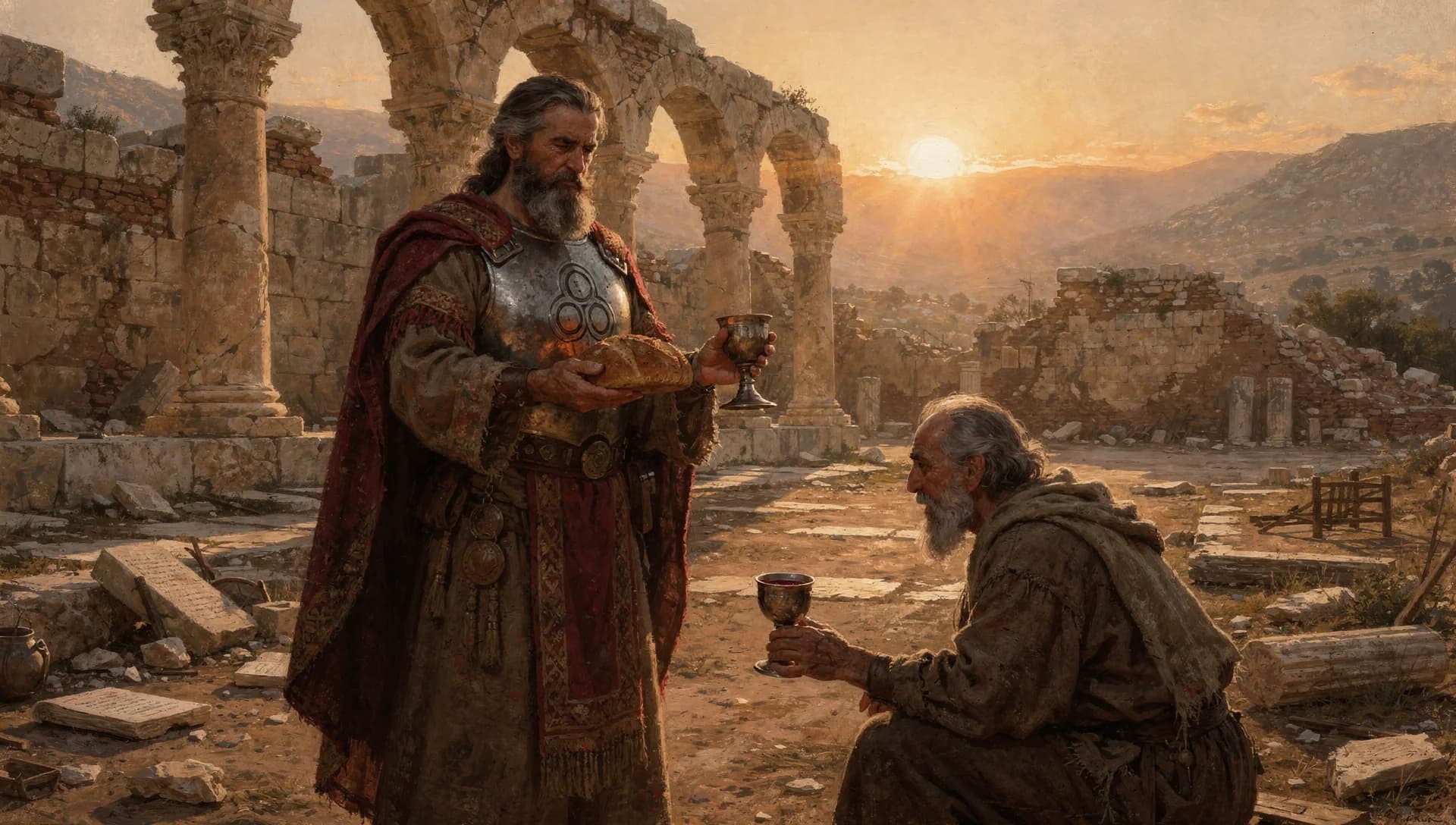
The Priest Who Had No Father: Machiventa Melchizedek and the Genesis Fragment

The Serpent Had a Name: Serapatatia and the Garden Narrative
The Newsletter
Get the research behind each piece
Free. New Urantia Book explorations, the sources behind the videos, and early looks. No spam, unsubscribe anytime.
Prefer video? Follow on YouTube and Facebook.
Delivered through Substack. You can also read past issues.