
The Serpent Had a Name: Serapatatia and the Garden Narrative
Genesis 3 tells the story of the serpent who convinced Eve to eat the forbidden fruit. The Urantia Book preserves the name of the actual historical figure whose role the Genesis serpent encodes: Serapatatia, a well-meaning Nodite leader whose good-faith miscalculation produced the Adamic default.

Serapatatia, well-meaning Nodite leader = The Serpent in the Garden of Eden
This article expands on the decoder mapping. For the side-by-side card and quick reference, see the mapping page.
The Figure Beneath the Name
The Hebrew word behind "serpent" in Genesis 3 is nachash (נָחָשׁ). The term has a range of meanings beyond the biological snake. It can mean to hiss, to divine or practice enchantment, and to shine or gleam. Rabbinic commentary preserved awareness of this semantic range. Bereshit Rabbah 20:5, a classical midrash, characterizes the pre-curse nachash as a radiant upright being, not a creature slithering in the dirt. The later association with snakes, the curse of crawling, the theological symbolism of evil embodied in reptilian form, was a development the Genesis text itself narrates as the consequence of the garden episode.
What the Hebrew tradition did not preserve is what the nachash was before it was translated into snake iconography. The Urantia Book preserves a specific account. The serpent of Genesis 3 is not a mythological construct but a compressed and symbolically coded memory of a specific historical figure named Serapatatia, a Nodite leader of genuine spiritual seriousness whose miscalculated intervention produced the Adamic default.
What the Urantia Book Says
Serapatatia's profile is given in specific detail:
"Adam had just finished his first one hundred years on earth when Serapatatia, upon the death of his father, came to the leadership of the western or Syrian confederation of the Nodite tribes. Serapatatia was a brown-tinted man, a brilliant descendant of the onetime chief of the Dalamatia commission on health mated with one of the master female minds of the blue race of those distant days." (UB 75:3.1)
The lineage is important. Serapatatia was descended from one of the Caligastia staff's corporeal members, specifically the chief of the commission on health, crossed with the best of the blue race (UB 75:3.1). The genetic substrate was therefore of the highest quality available in the pre-Adamic human population. His intellectual and spiritual capacities were correspondingly exceptional.
His role in the Garden is specified:
"Serapatatia became one of the most able and efficient of all of Adam's lieutenants. He was entirely honest and thoroughly sincere in all of his activities; he was never conscious, even later on, that he was being used as a circumstantial tool of the wily Caligastia." (UB 75:3.3)
"Presently, Serapatatia became the associate chairman of the Edenic commission on tribal relations, and many plans were laid for the more vigorous prosecution of the work of winning the remote tribes to the cause of the Garden." (UB 75:3.4)
This is the critical point. Serapatatia was not an outsider, not an adversary, not a deceiver. He was a trusted Edenic lieutenant, holding a senior administrative position, working from motives of genuine devotion to the Adamic mission. His intervention originated not in malice but in impatience, the desire to accelerate what he perceived as good. The Urantia Book is emphatic on this point:
"It should again be emphasized that Serapatatia was altogether honest and wholly sincere in all that he proposed. He never once suspected that he was playing into the hands of Caligastia and Daligastia. Serapatatia was entirely loyal to the plan of building up a strong reserve of the violet race before attempting the world-wide upstepping of the confused peoples of Urantia. But this would require hundreds of years to consummate, and he was impatient; he wanted to see some immediate results—something in his own lifetime." (UB 75:3.6)
The fateful conversation with Eve is narrated in specific historical detail:
"He held many conferences with Adam and Eve—especially with Eve—and they talked over many plans for improving their methods. One day, during a talk with Eve, it occurred to Serapatatia that it would be very helpful if, while awaiting the recruiting of large numbers of the violet race, something could be done in the meantime immediately to advance the needy waiting tribes." (UB 75:3.5)
The scheme matured over five years of discussion. Eventually Eve consented to a secret meeting with Cano, the brilliant Nodite leader, which resulted in the default. Serapatatia's response to the consequences was not defensive or evasive:
"Upon the realization of what had happened, Serapatatia was overcome with consternation and beside himself with fear and remorse. The next day he drowned himself in the great river." (UB 75:5.4)
The figure Genesis 3 compresses into the serpent is this Serapatatia: trusted lieutenant, honest intentions, catastrophic miscalculation, self-destruction in the aftermath.
What the Ancient Source Says
Genesis 3 presents the serpent as "more crafty than any other beast of the field" (Genesis 3:1), speaking to Eve in language, persuading her with theological arguments about the forbidden fruit ("you will not die... your eyes will be opened, and you will be like God, knowing good and evil"). The serpent's role is conversational and rhetorical, not predatory. After the default, the serpent is cursed to go on its belly and eat dust (Genesis 3:14), a punishment that presupposes a prior upright form.
The Hebrew nachash, as noted, carries a range of meanings. Gordon Wenham's Genesis 1-15 (Word Biblical Commentary, Word Books, 1987) documents the semantic range. The International Standard Version translates nachash as "the Shining One" in certain interpretive readings. The connection to seraph (fiery serpent / serpent beings) is philologically established; seraphim in Isaiah 6 are both serpentine and fiery-bright.
The rabbinic and pseudepigraphal tradition preserved significant further material about the pre-curse serpent figure. Bereshit Rabbah and the Apocalypse of Moses describe the nachash as an upright being, possibly with limbs, associated with wisdom and radiance. R. Patai's The Hebrew Goddess (Wayne State University Press, 1990) documents the broader ancient Near Eastern context of the divine-serpent motif. The Ugaritic Baal Cycle preserves related material.
Philological scholarship has long recognized that the Genesis serpent is not a simple biological snake. What has been missing from the scholarly reconstruction is a specific historical referent. The nachash is clearly the compressed symbol of something older than the Genesis composition, but what it is compressing has been reconstructable only through indirect means: comparative mythology, philological analysis, rabbinic memory of pre-Genesis tradition.
The name Serapatatia does not appear in any surviving ancient Near Eastern text. The phonological compression Serapatatia → Serap → Seraph → Serpent is consistent with normal processes of name evolution across millennia of oral transmission and multiple language shifts (Edenic → Nodite → proto-Semitic → Hebrew). The compression is not philologically guaranteed but is philologically plausible. The seraph-nachash-serpent triangle in the Hebrew tradition is the residue one would expect if the original memory was of a specific named individual named Serapatatia whose role in the Eden narrative was later theologically transposed into the serpent figure.
Why This Mapping Matters
The Genesis 3 narrative is one of the theologically most consequential passages in the biblical tradition. It grounds the doctrines of original sin, the fall, human nature's corruption, the need for redemption, and the theological anthropology that shaped Western religious civilization for two millennia. The identity of the serpent has been a continuous subject of theological and philological inquiry throughout this history.
The conventional theological tradition treats the serpent as Satan or a Satan-proxy, the embodiment of evil and deceptive malice. This reading is already present in Wisdom of Solomon 2:24 ("through the devil's envy death entered the world") and becomes explicit in Revelation 12:9 ("the great dragon was thrown down, that ancient serpent, who is called the Devil and Satan"). The identification of the serpent with the cosmic adversary became the standard Christian reading and has shaped the entire theology of the fall.
The Urantia Book's account preserves the role of Caligastia (the cosmic adversary) while identifying the proximate actor differently. The proximate cause of the default was not a malicious adversarial being but a well-meaning trusted lieutenant. Caligastia was the background manipulator; Serapatatia was the foreground instrument. The distinction matters theologically. The fall was not produced by a straightforward encounter with evil but by a complex miscalculation involving genuine sincerity, impatience, and misjudgment of consequences.
This shifts the theological reading of the episode. Original sin, in the Urantia account, is not the human willingness to disobey divine command under the influence of malicious temptation. It is the human (and superhuman) capacity to choose well-intentioned shortcuts to good ends and to produce catastrophic consequences thereby. Serapatatia is not Satan. He is everyone who has ever wanted to accelerate what they believed was a righteous cause without waiting for the slower divine process.
The mapping's significance is that it restores a specific historical referent to a theologically central figure. The serpent is not a mythological construct or a cosmic adversary. The serpent is Serapatatia, whose name the Hebrew tradition partially preserved in the seraph-nachash semantic field, whose role the Genesis narrative compressed into symbolic form, and whose human failure is the template of all good-faith failures that have since produced catastrophic consequences through miscalculated haste.
The philological bridge (Serapatatia → Seraph → Nachash → Serpent) is not rigorously demonstrable through standard historical-linguistic methods. But the fit between the Urantia account's specific historical figure and the Genesis text's symbolic compression is tight enough to warrant the identification. The well-meaning trusted lieutenant whose intervention produced the default is the kind of figure that two thousand years of oral tradition would plausibly compress into the persuasive serpent of Genesis 3.
Sources
- The Urantia Book, Paper 75 (The Default of Adam and Eve). Urantia Foundation, first printing 1955. Cited passages: 75:3.1, 75:3.3, 75:3.4, 75:3.5, 75:3.6, 75:5.4.
- Wenham, Gordon J. Genesis 1-15. Word Biblical Commentary, Word Books, 1987.
- Patai, Raphael. The Hebrew Goddess. Third edition, Wayne State University Press, 1990.
- Bereshit Rabbah (Genesis Rabbah). Translated by Jacob Neusner, Genesis Rabbah: The Judaic Commentary to the Book of Genesis, 3 volumes, Scholars Press, 1985.
- Speiser, E. A. Genesis. Anchor Yale Bible, Doubleday, 1964.
- Westermann, Claus. Genesis 1-11: A Commentary. Translated by John J. Scullion, Augsburg, 1984.
- Day, John. God's Conflict with the Dragon and the Sea: Echoes of a Canaanite Myth in the Old Testament. Cambridge University Press, 1985.
Confidence and Evidence
- Confidence: INFORMED SPECULATION
- Evidence rating: MODERATE
- Basis: The Urantia Book describes Serapatatia in specific detail and assigns him the proximate causal role in the Adamic default. The Hebrew nachash semantic range (shining, serpentine, enchanting) is consistent with a memory of a specifically non-ordinary figure. The philological bridge Serapatatia → Seraph → Nachash is not rigorously demonstrable but is consistent with normal name-evolution processes across more than thirty millennia of oral transmission.
Related Decoder Articles
- Eve's Mating with Cano = "Forbidden Fruit" / Original Sin
- Machiventa Melchizedek = Deleted Priest-King of Genesis
- Caligastia, Planetary Prince = An / Anu
By Derek Samaras
Connecting Articles
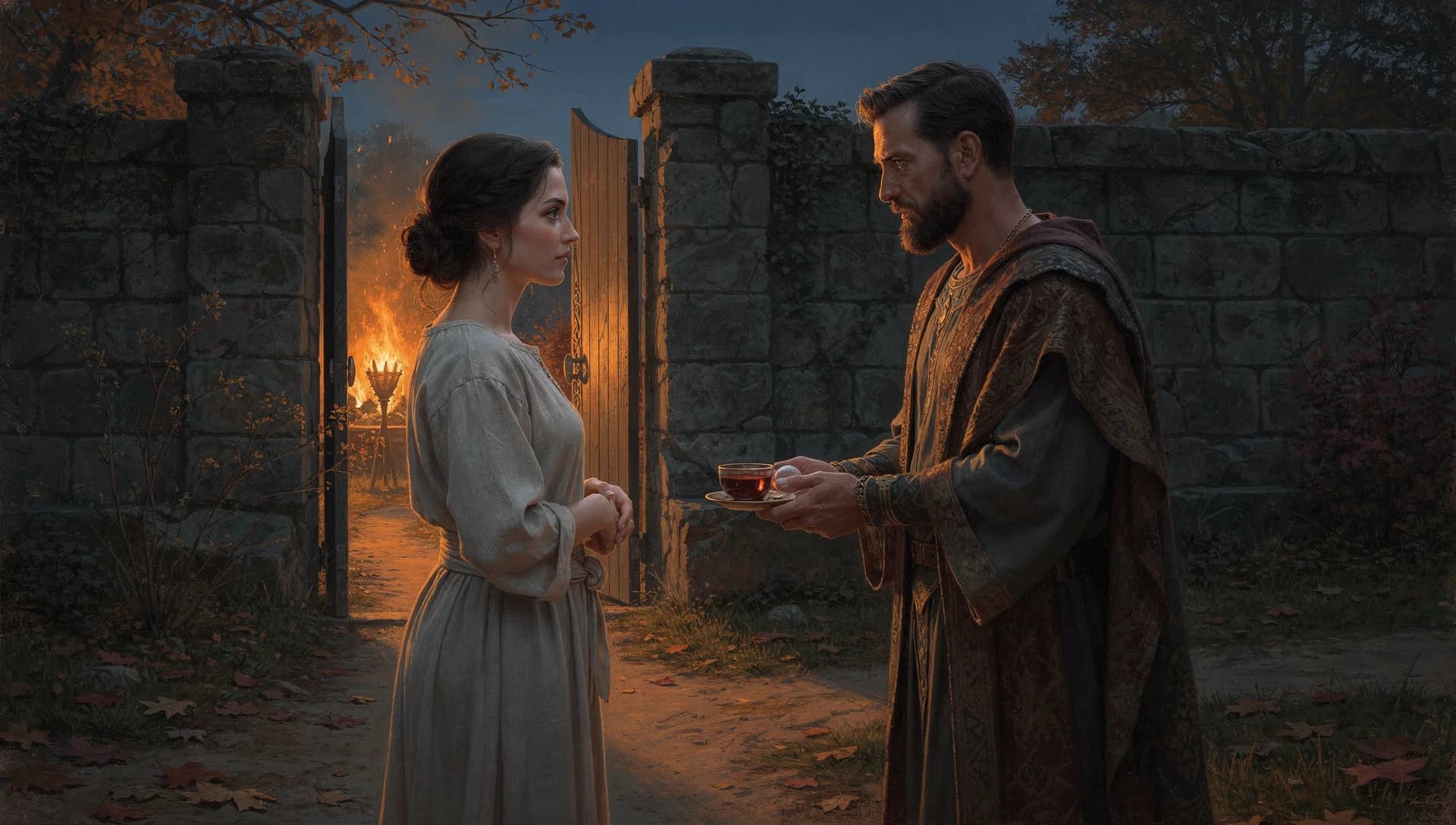
The Act Behind the Symbol: Eve's Union with Cano and the Forbidden Fruit
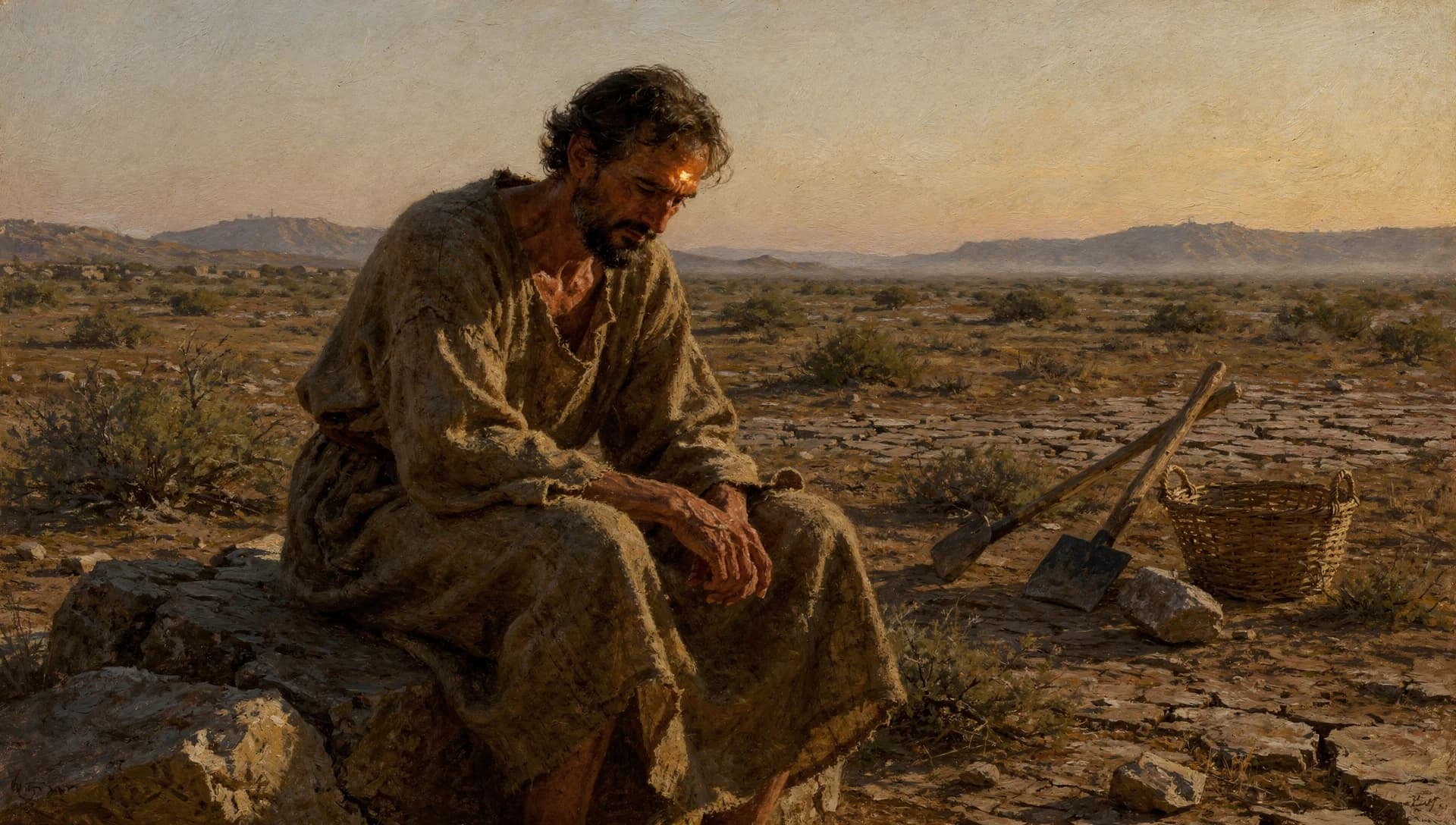
The Mark of Mercy: Cain's Thought Adjuster and the Genesis Mark
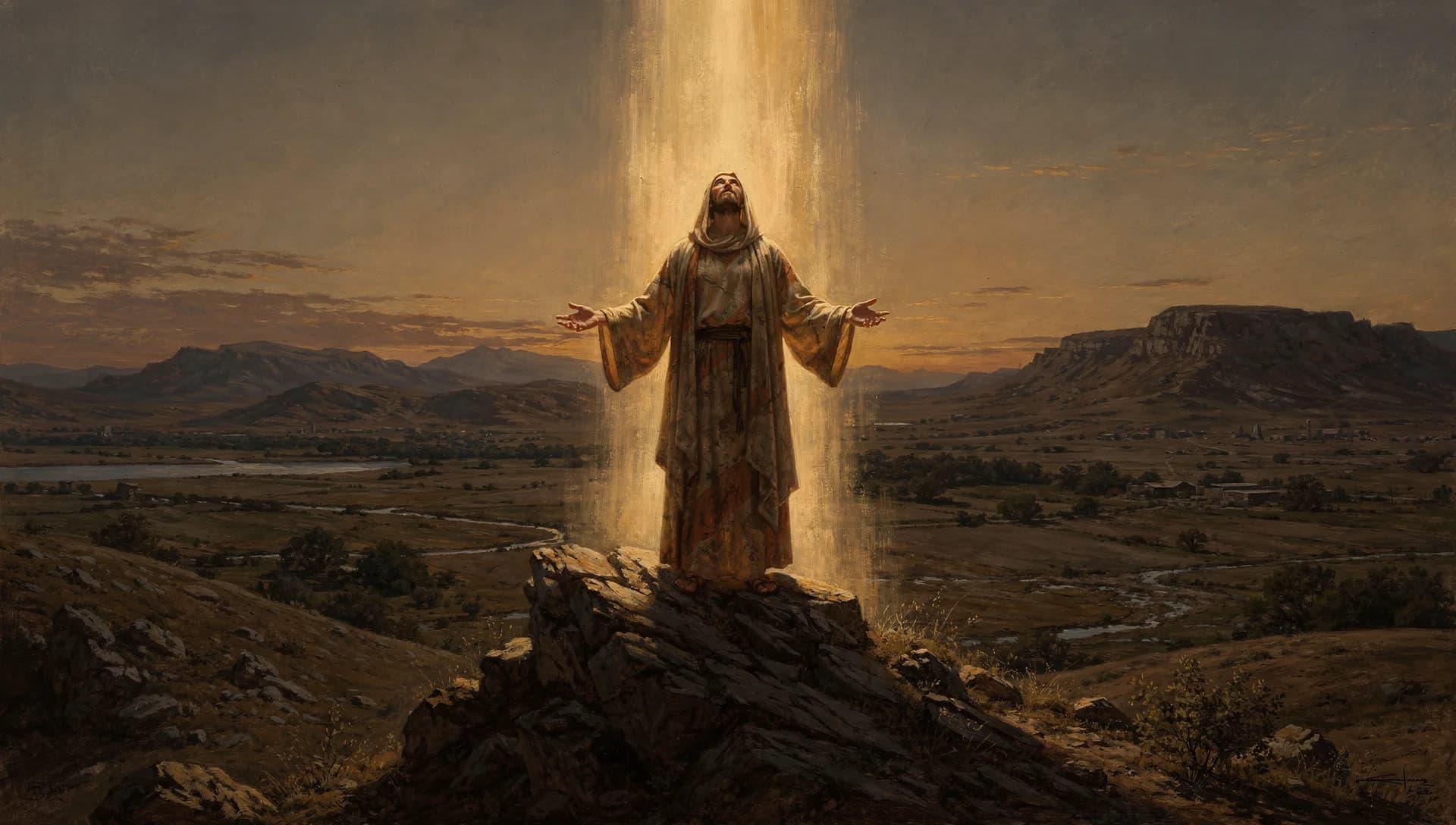
The One Who Did Not Die: Enoch's Fusion and the Genesis 5:24 Mystery
The Priest Who Had No Father: Machiventa Melchizedek and the Genesis Fragment
The Newsletter
Get the research behind each piece
Free. New Urantia Book explorations, the sources behind the videos, and early looks. No spam, unsubscribe anytime.
Prefer video? Follow on YouTube and Facebook.
Delivered through Substack. You can also read past issues.