
The Spark Within the Body: Orphic Brotherhood and the Thought Adjuster in Greek Dress
The Orphic brotherhood taught that each human soul carries a divine spark of Dionysus, imprisoned in the body through a primordial fault, and that purification through ethical life and ritual initiation is required for the spark to return to its divine source. The Urantia Book calls the Orphic brotherhood 'the best of the cults,' and its core teaching reads as the Thought Adjuster doctrine preserved in Greek mystery dress.
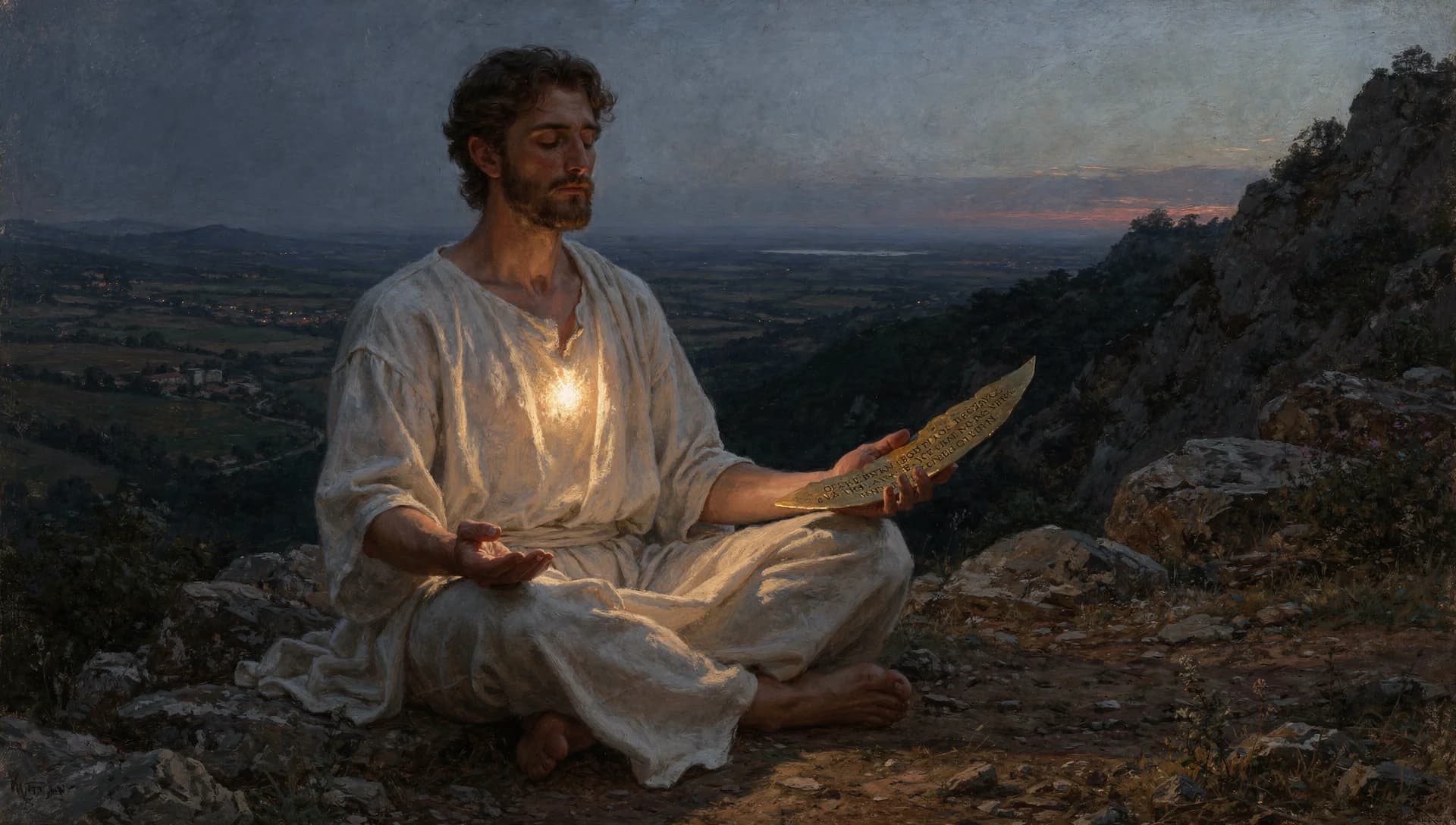
Thought Adjuster doctrine in Greek mystery-cult form = Orphic brotherhood, the purification of the divine spark
This article expands on the decoder mapping. For the side-by-side card and quick reference, see the mapping page.
The Best of the Cults
The Orphic brotherhood appeared in Greek religious life around the sixth century BCE, and from the start it taught something that set it apart from the wider polytheism around it. The teaching went like this. Human beings arose from the ashes of the Titans, who had consumed the infant Dionysus. Every person therefore carries a Dionysian spark of the divine, locked inside a Titanic body. The Orphic life of moral discipline, ritual initiation, and abstention from meat was the path by which that spark could be purified and eventually return to its source.
What set the Orphic brotherhood apart was the inward turn. Civic ritual was not the heart of the matter. Personal ethical transformation was. That made the brotherhood distinct from the polis-centered worship that dominated Greek religion.
What the Urantia Book Says
The Urantia Book singles out the Orphic brotherhood among the Greek mystery cults:
"The Eleusinian mysteries grew up within the Olympian pantheon, a Greek version of the worship of fertility; Dionysus nature worship flourished; the best of the cults was the Orphic brotherhood, whose moral preachments and promises of salvation made a great appeal to many." (98:2.10)
The cosmic reality the Orphic teaching reaches for is the Thought Adjuster. The Urantia Book describes the Adjuster as an actual fragment of the Universal Father indwelling the human mind:
"The material mind of mortal man is the cosmic loom that carries the morontia fabrics on which the indwelling Thought Adjuster threads the spirit patterns of a universe character of enduring values and divine meanings—a surviving soul of ultimate destiny and unending career, a potential finaliter." (111:2.2)
The Adjuster's role in moral and spiritual transformation is direct:
"Material evolution has provided you a life machine, your body; the Father himself has endowed you with the purest spirit reality known in the universe, your Thought Adjuster. But into your hands, subject to your own decisions, has been given mind, and it is by mind that you live or die. It is within this mind and with this mind that you make those moral decisions which enable you to achieve Adjusterlikeness, and that is Godlikeness." (111:1.4)
The Orphic teaching of an indwelling divine fragment that requires ethical cultivation for ultimate reunion with the divine runs parallel to the Adjuster doctrine. The mythological dress is different. A Dionysian spark in a Titanic body is not the same picture as a Father fragment indwelling an evolutionary mind. But the working theology lines up: divinity within, moral cooperation, eventual return.
What the Ancient Sources Say
The Orphic tradition is documented across substantial primary and archaeological sources. The principal texts include the Derveni Papyrus (fourth century BCE, discovered in 1962 near Derveni in northern Greece, and the oldest known European manuscript preserving Orphic theological commentary), the Gold Leaves from Thurii and other Orphic burial sites (which preserve eschatological and initiatory formulas), and the Orphic hymns (a collection of eighty-seven hymns preserved in late-antique manuscripts).
M. L. West's The Orphic Poems (Clarendon Press, 1983) gives the principal modern scholarly reconstruction of Orphic theological literature. From the fragmentary evidence, West reconstructs the Orphic anthropogony: the Titans dismember and consume the infant Dionysus, Zeus destroys the Titans by thunderbolt, humanity emerges from the ashes, and human beings inherit a double nature, divine spark within Titanic body.
W. K. C. Guthrie's Orpheus and Greek Religion (Methuen, 1935; revised 1952) is the foundational twentieth-century treatment. Guthrie documented the Bios Orphikos, the Orphic way of life, including vegetarian discipline, the famous abstention from beans (a prohibition shared with the Pythagoreans), and participation in the initiation sacraments.
Walter Burkert's Ancient Mystery Cults (Harvard University Press, 1987) places the Orphic brotherhood within the broader Greek mystery-cult landscape. Burkert draws a clear contrast: the Orphic brotherhood emphasized individual ethical transformation, while the Eleusinian mysteries centered on communal ritual.
The Dionysian spark theology has long been compared to the Upanishadic atman doctrine and the later Mahayana teaching on Tathagatagarbha (treated in the companion article on Buddha-nature). The pattern of an indwelling divine fragment, preserved across Orphic Greek, Upanishadic Indian, and Mahayana Buddhist sources, is exactly the kind of shared substrate the Urantia Book points to at 111:0.4 as approximations of the Adjuster doctrine.
The Pythagorean tradition overlapped with the Orphic so heavily that ancient writers sometimes treated the two as one movement. Both stressed mathematical and philosophical purification of the soul, vegetarian discipline, and an initiated community.
Carl Ruck's Persephone's Quest: Entheogens and the Origins of Religion (Yale University Press, 1986) discusses the ritual use of psychoactive substances some scholars identify in the Orphic and Eleusinian initiations. That debate is contested, but it does not affect the mapping of the theological content.
Why This Mapping Matters
The Orphic teaching of an indwelling divine fragment that requires ethical cultivation for return to the divine is one of the closest pre-Urantia preservations of the Thought Adjuster doctrine in any world religious tradition. The Urantia Book explicitly singles out the Orphic brotherhood as the best of the Greek mystery cults, which signals that the teaching was held in elevated regard relative to the wider mystery substrate.
Place the Orphic teaching alongside the Upanishadic atman (which the Urantia Book at 111:0.4 explicitly names as approximating the Adjuster), the Mahayana Tathagatagarbha (treated in the companion article), and the Adjuster doctrine itself, and a clear cross-cultural pattern emerges. These traditions are parallel preservations of the same cosmic reality the Urantia Book documents directly.
The ethical and purificatory emphasis of the Orphic life lines up with the Urantia Book's teaching on moral cooperation with the Adjuster. The Adjuster's transforming work in the human mind requires the human's moral decision and cooperative life direction. The Orphic insistence on a disciplined, purified life preserves that cooperative requirement in religious form.
The inward, individualistic character of Orphic religion, focused on personal transformation rather than communal ritual, also matters. The Urantia Book's praise of the Orphic brotherhood as the best of the cults reflects this orientation, which fits the Urantia Book's broader teaching that the Adjuster relationship is personal, and that genuine religious life is the moral and spiritual transformation of the individual.
The Greek myth (a Dionysian spark in a Titanic body) is not the same as the Urantia Book's cosmology (a Father fragment in an evolutionary mind). But the working theology is parallel, and the Orphic teaching reads as a real preservation of the cosmic reality the Urantia Book documents directly.
The takeaway: the Orphic brotherhood should be read as a genuine approximation of the Thought Adjuster doctrine in Greek mystery dress. The Urantia Book's direct praise of the Orphic tradition as the best of the cults endorses the theological quality of the teaching, placing it alongside the Upanishadic atman and the Mahayana Tathagatagarbha as a valuable cross-cultural preservation of a real cosmic insight.
Sources
- The Urantia Book, Paper 98 (The Melchizedek Teachings in the Occident), Paper 111 (The Adjuster and the Soul). Urantia Foundation, first printing 1955. Cited passages: 98:2.10, 111:0.4, 111:1.4, 111:2.2.
- West, M. L. The Orphic Poems. Clarendon Press, 1983.
- Guthrie, W. K. C. Orpheus and Greek Religion. Methuen, 1935; revised 1952.
- Burkert, Walter. Ancient Mystery Cults. Harvard University Press, 1987.
- Edmonds, Radcliffe G. III. Redefining Ancient Orphism: A Study in Greek Religion. Cambridge University Press, 2013.
- Kern, Otto. Orphicorum Fragmenta. Weidmann, 1922.
- The Derveni Papyrus. Edited by Theokritos Kouremenos, Gabor Betegh, and George Parassoglou, Olschki, 2006.
Confidence and Evidence
- Confidence: UB CONFIRMED
- Evidence rating: STRONG
- Basis: The Urantia Book directly identifies the Orphic brotherhood as the best of the mystery cults at UB 98:2.10, and at 111:0.4 explicitly compares the atman tradition with the Adjuster doctrine. The Orphic divine-spark theology runs structurally parallel to the Adjuster doctrine. The disciplined Orphic life parallels the Urantia Book's teaching on moral cooperation with the Adjuster.
Related Decoder Articles
- Thought Adjuster = Tathagatagarbha Buddha-Nature
- Eleusinian Mysteries = Adamic Agricultural Inheritance
- Cybele and Attis = Phrygian Mystery Cult
Byline: Derek Samaras | Urantia Book Network | April 2026
Connecting Articles

The Mark of Mercy: Cain's Thought Adjuster and the Genesis Mark

Two Realities, Two Names: Yang and Yin as Soul and Spirit
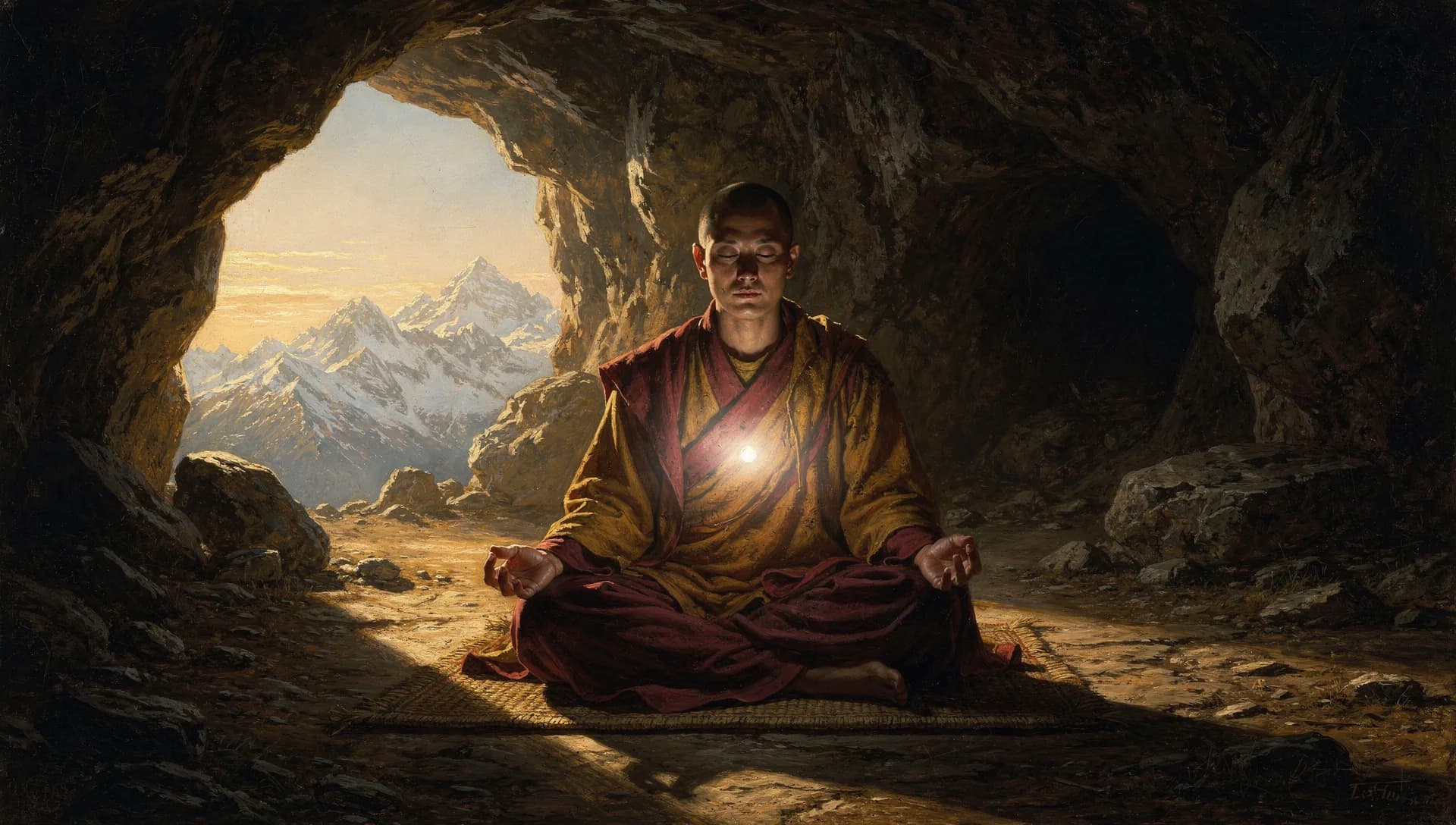
The Seed of the Infinite Within: Tathagatagarbha, Atman, and the Thought Adjuster
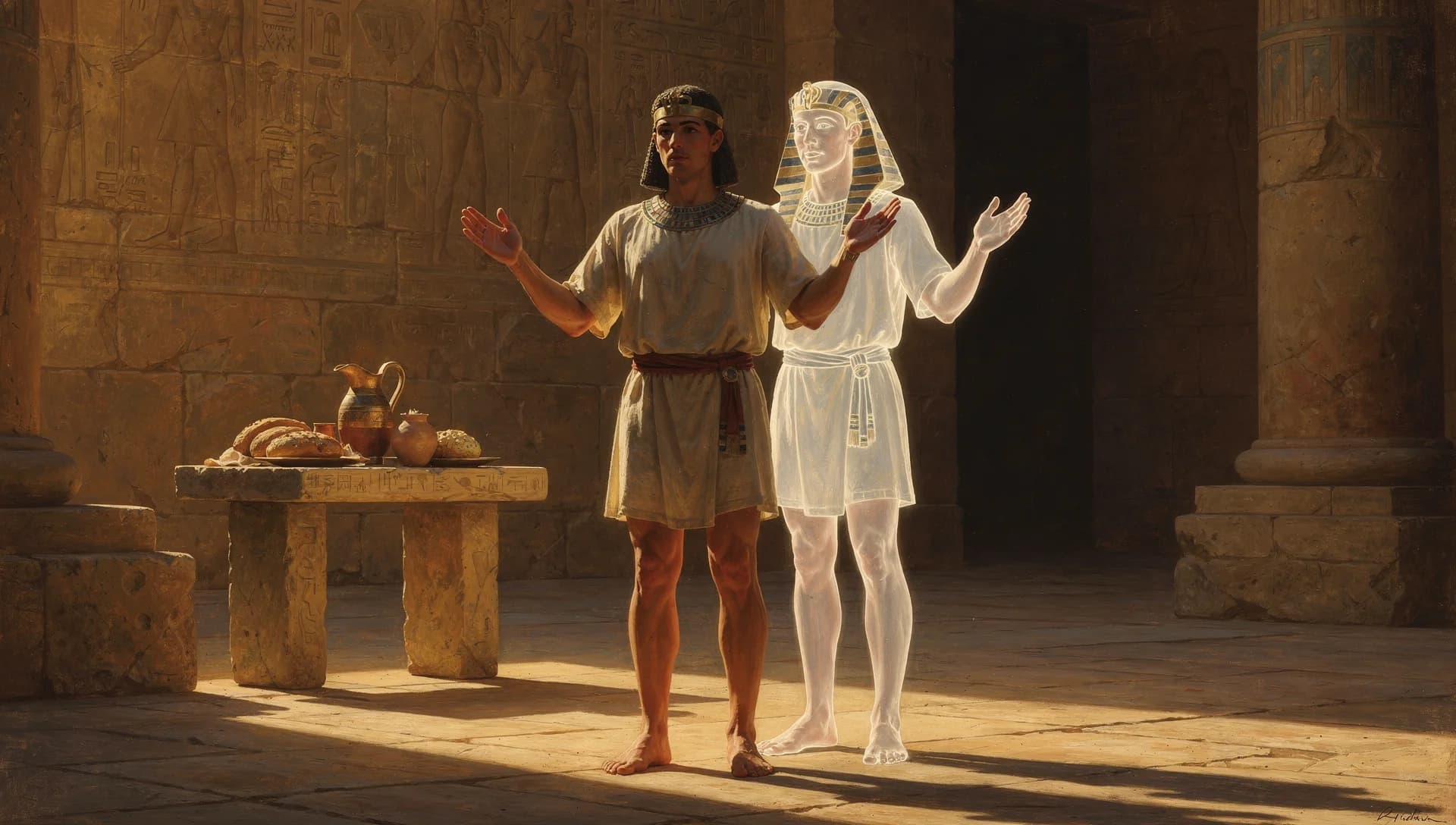
The Spirit-Double: The Egyptian Ka and the Thought Adjuster
The Newsletter
Get the research behind each piece
Free. New Urantia Book explorations, the sources behind the videos, and early looks. No spam, unsubscribe anytime.
Prefer video? Follow on YouTube and Facebook.
Delivered through Substack. You can also read past issues.