
Mercy and Justice, Part One: The Bully on the Road
Jesus rescued a boy from a bully, then stopped his own student from punishing the bully. The reason he gave draws a line most of us have never thought to draw.
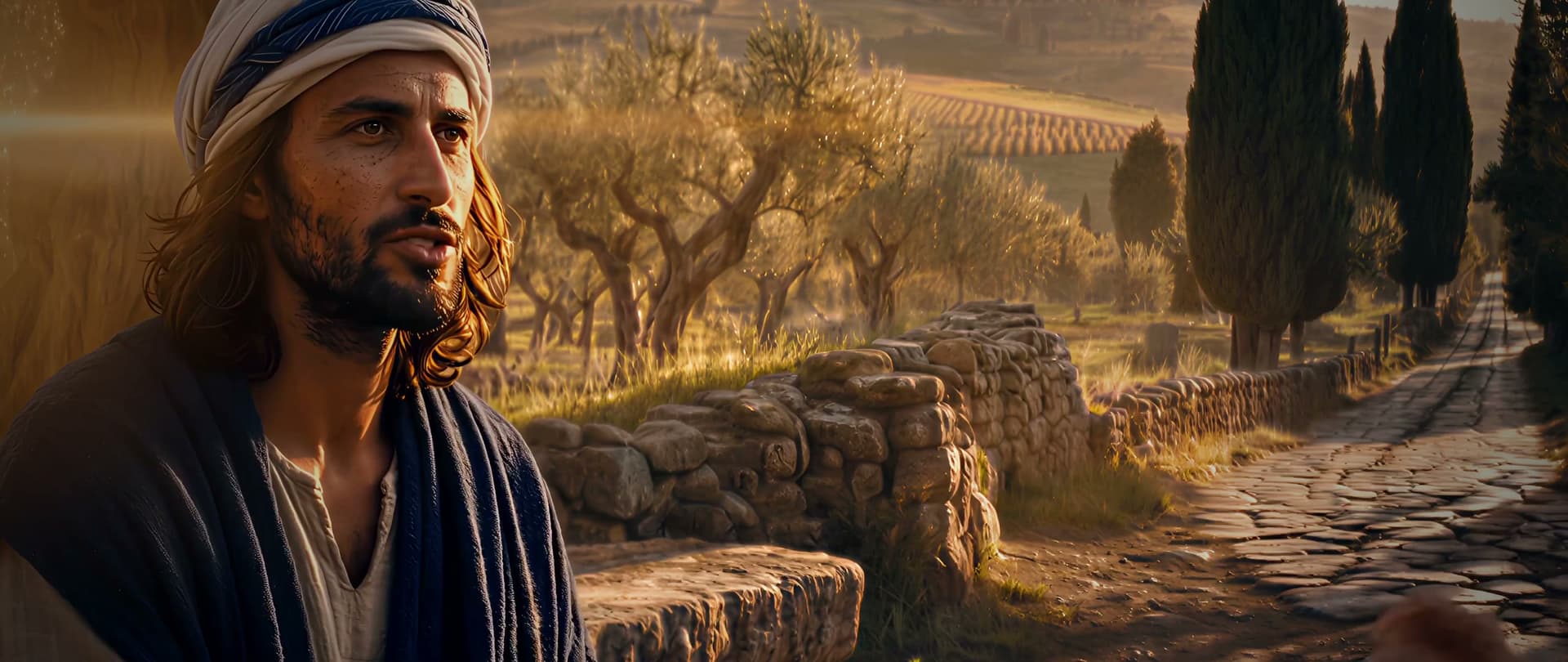
Mercy and Justice, Part One: The Bully on the Road
Derek Samaras | Urantia Book Network | August 2026
There is a cinematic version of this. Watch the scroll film: Mercy and Justice, Part One, and the full film is below.
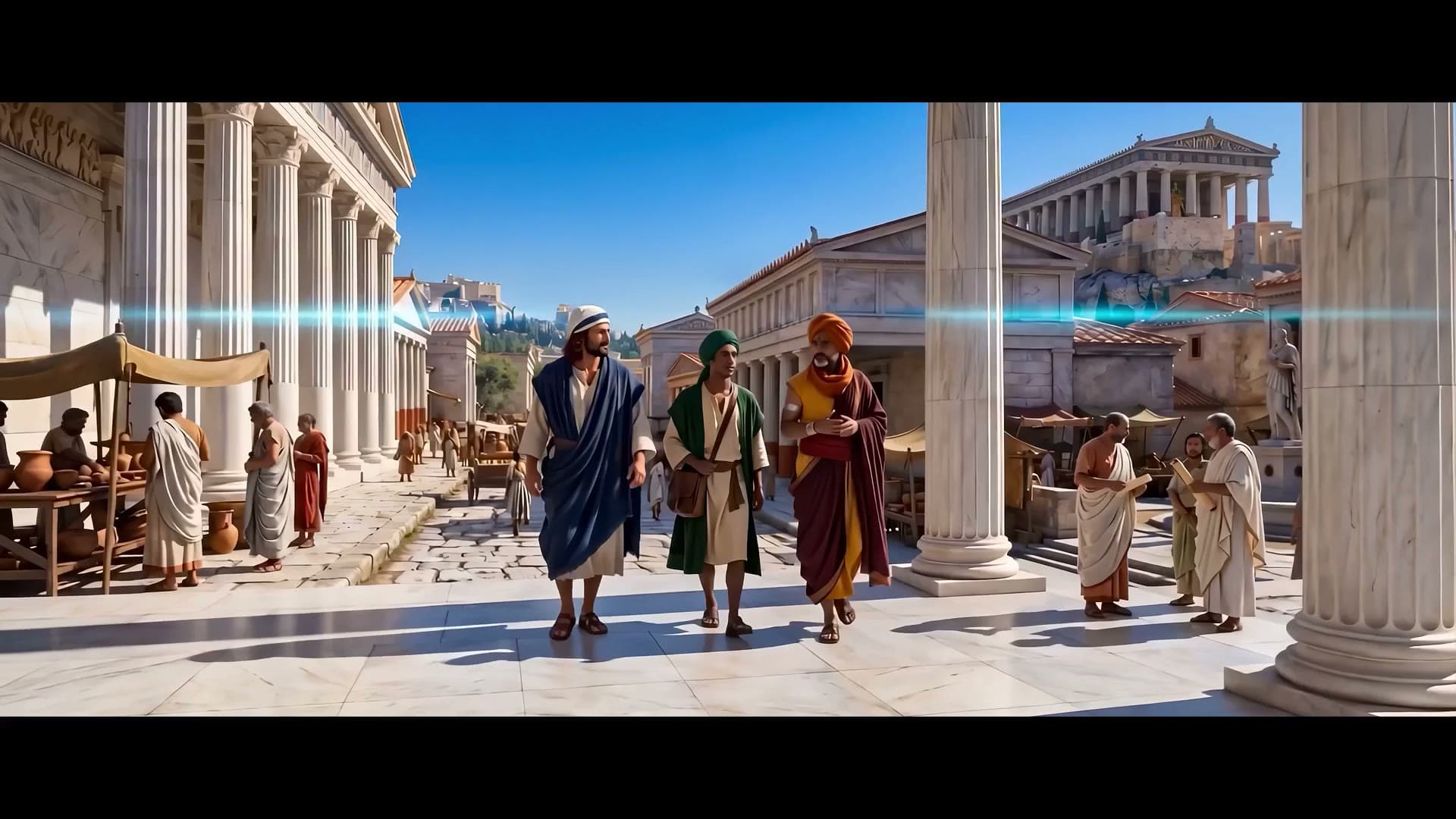
On his way home from Rome, walking the Appian Way toward Tarentum with a merchant and the merchant's young son Ganid, Jesus gave a set of teachings that started with a simple roadside fight and ended somewhere much larger.
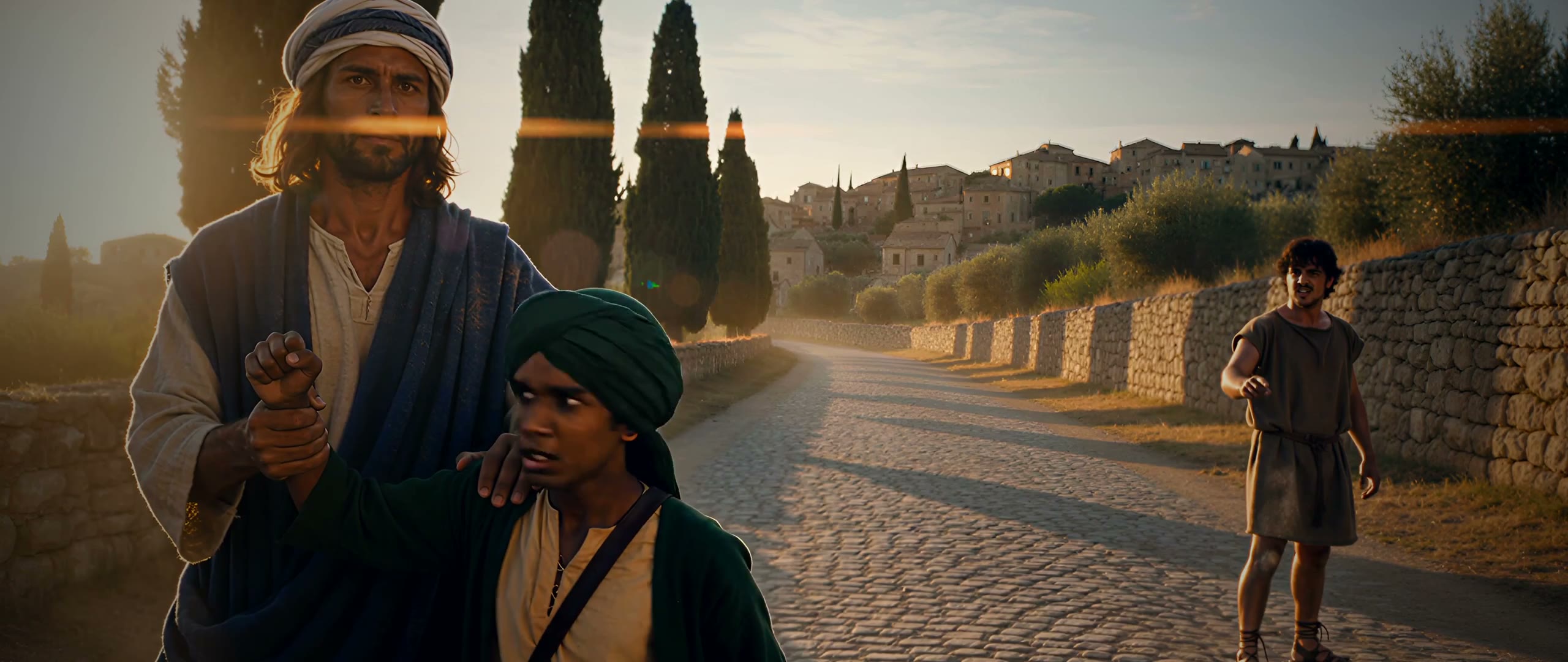
What mercy did, and where it stopped
They came upon a rough youth beating a smaller boy. Jesus went straight in, pulled the bully off, and held him just long enough for the smaller lad to run. The instant he let go, Ganid jumped on the bully to give him the thrashing he thought was deserved, and Jesus stopped that too. Ganid was baffled.
"If mercy requires that you rescue the smaller lad, does not justice demand the punishment of the larger and offending youth?" (133:1.1)
It is the question almost anyone would ask. Jesus answered it by separating two things we usually blur together.
"Mercy ministry is always the work of the individual, but justice punishment is the function of the social, governmental, or universe administrative groups." (133:1.2)
His part was to deliver the victim, using only the force that took. Sitting in judgment on the aggressor, weighing his motives, and handing down a sentence was not his to do as a private person.
"Ganid, mercy may be lavish, but justice is precise." (133:1.2)
Mercy can be poured out freely. Justice has to be exact, and, as Jesus pointed out, no two people would ever agree on the exact penalty. That is precisely why it belongs to the group and its chosen representatives, not to the heat of one offended heart.
But would you not defend yourself?
Ganid pushed to the hard case. What if someone strong and cruel attacked you? Jesus gave a careful answer, and then the reason underneath it.

"I am absolutely assured that the entire universe is friendly to me—this all-powerful truth I insist on believing with a wholehearted trust in spite of all appearances to the contrary." (133:1.4)
That is the bedrock. Not a rule about fists, but a settled trust that the Father's care is real even when appearances scream otherwise.
Equal at the one bar that counts
Earlier on that same road, when Ganid had asked about India's caste system, Jesus had already laid the foundation for all of this.
"There are only two groups of mortals in the eyes of God: those who desire to do his will and those who do not." (133:0.3)
Every human ranking, by class or strength or rank, dissolves at the judgment bar of God, who is no respecter of persons. The bully and the bullied stand there on level ground, and so the right to judge is lifted out of any one person's hands and placed where it can be exercised justly.
The boy was not fully satisfied, and the conversation ran on for days. When he asked one last time what Jesus would do if the test ever came, the answer was quiet: that test has not yet come, and when it does, they would abide by the Father's will.
Quotes drawn from the cited paragraphs; readers are encouraged to verify against the canonical text. Continue to Part Two.
Connecting Articles


The Newsletter
Get the research behind each piece
Free. New Urantia Book explorations, the sources behind the videos, and early looks. No spam, unsubscribe anytime.
Prefer video? Follow on YouTube and Facebook.
Delivered through Substack. You can also read past issues.