
The Prophet Egypt Murdered: Okhban and the Four Great Prophets
The Urantia Book names four great prophets who arose in six thousand years of Egyptian religious history: Amenemope, Okhban, Ikhnaton, and Moses. Three of them were received; one was murdered. Okhban's name is not preserved in independent historical records, but the Urantia account of his martyrdom establishes a pattern of prophetic rejection that shaped the Egyptian receptive environment.
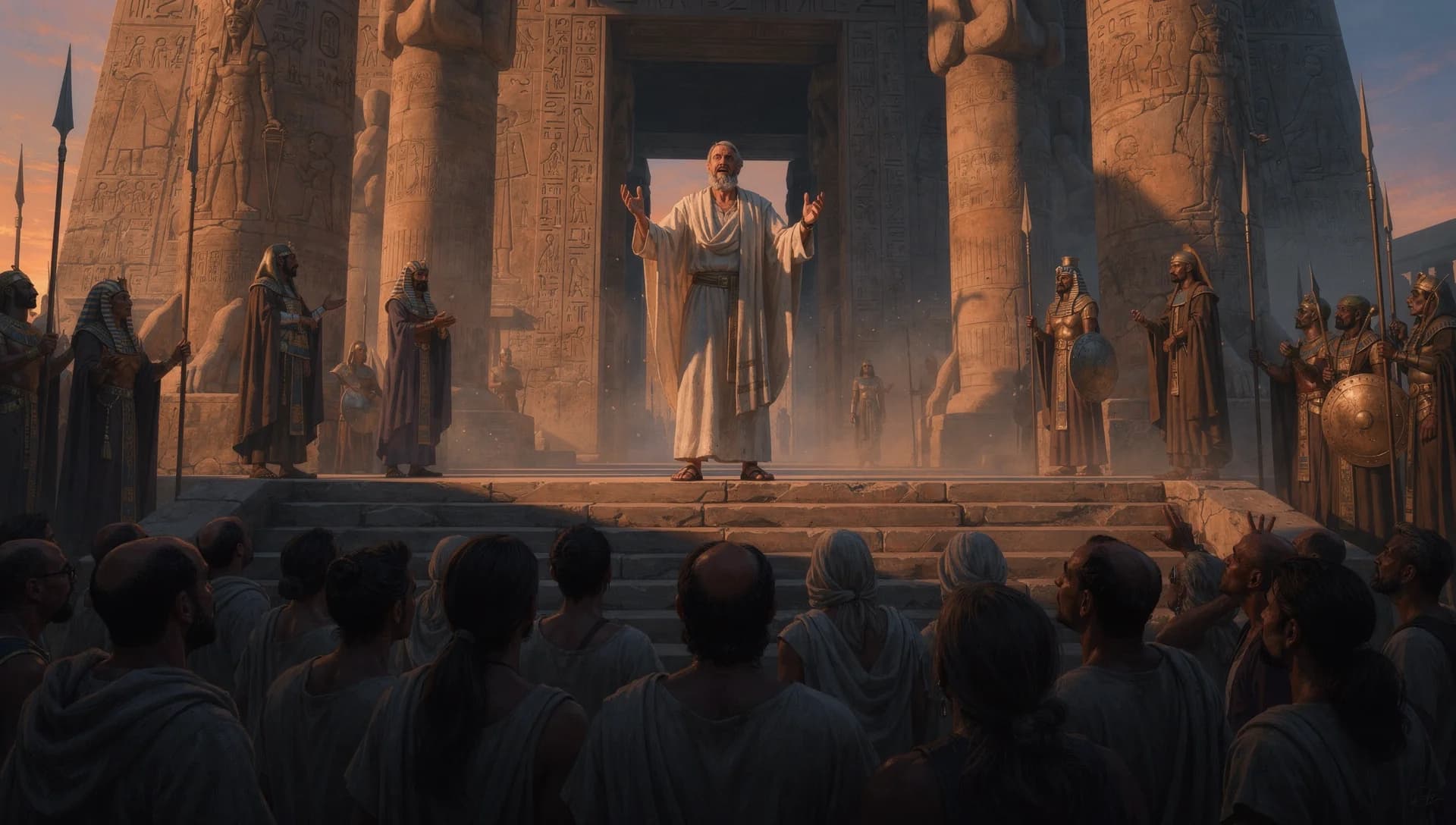
Okhban, murdered Egyptian prophet = One of only four great prophets of Egypt
This article expands on the decoder mapping. For the side-by-side card and quick reference, see the mapping page.
Four Prophets in Six Thousand Years
The Urantia Book's accounting of Egyptian prophetic history is unusually specific and unusually stern. In six thousand years of Egyptian religious civilization, only four great prophets arose. This is a small number for a culture of such scale and duration. The text names them and summarizes Egypt's reception of each:
"Egypt was intellectual and moral but not overly spiritual. In six thousand years only four great prophets arose among the Egyptians. Amenemope they followed for a season; Okhban they murdered; Ikhnaton they accepted but halfheartedly for one short generation; Moses they rejected. Again was it political rather than religious circumstances that made it easy for Abraham and, later on, for Joseph to exert great influence throughout Egypt in behalf of the Salem teachings of one God." (UB 95:3.5)
Three of the four are historically prominent. Amenemope is the author of the Wisdom of Amenemope whose influence on Proverbs is documented in the companion decoder article. Ikhnaton is the Amarna pharaoh whose monotheistic reformation is treated at length in the companion Ikhnaton article. Moses is the central figure of Hebrew religious history.
Okhban is different. The name does not appear in any surviving Egyptian historical record, any extant religious text, any archaeological inscription. The Urantia Book is the only source that preserves his name and the fact of his martyrdom. This is a historical claim about a specific named individual who is otherwise absent from the documentary record.
What the Urantia Book Says
The Urantia Book's mention of Okhban is brief but specific. He is placed between Amenemope (whose teaching the Egyptians followed for a season) and Ikhnaton (whose reformation the Egyptians accepted only for a short generation). The positioning suggests a chronology. Amenemope flourished in roughly the thirteenth century BCE. Ikhnaton reigned in the mid-fourteenth century BCE. Okhban, positioned between them in the text's enumeration, would have operated in the intervening period, perhaps in the late thirteenth or early fourteenth century BCE, when Egyptian religion was in the phase the book describes elsewhere as "The teachings of Amenemope were slowly losing their hold on the Egyptian mind" (95:5.1).
The wider context provides the framework for what Okhban's work would have been. The Urantia Book names the Salem Melchizedek mission as the operative reforming force in Egyptian religion during this period. The Salemite physician who influenced Ikhnaton's mother was part of an organized Salem missionary presence at the Egyptian court. The physician was not alone; he was working within a network. Okhban, as one of the four great prophets, was likely part of the same Salem-affiliated reform effort, operating a generation or two before the Ikhnaton episode and apparently going further, or going public more directly, than the prudent Salemite physician would have counseled.
The text names the outcome without elaborate detail: "Okhban they murdered." The single verb carries the weight. It places Okhban's career in the historical pattern of monotheistic prophetic martyrdom: the reformer who attempts to bring the population out of organized polytheism, who works without the political protection Ikhnaton later had as pharaoh, who is opposed by the entrenched priesthood, and who is killed for it.
The broader pattern of Egyptian prophetic history is summarized in Paper 95:3.2:
"Moral evolution is not wholly dependent on revelation. High moral concepts can be derived from man's own experience. Man can even evolve spiritual values and derive cosmic insight from his personal experiential living because a divine spirit indwells him. Such natural evolutions of conscience and character were also augmented by the periodic arrival of teachers of truth, in ancient times from the second Eden, later on from Melchizedek's headquarters at Salem." (UB 95:3.2)
The "periodic arrival of teachers of truth" is the pattern of which the four named prophets are the most prominent Egyptian manifestations. The pattern predates the Salem mission (Sethite teachers arrived earlier) and continues through it. Okhban is one of the manifestations.
What the Ancient Source Says
Okhban is not attested in the surviving Egyptian record. No hieroglyphic inscription, no papyrus, no classical reference preserves the name. This absence is not unique. The Egyptian historical record preserves kings, high officials, and scribal figures relatively well; it preserves prophetic or critical religious figures relatively poorly, especially when such figures were ideologically suppressed. The extensive damnatio memoriae practiced against Akhenaten himself after the Amarna reversion demonstrates the pattern: Egyptian institutional memory could be and was selectively erased. A murdered prophet whose teaching the priesthood opposed would be the exact kind of figure the official record would erase.
The pattern of monotheistic reformer versus priestly establishment in ancient Egypt is attested in other cases. Jan Assmann's Moses the Egyptian: The Memory of Egypt in Western Monotheism (Harvard University Press, 1997) traces the long history of memory-suppression around Egyptian monotheistic episodes. The Amarna reversion under Tutankhamun and the subsequent damnatio of Akhenaten's memory is the best-documented case. The text of the Ramesside "counter-reformation" records the deliberate effacement of Amarna-period inscriptions, the demolition of Akhetaten, and the restoration of the pre-Amarna priestly orthodoxy. The pattern is extensively attested.
James Henry Breasted's Development of Religion and Thought in Ancient Egypt (Scribner, 1912) documented the tension between prophetic-reformative religious tendencies and priestly-conservative establishment tendencies across the full span of Egyptian religious history. Breasted's work predates the Amarna excavations in their modern fullness and some of his reconstructions have been superseded, but the general analytical framework remains useful. Egyptian religious history is the history of a conservative priestly institution repeatedly absorbing, adapting, or suppressing prophetic challenges from within and without.
The paucity of named Egyptian prophets in independent sources reflects this institutional reality rather than an absence of prophetic activity. What the Urantia Book's list of four establishes is that the prophetic activity, though named and specific in cosmic memory, was politically and institutionally marginal in Egyptian civilization. Three of the four are known to history through external circumstances (Amenemope through his wisdom text's preservation, Ikhnaton through his royal status, Moses through his Hebrew-tradition reception). Okhban, operating as a murdered prophet without external memorialization, is the one whose name would not have survived if the Urantia revelation had not preserved it.
Why This Mapping Matters
The Okhban mention is the shortest of the Urantia Book's Egyptian religious-history claims but is structurally significant in three ways.
First, it completes the enumeration. Four great prophets in six thousand years is a precise claim. Without Okhban, the enumeration would be three (Amenemope, Ikhnaton, Moses), and the pattern would read differently. With Okhban, the pattern includes a martyred prophet alongside the followed sage, the royal reformer, and the national founder who eventually succeeded elsewhere. The four-figure typology is richer.
Second, it identifies a distinct mode of Egyptian reception. Each of the four encounters a different institutional response: following for a season (Amenemope), murder (Okhban), halfhearted acceptance for a generation (Ikhnaton), rejection (Moses). The full range of possible receptions is covered by the four. Egypt, in the Urantia Book's summary, is not a culture that was simply hostile to prophetic reform; it is a culture that produced and tested four distinct institutional responses to prophetic reform across six millennia, and the martyrdom response is one of them (UB 95:3.5).
Third, it preserves a name the historical record does not. The Urantia Book is, in this single sentence, restoring a specific individual to historical memory whom the Egyptian institutional machinery successfully erased. The Okhban mention, while not verifiable against the Egyptian record, is verifiable against the pattern of Egyptian institutional memory-suppression, which is extensively documented and entirely consistent with the disappearance of a murdered monotheistic reformer from the official record.
The mapping does not claim that independent historical research will recover Okhban. The mapping claims that Okhban was real, was named by Egyptian memory as one of four great prophets, was killed for his teaching, and was erased from institutional memory by the standard Egyptian mechanism of damnatio. That is a specific and constrained set of claims, and while it is not testable against surviving texts, it is testable against the broader pattern of Egyptian religious history, which supports it.
Sources
- The Urantia Book, Paper 95 (The Melchizedek Teachings in the Levant). Urantia Foundation, first printing 1955. Cited passages: 95:3.2, 95:3.5, 95:5.1.
- Breasted, James Henry. Development of Religion and Thought in Ancient Egypt. Scribner, 1912.
- Assmann, Jan. Moses the Egyptian: The Memory of Egypt in Western Monotheism. Harvard University Press, 1997.
- Assmann, Jan. The Mind of Egypt: History and Meaning in the Time of the Pharaohs. Harvard University Press, 2002.
- Redford, Donald B. Akhenaten: The Heretic King. Princeton University Press, 1984.
- Lichtheim, Miriam. Ancient Egyptian Literature, Volume II: The New Kingdom. University of California Press, 1976.
Confidence and Evidence
- Confidence: UB CONFIRMED
- Evidence rating: MODERATE
- Basis: The Urantia Book names Okhban directly in Paper 95:3.5 as one of four great prophets of Egypt, murdered for his teaching. The pattern of Egyptian institutional suppression of reformers is documented in academic scholarship (Assmann, Breasted). The name is not independently attested, which is consistent with the Urantia claim of successful institutional erasure.
Related Decoder Articles
- Salem Missionaries = Ikhnaton / Akhenaten
- Amenemope, Egyptian Conscience Teacher = "Son of Man"
- Salem Teaching Corrupted = Osiris and Isis Mystery Cult
By Derek Samaras
Connecting Articles
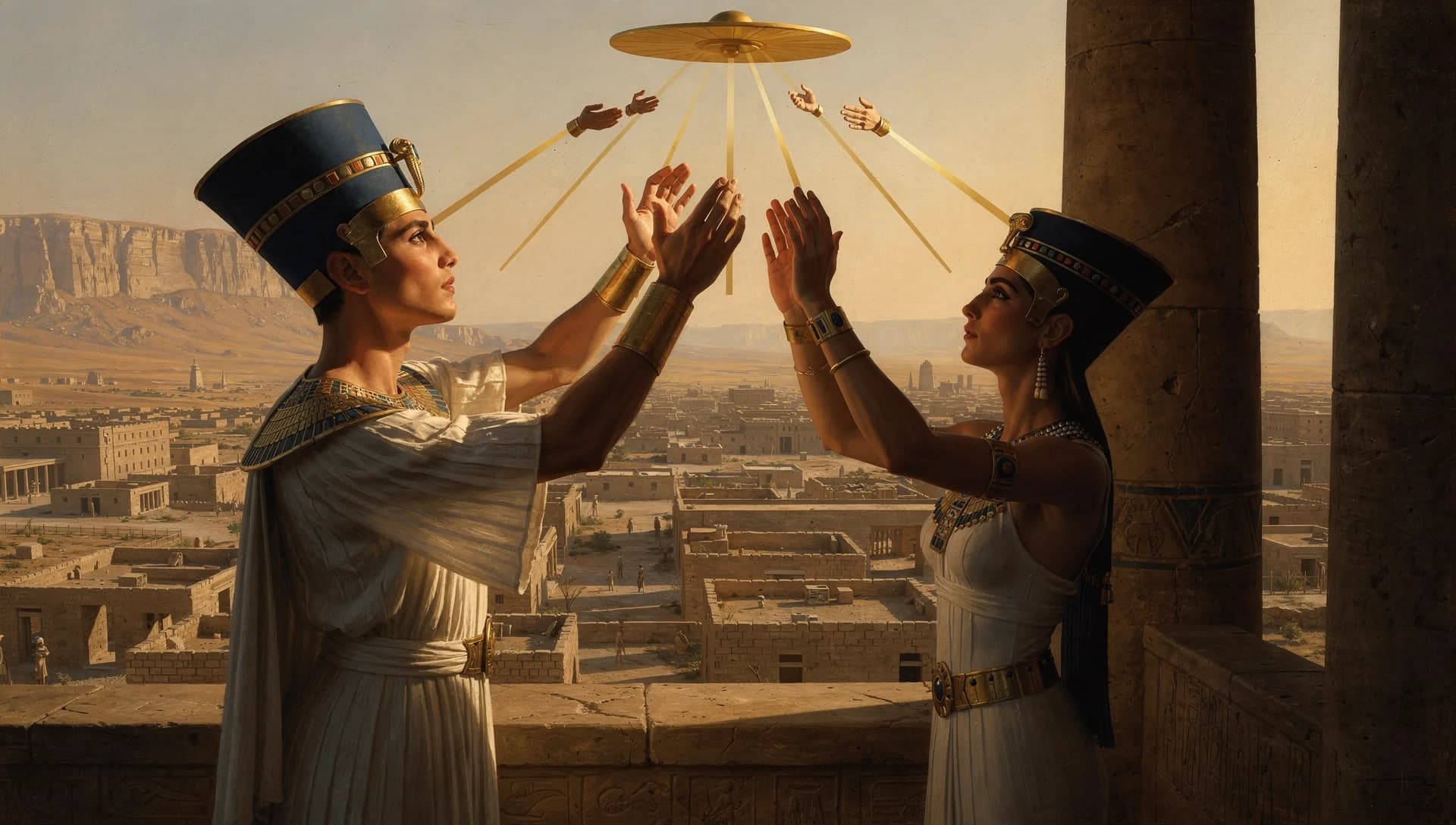
The Pharaoh Who Preached One God: Ikhnaton and the Salem Mission
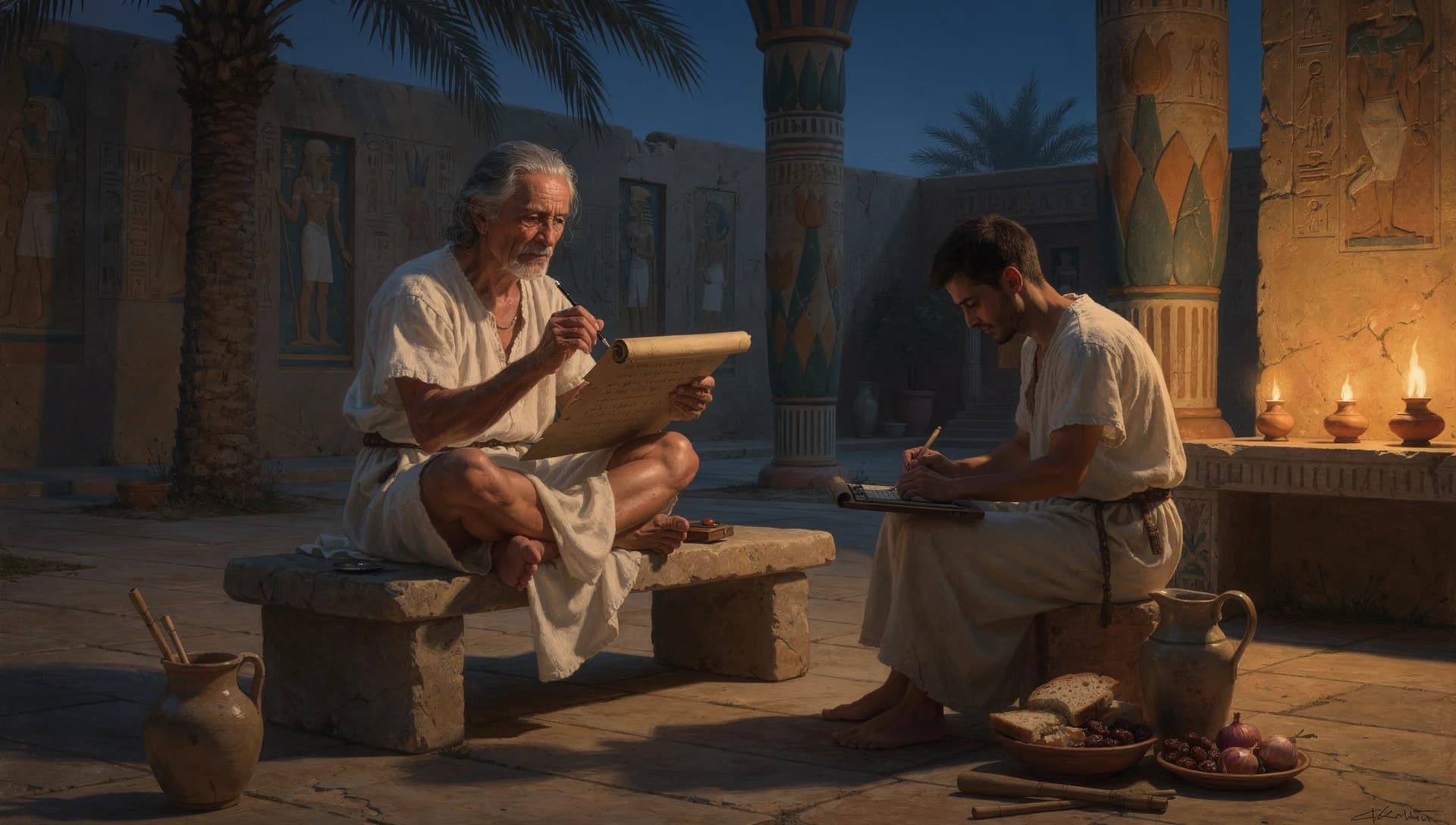
The Sage Whose Words Became Proverbs: Amenemope and the Hebrew Scriptures
Two Monarchs, One Pattern: Asoka and Ikhnaton Among the Great Civil Rulers
The Late Book of the Law: Deuteronomy and the Torah Composition Timeline
The Newsletter
Get the research behind each piece
Free. New Urantia Book explorations, the sources behind the videos, and early looks. No spam, unsubscribe anytime.
Prefer video? Follow on YouTube and Facebook.
Delivered through Substack. You can also read past issues.