
The Amun-Cult Travels South: Egyptian Religious Transmission into Kush, Nubia, and Ethiopia
The Kushite and Nubian civilizations developed in continuous cultural contact with Egypt, absorbing Egyptian religious concepts (the ram-headed Amun, the solar disk, sacred-tree iconography, divine kingship) southward into sub-Saharan Africa. The Urantia Book identifies the original Salem seed at Ikhnaton's court and documents Mesopotamian cultural penetration of the Nile valley for more than thirty thousand years. The Nubian Amun cult is a downstream continuation of the same Salem-Egyptian transmission pathway.
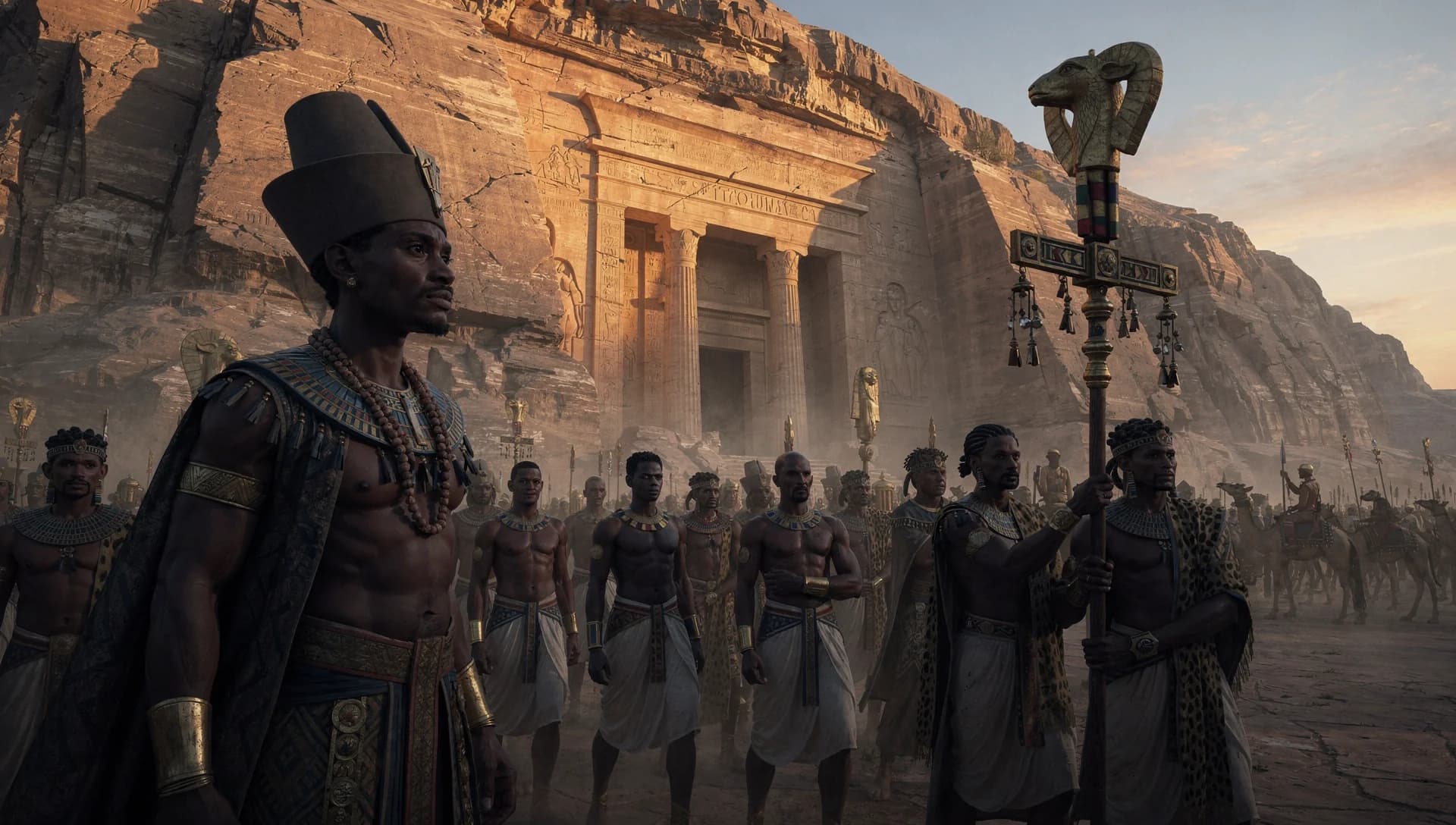
Salem-Egyptian monotheistic-leaning content transmitted southward = Nubian and Kushite Amun-cult and divine-kingship tradition
This article expands on the decoder mapping. For the side-by-side card and quick reference, see the mapping page.
The Southward Transmission Corridor
The Nile valley served, across the full span of ancient African cultural history, as a long corridor that carried Egyptian religious concepts southward into Nubia, Kush, and eventually into the broader Sahel and Ethiopian highlands. The content that traveled with it is easy to name. The ram cult of Amun. The solar theology of Aten and Re. The sacred tree and the primordial waters of Egyptian cosmology. The institution of divine kingship. The full mummification and afterlife complex.
The Kingdom of Kush flourished from roughly 1070 BCE to 350 CE, centered first at Napata and later at Meroë. It grew up as a thoroughly Egyptianized sub-Saharan civilization. Its kings ruled Egypt itself as the 25th Dynasty, from about 744 to 656 BCE, and they carried the Egyptian royal and religious institutions back to their own capitals when they returned south. The later Meroitic period preserved those structures, in adapted Kushite form, across the first millennium BCE and into the first millennium CE.
The Urantia Book identifies the original Salem transmission at Ikhnaton's court and the long continuation that followed.
What the Urantia Book Says
The Urantia Book documents the Salem transmission into Egypt and how it was absorbed:
"The teachings of Amenemope were slowly losing their hold on the Egyptian mind when, through the influence of an Egyptian Salemite physician, a woman of the royal family espoused the Melchizedek teachings. This woman prevailed upon her son, Ikhnaton, Pharaoh of Egypt, to accept these doctrines of One God." (UB 95:5.1)
The monotheistic strand of Ikhnaton's reform is documented across UB 95:5, where the Aten theology of the solar disk preserves the Salem teaching of the one God. The southward continuation of Egyptian religious content shows up in the Urantia Book's broader treatment of Andite and Egyptian migration:
"Later on, mixed Andites and Egyptians followed down both the east and west coasts of Africa well below the equator, but they did not reach Madagascar." (UB 78:5.5; 80:1.3 treats the broader Mesopotamian-Egyptian cultural continuity)
The long cultural continuity between Mesopotamia and the Nile valley is stated plainly:
"For more than thirty thousand years Egypt received a steady stream of Mesopotamians, who brought along their art and culture to enrich that of the Nile valley." (UB 80:1.3, adapted)
The Salem content that survived in Egypt, first through the Aten reform and then through the post-Amarna Amun priesthood, was carried south along the Nile into Nubia and Kush. The Kushite pharaohs of the 25th Dynasty made Amun their state god at Napata and Meroë. They brought Theban Amun theology, already shaped by the absorbed Aten content, into the sub-Saharan cultural substrate.
What the Ancient Sources Say
The archaeological and textual record of Egyptian and Nubian cultural exchange is well covered in the scholarly literature. David O'Connor's Ancient Nubia: Egypt's Rival in Africa (University of Pennsylvania Museum, 1993) treats the continuous corridor between Egypt and Nubia across the full pharaonic period.
Timothy Kendall's fieldwork at Jebel Barkal, the sacred mountain at the Kushite capital of Napata, identified in Egyptian texts as the southern residence of Amun, documented the Egyptianized royal cult at the heart of Kushite kingship. The Kushite king Piankhi's Victory Stela, dated around 730 BCE and now in the Cairo Museum, records his conquest of Egypt in Egyptian religious language. Piankhi presents himself as the ruler appointed by Amun, carrying the Amun cult back from Napata.
László Török's The Kingdom of Kush: Handbook of the Napatan-Meroitic Civilization (Brill, 1997) is the definitive scholarly treatment of the Kushite inheritance from Egypt. Török documents the Meroitic period's adapted continuation of Egyptian religious content. The lion god Apedemak is a Kushite innovation that integrates Egyptian iconography with local devotion, and the Kushite royal succession blends Egyptian divine kingship with local matrilineal practice.
Richard H. Wilkinson's The Complete Gods and Goddesses of Ancient Egypt (Thames & Hudson, 2003) traces the Theban Amun cult and its later journey south. The Amun-Re syncretism, which fused the originally local Theban ram god with the solar Re of Heliopolis, produced a universalist royal cult that the 25th Dynasty and its Meroitic successors carried into Nubia and beyond.
The Ikhnaton reform itself is treated in Jan Assmann's Moses the Egyptian: The Memory of Egypt in Western Monotheism (Harvard University Press, 1997) and in Donald Redford's Akhenaten: The Heretic King (Princeton University Press, 1984). Both authors document the monotheistic features of Aten theology: the solar disk as the single divine source, exclusive worship of the Aten in place of the older pantheon, and a universalist rather than nationalist divine address. Both also document how the Aten content was absorbed back into the Theban Amun priesthood after Amarna.
Ethiopian and Horn of Africa Christianity preserves additional Egyptian content. The Aksumite civilization, from the first through the seventh centuries CE, integrated older Egyptian religious material with Semitic and later Christian theology. The Ge'ez Orthodox tradition preserves Egyptian-derived monastic and liturgical content that traces continuously through the Egyptian Coptic tradition into the Ethiopian church. Sergew Hable Selassie's Ancient and Medieval Ethiopian History to 1270 (United Printers, 1972) documents that long line of religious and cultural transmission.
The southward reach into West Africa has been treated in the literature on trans-Saharan exchange. The Nok and later Sahelian cultures preserved Egyptian-derived iconography, sacred-tree imagery, solar disk symbolism, and royal regalia conventions, across the West African cultural substrate. Roland Oliver and Brian M. Fagan's Africa in the Iron Age (Cambridge University Press, 1975) documents the broader pattern of Egyptian-derived material reaching across the Sahel.
Why This Mapping Matters
The southward flow of Egyptian religion into Nubia, Kush, and the broader sub-Saharan substrate is the long-running cultural-corridor preservation of the Salem seed that the Urantia Book identifies at Ikhnaton's court. Unlike the more fragmentary preservation that the Urantia Book describes in tribal contexts, the Egyptian-Nubian corridor was institutional. Temples, priesthoods, royal lineages, and written liturgy carried the Salem-derived content across far greater stretches of time and with much more theological elaboration.
The Kushite 25th Dynasty's institutionalization of Amun worship at Napata and Meroë is the southward continuation of the post-Amarna Theban cult, and that cult had already absorbed the Aten content from Ikhnaton's reform. The seed Machiventa planted in the twentieth century BCE made its way into Egypt through the Salem missionary effort. By around 1350 BCE it produced the monotheistic-leaning Aten theology of Ikhnaton. After Amarna it was folded back into Amun-Re in a polytheistic frame, and then it traveled south.
The Kushite preservation has its own significance within the Urantia framework. Kush served as a sub-Saharan institutional home for Egyptian-derived religion for more than fourteen centuries, from roughly 1070 BCE through 350 CE. That institutional continuity allowed the Egyptian-Salem content to be carried across that span and shaped into something genuinely African through Meroitic innovation, the Apedemak lion cult, the matrilineal succession, and the Meroitic cursive script.
The Ethiopian and Christian phase extended the line further. The Aksumite Christianization in the fourth century CE folded Salem-derived monotheistic content into the Christian theological frame, preserving the long Salem-Egyptian-Christian pathway across the Ethiopian substrate into the present. The Ge'ez Orthodox tradition's preservation of Egyptian-derived liturgical and monastic forms is the continuing institutional memory of the Salem seed across more than three and a half millennia.
The point of the mapping is this. Nubian, Kushite, and Ethiopian religion should not be read primarily as independent indigenous African development. It is downstream preservation of the Salem-Egyptian transmission that the Urantia Book identifies as a real historical missionary enterprise. The Nile corridor and the institutional memory of Kush and Ethiopia carried the Salem content into sub-Saharan Africa in much more elaborated form than the partial preservation that characterizes the broader African high-god traditions, which are treated in the companion Olodumare-Nyame-Mulungu article.
Sources
- The Urantia Book, Paper 78 (The Violet Race After the Days of Adam), Paper 80 (Andite Expansion in the Occident), Paper 95 (The Melchizedek Teachings in the Levant). Urantia Foundation, first printing 1955. Cited passages: 78:5.5, 80:1.3, 95:5.1-6.
- O'Connor, David. Ancient Nubia: Egypt's Rival in Africa. University of Pennsylvania Museum, 1993.
- Török, László. The Kingdom of Kush: Handbook of the Napatan-Meroitic Civilization. Brill, 1997.
- Wilkinson, Richard H. The Complete Gods and Goddesses of Ancient Egypt. Thames & Hudson, 2003.
- Kendall, Timothy. Kush: Lost Kingdom of the Nile. Brockton Art Museum, 1982.
- Assmann, Jan. Moses the Egyptian: The Memory of Egypt in Western Monotheism. Harvard University Press, 1997.
- Redford, Donald. Akhenaten: The Heretic King. Princeton University Press, 1984.
- Selassie, Sergew Hable. Ancient and Medieval Ethiopian History to 1270. United Printers, 1972.
- Oliver, Roland and Brian M. Fagan. Africa in the Iron Age. Cambridge University Press, 1975.
Confidence and Evidence
- Confidence: UB CONFIRMED
- Evidence rating: MODERATE
- Basis: The Urantia Book directly documents the Salem transmission into Egypt and the Ikhnaton reform at UB 95:5. The archaeological and textual record of Egyptian-Nubian cultural transmission is extensively documented across the scholarly literature. The Kushite institutionalization of the Amun-cult and the subsequent Ethiopian Christian preservation provide a continuous institutional pathway for the Salem seed to reach sub-Saharan Africa.
Related Decoder Articles
- Ikhnaton = Salem Teaching at the Egyptian Court
- African High-God = Salem Monotheism Layer
- Melchizedek = Machiventa and the Salem Enterprise
Byline: Derek Samaras | Urantia Book Network | April 2026
Connecting Articles
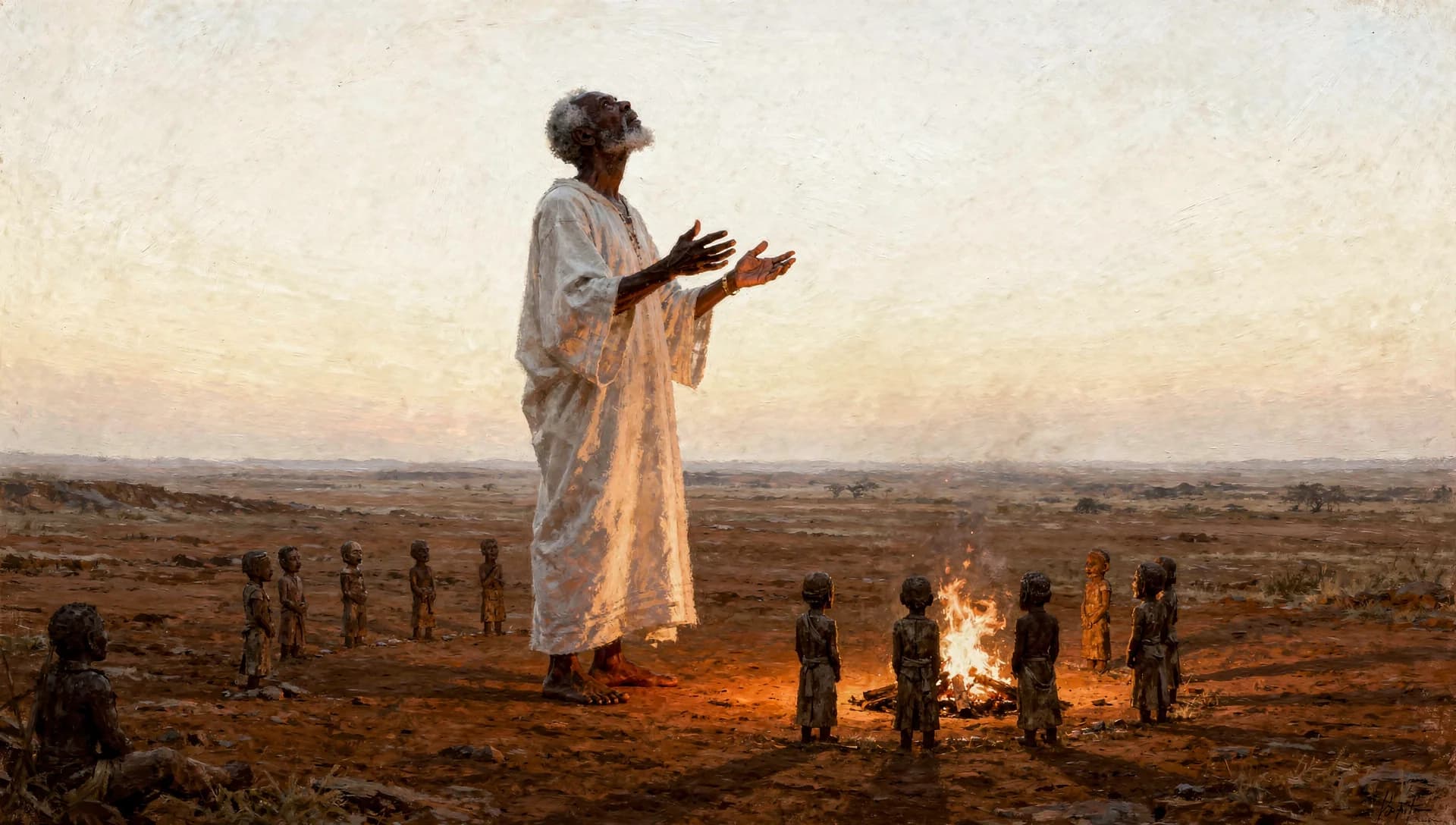
The Sky God Who Withdrew: African High-God Traditions and the Salem Teaching Layer
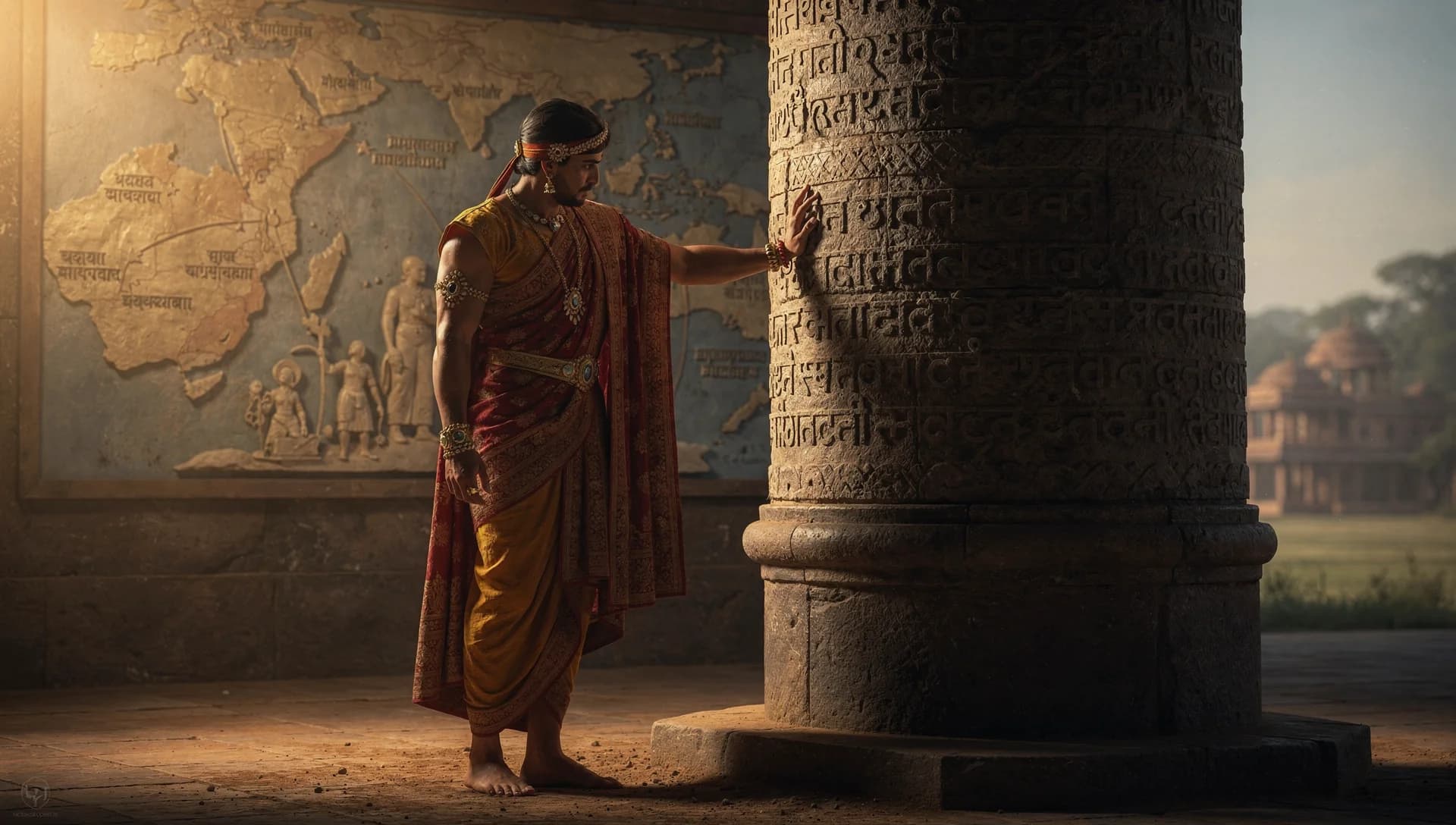
Two Monarchs, One Pattern: Asoka and Ikhnaton Among the Great Civil Rulers
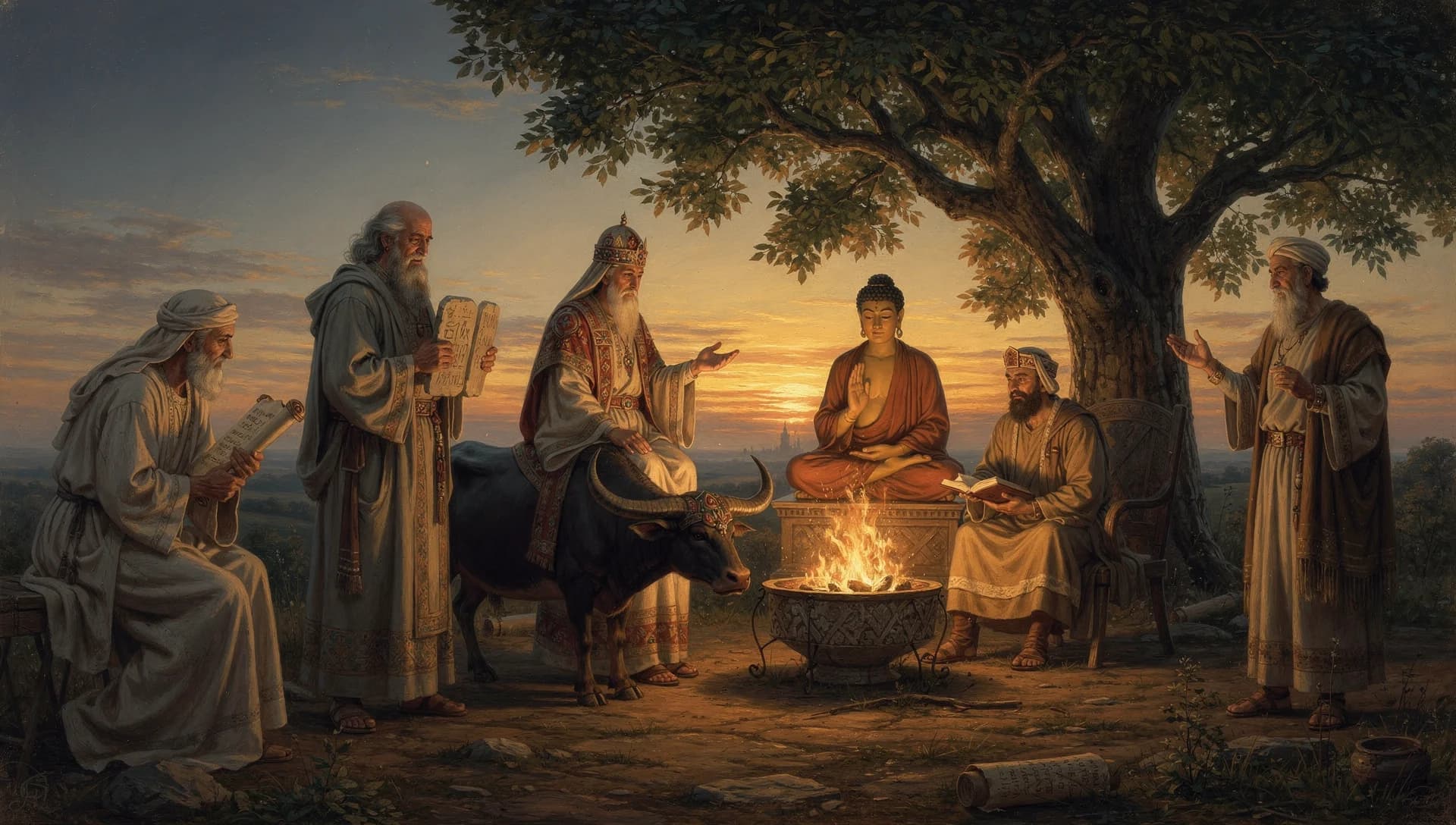
Seven Teachers, One Preparation: The Axial Age and the Salem Continuity

The Vow to Stay: Bodhisattva Ideal and the Salem Missionary Commission
The Newsletter
Get the research behind each piece
Free. New Urantia Book explorations, the sources behind the videos, and early looks. No spam, unsubscribe anytime.
Prefer video? Follow on YouTube and Facebook.
Delivered through Substack. You can also read past issues.