
Day After Day: Jesus and Mardus, Leader of the Roman Cynics
Of all the philosophical schools of the Greco-Roman world, the Cynics preserved the purest remnant of Melchizedek's Salem teaching. When Jesus arrived in Rome he spent night after night in conversation with Mardus, the acknowledged leader of the Roman Cynics. The meeting was not coincidental. It was a reunion across two millennia.
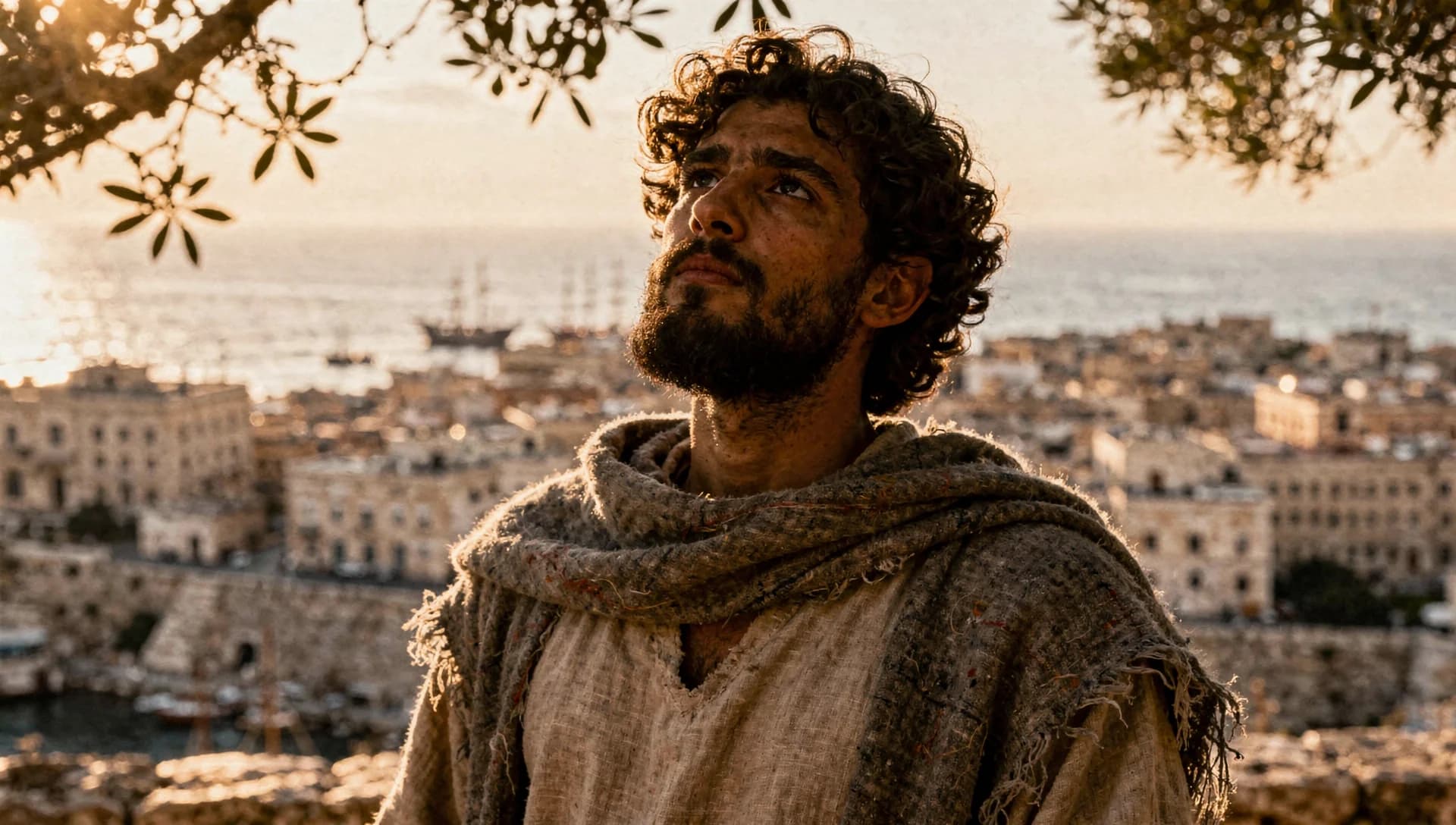
Mardus, Cynic leader taught by Jesus = Roman Cynic philosopher personally instructed in the gospel
This article expands on the decoder mapping. For the side-by-side card and quick reference, see the mapping page.
The Philosopher Jesus Spent the Most Time With
The Urantia Book records Jesus spending a single all-night conversation with Angamon the Stoic and a multi-night sequence of conversations with Mardus the Cynic during the Roman sojourn. The asymmetry is worth marking. Angamon received one long session. Mardus received many. The text's explanation for the difference is implicit rather than stated, but the companion article on the Cynics and Salem missionary teaching makes it explicit: Jesus had more to give the Cynics because the Cynics were closer to the source.
The Urantia Book states that the Cynics preserved Melchizedek's Salem teaching in purer form than any other European philosophical school (UB 98:0.2). When Jesus arrived in Rome, the philosophical conversation that engaged him most extensively was the one with the school whose roots reach back to the Salem missionaries of the second millennium BCE. The encounter in Paper 132 is, read in that light, the Son of the same God Melchizedek served meeting, face to face, the living descendants of Melchizedek's European mission.
What the Urantia Book Says
The opening is direct:
"Mardus was the acknowledged leader of the Cynics of Rome, and he became a great friend of the scribe of Damascus. Day after day he conversed with Jesus, and night upon night he listened to his supernal teaching." (UB 132:2.1)
The relationship is qualitatively different from the Angamon encounter. Angamon received instruction. Mardus received sustained teaching over many days and nights. The text then moves into Jesus' response to Mardus's own central philosophical question, the problem of good and evil:
"My brother, good and evil are merely words symbolizing relative levels of human comprehension of the observable universe. If you are ethically lazy and socially indifferent, you can take as your standard of good the current social usages. If you are spiritually indolent and morally unprogressive, you may take as your standards of good the religious practices and traditions of your contemporaries. But the soul that survives time and emerges into eternity must make a living and personal choice between good and evil as they are determined by the true values of the spiritual standards established by the divine spirit which the Father in heaven has sent to dwell within the heart of man." (UB 132:2.2)
The treatment of evil is philosophically precise and matches the Cynic preference for direct ethical analysis over metaphysical elaboration:
"The possibility of evil is necessary to moral choosing, but not the actuality thereof. A shadow is only relatively real. Actual evil is not necessary as a personal experience. Potential evil acts equally well as a decision stimulus in the realms of moral progress on the lower levels of spiritual development. Evil becomes a reality of personal experience only when a moral mind makes evil its choice." (UB 132:2.10)
The distinction between the possibility of evil and the actuality of evil, between evil as a structural condition for moral choice and evil as a personal experience, is a philosophically sharp one. It is also the kind of distinction a Cynic philosophical audience would have been particularly equipped to receive. Cynic moral teaching was practical and concrete. The Jesus-Mardus discussions, as the Urantia Book preserves them, are practical and concrete throughout.
What the Ancient Source Says
The Cynic movement in the early first century CE is attested in a handful of named individuals and a larger number of implied public intellectuals. The standard modern reference is The Cambridge Companion to the Cynics edited by R. Bracht Branham and Marie-Odile Goulet-Cazé (Cambridge University Press, 1996). Donald Dudley's A History of Cynicism (Methuen, 1937) remains the classic single-volume treatment. Demonax of Cyprus, Demetrius of Corinth (praised by Seneca and later associated with the circle of Thrasea Paetus), and others are attested Roman-period Cynics whose activity corresponds chronologically to the broader period of Jesus' ministry and its immediate aftermath.
A specific "leader of the Cynics of Rome" during the 20s CE is not independently attested. As with Angamon and Rodan, the absence is not decisive: Cynic philosophical leadership was informal and peripatetic, and the individual teachers are documented unevenly. A senior street-preaching philosopher of the Cynic tradition active in Rome during Jesus' visit is historically plausible without being externally confirmable.
F. Gerald Downing's Cynics and Christian Origins (T&T Clark, 1992) and its sequel Christ and the Cynics: Jesus and Other Radical Preachers in First-Century Tradition (Sheffield, 1988) argue at book length that the sayings tradition of Jesus, preserved in the Synoptic gospels and extracanonical Q-material, bears extensive structural and rhetorical similarity to documented Cynic diatribe. The controversial version of the argument, which Downing himself does not make, would hold that Jesus was simply a Cynic. The measured version, which is the scholarly mainstream by Downing's work, holds that the Jesus movement and the Cynic movement are recognizably cousins even without direct historical contact.
The Urantia Book narrows the "without direct historical contact" qualifier. The contact is direct. Jesus, during his pre-ministry travels, had extended multi-day teaching sessions with the senior Cynic leadership of Rome. The structural and rhetorical convergence between Cynic and Christian teaching that Downing documents is not coincidental parallel development. It has a specific causal pathway: Jesus taught the senior Cynic leadership, who carried the teaching into their own network, which was already one of the most active itinerant-preaching networks in the empire.
Why This Mapping Matters
Three independent lines of evidence support the Urantia claim. First, the Cynics as a movement were uniquely positioned to preserve and propagate Jesus' teaching. Their own practice, itinerant preaching, voluntary poverty, public diatribe, radical monotheism, ethical directness, is structurally identical to the early Christian mission pattern that followed a generation later. Second, the parallels between Cynic literature and the Jesus sayings tradition are extensive and documented in the academic literature. Third, the Urantia Book's claim in Paper 98 that the Cynics preserved the purest remnant of Salem monotheism in Europe means that, by the time Jesus arrived in Rome, the Cynics were maintaining a form of the Melchizedek teaching first given nearly two thousand years earlier.
The Jesus-Mardus encounter was therefore a reunion. Not of particular individuals, because Mardus had no direct knowledge of Salem, but of teachings. The Cynic movement had been keeping the Melchizedek tradition alive in Europe, in its ethical and anti-cultic and itinerant form, for longer than Mardus or anyone in his school knew. When the incarnate Son of the Father arrived in Rome and spent night after night teaching the senior Cynic leader, what was happening was the restoration of a connection. The distant source meeting the distant preserver.
That explains the time allocation. Jesus could give Angamon a single night because Angamon's Stoicism, while receptive, was philosophically distant from the core teaching. He could give Mardus many nights because Mardus's Cynicism was already working the same material, just without full contact with the source.
The Urantia Book's specific and repeated attention to the Cynics, in Paper 98 (Salem preservation), Paper 132 (Jesus' extended teaching of Mardus), and by implication throughout the early Christian reception narrative, reflects a theologically coherent position: the Cynic school was the European institution that most faithfully carried the Melchizedek mission through the centuries, and Jesus treated it that way.
Sources
- The Urantia Book, Paper 98 (The Melchizedek Teachings in the Occident), Paper 132 (The Sojourn at Rome). Urantia Foundation, first printing 1955. Cited passages: 98:0.2, 132:2.1, 132:2.2, 132:2.10.
- Branham, R. Bracht, and Marie-Odile Goulet-Cazé, eds. The Cambridge Companion to the Cynics. Cambridge University Press, 1996.
- Dudley, Donald R. A History of Cynicism from Diogenes to the 6th Century A.D. Methuen, 1937.
- Downing, F. Gerald. Cynics and Christian Origins. T&T Clark, 1992.
- Downing, F. Gerald. Christ and the Cynics: Jesus and Other Radical Preachers in First-Century Tradition. JSOT Press, 1988.
- Goulet-Cazé, Marie-Odile. L'ascèse cynique: Un commentaire de Diogène Laërce VI 70-71. Vrin, 1986.
- Diogenes Laertius. Lives of Eminent Philosophers, Book VI. Loeb Classical Library, Harvard University Press, 1925.
Confidence and Evidence
- Confidence: UB CONFIRMED
- Evidence rating: STRONG
- Basis: The Urantia Book's Paper 98 identification of Cynics as the purest European preservers of Salem monotheism is internally consistent with Paper 132's record of Jesus's sustained teaching of the senior Roman Cynic. F. G. Downing's documented convergence between Jesus-tradition and Cynic tradition provides academic corroboration. The multi-day teaching span allocated to Mardus is proportionate to the Cynic school's theological proximity to the source.
Related Decoder Articles
- Salem Missionaries' Purest European Teaching = Cynics
- Angamon, Stoic Leader Taught by Jesus
- Stoic Ethics Absorbed into Pauline Christianity
By Derek Samaras
Connecting Articles
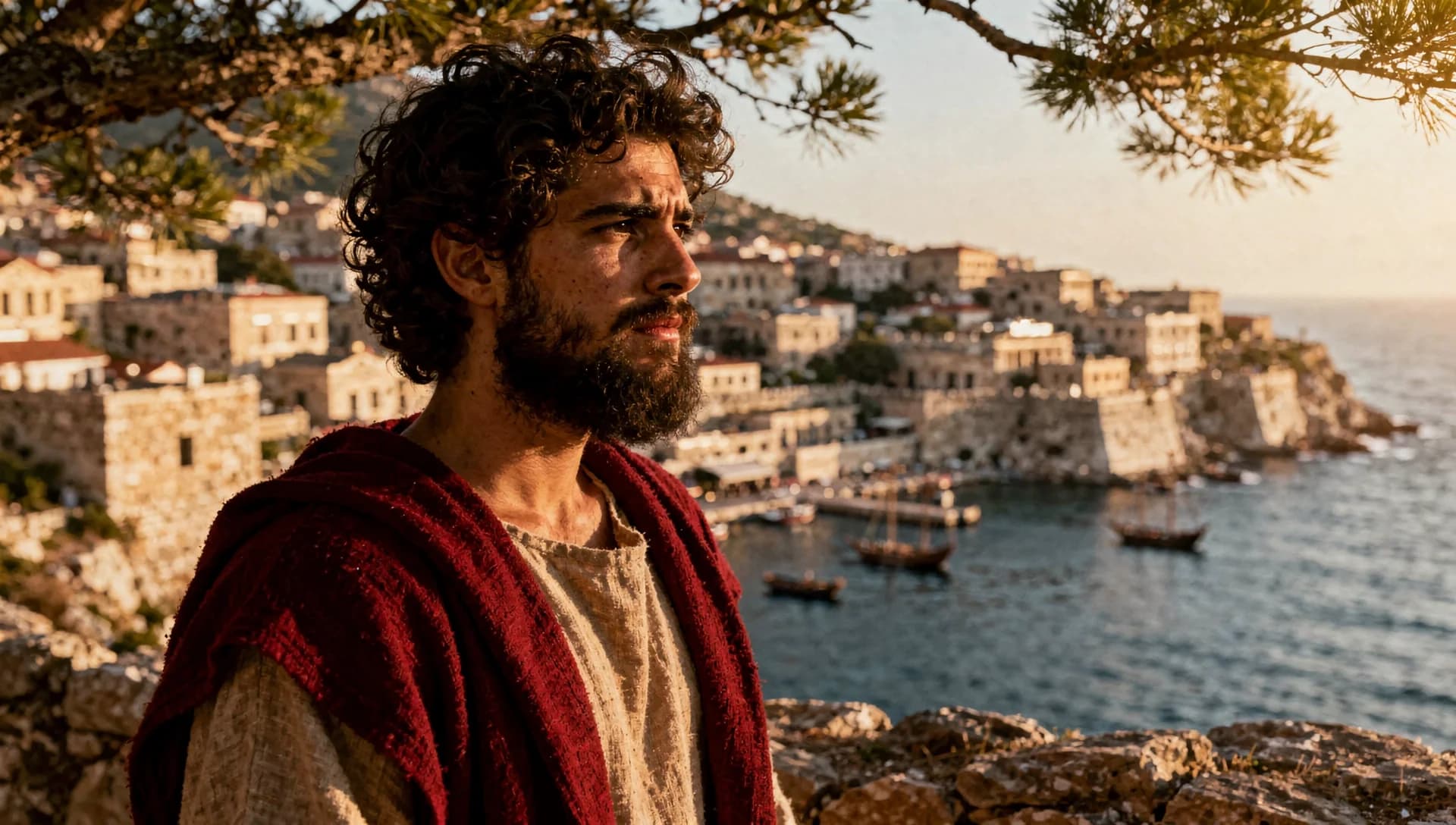
The All-Night Talk: Jesus and Angamon, Leader of the Stoics
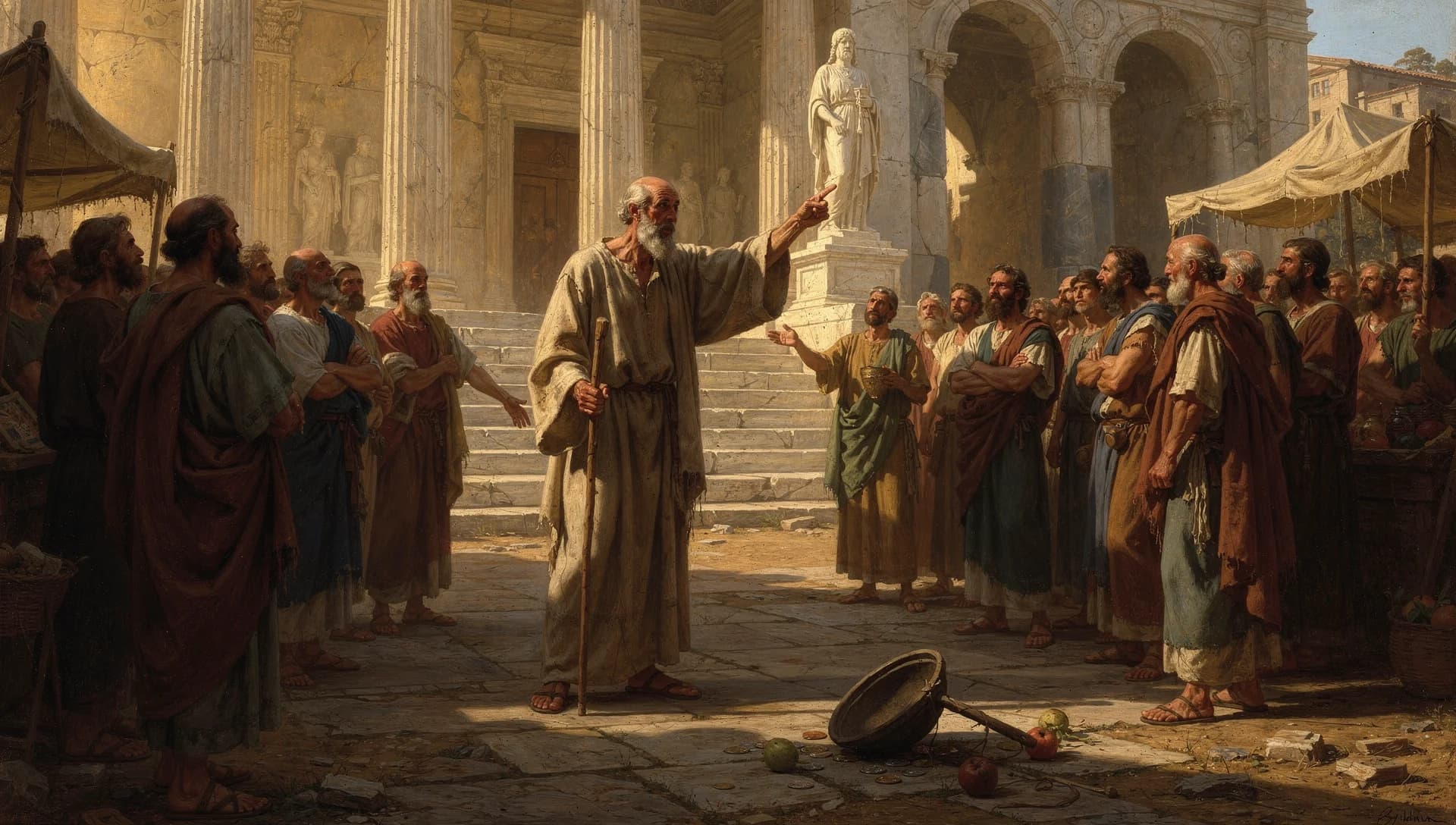
The Last Stand: Salem Missionaries and the Greek Cynics

The First Comparative Religion Study: Ganid, Jesus, and the Alexandrian Compilation
The Prophet Who Almost Got There: Gautama Siddhartha and the Salem Gospel
The Newsletter
Get the research behind each piece
Free. New Urantia Book explorations, the sources behind the videos, and early looks. No spam, unsubscribe anytime.
Prefer video? Follow on YouTube and Facebook.
Delivered through Substack. You can also read past issues.