
The Captivity Rewrite: Hebrew Scribal Revision in Babylon
The Hebrew sacred texts as we have them are not the texts as Moses or the patriarchs left them. The Urantia Book identifies a specific historical moment at which the Hebrew priesthood systematically revised the inherited tradition: the Babylonian captivity of 586 to 539 BCE. The revision's direction, scope, and theological consequences are precisely described.
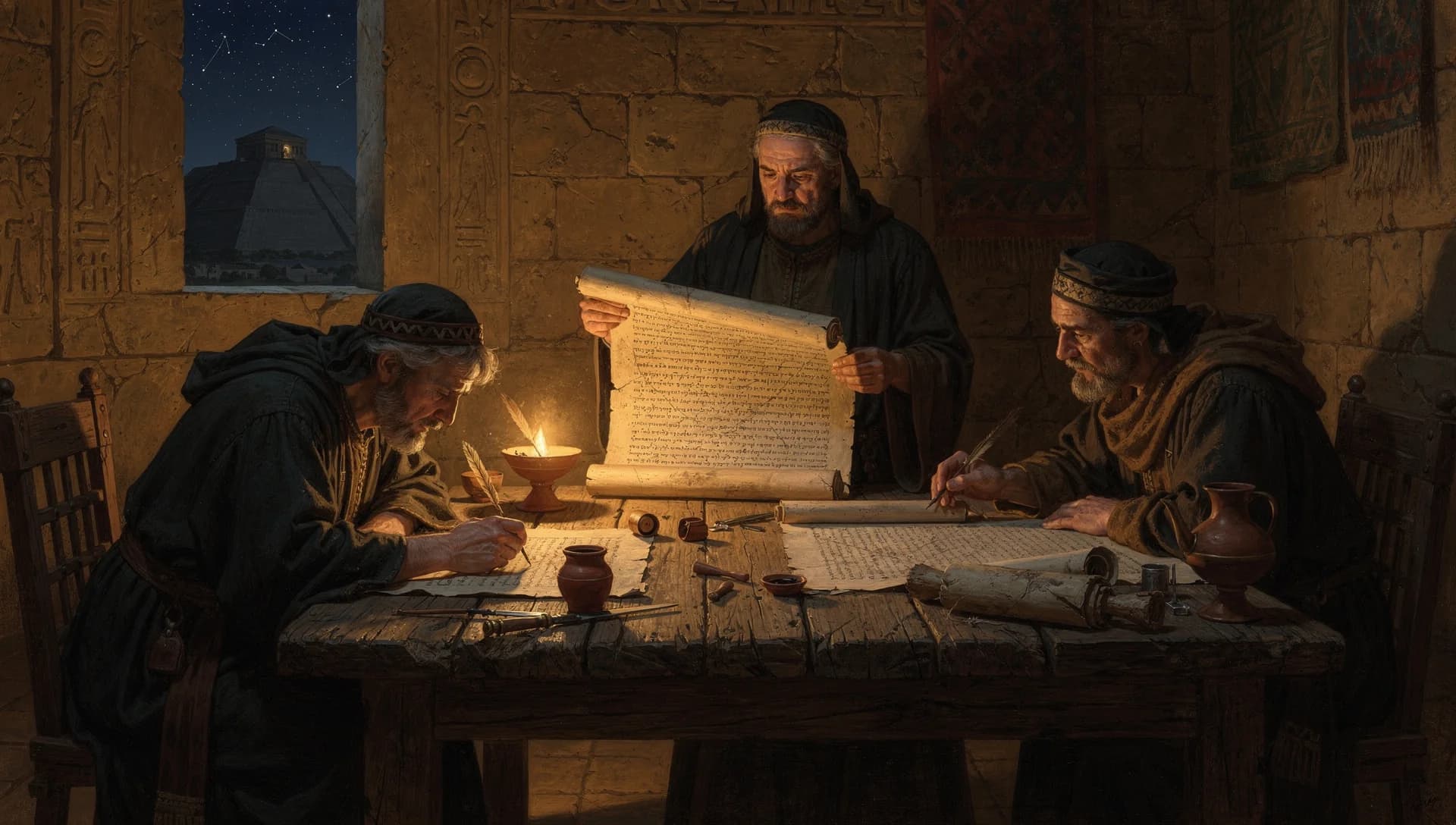
Hebrew scribal revision during Babylonian captivity = Massive rewrite of sacred texts (586-539 BC)
This article expands on the decoder mapping. For the side-by-side card and quick reference, see the mapping page.
The Editorial Moment That Shaped Two Bibles
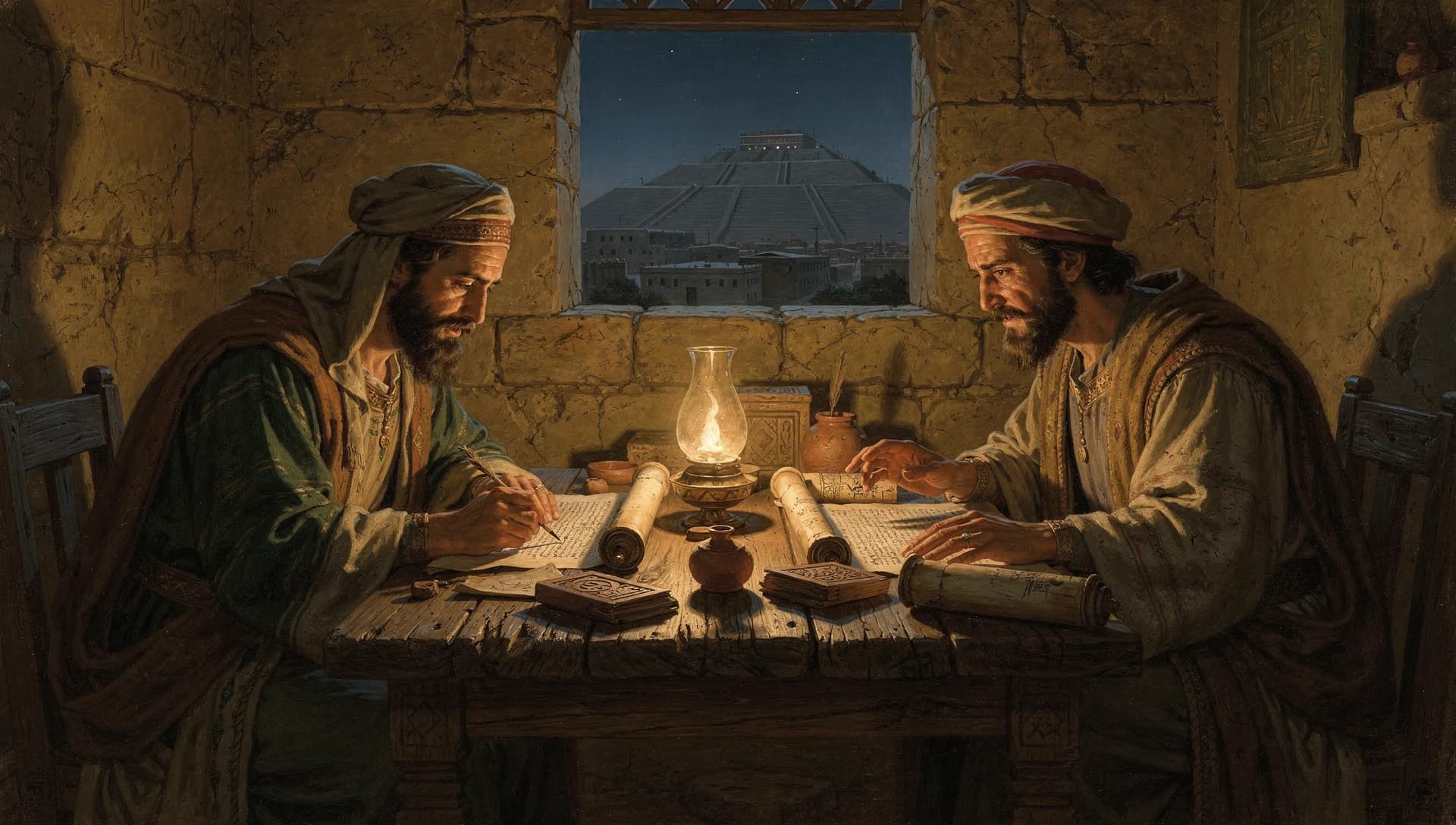
Between 586 BCE (the fall of Jerusalem to Nebuchadnezzar) and 539 BCE (the Persian conquest of Babylon and the return of the Judean exiles), the Hebrew priesthood underwent the formative intellectual experience of the post-Davidic period. Deprived of the temple, the land, and the political framework that had sustained Israelite religion for four centuries, the priesthood turned to the editorial project of consolidating, harmonizing, and systematizing the inherited religious texts. The results of that editorial project are the backbone of the Hebrew Bible as we have it.
Modern biblical scholarship has reconstructed this editorial moment in extensive detail. The Priestly source (P), the Deuteronomistic Historian (Dtr), and the final Pentateuchal redactor are the scholarly names for the editorial hands that shaped the text during and immediately after the captivity. The Urantia Book names the broader phenomenon directly and describes the ideological direction of the revision.
What the Urantia Book Says
The Urantia Book identifies the captivity as the decisive editorial moment:
"The Hebrew narratives of Isaac, Jacob, and Joseph are far more reliable than those about Abraham, although they also contain many diversions from the facts, alterations made intentionally and unintentionally at the time of the compilation of these records by the Hebrew priests during the Babylonian captivity." (UB 93:9.8)
The ideological direction of the revision is named specifically:
"The national ego of the Jews was tremendously depressed by the Babylonian captivity. In their reaction against national inferiority they swung to the other extreme of national and racial egotism, in which they distorted and perverted their traditions with the view of exalting themselves above all races as the chosen people of God; and hence they carefully edited all their records for the purpose of raising Abraham and their other national leaders high up above all other persons, not excepting Melchizedek himself." (UB 93:9.9)
The Urantia Book documents the specific theological improvement that occurred simultaneously in the work of Isaiah the Second:
"During the captivity the Jews were much influenced by Babylonian traditions and legends, although it should be noted that they unfailingly improved the moral tone and spiritual significance of the Chaldean stories which they adopted, notwithstanding that they invariably distorted these legends to reflect honor and glory upon the ancestry and history of Israel." (UB 97:7.2)
"No prophet or religious teacher from Machiventa to the time of Jesus attained the high concept of God that Isaiah the second proclaimed during these days of the captivity. It was no small, anthropomorphic, man-made God that this spiritual leader proclaimed. 'Behold he takes up the isles as a very little thing.' 'And as the heavens are higher than the earth, so are my ways higher than your ways and my thoughts higher than your thoughts.'" (UB 97:7.5)
The simultaneous presence of two forces is a significant observation. On one hand, the priesthood was ideologically compressing the tradition toward ethnic-nationalistic ends, distorting Abraham's relation to Melchizedek, inventing the universal flood narrative to simplify genealogies, and elevating the national heroes above their actual historical peers. On the other hand, Isaiah the Second was articulating the highest monotheistic theology available before Jesus, expanding the concept of God beyond anything the Hebrew tradition had previously achieved.
The captivity moment therefore produced simultaneously the greatest theological advance in Hebrew religious history (Isaiah 40-55) and the most systematic editorial reshaping of the inherited tradition (the Priestly source and the final Pentateuch).
What the Ancient Source Says
The source-critical analysis of the Hebrew Bible that identified the Priestly source (P) and the Deuteronomistic Historian (Dtr) was developed in the nineteenth century by Julius Wellhausen and subsequent scholars. Wellhausen's Prolegomena zur Geschichte Israels (1883) established the basic framework. Modern treatments include Joel Baden's The Composition of the Pentateuch (Yale University Press, 2012), Ronald Hendel and Jan Joosten's How Old Is the Hebrew Bible? (Yale University Press, 2018), and the essays collected in David Carr's The Formation of the Hebrew Bible (Oxford University Press, 2011).
The Priestly source's distinctive features include systematic interest in genealogies, ritual legislation, temple architecture, and the covenant framework. Its compositional dating is generally placed in the sixth to fifth centuries BCE, coinciding with the Babylonian captivity and the post-exilic return. Its editorial work included the construction of the universal flood narrative (treated in the companion Three Noahs article), the compression of the Abrahamic covenant framework (treated in the companion Melchizedek article), and the systematization of the levitical priesthood's ritual authority.
The Deuteronomistic Historian, working roughly contemporaneously, produced the framework narrative of Joshua through 2 Kings, retrojecting the post-exilic theology of monotheistic reform back onto the pre-exilic Israelite history. Richard Elliott Friedman's Who Wrote the Bible? (Summit, 1987) provides the accessible summary; Thomas Römer's The So-Called Deuteronomistic History (T&T Clark, 2007) provides the scholarly detail.
The specific claim that the Hebrew editorial work during the captivity simultaneously produced unparalleled theological elevation (Isaiah 40-55, the so-called Deutero-Isaiah) and ideological compression (the Priestly source) is consistent with the scholarly consensus. The two movements operated in parallel within the same exilic Hebrew community. Joseph Blenkinsopp's Isaiah 40-55 (Anchor Yale Bible, Doubleday, 2002) treats Deutero-Isaiah as the single greatest theological work of the exilic period. Hans-Joachim Kraus's Psalms 60-150 (Augsburg, 1989) discusses the parallel liturgical-theological reform.
Why This Mapping Matters
The ordinary Christian and Jewish reading of the Hebrew Bible treats the text as essentially contemporaneous with the events it describes. Moses wrote the Torah. David composed the Psalms. Solomon wrote Proverbs. The subsequent editorial layers are generally either denied or underestimated.
Modern biblical scholarship has progressively established the editorial depth of the text. The extent to which the Hebrew Bible is a post-exilic composition reflecting post-exilic theological concerns has been scholarly consensus for over a century. The general public's awareness of this consensus lags behind the specialist knowledge.
The Urantia Book's contribution is to supply specific content for the editorial claims. The revision direction (ethnic-national compression of an originally more universal tradition). The specific compressions (Melchizedek's suppression, the universal flood narrative, the elevation of Abraham above his predecessors). The simultaneous theological advance (Isaiah 40-55 as the highest pre-Christian monotheism). The specific mechanism (Babylonian captivity as the national-psychic trauma producing both reactions).
This supplies reading guidance for the Hebrew Bible. The text is not uniformly reliable. Some layers preserve genuine historical content (the Isaac-Jacob-Joseph narratives are "far more reliable" per UB 93:9.8; the earlier prophetic material is substantially authentic). Other layers reflect specifically post-exilic priestly ideology (the universal flood, the compressed Melchizedek account, the ethnic-exclusivist framework). The text requires discernment rather than uniform acceptance.
The mapping's significance is that it places the Hebrew Bible within a specific editorial-historical frame. The text was not given whole; it was assembled across centuries, with the decisive editorial phase occurring during the Babylonian captivity. The revision produced both the greatest theological advance the Hebrew tradition had yet seen (Isaiah 40-55) and the most systematic ideological compression of the inherited material. Reading the Hebrew Bible without awareness of this editorial moment produces predictable misreadings. Reading it with the Urantia Book's specific frame produces clearer access to what the text is actually preserving.
Sources
- The Urantia Book, Paper 93 (Machiventa Melchizedek), Paper 97 (Evolution of the God Concept Among the Hebrews). Urantia Foundation, first printing 1955. Cited passages: 93:9.8, 93:9.9, 97:7.2, 97:7.5, 97:7.9, 97:7.12, 97:7.14.
- Wellhausen, Julius. Prolegomena to the History of Israel. Translated by Menzies and Black, A. & C. Black, 1885.
- Baden, Joel S. The Composition of the Pentateuch: Renewing the Documentary Hypothesis. Yale University Press, 2012.
- Friedman, Richard Elliott. Who Wrote the Bible? Summit Books, 1987.
- Blenkinsopp, Joseph. Isaiah 40-55: A New Translation with Introduction and Commentary. Anchor Yale Bible, Doubleday, 2002.
- Römer, Thomas. The So-Called Deuteronomistic History: A Sociological, Historical and Literary Introduction. T&T Clark, 2007.
- Carr, David M. The Formation of the Hebrew Bible: A New Reconstruction. Oxford University Press, 2011.
- Hendel, Ronald and Jan Joosten. How Old Is the Hebrew Bible? A Linguistic, Textual, and Historical Study. Yale University Press, 2018.
Confidence and Evidence
- Confidence: UB CONFIRMED
- Evidence rating: STRONG
- Basis: The Urantia Book names the Babylonian captivity editorial moment directly in Paper 93:9.8-9 and Paper 97:7. The post-exilic editorial reshaping of the Hebrew Bible is modern academic consensus. The specific direction of the revision (ethnic-nationalistic compression) matches what the documentary hypothesis tradition has reconstructed. The simultaneous theological advance via Deutero-Isaiah is independently recognized in biblical scholarship.
Related Decoder Articles
- Machiventa Melchizedek = Deleted Priest-King of Genesis
- Three Noahs, One Story: Composite Biblical Noah
- Deuteronomy Written Centuries After Moses
By Derek Samaras
Connecting Articles
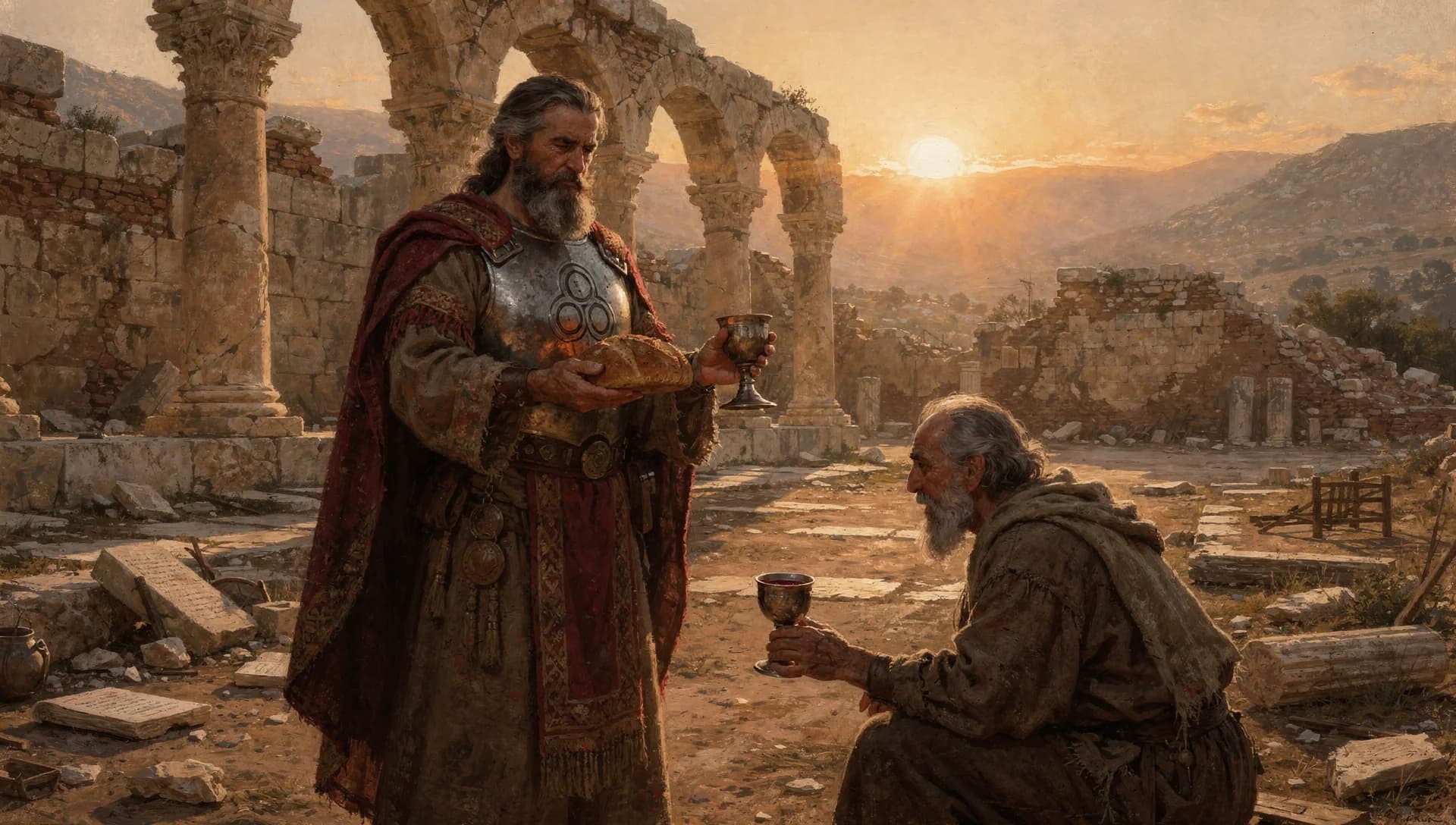
The Priest Who Had No Father: Machiventa Melchizedek and the Genesis Fragment
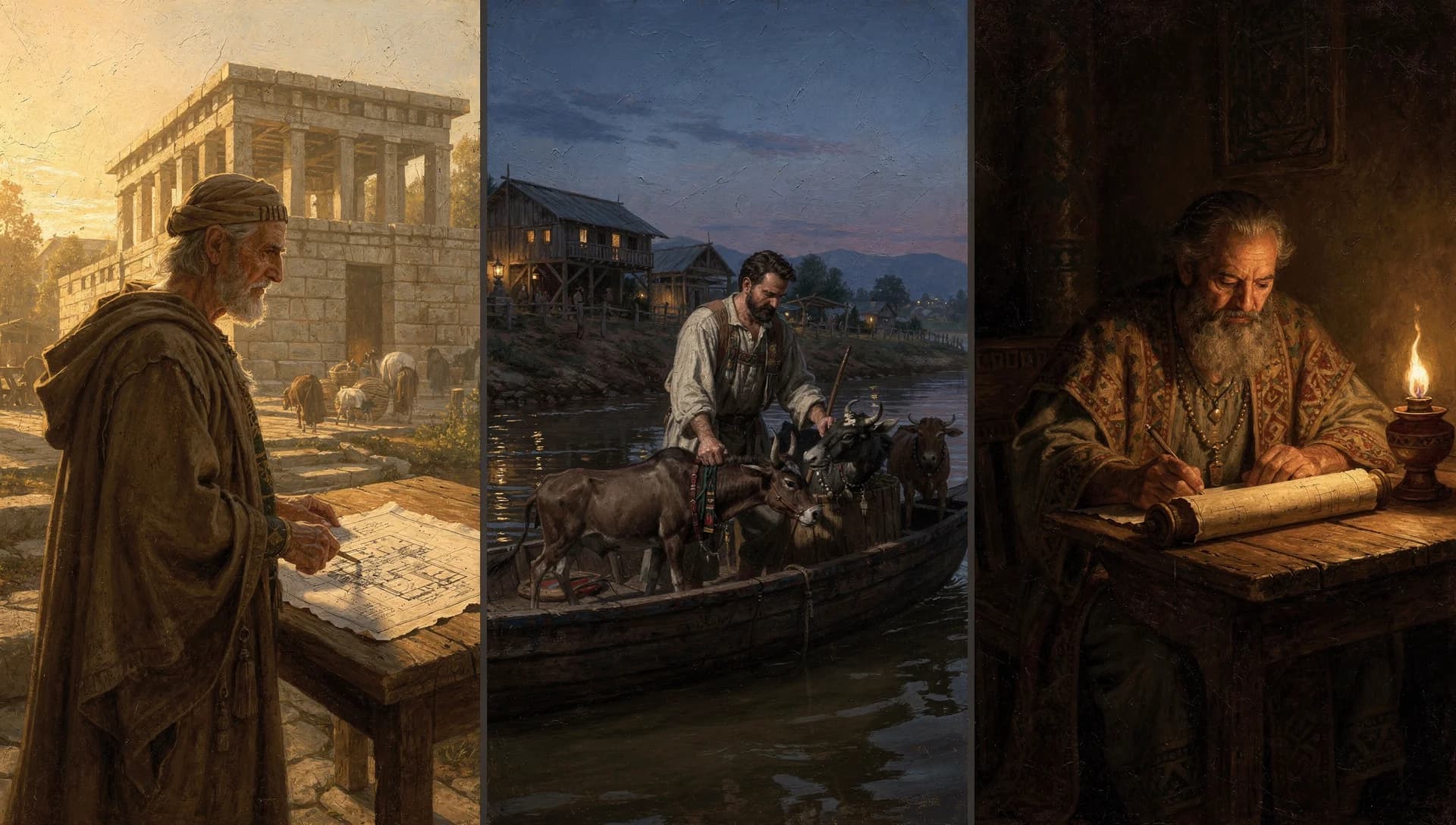
Three Noahs, One Story: The Composite Noah of Genesis
Heaven, Hell, and Devils: How Zoroastrianism Reshaped Jewish Theology

The Longest Memory: Australian Aboriginal Dreamtime and the Primordial Teaching-Ancestors
The Newsletter
Get the research behind each piece
Free. New Urantia Book explorations, the sources behind the videos, and early looks. No spam, unsubscribe anytime.
Prefer video? Follow on YouTube and Facebook.
Delivered through Substack. You can also read past issues.