
Two Dilmuns, Not One: Bahrain, the Nodite Headquarters, and the Confused Sumerian Paradise
Sumerian tradition preserves Dilmun as the paradise where 'the Gods first blessed mankind with the example of civilized and cultured life'. Modern archaeology identifies Dilmun with Bahrain. The Urantia Book reveals there were actually two distinct Dilmuns, and that later scribes folded both of them, plus Dalamatia itself, into a single sacred memory.
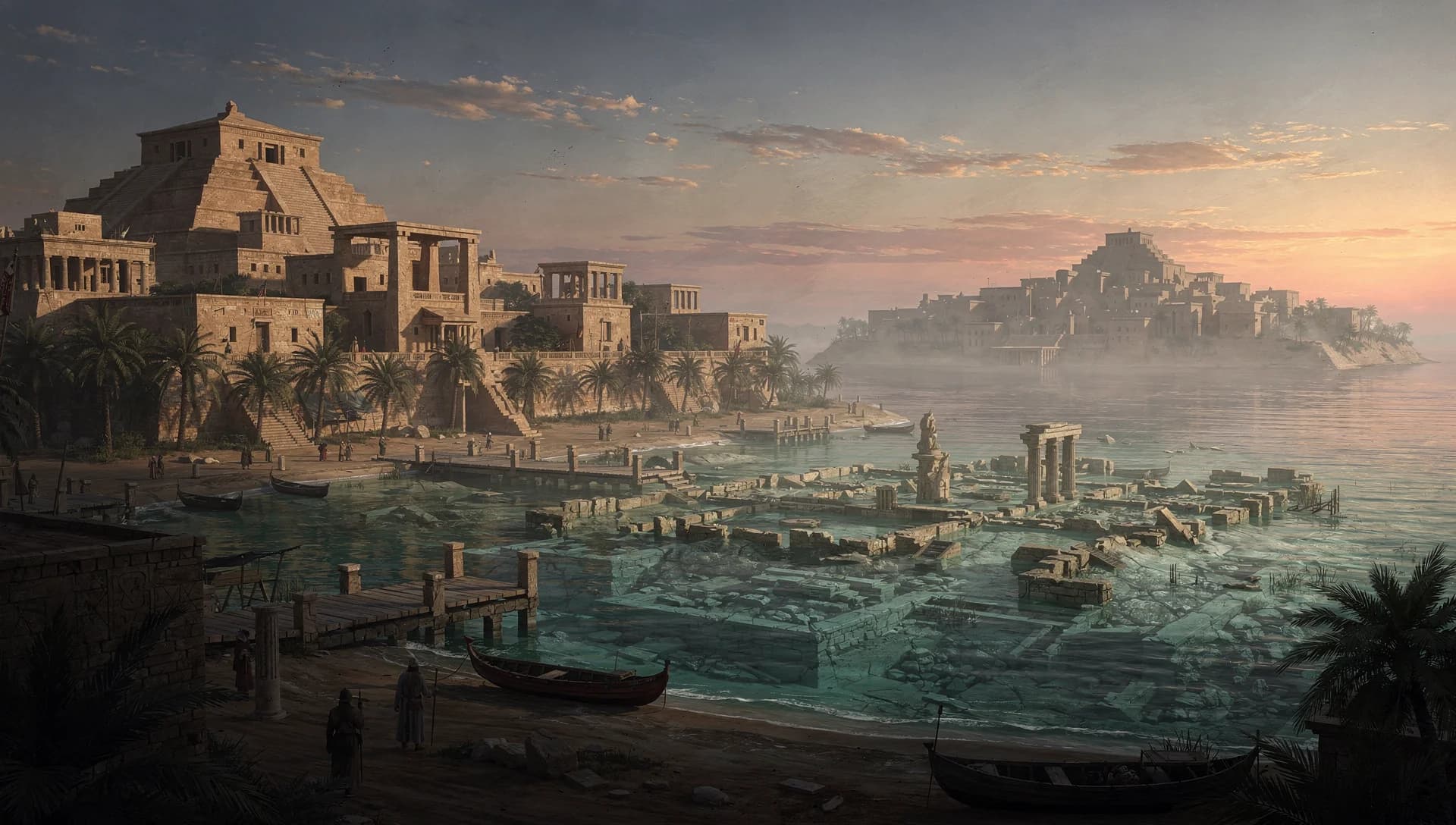
Two distinct Dilmuns plus Dalamatia confused into one = Dilmun (Bahrain) vs. Dilmun (Nodite HQ) vs. Dalamatia
This article expands on the decoder mapping. For the side-by-side card and quick reference, see the mapping page.
The Dilmun Confusion
Sumerian cuneiform tradition remembers Dilmun as a sacred paradise. It is a pure land where sickness, old age, and death do not exist, and where, in the famous phrase, "the Gods first blessed mankind with the example of civilized and cultured life". The Enki and Ninhursag composition (a cuneiform text from around 2000 BCE that preserves an older oral substrate) and the flood narrative in Gilgamesh both describe Dilmun as paradisal and as lying distant in the east, across the waters.
Modern archaeology has identified Dilmun with Bahrain. The Bronze Age trading civilization there (roughly 3000 to 1800 BCE) matches the Dilmun named in Sumerian commercial records, the partner that supplied Mesopotamia with copper, dates, pearls, and finished goods.
The two pictures sit awkwardly together. The Urantia Book explains why. The Sumerian tradition is not pointing at one place. It is pointing at three, layered on top of each other.
What the Urantia Book Says
The Urantia Book identifies the three sites that Sumerian scribes folded into one. The first is Dalamatia, the original headquarters of the Planetary Prince in what is now the Persian Gulf. Dalamatia was lost to the sea long before recorded history.
"One hundred and sixty-two years after the rebellion a tidal wave swept up over Dalamatia, and the planetary headquarters sank beneath the waters of the sea, and this land did not again emerge until almost every vestige of the noble culture of those splendid ages had been obliterated." (67:5.4)
The second is Dilmun proper, the Nodite headquarters city founded after Dalamatia went under.
"After the submergence of Dalamatia the Nodites moved north and east, presently founding the new city of Dilmun as their racial and cultural headquarters." (77:3.1)
The third is Dilmat, a much later Persian Gulf settlement that descendants of the Nodites established centuries afterward.
"The central or pre-Sumerian Nodites. A small group at the mouth of the Tigris and Euphrates rivers maintained more of their racial integrity. They persisted for thousands of years and eventually furnished the Nodite ancestry which blended with the Adamites to found the Sumerian peoples of historic times." (77:4.6)
The Urantia Book describes the conflation directly:
"The elaborate records left by the Sumerians describe the site of a remarkable settlement which was located on the Persian Gulf near the earlier city of Dilmun. The Egyptians called this city of ancient glory Dilmat, while the later Adamized Sumerians confused both the first and second Nodite cities with Dalamatia and called all three Dilmun. And already have archaeologists found these ancient Sumerian clay tablets which tell of this earthly paradise 'where the Gods first blessed mankind with the example of civilized and cultured life.' And these tablets, descriptive of Dilmun, the paradise of men and God, are now silently resting on the dusty shelves of many museums." (77:4.8)
Three places, separated by tens of thousands of years and by hundreds of miles, eventually remembered under one name.
What the Ancient Sources Say
The archaeological case for Dilmun as Bahrain is strong. P. V. Glob's Danish expeditions (1953 to 1978) opened the site, and international excavations at Qal'at al-Bahrain, the ancient Dilmun capital, have continued the work. Harriet Crawford's Dilmun and its Gulf Neighbours (Cambridge University Press, 1998) is the standard scholarly synthesis.
Khaled al-Nashef's The Deities of Dilmun (University of Birmingham, 1986) documents the religious life of the Bronze Age city. The picture that emerges is a major Gulf trading entrepot across the third and second millennia BCE, with substantial commerce reaching both Sumer and the Harappan cities of the Indus.
The paradisal Dilmun is preserved in the Enki and Ninhursag composition (translated in Samuel Noah Kramer's The Sumerians, University of Chicago Press, 1963, and given a fuller treatment in Thorkild Jacobsen's The Harps That Once, Yale University Press, 1987). That text describes Dilmun as a pure land without disease, death, or suffering, and as the place where the gods first established civilization.
Scholars have long puzzled over how these two Dilmuns can be the same. The archaeological Bahrain is a working commercial port. It does not preserve the paradisal features that would account for the mythological tradition. It is a marketplace, not a sanctuary.
The Urantia Book's framework dissolves the puzzle. Sumerian tradition was carrying the memory of three places. The paradisal content traces back to the original Dalamatia and to the Nodite Dilmun that succeeded it. The Bronze Age Bahrain site is a much later cultural settlement that the Sumerians also called Dilmun, because it sat in the same direction across the same waters. The conflation of three places into one name is exactly what cultural memory tends to do across millennia of oral and written transmission.
Why This Mapping Matters
The Sumerian Dilmun tradition is not myth in the dismissive sense. It preserves real cultural memory of the pre-rebellion Dalamatian civilization and of the Nodite continuity that followed. The archaeological Bahrain is a real historical site, but it represents a later phase of that same cultural lineage. It is not the original paradise.
The three-location confusion is a useful case study in how ancient memory works. Distinct events and distinct places get drawn together by shared names, shared directions, and the simplifying pressure of long oral transmission. What looks like one tradition is often a stack of older traditions compressed by time.
The mapping's significance is straightforward. The Sumerian Dilmun tradition preserves genuine memory of three historical realities (Dalamatia, the first Nodite Dilmun, and the later Bahrain settlement) that mainstream archaeology has not been able to distinguish on its own. The Urantia Book tells them apart and supplies the framework that makes each one legible.
Sources
- The Urantia Book, Paper 67 (The Planetary Rebellion), Paper 77 (The Midway Creatures). Urantia Foundation, first printing 1955. Cited passages: 67:5.4, 77:3.1, 77:4.6, 77:4.8.
- Crawford, Harriet. Dilmun and its Gulf Neighbours. Cambridge University Press, 1998.
- Glob, P. V. Al-Bahrain: De danske ekspeditioner til oldtidens Dilmun. Gyldendal, 1968.
- Al-Nashef, Khaled. The Deities of Dilmun. University of Birmingham, 1986.
- Kramer, Samuel Noah. The Sumerians: Their History, Culture, and Character. University of Chicago Press, 1963.
- Jacobsen, Thorkild. The Harps That Once: Sumerian Poetry in Translation. Yale University Press, 1987.
Confidence and Evidence
- Confidence: UB CONFIRMED
- Evidence rating: STRONG
- Basis: The Urantia Book directly documents the three-location confusion at UB 77:4.8. The archaeological Bahrain Dilmun is substantially documented. The paradisal Sumerian mythological content does not specifically match the archaeological Bahrain site, supporting the UB's claim that the Sumerian tradition conflated the later Bahrain site with the earlier Dalamatian and first-Dilmun paradisal realities.
Related Decoder Articles
Byline: Derek Samaras | Urantia Book Network | April 2026
Connecting Articles
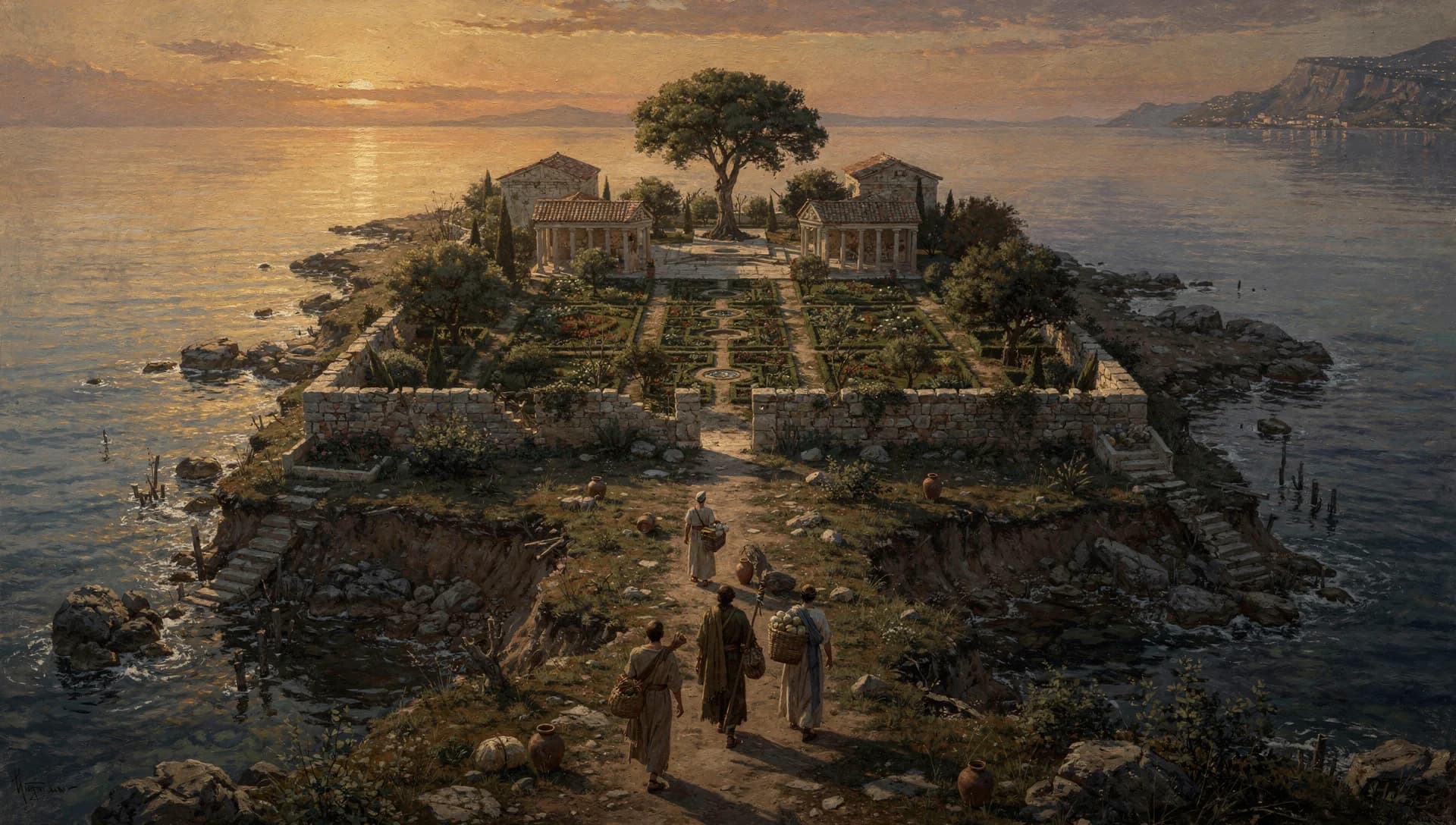
The Paradise That Sank: Eden, Atlantis, and Sumerian Dilmun

The Thunderbird Was Real: Fandors and the Indigenous American Giant Bird Tradition
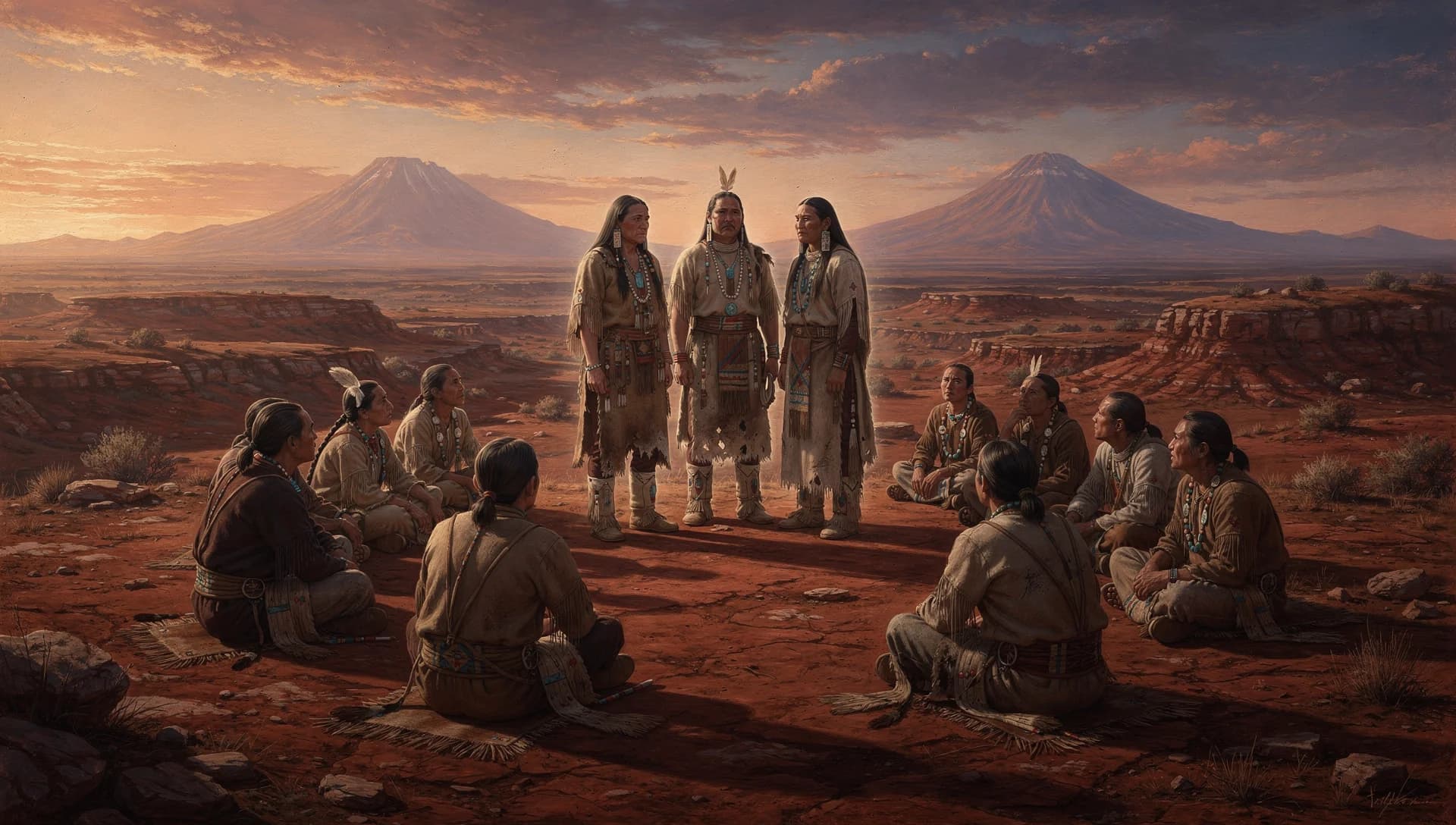
The Ones Who Came First: The Dalamatian Staff and the Navajo Holy People
The Bird That Carried the Bull: Fandors and the Mesopotamian Anzu
The Newsletter
Get the research behind each piece
Free. New Urantia Book explorations, the sources behind the videos, and early looks. No spam, unsubscribe anytime.
Prefer video? Follow on YouTube and Facebook.
Delivered through Substack. You can also read past issues.