
Van the Steadfast: The Jurist Who Defied a Fallen Prince, and the Enki the World Remembered
When the Planetary Prince of this world chose rebellion, one officer rose and said no. Van, the jurist who appealed past his own ruler to the courts of heaven, then held the light of truth on Urantia for thousands of years. The Sumerians may have remembered him too, under another name.
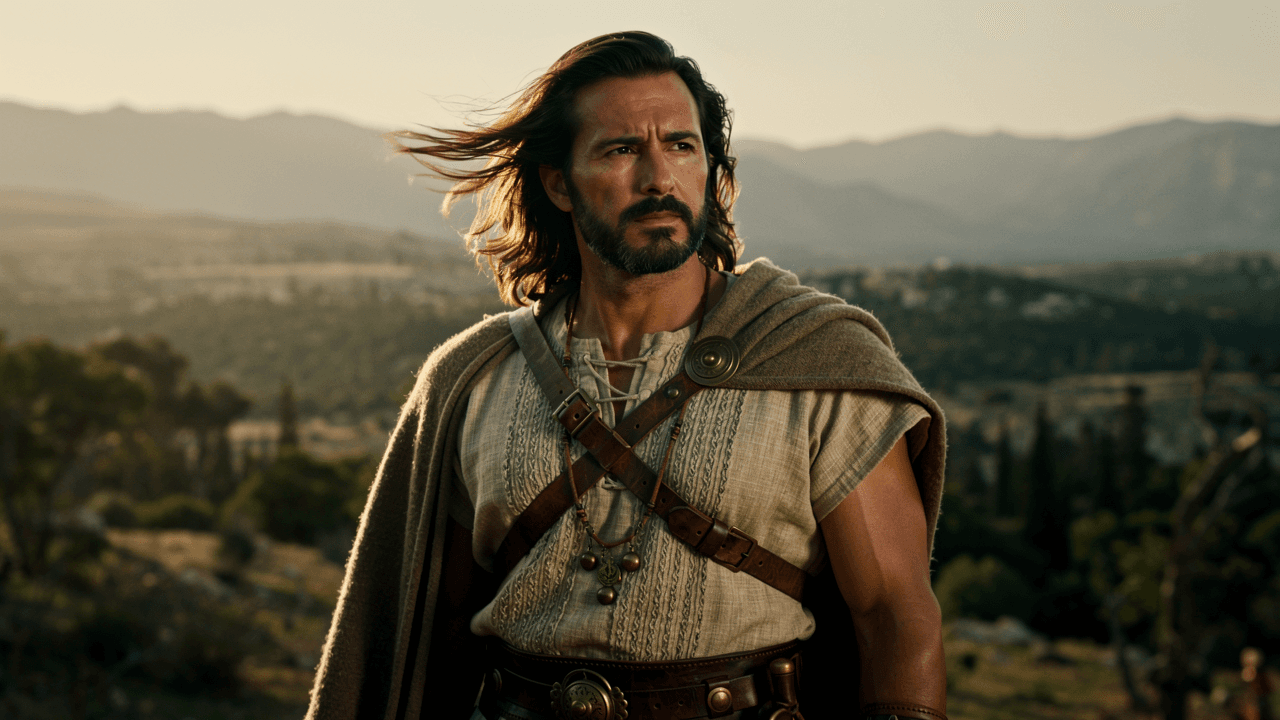
Van the Steadfast
The Jurist Who Defied a Fallen Prince, and the Enki the World Remembered
Derek Samaras | Urantia Book Network | June 2026
Was Enki real?
World mythology remembers Enki, the Sumerian lord of wisdom and fresh water, the patient one who sat at Eridu and organized civilization, and who, when the divine council resolved to destroy mankind, broke ranks with his superior to warn humanity and save it. It is a strange story for an ancient people to tell about one of its gods. Most pantheons exist to justify the ruler on the throne. Sumer told the opposite story, the wise one who defied the ruler so that the world could go on.
The Urantia Book records an event with the same shape, and gives the wise one a name. If you have read the companion to this piece, the story of the Prince who fell, you already know the darker half. This is the brighter half. When Caligastia chose rebellion, he was not the only voice in the room. One officer stood up and said no.
Watch the cinematic companion to this article:
When the Prince Fell, One Officer Said No
To understand Van, you have to picture the room. The Planetary Prince had called his whole administration together, and through his lieutenant Daligastia he demanded that every council abdicate, resigning its powers into Daligastia's hands as trustee, so that Caligastia could proclaim himself absolute sovereign of this world (67:2.1). It was, in plain terms, a coup. And in that moment, the most senior jurist on the planet rose to answer it.
Van was no minor functionary. He chaired the highest court of the Prince's own government, the body that heard appeals from all the others.
"This supreme council was directed by Van and was the court of appeals for all of the other nine special commissions charged with the supervision of human affairs. This council was one of wide function, being intrusted with all matters of earthly concern which were not specifically assigned to the other groups." (66:5.31)
So when the demand for total power was laid on the table, it was the chief justice of the world who answered it. The book describes the moment with real admiration.
"The presentation of this astounding demand was followed by the masterly appeal of Van, chairman of the supreme council of co-ordination. This distinguished administrator and able jurist branded the proposed course of Caligastia as an act bordering on planetary rebellion and appealed to his conferees to abstain from all participation until an appeal could be taken to Lucifer, the System Sovereign of Satania; and he won the support of the entire staff." (67:2.2)
Read that carefully. Van's first move was not rage. It was procedure. He named the act for what it was, and he insisted that the matter be appealed to higher authority before anyone acted. He was so persuasive that he carried the whole staff with him. For a moment, the rebellion stalled on the strength of one lawful objection.
The Seven-Hour Indictment
The appeal went up the chain, and the answer that came back was worse than the demand. The orders from the System Sovereign confirmed Caligastia and commanded absolute, unquestioning allegiance. The court of heaven, at that level, had already gone over to the rebel cause. Many a being would have read that reply and quietly submitted. Van did the opposite.
"And it was in reply to this amazing message that the noble Van made his memorable address of seven hours' length in which he formally drew his indictment of Daligastia, Caligastia, and Lucifer as standing in contempt of the sovereignty of the universe of Nebadon; and he appealed to the Most Highs of Edentia for support and confirmation." (67:2.2)
Seven hours. A formal legal indictment of his own prince, his prince's lieutenant, and the System Sovereign above them both, delivered while the circuits were closing and the planet was being cut off from the rest of the universe (67:2.3). Van could not yet know that his appeal would be answered, or when. He made it anyway, because it was true. That is the heart of the man. He did not stand firm because he was sure he would win. He stood firm because he was sure he was right.
The Long Stand
When the dust settled, the staff of one hundred had split, and Van's stand had not been in vain.
"On Urantia forty members of the corporeal staff of one hundred (including Van) refused to join the insurrection." (67:3.2)
Forty out of a hundred, against a charismatic prince and the dazzling authority above him, held the line. And they did not hold it alone. A loyal human stood at Van's side through the whole ordeal, an early descendant of the first human pair.
"Amadon is the outstanding human hero of the Lucifer rebellion." (67:3.8)
Amadon was not a celestial being. He was one of us, an evolutionary mortal, and he chose to stand with his chief when supermortal beings all around him were falling.
"Amadon elected to stand with his chief throughout the long and trying struggle. And it was an inspiring sight to behold this child of the evolutionary races standing unmoved by the sophistries of Daligastia while throughout the seven-year struggle he and his loyal associates resisted with unyielding fortitude all of the deceptive teachings of the brilliant Caligastia." (67:3.8)
Through those years the loyalists guarded something precious, the source of their sustenance and their endurance.
"Upon the outbreak of rebellion, loyal cherubim and seraphim, with the aid of three faithful midwayers, assumed the custody of the tree of life and permitted only the forty loyalists of the staff and their associated modified mortals to partake of the fruit and leaves of this energy plant." (67:3.5)
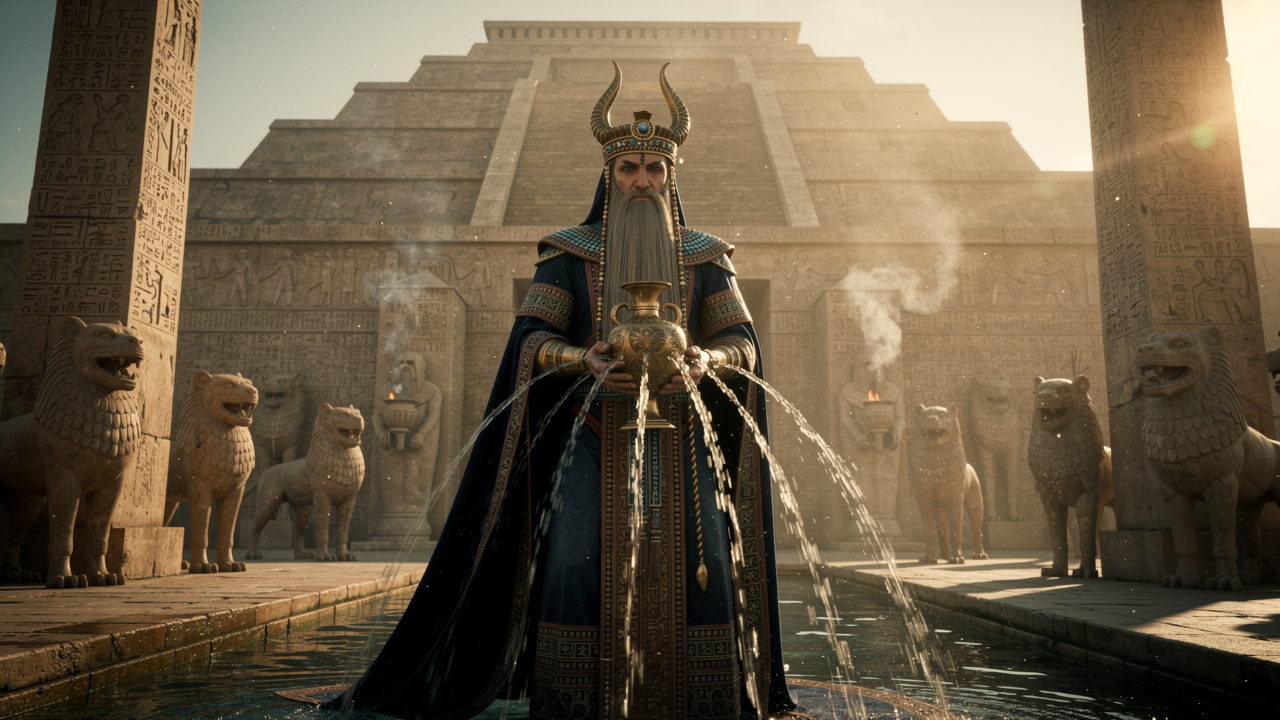
The Man Who Held the World
When the Melchizedek receivers finally arrived to take charge of the orphaned planet, the loyal members of the staff were released to return home. All but one.
"Immediately upon the arrival of the Melchizedek receivers the loyal personalities (except Van) were returned to Jerusem and were reunited with their waiting Adjusters." (67:4.5)
Van stayed. He remained on the world he had refused to abandon, and with Amadon and a loyal remnant he carried the light of truth across the long darkness that followed, all the way to the next great chapter of the planet's history.
"Van and Amadon remained on earth until shortly after the arrival of Adam and Eve. Some years thereafter they were translated to Jerusem, where Van was reunited with his waiting Adjuster. Van now serves in behalf of Urantia while awaiting the order to go forward on the long, long trail to Paradise perfection and the unrevealed destiny of the assembling Corps of Mortal Finality." (67:6.8)
The loyal human band that gathered around the two of them became the quiet keepers of civilization through the dark ages, the people the record calls the Amadonites.
"The Amadonites were the descendants of those Andonites who chose to remain loyal with Van and Amadon." (73:1.3)
One lawful objection, one seven-hour indictment, one human friend who would not flinch, and one teacher who stayed behind to hold a wounded world together for thousands of years. That is the life the Urantia Book gives to Van.
The Enki the World Remembered
Now set that beside the strange Sumerian story we began with.
Enki, later called Ea by the Akkadians, is the wise organizer who sits beside the fresh waters at Eridu and brings the arts of civilization to humanity. In the flood traditions preserved in the Eridu Genesis and the epic of Atrahasis, the chief god Enlil resolves to destroy mankind, and it is Enki who breaks with the council to warn the righteous man, Ziusudra in the Sumerian telling, Atrahasis in the Akkadian, so that humanity survives. The culture lives because one high official within the divine assembly refused to go along with his superior's decree.
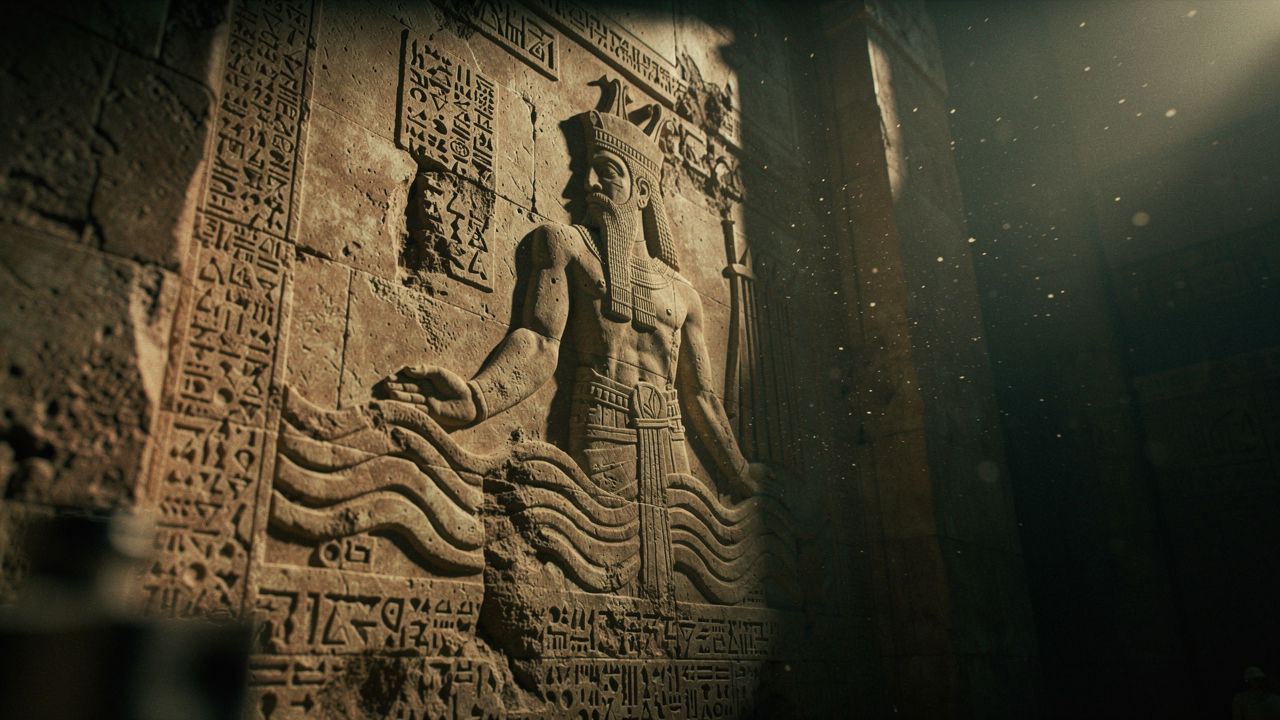
Hold the two portraits next to each other and notice how the lines fall. A high official in a divine council. A ruling authority that turns against the world. One wise administrator who breaks ranks, appeals over his superior's head, and labors patiently to carry humanity through the danger. In the revelation he is Van, the jurist who indicted his own prince and held the tree of life. In the clay tablets he is Enki, the wise one of Eridu who defied Enlil to save mankind from the flood. You can decide for yourself what to make of the resemblance. The Urantia Book simply offers the older account, and lets you see the shape underneath the legend.
Two Names, One Pattern
There is a reason the story of Van belongs right next to the story of Caligastia. They are the same moment seen from opposite ends. The Prince had every advantage, brilliance, authority, three hundred thousand years of trust, and he used them to betray the world. The jurist had only the truth and the courage to say it out loud, and he used that to save what could be saved.
Both men faced the same choice on the same day. That is the choice the whole drama keeps coming back to, and it is never really about horns or thrones or distant rebellions. It is about what a person does when the powerful ask them to call a wrong thing right. One said yes. One said no. And the world still remembers them both.
Note on Citations
Every direct quotation from the Urantia Book is verbatim from the cited paragraph and was verified against the canonical text. Citations follow the standard Paper:Section.Paragraph format. The discussion of Enki, Enlil, Eridu, and the Sumerian and Akkadian flood traditions reflects the comparative mythology of the Eridu Genesis and the Atrahasis epic; the parallel to Van is offered for the reader's own consideration, not asserted as established fact.

Connecting Articles



The Newsletter
Get the research behind each piece
Free. New Urantia Book explorations, the sources behind the videos, and early looks. No spam, unsubscribe anytime.
Prefer video? Follow on YouTube and Facebook.
Delivered through Substack. You can also read past issues.