
The Ones Who Stayed
Van. Amadon. The Melchizedek receivers. The midwayers. The fandors. The tree of life. They held the line on a quarantined planet for over 150,000 years. Then they became the legends.

THE ONES WHO STAYED
Derek Samaras | Urantia Book Network | April 2026
A Planet Under Quarantine
Two hundred thousand years ago, a world lost its government.
The Lucifer rebellion swept through Satania and tore the administrative structure of Urantia apart. The Planetary Prince, Caligastia, sided with Lucifer. Sixty of the hundred corporeal staff members defected (67:4.2). The system circuits were severed. And Urantia was quarantined, cut off from the normal communications and transports of the local universe.
But not everyone left. Not everyone fell.
A small group of extraordinary beings chose to stay on this darkened, isolated planet. They held the line for over 150,000 years. And when they finally departed or perished, the memory of what they had been, what they had done, and what they had guarded was so powerful that it encoded itself into the mythology of every civilization that followed.
This is the story of the ones who stayed.
Van: More Than 150,000 Years of Loyalty
Van was a member of the Prince's corporeal staff, serving as chairman of the supreme council of coordination (67:2.2). When Caligastia declared for Lucifer, Van refused.
The Urantia Book describes the quality of his resistance in terms that read like a character study in moral psychology:
"The spiritual insight and moral steadfastness which enabled Van to maintain such an unshakable attitude of loyalty to the universe government was the product of clear thinking, wise reasoning, logical judgment, sincere motivation, unselfish purpose, intelligent loyalty, experiential memory, disciplined character, and the unquestioning dedication of his personality to the doing of the will of the Father in Paradise." (67:3.6)
Van did not simply survive the rebellion. He organized the resistance. He gathered the loyal midwayers, the faithful angels, and the human Andonites who refused to follow Caligastia. He fought a seven-year campaign to protect the loyalists and their most precious asset: the tree of life (67:3.4-6).
After the Melchizedek receivers arrived, the other loyal staff members were returned to Jerusem. Van alone remained (67:4.5). He stayed on Urantia as the titular head of all superhuman personalities functioning on the planet, sustained by the tree of life in conjunction with the specialized life ministry of the Melchizedeks, for over one hundred and fifty thousand years (67:6.4).
Within a thousand years of the rebellion, Van had established more than 350 advanced civilization outposts scattered across the world (67:6.6). These communities, composed largely of loyal Andonite descendants mixed with Sangik peoples and Nodites, kept the flame of civilized life alive through the darkest epoch in planetary history.
When Adam and Eve finally arrived, Van prepared the Garden of Eden for them. A committee chose the Mediterranean peninsula site, and Van's company spent two years transferring the world's cultural headquarters there (73:3.2). He transplanted the tree of life into the Garden temple (73:6.1). And when the Material Son and Daughter were formally installed, Van relinquished the authority he had carried for over 150 millennia (74:2.6). He was translated to Jerusem simultaneously with the departure of the twelve Melchizedek receivers (74:5.2).
150,000 years. On a quarantined planet. With no system broadcasts, no celestial backup, no guarantee that help would ever come. Van stayed.
Amadon: The Human Hero
If Van was the superhuman leader of the resistance, Amadon was its human heart.
Amadon was a modified Andonite, one of the hundred mortals who contributed their own life plasm to the Prince's corporeal staff (67:3.8). He served as Van's personal associate and assistant. When the rebellion came, he had a choice no human being should ever have to make: follow the brilliant, persuasive Caligastia, or stand with Van against the tide.
He stood.
"The Lucifer rebellion was withstood by many courageous beings on the various worlds of Satania; but the records of Salvington portray Amadon as the outstanding character of the entire system in his glorious rejection of the flood tides of sedition and in his unswerving devotion to Van—they stood together unmoved in their loyalty to the supremacy of the invisible Father and his Son Michael." (67:8.1)
The outstanding character of the entire system. Not of Urantia alone, but of all 619 inhabited worlds in Satania (15:14.5). A mortal who contributed his own life plasm to the Prince's staff, then stood unmoved by the sophistries of Daligastia for seven years while superhuman beings crumbled around him (67:3.8).
Like Van, Amadon was sustained by the tree of life for the full watch of more than 150,000 years (67:6.4). The 144 loyal Andonites who stood with him became known as the Amadonites, and they formed the biological and cultural backbone of the loyalist civilization that Van established across the globe (67:6.3).
The Twelve Melchizedek Receivers
When the circuits of Satania went down and the rebellion was contained but not resolved, the universe administration did not simply abandon Urantia. Twelve Melchizedek Sons were appointed as planetary receivers, confirmed by the mandate of the Most High Father of Norlatiadek (67:6.5).
These emergency administrators did heroic work. They preserved the remnants of civilization. Their planetary policies were faithfully executed through Van and his outposts (67:6.6). They governed through an advisory council that included a loyal aide of the fallen Prince, the two resident Life Carriers, a Trinitized Son in training, a volunteer Teacher Son, a Brilliant Evening Star, and the chiefs of both seraphim and cherubim (67:6.5).
This was receivership on a cosmic scale: twelve emergency Sons managing a quarantined planet for 150,000 years, coordinating with a human-superhuman hybrid force on the ground, waiting for the arrival of a Material Son and Daughter who had been promised but whose timing was unknown.
When Adam and Eve arrived, the Melchizedeks departed. When Adam and Eve defaulted, the same twelve returned (93:0.2). They continued as planetary receivers through the long dark ages that followed, through the emergency incarnation of one of their own, Machiventa Melchizedek, during the time of Abraham (93:1.3), and on down to the day when Jesus of Nazareth established himself on earth as the Son of Man.
The Melchizedek receivership of Urantia is one of the longest continuous emergency administrations in the history of Nebadon.
The Loyal Midwayers
When the rebellion split the staff, it also split the midway creatures.
A little over four-fifths of the primary midwayers were ensnared by the rebellion (77:1.7). But the loyal corps, roughly one-fifth, immediately entered the service of the Melchizedek receivers, functioning under Van's titular leadership until the arrival of Adam (77:1.7).
During the seven crucial years of the rebellion itself, three faithful midwayers assumed custody of the tree of life alongside loyal cherubim and seraphim (67:3.5). Without them, the tree would have been seized or destroyed, and Van and Amadon would have aged and died like any other mortals.
The midwayers' most prominent loyalist was 1-2-3 the First, the eldest of the primary order. His "fearless leadership was instrumental in reducing the casualties in his order" (77:9.5). After Pentecost, 1-2-3 the First was released from immediate planetary duties and now serves on Jerusem as a member of the twenty-four counselors.
After Pentecost, the loyal primary midwayers and the loyal secondary midwayers effected a voluntary union and have functioned as one unit ever since (51:3.8). They are, to this day, the permanent citizens of Urantia (77:9.1). They were here before the Prince arrived, and they will be here long after the last mortal has been translated.
Their determination is captured in the motto of their order: "What the United Midwayers undertake, the United Midwayers do" (77:9.3).
The Tree of Life
The tree of life was not a myth. The Urantia Book is direct about this:
"The 'tree of the knowledge of good and evil' may be a figure of speech, a symbolic designation covering a multitude of human experiences, but the 'tree of life' was not a myth; it was real and for a long time was present on Urantia." (73:6.3)
It was an actual shrub from Edentia, sent to Urantia by the Most Highs of Norlatiadek when Caligastia arrived as Planetary Prince (66:4.13). It stored "certain space-energies which were antidotal to the age-producing elements of animal existence." Its fruit was "like a superchemical storage battery, mysteriously releasing the life-extension force of the universe when eaten" (73:6.4).
The tree was useless to ordinary evolutionary mortals. But for the corporeal members of the Prince's staff, and for the modified Andonites who had contributed life plasm to the staff, it conferred indefinite life (66:4.13).
Follow its journey:
Dalamatia (~500,000 years ago): The tree grew in the central courtyard of the temple of the unseen Father (66:4.13).
The Rebellion (~200,000 years ago): When Caligastia defected, Van's loyalists regrew the tree from its central core at their temporary camp east of Dalamatia (73:6.5). Loyal cherubim, seraphim, and three midwayers guarded it (67:3.5).
The Highland Retreat (200,000 to ~38,000 years ago): The Edentia shrub was taken to Van and Amadon's highland headquarters, where it sustained them both for over 150,000 years (73:6.5).
The Garden of Eden (~38,000 years ago): Van transplanted the tree to the central courtyard of the Father's temple in the newly prepared Garden (73:6.1, 73:6.6). Adam and Eve periodically partook of its fruit for the maintenance of their dual form of physical life.
After the Default: When Adam and Eve fell, they were forbidden to take the tree's core from the Garden. The Nodites invaded, having been told they would "become as gods" if they ate the fruit. They found it unguarded. They ate freely. It did nothing for them. They lacked the biological endowment that complemented the fruit. Enraged at their inability to benefit from the tree, and in connection with one of their internal wars, the Nodites destroyed both the temple and the tree by fire (73:6.7).
And with its destruction, all flesh on Urantia was consigned to the natural course of life and death (73:6.8).
The Fandors: The Great Passenger Birds
One of the most overlooked details in the Urantia Book is the existence of the fandors, enormous passenger birds that were domesticated by the Prince's staff and used as aerial transport for tens of thousands of years.
Their ancestors appeared in the Cenozoic era, reaching heights of ten feet and laying eggs nine by thirteen inches. The UB describes them as "the ancestors of the later gigantic passenger birds that were so highly intelligent, and that onetime transported human beings through the air" (61:1.9).
At Dalamatia, Bon's group (the animal domestication council) successfully trained the fandors as passenger birds (66:5.6). On normal evolutionary worlds, similar creatures serve the early races, being "of great service since they possess a high order of intelligence, often being able to speak many words of the languages of the realm" (52:1.5).
The fandors were still alive and in service when Adam and Eve arrived on Urantia nearly 38,000 years ago (74:0.1). One of the most vivid images in the Adamic narrative is the third day of their new life:
"The third day was devoted to an inspection of the Garden. From the large passenger birds—the fandors—Adam and Eve looked down upon the vast stretches of the Garden while being carried through the air over this, the most beautiful spot on earth." (74:3.4)
They became extinct more than 30,000 years ago (66:5.6). But for hundreds of thousands of years, they were part of the daily reality of superhuman life on this planet: giant, intelligent birds that carried people through the air.
How They Became the Legends
Here is where the Urantia Book's account and the mythology of the ancient world converge.
When you have superhuman beings, a sacred tree, giant birds, and invisible spirit creatures living on a planet for 150,000 years or more, and the cultures they influenced had no writing system to preserve the facts, the memory does not disappear. It garbles. It mythologizes. It survives as art.
Van in the Ancient World
In Sumerian tradition, Enki is the god of wisdom, crafts, and fresh waters who organized civilization and stood against the destructive impulses of Enlil. Academic sources give Enki the exact epithet "lord of steadfast decisions." The parallels to Van, chairman of the supreme council of coordination, are precise. Enki organizes civilization from Eridu (the oldest known city); Van builds 350 civilization outposts from his highland headquarters.
In Norse mythology, the Vanir are the older, wiser gods who war with the Aesir. The Aesir-Vanir war is "a conflict within the divine community rather than between gods and their enemies," a structural match for the internal Caligastia rebellion. The name itself echoes.
And in eastern Turkey, the ancient kingdom of Urartu, centered at Lake Van, preserves palace reliefs showing the exact three-element composition: a superhuman winged figure, a sacred tree, and a great bird. The native name Biainili became "Van" in Old Armenian, and the lake, the city, and the region still carry that name today. The images persist. The meaning is garbled, but the signal is still there.
The Tree in Every Tradition
The sacred tree is one of the most universal symbols in human culture, and the Urantia Book provides the literal origin.
In Genesis, the tree of life stands in the center of the Garden, guarded by a cherubim after the Fall, and its fruit confers immortality. The UB confirms this image almost exactly, then adds the operational detail Genesis lacks: what the tree was, how it worked, and why the cherubim guarded it (67:3.5, 73:6.1-7).
In Norse mythology, Yggdrasil is the cosmic tree at the center of the worlds, whose life-giving waters sustain the gods. Odin hung on Yggdrasil for nine nights in a sustained vigil that yielded cosmic knowledge. Van remained at the tree of life for more than 150,000 years in a sustained vigil that preserved cosmic truth. The structural parallel is exact.
In Sumerian art, the sacred tree appears as the single most frequently depicted motif in Neo-Assyrian palace reliefs, flanked by winged figures, persisting across 2,000 years of visual culture (British Museum collections, 883-859 BCE through late Assyrian period).
In the Sumerian King Lists (Weld-Blundell Prism, c. 1800 BCE), eight kings ruled before the flood for a combined 241,200 years. The UB provides two explanations: early Nodite rulers genuinely lived longer due to residual effects of the tree of life, and a calendrical confusion where the 28-day "month, or season" was counted as a "year," inflating lifespans by roughly twelve-fold (77:2.11).
The Fandors in Every Sky
A giant rideable bird appears across cultures separated by oceans and millennia:
Anzu (Sumerian): A massive bird depicted on Assyrian palace reliefs carrying animals and associated with divine power (British Museum BM 124571). The Imdugud Relief (c. 2600 BCE) shows a lion-headed eagle gripping two stags.
Garuda (Hindu): The king of birds, mount of Vishnu, described in the Mahabharata as so massive he could block out the sun. A violet-skinned divine figure riding a giant bird is precisely what an Adamson (violet-skinned Adamic descendant) on a fandor would look like to a remembering culture.
Thunderbird (Indigenous Americas): A creature of enormous size associated with storms, capable of carrying humans, central to the spiritual traditions of peoples across both American continents.
Roc (Arabian): The giant bird of the Thousand and One Nights, large enough to carry elephants.
The cross-cultural persistence of the "giant rideable bird" motif, spanning Sumerian, Hindu, Indigenous American, and Arabian traditions, is one of the most striking convergences in comparative mythology. The Urantia Book provides the common ancestor: the fandors.
The Midwayers in the Invisible World
Every culture on earth has traditions of invisible beings who interact with the physical world, who are neither fully spirit nor fully material, who have been here since before human memory.
The djinn of Islamic tradition. The fairies of Celtic lore. The kami of Shinto. The daimons of Greek philosophy. The helpful or mischievous spirits who haunt specific locations, who can interact with physical objects, who seem to have their own society and their own purposes.
The midwayers are exactly this: creatures functioning midway between the mortal and angelic levels, permanently stationed on Urantia, interacting with the physical world in ways that would be visible and puzzling to human observers. They have been here for roughly 500,000 years. They are still here. And their presence, felt but not understood, seeded the worldwide tradition of the invisible people.
Why This Matters
The standard academic explanation for the similarities across world mythology is convergent evolution of the human imagination: similar brains produce similar stories. And for some motifs, that explanation is sufficient.
But the Urantia Book offers something more precise. It names the individuals. It gives the dates. It describes the mechanism by which these beings entered the cultural memory: they were physically present, for enormous spans of time, in direct contact with early human cultures that had no writing systems.
Van was not a symbol. He was a person who lived on this planet for 150,000 years, building civilization outposts, teaching primitive peoples, guarding a sacred tree. When the cultures he influenced remembered him as Enki, or honored his name in the kingdom of Urartu, they were preserving a garbled but genuine memory of a real being.
The fandors were not archetypes. They were real birds, ten feet tall, intelligent enough to learn words, carrying human passengers through the air for hundreds of thousands of years. When Sumerian sculptors carved the Anzu, when Hindu poets sang of Garuda, when Indigenous peoples honored the Thunderbird, they were reaching back through millennia of oral tradition to the memory of something that once flew.
The tree of life was not a metaphor for spiritual wisdom. It was a shrub from Edentia that stored space-energies and conferred indefinite life on those with the biological complement to use it. When every culture on earth tells a story about a sacred tree whose fruit gives immortality, they are remembering the one that once grew in the courtyard of the Father's temple.
And the twelve Melchizedek receivers, the emergency administrators who governed this quarantined planet through more than 150,000 years of crisis and then returned after the Adamic default to continue their service through the time of Abraham and beyond, represent one of the longest continuous emergency administrations in the history of Nebadon. They are the unseen government behind the garbled memories of "divine councils" and "heavenly judges" in traditions from Mesopotamia to Mesoamerica.
These beings did not just endure a quarantine. They held the line for the entire planet. And the memory of what they were, faded and fractured through hundreds of generations of retelling, became the mythology of the human race.
The legends were never invented. They were remembered.
Related reading: The Watchers Were Real | Dalamatia Is the Original Atlantis | The Mythology Decoder
Character profiles: Van | Amadon | 1-2-3 the First
Connecting Articles
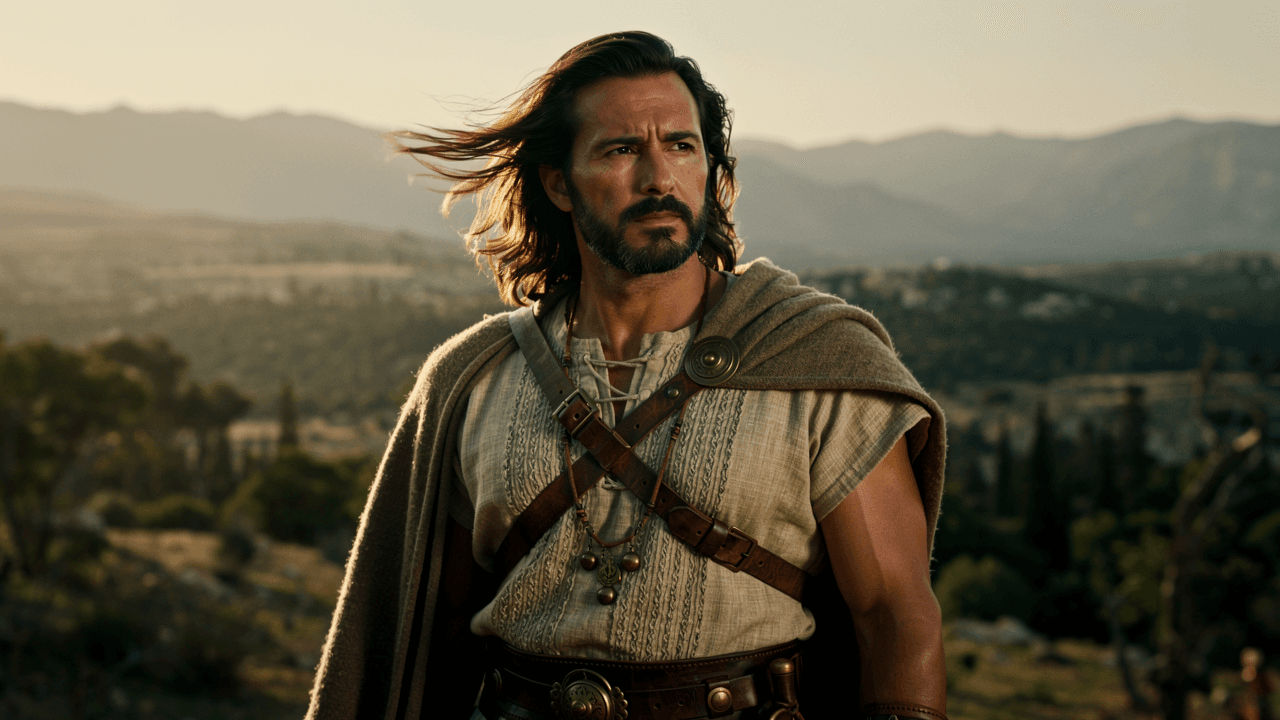
Van the Steadfast: The Jurist Who Defied a Fallen Prince, and the Enki the World Remembered

Rebellion Tested: What the Lucifer Rebellion Knows About Narcissistic Abuse
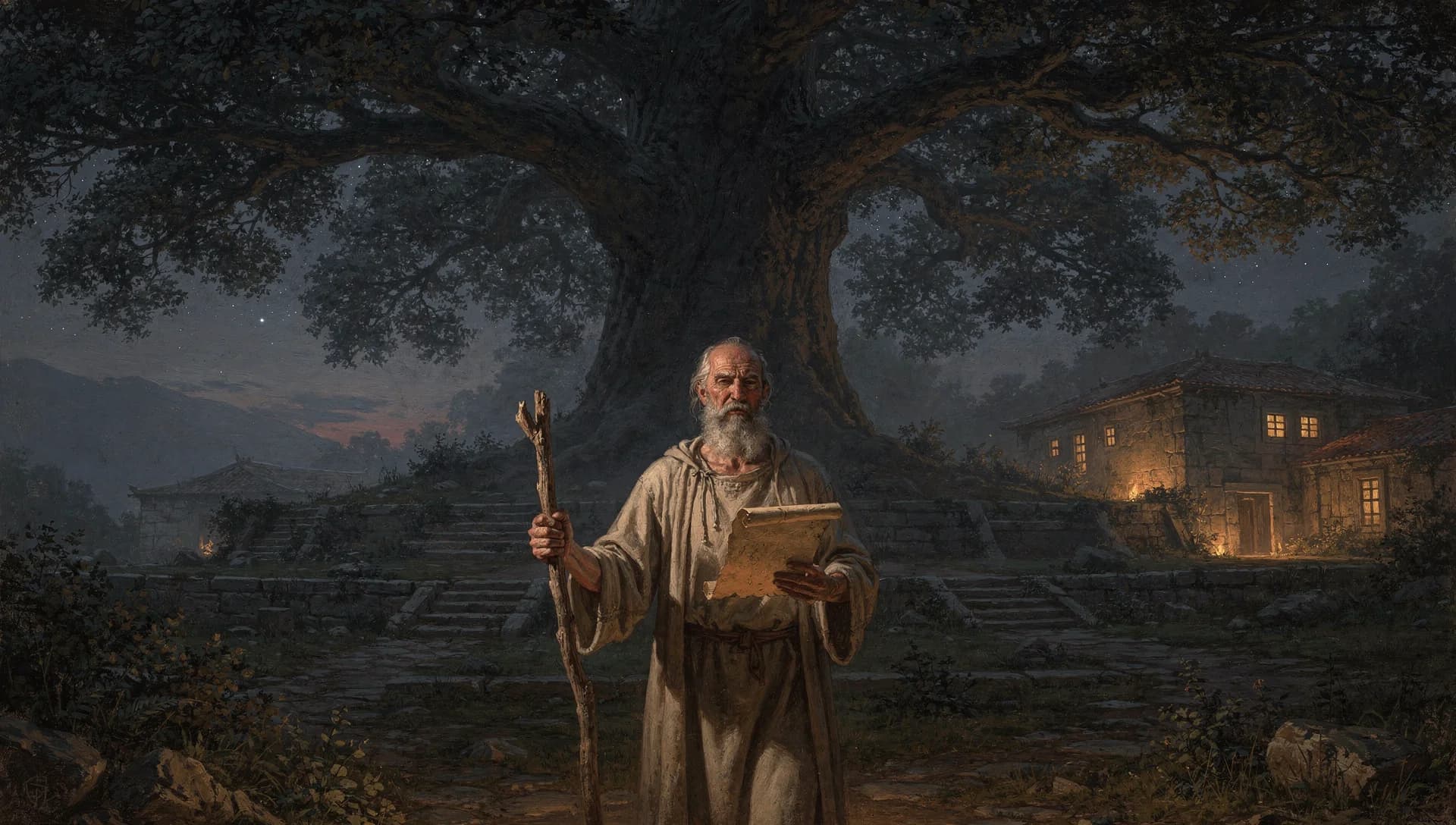
The One Who Hung on the Tree: Van and the Norse Odin
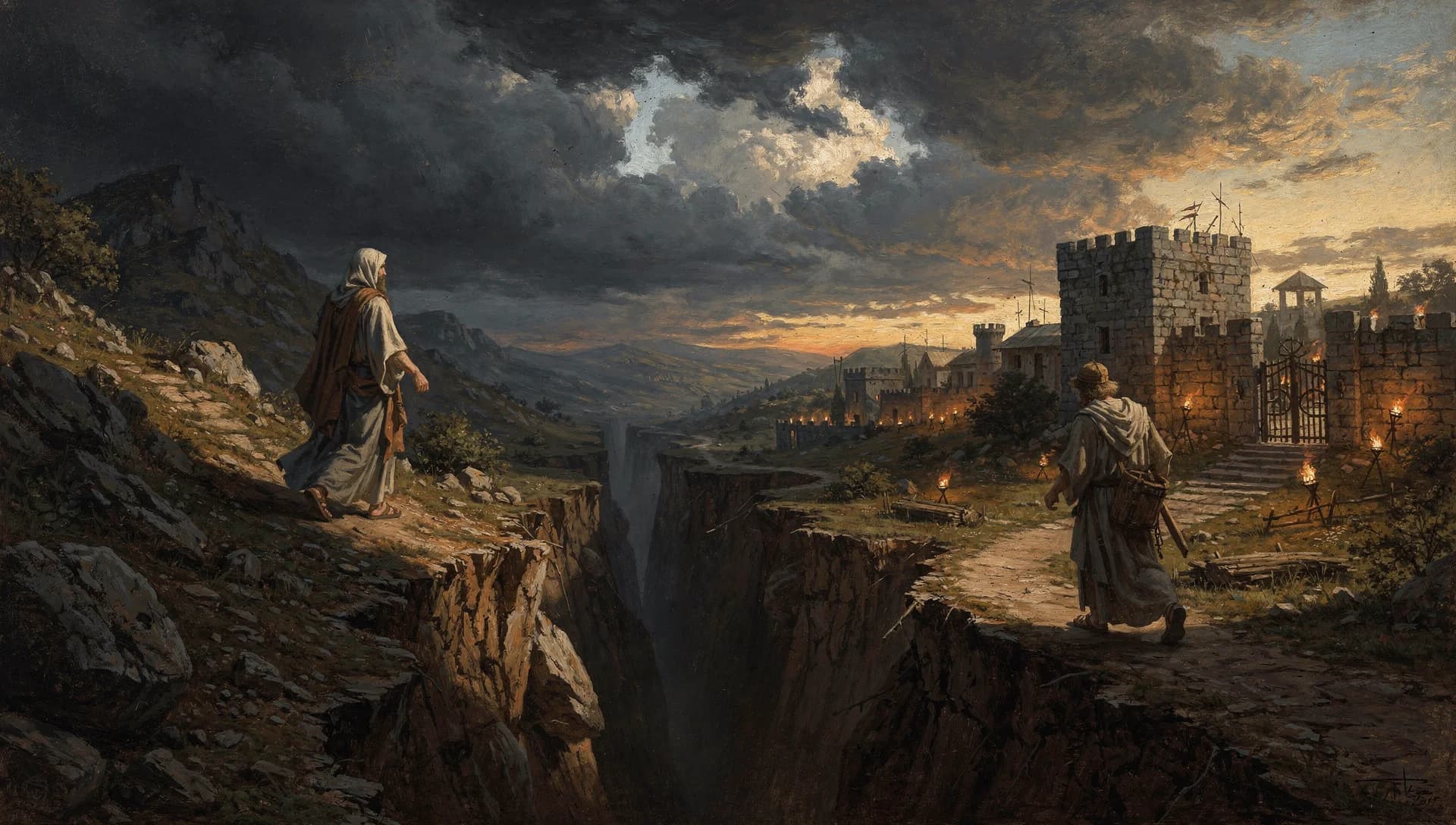
Nod and Enlil: The Rebel Who Became the Storm-God
The Newsletter
Get the research behind each piece
Free. New Urantia Book explorations, the sources behind the videos, and early looks. No spam, unsubscribe anytime.
Prefer video? Follow on YouTube and Facebook.
Delivered through Substack. You can also read past issues.