
The Prince Who Fell: Caligastia and the Truth About the Devil
Half a million years ago this world was placed in the care of a brilliant ruler who served it faithfully for three hundred thousand years, and then made a choice we are still living with. This is the story of Caligastia, the Prince who fell, and the Son who came to set this world free.

The Prince Who Fell
Caligastia and the Truth About the Devil
Derek Samaras | Urantia Book Network | June 2026
Half a million years ago, this world was placed in the care of a brilliant ruler. For three hundred thousand years, he served it faithfully. And then he made a choice that we are still living with today.
This is the story of Caligastia, the Planetary Prince of Urantia. It is a story that runs underneath a great deal of later legend, and when you follow it back to the record the Urantia Book preserves, the figure most of us were taught to fear turns out to be smaller, sadder, and far less powerful than the myths made him. It also turns out to be the setup for one of the most hopeful moments in the whole human story.
Watch the cinematic companion to this article:
A World Placed in His Care
The Prince did not arrive into recorded history. He arrived long before it, into a young and savage world that was just beginning to fill with the early human races.
"About five hundred thousand years ago and concurrent with the appearance of the six colored or Sangik races, Caligastia, the Planetary Prince, arrived on Urantia. There were almost one-half billion primitive human beings on earth at the time of the Prince's arrival, and they were well scattered over Europe, Asia, and Africa. The Prince's headquarters, established in Mesopotamia, was at about the center of world population." (66:0.2)
He came with help. With him served a corporeal staff of one hundred, supermortal teachers sometimes called the Caligastia one hundred (66:2.3), and together they built a headquarters on the warm shore of the Persian Gulf. The book describes it plainly, a real place, the first true city on Urantia.
"The headquarters of the Planetary Prince on Urantia was typical of such stations on a young and developing sphere. The nucleus of the Prince's settlement was a very simple but beautiful city, enclosed within a wall forty feet high. This world center of culture was named Dalamatia in honor of Daligastia." (66:3.3)
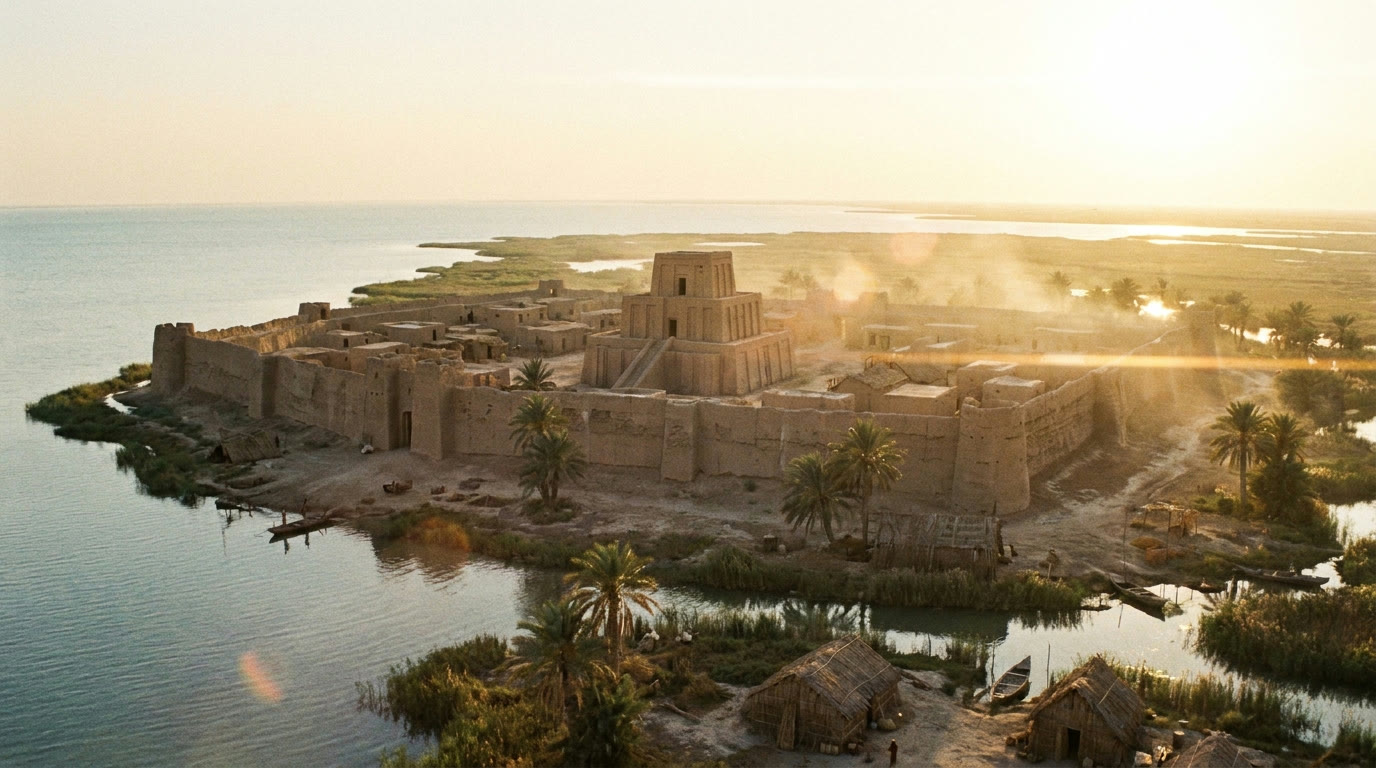
For three thousand centuries it worked. The Prince and his teachers patiently lifted a primitive people, giving them the rudiments of craft and language, of trade and social order, and the worship of one unseen Source. This was a being of real stature, not a villain in waiting. Before he ever came to this world he had served with distinction.
"Prior to the reign of Lucifer in Satania, Caligastia had been attached to the council of the Life Carrier advisers on Jerusem. Lucifer elevated Caligastia to a position on his personal staff, and he acceptably filled five successive assignments of honor and trust." (66:1.2)
That is the part the legends leave out. The Prince of this world was once faithful, and gifted, and trusted. Which is exactly what makes what came next a tragedy rather than a cartoon.
A Sovereign Above the Prince
The Prince did not rule alone. Far above him, set over a whole system of inhabited worlds, reigned a being of dazzling brilliance and authority named Lucifer. And Lucifer had begun to nurse a dangerous idea, a claim that the worlds should rule themselves free of any higher law, which he would frame as a "Declaration of Liberty." To carry his cause to the planets he sent his first lieutenant, a being named Satan.
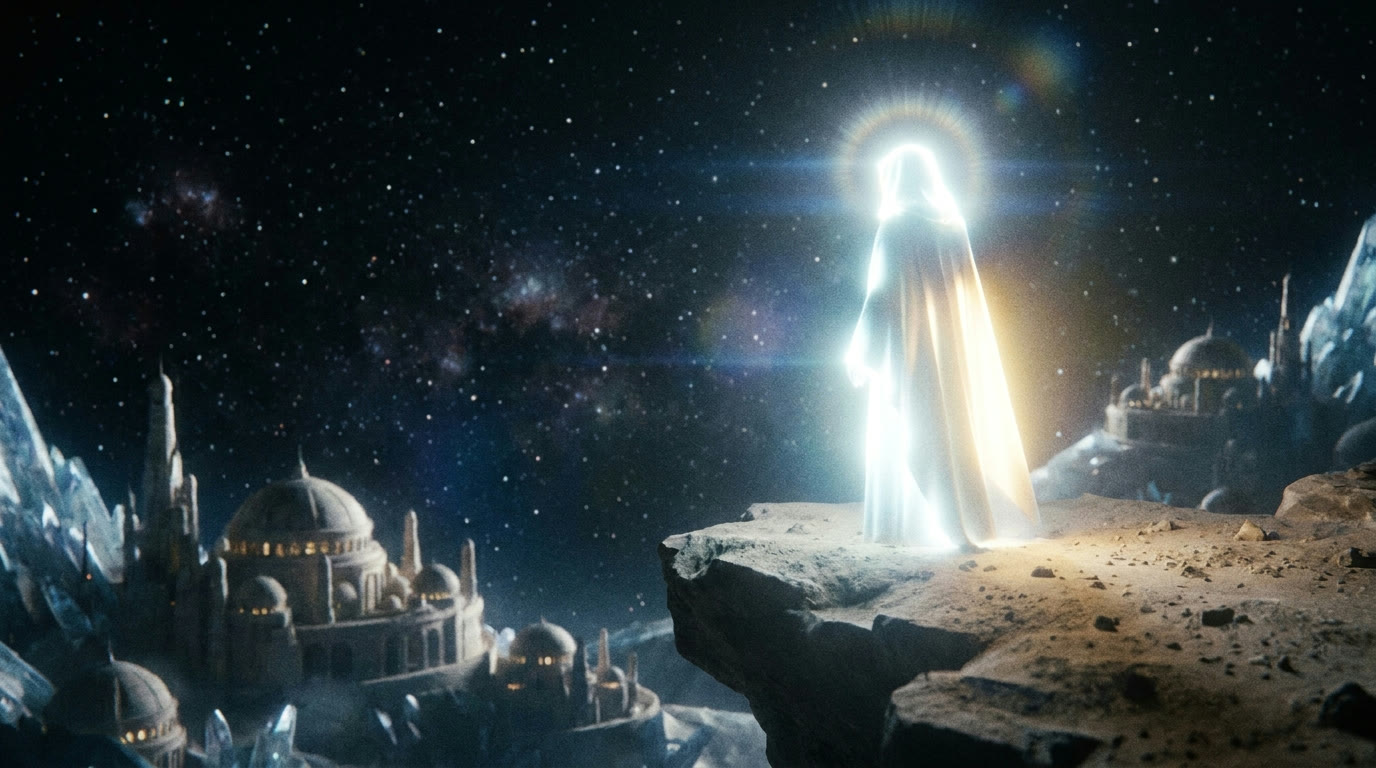
When the call to rebellion finally reached this world, it came in the form of one of Satan's inspection visits, and the Prince of Urantia faced the choice of his existence.
"In the course of this inspection Satan informed Caligastia of Lucifer's then proposed 'Declaration of Liberty,' and as we now know, the Prince agreed to betray the planet upon the announcement of the rebellion." (67:1.2)
After three hundred thousand years of faithful service, the Prince of this world said yes. And with that single sentence, the record gives us the real identity behind a name the whole world would later learn to dread.
"The 'devil' is none other than Caligastia, the deposed Planetary Prince of Urantia and a Son of the secondary order of Lanonandeks." (53:1.4)
Not What You Picture
Here the old image misleads us, and it is worth slowing down to see how completely. There were no horns, no pitchfork, no creature of fire and shadow. The beings at the heart of this rebellion were not monsters. They were radiant. When the book describes the arrival of Satan, it pauses to correct the picture directly.
"And when Satan arrived on the planet, his appearance in no way resembled your caricatures of his nefarious majesty. He was, and still is, a Lanonandek Son of great brilliance." (67:1.1)
That single detail rearranges everything. The danger was never a fanged devil prowling the dark. The danger was a beautiful, persuasive, brilliant personality who had stopped telling the truth. And even at the height of his treason, the fallen Prince was never granted the power the legends would later hand him. He could deceive. He could not compel.
"Even before Michael's bestowal on Urantia, neither Caligastia nor Daligastia was ever able to oppress mortals or to coerce any normal individual into doing anything against the human will. The free will of man is supreme in moral affairs; even the indwelling Thought Adjuster refuses to compel man to think a single thought or to perform a single act against the choosing of man's own will." (66:8.6)
Read that slowly, because it quietly dismantles the entire architecture of fear that grew up around the devil. No being in all the universe, fallen or faithful, can force its way past your own free choice. The book even says so in as many words.
"The devil has been given a great deal of credit for evil which does not belong to him. Caligastia has been comparatively impotent since the cross of Christ." (53:8.9)
A Teacher Who Stood Firm
The betrayal split the world in two, but it did not take everyone. Most of the Prince's staff followed him into rebellion. Not all of them did.
"On Urantia forty members of the corporeal staff of one hundred (including Van) refused to join the insurrection." (67:3.2)
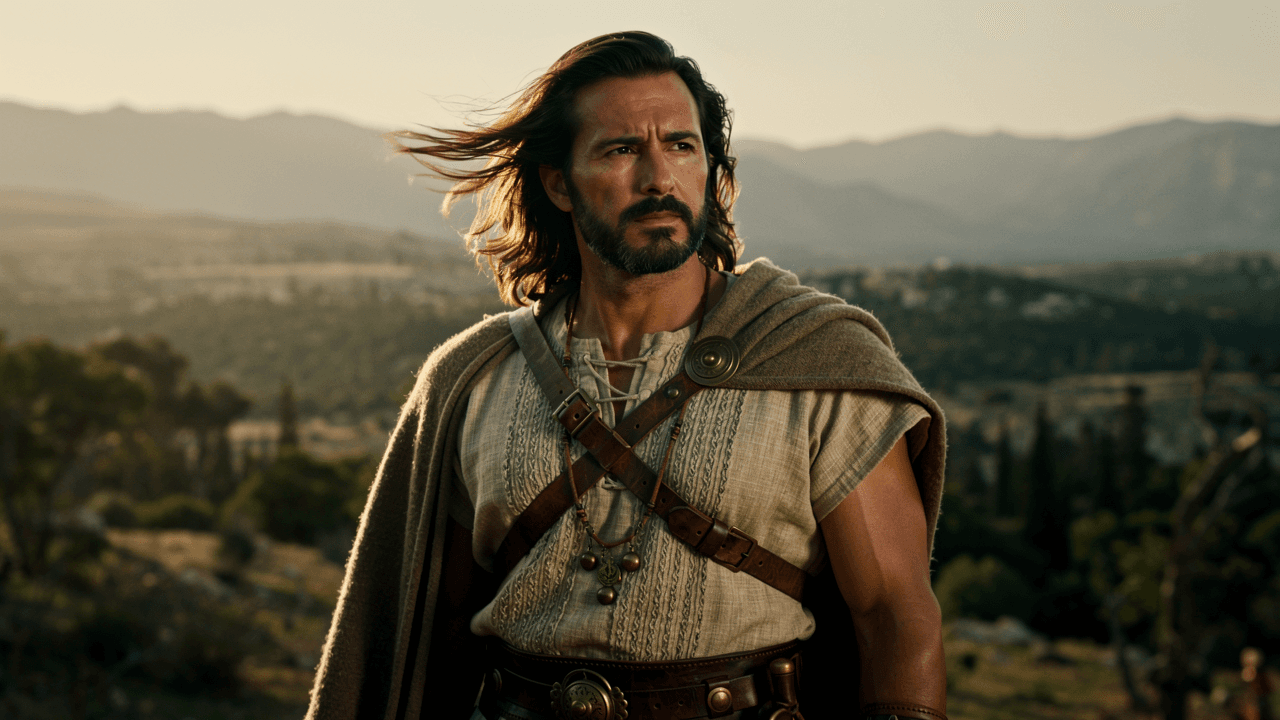
A loyal teacher named Van, and his faithful human companion Amadon, an early Andonite, refused to follow the brilliant lie. They held their ground, and they held the light of truth on this world through the long darkness that followed. The book does not let their steadfastness pass unnoticed. Across the dark ages that came after the rebellion, it was this loyal remnant that kept the human future alive.
"Under the supervision of the Melchizedek receivers, Van and Amadon continued the work of fostering the natural evolution of the human race, carrying forward the physical evolution of man until it reached that culminating attainment which warranted the dispatch of a Material Son and Daughter to Urantia." (67:6.7)
One Prince fell. One teacher stood firm. The same choice, on the same day, with very different answers. That contrast is the quiet heart of the whole story.
Where the Shadow Came From
So how did a brilliant fallen Lanonandek become the horned devil of later religion? Slowly, across centuries, as a real betrayal faded into rumor and rumor hardened into myth. The fading memory of Lucifer and Caligastia passed from people to people and was eventually painted in the darker colors of other traditions.
"The Jewish traditions of heaven and hell and the doctrine of devils as recorded in the Hebrew scriptures, while founded on the lingering traditions of Lucifer and Caligastia, were principally derived from the Zoroastrians during the times when the Jews were under the political and cultural dominance of the Persians." (95:6.6)
The devil we inherited, in other words, is a portrait several times removed from the original. A real event, dimly remembered, then dressed in borrowed imagery until a fallen prince of light became a monster of fire. The truth underneath is both simpler and stranger than the legend.
The One Who Came
The story does not end in the dark. Into this very world, isolated and troubled, came its own Creator Son to live a human life. The rebels saw their chance, and they failed.
"At the time Michael was on Urantia in the flesh, Lucifer, Satan, and Caligastia were leagued together to effect the miscarriage of his bestowal mission. But they signally failed." (53:1.4)
On a lonely height called Mount Hermon, an unaided man met the fallen prince of this world and overcame him.
"There on Mount Hermon, as an unaided mortal of the realm, he had met and defeated the Urantia pretender, Caligastia, the prince of this world. That eventful day, on the universe records, Jesus of Nazareth had become the Planetary Prince of Urantia." (136:3.1)
Near the end of his life, Jesus named what had happened, plainly, for anyone willing to hear it.
"Now is the judgment of this world; now shall the prince of this world be cast down." (53:8.5)
And in his last hours with his apostles, he said it again, and turned it into a promise.
"The old order is bringing itself to judgment; the Prince of this world I have cast down; and all men shall become free by the light of the spirit which I will pour out upon all flesh after I have ascended to my Father in heaven." (174:5.12)
The throne the traitor had abandoned was filled at last by one who would never fall.
What It Means
And so the fear loses its grip. The being behind the legend was real, and the betrayal was real, but the power the myths assigned him never was. There is no force in all the universe that can override your own will. The choice that Caligastia once made, and the choice that Van once made, is the same kind of choice set before each of us, every day. It always was.
A prince fell. A teacher stood firm. And a Son came to make this world free. That is where the story of the devil truly leads.
Note on Citations
Every direct quotation from the Urantia Book is verbatim from the cited paragraph and was verified against the canonical text. Citations follow the standard Paper:Section.Paragraph format used in Urantia Book scholarship. The narrative framing is original, and the quotation of (67:1.1) describes the appearance of Satan, Lucifer's lieutenant, whom the revelation presents as a brilliant being of light rather than the monster of later legend.

Connecting Articles
Rebellion Tested: What the Lucifer Rebellion Knows About Narcissistic Abuse
Van the Steadfast: The Jurist Who Defied a Fallen Prince, and the Enki the World Remembered

The Adjudication of Urantia: What Happens When the Lucifer Era Ends
Rebellion Tested: The Self They Could Not Recruit
The Newsletter
Get the research behind each piece
Free. New Urantia Book explorations, the sources behind the videos, and early looks. No spam, unsubscribe anytime.
Prefer video? Follow on YouTube and Facebook.
Delivered through Substack. You can also read past issues.